
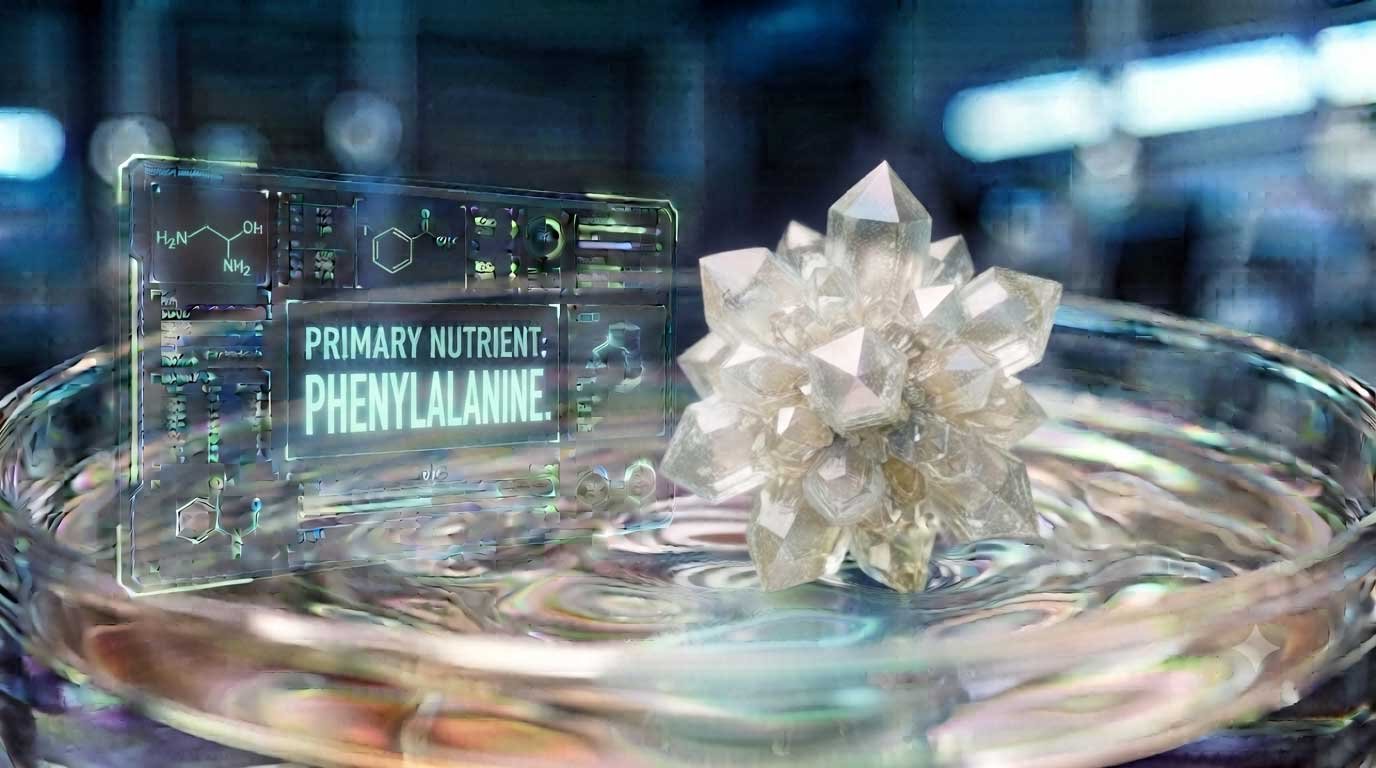
The Quiet Building Block Behind Your Best Thinking
I’ve spent a long time reading ingredient labels, supplement panels, and dusty biochemistry textbooks, and phenylalanine is one of those amino acids that never quite gets its due. It doesn’t have the marketing muscle of collagen or the trendy glow of glutathione. It just sits there, tucked into nearly every protein-rich food you eat, quietly doing one of the more important jobs in your entire nervous system. If you’ve ever wondered what actually makes the raw material for dopamine, or why a can of diet soda carries a strange warning label about “phenylketonurics,” you’re already brushing up against this amino acid without realizing it.
Phenylalanine belongs to a small club of amino acids your body cannot manufacture on its own. Biochemists call these the essential amino acids, and there are nine of them. Miss out on enough of any one, and your body starts to struggle in ways that ripple outward — muscle repair slows, hormone production falters, and in the case of phenylalanine specifically, the brain’s supply chain for some of its most important chemical messengers starts to run thin. That’s not hyperbole. Phenylalanine is the direct precursor to tyrosine, and tyrosine is the raw material for dopamine, norepinephrine, and epinephrine — the catecholamine family of neurotransmitters responsible for motivation, alertness, and the body’s stress response.

Table of Contents

I think what makes phenylalanine genuinely interesting, rather than just another entry in a nutrition textbook, is the dual nature of the story. On one hand, you have an amino acid essential to basic human function, present in eggs, chicken, soybeans, and dairy, part of a completely unremarkable diet. On the other hand, you have a genetic condition — phenylketonuria, or PKU — in which this same ordinary nutrient becomes actively dangerous if left unmanaged. Same molecule, wildly different outcomes depending on whether your liver can process it properly. That contrast is worth sitting with for a second, because it says something bigger about nutrition in general: context and individual biology matter more than the substance itself.
There are also two chemical mirror-image forms of phenylalanine worth knowing about early, because you’ll see both if you start shopping for supplements. L-phenylalanine is the natural form, the one your body pulls from food and uses to build proteins and neurotransmitter precursors. D-phenylalanine is a synthetic mirror image, studied mostly for its potential role in dulling pain signals. Combine the two and you get DL-phenylalanine, or DLPA, a supplement blend that’s been kicking around health food stores since the 1970s, originally investigated as a mood-support and pain-support compound. I’ll get into what the research actually shows about DLPA later on, because the marketing claims and the clinical evidence don’t always line up.
For most people reading this, though, phenylalanine isn’t something you need to supplement or fear. It’s something you’re already eating, several times a day, without thinking about it. Meat, fish, eggs, dairy, soy, legumes, nuts, seeds — phenylalanine rides along in virtually every protein source on the planet. Your liver converts a good portion of what you eat into tyrosine using an enzyme called phenylalanine hydroxylase, and from there the pathway toward dopamine and norepinephrine takes over. It’s an elegant little assembly line, one that runs in the background of every meal you eat without a second thought.
What I want to do here is walk through what phenylalanine actually does for your body and brain, where you’re realistically getting it from, how much you need, and — because this is the part people search for most and understand least — what the actual risks are, particularly around PKU and the aspartame connection that shows up on so many food labels. I’ve spent years digging through the research on amino acid metabolism, and I’ll tell you upfront: there’s a lot of supplement-industry noise around phenylalanine that outpaces the actual clinical evidence. My goal is to separate what’s genuinely well-established — the neurotransmitter pathway, the dietary requirements, the PKU risk — from what’s still speculative, like some of the mood and pain claims attached to DLPA supplements.
One more thing before we get into it. I’m not going to tell you to run out and buy a phenylalanine supplement, because for the overwhelming majority of people eating a normal, protein-containing diet, that would be solving a problem you don’t have. What I am going to do is help you understand why this amino acid matters, so that when you see it listed on a nutrition label, or flagged as a PKU warning on your sugar-free gum, you actually know what you’re looking at instead of just shrugging and moving on. That’s the kind of practical literacy that actually changes how you eat and how you read the products in your pantry.
Key Health Benefits
The Precursor Role: Feeding the Catecholamine Pathway
The single most important thing phenylalanine does in your body is act as raw material. Once absorbed, it gets converted by the liver enzyme phenylalanine hydroxylase into tyrosine, and tyrosine is the direct precursor for a trio of neurotransmitters collectively known as catecholamines: dopamine, norepinephrine, and epinephrine. Research on brain chemistry has shown that unlike most neurotransmitter production pathways, the synthesis of catecholamines in the brain is unusually sensitive to how much of these precursor amino acids are circulating in the blood at any given moment. In other words, what you eat can nudge the raw material available for making these brain chemicals, which is a fairly unusual relationship in neuroscience — most neurotransmitter systems aren’t so directly tied to diet.
Dopamine gets most of the public attention because of its association with motivation, reward, and focus. Norepinephrine and epinephrine matter just as much, governing alertness, the fight-or-flight stress response, and cardiovascular regulation. When researchers raise tyrosine levels in the brain through dietary protein intake, catecholamine production increases, but — and this is a detail people often miss — this effect is specific to neurons that are already actively firing. It’s not that more phenylalanine or tyrosine floods your brain with extra dopamine regardless of what you’re doing; the relationship is tied to neural activity that’s already underway. This is part of why the “eat protein, boost dopamine” pitch you sometimes see in wellness content is an oversimplification. The precursor supply matters, but it’s working within an existing system, not overriding it.
Mood Support: What DL-Phenylalanine Research Actually Shows
This is where I have to put on my skeptical hat, because DLPA has been marketed as a natural antidepressant for decades, and the evidence is a mixed bag — promising in places, thin in others. The foundational study most often cited is a 1979 double-blind trial comparing DL-phenylalanine against imipramine, a well-established tricyclic antidepressant, in 40 hospitalized patients with depression. Over 30 days, phenylalanine performed comparably to the pharmaceutical on standard depression rating scales, which was a notable finding for its time. Earlier open-label studies from the same research group reported similarly encouraging results.
Here’s the catch: these studies are small, dated, and haven’t been replicated with the rigor modern clinical research demands. No large-scale, contemporary, placebo-controlled trial has confirmed the antidepressant effect. The theoretical mechanism is sound — phenylalanine feeds the dopamine and norepinephrine pathways, and low catecholamine activity has long been associated with depressive symptoms — but sound theory and confirmed clinical outcome are two different things. If you see phenylalanine marketed as a proven depression treatment, that claim is running ahead of what the science actually supports. I’d call the mood-support angle plausible and worth further study, not settled.
The Pain Connection: D-Phenylalanine and Endorphins
The D-form of phenylalanine has its own separate research thread, built around the idea that it inhibits an enzyme called enkephalinase, which normally breaks down the body’s natural pain-relieving endorphins. Block that enzyme, the theory goes, and your own endorphins stick around longer and do more work. It’s a clever hypothesis, and some early animal research supported it.
Human trials, though, have been inconsistent. A controlled study published in the Archives of Physical Medicine and Rehabilitation tested D-phenylalanine against a placebo in chronic pain patients and found no statistically significant analgesic benefit. Other observational reports have suggested it might enhance the effectiveness of opioid pain medications when used alongside them, but that’s not the same as demonstrating standalone pain relief. If you’re dealing with chronic pain and considering DLPA, I’d treat it as an unproven adjunct at best, not a replacement for anything your doctor has already recommended.
Pigmentation and Skin Support
One of the lesser-known applications of phenylalanine involves vitiligo, the condition where patches of skin lose their pigment. Because tyrosine — phenylalanine’s metabolic downstream product — is also the precursor for melanin, some research has explored combining phenylalanine supplementation with controlled ultraviolet light exposure to help repigment affected skin. The results have been described as encouraging enough to warrant continued study, though this remains a specialized, medically supervised application rather than something to attempt on your own with over-the-counter supplements and sun exposure.
Cognitive Alertness and Attention
Because the catecholamine pathway governs so much of what we associate with focus and mental sharpness, there’s ongoing interest in whether phenylalanine or its downstream products support cognitive performance, particularly under stress or sleep deprivation, when catecholamine reserves tend to run low. The mechanistic case is reasonable: protein intake raises circulating tyrosine, which supports catecholamine synthesis during periods of active neural firing. But translating that mechanism into a reliable, everyday cognitive-enhancement claim is still more speculative than proven, and most healthy, well-fed people are not walking around catecholamine-deficient in the first place.
Dietary Sources
Animal-Based Sources: Where Most People Get Theirs
If you eat meat, dairy, or eggs with any regularity, you are almost certainly meeting your phenylalanine needs without ever thinking about it. Animal proteins tend to be dense, complete sources — meaning they deliver phenylalanine alongside the full spectrum of essential amino acids in one package. A few examples worth knowing:
- Poultry and red meat — chicken, turkey, beef, pork, and lamb all supply well over a gram of phenylalanine per typical serving, since muscle protein is naturally rich in it.
- Fish and seafood — salmon, tuna, trout, shrimp, and lobster are all solid contributors, useful if you’re leaning toward a pescatarian pattern.
- Eggs — a single egg carries several hundred milligrams, making eggs one of the more efficient, portable sources.
- Dairy — milk, cheese, and yogurt are all notably rich; hard cheeses like Parmesan and Romano rank among the densest phenylalanine sources by weight, largely because they’re so concentrated in protein generally.
I’ll admit there’s nothing exotic about this list. That’s actually the point — phenylalanine adequacy is essentially a byproduct of eating enough total protein from ordinary foods, not something that requires special sourcing or supplementation for the vast majority of people.
Plant-Based and Vegetarian Sources
If you’re eating a vegetarian or vegan diet, phenylalanine is still very much available, though you’ll want to lean on a somewhat wider variety of foods to hit the same density that animal protein delivers more concentrated. Soybeans and soy products — tofu, tempeh, edamame, soy milk — are consistently among the richest plant sources, right up there with some animal proteins gram for gram. Legumes broadly, including chickpeas, lentils, and kidney beans, contribute meaningfully as well. Nuts and seeds, particularly peanuts, almonds, pumpkin seeds, and sesame seeds, add both phenylalanine and healthy fats to the mix. Whole grains like oats, quinoa, wheat, and barley contribute smaller but still useful amounts, especially across multiple servings in a day.
The practical takeaway for plant-based eaters is that no single food needs to carry the full load. Spreading intake across legumes, soy, nuts, seeds, and whole grains throughout the day comfortably covers requirements, provided total protein intake is adequate — which, frankly, is the same advice that applies to essential amino acid intake in general on a plant-forward diet.
Hidden Sources: Aspartame and Processed Foods
Here’s where phenylalanine shows up in a form most people don’t expect: the artificial sweetener aspartame. Aspartame is a dipeptide made of two amino acids, aspartic acid and phenylalanine, and when your body metabolizes it, phenylalanine gets released into your bloodstream. This is precisely why you’ll find the phrase “Phenylketonurics: Contains Phenylalanine” printed on diet sodas, sugar-free gum, some yogurts, and a long list of low-calorie products. For someone without PKU, this contribution is genuinely trivial compared to what a normal protein-containing diet already provides. For someone with PKU, though, it’s a meaningful and avoidable source that requires careful label reading, which I’ll come back to in the toxicity section.
A Practical Note on Variety
I’ll be honest — I don’t think most people need to track phenylalanine intake food by food. Unless you have PKU or another condition your doctor has flagged, hitting your total protein target with a reasonably varied diet takes care of this automatically. The exception worth flagging is highly restrictive diets, whether that’s extreme calorie restriction, very limited food variety due to allergies, or unsupervised elimination diets, where total protein intake — and therefore phenylalanine — can quietly fall short without anyone noticing until symptoms show up.
Dosage & Deficiency
How Much Do You Actually Need
Unlike vitamins and minerals, phenylalanine doesn’t have its own standalone Recommended Dietary Allowance in most national guidelines, because it’s typically assessed together with tyrosine — the amino acid it converts into. The Institute of Medicine’s dietary reference intake report sets the combined recommended intake for phenylalanine plus tyrosine at roughly 25 milligrams per kilogram of body weight per day for adults, alongside an estimated average requirement in the neighborhood of 14 milligrams per kilogram. For context, that works out to somewhere around 875 milligrams a day for a 70-kilogram (154-pound) adult on the RDA side, though actual minimum requirements determined through controlled metabolic studies have run lower, closer to 9 milligrams per kilogram for phenylalanine alone when adequate tyrosine is also present in the diet.
What this means practically is that a single palm-sized serving of chicken, fish, or tofu, or a couple of eggs with some dairy, will comfortably clear the daily requirement for most adults. This isn’t a nutrient you need to plan meals around. Growing children and pregnant women have proportionally higher requirements per kilogram of body weight, reflecting the increased protein synthesis demands of growth and fetal development, but again, this scales naturally with adequate total protein intake rather than requiring targeted phenylalanine supplementation.
What Deficiency Actually Looks Like
True dietary phenylalanine deficiency is rare in people eating a reasonably varied, adequate-calorie diet, essentially because it would require a severe and sustained shortfall in total protein intake — the kind of scenario more commonly associated with malnutrition, severe eating disorders, or certain restrictive medical diets than with everyday dietary choices. When it does occur, the downstream effects trace back to insufficient catecholamine and tyrosine production: fatigue, low mood, poor concentration, and in more severe or prolonged cases, impaired growth in children. Skin and hair changes have also been described in severe protein-energy malnutrition more broadly, tied to the pigmentation role that tyrosine plays downstream of phenylalanine.
I want to be direct about something here: if you’re feeling fatigued, foggy, or low in mood, phenylalanine deficiency is very far down the list of likely explanations, well behind sleep quality, stress, iron status, thyroid function, and general caloric or protein adequacy. It’s a nutrient worth understanding, not one most people need to worry about running short on.
Supplemental Dosing — What the Research Has Actually Tested
For those specifically interested in supplemental phenylalanine, the research doses cluster in two very different ranges depending on the form. L-phenylalanine studies exploring mood and cognitive effects have used relatively high doses, sometimes in the range of 1 to 10 grams daily. DLPA, the combined D and L form, has generally been studied at meaningfully lower doses — often in the 150 to 200 milligram daily range for mood-related research, occasionally up to around 1 gram daily divided across doses in pain-focused trials. These numbers come from clinical research protocols, not casual self-experimentation, and given how thin and dated much of this evidence base is, I’d treat any supplemental use as something to discuss with a healthcare provider rather than something to freelance based on a supplement label.
Toxicity & Risks
Phenylketonuria: The One Risk That Actually Matters
If there’s a single fact about phenylalanine worth remembering above everything else in this article, it’s this: for the general population, phenylalanine from food is not dangerous, full stop. The entire risk conversation around this amino acid centers on a specific, rare, inherited condition called phenylketonuria, or PKU, affecting roughly one in every 15,000 to 24,000 births depending on the population studied. People with PKU carry a genetic mutation that impairs or eliminates the function of phenylalanine hydroxylase, the very enzyme responsible for converting phenylalanine into tyrosine.
Without that conversion working properly, phenylalanine accumulates in the bloodstream, and at high enough levels, it becomes neurotoxic — capable of interfering with brain development, particularly in infants and young children whose nervous systems are still forming. Left untreated, this accumulation can produce intellectual disability, seizures, behavioral problems, and other neurological complications. This is precisely why newborns in most developed countries are routinely screened for PKU shortly after birth through a simple heel-prick blood test — catching it early allows for dietary management before irreversible damage occurs.
The treatment is, in principle, straightforward: a lifelong, carefully controlled low-phenylalanine diet, avoiding high-protein foods like meat, eggs, dairy, and legumes, and relying instead on specialized medical formulas and low-protein substitute foods to meet nutritional needs without the phenylalanine load. In practice, this diet is demanding and requires real discipline — research on patients managing PKU has noted that a majority tolerate only around 500 milligrams of phenylalanine per day, a tiny fraction of what an unaffected adult consumes without a second thought. Adherence tends to decline as patients get older, particularly through adolescence and into adulthood, which is part of why ongoing counseling and monitoring matter so much for this population throughout life, not just in childhood.
The Aspartame Connection
This is the piece that trips people up most often, because it looks alarming out of context. That “Phenylketonurics: Contains Phenylalanine” warning stamped on diet sodas and sugar-free products exists specifically because aspartame breaks down into phenylalanine during digestion, and for someone managing PKU, every source counts toward a very tight daily ceiling. For everyone else, this warning is essentially irrelevant — it’s not a general safety warning, it’s a targeted one for a small, specific population. Regulatory agencies that have reviewed aspartame’s safety broadly, including its phenylalanine contribution, have concluded it poses no meaningful risk to people without PKU at typical consumption levels. If you don’t have PKU, you can read that label, understand what it means, and move on with your diet without a second thought.
Pregnancy and Maternal PKU
One area where vigilance matters even more is pregnancy in women who have PKU themselves, since elevated phenylalanine levels are neurotoxic to a developing fetus regardless of whether the baby has inherited the condition. Poorly controlled phenylalanine levels during pregnancy have been associated with developmental delays, microcephaly, and congenital heart problems in the child. This is a scenario where dietary management needs to be tightened, not relaxed, and it underscores why lifelong management — not just childhood management — matters so much for people living with PKU.
Megadosing and Unsupervised Supplementation
Outside of PKU, the realistic risk profile for phenylalanine shifts toward the question of unsupervised, high-dose supplementation rather than dietary intake. Because phenylalanine competes with other large neutral amino acids, including tyrosine and tryptophan, for the same transport system across the blood-brain barrier, very high supplemental doses could theoretically skew this competitive balance in ways that aren’t fully mapped out in healthy adults. There’s also the more mundane concern that any concentrated amino acid supplement can cause gastrointestinal discomfort, headaches, or interact with certain medications, including some antidepressants and blood pressure medications, given phenylalanine’s role upstream of norepinephrine and epinephrine production. None of this is catastrophic, but it’s a reasonable case for treating high-dose supplementation as something to run past a healthcare provider, particularly if you’re already on medication that touches the catecholamine system.
What This Amino Acid Actually Teaches Us About Nutrition
If you take one thing away from all of this, let it be the contrast at the center of the phenylalanine story. Here’s a nutrient present in nearly every protein-rich food on the planet, essential for building the neurotransmitters that govern focus, motivation, and stress response, and for the vast majority of people, completely unremarkable — something you meet your needs for without trying, several times a day, one meal at a time. And yet, for a small population with a specific genetic variation, that exact same molecule becomes something that has to be measured, restricted, and monitored for life. That’s not a contradiction; it’s just what nutrition actually looks like once you get past the headlines. Context, individual biology, and dose determine outcome far more than any nutrient’s reputation does.
I’d also push back gently on the supplement-aisle version of this story, the one where DLPA gets sold as a mood-lifting, pain-erasing miracle amino acid. The underlying biochemistry is real and genuinely fascinating — phenylalanine really is the doorway to your catecholamine system — but the clinical evidence supporting mood and pain claims is older and thinner than the marketing suggests. That doesn’t mean the research avenue is worthless; it means it’s still open, and worth watching rather than betting on.
For practical purposes, here’s where I’d leave you. If you eat a reasonably varied diet with adequate protein from any combination of meat, fish, eggs, dairy, soy, legumes, nuts, or seeds, you have nothing to actively manage here — your body is handling the phenylalanine-to-tyrosine-to-catecholamine pipeline exactly as it should. If you or your child have been flagged through newborn screening for PKU, or you know it runs in your family, that’s the one scenario where phenylalanine stops being a background nutrient and becomes something that needs a dietitian’s ongoing involvement. And if you’re eyeing a DLPA supplement for mood or pain, go in with clear eyes about how thin that evidence base actually is, and loop in a healthcare provider before you start, especially if you’re already taking anything that touches your dopamine or norepinephrine systems. Small amino acid, outsized role — that’s really the whole story.
Article Sources
At AncientHerbsWisdom, our content relies on reputable sources, including peer-reviewed studies, to substantiate the information presented in our articles. Our primary objective is to ensure our content is thoroughly fact-checked, maintaining a commitment to accuracy, reliability, and trustworthiness.
- Beckmann, H., Athen, D., Olteanu, M., & Zimmer, R. (1979). DL-phenylalanine versus imipramine: A double-blind controlled study. Archiv für Psychiatrie und Nervenkrankheiten, 227(1), 49-58. https://doi.org/10.1007/BF00585677
- Cleveland Clinic. (2025). Phenylketonuria (PKU) symptoms, causes & treatment. https://my.clevelandclinic.org/health/diseases/17816-phenylketonuria
- Fernstrom, J. D., & Fernstrom, M. H. (2007). Tyrosine, phenylalanine, and catecholamine synthesis and function in the brain. The Journal of Nutrition, 137(6). https://jn.nutrition.org/article/S0022-3166(22)09272-0/fulltext
- Institute of Medicine. (2005). Protein and amino acids. In Dietary reference intakes for energy, carbohydrate, fiber, fat, fatty acids, cholesterol, protein, and amino acids. National Academies Press. https://www.ncbi.nlm.nih.gov/books/NBK234922/
- Mayo Clinic Staff. (2023). Phenylalanine in diet soda: Is it harmful? Mayo Clinic. https://www.mayoclinic.org/healthy-lifestyle/nutrition-and-healthy-eating/expert-answers/phenylalanine/faq-20058361
- StatPearls Publishing. (2026). Phenylketonuria. In StatPearls. National Center for Biotechnology Information. https://www.ncbi.nlm.nih.gov/books/NBK535378/
- Walsh, N. E., Ramamurthy, S., Schoenfeld, L., & Hoffman, J. (1986). Analgesic effectiveness of D-phenylalanine in chronic pain patients. Archives of Physical Medicine and Rehabilitation, 67(7), 436-439. https://pubmed.ncbi.nlm.nih.gov/3524509/

- Phosphatidic Acid: Supporting Muscle Growth and Strength - July 31, 2026
- Ceramides: Supporting Healthy Skin From Within - July 31, 2026
- Synbiotics: Combining Prebiotics and Probiotics Together - July 31, 2026