
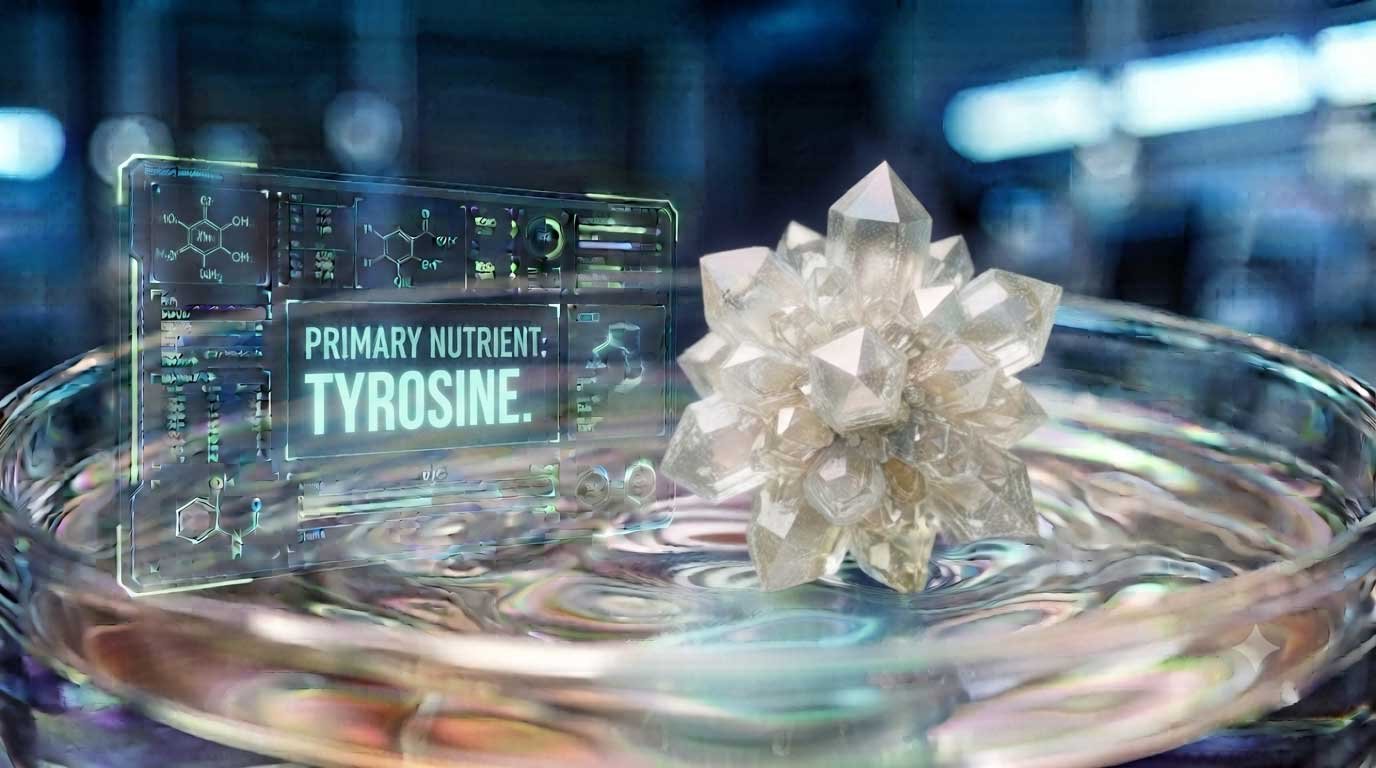
The Quiet Amino Acid Running the Show Behind the Scenes
If you asked ten people to name an amino acid, you’d probably get a handful of shrugs, maybe a “tryptophan, like in turkey?” and if you’re lucky, someone mumbling something about protein shakes. Tyrosine rarely makes that list, and honestly, that’s a shame. This is one of those biochemical workhorses that never gets the credit it deserves, quietly sitting in the background of two of the body’s most consequential systems: the dopamine pathway that shapes your motivation and focus, and the thyroid gland that sets the pace for your entire metabolism.
I’ve spent a long time digging through amino acid research, and tyrosine keeps surfacing in contexts that seem, at first glance, unrelated. One day it’s showing up in a paper about cognitive performance during military training. The next it’s central to a discussion about how the thyroid gland manufactures its hormones. That range is part of what makes tyrosine so interesting. It isn’t a niche compound with one narrow job. It’s a structural building block that gets repurposed by different tissues for completely different, but equally important, biological missions.
Table of Contents

Here’s the basic picture. Tyrosine is what’s called a nonessential amino acid, meaning your body can build it from scratch rather than relying solely on your dinner plate to supply it. But “nonessential” is a bit of a misleading label, because the raw material your body uses to make tyrosine is phenylalanine, another amino acid, and that one actually is essential. Your liver uses an enzyme called phenylalanine hydroxylase to convert phenylalanine into tyrosine. It’s a one-way street; once you have tyrosine, your body cannot convert it back into phenylalanine. So in a very real sense, tyrosine is downstream of phenylalanine’s availability, and if that conversion pathway gets disrupted for any reason, tyrosine suddenly becomes essential in every practical sense. This is exactly what happens in a rare genetic condition called phenylketonuria, or PKU, where the enzyme doesn’t work properly and people need to actively supplement tyrosine because their bodies simply cannot produce enough on their own.

What tyrosine actually does once it’s floating around in your bloodstream is where things get genuinely fascinating. It serves as the direct chemical precursor to the catecholamines, a family of neurotransmitters and hormones that includes dopamine, norepinephrine, and epinephrine (you probably know this last one better as adrenaline). Every single molecule of dopamine coursing through your brain’s reward circuitry started its life as a molecule of tyrosine. That’s not a small thing. Dopamine is deeply involved in motivation, attention, movement, and mood regulation, so a compound sitting at the very beginning of that manufacturing chain deserves a bit more attention than it typically gets.
But tyrosine doesn’t stop there. It also gets pulled into an entirely different biochemical operation over in the thyroid gland, where it becomes the structural backbone of thyroid hormones like thyroxine (T4) and triiodothyronine (T3). These hormones essentially set the metabolic thermostat for your whole body, influencing everything from your resting heart rate to how efficiently you burn calories to how sharp your thinking feels on any given day. And as if that weren’t enough range for one molecule, tyrosine also feeds into melanin production, the pigment responsible for the color of your skin, hair, and eyes.
I find it genuinely remarkable that a single amino acid can be involved in mood regulation, metabolic rate, and pigmentation, all at once, just by being funneled down different enzymatic pathways depending on which tissue picked it up. It’s a bit like discovering that the same raw lumber delivered to a construction site gets used to frame a house in one neighborhood and build a boat dock in another, depending entirely on which crew grabs it first.
Where this gets practically relevant for most people is in two very different scenarios. On one end, there’s a growing body of research into whether supplemental tyrosine can help people perform better cognitively during acute stress, sleep deprivation, or extreme physical demands, since these situations tend to burn through catecholamine reserves faster than the body can replace them. On the other end, there’s the slower, quieter question of whether ordinary dietary tyrosine intake, the kind you get from eating cheese, chicken, or tofu, is sufficient to keep your thyroid hormone production humming along normally. Both of these threads matter, and honestly, most people have never given either one a second thought.
Over the course of this article we’re going to walk through what the science actually shows about tyrosine’s health benefits, where you can realistically find it in your diet, how much you probably need and what deficiency looks like, and finally what happens when things tip too far in the other direction. Amino acid nutrition tends to get oversimplified into vague “eat more protein” advice, but tyrosine has enough specific, well-documented mechanisms behind it that it deserves a more careful look. Let’s get into it.
Key Health Benefits of Tyrosine
Tyrosine’s reputation, such as it is, rests almost entirely on two pillars: its role as the raw material for catecholamine neurotransmitters, and its role as the structural backbone of thyroid hormone. Both of these functions have real downstream consequences for how you feel, think, and function day to day, so let’s take them one at a time and dig into what the actual evidence shows rather than what supplement marketing copy tends to claim.
Supporting Dopamine and Norepinephrine Production
Tyrosine sits at the very top of the catecholamine synthesis pathway. An enzyme called tyrosine hydroxylase converts tyrosine into L-DOPA, which then gets converted into dopamine, and from there into norepinephrine and eventually epinephrine. This is the same biochemical pathway that Parkinson’s medications like levodopa are designed to support, though obviously at a completely different scale and for a completely different purpose.
Here’s the interesting wrinkle, though. Tyrosine hydroxylase, the enzyme doing the heavy lifting at the start of this chain, is only about seventy-five percent saturated with tyrosine under normal conditions. That’s a strange detail to sit with for a moment, because it means there’s actual headroom. Unlike some biochemical pathways where the rate-limiting enzyme is already working at full capacity and additional substrate does nothing, this one has room to run faster if more tyrosine becomes available. That’s part of why researchers got curious about whether supplemental tyrosine could meaningfully boost catecholamine output, particularly in situations where demand for these neurotransmitters spikes.
And demand does spike. Under acute stress, whether that’s physical (extreme cold, extreme heat, sleep deprivation) or psychological (a high-stakes cognitive task, combat training, a brutal exam period), your body burns through norepinephrine and dopamine faster than it can regenerate them from baseline tyrosine stores. A review published in the Journal of Psychiatric Research pulled together the available clinical and healthy-population research on this exact question, and the pattern that emerged was fairly consistent: tyrosine can enhance dopamine and norepinephrine levels in the brain, and supplementation appears to reverse cognitive decline specifically under conditions of stress or heavy cognitive demand (Jongkees et al., 2015). What’s notable is the conditional nature of that finding. This isn’t a blanket cognitive enhancer that boosts brainpower across the board. It seems to matter most when your system is already under some kind of load and catecholamine synthesis is struggling to keep pace with demand.
A field study that’s stuck with me involved Dutch military cadets during an intense week of combat training, a setting about as demanding as it gets for both mind and body. Cadets who received a tyrosine-rich drink performed better on memory and tracking tasks compared to cadets who received a carbohydrate-rich drink with matched calories, and tyrosine supplementation was also associated with a reduction in systolic blood pressure (Deijen et al., 1999). Think about what that combination represents: better cognitive output paired with a calmer cardiovascular response, both showing up during a week where sleep was scarce and physical stress was constant. That’s exactly the kind of scenario where the “seventy-five percent saturated enzyme” detail starts to make practical sense. There was room for tyrosine to do more work, and apparently it did.
It’s worth being honest that not every study lands the same way. Some trials looking at tyrosine’s effects on cognition during heat stress or intense exercise have found weaker or inconsistent results, and the research community generally agrees that tyrosine’s benefits are most reliable when catecholamine systems are already being taxed, not as a general everyday brain booster for someone who’s well-rested and unstressed. If you’re sitting comfortably at your desk with a full night’s sleep behind you, extra tyrosine probably isn’t going to sharpen your focus in any noticeable way, because your dopamine synthesis machinery isn’t running short on raw material to begin with.
Fueling Thyroid Hormone Production
The second major role tyrosine plays involves a completely different organ system, and it’s arguably even more foundational to daily wellbeing than the dopamine story, even though it gets discussed far less often.
Your thyroid gland manufactures a large protein called thyroglobulin, and scattered throughout that protein are tyrosine residues just waiting to be chemically modified. When dietary iodine arrives at the thyroid, an enzyme called thyroid peroxidase attaches iodine atoms directly onto those tyrosine molecules, a process researchers call organification. Depending on how many iodine atoms get attached, you end up with either monoiodotyrosine or diiodotyrosine. These iodinated tyrosine units then get chemically coupled together by that same enzyme to form the actual, functional thyroid hormones: thyroxine (T4), made from two diiodotyrosine units, and the more biologically active triiodothyronine (T3), made from one mono- and one diiodotyrosine unit.
Researchers studying the molecular mechanics of this process in detail have described exactly how central tyrosine’s chemical structure is to the whole operation. In a 2024 structural biology paper, scientists engineered a minimal protein model to study how thyroxine actually forms within thyroglobulin, and they confirmed that specific pairs of tyrosine residues undergo iodination and then coupling, ultimately producing thyroxine at what’s called the acceptor tyrosine site, with the final hormone released later through a proteolytic cleavage step (Stejskalova et al., 2024). That’s a fairly technical way of saying: tyrosine isn’t just involved in thyroid hormone production, it is the literal molecular scaffold the hormone is built on top of. Take away the tyrosine, and there’s nothing for the iodine to attach to, and no hormone gets made.
Why does any of this matter for how you feel day to day? Thyroid hormones regulate your basal metabolic rate, meaning how many calories you burn just existing, and they influence heart rate, body temperature, cognitive processing speed, and even mood stability. People with underactive thyroids often describe a persistent fog, sluggishness, and cold intolerance that can be genuinely debilitating, and while iodine deficiency gets most of the public attention when people talk about thyroid dysfunction, adequate tyrosine availability is just as structurally necessary, even if it rarely runs short in people eating a typical varied diet.
I want to be careful here not to overstate things, because avoiding direct medical claims matters. Tyrosine intake alone won’t fix a diagnosed thyroid disorder, and it’s not a substitute for appropriate medical evaluation if you’re experiencing symptoms of thyroid dysfunction. What the research does support is that tyrosine is a nonnegotiable structural ingredient in the biochemical assembly line that produces thyroid hormone in the first place, working in tandem with adequate iodine intake.
Other Roles Worth Mentioning
Beyond dopamine and thyroid hormone, tyrosine also feeds into melanin synthesis through a separate enzymatic pathway involving tyrosinase, which is why genetic mutations affecting tyrosine metabolism can sometimes show up as changes in skin, hair, or eye pigmentation. It’s a smaller piece of the puzzle compared to the neurotransmitter and hormone stories, but it rounds out the picture of just how many different biological systems this one amino acid quietly touches.
Dietary Sources of Tyrosine
Because tyrosine is a component of dietary protein rather than a standalone micronutrient like a vitamin, the most reliable way to get enough of it is simply to eat a reasonably varied, protein-containing diet. That said, some foods concentrate tyrosine far more than others, and knowing which ones can be genuinely useful, whether you’re trying to make sure you’re covering your bases or you’re just curious what’s actually in your fridge that’s contributing to this particular amino acid pool.
Animal-Based Sources
If you’re looking at raw concentration numbers, aged cheeses tend to top the list, and there’s a neat bit of etymology behind that. The word “tyrosine” comes from the Greek word for cheese, “tyri,” because the amino acid was first isolated from casein, the primary protein in cheese, back in the nineteenth century. Hard, aged cheeses like Parmesan, Swiss, and cheddar are particularly rich, with grated Parmesan delivering well over a gram and a half of tyrosine per cup serving according to nutrient composition data (U.S. Department of Agriculture, 2019).
The reason aged cheeses are so concentrated has to do with the aging process itself. As cheese matures, proteins break down into their individual free amino acid components, effectively pre-digesting some of that protein and concentrating amino acids like tyrosine in a smaller, denser package. The same phenomenon shows up with cured meats and fermented foods more broadly, where extended aging or fermentation liberates free amino acids that were previously locked inside intact protein structures.
Beyond cheese, most animal proteins carry a meaningful tyrosine payload. Beef, pork, poultry, and fish all deliver substantial amounts, generally in the range of several hundred milligrams to over a gram per typical serving depending on the cut and preparation. Eggs are another solid, everyday source, particularly the yolk, and dairy products more broadly, including milk and yogurt, contribute steadily if less dramatically than aged cheese does.
Plant-Based Sources
For anyone eating a vegetarian or vegan diet, soy products are genuinely the standout option here. Roasted soybeans are exceptionally tyrosine-dense, and tofu, tempeh, and soy milk all carry that legacy forward in more everyday, kitchen-friendly forms. Firm tofu in particular has become something of a go-to recommendation for people specifically trying to support catecholamine synthesis through plant-based eating, since it delivers a genuinely complete amino acid profile alongside its tyrosine content.
Beyond soy, legumes more broadly, including lentils and various beans, contribute tyrosine along with plenty of fiber and other nutrients. Nuts and seeds, particularly pumpkin seeds, sesame seeds, and almonds, offer smaller but still meaningful amounts, and they’re easy to sprinkle into meals without much thought. Whole grains contribute modestly as well, rounding out the picture for anyone building a plant-forward diet designed to hit adequate protein and amino acid targets.
A Quirk Worth Knowing: The Brain Doorway Problem
Here’s something that surprises a lot of people once they learn it. Getting tyrosine from your bloodstream into your brain, where it actually gets converted into dopamine and norepinephrine, isn’t as simple as just having enough of it circulating. Tyrosine crosses the blood-brain barrier using a shared transport system, one that also carries several other large neutral amino acids, including phenylalanine, tryptophan, leucine, isoleucine, and valine. These amino acids essentially compete with each other for the same limited number of transport “seats” crossing into brain tissue.
What this means practically is that eating a large, protein-heavy meal doesn’t necessarily flood your brain with tyrosine, even if that meal happens to contain plenty of it, because all those other competing amino acids are showing up at the same transporter doorway at the same time. This is actually part of why research studies investigating tyrosine’s cognitive effects tend to use purified, isolated tyrosine doses taken on an empty stomach rather than just telling participants to eat more protein. It’s a neat illustration of how nutrition science often gets more complicated once you zoom in past the “just eat the food” level of advice, and it’s also, honestly, a bit reassuring. It means your everyday meals aren’t going to send your brain chemistry on some kind of wild swing just because you had a big steak for dinner.
Practical Takeaway for Everyday Eating
For most people eating a reasonably varied diet with adequate protein, getting sufficient tyrosine simply isn’t something that requires active planning. A few practical patterns worth keeping in mind:
- Aged, hard cheeses (Parmesan, aged cheddar, Swiss) are the most concentrated everyday source
- Animal proteins across the board (beef, poultry, pork, fish, eggs) contribute steadily
- Soy products, particularly tofu and roasted soybeans, are the strongest plant-based options
- Legumes, nuts, and seeds add smaller but meaningful contributions
- Cooking doesn’t destroy tyrosine, since amino acids are heat-stable, so preparation method isn’t a major concern
Unless someone has a specific metabolic condition affecting amino acid processing, dietary tyrosine intake tends to take care of itself as a natural byproduct of eating enough protein overall.
Dosage and Deficiency
This is where the conversation splits into two genuinely different tracks, and I think keeping them separate matters. There’s the question of typical dietary requirements, the amount your body needs as a baseline to function normally, and then there’s the entirely separate question of therapeutic or research dosing, the kind used in studies looking at cognitive performance under acute stress. Conflating the two leads to confusion, so let’s untangle them.
Typical Dietary Requirements
Because tyrosine is conditionally nonessential, meaning your body can manufacture it from phenylalanine when dietary tyrosine intake runs low, there isn’t a formal standalone daily requirement the way there is for something like vitamin C. Instead, nutrition science tends to look at combined phenylalanine and tyrosine requirements together, since the two are metabolically linked.
For a typical adult, dietary reference figures land somewhere in the range of roughly twenty-five milligrams per kilogram of body weight per day for combined phenylalanine and tyrosine intake, split roughly in half between the two. For a person weighing around seventy kilograms, or about a hundred fifty-four pounds, that works out to somewhere in the neighborhood of eight hundred to nine hundred milligrams of tyrosine specifically, assuming normal phenylalanine conversion is happening in the background. Most people eating a diet with adequate protein blow past this figure without any conscious effort, since a single serving of chicken, fish, or aged cheese can deliver that much tyrosine on its own.
Research and Supplemental Dosing
The dosing picture looks completely different once you move into the research literature examining tyrosine’s effects on cognitive performance under stress. These studies typically use doses far beyond what you’d get from food alone, generally administered as purified tyrosine rather than through diet.
Looking across the available research, doses in published trials have ranged fairly widely. Some studies used a flat two grams per day, delivered as a protein-rich drink, and found measurable improvements in memory and tracking task performance during a demanding military training week (Deijen et al., 1999). Other research has used weight-based dosing, with figures around one hundred to one hundred fifty milligrams per kilogram of body weight, administered as a single dose roughly ninety minutes before a stressful cognitive or physical challenge. For a person weighing seventy kilograms, that weight-based range would translate to somewhere between seven and ten and a half grams, a substantially larger amount than what typical dietary intake provides.
What’s important to understand here is that these research doses were designed specifically to saturate the tyrosine hydroxylase enzyme during conditions of unusually high catecholamine demand, not to represent some kind of universal recommended daily intake. The review by Jongkees and colleagues that pulled together this body of literature was explicit that tyrosine’s benefits showed up specifically under stress or cognitive load conditions, and that the research base, while consistent in direction, still has real limitations in terms of study size and design (Jongkees et al., 2015). I’d encourage anyone considering supplemental tyrosine outside of typical dietary intake to talk with a healthcare provider first, particularly given the medication interactions we’ll get into in the next section.
What Deficiency Actually Looks Like
True dietary tyrosine deficiency is genuinely rare in people eating a varied diet with adequate protein, precisely because the body can manufacture its own supply from phenylalanine as a backup. Where deficiency becomes a real, clinically significant concern is in specific circumstances where either intake is severely restricted or the conversion pathway itself is broken.
Phenylketonuria is the clearest example. This inherited condition involves a nonfunctional or poorly functioning phenylalanine hydroxylase enzyme, the same one responsible for converting phenylalanine into tyrosine. People with PKU cannot rely on internal conversion to supply adequate tyrosine, and because their treatment requires strict dietary phenylalanine restriction (to prevent phenylalanine from building up to toxic levels), they’re simultaneously cutting off much of their tyrosine supply too, since foods high in phenylalanine also tend to be high in tyrosine.
This creates a genuinely tricky nutritional balancing act, and it’s the subject of a fair amount of ongoing research interest. A Cochrane systematic review specifically examined whether supplementing tyrosine helps people with PKU, since low tyrosine levels have been proposed as a contributor to some of the neuropsychological difficulties seen in this population. The review’s authors concluded that a deficiency of tyrosine has been suggested as a cause of some of the neuropsychological problems seen in phenylketonuria, which is why assessing the efficacy of tyrosine supplementation for this population was the specific aim of their analysis (Remmington & Smith, 2021). Interestingly, the reviewers ultimately found the existing trial evidence too limited in size and duration to draw firm conclusions either way, which tells you that even in a population where tyrosine deficiency is a documented, real physiological concern, nailing down the precise clinical benefit of supplementation is still an open scientific question.
Beyond PKU, other scenarios where tyrosine intake might genuinely run short include severely restricted diets, whether from disordered eating, extreme caloric restriction, or certain malabsorption conditions, along with situations involving significant, prolonged physiological stress where catecholamine demand outpaces the body’s capacity to synthesize and regenerate tyrosine fast enough. General symptoms historically associated with inadequate tyrosine or its downstream products have included low blood pressure and reduced body temperature regulation, reflecting tyrosine’s role upstream of both catecholamines and thyroid hormone, both of which influence cardiovascular and metabolic regulation. That said, these symptoms are nonspecific and can stem from many other causes, so they shouldn’t be treated as a self-diagnosis checklist. If you’re experiencing persistent fatigue, low blood pressure, or mood changes, that’s a conversation for a healthcare provider, not a cue to start supplementing on your own.
Toxicity and Risks
Tyrosine has a generally favorable safety profile at levels obtained through normal dietary intake, but that doesn’t mean it’s entirely without risk once you start looking at elevated blood levels, medication interactions, and specific medical conditions. Let’s walk through what actually matters here.
Hereditary Tyrosinemia and Elevated Blood Levels
The most serious tyrosine-related toxicity concern comes from a group of inherited metabolic disorders collectively known as tyrosinemia, where the body cannot properly break down and clear tyrosine, leading to it accumulating to dangerously high levels in the blood and tissues. According to the National Library of Medicine’s genetics resource, tyrosinemia is a genetic disorder characterized by problems breaking down the amino acid tyrosine, and if left untreated, tyrosine and its byproducts build up in tissues and organs in ways that can lead to serious health problems (MedlinePlus Genetics, 2023). There are three recognized types, distinguished by which specific enzyme in the tyrosine breakdown pathway is affected and by how severely and how early symptoms present. Type I is the most severe, typically emerging in infancy and, without treatment, capable of causing significant liver and kidney damage.
This is obviously a genetic condition, not something caused by dietary tyrosine intake in someone with a normally functioning metabolism, but it’s worth understanding because it illustrates why “more tyrosine” isn’t automatically better in every context. In people with any form of tyrosinemia, dietary tyrosine restriction becomes an essential part of ongoing management, sometimes alongside medication that blocks further metabolic breakdown of tyrosine to prevent toxic intermediate compounds from forming.
Even outside of formal tyrosinemia, research on individuals receiving very high experimental tyrosine doses (well beyond typical supplemental amounts) has documented skin and eye lesions occurring when plasma tyrosine reaches roughly ten times the levels seen in standard research trials using around one hundred fifty milligrams per kilogram. That’s a useful data point precisely because it shows there is a real ceiling here, even if it sits well above what most people would ever encounter through either diet or reasonable supplementation.
Monoamine Oxidase Inhibitor Interactions
If there’s one interaction worth taking seriously, it’s this one. Tyrosine should not be combined with monoamine oxidase inhibitors, a class of medication sometimes prescribed for depression or Parkinson’s disease. According to a clinical review on the NCBI Bookshelf, nonselective, irreversible MAOIs such as phenelzine and tranylcypromine are associated with an increased risk of hypertensive crisis when combined with tyramine-rich foods (Patel & Saadabadi, 2025). While tyramine and tyrosine are distinct compounds, tyramine is actually formed from tyrosine through bacterial or enzymatic breakdown, particularly in aged, fermented, or bacterially processed foods, which is exactly why aged cheeses, cured meats, and fermented products carry the biggest risk for people on this medication class.
The mechanism here matters for understanding why this combination is genuinely dangerous rather than just theoretically cautioned against. MAOIs work by blocking the enzyme responsible for breaking down catecholamines, including dopamine, norepinephrine, and tyramine itself. If someone on an MAOI then consumes a large amount of tyrosine, particularly the concentrated, purified form found in supplements, or eats foods rich in tyramine, the body loses its normal capacity to clear the resulting surge in circulating catecholamines. Blood pressure can spike suddenly and severely, a genuine medical emergency requiring immediate attention. This is exactly why anyone taking an MAOI medication needs to have an explicit conversation with their prescribing physician about dietary and supplement restrictions, tyrosine included.
Thyroid Medication Considerations
Because tyrosine is a direct structural precursor to thyroid hormone, there’s a theoretical concern about combining tyrosine supplementation with thyroid hormone replacement medications like levothyroxine, since additional substrate availability could, at least in principle, influence hormone synthesis dynamics. The clinical significance of this interaction in someone eating normal dietary amounts of tyrosine is minimal, but it’s a reasonable consideration for anyone thinking about higher-dose supplementation while managing a diagnosed thyroid condition, and it reinforces the general theme running through this entire discussion: talk to your healthcare provider before adding concentrated tyrosine supplementation on top of existing medication regimens.
Levodopa and Absorption Competition
Remember that shared transport system we discussed earlier, the one tyrosine uses alongside other large neutral amino acids to cross into the brain and get absorbed in the gut? That same competitive transport dynamic applies to levodopa, the medication used to manage Parkinson’s disease symptoms. Tyrosine and levodopa compete for absorption at the same transport sites in the intestine, meaning taking them together could theoretically reduce how much levodopa actually gets absorbed and reaches the brain where it’s needed. This is generally managed by timing tyrosine intake separately from levodopa doses, but again, this is squarely a conversation to have with a treating physician rather than something to navigate independently.
General Safety Perspective
Stepping back, the overwhelming majority of people eating ordinary meals containing tyrosine-rich foods have essentially nothing to worry about here. The toxicity concerns cluster around three fairly specific scenarios: genetic tyrosinemia disorders, concentrated supplemental dosing combined with certain medications, and very high experimental research doses far beyond anything found in food. For the average person simply eating chicken, cheese, tofu, or eggs as part of a normal diet, tyrosine intake sits comfortably within a range the body has evolved to handle without issue.
Why This Unassuming Amino Acid Deserves a Second Look
I started this piece by pointing out that almost nobody thinks about tyrosine, and having spent this much time walking through the research, I think that’s a genuine oversight rather than just an accident of nutritional fashion. Most conversations about brain chemistry and metabolic health tend to fixate on flashier targets, serotonin, cortisol, thyroid-stimulating hormone itself, while the actual structural raw material feeding several of these systems gets quietly ignored.
What strikes me most, looking back over everything we’ve covered, is how conditional tyrosine’s benefits actually are. This isn’t a compound that works like a light switch, where more automatically means better across the board. The cognitive research is clear that tyrosine’s advantages show up specifically when the body is under genuine catecholamine strain, whether that’s extreme cold, sleep deprivation, or sustained psychological stress, not as some kind of everyday productivity hack for someone who’s already well-rested and calm. The thyroid connection is even more foundational and less flashy: tyrosine isn’t optional there, it’s structurally load-bearing, quietly present in the background of hormone production that most people never think about until something goes wrong.
That conditional nature is actually reassuring in a practical sense. It means the vast majority of people don’t need to obsess over tyrosine intake, track it, or supplement it. Eating a reasonably varied diet with adequate protein, whether that comes from beef, chicken, fish, eggs, dairy, tofu, soybeans, or legumes, takes care of baseline needs without any special effort. The real, actionable takeaways from all of this research aren’t about chasing a supplement regimen. They’re about recognizing a few specific situations where tyrosine’s role becomes genuinely relevant: understanding why someone managing PKU needs careful, lifelong dietary planning around this amino acid, understanding why someone on an MAOI medication needs to be genuinely cautious about tyramine-rich foods and concentrated tyrosine supplements, and understanding that if you’re facing an unusually demanding stretch of sustained physical or cognitive stress, there’s at least a documented, evidence-based rationale behind why some people look to tyrosine for support, even if the research base, while promising, still has real limitations in scope and sample size.
If there’s one thing I’d want someone to walk away from this with, it’s a bit more respect for how interconnected the body’s biochemistry actually is. A single amino acid, built from another amino acid, feeding into neurotransmitters that shape motivation and focus while simultaneously serving as the literal building block for the hormones that set your metabolic pace. That’s a lot of responsibility resting on a molecule most people have never given a second thought. Next time you’re slicing into a wedge of Parmesan or scrambling a plate of eggs, there’s a reasonable chance you’re feeding both systems at once, and now you actually know why that matters.
Article Sources
At AncientHerbsWisdom, our content relies on reputable sources, including peer-reviewed studies, to substantiate the information presented in our articles. Our primary objective is to ensure our content is thoroughly fact-checked, maintaining a commitment to accuracy, reliability, and trustworthiness.
- Deijen, J. B., Wientjes, C. J. E., Vullinghs, H. F. M., Cloin, P. A., & Langefeld, J. J. (1999). Tyrosine improves cognitive performance and reduces blood pressure in cadets after one week of a combat training course. Brain Research Bulletin, 48(2), 203–209. https://doi.org/10.1016/s0361-9230(98)00163-4
- Jongkees, B. J., Hommel, B., Kühn, S., & Colzato, L. S. (2015). Effect of tyrosine supplementation on clinical and healthy populations under stress or cognitive demands—A review. Journal of Psychiatric Research, 70, 50–57. https://doi.org/10.1016/j.jpsychires.2015.08.014
- MedlinePlus Genetics. (2023). Tyrosinemia. National Library of Medicine. https://medlineplus.gov/genetics/condition/tyrosinemia/
- Patel, P., & Saadabadi, A. (2025). Monoamine oxidase inhibitors (MAOIs). In StatPearls. StatPearls Publishing. https://www.ncbi.nlm.nih.gov/books/NBK539848/
- Remmington, T., & Smith, S. (2021). Tyrosine supplementation for phenylketonuria. Cochrane Database of Systematic Reviews, 1(CD001507), 1–19. https://doi.org/10.1002/14651858.CD001507.pub4
- Stejskalova, C., Arrigoni, F., Albanesi, R., Bertini, L., Mollica, L., & Coscia, F. (2024). A conserved acidic residue drives thyroxine synthesis within thyroglobulin and other protein precursors. Journal of Biological Chemistry, 301(1), 108026. https://doi.org/10.1016/j.jbc.2024.108026
- U.S. Department of Agriculture, Agricultural Research Service, Beltsville Human Nutrition Research Center. (2019). FoodData Central. https://fdc.nal.usda.gov/

- Phosphatidic Acid: Supporting Muscle Growth and Strength - July 31, 2026
- Ceramides: Supporting Healthy Skin From Within - July 31, 2026
- Synbiotics: Combining Prebiotics and Probiotics Together - July 31, 2026