
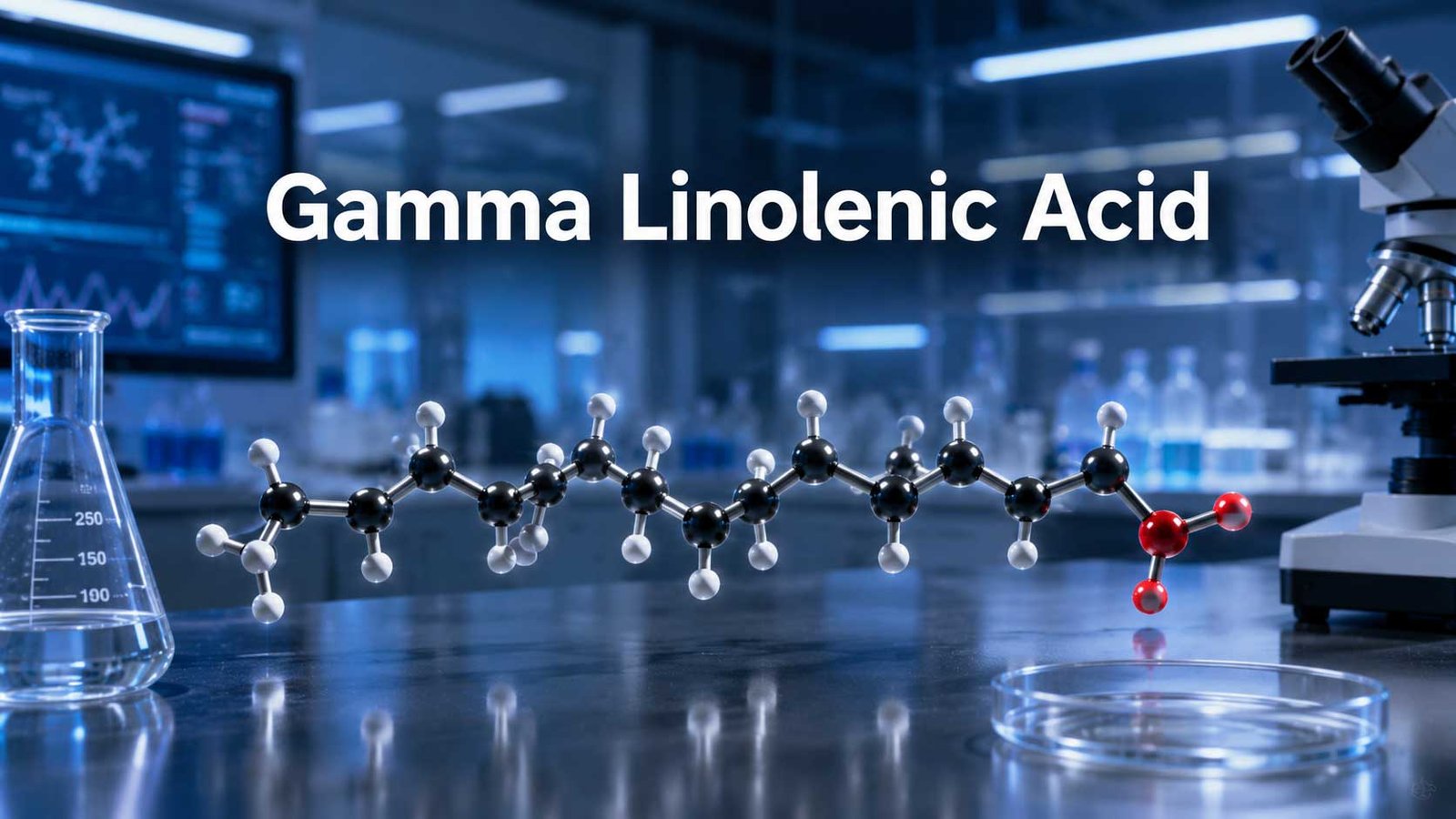
The Omega-6 That Breaks Its Own Rules
If you’ve spent any time reading about fats, you’ve probably absorbed the shorthand version of the story: omega-3s are the good guys, omega-6s are the troublemakers, and the whole game is about tilting your plate toward the former and away from the latter. It’s a tidy narrative. It’s also incomplete, and Gamma Linolenic Acid is the fatty acid that proves it.
Gamma Linolenic Acid, or GLA, is technically an omega-6 fat. By the crude “omega-6 bad, omega-3 good” logic, it should behave like arachidonic acid and its pro-inflammatory cousins. It doesn’t. GLA takes a different metabolic road once it enters the body, and that detour is why researchers have been fascinated with it for the better part of five decades. I’ve followed this fatty acid through its ups and downs in the literature — the excitement of the 1980s, the letdown of some poorly designed eczema trials in the ’90s and 2000s, and the quieter, more rigorous interest in it today — and I still think it’s one of the more misunderstood nutrients in the fat-and-inflammation conversation.
Table of Contents


Here’s the basic picture. Linoleic acid, the most common omega-6 fat in the Western diet, gets converted by an enzyme called delta-6-desaturase into GLA. From there, GLA is elongated into dihomo-gamma-linolenic acid, or DGLA, which is where a lot of the interesting biology happens. DGLA can be converted into prostaglandin E1 and 15-HETrE, compounds that actually dampen inflammatory signaling rather than fuel it. That’s the twist. Most of the omega-6 pathway ends in arachidonic acid and its inflammatory prostaglandins and leukotrienes. GLA’s pathway, at the DGLA checkpoint, can peel off toward something closer to omega-3 territory in terms of effect GLA is an omega-6 polyunsaturated fatty acid found in human milk and several botanical seed oils, and although animal studies consistently show that GLA-supplemented diets attenuate inflammatory responses, human clinical results have been more mixed.

The trouble is, delta-6-desaturase — the enzyme that kicks off this whole conversion — is not particularly efficient in a lot of people. Age, insulin resistance, alcohol intake, high saturated fat intake, and certain nutrient deficiencies (zinc, magnesium, B6) all slow it down. Which means a decent chunk of the population may be quietly under-converting linoleic acid into GLA without ever knowing it, missing out on the anti-inflammatory branch of the omega-6 pathway almost entirely. This is part of why GLA supplementation — through borage oil, evening primrose oil, or blackcurrant seed oil — became such a popular workaround starting in the 1970s and ’80s. Skip the bottleneck enzyme, get straight to the good stuff.
I want to be upfront about something before we go further: the clinical trial record on GLA is genuinely mixed, and I’m not going to pretend otherwise just to make a tidier story. Rheumatoid arthritis and diabetic neuropathy research has been fairly encouraging. Atopic dermatitis research has been a mess of contradictory findings, with some well-designed trials showing no meaningful benefit at all. Anyone telling you GLA is a guaranteed fix for eczema or joint pain is oversimplifying a body of evidence that’s considerably more nuanced. What I find genuinely interesting about Gamma Linolenic Acid isn’t that it’s a miracle fat — it isn’t — but that it represents a legitimate biochemical curiosity: an omega-6 fatty acid with a documented anti-inflammatory branch point, sitting in a category of fats we’ve been taught to treat as monolithic.
Where does GLA actually show up? Almost nowhere in a typical diet, honestly. Human milk contains a small amount, which may partly explain why breastfed infants show certain fatty acid profile differences compared to formula-fed infants in some studies. Beyond that, GLA is concentrated almost exclusively in a handful of seed oils that most people have never cooked with — borage, evening primrose, blackcurrant, and to a lesser extent hemp seed. Nobody is getting meaningful GLA from a standard grocery cart. If you want it in any appreciable amount, you’re looking at a supplement bottle, not a spice rack.
There’s also a practical reason GLA keeps coming up in skin health conversations specifically. The skin is one of the more metabolically active sites for essential fatty acid processing in the body, and disruptions to fatty acid metabolism — particularly reduced delta-6-desaturase activity — have long been observed in people with atopic dermatitis and other inflammatory skin conditions. That correlation is exactly why researchers went looking at GLA-rich oils as a potential intervention in the first place, decades before “skin barrier function” became a phrase you’d see on a skincare bottle.
I’ll walk you through what the actual evidence says GLA can and can’t do, where you’d realistically source it, how much people typically use, what a deficiency might look like, and — just as importantly — where the real risks are, because borage oil in particular is not the harmless health-food-store staple a lot of people assume it to be. This isn’t going to be a cheerleading piece. It’s going to be the article I wish existed when I first went down this rabbit hole years ago: honest about what’s solid, honest about what’s shaky, and specific about the parts that actually matter for someone deciding whether to try it.
One last thing worth sitting with before we get into the details: fatty acid biochemistry rewards patience, not urgency. GLA doesn’t work like an NSAID, kicking in within the hour. Its effects, where they exist, build over weeks as DGLA accumulates in cell membranes and starts shifting the eicosanoid balance. That timeline matters for expectations, and I’ll come back to it more than once.
Key Health Benefits
Let’s get into what Gamma Linolenic Acid is actually documented to do, because the claims floating around online range from solidly supported to wishful thinking, and it’s worth separating the two.
Modulating the Inflammatory Cascade
The core mechanism, as I touched on above, runs through DGLA. Once GLA is elongated to DGLA, it competes with arachidonic acid for the same enzymes (cyclooxygenase and lipoxygenase) that build inflammatory mediators. When DGLA wins that competition, the result leans toward prostaglandin E1 and 15-HETrE rather than the more inflammatory PGE2 and leukotriene B4 that arachidonic acid tends to produce. A review published in the European Journal of Pharmacology laid this mechanism out clearly, noting that animal and cell-based research consistently shows GLA-enriched diets shifting inflammatory mediator production in a favorable direction, even though translating that into consistent clinical outcomes in humans has proven harder Gamma-linolenic acid is found in human milk and several botanical seed oils and is typically consumed as part of a dietary supplement, and while numerous in vitro and in vivo animal models illustrate that GLA-supplemented diets attenuate various inflammatory responses, the clinical literature has been less conclusive.
This is a good place to pause and be honest about something: mechanism and outcome are not the same thing. GLA’s biochemistry is elegant and well-mapped. Its clinical performance in specific diseases is a different, messier question, and it varies a lot by condition.
Joint and Autoimmune Support
This is where GLA’s track record looks strongest. Multiple randomized, placebo-controlled trials in rheumatoid arthritis have tested GLA doses generally in the range of 1.4 to 2.8 grams per day, sourced from borage or blackcurrant seed oil, and found meaningful improvements in joint tenderness and swelling scores clinical trials using dosages between 540 mg and 2.8 g of GLA from blackcurrant seed oil or borage seed oil showed benefit in improving joint tenderness scores, joint swelling scores, and pain. One trial combining GLA with EPA from fish oil reportedly produced even better results than either fat alone, which fits with the idea that GLA and omega-3s can work through complementary anti-inflammatory pathways rather than redundant ones.
The proposed mechanism in rheumatoid arthritis specifically involves DGLA possibly acting on T cells and reducing the self-perpetuating cycle of interleukin-1 beta that drives synovial inflammation. It’s not a cure, and it’s not a replacement for disease-modifying drugs, but as an adjunct in mild-to-moderate joint inflammation, the human trial data is more consistent here than almost anywhere else GLA has been studied.
Diabetic Neuropathy
Here’s a genuinely under-discussed piece of the GLA story. A landmark multicenter trial published in Diabetes Care enrolled 111 patients with mild diabetic neuropathy across seven centers and tested GLA at 480 mg per day for one year. The results favored GLA over placebo on thirteen of sixteen measured parameters, including nerve conduction velocity and sensory thresholds, with the benefit more pronounced in patients whose blood sugar was reasonably well controlled. A smaller, earlier double-blind trial using 360 mg per day over six months found similar improvements in nerve conduction and thermal threshold testing. More recent head-to-head research has compared GLA against alpha-lipoic acid, a more commonly used nerve-support nutrient, and found the two performed comparably in reducing pain scores over twelve weeks in people with type 2 diabetes. This doesn’t mean GLA replaces standard diabetic care — it doesn’t — but it’s one of the more replicated, dose-consistent findings in the entire GLA literature, and I think it deserves more attention than it usually gets.
Skin Barrier Function — With a Big Caveat
Skin is where GLA gets marketed most aggressively, and it’s also where the evidence is most inconsistent. The theory is sound: atopic dermatitis has repeatedly been associated with reduced delta-6-desaturase activity, meaning people with eczema may convert less linoleic acid into GLA than people without it, potentially leaving their skin short on the fatty acids needed for a healthy barrier and normal inflammatory signaling.
But theory and trial outcomes have diverged sharply. Some open-label and smaller studies found real correlations — one study of 21 atopic dermatitis patients taking 4 to 6 grams of evening primrose oil daily found a significant rise in plasma GLA and DGLA that tracked with improved SCORAD severity scores over twelve weeks. A separate randomized trial in Korean patients with mild atopic dermatitis likewise found evening primrose oil supplementation beneficial. On the other hand, some of the largest and most rigorously controlled trials found essentially nothing. A well-known randomized, double-blind, placebo-controlled trial of borage oil in 151 adults and children with atopic eczema found no meaningful difference from placebo after twelve weeks, concluding plainly that GLA was not beneficial for the condition. An older crossover trial of 123 patients on evening primrose oil found no significant effect on erythema, scaling, or overall severity at all. A comprehensive systematic review pooling this research for the Cochrane Skin Group similarly found the overall evidence unconvincing for meaningful symptom relief in eczema.
My honest read, after going through this literature more than once: GLA is not a reliable eczema treatment based on the aggregate evidence, whatever individual small studies might suggest. If someone with atopic dermatitis wants to try it, that’s a reasonable personal experiment given a relatively mild risk profile at food-level doses, but it shouldn’t be framed as an established therapy, and it’s not something I’d want to see replacing dermatologist-guided care.
Cardiometabolic Effects
Less talked about, but reasonably well documented, is GLA’s effect on blood lipids. A study using 3 grams per day of GLA-containing oil in hyperlipidemic patients over four months found triglycerides dropped by roughly 48 percent and HDL cholesterol rose by about 22 percent, alongside reduced platelet aggregation and thromboxane production GLA supplementation decreased plasma triglyceride levels by 48% and increased HDL-cholesterol concentration by 22%, while platelet aggregation and thromboxane B2 decreased significantly and bleeding time increased by 40%. That bleeding time increase is worth remembering — it comes back up in the risk section, because a fatty acid that meaningfully affects platelet function isn’t something to combine casually with blood thinners.
There’s also emerging interest in GLA and skin conditions tied to inflammation and lipid metabolism specifically, such as rosacea, where a recent randomized trial found that GLA supplementation improved clinical outcomes and reduced lipid levels in affected patients, though this remains an early and narrow body of evidence rather than an established use.
Dietary Sources
If you’ve been nodding along thinking you’ll just eat your way to more GLA, I have to stop you here. Realistically, you won’t — not through ordinary food, anyway.
The Seed Oil Concentration Problem
GLA is not distributed evenly across the plant kingdom. It’s concentrated almost exclusively in the seeds of a small number of plants, and even within those plants, it typically requires cold-pressing the seed oil to get any meaningful amount in a usable form.
Borage oil, pressed from the seeds of Borago officinalis (the plant sometimes called starflower), is the single richest commercial source, typically containing somewhere between 20 and 26 percent GLA by weight borage seed oil has one of the highest amounts of GLA of any seed oil, with GLA typically composing about 24 percent of the oil. Blackcurrant seed oil comes in a close second, generally in the 15 to 20 percent range. Evening primrose oil, despite being the most historically famous and widely marketed GLA source, is actually the weakest of the three major options, generally landing around 7 to 10 percent GLA content. This surprises a lot of people — evening primrose oil has better brand recognition than borage oil, but gram for gram, it delivers noticeably less of the fatty acid it’s known for.
Hemp seed oil contains a smaller but still notable amount of GLA, generally in the low single-digit percentage range, and has the advantage of being a food-grade oil people actually cook with rather than a supplement-only product. Small amounts of GLA also show up in spirulina, certain fungal oils, and, as mentioned earlier, human breast milk.
What This Means in Practice
Because GLA is virtually absent from the standard Western diet — you won’t find it in olive oil, sunflower oil, meat, dairy, grains, or most vegetables — anyone seeking a therapeutic amount is looking at a supplement, full stop. This is different from something like omega-3s, where you have real dietary options (fatty fish, walnuts, flaxseed) alongside supplements. With GLA, the food-based route and the supplement route are basically the same route, just packaged differently: capsule, liquid oil, or occasionally added to a functional food product.
A few practical notes if you’re comparing products:
- Borage oil delivers the most GLA per gram of oil, which usually means fewer capsules needed to hit a given dose.
- Evening primrose oil has the longest safety track record in clinical research, particularly around pregnancy-adjacent use, though even that evidence is inconsistent.
- Blackcurrant seed oil often comes bundled with omega-3 fatty acids naturally present in the same seed, which some people find appealing for a “two birds” supplement.
- Hemp seed oil won’t get you to therapeutic GLA doses through food use alone, but it’s a reasonable low-dose contributor if you’re already using it in cooking or salad dressings.
Relying on Your Own Conversion Pathway
It’s worth remembering there’s a second “source” of GLA that doesn’t come from a bottle at all: your own delta-6-desaturase enzyme converting dietary linoleic acid. Linoleic acid itself is abundant — it’s the dominant fat in sunflower, safflower, corn, and soybean oil, and most people get plenty of it. The bottleneck isn’t linoleic acid intake; it’s the conversion step. Supporting that pathway with adequate zinc, magnesium, and vitamin B6, along with moderating alcohol intake (which is known to blunt delta-6-desaturase activity), may do more for your internal GLA production than people give it credit for. It’s a slower, less dramatic lever than popping a borage oil capsule, but it’s the one your body was already built to use.
Dosage & Deficiency
Dosing GLA is less standardized than you’d expect for a fatty acid that’s been studied since the 1980s, partly because trials have tested wildly different amounts depending on the condition and the source oil used.
Typical Ranges Used in Research
For general anti-inflammatory or joint-related use, clinical trials have most often landed somewhere between 1 and 3 grams of GLA per day. The rheumatoid arthritis trials that showed benefit generally used doses in the 1.4 to 2.8 gram range sustained over several months, not days or weeks. For diabetic neuropathy, the doses that produced measurable nerve function improvements were considerably lower — 360 to 480 mg per day — sustained over six months to a year, reinforcing that GLA is a slow-acting nutrient rather than something to judge after a week or two.
For general wellness or lower-intensity use, many commercial evening primrose or borage oil supplements are formulated to deliver somewhere between 240 and 500 mg of GLA per serving, which is a reasonable starting point for someone experimenting cautiously rather than chasing a specific clinical outcome documented in a trial for a diagnosed condition.
A practical note: because evening primrose oil is only about 7 to 10 percent GLA by weight, you need roughly two to three times as much total oil to match the GLA dose you’d get from borage oil. Read supplement labels for the actual milligrams of GLA per serving, not just the total oil content — this is a common point of confusion, and it’s easy to underdose without realizing it if you’re only looking at the total oil amount on the front of the bottle.
What Deficiency Looks Like
True GLA deficiency isn’t a formally recognized clinical diagnosis the way, say, vitamin B12 deficiency is, largely because your body can manufacture GLA internally from linoleic acid rather than requiring it directly from food. That said, functional insufficiency — where delta-6-desaturase activity is impaired enough that GLA and DGLA levels run low despite adequate linoleic acid intake — has been associated in the research literature with several patterns:
- Dry, rough, or easily irritated skin, consistent with impaired barrier lipid composition
- A tendency toward disproportionate inflammatory skin flares
- Reduced circulating GLA and DGLA on fatty acid panel testing in people with atopic dermatitis compared to unaffected individuals
Certain groups are more likely to have impaired conversion: older adults (delta-6-desaturase activity declines with age), people with poorly controlled diabetes, heavy alcohol users, and anyone with chronically low zinc, magnesium, or B6 status. If you fall into one of those categories and you’re curious whether low GLA conversion might be playing a role in stubborn skin issues, that’s a more reasonable hypothesis to explore than assuming everyone with dry skin has a GLA problem.
Building In Some Patience
I mentioned this earlier and I want to underline it here specifically: GLA needs weeks, not days, to show up in relevant tissue. It has to be absorbed, converted to DGLA, incorporated into cell membranes, and then compete with arachidonic acid in eicosanoid synthesis. Most trials that showed benefit ran for eight to twelve weeks at minimum, and the diabetic neuropathy trials that showed the most convincing results ran for six months to a year. If you try a GLA supplement and judge it after ten days, you’re not really testing the thing the research actually tested.
Toxicity & Risks
This is the section I think gets shortchanged in most GLA content online, and it shouldn’t be, because borage oil in particular carries real risks that go beyond the usual “consult your doctor” boilerplate.
The Pyrrolizidine Alkaloid Problem
Borage plants naturally contain compounds called unsaturated pyrrolizidine alkaloids, which are hepatotoxic — meaning they can damage the liver, with risk accumulating over prolonged use and higher cumulative doses borage oil contains pyrrolizidine alkaloids that are hepatotoxic, and the risk of hepatic damage increases with length of exposure and cumulative dose consumed, so patients should use borage oil certified free of unsaturated pyrrolizidine alkaloids. This is not a fringe concern; it’s specific enough that reputable clinical references flag it directly. If you’re going to use borage oil, buying a product explicitly labeled “PA-free” or “pyrrolizidine alkaloid-free” isn’t optional caution, it’s the baseline for using the product responsibly at all. Evening primrose oil and blackcurrant seed oil don’t carry this same alkaloid concern, which is one reason some clinicians consider them the safer default even though they deliver less GLA per gram.
Bleeding Risk
Remember the platelet aggregation and bleeding time data from the health benefits section? The same mechanism that makes GLA interesting for cardiovascular markers is exactly why it needs to be treated with respect around anticoagulant and antiplatelet medications side effects of the oil include lowering the seizure threshold and increasing the risk of bleeding in patients on warfarin or antiplatelet drugs. Anyone on warfarin, aspirin therapy, clopidogrel, or similar medications should not start a GLA supplement without medical guidance, and most sources recommend stopping it at least two weeks before any scheduled surgery given the increased bleeding risk.
Seizure Threshold — A More Complicated Story Than It First Appears
For years, evening primrose oil in particular carried a seizure warning, largely built on a handful of older case reports involving schizophrenic patients who developed seizures while taking it. More recent analysis has actually pushed back on this concern somewhat — a review found that an earlier concern about evening primrose oil causing epilepsy or seizures has been shown to be largely incorrect, with some research suggesting its components may even have anticonvulsant activity. That said, this isn’t a settled question. A documented case report described status epilepticus following borage oil ingestion specifically, and the honest conclusion from the research is that the data on GLA and seizure risk is genuinely mixed rather than clearly resolved in either direction. Given that ambiguity, anyone with a personal or family history of epilepsy, or anyone taking anticonvulsant medication, should treat this as an open question and check with a physician before using borage oil or evening primrose oil, rather than assuming either the old warning or the newer reassurance is the final word.
Pregnancy and Breastfeeding
This one deserves particular emphasis because GLA-containing oils get marketed toward pregnancy-adjacent uses (like labor induction), which makes the risk profile especially relevant. Borage oil specifically is generally considered unsafe in pregnancy — borage is contraindicated in pregnancy as it has been shown to be teratogenic and labor-inducing as an agonist of prostaglandin E. Evening primrose oil has a longer history of use around pregnancy for labor-related purposes, but the safety and efficacy evidence there is inconsistent enough that it shouldn’t be treated as reliably safe either, and it should only be used in pregnancy under direct medical supervision, if at all.
More Common, Milder Side Effects
Away from the more serious risks, the everyday side effect profile for GLA-containing oils is fairly mild for most healthy adults: gastrointestinal upset, bloating, gas, mild nausea, headache, and occasionally soft stools. These tend to be dose-dependent and often improve by taking the supplement with food or splitting the dose across two meals rather than taking it all at once.
Who Should Be Especially Cautious
Pulling this together, I’d flag GLA supplementation, and borage oil specifically, as something that needs a real conversation with a healthcare provider — not just a passing mention — if you fall into any of these categories:
- Pregnant or breastfeeding
- Taking blood thinners or antiplatelet medication, or scheduled for surgery within two weeks
- Living with epilepsy or taking anticonvulsant medication
- Managing pre-existing liver disease
- Taking any medication where altered bleeding time or prostaglandin activity could matter clinically
None of this means GLA is dangerous for the average healthy adult using a reputable, PA-free product at a reasonable dose. It means the “it’s just a natural oil” framing undersells the actual pharmacology involved, and that framing is exactly what leads people to skip conversations with their doctor that they probably shouldn’t skip.
Where GLA Actually Fits Into the Picture
After all this, where does that leave Gamma Linolenic Acid? Not as a miracle fat, and not as a fad to dismiss either — somewhere more interesting than both extremes. It’s a genuine biochemical outlier: an omega-6 fatty acid that, once it clears the DGLA checkpoint, can lean toward calming inflammatory signaling rather than driving it. That mechanism is real, it’s well mapped, and it explains why researchers keep coming back to this molecule decade after decade.
What I’d push back on is the marketing shorthand that turns “anti-inflammatory omega-6” into “cures eczema, fixes joints, solves skin.” The rheumatoid arthritis and diabetic neuropathy data hold up reasonably well across multiple trials and doses. The skin health data is genuinely split, with some of the largest, best-designed trials finding no real benefit for eczema specifically, even while the underlying rationale about delta-6-desaturase activity and skin barrier lipids remains scientifically sound. That gap between plausible mechanism and inconsistent outcome is common in nutrition science, and GLA is a textbook example of why it matters to read the actual trials rather than the supplement bottle’s summary of them.
If you’re considering it, my honest take is this: source matters more than most people realize — a PA-free borage oil or a well-sourced evening primrose or blackcurrant oil are not interchangeable in risk profile, and neither is something to start casually if you’re pregnant, on blood thinners, or managing epilepsy. Dose matters, and it should be based on milligrams of actual GLA, not total oil volume. And patience matters most of all, because this is a fatty acid that reshapes your cell membranes gradually over weeks, not something that announces its effects overnight.
Fats get lumped into simple categories far too often — good or bad, inflammatory or anti-inflammatory — and GLA is a useful reminder that biology rarely respects those clean lines. It’s an omega-6 that, through one specific metabolic detour, ends up doing something most of its omega-6 relatives don’t. That’s worth understanding on its own terms, evidence gaps and all, rather than squeezing it into whichever narrative happens to be convenient.
Article Sources
At AncientHerbsWisdom, our content relies on reputable sources, including peer-reviewed studies, to substantiate the information presented in our articles. Our primary objective is to ensure our content is thoroughly fact-checked, maintaining a commitment to accuracy, reliability, and trustworthiness.
- Keen, H., Payan, J., Allawi, J., Walker, J., Jamal, G. A., Weir, A. I., Henderson, L. M., Bissessar, E. A., Watkins, P. J., Sampson, M., Gale, E. A. M., Scarpello, J., Boddie, H. G., Hardy, K. J., Thomas, P. K., Misra, P., & Halonen, J. P. (1993). Treatment of diabetic neuropathy with gamma-linolenic acid. The gamma-Linolenic Acid Multicenter Trial Group. Diabetes Care, 16(1), 8–15. https://doi.org/10.2337/diacare.16.1.8
- Sergeant, S., Rahbar, E., & Chilton, F. H. (2016). Gamma-linolenic acid, dihommo-gamma linolenic, eicosanoids and inflammatory processes. European Journal of Pharmacology, 785, 77–86. https://doi.org/10.1016/j.ejphar.2016.04.020
- Horrobin, D. F. (1993). Fatty acid metabolism in health and disease: the role of delta-6-desaturase. American Journal of Clinical Nutrition, 57(5 Suppl), 732S–737S. https://doi.org/10.1093/ajcn/57.5.732S
- Takwale, A., Tan, E., Agarwal, S., Barclay, G., Ahmed, I., Hotchkiss, K., Thompson, J. R., Chapman, T., & Berth-Jones, J. (2003). Efficacy and tolerability of borage oil in adults and children with atopic eczema: randomised, double blind, placebo controlled, parallel group trial. BMJ, 327(7428), 1385. https://doi.org/10.1136/bmj.327.7428.1385
- Bamford, J. T., Ray, S., Musekiwa, A., van Gool, C., Humphreys, R., & Ernst, E. (2013). Oral evening primrose oil and borage oil for eczema. Cochrane Database of Systematic Reviews, 2013(4), CD004416. https://doi.org/10.1002/14651858.CD004416.pub2
- Simon, D., Vassina, E., Yousefi, S., Kozlowski, E., Braathen, L. R., & Simon, H. U. (2014). Gamma-linolenic acid levels correlate with clinical efficacy of evening primrose oil in patients with atopic dermatitis. Advances in Therapy, 31(2), 180–188. https://doi.org/10.1007/s12325-014-0093-0
- Chung, B. Y., Park, S. Y., Jung, M. J., Kim, H. O., & Park, C. W. (2018). Effect of evening primrose oil on Korean patients with mild atopic dermatitis: A randomized, double-blinded, placebo-controlled clinical study. Annals of Dermatology, 30(4), 409–416. https://doi.org/10.5021/ad.2018.30.4.409
- Guivernau, M., Meza, N., Barja, P., & Roman, O. (1994). Clinical and experimental study on the long-term effect of dietary gamma-linolenic acid on plasma lipids, platelet aggregation, thromboxane formation, and prostacyclin production. Prostaglandins, Leukotrienes and Essential Fatty Acids, 51(5), 311–316. https://doi.org/10.1016/0952-3278(94)90001-9
- Belch, J. J., & Hill, A. (2000). Evening primrose oil and borage oil in rheumatologic conditions. American Journal of Clinical Nutrition, 71(1 Suppl), 352S–356S. https://doi.org/10.1093/ajcn/71.1.352s
- National Center for Complementary and Integrative Health. (2023). Evening primrose oil: Usefulness and safety. U.S. Department of Health and Human Services. https://www.nccih.nih.gov/health/evening-primrose-oil
- Memorial Sloan Kettering Cancer Center. (2023). Borage. About Herbs, Botanicals & Other Products. https://www.mskcc.org/cancer-care/integrative-medicine/herbs/borage
- Al-Khudairy, O., Rahman, S., & Roberts, K. (2011). Status epilepticus associated with borage oil ingestion. Journal of Medical Toxicology, 7(2), 154–157. https://doi.org/10.1007/s13181-011-0140-4
- Bahrami, A., Gonoodi, K., Khayyatzadeh, S. S., Tayefi, M., Darroudi, S., Bahrami-Taghanaki, H., Eslami, S., Ferns, G. A., Farahmand, S. K., & Ghayour-Mobarhan, M. (2021). Randomized clinical trial of gamma-linolenic acid supplementation for rosacea: effects on clinical outcomes and lipid profile. Journal of Cosmetic Dermatology, 20(11), 3624–3631. https://doi.org/10.1111/jocd.13998

- Phosphatidic Acid: Supporting Muscle Growth and Strength - July 31, 2026
- Ceramides: Supporting Healthy Skin From Within - July 31, 2026
- Synbiotics: Combining Prebiotics and Probiotics Together - July 31, 2026