
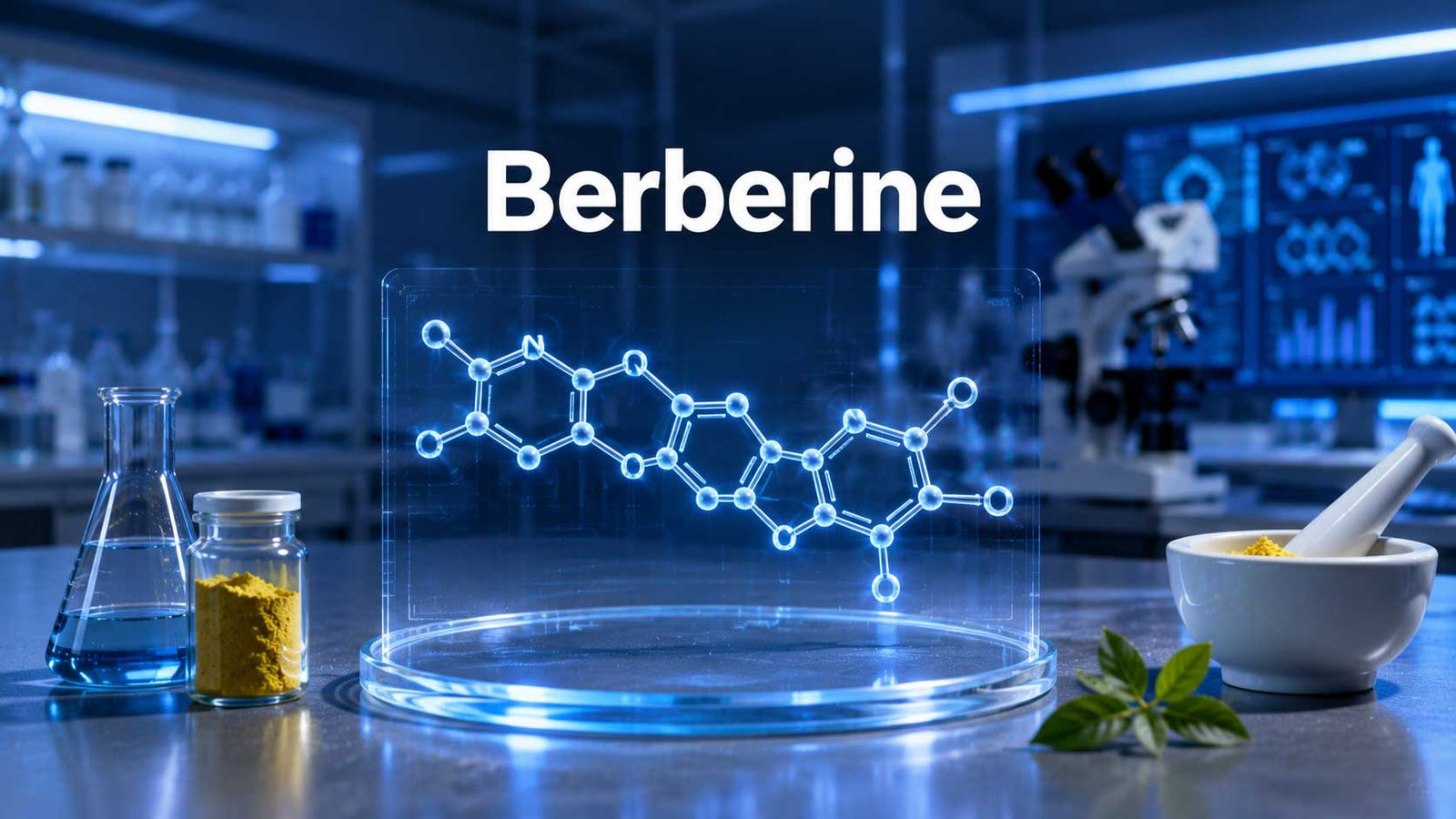
The Yellow Root Everyone’s Suddenly Talking About
There’s a particular kind of skepticism that kicks in whenever a natural compound gets nicknamed after a blockbuster drug. Berberine has been called “nature’s Ozempic” more times in the last two years than in the previous two decades combined, and honestly, that nickname does it a disservice. It oversells one part of the story and completely ignores the far more interesting, far older one.
Berberine is a bright yellow alkaloid, the kind of compound you can practically see doing something the moment you handle it in raw form. Break open a piece of dried Coptis chinensis root, or Berberis root bark, and the color alone tells you this isn’t an inert plant fiber. It’s been used in Traditional Chinese Medicine and Ayurveda for centuries, mostly for digestive complaints and infections, long before anyone had a clue it might do anything for glucose metabolism. That part of the story only really got going in the last twenty-five years, once researchers started noticing that this centuries-old antimicrobial herb had a side effect nobody had catalogued: it lowered blood sugar in people who took it.
Table of Contents


I’ve spent a long time following the clinical literature on this compound, and what strikes me most isn’t that it works, plenty of things “work” in a petri dish, it’s how consistently the human trials keep landing in a similar place. Meta-analysis after meta-analysis, conducted by different research groups, using different populations, keeps finding roughly the same magnitude of effect on fasting glucose and HbA1c. That kind of reproducibility is rare in the supplement world, where most claims evaporate the moment someone runs a properly controlled trial.

So what is berberine, mechanistically? At the cellular level, it activates an enzyme called AMP-activated protein kinase, or AMPK. Think of AMPK as your body’s energy thermostat. When cellular energy runs low, AMPK flips on and tells your cells to start using glucose more efficiently, to stop making new glucose in the liver, and to become more sensitive to insulin’s signal. Metformin, the first-line drug for type 2 diabetes, works through a strikingly similar pathway. That overlap is exactly why researchers got curious about berberine in the first place, and why so many trials have compared the two head-to-head.
But here’s where I want to set expectations properly, because this matters more than any marketing copy will tell you. Berberine has notoriously poor oral bioavailability, often cited at under 5%. Your gut barely lets the stuff through. And yet it still produces measurable effects on blood glucose in trial after trial. Some researchers think this happens partly through action on gut bacteria and intestinal cells before the compound ever needs to reach systemic circulation, rather than purely through what makes it into your bloodstream. It’s a compound that seems to work despite the pharmacokinetics looking unfavorable on paper, which is honestly one of the stranger and more compelling parts of the berberine story.
This article is going to walk through what the research actually supports, where berberine comes from and what “dietary sources” even means for a compound almost nobody eats in meaningful amounts, how much people typically take in clinical settings, and where the real risks sit, because they exist and they’re worth taking seriously, especially for certain groups of people. I’m not interested in either extreme here. Not the breathless “cures everything” framing, and not the reflexive “it’s just a supplement, ignore it” dismissal either. The clinical data on metabolic health is genuinely substantial for a compound this far outside mainstream pharmaceutical development, and it deserves a level-headed look.
One thing worth sitting with before we go further: berberine isn’t a vitamin. There’s no deficiency state for it, no recommended daily intake, no biological requirement your body has for this molecule. That distinguishes it fundamentally from something like vitamin D or magnesium. It’s a bioactive plant compound you either choose to take or don’t, and that changes how we should think about dosage, timing, and who might actually benefit from adding it to a routine focused on metabolic health. Keep that framing in mind as we go, because it’ll come up again when we talk about dosing later on.
The interest in berberine has also grown alongside a broader cultural shift toward blood sugar awareness that isn’t limited to people with diagnosed diabetes. Continuous glucose monitors, once a tool reserved for insulin-dependent patients, are now worn by healthy adults curious about their post-meal spikes. That environment has created fertile ground for a compound like berberine, something people can point to with actual randomized trial data behind it, unlike so much of what circulates in wellness spaces. Whether that popularity is fully earned is what the rest of this article tries to sort out.
Key Health Benefits
Let’s get into what the human trials actually show, because this is where berberine either earns its reputation or doesn’t, and in my reading of the literature, it mostly does, with some important caveats.
Blood Sugar and Insulin Sensitivity
This is berberine’s best-documented territory, and the data is genuinely deep. A systematic review and meta-analysis pooling forty-six randomized controlled trials in people with type 2 diabetes found that berberine, used alone or alongside standard diabetes therapies, produced meaningful reductions in HbA1c, fasting plasma glucose, and post-meal glucose readings, along with improvements in fasting insulin and insulin resistance scores based on analysis of berberine’s effects on glycemic metabolism markers including HbA1c, fasting plasma glucose, and 2-hour postprandial blood glucose, alongside insulin resistance measures like fasting insulin and HOMA-IR. Other independent meta-analyses have landed on similar numbers, with fasting glucose reductions consistently falling in a clinically meaningful range across studies involving well over a thousand participants berberine lowered fasting glucose and HbA1c along with fasting insulin across pooled randomized trials.
What I find more convincing than any single average, though, is how the effect holds up across different comparison groups. Compared with placebo, berberine wins decisively. Compared with lifestyle changes alone, it adds something on top. Compared head-to-head with metformin, several trials show comparable glucose-lowering ability, though berberine tends to come with a gentler gastrointestinal side effect profile in some comparisons, at least in the version and dose most commonly studied. That’s not a small thing if you’ve ever had a friend abandon metformin because of the GI distress.
A few practical notes worth flagging:
- Effect sizes seem to scale somewhat with baseline glucose levels. People starting with higher fasting glucose tend to see larger absolute drops than those closer to normal range.
- Duration matters. Most positive trials run somewhere between four weeks and six months. Longer-term data exists but is thinner.
- Combination approaches, berberine plus lifestyle intervention, or berberine plus a standard diabetes medication, tend to outperform berberine alone.
Cholesterol and Cardiovascular Markers
Berberine doesn’t stop at glucose. It has a fairly consistent lipid-modifying effect too, which is part of why cardiologists studying nutraceuticals keep circling back to it. A meta-analysis of sixteen randomized clinical trials involving over two thousand participants with dyslipidemia found that berberine meaningfully improved lipid profiles with what the authors described as a satisfactory safety record, although they were careful to flag high heterogeneity across the included studies the meta-analysis concluded that berberine improves lipid profiles in dyslipidaemias with satisfactory safety, while cautioning that findings should be interpreted carefully given high clinical heterogeneity and risk of bias in the included trials.
A broader review focused on cardiovascular disease risk factors reached a similar conclusion, reporting short-term berberine use improved both glucose and lipid profiles without raising notable safety concerns, while the authors called for longer trials to establish whether this translates into fewer actual cardiovascular events down the line short-term berberine treatment significantly improved blood glucose and blood lipid profiles without raising safety concerns, and the authors suggested a rigorously designed trial to examine long-term cardiovascular prevention potential. That last point is the honest caveat I’d want anyone to walk away with: we have solid biomarker data, we don’t yet have decades-long hard outcome data the way we do for statins. That’s not a knock against berberine specifically, it’s just where the research currently sits.
Weight and Body Composition
This is the piece that fuels most of the “natural Ozempic” comparisons, and it’s the one where I’d urge the most caution. Some trials do show modest reductions in body mass index and waist circumference alongside the glucose and lipid improvements, particularly in people with insulin resistance or PCOS. But “modest” is doing real work in that sentence. This isn’t a compound that produces the kind of dramatic weight loss associated with GLP-1 receptor agonist medications. If anything, the weight changes observed in trials look more like a secondary consequence of improved insulin sensitivity and metabolic function than a primary fat-loss mechanism in its own right.
PCOS and Hormonal Metabolic Health
Polycystic ovary syndrome sits at an interesting intersection of hormonal and metabolic dysfunction, and berberine has picked up genuine research interest here. A meta-analysis and systematic review of trials in women with PCOS and insulin resistance found improvements in fasting insulin, fasting blood sugar, and HOMA-IR in berberine-treated groups, though the authors were candid that the evidence base remains preliminary and needs larger, better-designed trials before firm clinical recommendations can be made while berberine showed a promising prospect in treating PCOS with insulin resistance, the mechanisms remained unclear and more properly designed randomized, double-blind, placebo-controlled trials were called for to confirm its effect and safety. A separate meta-analysis focused specifically on PCOS-IR patients described improvements across anthropometric, hormonal, metabolic, and inflammatory markers in the berberine group compared with controls adjunctive berberine therapy was associated with improvements in anthropometric, hormonal, metabolic, and inflammatory profiles in women with PCOS, though the authors called for well-designed randomized controlled trials to confirm these findings. Head-to-head, some trials suggest berberine performs comparably to metformin on these markers, which is notable given how central metformin has become in PCOS management protocols.
Gut and Inflammatory Effects
There’s a growing thread of research suggesting berberine’s benefits aren’t purely about direct glucose or lipid handling but also involve changes to gut bacteria composition and reductions in inflammatory markers like CRP, IL-6, and TNF-alpha. Given that low-grade chronic inflammation is now understood to play a real role in insulin resistance, this mechanism might partly explain why berberine’s effects seem broader than a single-pathway drug would typically produce. It’s early-stage territory compared to the glucose data, but it’s consistent enough across studies that I don’t think it’s noise.
Taken together, the benefit picture is genuinely strong for a plant-derived compound, strongest on glucose and lipids, promising but less mature on weight and PCOS, and mechanistically interesting on inflammation. None of that makes it a replacement for prescribed medication in someone with diagnosed diabetes, and no reputable researcher in this space is suggesting that. But as an adjunct, studied alongside standard care rather than instead of it, the evidence base is unusually solid.

Dietary Sources
Here’s something that surprises a lot of people the first time they look into it: there is no everyday food that delivers meaningful berberine. You will not get a functional dose from your grocery store produce aisle. This distinguishes berberine sharply from something like vitamin C or omega-3s, where diet alone can realistically get you into a therapeutic range.
Berberine is concentrated almost exclusively in the roots, rhizomes, stems, and bark of a specific cluster of plants, tissues that plants use to store defensive compounds, not tissues humans typically eat.
The Main Botanical Sources
The plants most commonly used to produce commercial berberine include:
- Barberry (Berberis vulgaris and related species) — root bark can run remarkably high in berberine content, among the richest natural concentrations documented.
- Tree turmeric or Indian barberry (Berberis aristata) — grows through the Himalayan region and is one of the main raw material sources for commercial supplement extraction, with roots containing a meaningful percentage of berberine by weight Berberis aristata grows throughout the Himalayan region, is called tree turmeric or Indian barberry, and serves as a main source for commercial berberine supplements, with roots containing approximately 2 to 4 percent berberine by weight.
- Goldenseal (Hydrastis canadensis) — a North American plant historically used by Indigenous peoples, now flagged as a species of conservation concern in several states due to overharvesting pressure from herbal supplement demand.
- Oregon grape (Mahonia aquifolium) — native to western North America, contains berberine mainly in its roots and bark, at generally lower concentrations than barberry but considered a more sustainable harvest option.
- Chinese goldthread (Coptis chinensis) — used for thousands of years in Traditional Chinese Medicine, with rhizomes and roots reaching notably high berberine concentrations in some varieties.
- Amur cork tree (Phellodendron amurense) — stores berberine in its bark and is another traditional source used across East Asian herbal medicine.
Why You Won’t Find It in Food
None of these plants show up as culinary staples anywhere in the world, for good reason. The parts of the plant richest in berberine, the woody roots and inner bark, aren’t palatable or practical to eat in any quantity that would matter. Barberries themselves, the tart red berries some of these shrubs produce, do get used in cooking in parts of the Middle East and Central Asia, dried and added to rice dishes for their sour bite, but the berries carry far less berberine than the root bark does. You’d need to eat an impractical volume of them to approach anything close to a studied clinical dose.
This is really the key thing to understand about berberine as a “dietary” compound: it isn’t one, practically speaking. It’s a botanical extract. When people talk about getting berberine into their routine, they’re talking about supplements standardized from Berberis aristata, Coptis chinensis, or similar sources, not about adjusting their grocery list. That’s worth being upfront about, because it changes how you think about sourcing quality and dosing accuracy, topics we’ll get into next.
A Note on Sourcing Quality
Because berberine supplements are extracted rather than eaten whole, sourcing and standardization matter enormously. Products should ideally specify both the plant source and the percentage of berberine the extract is standardized to. An unstandardized “root powder” capsule might contain a fraction of the berberine content of a properly extracted and tested product, even at the same milligram weight on the label. This is one of those areas where reading past the front-of-bottle marketing genuinely pays off.
Dosage & Deficiency
Let’s address the “deficiency” half of this heading directly, because it deserves a short, honest answer: there is no berberine deficiency. Your body has no metabolic requirement for this compound, no established biomarker of insufficiency, nothing analogous to scurvy or rickets. Berberine is a bioactive plant alkaloid you either choose to supplement or don’t. That framing matters because it should change how cautiously and intentionally you approach dosing, this isn’t a nutrient your body is starving for, it’s a pharmacologically active compound you’re introducing on purpose.
Typical Doses Used in Clinical Research
Across the trials feeding into the meta-analyses discussed earlier, doses generally cluster in a fairly consistent range: 900 to 1,500 milligrams total per day, usually split into two or three doses taken with meals. The most commonly studied regimen looks something like 500 milligrams taken two or three times daily.
A few things about that dosing pattern are worth understanding rather than just memorizing:
- Splitting the dose matters. Berberine has a relatively short half-life in the body, and its poor oral bioavailability means blood levels don’t stay elevated long after a single dose. Spreading intake across the day, rather than taking it all at once, tends to produce steadier effects in the trials that compared dosing schedules.
- Taking it with food isn’t incidental. Because part of berberine’s effect may involve local action in the gut before systemic absorption, and because it can cause GI upset on an empty stomach, meal-timing is standard practice in clinical protocols, not just a suggestion tacked onto supplement labels.
- Higher doesn’t reliably mean better. Doses meaningfully above the 1,500 milligram daily range haven’t shown proportionally larger benefits in the trial data, they’ve mostly shown a sharp increase in gastrointestinal complaints, which we’ll cover more in the next section.
How Long Before You’d Notice Anything
This is where I’d manage expectations carefully. Berberine is not fast-acting in the way some people expect from watching supplement marketing. Most of the positive glycemic trial data comes from interventions running four weeks at the shorter end and up to six months at the longer end. Meaningful, measurable changes in fasting glucose or HbA1c generally take weeks of consistent use, not days. If someone takes it for a week and feels nothing dramatic, that’s not necessarily a sign it isn’t working, it’s more likely a sign that this compound behaves like most things affecting glucose metabolism: gradually, and best evaluated with actual bloodwork rather than subjective feeling.
Formulation Differences Worth Knowing About
Standard berberine hydrochloride is what most of the clinical trial data is based on, and it’s the most widely available and most affordable form. Because of the bioavailability issue mentioned earlier, some newer products use berberine bound to phospholipids, sometimes marketed as a “phytosome” form, aiming to improve absorption and potentially allow for lower effective doses. The clinical trial base for these newer delivery forms is considerably thinner than for standard berberine hydrochloride, so I’d treat claims of dramatically superior absorption with some healthy skepticism until more head-to-head human data accumulates.
Practical Takeaways on Dosing
If someone is working with a healthcare provider on a berberine trial for metabolic support, the pattern most consistent with the research literature looks like: 500 milligrams, two to three times daily, taken with meals, evaluated over a minimum of eight to twelve weeks with actual lab markers, not guesswork. Starting at the lower end of that range and assessing GI tolerance before increasing frequency is a reasonable, conservative approach that mirrors how many of the better-designed trials structured their protocols.
Toxicity & Risks
This is the section I’d ask you to actually read carefully, because berberine’s popularity as a “natural” supplement sometimes creates a false sense that it’s automatically gentle. It isn’t. It’s a pharmacologically active compound with a real interaction profile, and treating it as harmless because it comes from a plant root rather than a pharmaceutical lab is a mistake.
Gastrointestinal Effects
The most common and best-documented adverse effects are digestive: cramping, diarrhea, constipation, bloating, particularly in the first few weeks of use and particularly at higher doses. This tracks with berberine’s poor absorption, a meaningful amount stays in the gut where it can directly irritate intestinal tissue before whatever gets absorbed does its systemic work. Starting at a lower dose and increasing gradually is the most consistently recommended way to reduce this, and it’s a pattern echoed across the safety data from the trials themselves.
Drug Interactions Are the Real Concern
If there’s one section of this article I’d want someone to genuinely internalize, it’s this one. Berberine inhibits several cytochrome P450 liver enzymes, most notably CYP3A4, along with CYP2D6 and CYP2C9, and these enzymes are responsible for metabolizing a very large share of commonly prescribed medications. A human pharmacokinetic study confirmed that repeated berberine administration measurably reduced the activity of these enzymes in study participants. Practically, that means berberine can cause certain drugs to build up to higher-than-intended levels in the bloodstream, because the liver isn’t clearing them at the normal rate.
Medications and drug classes with documented or theoretically significant interaction risk include:
- Diabetes medications, including insulin and sulfonylureas, where combining with berberine raises real hypoglycemia risk given berberine’s own glucose-lowering effect.
- Statins, where CYP3A4 inhibition can raise statin blood levels and, in theory, increase risk of muscle-related side effects.
- Immunosuppressants like cyclosporine, where narrow therapeutic windows make even modest level increases clinically significant.
- Blood thinners, including warfarin and some newer anticoagulants, where changes in drug metabolism can shift bleeding risk in either direction.
- Calcium channel blockers, where increased drug levels have been associated with effects on heart rate.
None of this means these combinations are automatically dangerous in every person, but it does mean anyone taking prescription medication, especially anything metabolized by the liver, genuinely needs to loop in a pharmacist or physician before adding berberine, not as a formality, but because the enzyme inhibition here is real and well-documented pharmacologically.
Pregnancy, Breastfeeding, and Infants: A Hard Line
This is the single most important safety point in the entire article, and I want to state it plainly rather than hedge around it. Berberine should not be used during pregnancy, while breastfeeding, or given to infants, full stop. The concern centers on bilirubin, a substance produced when red blood cells break down, which newborns already process less efficiently than adults do. Berberine can interfere with how bilirubin binds to proteins in the blood, potentially increasing free bilirubin levels and raising the risk of a serious, life-threatening condition called kernicterus, a form of brain injury from bilirubin crossing into the brain. The National Center for Complementary and Integrative Health has stated this concern directly berberine can cause or worsen jaundice in newborn infants and could lead to a life-threatening problem called kernicterus, and it might also interact with medicines in negative ways. This isn’t a theoretical, better-safe-than-sorry caution, it’s a documented mechanism with real historical cases behind it, and it’s why this compound gets treated with such uniform seriousness by every major health authority that has weighed in on it.
Liver Considerations
The broader safety data on liver injury is reassuring, current evidence generally classifies berberine as an unlikely cause of clinically significant liver damage in adults at standard doses, and some research has even pointed toward mild liver-protective effects in certain contexts. That said, given berberine’s role in inhibiting liver enzymes generally, anyone with pre-existing liver conditions should still approach it cautiously and under medical guidance rather than assuming the reassuring population-level data applies uniformly to an already compromised liver.
Who Should Be Most Cautious
Beyond pregnancy and breastfeeding, extra caution is warranted for: anyone on multiple prescription medications, particularly those with narrow therapeutic windows; people with existing liver disease; those with a history of significant GI conditions, given the digestive side effect profile; and anyone already using other blood-sugar-lowering interventions, where the additive effect could push glucose lower than intended. Children are generally excluded from the research base entirely and shouldn’t be given berberine outside of a pediatric specialist’s direct guidance.
The honest summary here: for a healthy adult not pregnant, not breastfeeding, and not on interacting medications, berberine’s risk profile in the clinical trial literature looks reasonably favorable, mostly transient GI discomfort. But the drug interaction landscape and the pregnancy contraindication are not fine print, they’re central to using this compound responsibly, and no article on berberine is complete, or honest, without giving them equal weight to the benefits.
Where Berberine Actually Fits
After spending this much time in the literature, my honest take is that berberine occupies a genuinely unusual space. It isn’t snake oil, the glucose and lipid data across dozens of independent trials is too consistent for that dismissal to hold up. But it also isn’t the miracle metabolic fix that social media sometimes turns it into, and it certainly isn’t a substitute for prescribed diabetes or cholesterol medication in someone who actually needs one.
Where it seems to earn its keep is as a well-studied adjunct, something layered onto a foundation of diet, movement, and sleep, or used alongside standard medical care rather than instead of it, for people specifically dealing with insulin resistance, elevated lipids, or PCOS-related metabolic dysfunction. The mechanism through AMPK activation is legitimate and shared with a first-line diabetes drug, the trial base is unusually large for a botanical compound, and the effect sizes, while not dramatic, are real and reproducible across independent research groups.
What I’d push back on is the framing that turns berberine into a shortcut. It works gradually, over weeks, requires consistent dosing several times a day, comes from plants nobody realistically eats in their diet, and carries interaction risks serious enough to require an actual conversation with a healthcare provider if you’re on any regular medication. None of that fits neatly into a viral supplement pitch, but it’s a far more useful way to think about where this compound genuinely belongs in someone’s routine.
If you take one practical thing away from all of this, let it be this: treat berberine with the same seriousness you’d treat a new prescription, because pharmacologically, that’s closer to what it actually is. Get baseline labs if you’re using it for a specific metabolic goal, track those labs over a real time frame rather than judging by how you feel after a week, and have an honest conversation with whoever manages your medications before you start, especially if that list includes anything for blood sugar, cholesterol, blood clotting, or immune suppression. That’s not overcaution, it’s just matching the respect you’d give any compound this metabolically active.
Article Sources
At AncientHerbsWisdom, our content relies on reputable sources, including peer-reviewed studies, to substantiate the information presented in our articles. Our primary objective is to ensure our content is thoroughly fact-checked, maintaining a commitment to accuracy, reliability, and trustworthiness.
- Cicero, A. F. G., Baggioni, A. (2016). Berberine and its role in chronic disease. Advances in Experimental Medicine and Biology, 928, 27-45. https://doi.org/10.1007/978-3-319-41334-1_2
- Fogacci, F., Grassi, D., Rizzo, M., & Cicero, A. F. G. (2019). Metabolic effect of berberine-silymarin association: A meta-analysis of randomized, double-blind, placebo-controlled clinical trials. Phytotherapy Research, 33(4), 862-870. https://doi.org/10.1002/ptr.6282
- Guo, J., Chen, H., Zhang, X., Lou, W., Zhang, P., Qiu, Y., Zhang, C., Wang, Y., & Liu, W. J. (2021). The effect of berberine on metabolic profiles in type 2 diabetic patients: A systematic review and meta-analysis of randomized controlled trials. Oxidative Medicine and Cellular Longevity, 2021, 2074610. https://doi.org/10.1155/2021/2074610
- Guo, Y., Chen, Y., Tan, Z. R., Klaassen, C. D., & Zhou, H. H. (2012). Repeated administration of berberine inhibits cytochromes P450 in humans. European Journal of Clinical Pharmacology, 68(2), 213-217. https://doi.org/10.1007/s00228-011-1108-2
- Ju, J., Li, J., Lin, Q., & Xu, H. (2018). Efficacy and safety of berberine for dyslipidaemias: A systematic review and meta-analysis of randomized clinical trials. Phytomedicine, 50, 25-34. https://doi.org/10.1016/j.phymed.2018.09.212
- Lan, J., Zhao, Y., Dong, F., Yan, Z., Zheng, W., Fan, J., & Sun, G. (2015). Meta-analysis of the effect and safety of berberine in the treatment of type 2 diabetes mellitus, hyperlipemia and hypertension. Journal of Ethnopharmacology, 161, 69-81. https://doi.org/10.1016/j.jep.2014.09.049
- Li, M. F., Zhou, X. M., & Li, X. L. (2018). The effect of berberine on polycystic ovary syndrome patients with insulin resistance (PCOS-IR): A meta-analysis and systematic review. Evidence-Based Complementary and Alternative Medicine, 2018, 2532935. https://doi.org/10.1155/2018/2532935
- Li, Y., Ma, H., Zhang, Y., Kuang, H., Ng, E. H. Y., Hou, L., & Wu, X. (2013). Effect of berberine on insulin resistance in women with polycystic ovary syndrome: Study protocol for a randomized multicenter controlled trial. Trials, 14, 226. https://doi.org/10.1186/1745-6215-14-226
- Mednexus, Cardiology Discovery. (2023). Efficacy and safety profile of berberine treatment in improving risk factors for cardiovascular disease: A systematic review and meta-analysis of randomized, double-blind trials. Cardiology Discovery. https://doi.org/10.1097/CD9.0000000000000087
- National Center for Complementary and Integrative Health. (2023). In the news: Berberine. U.S. Department of Health and Human Services. https://www.nccih.nih.gov/health/in-the-news-berberine
- Suadoni, M. T., & Atherton, I. (2021). Berberine for the treatment of hypertension: A systematic review. Complementary Therapies in Clinical Practice, 42, 101287. https://doi.org/10.1016/j.ctcp.2020.101287
- Xie, W., Su, F., Wang, G., Peng, Z., Xu, Y., Zhang, Y., Xu, N., Hou, K., Hu, Z., Chen, Y., & Chen, X. (2022). Glucose-lowering effect of berberine on type 2 diabetes: A systematic review and meta-analysis. Frontiers in Pharmacology, 13, 1015045. https://doi.org/10.3389/fphar.2022.1015045
- Zhang, L. S., Zhang, J. H., Feng, R., Jin, X. Y., Yang, F. W., Ji, Z. C., & Wang, J. (2019). Efficacy and safety of berberine alone or combined with statins for the treatment of hyperlipidemia: A systematic review and meta-analysis of randomized controlled clinical trials. The American Journal of Chinese Medicine, 47(4), 751-767. https://doi.org/10.1142/S0192415X19500393

- Phosphatidic Acid: Supporting Muscle Growth and Strength - July 31, 2026
- Ceramides: Supporting Healthy Skin From Within - July 31, 2026
- Synbiotics: Combining Prebiotics and Probiotics Together - July 31, 2026