
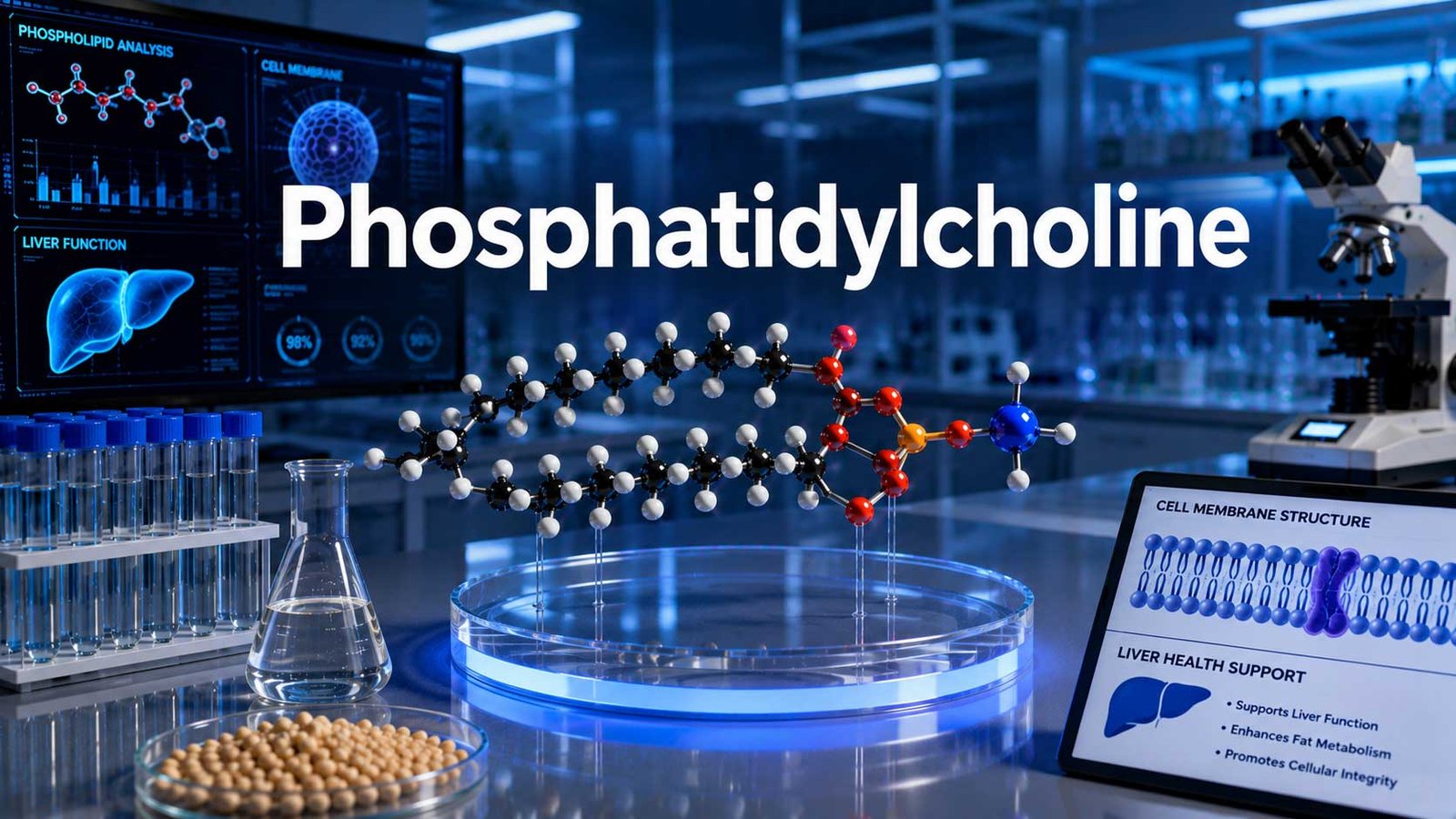
The Fat You’ve Never Heard Of That’s Holding Your Cells Together
I remember the first time someone asked me, over dinner of all places, why egg yolks kept showing up in every “brain food” article they’d read. I told them it probably had something to do with a molecule most people have never heard of, one that happens to be doing more structural work in their body right this second than almost anything else they’ve eaten that day. That molecule is phosphatidylcholine, and once you understand what it actually does, you start seeing it everywhere: in the yolk of your breakfast egg, in the soy lecithin listed on a chocolate bar wrapper, in the fine print of liver support supplements sold at every health store you’ve ever walked into.
Here’s the thing about phosphatidylcholine that surprises people. It isn’t some obscure boutique nutrient dreamed up by a supplement marketer. It’s one of the most abundant phospholipids in your entire body, and it makes up a huge share of the membrane surrounding nearly every cell you have. Your skin cells, your neurons, your liver cells, your red blood cells racing through your bloodstream right now, all of them depend on phosphatidylcholine to hold their outer walls together in a form that’s flexible enough to function but sturdy enough to survive. Structurally, it’s a workhorse. Functionally, it’s involved in far more than most people realize, including bile production, fat transport, and the health of your liver specifically.
Table of Contents


I want to be upfront about something before we go further. This article isn’t going to tell you that phosphatidylcholine is a miracle cure, because it isn’t, and anyone who tells you otherwise is probably trying to sell you something. What it is, though, is a genuinely essential building block, one your body can make on its own to a degree but often not in sufficient quantity, which is why diet matters so much here. The precursor to phosphatidylcholine is choline, an essential nutrient the Institute of Medicine’s Food and Nutrition Board recognizes as necessary because your liver simply cannot synthesize enough of it internally to meet your daily needs.
So why does this matter for cell membranes specifically? Think about a cell membrane as less of a wall and more of a living, breathing boundary, one that has to let certain things in, keep other things out, and stay flexible enough to bend, fuse, and reshape itself constantly. Phospholipids like phosphatidylcholine form the basic bilayer structure of that boundary, with hydrophilic heads facing outward toward the watery environment and hydrophobic tails tucked inward, away from water. That amphiphilic structure is what makes membranes possible at all, and phosphatidylcholine happens to be the single most common phospholipid doing this job in mammalian cells, occupying a dominant position in the outer layer of the plasma membrane specifically.
Now here’s where it gets particularly interesting, at least to me. The liver connection isn’t a side note, it’s central to the whole story. Your liver relies on phosphatidylcholine not just as a structural component of its own hepatocyte membranes but as a functional necessity for processing fat and producing bile. When choline intake runs low, the liver’s ability to package and export fat gets compromised, and fat starts accumulating inside liver cells instead of leaving them. That’s not speculation, it’s actually one of the reasons regulatory bodies used liver enzyme markers as the basis for setting adequate intake levels for choline in the first place.
I’ve spent enough time reading through the research on this topic to have opinions, and one of them is that phosphatidylcholine gets unfairly buried under flashier nutrients. Omega-3s get the magazine covers. Vitamin D gets the headlines. Meanwhile phosphatidylcholine quietly does structural and metabolic work that arguably touches more of your physiology, simply because it’s everywhere your cells are. That’s not to diminish other nutrients, just to say this one deserves more attention than it typically gets.
Over the course of this piece, we’re going to work through what the research actually says about phosphatidylcholine’s health benefits, where you can realistically get it from food, how much you actually need, what happens when you don’t get enough, and where the line sits between a helpful intake and one that starts causing problems. I’ll be honest where the evidence is strong and honest where it’s still developing, because that distinction matters. Nutrition science moves in increments, not miracles, and phosphatidylcholine is a good example of a compound with real, demonstrated physiological importance that still deserves a clear-eyed look rather than either dismissal or hype.
One last thing before we dive in. If you’ve ever wondered why your grandmother’s cod liver oil regimen or your aunt’s insistence on eating the whole egg, yolk included, wasn’t just old wives’ tale nonsense, phosphatidylcholine is part of the answer. Traditional diets often provided more of it than modern, processed-food-heavy eating patterns do, and that shift is worth paying attention to as we go through the practical sections ahead.
Key Health Benefits
Structural Integrity at the Cellular Level
Let’s start with the most fundamental role phosphatidylcholine plays, because everything else kind of builds on top of it. Cell membranes aren’t static walls, they’re dynamic structures that need to maintain fluidity, selective permeability, and the ability to host embedded proteins that do the actual work of transporting nutrients and sending signals. Phosphatidylcholine is a strong bilayer-forming lipid, and it’s the most common phospholipid found in mammalian membranes generally, occupying a dominant position particularly in the outer leaflet alongside sphingomyelin. Its molecular shape, roughly cylindrical, lends itself well to forming stable, flat bilayer sheets rather than curved or unstable structures, which is part of why it’s so central to membrane architecture. When researchers study how membrane proteins fold and function, they often find phosphatidylcholine molecules sitting right alongside them, stabilizing the local environment those proteins need to work properly.
Supporting Liver Function and Fat Metabolism
This is where phosphatidylcholine really earns its keep, and where a meaningful body of clinical research exists. The liver depends on phosphatidylcholine to package triglycerides into lipoproteins for export, and when that process runs smoothly, fat doesn’t accumulate abnormally inside liver cells. In patients with non-alcoholic fatty liver disease, a large real-world observational study following nearly 2,900 adults across Russia found that adjunctive treatment with polyenylphosphatidylcholine over 24 weeks was associated with meaningful improvement in ultrasonographic markers of liver steatosis, on top of standard care. A broader body of experimental research has also linked phosphatidylcholine repletion to reduced steatosis by way of its influence on lipid metabolism pathways in liver cells, along with effects on inflammatory signaling within the liver’s resident immune cells. None of this means phosphatidylcholine replaces medical treatment for liver disease, and I want to be clear about that, but the supportive role in liver membrane repair and fat handling is genuinely well documented.
Bile Production and Fat Digestion
Something people don’t think about enough: phosphatidylcholine isn’t just structural, it’s functional in bile itself. Bile needs phospholipids to keep cholesterol solubilized and to help emulsify dietary fat so your digestive enzymes can actually break it down. Without adequate phosphatidylcholine, bile composition shifts, and that has downstream effects on how efficiently you’re digesting and absorbing fats, along with fat-soluble vitamins that ride along with them.
A Precursor Role in Neurotransmission
Choline, phosphatidylcholine’s building block, is the direct precursor to acetylcholine, a neurotransmitter involved in muscle contraction, memory processes, and a handful of other cognitive functions. This is more of a choline-level benefit than a phosphatidylcholine-specific one, but since phosphatidylcholine is the primary reservoir of choline in the body and diet, breaking it down releases choline that can be shuttled toward acetylcholine synthesis when needed. I’d stop short of calling this a smart-drug effect, because the evidence for cognitive enhancement from supplemental phosphatidylcholine in otherwise healthy, non-deficient people is thin. But in the context of adequate overall choline status, this pathway matters.
Cardiometabolic Considerations, With an Important Caveat
Here’s where I have to complicate the picture a little, because a responsible article doesn’t cherry-pick only the flattering data. Dietary choline and phosphatidylcholine can be metabolized by gut bacteria into trimethylamine, which the liver then converts into trimethylamine N-oxide, or TMAO. Elevated circulating TMAO has been associated with increased cardiovascular risk across numerous observational studies and a recent systematic review and meta-analysis of nearly 49,000 participants. This doesn’t mean phosphatidylcholine itself is dangerous in normal dietary amounts, and interestingly, one controlled feeding study found that choline delivered specifically as phosphatidylcholine produced a substantially smaller TMAO spike than choline delivered as a free bitartrate salt, suggesting the food matrix and form matter quite a bit. Still, it’s a nuance worth holding onto rather than glossing over, and we’ll come back to it in the risks section.
Cellular Signaling and Membrane Repair
Beyond its structural presence, phosphatidylcholine and its metabolic byproducts participate in cell signaling cascades, including processes tied to cell division and programmed cell death. Membranes damaged by oxidative stress, toxins, or inflammation can, to some degree, be repaired using available phosphatidylcholine, which is part of why researchers have looked at it as a supportive agent in conditions involving liver cell injury from alcohol, medications, or other toxic exposures.

Dietary Sources
The Egg Question
If there’s one food that comes up constantly in any conversation about phosphatidylcholine, it’s eggs, specifically the yolk. Egg yolks are one of the richest common dietary sources of choline and its phosphatidylcholine form, and this is actually one of the more compelling arguments against yolk-avoidant eating patterns that became popular decades ago over cholesterol concerns that have since been substantially walked back by more recent research. A couple of whole eggs at breakfast contributes a meaningful chunk toward your daily choline target, largely in phosphatidylcholine form.
Soy and Soy Lecithin
Soybeans, and particularly the lecithin extracted from them, are another major dietary and commercial source. Soy lecithin, which you’ve probably seen listed as an ingredient in chocolate, baked goods, and processed foods where it functions as an emulsifier, is rich in phosphatidylcholine. This is actually one of the more overlooked sources of dietary phosphatidylcholine intake for people eating a typical processed-food-inclusive diet, even if they’ve never taken a supplement in their life.
Animal Proteins Beyond Eggs
- Beef liver and other organ meats rank among the most concentrated sources of choline generally
- Chicken breast and other poultry provide moderate but consistent amounts
- Fish, particularly salmon and cod, contribute meaningfully as well
- Dairy products like milk and cheese offer smaller but still relevant contributions
Plant-Based Sources
This is where things get a little trickier if you’re eating a vegan or largely plant-based diet. Cruciferous vegetables like broccoli and Brussels sprouts contain choline, as do legumes like chickpeas and kidney beans, along with nuts and seeds such as sunflower seeds. The concentrations, though, tend to run lower than what you’d get from eggs or organ meats, which is one reason researchers have flagged vegetarians, and vegans in particular, as a population at elevated risk of falling short of adequate choline intake.
How Realistic Intake Actually Looks
National survey data paints a pretty sobering picture here. Analysis of NHANES data from the United States found that mean dietary choline intake sat well below the adequate intake level for both men and women, with only a small single-digit percentage of the population actually meeting the recommended amount from food and supplements combined. Pregnant women fared even worse, with less than one in ten meeting the target. This isn’t a niche deficiency risk confined to unusual diets, it’s a pattern that shows up broadly across the general population eating a typical modern diet.
Cooking and Processing Effects
Worth noting: how you prepare food can shift choline content somewhat, since some water-soluble choline forms can leach out during boiling, whereas phosphatidylcholine, being more lipid-bound, tends to be a bit more stable through typical cooking methods. If you’re trying to maximize intake from whole foods, methods like scrambling or poaching eggs rather than hard-boiling and discarding cooking liquid, or roasting rather than boiling vegetables, can help retain a bit more.
Dosage & Deficiency
What “Adequate Intake” Actually Means Here
Choline doesn’t have a formal Recommended Dietary Allowance, mostly because the data available wasn’t robust enough to calculate one with confidence. Instead, the Food and Nutrition Board set an Adequate Intake level, based specifically on the amount needed to prevent liver damage as measured through serum alanine aminotransferase levels. For adults, that figure sits at 550 milligrams per day for men and 425 milligrams per day for women, with increases to around 450 milligrams during pregnancy and 550 during lactation. These figures represent total choline from all dietary forms combined, including the phosphatidylcholine-bound portion, not phosphatidylcholine as an isolated target.
Individual Variation Is Real
Something that doesn’t get discussed enough: choline requirements aren’t uniform across everyone. Genetic variation in the enzymes involved in choline metabolism can meaningfully raise an individual’s requirement above the general population average. Estrogen also plays a role, since higher estrogen levels stimulate the body’s own internal production of choline via the liver, which is part of why premenopausal women may have somewhat lower baseline dietary needs than postmenopausal women or men, all else equal.
Recognizing Deficiency
True choline deficiency isn’t common in people eating a varied diet, but it does show up in specific circumstances, most notably in patients receiving long-term parenteral, or intravenous, nutrition without adequate choline supplementation. In controlled research settings, choline-deficient diets have been shown to produce measurable, reversible liver abnormalities, including elevated liver enzymes and fatty liver changes, which reverse once choline is reintroduced. Outside of clinical settings, milder insufficiency is thought to be far more common than outright deficiency, given how far short of the adequate intake level most of the general population falls based on national survey data.
Practical Signs Worth Paying Attention To
- Fatigue that doesn’t have an obvious explanation
- Muscle aches or unexplained muscle damage markers
- Liver enzyme elevations found incidentally on routine bloodwork
- In more severe, prolonged cases, signs consistent with fatty liver changes
I’ll add a caveat here that I think matters: none of these signs are specific to choline or phosphatidylcholine status on their own, and jumping to conclusions about a nutrient deficiency based on vague symptoms alone isn’t a great idea. If something feels persistently off, that’s a conversation for a healthcare provider who can actually look at bloodwork and history, not a supplement aisle decision made on a hunch.
Supplemental Forms and Typical Ranges
When phosphatidylcholine or its more refined cousin, polyenylphosphatidylcholine, shows up in supplement or clinical research contexts, the amounts studied for liver-related outcomes have generally landed in a range of roughly 900 to 1,800 milligrams of the phospholipid itself per day, often divided across multiple doses. That’s a different number than the choline adequate intake figure, since it reflects the phosphatidylcholine molecule as a whole rather than its choline content alone, and it’s worth not conflating the two when reading labels or research.
Toxicity & Risks
The Upper Limit
There is a defined Tolerable Upper Intake Level for choline, set at 3.5 grams per day for adults, established specifically because of documented adverse effects at higher intakes. This ceiling exists for good reason, and it’s not a theoretical concern.
What Happens at Excessive Intake
The most consistently documented adverse effect from very high choline intake is hypotension, meaning a drop in blood pressure that can bring on dizziness or fainting in susceptible people. Alongside that, researchers have noted cholinergic side effects including excessive sweating, gastrointestinal upset like diarrhea, and a distinctly unpleasant one: fishy body odor. That last one happens because excess choline gets converted by gut bacteria into trimethylamine, which your body then struggles to fully break down and clear, and it literally comes out through sweat and breath.
The TMAO Question, Revisited
I raised this earlier and want to come back to it properly, because it’s the most scientifically interesting risk conversation around this nutrient right now. A large systematic review and meta-analysis pooling data from roughly 49,000 participants across 30 prospective studies found that elevated trimethylamine N-oxide was associated with increased risk of major adverse cardiovascular events and death. Other cohort research, including findings from the Multi-Ethnic Study of Atherosclerosis, found a similar pattern, with higher plasma TMAO tracking with elevated cardiovascular risk in a dose-dependent way across quintiles. Mechanistically, animal research has also linked elevated TMAO to impaired kidney filtration function and increased fibrosis in kidney tissue over time.
Here’s the nuance I don’t want to lose, though. This isn’t a simple “phosphatidylcholine is bad for your heart” story. The gut bacterial composition someone carries matters enormously in how much TMAO gets produced from the same choline intake, meaning two people eating identical diets can end up with very different TMAO responses. And in a controlled crossover feeding study, choline delivered as phosphatidylcholine produced meaningfully less TMAO response than the same amount of choline delivered as a free bitartrate salt, which suggests that how you get your choline, whole food versus isolated supplement form, might genuinely matter for this particular risk pathway. That’s a distinction that gets lost in a lot of oversimplified online summaries of this research, and I think it deserves more attention than it usually gets.
Populations That Should Be More Cautious
People with existing cardiovascular disease, chronic kidney disease, or a personal or family history of elevated cardiovascular risk markers are probably the group that should think most carefully before adding high-dose choline or phosphatidylcholine supplementation on top of an already adequate dietary intake. This isn’t a blanket warning against dietary sources like eggs or fish, which come packaged with plenty of other nutritional benefits, but rather a note of caution specifically around supplemental megadosing in higher-risk individuals.
Drug and Condition Interactions Worth Knowing
Because phosphatidylcholine and choline intersect with liver metabolism and bile handling, people with certain existing liver or gallbladder conditions should approach supplementation thoughtfully rather than casually. And as always, anyone taking prescription medications, particularly those affecting blood pressure or cardiovascular function, should loop in a healthcare provider before adding a new supplement into the mix, since interactions aren’t always predictable from general population data alone.
The Bottom Line on Safety
For the vast majority of people eating whole food sources like eggs, fish, and legumes, phosphatidylcholine intake sits nowhere near concerning territory, and the structural and liver-supportive benefits it offers are well worth prioritizing through diet. The picture gets more nuanced at high supplemental doses, particularly for people with existing cardiovascular or kidney vulnerabilities, which is exactly the kind of situation where individualized guidance beats generic advice.
Why This Unassuming Molecule Deserves a Permanent Spot on Your Radar
If you take one thing away from everything we’ve covered, let it be this: phosphatidylcholine isn’t a trend, it’s foundational biology. Every cell membrane you have, every liver cell working to metabolize fat and produce bile right now, depends on this molecule in ways that have nothing to do with marketing hype and everything to do with basic physiology that’s been studied for decades.
What strikes me most, having spent real time in this research, is how much the practical story comes down to something refreshingly simple: eat real food, particularly eggs, fish, and if you tolerate it well, some organ meats, and you’ll likely land somewhere reasonable on choline and phosphatidylcholine intake without needing to think about milligrams at all. The population data telling us most people fall short of the adequate intake level isn’t really an argument for supplementation as a first move, it’s more of an argument for putting a couple of whole eggs back on the breakfast plate and not shying away from foods that got unfairly maligned by outdated dietary fear decades ago.
For people dealing with specific liver health concerns, particularly something like non-alcoholic fatty liver disease, the research on polyenylphosphatidylcholine as an adjunctive, supportive measure alongside standard medical care is genuinely more substantial than most people realize, though it’s not a replacement for actual medical management. And for those thinking about supplementation more broadly, the TMAO conversation is worth taking seriously without spiraling into unnecessary fear, especially given the emerging evidence that whole-food-bound phosphatidylcholine behaves differently in the body than isolated choline salts.
I’d rather leave you with a framework than a prescription. Prioritize food sources first. Pay attention to whether you fall into a higher-risk group, whether that’s pregnancy, a plant-based diet, or existing cardiovascular concerns, where the calculus around intake and supplementation shifts. And if you’re ever tempted by a supplement bottle promising dramatic liver or brain benefits from phosphatidylcholine, hold that claim up against what the actual research supports, which is real, meaningful, but measured rather than miraculous.
At the end of the day, this is a nutrient that does its best work quietly, holding cell membranes together, keeping bile flowing, supporting a liver that’s constantly under metabolic pressure from everything else in modern life. That’s not a flashy story, but it’s an important one, and it’s exactly the kind of thing worth understanding properly rather than skimming past.
Article Sources
At AncientHerbsWisdom, our content relies on reputable sources, including peer-reviewed studies, to substantiate the information presented in our articles. Our primary objective is to ensure our content is thoroughly fact-checked, maintaining a commitment to accuracy, reliability, and trustworthiness.
- Institute of Medicine (US) Standing Committee on the Scientific Evaluation of Dietary Reference Intakes and its Panel on Folate, Other B Vitamins, and Choline. (1998). Dietary Reference Intakes for Thiamin, Riboflavin, Niacin, Vitamin B6, Folate, Vitamin B12, Pantothenic Acid, Biotin, and Choline. National Academies Press. https://www.ncbi.nlm.nih.gov/books/NBK114308/
- National Institutes of Health, Office of Dietary Supplements. (2022). Choline: Fact sheet for health professionals. https://ods.od.nih.gov/factsheets/Choline-HealthProfessional/
- Harvard T.H. Chan School of Public Health, The Nutrition Source. (2025). Choline. https://nutritionsource.hsph.harvard.edu/choline/
- Linus Pauling Institute, Oregon State University. (2026). Choline. Micronutrient Information Center. https://lpi.oregonstate.edu/mic/other-nutrients/choline
- Maev, I. V., Samsonov, A. A., Palgova, L. K., Pavlov, C. S., Vovk, E. I., Shirokova, E. N., & Starostin, K. M. (2020). Effectiveness of phosphatidylcholine in alleviating steatosis in patients with non-alcoholic fatty liver disease and cardiometabolic comorbidities (MANPOWER study). BMJ Open Gastroenterology, 7(1), e000341. https://doi.org/10.1136/bmjgast-2019-000341
- Mak, K. M. (2024). Soybean polyenylphosphatidylcholine (PPC) is beneficial in liver and extrahepatic tissue injury: An update in experimental research. The Anatomical Record. https://doi.org/10.1002/ar.25333
- Buchman, A. L., Ament, M. E., Sohel, M., Dubin, M., Jenden, D. J., Roch, M., Pownall, H., Farley, W., Awal, M., & Ahn, C. (2001). Choline deficiency causes reversible hepatic abnormalities in patients receiving parenteral nutrition: Proof of a human choline requirement: A placebo-controlled trial. Journal of Parenteral and Enteral Nutrition, 25(5), 260-268. https://pubmed.ncbi.nlm.nih.gov/11531217/
- Budoff, M. J., de Oliveira Otto, M. C., Li, X. S., Lee, Y., Wang, M., Lai, H. T. M., Lemaitre, R. N., Pratt, A., Tang, W. H. W., Psaty, B. M., Siscovick, D. S., Hazen, S. L., & Mozaffarian, D. (2025). Trimethylamine-N-oxide (TMAO) and risk of incident cardiovascular events in the multi-ethnic study of Atherosclerosis. Scientific Reports, 15(1), 23362. https://doi.org/10.1038/s41598-025-05903-3
- Khan, Q. A., Asad, M., Ali, A. H., Farrukh, A. M., Naseem, U., Semakieh, B., Levin Carrion, Y., & Afzal, M. (2024). Gut microbiota metabolites and risk of major adverse cardiovascular events and death: A systematic review and meta-analysis. Medicine, 103(22), e37825. https://doi.org/10.1097/MD.0000000000037825
- DiMarco, D. M., Missimer, A., Murillo, A. G., Lemos, B. S., Malysheva, O. V., Caudill, M. A., & Fernandez, M. L. (2017). Effect of choline forms and gut microbiota composition on trimethylamine-N-oxide response in healthy men. Nutrients, 9(11), 1191. https://www.ncbi.nlm.nih.gov/pmc/articles/PMC7468900/
- Vecchio, A. J., Rathnayake, S. S., & Stec, D. E. (2022). Bilayer forming phospholipids as targets for cancer therapy. International Journal of Molecular Sciences, 23(9), 5266. https://www.ncbi.nlm.nih.gov/pmc/articles/PMC9100777/
- Alberts, B., Johnson, A., Lewis, J., Raff, M., Roberts, K., & Walter, P. (2002). Molecular Biology of the Cell (4th ed.). Structure of the plasma membrane. National Center for Biotechnology Information Bookshelf. https://www.ncbi.nlm.nih.gov/books/NBK9898/

- Phosphatidic Acid: Supporting Muscle Growth and Strength - July 31, 2026
- Ceramides: Supporting Healthy Skin From Within - July 31, 2026
- Synbiotics: Combining Prebiotics and Probiotics Together - July 31, 2026