
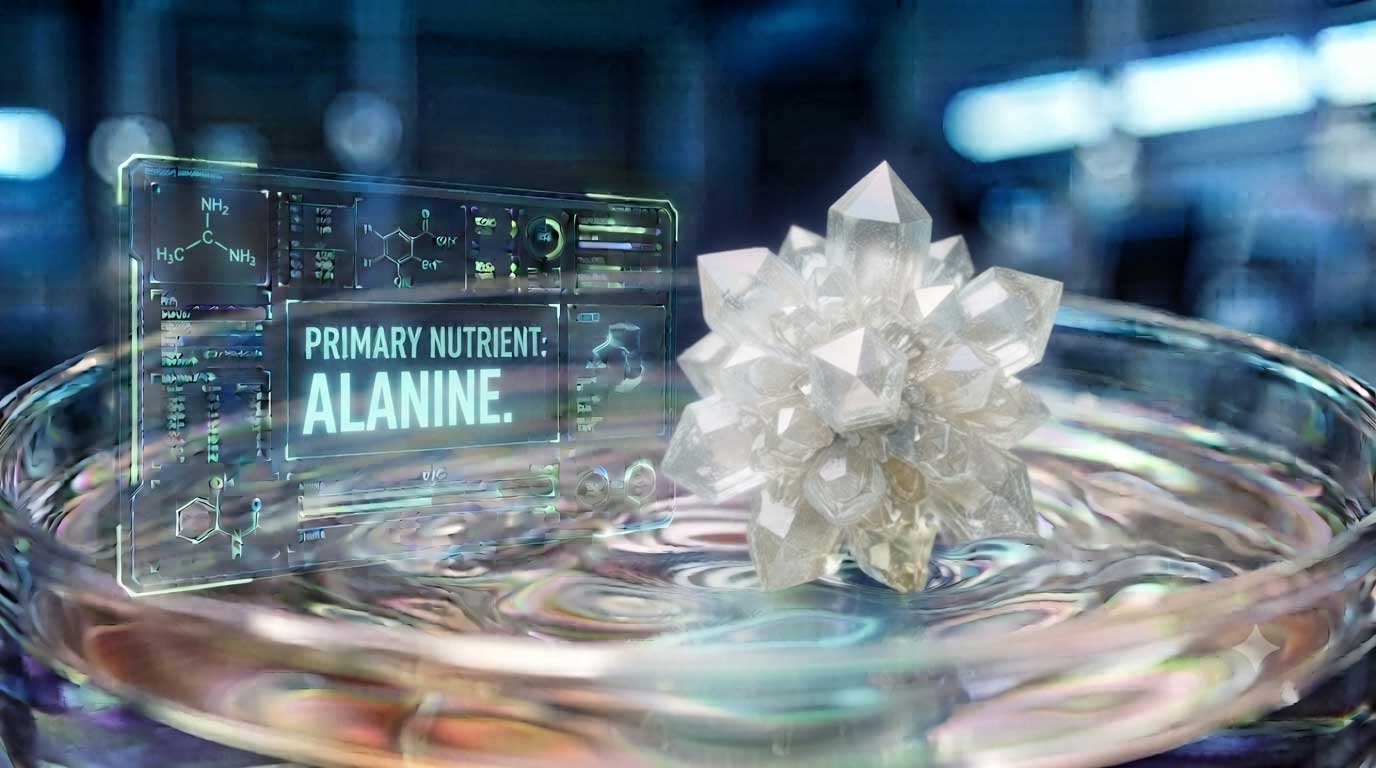
The Amino Acid Working Quietly Behind the Scenes
Ask most people to name an amino acid and you’ll probably hear leucine, glutamine, maybe tryptophan if they’ve had a big Thanksgiving dinner and blamed it for their nap. Alanine rarely comes up, and honestly, that’s a little unfair. This is one of the busiest little molecules in your body’s day-to-day chemistry, and it doesn’t get nearly the credit it deserves.
Alanine is a small, simple amino acid — one of the twenty that build every protein in your body — and it happens to be one of the most abundant free amino acids circulating in human blood. It’s non-essential, meaning your body can manufacture it on its own without you having to eat it directly, which is probably part of why it flies under the radar. We tend to obsess over the essential amino acids, the ones we “must” get from food, and quietly ignore the ones our own biochemistry handles for us. But just because your body can make something doesn’t mean that something isn’t important. Cholesterol is another example of that logic gone wrong in public perception, and alanine deserves a bit more nuance too.
Table of Contents

Here’s what makes alanine genuinely interesting: it sits right at the crossroads of energy metabolism and protein metabolism. Structurally, it’s about as simple as amino acids get — a central carbon, an amino group, a carboxyl group, and a small methyl side chain. No fancy rings, no sulfur, nothing exotic. But that simplicity is exactly what makes it so versatile. Because alanine can be converted back and forth into pyruvate — a central molecule in how your cells burn glucose for fuel — it acts almost like a shuttle. It picks something up in one tissue, drops it off in another, and helps keep the whole system running smoothly.
The clearest example of this is something called the glucose-alanine cycle, sometimes called the Cahill cycle after the researcher who described it. During periods of fasting or intense physical exertion, muscle tissue breaks down some of its protein for energy. That process releases nitrogen, which is genuinely toxic if it just floats around as ammonia. So the body does something clever: it attaches that nitrogen to pyruvate, forming alanine, and ships it off to the liver. The liver strips the nitrogen back off, safely disposes of it through the urea cycle, and converts the leftover carbon skeleton back into glucose. That glucose then travels back to the muscle to be used as fuel again. It’s a closed loop, muscle to liver and back, and alanine amino acid metabolism is the mechanism that makes the whole thing possible.
There’s also a related molecule worth mentioning early on: beta-alanine. This is a slightly different form of the amino acid, and it’s become something of a celebrity in the sports supplement world because of its role in producing carnosine, a compound stored in muscle tissue that buffers acid buildup during intense exercise. L-alanine and beta-alanine aren’t interchangeable, though, and I’ll get into that distinction later because conflating the two is one of the more common mix-ups I see people make.
What strikes me most after years of looking at amino acid metabolism is how alanine represents this larger truth about nutrition and physiology: the most important players aren’t always the flashiest ones. Alanine doesn’t have a dramatic backstory. It’s not going to headline a supplement bottle with bold claims about transformation. What it does is quieter and, in some ways, more essential — it keeps the lights on. It’s part of the infrastructure. Think of it like the electrical wiring in a house. Nobody admires wiring. Nobody takes photos of it for their home renovation blog. But without it, nothing else works, and you’d notice awfully fast if it stopped functioning.
There’s also a clinical angle that most people never encounter unless they’ve had blood work done and started asking questions. A version of alanine shows up on nearly every standard liver panel, in the form of an enzyme called alanine aminotransferase, or ALT. This enzyme is central to how alanine gets converted to and from pyruvate, and it’s used medically as one of the most common markers doctors check when evaluating liver health. That connection alone tells you this amino acid isn’t some obscure biochemical footnote — it’s threaded into how modern medicine keeps tabs on one of your most important organs.
Over the next few sections, I want to walk through what the science actually says about alanine’s role in health — not the exaggerated marketing version, but the grounded, evidence-based picture. We’ll get into the health benefits tied to its role in energy metabolism and muscle function, where you actually find alanine in food, what dosage and deficiency look like in real terms, and where the line sits between reasonable intake and something that could tip into risk territory. Some of this will surprise you. Some of it will probably confirm what you already suspected: that the unglamorous stuff is often doing the heaviest lifting.
Key Health Benefits
When people ask me what alanine “does,” the honest answer is that it does a lot of unglamorous, structural work rather than one single showy thing. That’s harder to sell, but it’s also more interesting once you dig into the details. Let’s break down where the actual evidence points.
Supporting Cellular Energy Production
The glucose-alanine cycle isn’t just a biochemistry textbook diagram — it’s an active, ongoing process, particularly relevant during fasting, prolonged exercise, or any state where the body needs to generate glucose without eating. Research on this cycle has shown that alanine is quantitatively the primary amino acid released by muscle tissue and taken up by the liver during fasting states, and that the liver’s capacity to convert alanine into glucose actually exceeds its capacity to do so from any other amino acid. That’s a fairly bold distinction. It suggests alanine isn’t just one of many contributors to gluconeogenesis — it’s arguably the most efficient one.
This matters practically because it means alanine plays a genuine role in maintaining blood glucose stability between meals and during physical exertion, functioning as a kind of metabolic safety net. When your muscles are working hard and burning through glycogen stores, this cycle helps keep glucose flowing back to where it’s needed. It’s not the only mechanism at play — the Cori cycle involving lactate does something structurally similar — but alanine’s pathway is considered less wasteful in terms of net energy exchange in certain contexts, particularly around nitrogen handling.
Muscle Tissue Maintenance and Recovery
Because alanine is intimately tied to how muscle protein gets broken down and its nitrogen safely shuttled away, it plays a role in the broader picture of muscle turnover — the ongoing cycle of breakdown and repair that happens whether you’re a competitive athlete or just someone who takes the stairs occasionally. During intense or prolonged exercise, amino acid oxidation and protein breakdown in skeletal muscle increase, and alanine release from muscle tissue rises correspondingly as part of that adaptive response.
Some research has also connected the glucose-alanine cycle to how the body handles lactate accumulation during strenuous activity, since components of this metabolic network help clear byproducts of anaerobic metabolism from working muscle tissue and route them toward the liver for reprocessing. Less lactate hanging around theoretically means less of that heavy, fatigued feeling in your legs on rep twelve of a tough set. I’m not going to claim alanine alone determines how sore you feel tomorrow — plenty of factors are involved — but it’s part of the underlying machinery that governs muscular endurance.
The Beta-Alanine Connection to Exercise Performance
This is where things get genuinely exciting from a performance standpoint, though it’s important to separate L-alanine from its cousin, beta-alanine, since they behave quite differently in the body. Beta-alanine combines with the amino acid histidine to form carnosine, which accumulates in muscle tissue and works as a buffer against the hydrogen ions produced during high-intensity exercise. Those hydrogen ions are largely responsible for the burning sensation and the drop in muscle performance that hits during activities lasting roughly one to ten minutes at near-maximal effort — think 400-meter sprints, heavy strength circuits, or grueling interval sessions.
Beta-alanine is considered the rate-limiting factor in carnosine synthesis, meaning your muscle’s carnosine levels are largely capped by how much beta-alanine is available, not by histidine. Supplementation studies have shown that consistent beta-alanine intake over several weeks can meaningfully raise muscle carnosine concentrations, which is why it’s become such a staple in pre-workout formulations. I’ll get into dosing specifics in a later section, but the takeaway here is that this branch of alanine metabolism has some of the more robust exercise-performance evidence behind it compared to a lot of trendier sports nutrition ingredients.
Liver Function and Detoxification Support
Given how central alanine is to nitrogen handling, it’s not surprising that it’s woven into liver physiology at a deep level. The enzyme responsible for converting alanine to pyruvate and back, ALT, is concentrated most heavily in liver cells, more so than almost anywhere else in the body. This isn’t alanine “cleansing” the liver in the vague, wellness-industry sense of that word — that framing oversimplifies things. What’s actually happening is more mechanical: alanine serves as a vehicle that helps the liver manage the nitrogen byproducts of protein metabolism throughout the body, funneling that nitrogen toward safe disposal through the urea cycle rather than letting it accumulate as ammonia.
This is precisely why ALT shows up as a routine marker on liver panels. When liver cells are damaged or under stress, they leak this enzyme into the bloodstream in larger amounts, giving doctors an early, sensitive signal that something in the liver’s environment has shifted, sometimes before a person feels any symptoms at all.
Immune and Protein Synthesis Roles
Alanine, like every proteinogenic amino acid, gets incorporated directly into the structure of proteins your body builds daily, from enzymes to structural tissue to elements of immune function. It’s not a headline nutrient in immunology research the way glutamine or arginine sometimes are, but its steady contribution to protein synthesis means adequate overall amino acid status — including alanine — supports the basic machinery immune cells rely on to do their jobs, replicate, and repair themselves after being called into action.
I’ll be honest with you: some of the more sweeping claims floating around about alanine — that it dramatically lowers cholesterol, that it single-handedly boosts prostate health, that kind of thing — are thinly supported at best. I’d rather undersell this amino acid and have the science hold up than oversell it and have you disappointed. What’s solidly established is its metabolic role in energy production, its contribution to muscle nitrogen handling, and beta-alanine’s fairly well-documented performance benefits through carnosine. That’s plenty to justify paying attention to it.
Dietary Sources
Because alanine is a non-essential amino acid, your liver and other tissues can synthesize it from other amino acids and metabolic intermediates whenever needed, which means genuine dietary deficiency is uncommon in people eating a reasonably varied diet. Still, dietary intake contributes to your overall amino acid pool, and for people who train intensely, are recovering from illness, or eat restrictive diets, knowing where alanine actually shows up in food is worth understanding.
Animal-Based Sources
Alanine is one of the more abundant amino acids in animal protein, and it’s found across just about every type of animal tissue.
- Poultry, particularly chicken breast, contains meaningful amounts of alanine alongside its broader amino acid profile.
- Red meat and organ meats are dense sources, partly because alanine is concentrated in muscle tissue itself — makes sense, given its role in muscle metabolism.
- Fish and seafood contribute solid amounts, with the added benefit of coming packaged alongside omega-3 fats.
- Eggs, especially the whites, are a classic complete-protein source that includes alanine among their amino acid lineup.
- Dairy products, including Greek yogurt and cheese, add alanine along with calcium and other nutrients people often associate with those foods.
If you eat a fairly typical omnivorous diet with regular protein at most meals, you’re very likely getting a steady supply without thinking about it at all.
Plant-Based Sources
Plant foods can absolutely supply alanine too, though usually in somewhat smaller concentrations per serving compared to animal protein, which just means portion sizes and variety matter more.
- Soy products, including tofu and edamame, are among the stronger plant sources and offer a relatively complete amino acid profile for a plant food.
- Legumes like lentils and beans contribute alanine along with fiber and slow-digesting carbohydrates.
- Whole grains, including corn and quinoa, add smaller but consistent amounts.
- Nuts, particularly almonds, and various seeds round out the plant-based picture.
- Nutritional yeast and brewer’s yeast are worth a specific mention, since yeast-derived proteins have historically been noted as a contributor to alanine intake.
For anyone eating plant-forward, the practical move isn’t to obsess over any single food but to make sure you’re getting protein variety across the day — a mix of legumes, grains, nuts, and soy tends to cover the bases far better than leaning on just one category.
Beta-Alanine in Food
Since beta-alanine gets so much attention in the sports nutrition world, it’s worth noting that its dietary sources are narrower than L-alanine’s. Beta-alanine is found primarily in meat and poultry, since it exists as part of dipeptides like carnosine and anserine within animal muscle tissue. This is part of why vegetarians and vegans, on average, tend to have lower baseline muscle carnosine levels than omnivores — they’re simply not getting that direct dietary beta-alanine intake, even though their bodies can still produce some on their own. If you’re plant-based and interested in the exercise performance angle specifically, that’s a relevant consideration, and it’s one of the more legitimate cases where targeted beta-alanine supplementation has a clear rationale behind it, separate from the general nutrition conversation around L-alanine.
Does Cooking or Processing Affect Alanine Content?
Amino acids are fairly heat-stable compared to some vitamins that degrade quickly under cooking temperatures. Alanine isn’t going to vanish because you grilled your chicken instead of steaming it. Where you do see meaningful differences is in processing that removes or dilutes the protein itself — think heavily refined grain products stripped of their germ and bran, or ultra-processed foods where actual whole-food protein content is diluted by fillers. The simplest rule of thumb I give people: prioritize whole or minimally processed protein sources, animal or plant, and the amino acid profile, alanine included, tends to take care of itself.
A Closer Look at Which Foods Rank Highest
If you want to get slightly more specific, gelatin and collagen-based products actually rank among the more concentrated sources of alanine, since the connective tissue proteins they’re derived from are unusually rich in this particular amino acid alongside glycine and proline. That’s part of why bone broth enthusiasts sometimes cite amino acid density as a selling point, though I’d stop short of calling broth a superfood on that basis alone — it’s one contributor among many, not a singular solution. Similarly, foods that are essentially concentrated muscle tissue, like jerky or cured meats, carry a fair amount of alanine simply because of how much muscle protein is packed into a small volume, though I wouldn’t recommend leaning on processed, high-sodium meats as your primary strategy for amino acid intake given the other tradeoffs involved.
Wheat germ also gets mentioned periodically in older nutrition literature as a contributor to alanine intake, likely because whole grains that retain their germ layer hold onto more of their original amino acid content compared to heavily milled and refined counterparts. It’s a small reminder that refining grains doesn’t just strip fiber and micronutrients — it can meaningfully dilute the amino acid profile too, alanine included.
A Note on Protein Quality Versus Protein Quantity
Something I try to emphasize with anyone asking about specific amino acids is that fixating on one nutrient in isolation tends to miss the bigger picture. Alanine rarely, if ever, shows up as a limiting factor in someone’s diet the way certain essential amino acids or minerals can. What actually matters more is whether your overall protein intake is sufficient and reasonably varied. A diet built around a single, narrow protein source, even a good one, tends to be less resilient than one that draws from several categories across the week. Rotate between poultry, fish, legumes, dairy, and plant proteins rather than anchoring everything to one option, and the full spectrum of amino acids, alanine very much included, tends to sort itself out without much deliberate engineering on your part.
Putting It in Practical Terms
I don’t think most people need to sit down and calculate their alanine intake gram by gram — that’s overkill for a non-essential amino acid your body already manufactures. What’s actually useful is recognizing that consistent, adequate total protein intake, spread across a mix of food sources, naturally covers your alanine needs without any special planning. If you’re already eating enough protein to support your activity level, you’re almost certainly getting enough alanine along with it, and the more relevant question to ask yourself isn’t “how much alanine am I eating” but “am I eating enough total protein, from varied enough sources, to support what my body is actually doing day to day.” That framing will serve you far better than obsessing over any single amino acid on a spreadsheet.
Dosage & Deficiency
This is the section where I want to slow down and be precise, because “dosage” means something very different depending on whether we’re talking about L-alanine as a general dietary amino acid or beta-alanine as a targeted sports supplement. Conflating the two leads to confused expectations, so let’s separate them clearly.
Is There an Official Alanine Requirement?
No formal recommended dietary allowance exists for alanine specifically, and that’s consistent with how non-essential amino acids are generally treated in nutrition science — since the body synthesizes them internally, requirement values focus instead on total protein and on the essential amino acids that can’t be self-manufactured. Alanine gets folded into your overall protein intake rather than tracked as an isolated target.
For most healthy adults eating a diet that meets standard protein recommendations, alanine synthesis plus dietary intake comfortably covers physiological needs. There’s no meaningful population of healthy people walking around alanine-deficient the way you might see iron or vitamin D deficiency show up on a blood panel.
What Deficiency Actually Looks Like
True alanine deficiency in a clinical sense is genuinely rare, and it tends to show up only in fairly specific, extreme circumstances rather than as a standalone dietary shortfall. Some research has pointed to situations like pregnancy and a condition called ketotic hypoglycemia of infancy as circumstances where diminished alanine availability can accentuate fasting-related low blood sugar, since the glucose-alanine cycle’s ability to regenerate glucose depends on having enough circulating alanine to shuttle toward the liver.
Outside of these specific physiological states, or severe protein-calorie malnutrition where essentially every amino acid pool runs low simultaneously, isolated alanine deficiency isn’t something clinicians typically screen for or worry about in otherwise healthy people. If you’re eating adequate protein and don’t have an underlying metabolic condition, this isn’t something that should be keeping you up at night.
L-Alanine Supplementation
Straight L-alanine supplements exist but are far less common and far less studied than beta-alanine. Most healthy people who eat adequate protein simply don’t need to supplement with it, and if you do use it as a supplement, working with a healthcare provider to determine an appropriate amount makes sense rather than guessing. There isn’t a well-established, evidence-backed dosing range for L-alanine supplementation the way there is for its beta counterpart, largely because there hasn’t been the same commercial or research interest driving large clinical trials on it.
Beta-Alanine Dosing, Where the Real Data Lives
If you’re interested in alanine from a performance angle, beta-alanine is where the actual dosing science has been worked out in real detail. Research generally points to a daily range of about 3.2 to 6.4 grams as effective for enhancing high-intensity exercise performance, with a loading period, often four to six weeks, needed to meaningfully raise muscle carnosine stores. Studies have found that a loading dose in the 4 to 6 gram per day range, split into smaller doses of around 2 grams or less, produces roughly a 20 to 30 percent increase in muscle carnosine within two weeks, climbing to a 40 to 60 percent increase by around four weeks of consistent use.
The reason for splitting doses rather than taking it all at once comes down to tolerability, which leads directly into the next section. Sports nutrition organizations have generally regarded doses in the 4 to 6 gram daily range as reasonable for healthy adults over studied trial periods, though as with most supplements, individual response varies and starting conservatively is a sensible approach.
A Few Practical Notes on Timing
Beta-alanine doesn’t need to be taken immediately before a workout to work — unlike caffeine, its benefit comes from chronic loading of muscle carnosine stores over weeks, not from an acute spike in blood levels right before you train. Taking it with meals, spread across the day, tends to both improve comfort and doesn’t meaningfully change its effectiveness compared to pre-workout-only timing. If you’re someone who trains for short, high-intensity efforts — sprinting, wrestling, CrossFit-style circuits — this is one of the few supplements where the evidence genuinely lines up with the marketing, provided you approach the dosing sensibly rather than mega-dosing out of impatience.
How Long Before You’d Notice Anything
One question I get constantly is some version of “how fast will I feel a difference.” With beta-alanine, patience matters more than it does with a lot of other supplements. Because the entire mechanism depends on gradually saturating muscle carnosine stores rather than producing an immediate pharmacological effect, most people won’t notice a dramatic shift after a single dose or even after the first few days. The research showing meaningful carnosine increases within about two weeks, climbing further by the four-week mark, gives a realistic timeline to set your expectations around. If you start beta-alanine expecting a pre-workout-style kick, you’re going to be disappointed and probably conclude, incorrectly, that it doesn’t work for you.
I’d also point out that once you stop supplementing, muscle carnosine levels don’t vanish overnight either — they decline gradually over weeks, which means consistency matters more than any single day’s dose. This is closer in spirit to creatine loading than to caffeine, and mentally preparing for that slower timeline tends to prevent people from abandoning it prematurely.
Whole Food Versus Supplement Form
For the vast majority of readers, getting adequate L-alanine through a normal, protein-sufficient diet is genuinely enough, and there’s no compelling reason to add a standalone L-alanine supplement on top of that. Beta-alanine is the more legitimate supplement conversation, specifically for people training in that high-intensity, short-duration category where carnosine buffering actually matters to performance. Endurance athletes doing steady-state cardio, for instance, typically see far less benefit from beta-alanine supplementation than someone doing repeated sprint efforts or heavy strength work, simply because the physiological demand it addresses, acid buffering during near-maximal exertion, isn’t as prominent in longer, lower-intensity efforts.
If you do decide beta-alanine fits your training goals, buying from a reputable supplement brand that discloses actual gram dosages per serving matters more than people realize. Proprietary blends that hide exact amounts behind vague labeling make it impossible to know whether you’re actually hitting the dosing ranges the research supports, and underdosed products are unfortunately common in this category.
Toxicity & Risks
For an amino acid this deeply embedded in normal metabolism, alanine has a pretty reassuring safety profile when it comes to ordinary dietary intake. But “reassuring” doesn’t mean “risk-free in every context,” and there are a few specific situations worth understanding clearly.
General Safety of Dietary Alanine
Alanine obtained through normal food intake doesn’t carry meaningful toxicity concerns for the vast majority of healthy people. It’s been described as free of side effects for most people who consume it through diet or standard supplementation, though a consistent caveat shows up across clinical sources: people with existing kidney or liver disease should be cautious about high intakes of amino acids generally, alanine included, and should talk to a healthcare professional before adding concentrated amino acid supplements to their routine. This isn’t unique to alanine — it’s a general principle for amino acid supplementation in the context of organ impairment, since compromised kidneys and livers process nitrogen-containing compounds less efficiently.
The Beta-Alanine Tingling Sensation
The most well-documented and, frankly, most talked-about side effect connected to alanine metabolism isn’t really about L-alanine at all — it’s beta-alanine’s signature side effect: paresthesia, that tingling, prickling, sometimes itchy sensation that shows up on the face, neck, and hands within about ten to twenty minutes of taking a supplement dose. It’s caused by beta-alanine activating specific sensory receptors in the skin, and while it can feel alarming the first time it happens, research consistently describes it as harmless and temporary, typically resolving within an hour.
The likelihood of experiencing noticeable paresthesia increases with higher single doses, and it tends to become more bothersome above roughly 40 milligrams per kilogram of body weight taken at once. Some research has also noted that people under about 75 kilograms of body weight report more frequent or intense itchiness compared to heavier individuals, and that women have reported the sensation somewhat more often than men in certain studies. None of this indicates tissue damage or an allergic reaction — it’s a distinct, well-characterized neurological response, not inflammation. The practical fix that shows up again and again in the research is straightforward: split your beta-alanine dose into smaller amounts throughout the day, generally under 2 grams per serving, rather than taking the full daily amount all at once, or consider a sustained-release formulation if the sensation genuinely bothers you.
Upper Limits and Longer-Term Use
Clinical guidance generally points toward not exceeding around 6.4 grams of beta-alanine over sustained periods without professional guidance, and studies extending out to 24 weeks at doses in the 3.2 to 6.4 gram daily range haven’t turned up evidence of lasting harm in healthy adults. That said, some research using considerably higher doses, in the range of 15 grams daily, has observed changes in markers like triglycerides, LDL cholesterol, and urea nitrogen compared to baseline, which is a useful reminder that “more is better” doesn’t hold up here. Sticking within researched ranges rather than assuming a bigger dose delivers proportionally bigger benefits is the sensible approach.
The ALT Connection Worth Understanding
Since alanine aminotransferase, the enzyme most closely tied to alanine’s metabolic role, is used medically as a liver health marker, it’s worth clarifying something that trips people up: elevated ALT on a blood test isn’t caused by eating alanine-rich foods or taking beta-alanine supplements at normal doses. Elevated ALT reflects liver cells releasing this enzyme in response to actual cellular stress or damage — from conditions like fatty liver disease, viral hepatitis, alcohol use, certain medications, or even intense exercise and dehydration in some cases. If you’ve ever seen a slightly elevated ALT on a lab report and wondered whether your diet or supplement routine caused it, the honest answer is that dietary alanine itself isn’t a typical driver of that number; it’s much more likely tied to broader liver physiology, lifestyle factors, or an underlying condition that deserves proper medical evaluation rather than dietary self-diagnosis.
Who Should Be More Cautious
Pulling this together, a few groups warrant extra thought before adding concentrated alanine or beta-alanine supplementation on top of normal dietary intake:
- People with diagnosed kidney or liver conditions, given the general caution around concentrated amino acid intake in these situations.
- Pregnant individuals, given the noted relationship between alanine availability and glucose regulation during pregnancy — this is a conversation for an obstetrician, not a supplement label.
- Anyone experiencing beta-alanine paresthesia that feels unusually intense, prolonged, or accompanied by other symptoms like swelling or difficulty breathing, since that could indicate something other than typical paresthesia and warrants medical attention rather than assumption.
For everyone else, the practical risk picture here is genuinely mild compared to a lot of other supplements on the market. It’s just worth using accurate information rather than internet folklore to guide how much you take and why.
What Alanine Really Teaches Us About the Body’s Quiet Workhorses
After spending real time in the research on this amino acid, I keep coming back to the same thought: alanine is a pretty good case study in why nutrition science shouldn’t just chase the ingredients with the flashiest marketing budgets. It doesn’t have a dramatic origin story. It’s not going to be the star of a viral wellness trend next year. But its fingerprints are on some genuinely essential processes — how your body regenerates glucose during a fast, how your muscles manage nitrogen while you push through a hard set, how your liver gets monitored for early signs of trouble.
If there’s one practical takeaway I’d want you to walk away with, it’s this: most healthy people eating a reasonably varied diet with adequate protein don’t need to think about alanine as a separate nutritional target. It’s baked into the broader protein conversation, not something requiring its own tracking spreadsheet. Where it does become worth paying deliberate attention to is on the performance side, specifically beta-alanine, if you’re someone whose training involves short, brutal efforts where muscle acid buffering genuinely matters. There, the dosing science is real, the mechanism is well understood, and the main downside — that tingling sensation — is uncomfortable at worst, not dangerous.
I’d also gently push back on the instinct to either dismiss non-essential amino acids as unimportant or to overhype them into miracle molecules. Alanine sits in a sensible middle ground: quietly indispensable to normal metabolism, not something you need to fear, and not something that needs a dramatic supplement stack built around it unless your specific goals call for it. That’s not the most exciting conclusion, I know. But it happens to be the honest one, and after years of watching nutrition trends come and go, I’ve grown to trust the unglamorous, well-supported answer over the one dressed up to sell more bottles.
Pay attention to your overall protein intake, vary your sources between animal and plant foods if that fits your preferences, and if you’re specifically chasing exercise performance gains, look into beta-alanine with realistic expectations and sensible dosing rather than assuming more is automatically better. The rest, your body has been quietly handling on its own the entire time.
I think about this amino acid the same way I think about a lot of foundational biology once you actually sit with it long enough: the systems that keep us functioning day to day rarely announce themselves. Nobody feels their glucose-alanine cycle working. Nobody consciously experiences their ALT levels doing their job on a liver panel. These processes hum along in the background, invisible right up until something goes wrong and a doctor points at a number on a lab report and starts asking questions. That invisibility is exactly why it’s worth understanding at least the outline of what’s happening under the hood, even if you never plan to supplement with anything related to it.
If you’re an athlete weighing whether beta-alanine deserves a spot in your supplement routine, my honest take is that it’s one of the more defensible additions out there, provided your training actually matches the profile it’s suited for. If you’re someone simply trying to eat well and support your energy levels day to day, the far more useful lever to pull is your total protein intake and its variety, not any single amino acid in isolation. And if you’ve ever glanced at a blood test and seen “ALT” listed with a number next to it, hopefully you now have a slightly clearer sense of what that enzyme is actually doing and why your doctor cares about tracking it.
None of this requires you to overhaul your diet or start measuring amino acids with a kitchen scale. It just requires a bit more respect for the parts of your physiology that don’t ask for attention but earn it anyway.
If I had to distill everything above into a single piece of advice, it would be this: don’t let the word “non-essential” fool you into thinking “unimportant.” Nutrition science has a habit of using technical classifications that get misread by the general public, and alanine is a textbook case. Non-essential simply describes where the raw material comes from — your body’s own synthesis pathways versus your fork — not how much biological weight the molecule carries once it’s in circulation. By that measure, alanine is doing quiet, continuous, genuinely important work every single day whether you think about it or not.
So the next time you’re at the gym pushing through a brutal set of sprints and feel that familiar burn setting in, or the next time your doctor mentions your ALT came back within normal range on a routine panel, you’ll have a little more context for what’s actually happening beneath the surface. That’s really the goal here, not to convince you to change anything drastic, but to give you a clearer, more accurate picture of a molecule that’s been working on your behalf longer than you’ve probably ever thought about it.
Article Sources
At AncientHerbsWisdom, our content relies on reputable sources, including peer-reviewed studies, to substantiate the information presented in our articles. Our primary objective is to ensure our content is thoroughly fact-checked, maintaining a commitment to accuracy, reliability, and trustworthiness.
- Cahill cycle. (n.d.). In Wikipedia. https://en.wikipedia.org/wiki/Cahill_cycle
- Felig, P. (1973). The glucose-alanine cycle. Metabolism, 22(2), 179-207. https://doi.org/10.1016/0026-0495(73)90269-2
- Perry, R. J., Peng, L., Cline, G. W., Petersen, K. F., & Shulman, G. I. (2019). Hungry for your alanine: when liver depends on muscle proteolysis. The Journal of Clinical Investigation, 129(11), 4563-4565. https://doi.org/10.1172/JCI131931
- TraceGains. (2026). Alanine. PeaceHealth Health Information Library. https://www.peacehealth.org/medical-topics/id/hn-2798009
- Trexler, E. T., Smith-Ryan, A. E., Stout, J. R., Hoffman, J. R., Wilborn, C. D., Sale, C., Kreider, R. B., Jäger, R., Earnest, C. P., Bannock, L., Campbell, B., Kalman, D., Ziegenfuss, T. N., & Antonio, J. (2015). International society of sports nutrition position stand: Beta-Alanine. Journal of the International Society of Sports Nutrition, 12, 30. https://doi.org/10.1186/s12970-015-0090-y
- Examine. (2025). Beta-Alanine research analysis. Examine.com. https://examine.com/supplements/beta-alanine/
- Decombaz, J., Beaumont, M., Vuichoud, J., Bouisset, F., & Stellingwerff, T. (2012). Effect of slow-release beta-alanine tablets on absorption kinetics and paresthesia. Amino Acids, 43(1), 67-76. https://doi.org/10.1007/s00726-011-1169-7
- Rangaves, D. (2026). What is ALT in a blood test? Understanding normal ranges and results. Everlywell. https://www.everlywell.com/blog/blood-test/what-is-alt-in-a-blood-test/
- WebMD Editorial Contributors. (2025). Alanine aminotransferase (ALT) test or (SGPT): Normal range and results. WebMD. https://www.webmd.com/fatty-liver-disease/alanine-aminotransferase-test
- Ravi Kiran, T., Praveen Kumar, K. S., Vijaya Lakshmi, A., Sudhakar, M., & Rao, T. R. (2020). Increased bioavailability of beta-alanine by a novel controlled-release powder blend compared to a slow-release tablet. Pharmaceutics, 13(9), 1517. https://www.ncbi.nlm.nih.gov/pmc/articles/PMC8467909/
- Medical News Today. (2023). Beta alanine itch: Why it occurs and how to stop it. https://www.medicalnewstoday.com/articles/beta-alanine-itch

- Phosphatidic Acid: Supporting Muscle Growth and Strength - July 31, 2026
- Ceramides: Supporting Healthy Skin From Within - July 31, 2026
- Synbiotics: Combining Prebiotics and Probiotics Together - July 31, 2026