
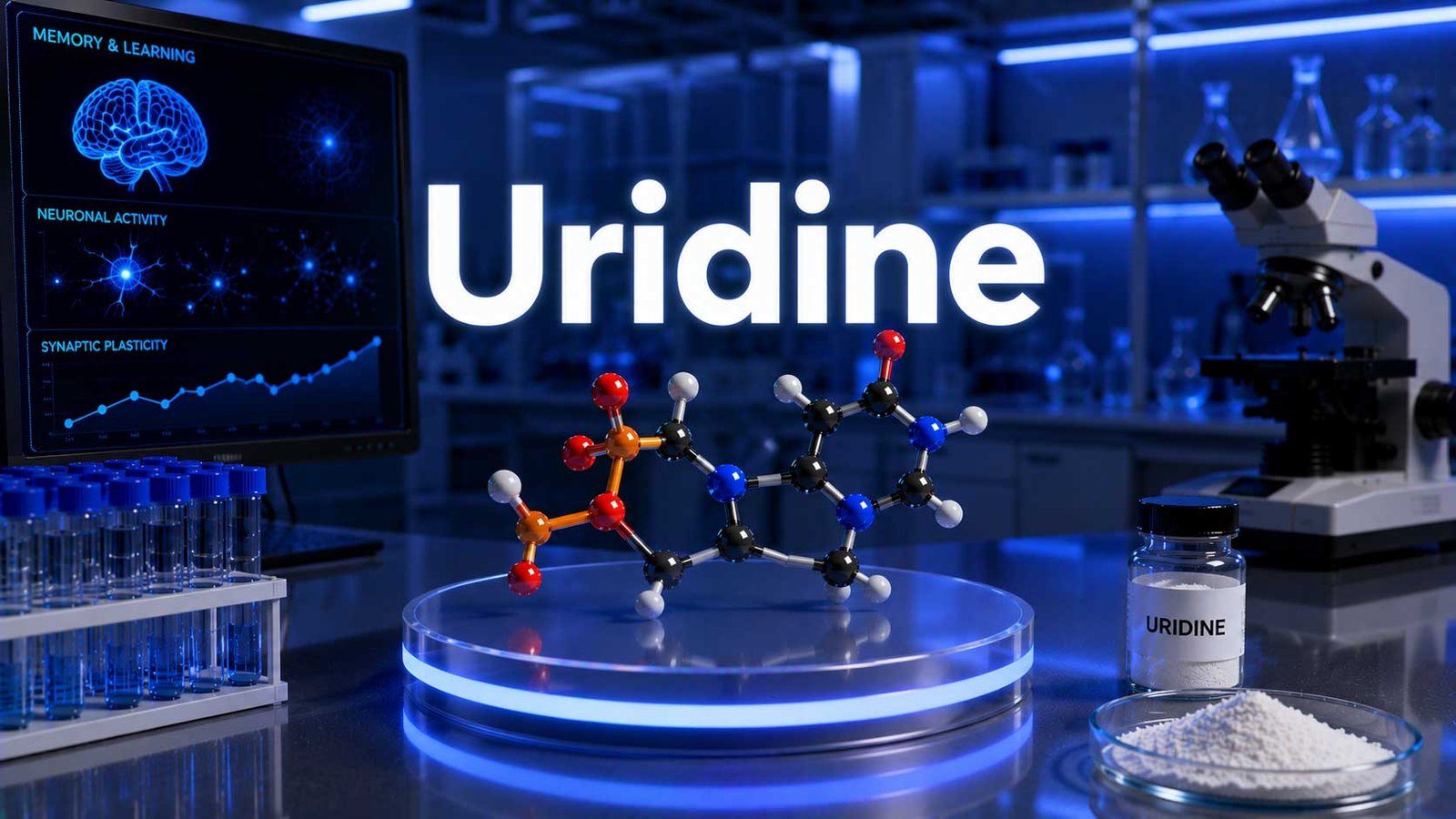
The Brain’s Quiet Builder: Getting to Know Uridine
I’ve spent a long time reading through nootropic research, and there’s a particular kind of molecule that never gets the flashy headlines but keeps showing up in the footnotes of serious neuroscience papers. Uridine is one of those molecules. It doesn’t have the marketing muscle of caffeine or the mystique of psychedelics-turned-microdose trend. It just quietly does its job, and its job happens to be foundational.
Uridine is a pyrimidine nucleoside, one of the five basic building blocks that make up RNA. In the body, it’s most often found and supplemented in the form of Uridine Monophosphate, or UMP, which is the nucleotide version — uridine attached to a phosphate group. Think of UMP as uridine in its “ready to work” form. Once it’s absorbed, the body converts it into uridine triphosphate (UTP) and eventually cytidine triphosphate (CTP), both of which play direct roles in how brain cells build and maintain themselves.
Table of Contents


Here’s where it gets interesting for anyone who cares about memory and learning. Brain cells communicate through synapses, tiny junctions where one neuron passes a signal to the next. Building and maintaining these synapses requires a steady supply of phospholipids, the fatty molecules that make up cell membranes. And it turns out that three specific nutrients are needed to manufacture those membrane phospholipids at a meaningful rate: choline, docosahexaenoic acid (DHA, the omega-3 found in fish), and uridine. Take any one of those three away, and the whole system slows down.

This isn’t some fringe theory. It’s the work of Richard Wurtman and his colleagues at MIT, who spent years mapping out exactly how these three precursors interact to support what’s called synaptogenesis — the formation of new synapses. Their research, published in outlets like Nutrition Reviews and Nutrients, laid out a fairly compelling case that uridine isn’t just a bystander in brain metabolism. It’s an active participant in whether your neurons can keep building new connections as you learn, adapt, and age.
Now, I want to be upfront about something before we go further: most of the standout human data around uridine comes from a fairly narrow set of clinical situations — bipolar depression, hereditary metabolic disorders, and small pilot trials. Much of the excitement around memory and learning specifically is extrapolated from animal studies, particularly a well-known series of experiments in gerbils. That doesn’t make the science worthless. It makes it promising but incomplete, which is honestly the case with most of nutritional neuroscience. Anyone who tells you otherwise is probably selling something.
What makes uridine worth understanding, even with those caveats, is the mechanism itself. It’s not a stimulant. It’s not going to give you a jittery afternoon or crash you by 4pm. Its proposed role is structural — helping the brain build the physical hardware (membranes, synapses, dendritic spines) that learning and memory actually run on. That’s a very different value proposition than most things marketed for “focus” or “brain fog,” and it’s part of why researchers in the aging and neurodegeneration space have paid it so much attention.
There’s also a developmental angle that tends to get overlooked. Uridine, largely in the form of UMP, is present in meaningful concentrations in human breast milk, and it’s been added to infant formulas for exactly this reason — because the infant brain is undergoing an extraordinary rate of synapse formation, and the body seems to prioritize giving babies a steady supply of this raw material. That alone tells you something about how biology views this compound: not as an optional extra, but as a building block that matters most precisely when the brain is doing its heaviest construction work.
Over the next several sections, I want to walk through what the actual evidence says about uridine’s health benefits, where you can realistically get it from (spoiler: dietary sources are trickier than you’d think), how much people typically use when supplementing, and what the legitimate risks and limitations are. I’m not interested in overselling this compound. I’ve read enough supplement marketing copy to be allergic to hype. But I do think uridine deserves a more grounded, honest look than it usually gets, because underneath the nootropic forum enthusiasm, there’s some genuinely interesting biochemistry happening.
One more thing worth sitting with before we go further: uridine sits at an odd intersection of nutrition science, pharmacology, and rare-disease medicine, and that’s part of why it’s so easy to find confusing or contradictory information about it. A pharmacology paper studying uridine triacetate for chemotherapy toxicity is going to describe a very different dosing context than a nootropics forum discussing 1 gram capsules for focus. A pediatric case report on hereditary orotic aciduria is going to describe outcomes that have nothing to do with everyday memory support. Part of my goal here is to keep those contexts separate so you’re not accidentally applying a chemotherapy-adjacent dosing framework to a wellness question, or dismissing a legitimate metabolic therapy because it sounds like nootropic hype.
I also think it’s worth naming the obvious comparison people tend to make: uridine versus citicoline (CDP-choline), since the two frequently show up together in brain-health formulations and get mentioned in the same breath. They’re related — uridine is actually part of what your body uses in synthesizing CDP-choline internally — but they’re not interchangeable, and conflating the two tends to muddy the research picture more than it clarifies it. I’ll touch on where they overlap as we go, but the focus here stays squarely on uridine itself, and specifically on what it may or may not do for memory and learning.
So let’s get into it, starting with the actual health benefits the research points to, and where that research is strongest versus where it’s still mostly promise.
Key Health Benefits
Synaptic Plasticity and the Physical Architecture of Memory
Let’s start with the mechanism that everything else in this section builds on. Memory formation isn’t an abstract, purely electrical event — it has a physical component. When you learn something new, your brain is quite literally constructing new synaptic connections and strengthening existing ones, a process broadly known as synaptic plasticity. That construction requires raw materials, chiefly membrane phospholipids like phosphatidylcholine.
Wurtman’s research group demonstrated, primarily in gerbil models, that orally administered UMP combined with DHA significantly increased brain phospholipid levels, synaptic protein content, and dendritic spine density in the hippocampus — the brain region most associated with forming new memories. In one particularly telling study, gerbils given the combination of uridine, DHA, and choline outperformed control animals on radial maze, T-maze, and Y-maze tests, standard measures of spatial learning and memory in rodents. Adding uridine to DHA and choline produced a bigger improvement than DHA and choline alone, which suggests uridine isn’t just riding along — it’s contributing something specific to the process.
Mechanistically, the proposed pathway runs through what’s called the Kennedy cycle, a biochemical pathway that assembles phosphatidylcholine from three components: choline, DHA (or another polyunsaturated fatty acid), and CTP, which is derived from uridine. The enzymes in this pathway are, under normal conditions, not fully saturated with these substrates — meaning there’s actual room for more raw material to speed up the process. That’s the biological argument for why boosting circulating uridine could matter: you’re not overriding a system, you’re feeding one that’s often running below capacity.
A related detail I find genuinely elegant: the uridine-plus-DHA effect doesn’t seem to just increase generic cellular bulk. Researchers tracking specific synaptic proteins — things like PSD-95, synapsin-1, and syntaxin-3, all markers closely tied to functioning synapses — found these rose alongside the treatment, while non-synaptic structural proteins like beta-tubulin didn’t budge. That specificity matters. It’s the difference between a treatment that just makes cells generally bigger versus one that appears to be selectively supporting the synaptic machinery itself. Whether that same selectivity holds up in human brains is still an open question, but it’s the kind of mechanistic detail that separates a plausible hypothesis from wishful pattern-matching.
Neurotransmitter Support
Beyond the structural story, uridine also appears to interact with neurotransmitter systems that are directly involved in learning and mood. It’s a precursor to CDP-choline, which the body needs to synthesize acetylcholine — the neurotransmitter most closely tied to attention, learning, and memory consolidation. There’s also evidence that uridine triphosphate acts as a signaling molecule in its own right, binding to P2Y purinergic receptors on neurons and influencing neurite outgrowth, the process by which neurons extend new projections toward potential synaptic partners.
This dual role is part of what makes uridine mechanistically distinct from a simple “precursor” nutrient. It’s not just raw material sitting passively until enzymes get around to using it. Through those P2Y receptors, uridine-derived nucleotides can actively trigger downstream signaling cascades that influence gene expression related to synaptic proteins. In plain terms: it’s not only supplying bricks, it’s also occasionally ringing the doorbell to tell the construction crew to get moving. That combination of substrate supply and active signaling is fairly unusual among nutritional compounds, and it’s a big part of why researchers in this space treat uridine as more than just another building block on a supplement label.
Cognitive Performance Beyond Memory Alone
While memory and learning are the headline benefits, some of the animal literature suggests the effects extend a bit further, into general markers of cognitive flexibility and environmental adaptability. In one study, rats raised in an “environmentally impoverished” setting — essentially, a deliberately understimulating environment known to blunt normal cognitive development — showed improved performance on memory tasks after chronic administration of DHA and UMP compared to untreated impoverished-environment rats. That’s a particularly interesting angle because it suggests the nutrient combination may help offset some of the cognitive cost of a suboptimal environment, rather than simply enhancing an already-optimal one. I’d stop short of drawing a straight line to human developmental environments, but it’s a thread that deserves more follow-up research than it’s gotten.
Mood and Emotional Resilience
I’d be doing this topic a disservice if I didn’t mention the mood-related research, because it’s some of the more rigorous human data available. Open-label studies in adolescents with bipolar depression found that uridine supplementation was associated with meaningful reductions in depressive symptom scores over six weeks, without triggering manic episodes — a real concern with many antidepressants used in bipolar patients. Related work using triacetyluridine, a more bioavailable uridine derivative, found similar mood improvements in adult bipolar patients alongside measurable changes in brain energy metabolism. None of this proves uridine treats depression in the general population, but it does suggest the compound has real effects on brain chemistry beyond the structural story.
Neuroprotection in the Aging Brain
Finally, there’s the neuroprotection angle, which is really an extension of the synaptic story. Alzheimer’s disease is characterized, among other things, by a loss of cortical and hippocampal synapses — and that loss correlates more strongly with cognitive decline than plaque burden alone does. Wurtman’s research group has argued, based on animal data, that supplying the precursors needed for synapse construction (uridine among them) could theoretically help offset some of that loss. Early trials of a related nutrient combination in mild Alzheimer’s patients showed modest improvements in delayed verbal memory. It’s early-stage, hopeful science rather than an established treatment, but it’s a thread worth watching.
Dietary Sources
Where Uridine Actually Shows Up in Food
Here’s the part that trips a lot of people up, myself included the first time I looked into this seriously: uridine is technically present in a decent range of foods, but getting it from those foods into your bloodstream in a usable form is a different matter entirely. This is one of those areas where “contains” and “delivers” end up meaning very different things, and it’s a distinction that a lot of casual health content glosses right over.
Foods that contain notable amounts of uridine include:
- Organ meats, especially beef and pork liver
- Brewer’s yeast and nutritional yeast
- Broccoli and other cruciferous vegetables
- Mushrooms
- Tomatoes
- Fish, including herring and other RNA-rich seafood
- Sugarcane and sugar beet molasses
- Beer
That’s a fairly broad list, and if you stopped there, you might assume a liver-and-broccoli dinner would do the trick. The catch is that most dietary uridine exists bound up in RNA within these foods, and RNA-bound uridine is largely broken down during digestion in the gut and liver before it ever reaches systemic circulation in a meaningful way. Several researchers, Wurtman included, have pointed out that no ordinary food has been convincingly shown to raise plasma uridine levels in humans.
The Exceptions That Actually Work
There are a small number of genuine exceptions to that rule, and they’re worth knowing.
Beer is the most surprising one. Because of its yeast content, beer contains free uridine rather than RNA-bound uridine, and at least one human study found plasma uridine levels rose noticeably within thirty minutes of drinking regular beer. I want to be careful here, because “drink more beer for brain health” is not a responsible takeaway — the alcohol content brings its own well-documented risks that outweigh whatever uridine benefit you might get. But it’s a genuinely interesting data point on bioavailability.
Human breast milk is the other major exception, and arguably the most biologically meaningful one. Because infant brains are undergoing such rapid synaptogenesis, breast milk delivers uridine (largely as UMP) in a bioavailable form, and this is the basis for why many infant formulas are now fortified with nucleotides including UMP.
Why Most People Turn to Supplementation
Given that gap between “contains uridine” and “will raise your uridine levels,” it’s easy to see why most people interested in uridine’s cognitive effects look toward UMP or triacetyluridine supplements rather than restructuring their diet around organ meats and mushrooms. Supplemental UMP bypasses much of the RNA-digestion problem because it’s already in nucleotide form, though even then, oral bioavailability isn’t perfect — studies have found it ranges roughly from about 6% to 20% depending on dose, which is part of why some formulations use triacetyluridine, a modified version designed to improve absorption.
I think about this the same way I think about vitamin D and sunlight. Technically, sunlight can produce vitamin D in your skin, but for a lot of people in a lot of climates, that pathway just isn’t reliable enough to depend on, so supplementation fills the gap. Uridine has a similar practical reality, except the barrier isn’t sunlight exposure, it’s digestive breakdown of RNA-bound uridine. You could eat liver and broccoli every single day and still not reliably move the needle on plasma uridine the way a modest dose of UMP would.
A Word on Infant Nutrition
Since I mentioned breast milk earlier, it’s worth expanding on briefly, because it’s genuinely one of the clearest real-world demonstrations of uridine’s biological importance. Infant formula manufacturers have specifically added nucleotides, including UMP, in an attempt to bring formula composition closer to breast milk, precisely because of the role these compounds appear to play in rapid early brain development. This isn’t a fringe supplement industry decision; it reflects mainstream pediatric nutrition science recognizing that during periods of maximal synaptogenesis, the body benefits from a readily available, bioavailable form of uridine rather than relying on what it can manufacture internally or salvage from digested RNA.
Practical Takeaway on Food
None of this means dietary sources are worthless or that you should ignore them entirely. A diet that regularly includes organ meats, mushrooms, broccoli, and fish is a genuinely healthy pattern for a whole host of reasons that have nothing to do with uridine specifically — B vitamins, choline, omega-3s, and fiber, to name a few. I’d just encourage you not to think of “eating more broccoli” as a substitute for supplementation if raising plasma uridine specifically is your actual goal. They’re different strategies solving different problems, even though they overlap on the same grocery list.
Dosage & Deficiency
What “Typical” Dosing Actually Looks Like
There’s no officially established dosage for uridine as a cognitive supplement, and I think it’s important to say that plainly rather than pretend otherwise. What we have instead is a patchwork of dosing ranges pulled from different clinical contexts, and they vary more than you’d expect.
In the mood-related trials I mentioned earlier, researchers used doses in the range of 500 mg twice daily (1 gram total) in adolescents with bipolar depression, while adult trials using triacetyluridine pushed doses considerably higher, escalating from 6 grams per day up to 18 grams per day of triacetyluridine, which translates to roughly 4 to 12 grams per day of uridine equivalent. That’s a wide range, and it reflects the fact that these were exploratory psychiatric trials, not consumer wellness protocols.
On the nootropic and general wellness side, more commonly cited ranges fall between 1 and 2 grams per day, often split into two or three smaller doses rather than one large dose. Splitting the dose makes some sense given uridine’s relatively short residence time in circulation — its effects don’t necessarily persist across a full 24-hour window from a single dose.
If you’re the type who likes precision, I understand the frustration here. But this is genuinely a supplement where “start low, track how you respond, and adjust gradually” is more honest guidance than any specific number I could hand you.
What Deficiency Looks Like
True dietary uridine deficiency in otherwise healthy people is not a well-documented condition, largely because the body synthesizes its own uridine through the de novo pyrimidine synthesis pathway — you’re not entirely dependent on outside sources the way you are with, say, vitamin C.
That said, there’s one clear, well-documented condition where uridine deficiency has severe consequences: hereditary orotic aciduria, a rare autosomal recessive metabolic disorder in which a deficiency of the enzyme UMP synthase blocks the body’s ability to manufacture its own uridine nucleotides. Affected infants and children develop megaloblastic anemia, developmental and growth delays, immune dysfunction, and excessive orotic acid excretion in the urine. This condition has been managed successfully with oral uridine supplementation for decades, with documented cases showing sustained remission over years of treatment, and it’s the basis for the FDA-approved drug uridine triacetate, marketed as Xuriden, specifically for this indication.
Outside of that rare genetic context, there isn’t strong evidence that ordinary people are walking around “uridine deficient” in a way that’s driving memory problems. The more accurate framing is that supplementation is being explored as a way to push uridine levels above the normal baseline, in hopes of maximizing the substrate available for synapse-building pathways, rather than correcting an actual deficiency state.
Populations Where Uridine Status May Matter More
A few groups do warrant closer attention: infants and young children, given the rapid synaptogenesis happening in early brain development (which is why formula fortification exists), and possibly older adults experiencing age-related synaptic loss, an area where research remains preliminary but active.
Timing and Stacking Considerations
I get asked fairly often whether uridine should be taken with food, on an empty stomach, or alongside specific other nutrients. The honest answer is that the clinical trials didn’t standardize this in a way that gives a definitive protocol, but there are a few reasonable inferences worth mentioning. Given the mechanistic overlap with choline and DHA in the Kennedy cycle, some researchers and formulators pair uridine with a choline source and an omega-3 supplement on the theory that all three substrates being available simultaneously maximizes the synaptic-building pathway rather than leaving it bottlenecked by a missing ingredient. That’s a reasonable extrapolation from the gerbil data, though it hasn’t been rigorously tested as a specific human protocol.
As for timing relative to food, taking uridine with a meal containing some fat may aid tolerability given the gastrointestinal side effects some people report, though this is more of a practical comfort consideration than something backed by absorption studies specific to UMP. If you’re prone to a sensitive stomach, starting with a smaller dose taken with food, rather than on an empty stomach first thing in the morning, is a sensible way to gauge your own tolerance before committing to a full regimen.
A Note on Self-Assessment
Because there’s no blood test in routine clinical practice that measures “uridine status” the way there is for, say, vitamin B12 or iron, most people supplementing uridine for cognitive reasons are relying on subjective tracking rather than lab-confirmed deficiency correction. That’s not unusual in the nootropic space, but it does mean the burden of judging whether it’s “working” falls on you, your own attention, memory, and mood over weeks of consistent use, rather than a number on a lab report. I’d encourage keeping some kind of simple journal if you try it, since subjective impressions of cognitive supplements are notoriously unreliable without a written record to check yourself against.
Toxicity & Risks
The Honest Safety Picture
I’ll give uridine credit here: its safety profile, based on the available human data, is genuinely reassuring compared to a lot of compounds that get marketed as nootropics. That reassurance matters, because so much of the nootropic supplement space is built on thin, short-duration safety data, and it’s refreshing to be able to point to decades of use in a specific patient population rather than a single six-week trial. The most direct long-term human safety data comes, somewhat ironically, from hereditary orotic aciduria patients who have been treated with uridine for twenty years or more, at doses up to 300 mg per kilogram of body weight per day — and it’s been described as well tolerated in that population, including in women who went on to have normal pregnancies while on treatment.
That’s a fairly high bar of reassurance, but it doesn’t mean uridine is risk-free or that everyone tolerates it identically, especially at the higher doses sometimes used in nootropic stacking.
Common Side Effects
The side effects that show up most consistently across studies, whether in psychiatric trials, metabolic disease management, or general supplementation, are gastrointestinal:
- Nausea
- Diarrhea
- Stomach cramping
- Mild appetite changes
These effects tend to correlate with dose size, and some researchers have suggested they may partly stem from local gut irritation, particularly with formulations that have poor absorption, since more of the compound is left sitting in the digestive tract rather than being absorbed. Starting at a lower dose and increasing gradually, rather than jumping straight to 2 grams, seems to reduce the likelihood of these issues.
Psychiatric and Neurological Considerations
In the bipolar depression trials using higher-dose triacetyluridine, a small number of participants experienced mild, self-limited hypomania, along with dizziness, headaches, sleep disturbances, and in a couple of cases, visual disturbances including some depth perception changes, though these weren’t conclusively linked to the study drug. This matters most for people with a personal or family history of bipolar disorder, who should treat any mood-active compound, uridine included, with real caution and ideally under medical guidance rather than self-experimentation.
Who Should Be Especially Careful
A few groups deserve extra caution:
- People with a bipolar spectrum diagnosis, given the mood-modulating effects discussed above
- Pregnant or breastfeeding individuals, simply because the research base outside of the orotic aciduria population is thin
- Anyone with a history of gout or elevated uric acid, since uridine-rich foods can sometimes overlap with purine-rich foods, and there’s a theoretical connection between pyrimidine metabolism and uric acid handling worth discussing with a doctor
- People on medications metabolized through nucleotide pathways, including certain chemotherapy drugs like 5-fluorouracil, where uridine derivatives are actually used clinically to counteract toxicity — meaning there’s real pharmacological interaction potential here, not just theoretical overlap
Reading Labels and Sourcing Carefully
One practical risk that has nothing to do with uridine’s biology but everything to do with the supplement market: quality control varies enormously between manufacturers. Because uridine and UMP aren’t as tightly regulated or as widely third-party tested as more mainstream supplements, sourcing from a reputable manufacturer that provides third-party testing matters more here than it might for something like plain vitamin C. I’d treat any product making bold, specific memory-boost claims with skepticism, since the human research simply doesn’t support the kind of dramatic before-and-after cognitive transformation that some marketing implies.
The Bottom Line on Risk
None of this should read as alarmist. Compared to many trending nootropics, uridine’s risk profile is relatively mild and well-characterized, at least within the doses studied. But “relatively mild” isn’t the same as “risk-free,” and the gap between rigorously studied clinical doses and casually stacked nootropic doses is exactly where I’d encourage more caution than most online guides tend to show. If you take one thing away from this section, let it be this: the strongest safety data we have comes from tightly monitored medical contexts, not from casual self-experimentation, and it’s worth respecting that distinction when deciding how you approach this compound yourself.
I’d also gently push back on the instinct, common in nootropic circles, to assume that if a little is helpful, more must be better. The dose-response relationship for uridine, based on what’s actually been studied, doesn’t support that assumption. Side effects become more likely as doses climb toward the higher end of the clinical psychiatric range, without clear evidence that cognitive benefits scale proportionally alongside them. Staying within the more modest, commonly cited 1 to 2 gram daily range, rather than chasing the much higher doses used in specific medical trials, is the more defensible approach for anyone using uridine outside of a supervised clinical context.
Rebuilding the Brain, One Synapse at a Time
If there’s one thing I hope sticks after all of this, it’s that uridine’s story isn’t really about a quick cognitive boost. It’s about maintenance and construction — giving the brain one of the raw materials it needs to keep building and rebuilding the physical connections that memory and learning depend on. That’s a slower, less glamorous kind of benefit than what most supplement marketing promises, and honestly, I find that more credible, not less.
The research base is real but still developing. The animal data on synaptic plasticity and memory is genuinely strong and mechanistically coherent. The human data is more scattered, concentrated in specific populations like bipolar patients and people with rare metabolic disorders, with the general cognitive-enhancement case still resting partly on extrapolation. That’s not a reason to dismiss uridine, but it is a reason to hold your expectations a little loosely.
Practically speaking, if you’re curious about uridine, a few things are worth keeping in mind. Getting meaningful amounts from food alone is unrealistic for most people, given the bioavailability problem with RNA-bound uridine in typical foods. If you’re considering supplementation, starting conservatively, somewhere in the 500 mg to 1 gram range split across the day, and paying attention to how your digestive system responds, is a more sensible approach than jumping straight to the higher doses used in clinical psychiatric trials. And if you have a personal or family history of bipolar disorder, or you’re on medications that interact with nucleotide metabolism, this is a conversation to have with a healthcare provider rather than a solo experiment.
What keeps me interested in uridine, after years of watching nootropic trends come and go, is that its proposed mechanism actually makes biochemical sense and doesn’t require believing in anything exotic. Neurons need membrane material to build synapses. Uridine, alongside choline and DHA, supplies part of that material. Whether boosting it beyond normal levels meaningfully improves memory and learning in healthy adults is still an open question, but it’s an open question built on solid biological reasoning rather than wishful thinking. That, to me, is worth paying attention to, even if the final verdict is still a few good clinical trials away.
I’d also encourage a bit of patience if you do decide to try it. This isn’t a compound with an obvious, immediate feel, the way caffeine or even L-theanine can be noticeable within an hour. Its proposed benefits are structural and cumulative, tied to synapse formation over days and weeks rather than a single afternoon. If you’re expecting a dramatic, instantly noticeable shift in focus or recall, you’ll likely be disappointed. If you’re approaching it as a slow, foundational input alongside good sleep, regular movement, and a reasonably balanced diet, you’re framing it the way the actual research supports.
It’s also worth remembering that uridine doesn’t operate in isolation. The strongest data we have involves it working alongside choline and DHA, not standing alone as a solo intervention. If you’re genuinely trying to support the biochemical pathway this article has described, it makes more sense to think in terms of that whole trio rather than treating uridine as a magic bullet on its own. A diet or supplement routine that neglects choline and omega-3 intake while loading up on uridine is, based on the mechanistic story, leaving a fair amount of potential benefit on the table.
Where does that leave us, practically? Uridine is a well-tolerated, biologically plausible, mechanistically interesting compound with real but still-developing human evidence behind its cognitive benefits. It’s not a miracle, and anyone selling it to you as one hasn’t read the same research I have. But as a piece of a broader strategy for supporting brain health over the long run, alongside the fundamentals that actually move the needle most, it’s a genuinely reasonable one to have on your radar.
Article Sources
At AncientHerbsWisdom, our content relies on reputable sources, including peer-reviewed studies, to substantiate the information presented in our articles. Our primary objective is to ensure our content is thoroughly fact-checked, maintaining a commitment to accuracy, reliability, and trustworthiness.
- Cansev, M., Watkins, C. J., van der Beek, E. M., & Wurtman, R. J. (2005). Oral uridine 5′-monophosphate (UMP) increases brain CDP-choline levels in gerbils. Brain Research, 1058(1-2), 101-108. https://doi.org/10.1016/j.brainres.2005.07.054
- Cornelius, J. R., Jr., Cato, K., Ricketts, T., et al. Clinical and Imaging Trial of Uridine for Veterans With Suicidal Ideation. ClinicalTrials.gov, NCT03265964. https://cdn.clinicaltrials.gov/large-docs/64/NCT03265964/Prot_SAP_000.pdf
- Holguin, S., Martinez, J., Chow, C., & Wurtman, R. (2008). Dietary uridine enhances the improvement in learning and memory produced by administering DHA to gerbils. The FASEB Journal, 22(11), 3938-3946. https://doi.org/10.1096/fj.08-112425
- Kondo, D. G., Sung, Y. H., Hellem, T. L., Delmastro, K. K., Jeong, E. K., Kim, N., Shi, X., & Renshaw, P. F. (2011). Open-label uridine for treatment of depressed adolescents with bipolar disorder. Journal of Child and Adolescent Psychopharmacology, 21(2), 171-175. https://pmc.ncbi.nlm.nih.gov/articles/PMC3080753/
- Sandberg, D. E., Chapman, M. L., et al. Hereditary orotic aciduria: Long-term therapy with uridine and a trial of uracil. Journal of Pediatrics. https://www.jpeds.com/article/S0022-3476(69)80318-5/abstract
- Slattery, C. N., Roche, S., & Fitzgerald, N. (2011). Enhanced uridine bioavailability following administration of a triacetyluridine-rich nutritional supplement. PLOS ONE. https://www.ncbi.nlm.nih.gov/pmc/articles/PMC3040752/
- The Medical Letter. (n.d.). In brief: Uridine triacetate (Xuriden) for hereditary orotic aciduria. https://secure.medicalletter.org/TML-article-1491g
- Wurtman, R. J. (2014). A nutrient combination that can affect synapse formation. Nutrients, 6(4), 1701-1710. https://doi.org/10.3390/nu6041701
- Wurtman, R. J., Cansev, M., Sakamoto, T., & Ulus, I. H. (2010). Nutritional modifiers of aging brain function: Use of uridine and other phosphatide precursors to increase formation of brain synapses. Nutrition Reviews, 68(Suppl 2), S88-S101. https://doi.org/10.1111/j.1753-4887.2010.00344.x
- Wurtman, R. J., Cansev, M., & Ulus, I. H. (2009). Synapse formation is enhanced by oral administration of uridine and DHA, the circulating precursors of brain phosphatides. Journal of Nutrition, Health & Aging, 13(3), 189-197. https://pubmed.ncbi.nlm.nih.gov/19262950/
- Wurtman, R. J., Ulus, I. H., Cansev, M., Watkins, C. J., Wang, L., & Marzloff, G. (2006). Synaptic proteins and phospholipids are increased in gerbil brain by administering uridine plus docosahexaenoic acid orally. Brain Research, 1088(1), 83-92. https://doi.org/10.1016/j.brainres.2006.03.019
- Yamamoto, T., Moriwaki, Y., Takahashi, S., Tsutsumi, Z., Yamakita, J., & Hada, T. (2002). Effect of beer on the plasma concentrations of uridine and purine bases. Metabolism, 51(10), 1317-1323. https://www.ncbi.nlm.nih.gov/pubmed/12370853

- Phosphatidic Acid: Supporting Muscle Growth and Strength - July 31, 2026
- Ceramides: Supporting Healthy Skin From Within - July 31, 2026
- Synbiotics: Combining Prebiotics and Probiotics Together - July 31, 2026