
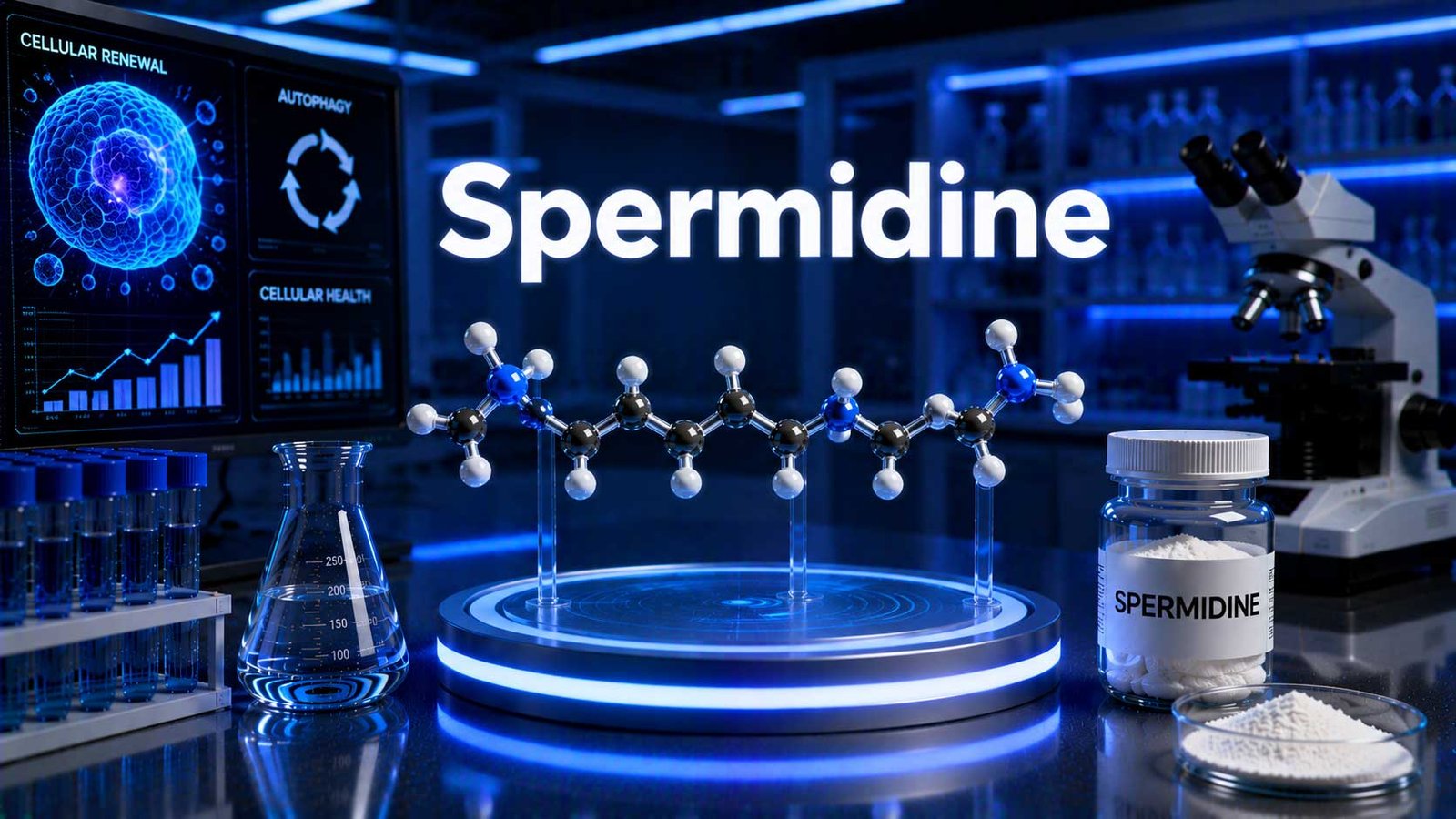
The Molecule Your Body Has Been Quietly Losing Since Your Twenties
There’s a strange kind of humility that comes from learning about spermidine for the first time. Here’s a compound that’s been inside every cell of your body since before you were born, doing unglamorous but essential work, and most people go their whole lives without ever hearing its name. I remember the first time I really sat with the research on this one — not the headline-grabbing “fountain of youth” articles, but the actual biochemistry — and I had that specific feeling you get when something obvious in hindsight suddenly clicks into place.
Spermidine is a polyamine, a small organic molecule your cells produce naturally from another amino acid called putrescine, which itself comes from arginine and ornithine metabolism. Despite the slightly unfortunate name (yes, it was first identified in human semen back in the 17th century, which is exactly where the name comes from), spermidine has nothing to do with reproduction in terms of its primary function in the body. It’s found in essentially every living cell, from bacteria to plants to human tissue, which tells you something about how fundamental it is to cellular life itself.
Table of Contents


Here’s the part that got my attention years ago and hasn’t let go since: spermidine levels in human tissue decline measurably with age. Not a small dip, either. Studies looking at blood and tissue concentrations across the lifespan show a consistent downward trend starting sometime in early adulthood and continuing steadily from there. Your cells are producing less of it, your gut microbiome (which also manufactures a meaningful portion of your spermidine supply) shifts in ways that reduce output, and your dietary intake often doesn’t make up the difference.

Why does that matter? Because spermidine’s main claim to fame is its role in a process called autophagy — literally “self-eating” in Greek, though that makes it sound far more dramatic than it is. Autophagy is your cells’ internal recycling and quality control system. Old, damaged, or misfolded proteins get tagged, broken down, and either recycled into new building blocks or cleared out entirely. Worn-out cellular components like mitochondria go through the same process. Think of it as the janitorial staff that keeps a building running long after the original architects have moved on. When autophagy works well, cells stay cleaner, more efficient, and better equipped to handle stress. When it slows down, cellular debris tends to accumulate.
The foundational research here traces back to a landmark 2009 paper out of Frank Madeo’s lab in Graz, Austria, which found that administering spermidine to yeast, fruit flies, and roundworms extended their lifespan, and that this effect depended almost entirely on functional autophagy machinery since spermidine administration extends lifespan in yeast, flies, worms and human immune cells by preventing early oxidative stress and necrotic cell death and increasing expression of autophagy genes. That single study kicked off more than a decade of follow-up research across species, culminating in human observational studies and, more recently, actual clinical trials.
I want to be upfront about something before we go further, because I think it matters for how you read the rest of this piece. Spermidine research spans a genuine spectrum: rock-solid cell biology at one end, promising but still-developing human trial data in the middle, and a fair amount of supplement-industry enthusiasm stretching things at the other end. My job here isn’t to hype this molecule into something it isn’t. It’s to walk you through what we actually know, where the evidence is strong, where it’s still emerging, and what that means if you’re the kind of person who reads ingredient labels and wonders whether wheat germ is actually worth the trouble.
There’s also a reason spermidine has become such a hot topic in longevity and cellular health circles specifically, as opposed to just being another supplement fad that comes and goes. Unlike a lot of compounds marketed for anti-aging purposes, this one has decades of basic biology behind it, a mechanism that makes coherent sense (autophagy decline is one of the recognized hallmarks of aging), and — critically — it’s something your body already knows how to use because it’s already making it. That’s a meaningfully different starting point than, say, a novel synthetic molecule nobody’s ever encountered before.
What follows is a practical walk through the terrain: what spermidine appears to do inside the body, where you can actually get it from food, how much people typically consume versus how much shows up in clinical research, and what the honest safety picture looks like. No fluff, no miracle claims, just a clear-eyed look at a molecule that quietly supports one of the most important housekeeping systems your cells have.
Key Health Benefits
Let’s get into what spermidine actually appears to do, because “supports cellular renewal” is one of those phrases that sounds nice on a supplement label but doesn’t tell you much on its own. I want to break this down by the areas where the research base is most developed, starting with the mechanism everything else hangs off of.
Autophagy and the Cellular Housekeeping System
I already touched on autophagy in the introduction, but it deserves a closer look because it’s genuinely the backbone of everything else spermidine is associated with. Autophagy isn’t one single process — it’s a family of related pathways, and spermidine appears to influence several of them, most notably by inhibiting an enzyme called EP300 (a histone acetyltransferase), which in turn triggers a cascade of changes in gene expression that ramp up autophagic activity. There’s also a second, somewhat independent mechanism involving a process called hypusination, where spermidine acts as the sole source material for modifying a specific protein (eIF5A) that’s involved in translating other autophagy-related proteins spermidine is a naturally occurring polyamine that elicits geroprotection and autophagy induction across species, with a review delineating its molecular targets and effects on the hallmarks of aging.
What’s interesting is that this isn’t purely a theoretical or animal-model phenomenon anymore. Researchers have shown that spermidine can restore healthier autophagic function in human immune cells taken from older donors, essentially demonstrating the mechanism working in real human tissue outside the body. It’s one thing to see an effect in a fruit fly. It’s another to see the same molecular pathway respond in cells drawn from a 70-year-old volunteer.
Cardiovascular Support
This is probably the area with the most compelling population-level human data, even if it’s observational rather than interventional. The Bruneck Study, a long-running prospective cohort study based in northern Italy, tracked dietary spermidine intake against mortality outcomes over roughly two decades in a population of adults. The results were striking. Participants in the highest third of dietary spermidine intake had substantially lower all-cause mortality than those in the lowest third, and the researchers calculated that the difference in risk was comparable to being about 5.7 years younger the hazard ratios presented were for a 1-SD higher spermidine intake, and analyses excluding the initial five years of follow-up or additionally adjusting for lifestyle and dietary characteristics yielded similar results. The findings were independently checked against a second cohort, the SAPHIR study, and held up.
Now, I want to pump the brakes a little here, because this kind of study can only tell you so much. People who eat more spermidine-rich foods (whole grains, legumes, aged cheeses, mushrooms) tend to have generally healthier dietary patterns overall, and teasing apart spermidine’s individual contribution from the broader “eats vegetables, doesn’t smoke” lifestyle package is genuinely hard. That said, similar associations turned up independently in a separate analysis of the U.S. National Health and Nutrition Examination Survey, where higher dietary spermidine intake was linked to lower cardiovascular and all-cause mortality in a large American sample, which adds some weight to the idea that this isn’t just a quirk of one European population.
Animal research offers a plausible mechanistic backstory here too, with studies showing spermidine supplementation improving markers of cardiac and vascular aging in rodents, including effects on arterial stiffness and mitochondrial function in heart tissue.
Cognitive Function and Memory Support
If there’s one area where spermidine research has moved fastest from bench to bedside, it’s cognition. Building on earlier rodent studies showing that restoring polyamine levels could protect against age-related memory impairment, researchers ran the SmartAge trial, a twelve-month, randomized, double-masked, placebo-controlled study in older adults with subjective cognitive decline. Participants received a modest daily dose of spermidine-rich wheat germ extract or a placebo, and the trial tracked memory performance alongside various biomarkers. The results, published in JAMA Network Open, reported measurable improvements in memory performance in the spermidine group relative to placebo over the study period, with good safety and tolerability throughout spermidine supplementation has shown beneficial effects on brain and cognitive health in animal models, and there had been preliminary evidence of memory improvement in individuals with subjective cognitive decline before this longer trial was conducted.
This matters because subjective cognitive decline is considered an early risk marker that sometimes precedes more serious cognitive issues down the line, so a twelve-month intervention showing measurable benefit in this population is a meaningfully bigger deal than a short-term study in healthy young adults would be.
Immune Cell Renewal
The last piece worth highlighting is spermidine’s apparent role in keeping immune cells functioning well as they age. T cells from older donors tend to show reduced autophagy and diminished function compared to those from younger people, and research out of Oxford found that restoring spermidine levels in these aged T cells could partially reverse that decline, correlating with better cellular function and improved responses in downstream immune assays. More recent pilot work in older adults has extended this into vaccine response specifically, finding that some older adults who mount weak antibody responses to vaccination show signs of impaired autophagy in their immune cells, and that spermidine supplementation was associated with improved antibody levels and more active memory B cells in that subgroup.
Taken together, these four areas paint a coherent picture: a molecule that supports the basic maintenance systems cells rely on, with downstream effects that show up across several different organ systems and, increasingly, in actual human trials rather than just cell cultures and animal models.

Dietary Sources
If autophagy is the “why” of spermidine, food is the practical “how.” Unlike some compounds where you’re stuck choosing between an obscure supplement or nothing at all, spermidine shows up in a genuinely wide range of everyday foods. The trick is knowing which ones actually deliver meaningful amounts, because the concentration varies enormously depending on the food.
Wheat Germ: The Undisputed Heavyweight
If you’re going to remember one food from this section, make it wheat germ. It’s consistently identified as the single richest common dietary source of spermidine, with concentrations that dwarf most other options — research estimates place it somewhere in the range of 150 to 300 milligrams per kilogram, depending on the specific study and how the wheat was processed. In practical terms, a single tablespoon of wheat germ can provide somewhere around 1 to 2.5 milligrams of spermidine, which is a genuinely useful contribution when you consider that clinical trials showing cognitive benefits used daily doses in that same general ballpark.
Wheat germ is also just a solid food in its own right. It’s the nutrient-dense embryo of the wheat kernel, packed with vitamin E, folate, zinc, and healthy fats, and it’s easy to fold into a morning routine — a spoonful stirred into oatmeal, yogurt, or a smoothie doesn’t change the taste dramatically but adds a pleasant nutty note. If you’re someone who bakes, it can also go into bread or muffin batter without much fuss.
One caveat worth mentioning: freshness matters. Wheat germ oxidizes fairly quickly once it’s separated from the rest of the grain, and storage conditions can affect both flavor and nutrient content over time. Keeping it refrigerated and buying smaller quantities more frequently tends to be the better play.
Fermented Soy Foods
Natto, the sticky fermented soybean dish that’s a breakfast staple in parts of Japan, is another genuine powerhouse here, and this is where things get interesting from a longevity-research standpoint. Fermentation seems to substantially boost polyamine content compared to unfermented soy, likely because the bacteria involved in the fermentation process are themselves producing additional spermidine as a metabolic byproduct. Tempeh, another fermented soy product, follows a similar pattern, and both foods are staples in regions of Asia that have long been studied for exceptional longevity outcomes.
I’ll be honest, natto is an acquired taste for a lot of Western palates — the texture alone (stringy, somewhat slimy) turns plenty of people off before they even get to the flavor. If that’s you, tempeh tends to be a gentler entry point since it has a firmer, more familiar texture that works well stir-fried or crumbled into a grain bowl. Tofu and edamame contain spermidine too, just in smaller amounts than their fermented cousins.
Aged Cheeses and Mushrooms
Here’s a fun one: the aging process in cheese doesn’t just develop flavor, it also concentrates polyamine content. Well-aged varieties like sharp cheddar, aged Gouda, Parmesan, and various blue cheeses tend to carry more spermidine than their fresher counterparts, likely tied to the same bacterial and enzymatic activity responsible for flavor development. If you already enjoy a cheese board, this is one of those rare cases where indulgence and nutrition happen to line up nicely.
Mushrooms deserve their own mention too. Shiitake, oyster, and portobello varieties all contribute meaningful amounts of spermidine, and they come with the added benefit of being low-calorie, high-fiber, and rich in other compounds like beta-glucans that support general health independent of their polyamine content. Tossing mushrooms into soups, stir-fries, or roasted vegetable medleys is an easy way to build this in without thinking about it too hard.
Building a Spermidine-Rich Plate Without Overhauling Your Diet
A few practical patterns worth internalizing:
- Whole grains, legumes (lentils, chickpeas, black beans), and green peas all contribute moderate but meaningful amounts, especially when eaten regularly rather than occasionally.
- Certain fruits like durian, mango, and citrus contain notable spermidine as well, though durian in particular isn’t exactly a pantry staple for most people outside Southeast Asia.
- Cruciferous vegetables including broccoli and cauliflower show up on most polyamine food databases with respectable numbers.
- Variety matters more than obsessing over any single “superfood.” A diet that regularly includes several of these categories will likely add up to more total intake than fixating on wheat germ alone while ignoring everything else.
The honest truth is that most people eating a reasonably varied, whole-food-forward diet are already getting some spermidine without trying. The question worth asking isn’t “am I getting zero,” it’s “am I getting enough to approach the amounts studied in research showing measurable benefits,” which brings us naturally into dosage territory.
Dosage & Deficiency
This is the section where I think a lot of the online discourse around spermidine gets a little muddled, so let’s try to bring some clarity to actual numbers rather than vague gestures at “more is better.”
What People Actually Consume From Food
Estimates of typical dietary spermidine intake vary by population and dietary pattern, but general figures for a standard Western diet tend to land somewhere in the range of 10 to 15 milligrams per day when you count total polyamine intake across food sources, though the spermidine-specific portion of that is usually smaller since putrescine and spermine (the other two major polyamines) are counted separately in most databases. People eating diets richer in legumes, whole grains, aged cheeses, and fermented soy — patterns closer to certain Mediterranean or traditional Japanese eating styles — tend to land on the higher end of that range.
For context, the Bruneck Study found that participants in the study’s highest tertile of spermidine intake were consuming somewhere north of about 80 micromolar-equivalent units per day, compared to under 62 in the lowest tertile — the exact conversion to milligrams depends on how you’re measuring, but the broad takeaway is that the gap between “average” and “high” intake in real-world diets isn’t enormous, which is actually encouraging. It suggests that meaningful shifts are achievable through food choices rather than requiring supplementation to reach beneficial ranges.
Clinical Trial Dosing
Here’s where things get more concrete. The SmartAge cognitive trial used a daily dose of 0.9 milligrams of spermidine from wheat germ extract, sustained over twelve months. That’s a notably modest number, especially compared to some of the more aggressive dosing you’ll see marketed by supplement companies. Earlier, shorter safety and tolerability studies from the same research group used similar low-milligram dosing and found it well tolerated in older adults over several months.
This matters because it tells you something important: the human clinical evidence we actually have doesn’t support the idea that you need enormous doses to see benefit. A tablespoon or two of wheat germ, combined with regular servings of legumes, mushrooms, and the occasional aged cheese or serving of natto, can realistically get a person into the same general neighborhood as what’s been studied in trials showing cognitive and safety benefits.
Signs Associated With Lower Spermidine Status
There isn’t a standard clinical blood test that doctors run to check “spermidine levels” the way they’d check vitamin D or iron, so there’s no formal deficiency diagnosis in the way we think about other nutrients. What the research does show is a consistent age-related decline in tissue and blood spermidine concentrations, and some studies have found lower spermidine levels correlating with worse memory performance and greater subjective cognitive complaints in older populations, along with associations to markers of cellular senescence in immune cells.
It’s worth being careful with the causality question here, though. Lower spermidine in aging tissue could be a contributing factor to declining cellular function, a downstream consequence of it, or some combination of both feeding into each other. The research hasn’t fully untangled that, and I don’t think it’s honest to present this as a settled deficiency syndrome the way we’d talk about, say, vitamin B12 deficiency with its well-characterized symptoms and diagnostic markers.
A Practical Framework
If you’re trying to translate all this into something actionable without overthinking it:
- Aim for regular inclusion of at least two or three spermidine-rich foods across your week rather than a single daily ritual you’ll eventually abandon.
- A tablespoon of wheat germ most days, paired with occasional servings of legumes, mushrooms, or aged cheese, realistically approaches the range studied in trials showing measurable benefits.
- If food-based intake feels impractical for your lifestyle, standardized wheat germ extract supplements exist and have been used in the clinical research discussed above, generally in the sub-1-milligram to low-single-digit-milligram range per day.
- There’s no strong evidence that dramatically exceeding these amounts produces proportionally greater benefit, which is a good segue into thinking honestly about the upper limits and safety picture.
Why the “More Is Better” Instinct Doesn’t Quite Apply Here
There’s a natural tendency, once you learn a compound is associated with good outcomes, to assume that doubling or tripling your intake must double or triple the benefit. Spermidine research doesn’t really support that kind of linear thinking, and I think it’s worth spelling out why. The dose-response relationships observed in the population studies weren’t dramatic step-changes; they were gradual, and the difference between the middle and top tiers of intake tended to be smaller than the difference between the bottom and middle tiers. That pattern, sometimes called a plateauing effect, shows up in a lot of nutrition science and is a useful mental model here. It suggests that getting from “very low” to “moderate” intake likely matters more than pushing from “moderate” to “very high.”
There’s also a biological reason this makes sense. Your body isn’t a passive receptacle for spermidine; it actively regulates production, uptake, and breakdown through enzymes like spermidine/spermine N1-acetyltransferase, which helps keep polyamine levels within a functional range rather than letting them climb unchecked. This kind of homeostatic control is common throughout physiology, and it’s part of why chasing extreme doses of naturally regulated compounds often produces diminishing returns rather than proportional benefits.
Age and Life Stage Considerations
It’s also worth acknowledging that most of the meaningful human trial data comes from older adults, generally in their sixties through eighties, which happens to be the population where age-related spermidine decline is most pronounced and where the case for supplementation (through food or extract) is strongest. Younger adults with naturally higher baseline spermidine production and turnover haven’t been the focus of the same depth of clinical research, so extrapolating trial findings backward onto a 30-year-old is more of an educated guess than an evidence-based recommendation. That doesn’t mean a younger person eating spermidine-rich foods is doing anything unwise; it just means the strongest data currently speaks most directly to an older population, and framing this as something urgently needed at every life stage would be overstating what’s actually been shown.
Toxicity & Risks
I think this section is where a writer’s actual opinion matters most, because the supplement market has a well-documented habit of implying that if a little is good, a lot must be better. With spermidine, the evidence doesn’t really support that leap, and there are some genuine reasons for caution at higher, less-studied doses.
Safety at Food-Derived Amounts
Let’s start with the reassuring part. Spermidine is not some exotic foreign compound your body has to learn to process. It’s endogenous, meaning your cells make it themselves, and it’s been part of the human diet for the entirety of human history in foods like grains, legumes, and fermented products. At the levels found in ordinary food consumption, there’s no meaningful safety concern on record. People in regions with traditionally high natto or fermented-soy consumption have been eating far more spermidine daily than the average Western diet provides for generations without any signal of harm tied specifically to polyamine intake.
Regulatory Upper Limits and What They’re Based On
Where things get more specific is with concentrated extracts and supplements. The European Food Safety Authority evaluated a spermidine-rich wheat germ extract as a novel food and, following its safety assessment, authorized it for use in the European Union, with subsequent regulatory updates addressing manufacturing specifications for the approved extract the entry in the Union list of authorised novel foods referring to spermidine-rich wheat germ extract from Triticum aestivum was amended following the change of specifications process. This regulatory pathway reflects a formal review of toxicological and human data for that specific extract, and the resulting guidance generally points toward a daily intake ceiling in the single-digit milligram range for supplemental spermidine from this particular source, which lines up closely with the doses actually used in the human clinical trials discussed earlier in this article.
It’s worth being precise about what that limit actually represents. It isn’t a line beyond which harm is expected to occur; it’s the upper boundary of what’s been formally evaluated with adequate safety data behind it. Products on the market that deliver considerably higher doses aren’t necessarily dangerous, but they are, by definition, operating outside the range that regulatory science has thoroughly examined for long-term human use. That’s a meaningfully different statement than “unsafe,” but it’s also not nothing.
Where the Real Caution Belongs
A few groups and situations deserve more careful thought before adding concentrated spermidine supplementation to the mix, separate from ordinary food sources:
- Pregnancy and breastfeeding, where the research base on supplemental polyamine intake is thin and most clinical trials have specifically excluded these populations.
- Active cancer treatment or a history of certain cancers, given that polyamine metabolism is closely tied to cell proliferation pathways, and some research has explored polyamine restriction rather than supplementation as an adjunct cancer strategy in specific contexts. This is genuinely nuanced territory that deserves a direct conversation with an oncologist rather than a generalized recommendation either way.
- People on immunosuppressive therapy or managing complex autoimmune conditions, since spermidine’s effects on immune cell function, while generally framed as beneficial for aging-related immune decline, haven’t been thoroughly mapped in the context of therapeutic immune suppression.
- Anyone considering doses well above what’s been studied in clinical trials, simply because the long-term human safety data at high doses doesn’t really exist yet. Extrapolating “it’s natural and my body makes it anyway” to justify taking amounts many times higher than anything tested is a leap the current evidence doesn’t support.
Mild, More Common Considerations
For most healthy adults using food sources or modest supplemental doses in line with what’s been studied, the more likely downsides are mundane: some people report mild gastrointestinal discomfort, particularly when first introducing concentrated wheat germ or supplement forms, which often settles down with consistent use or by taking it alongside food. This is a far cry from serious toxicity, but it’s worth knowing so you’re not caught off guard.
My honest take, after going through this research repeatedly over the years, is that spermidine sits in a genuinely favorable risk category compared to a lot of things marketed in the same longevity-adjacent space. The mechanism is well characterized, the doses studied in humans are modest and closely mirror what a thoughtful diet can provide, and the safety signal at those levels is clean. Where I’d urge some skepticism is toward the marketing that implies dramatically higher, unstudied doses are automatically better just because the underlying molecule is natural. Natural and unlimited are not the same thing, and that distinction matters here as much as anywhere else in nutrition science.
Reading Supplement Labels With a Critical Eye
If you do go the supplement route rather than relying purely on food, it’s worth paying attention to two things that get glossed over in a lot of marketing copy. First, the source matters. Trials showing measurable benefit have generally used standardized wheat germ extracts with a verified spermidine content, not generic “polyamine blends” of uncertain composition. Products that don’t specify how much actual spermidine they deliver per serving, as opposed to just listing “wheat germ extract” as an ingredient with no milligram figure attached, make it hard to know whether you’re anywhere near the doses that research has actually examined. Second, be wary of proprietary blends that combine spermidine with a long list of other longevity-adjacent ingredients at doses too small to individually matter, since that pattern often exists more for marketing differentiation than for any demonstrated synergistic effect.
Interactions and Practical Precautions
There isn’t a well-documented list of serious drug interactions tied to dietary or modest supplemental spermidine intake, which is reassuring, but that absence partly reflects how new the clinical research still is rather than definitive proof of a clean bill of health across every medication combination. Anyone taking medications that specifically affect polyamine metabolism, which does come up in certain specialized cancer treatment protocols, should loop in their prescribing physician before adding a concentrated supplement on top of an existing regimen. For most people without a specific medical complication in that territory, the practical precautions are refreshingly simple: start with food sources first, introduce any supplement gradually rather than jumping straight to a high dose, and pay attention to how your digestive system responds over the first week or two.
It’s also worth remembering that “safe” doesn’t mean “necessary for everyone.” Plenty of people will do perfectly well without ever specifically tracking their spermidine intake, simply by eating a reasonably varied, whole-food-based diet that happens to include some of the sources discussed earlier. This isn’t a compound that demands anxious monitoring or a rigid daily ritual to be worthwhile.
Why This Small Molecule Deserves a Bigger Seat at the Table
Stepping back from all the mechanistic detail, I keep coming back to the same thought: spermidine is one of those rare compounds where the science, the food sources, and the practical takeaway all line up without requiring a huge leap of faith or an expensive supplement stack. You don’t need to reorganize your entire pantry or start counting milligrams obsessively. You need a spoonful of wheat germ in your morning routine, a reasonable rotation of legumes and mushrooms through your weekly meals, and maybe an occasional plate of aged cheese or a curious taste test of natto if you’re feeling adventurous.
What makes this molecule compelling isn’t a single blockbuster finding. It’s the accumulation of consistent signals across very different lines of evidence — decades of cell and animal biology establishing a coherent mechanism through autophagy, population studies spanning different countries linking higher intake to lower mortality, and now actual randomized human trials showing measurable benefits in memory and immune function using doses that map cleanly onto what real food can provide. That kind of convergence is genuinely rare in the world of nutrition science, where so much of what gets hyped rests on a single small study or a plausible-sounding mechanism that never quite pans out in people.
I’d also gently push back on treating this as some kind of magic bullet against aging, because that framing does the research a disservice and sets people up for disappointment. Spermidine supports a specific, important cellular process. It doesn’t override genetics, undo decades of other health habits, or substitute for sleep, movement, and the rest of the unglamorous fundamentals that actually carry the most weight in how well someone ages. Think of it less as a silver bullet and more as one solid, well-supported piece of a much larger puzzle, the kind of piece that’s easy to slot into an already reasonable diet without much friction or cost.
If you take one practical thing away from everything above, let it be this: check whether wheat germ, mushrooms, legumes, or aged cheese already show up in your regular meals, and if they don’t, there’s a low-effort, well-supported case for changing that. Not because any single food is magic, but because the cumulative pattern of eating this way has real evidence behind it, evidence that’s grown considerably more solid over just the past few years as clinical trials have started catching up to decades of cell biology. That’s a rare enough thing in nutrition science to take seriously.
I also think there’s something worth sitting with about how this whole story unfolded. Spermidine wasn’t discovered by a pharmaceutical company chasing a patentable molecule. It was noticed because researchers kept seeing the same signal show up again and again, in yeast, in flies, in worms, in mice, in human immune cells, and eventually in people themselves, until the accumulated weight of evidence became hard to ignore. That’s a slower, less flashy path to credibility than most trending supplements ever take, and I’d argue that’s exactly what makes it more trustworthy rather than less interesting.
None of this means you need to become someone who talks about autophagy at dinner parties or restructures every meal around polyamine content. It just means that the next time you’re deciding between plain rice and something folded through with lentils, or between a bland snack and a small wedge of aged cheese, there’s a quiet, well-documented reason to lean toward the more interesting choice. Cellular renewal isn’t something that happens in a single dramatic moment. It’s the accumulation of thousands of small, unremarkable decisions your body makes every single day, clearing out what no longer serves it and making room for what does. Spermidine simply happens to be one of the more useful tools your cells have for doing that work well, and it’s sitting, quite literally, in your kitchen already.
Article Sources
At AncientHerbsWisdom, our content relies on reputable sources, including peer-reviewed studies, to substantiate the information presented in our articles. Our primary objective is to ensure our content is thoroughly fact-checked, maintaining a commitment to accuracy, reliability, and trustworthiness.
- Schwarz, C., Benson, G. S., Horn, N., Wurdack, K., Grittner, U., Schilling, R., Märschenz, S., Köbe, T., Hofer, S. J., Magnes, C., Stekovic, S., Eisenberg, T., Sigrist, S. J., Schmitz, D., Wirth, M., Madeo, F., & Flöel, A. (2022). Effects of spermidine supplementation on cognition and biomarkers in older adults with subjective cognitive decline: A randomized clinical trial. JAMA Network Open, 5(5), e2213875. https://doi.org/10.1001/jamanetworkopen.2022.13875
- Eisenberg, T., Knauer, H., Schauer, A., Büttner, S., Ruckenstuhl, C., Carmona-Gutierrez, D., Ring, J., Schroeder, S., Magnes, C., Antonacci, L., Fussi, H., Deszcz, L., Hartl, R., Schraml, E., Criollo, A., Megalou, E., Weiskopf, D., Laun, P., Heeren, G., Breitenbach, M., Grubeck-Loebenstein, B., Herker, E., Fahrenkrog, B., Fröhlich, K. U., Sinner, F., Tavernarakis, N., Minois, N., Kroemer, G., & Madeo, F. (2009). Induction of autophagy by spermidine promotes longevity. Nature Cell Biology, 11(11), 1305-1314. https://doi.org/10.1038/ncb1975
- Hofer, S. J., Simon, A. K., Bergmann, M., Eisenberg, T., Kroemer, G., & Madeo, F. (2022). Mechanisms of spermidine-induced autophagy and geroprotection. Nature Aging, 2(12), 1112-1129. https://doi.org/10.1038/s43587-022-00322-9
- Kiechl, S., Pechlaner, R., Willeit, P., Notdurfter, M., Paulweber, B., Willeit, K., Werner, P., Ruckenstuhl, C., Iglseder, B., Weger, S., Mairhofer, B., Gartner, M., Kedenko, L., Chmelikova, M., Stekovic, S., Stuppner, H., Oberhollenzer, F., Kroemer, G., Mayr, M., Eisenberg, T., Tilg, H., Madeo, F., & Willeit, J. (2018). Higher spermidine intake is linked to lower mortality: A prospective population-based study. American Journal of Clinical Nutrition, 108(2), 371-380. https://doi.org/10.1093/ajcn/nqy102
- Wu, H., Wang, J., Jiang, H., Liu, X., Sun, X., Chen, Y., Hu, C., Wang, Z., Han, T., Sun, C., Wei, W., & Jiang, W. (2022). The association of dietary spermidine with all-cause mortality and CVD mortality: The U.S. National Health and Nutrition Examination Survey, 2003 to 2014. Frontiers in Public Health, 10, 949170. https://doi.org/10.3389/fpubh.2022.949170
- Alsaleh, G., Panse, I., Swadling, L., Zhang, H., Richter, F. C., Meyer, A., Lord, J., Barnes, E., Klenerman, P., Green, C., & Simon, A. K. (2020). Autophagy in T cells from aged donors is maintained by spermidine and correlates with function and vaccine responses. eLife, 9, e57950. https://doi.org/10.7554/eLife.57950
- Madeo, F., Eisenberg, T., Büttner, S., Ruckenstuhl, C., & Kroemer, G. (2018). Spermidine and autophagy: A novel anti-aging strategy. Frontiers in Cell and Developmental Biology, 6, 108. https://doi.org/10.3389/fcell.2018.00108
- European Commission. (2020). Commission Implementing Regulation (EU) 2020/443 of 25 March 2020 authorising the change of the specifications of the novel food spermidine-rich wheat germ extract (Triticum aestivum) under Regulation (EU) 2015/2283. Official Journal of the European Union. https://eur-lex.europa.eu/eli/reg_impl/2020/443/oj/eng

- Phosphatidic Acid: Supporting Muscle Growth and Strength - July 31, 2026
- Ceramides: Supporting Healthy Skin From Within - July 31, 2026
- Synbiotics: Combining Prebiotics and Probiotics Together - July 31, 2026