
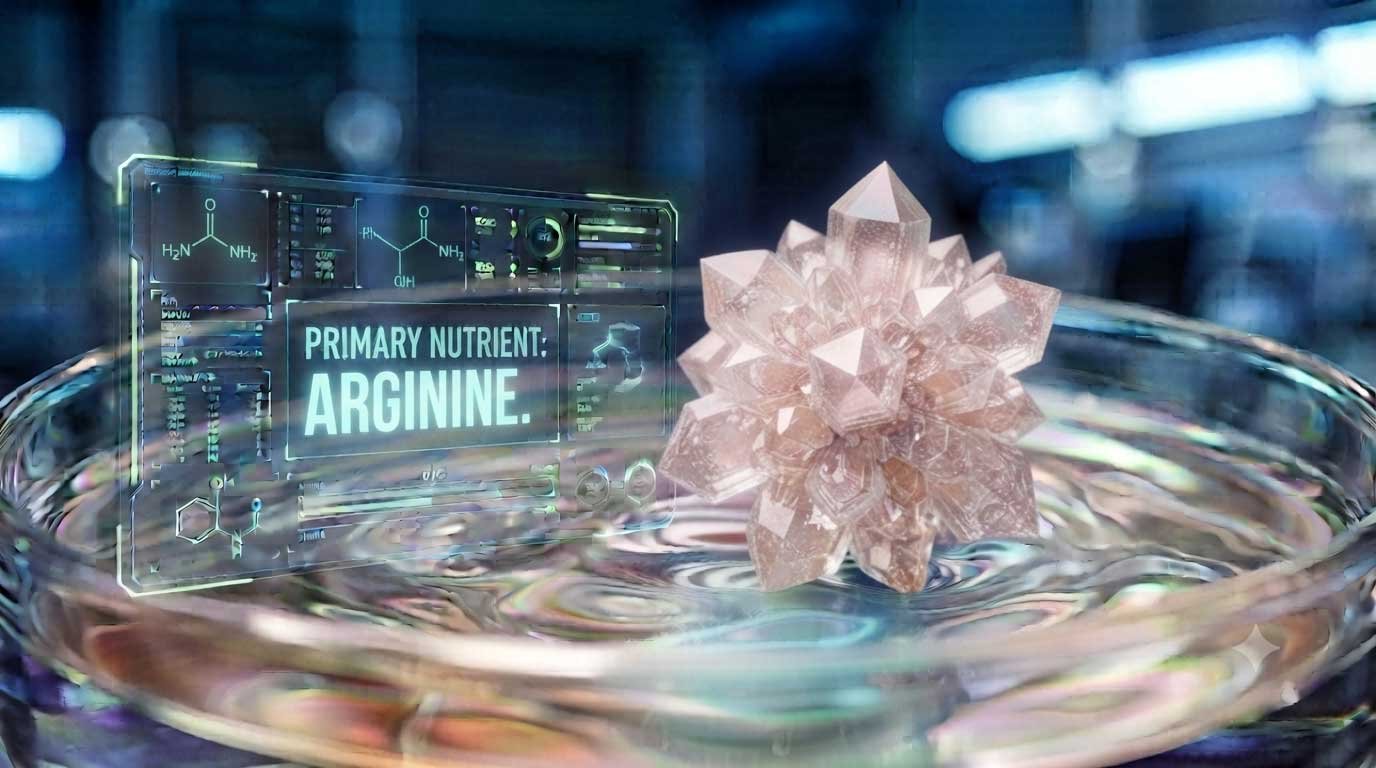
The Amino Acid That Talks to Your Blood Vessels
If there’s one amino acid that keeps popping up at the center of the conversation, it’s arginine. Not glamorous. Not trendy in the way collagen or creatine are right now. But arginine sits in a strange, interesting spot in nutrition science — it’s technically “non-essential,” meaning your body can make it on its own, and yet under enough stress, illness, or physical demand, your own production quietly falls short of what you actually need.
That gap matters, because arginine is the only raw material your body uses to make nitric oxide, the molecule responsible for telling your blood vessels to relax and widen. Data from the literature show that arginine is the only substrate for the production of nitric oxide, from which arginine develops its effects on the cardiovascular system. If you’ve ever wondered why bodybuilders chug arginine before a workout, why cardiologists have studied it for decades, or why “nitric oxide boosters” are a whole aisle at the supplement store now, this is the reason. One amino acid, one gas molecule, and a whole lot of downstream effects on how blood moves through your body.
Table of Contents

Here’s where I’ll set expectations early, because I think it matters more than the marketing usually allows: arginine is not a miracle molecule. The research on it is genuinely compelling in some areas — cardiovascular function, wound healing, blood flow — and genuinely mixed or disappointing in others, particularly athletic performance in already-trained individuals. In contrast to studies in patients, the results obtained in highly trained healthy athletes are inconclusive, and it seems that the great popularity of supplements is related to extensive advertising campaigns by sports nutrition manufacturers. So we’re going to walk through this with some nuance, not hype.

Arginine sits in an odd taxonomic category. Technically it’s classified as a semi-essential or conditionally essential amino acid — your liver and kidneys can synthesize it from citrulline through the urea cycle, so under normal circumstances you don’t need to eat it. But “normal circumstances” is doing a lot of work in that sentence. During childhood growth spurts, pregnancy, serious injury, sepsis, or intense physical stress, the body’s internal production capacity gets outpaced by demand. That’s when dietary arginine — from meat, nuts, dairy, legumes — stops being optional and starts being genuinely important.
What makes arginine fascinating from a biochemistry standpoint is the sheer economy of its role. Most nutrients we talk about have a handful of jobs scattered across different systems. Arginine’s headline function is almost singular in focus: it’s the substrate that nitric oxide synthase enzymes grab onto to produce nitric oxide, releasing citrulline as a byproduct. That reaction happens inside the endothelium — the paper-thin layer of cells lining every blood vessel in your body — and the nitric oxide it produces diffuses into the surrounding smooth muscle, where it triggers relaxation. Blood vessels widen. Blood pressure eases. Circulation improves. It’s a beautifully simple mechanism for something with such wide-reaching consequences.
I want to be upfront about something else too: nitric oxide’s role isn’t confined to blood vessels. It’s involved in immune defense, nerve signaling, and mitochondrial regulation. So when researchers study arginine, they’re rarely looking at one narrow effect — they’re looking at a molecule that touches cardiovascular health, exercise physiology, wound recovery, and even parts of immune function simultaneously. That breadth is part of why the research literature on arginine is so large, and also part of why it’s so easy to overstate what a supplement bottle can actually promise you.
What follows is a look at what the science actually supports — the mechanisms, the food sources, reasonable dosing ranges, deficiency risk, and the real toxicity concerns that don’t get enough attention in the wellness space. No fluff, no oversell.
Key Health Benefits
The Nitric Oxide Connection
Let’s start where everything starts: the enzymatic conversion of arginine into nitric oxide via nitric oxide synthase. This narrative review provides an analysis of the role of nitric oxide and its precursors, particularly arginine, in vascular regulation and health, noting that nitric oxide serves as a critical mediator of vascular function, contributing to vasodilation, the regulation of blood flow, and the prevention of thrombosis. That last part — thrombosis prevention — doesn’t get talked about nearly enough outside clinical circles. Nitric oxide isn’t just a vasodilator; it actively discourages platelets from clumping together and adhering to vessel walls, which is a meaningfully different function from “opens blood vessels.”
The mechanism itself is elegant once you see it laid out. Arginine gets metabolized by nitric oxide synthase inside endothelial cells, producing nitric oxide, which diffuses into vascular smooth muscle and activates an enzyme called guanylate cyclase. That triggers a rise in cyclic GMP, which causes the smooth muscle to relax. Relaxed muscle means a wider vessel. A wider vessel means less resistance, easier blood flow, and typically lower blood pressure. It’s a short chain of events, but each link is doing real physiological work.
Cardiovascular and Circulatory Support
This is where arginine has the most consistent research backing, particularly around endothelial function — essentially, how well your blood vessels respond and dilate when they need to. Studies in people with coronary artery disease, diabetes, and peripheral vascular disease consistently show that arginine supplementation improves flow-mediated dilation scores, which is the standard clinical measure of how well an artery widens in response to increased blood flow demand. That’s not a small thing — flow-mediated dilation is one of the more reliable non-invasive predictors researchers use to gauge vascular health.
For people dealing with genuinely compromised circulation — I’m talking cold extremities, slow-healing wounds, leg cramping during walking that resolves with rest (a pattern called intermittent claudication) — this is where arginine shows real practical value. It’s also been studied specifically in angina and coronary artery disease contexts, where some evidence shows it may help improve blood flow in the arteries of the heart and improve symptoms of clogged arteries and chest pain.
I’ll add a caveat here, because I think it’s important and often glossed over: not every cardiac application has panned out. One notable study found that arginine was not helpful — and may have even been harmful — when used for treating heart attacks in combination with standard treatment. That’s a real finding, not a footnote to bury. Arginine’s benefits in stable, chronic circulatory issues don’t automatically translate to acute, high-risk cardiac events. Context matters enormously here.
Blood Pressure Regulation
Because nitric oxide relaxes vascular smooth muscle, arginine supplementation has a fairly direct line to blood pressure outcomes. Studies show reductions of up to 5 mmHg in systolic pressure in some trials — a modest but clinically meaningful shift, especially for people managing borderline hypertension through lifestyle interventions rather than medication. I wouldn’t call this a replacement for antihypertensive therapy in anyone with diagnosed high blood pressure, but as a supporting piece of a broader circulation-focused approach, the mechanism checks out and the data backs it up reasonably well.
The L-Arginine Paradox
Here’s something that surprised me the first time I really dug into it, and it’s worth sharing because it explains why arginine supplementation doesn’t always “work” the way people expect. It’s called the arginine paradox: oral arginine supplementation doesn’t reliably increase nitric oxide production, even though arginine is the direct substrate for the reaction. This phenomenon can be attributed to the body’s limited capacity to utilise arginine for nitric oxide synthesis under specific conditions, with elevated arginase activity — an enzyme that competes with nitric oxide synthase for arginine — reducing the pool available for nitric oxide production despite higher arginine levels.
There’s also a molecule called asymmetric dimethylarginine, or ADMA, that acts as a natural inhibitor of nitric oxide synthase. Despite the abundance of arginine as a substrate for nitric oxide synthesis, its utilisation can be constrained by enzyme uncoupling or interference from ADMA. In plain terms: having plenty of arginine floating around in your bloodstream doesn’t guarantee your body is efficiently turning it into nitric oxide. Endothelial health, oxidative stress levels, and enzyme competition all get a vote too. This is one of the biggest reasons why arginine supplementation research produces such inconsistent results across different study populations — a healthy 30-year-old and someone with endothelial dysfunction from diabetes are working with completely different underlying machinery.
Exercise and Athletic Performance — A Mixed Bag
Sports nutrition marketing loves arginine, and I understand the appeal — more nitric oxide theoretically means better blood flow to working muscles, more oxygen delivery, better “pump.” The reality is messier. The great popularity of arginine supplements among athletes is related in part to extensive advertising campaigns by sports nutrition manufacturers who suggest that taking arginine leads to increased exercise capacity by stimulating nitric oxide, growth hormone, and creatine synthesis, but the actual performance data in well-trained individuals doesn’t consistently support that story.
The likely explanation is almost logical when you think about it: highly trained athletes already have well-optimized nitric oxide pathways from years of cardiovascular adaptation. Adding more raw material to a system that isn’t the bottleneck doesn’t necessarily move the needle. Where arginine tends to show more promise is in less-trained individuals or those with some baseline vascular limitation — populations where nitric oxide production genuinely has room to improve.
Dietary Sources
Where Arginine Actually Comes From
The good news about arginine is that it’s not some obscure nutrient hiding in exotic foods. It can be synthesized from the amino acid citrulline through the breakdown of body proteins, or obtained through dietary protein intake from foods like meat, poultry, dairy, nuts, fish, and soy products. If you’re eating a reasonably varied, protein-inclusive diet, you’re almost certainly getting meaningful amounts without thinking about it at all.
Nuts, seeds, meat, fish, dairy products, and plant proteins are rich sources of arginine. Among plant sources, almonds, walnuts, sunflower seeds, legumes, soybeans, and lentils are excellent options that provide arginine along with other nutrients, such as healthy fats, proteins, and essential vitamins. On the animal side, beef, poultry, fish such as salmon, and dairy products are particularly rich in arginine, contributing significantly to endothelial function and nitric oxide synthesis.
A few practical highlights worth keeping in mind:
- Pumpkin seeds and watermelon seeds are among the more concentrated plant sources
- Turkey breast and chicken tend to edge out red meat slightly per gram of protein
- Peanuts and peanut butter offer a convenient, affordable source
- Chickpeas and soybeans give plant-based eaters a solid entry point
- Dairy — particularly cheese and yogurt — contributes smaller but steady amounts
The Vegetarian and Vegan Consideration
This is one of those details that doesn’t get discussed enough in general nutrition content, and I think it deserves more attention than it gets. Because most arginine in the typical American diet is obtained from meat and fish, which provide about 5.5 grams daily, vegetarians may be at greater risk for arginine deficiency. That doesn’t mean vegetarians and vegans are doomed to low arginine status — legumes, nuts, and soy products can absolutely close that gap — but it does mean the intake pattern looks different and might warrant a bit more intentionality, especially for people who train hard or are managing a circulatory health condition.
Beyond Arginine Itself: Citrulline and Nitrates
Something worth understanding is that arginine isn’t the only dietary route to more nitric oxide. Citrulline, found abundantly in watermelon, gets converted into arginine in the kidneys, effectively acting as a slow-release precursor. And then there’s the entirely separate nitrate pathway — nitrates found commonly in vegetables such as beetroot, lettuce, and spinach can be reduced in the body to nitrites, which are subsequently converted into nitric oxide, bypassing the arginine-dependent enzyme pathway altogether. This matters practically: if you’re specifically chasing nitric oxide production for circulation or exercise purposes, a beet-forward, leafy-green-heavy diet alongside arginine-rich proteins probably does more for you than focusing on arginine in isolation.
Dosage & Deficiency
What “Enough” Looks Like
There isn’t a formal Recommended Dietary Allowance for arginine the way there is for, say, vitamin C, largely because of its conditionally essential status. Most healthy adults get sufficient amounts through ordinary dietary protein intake without any deliberate effort. Normal serum levels of arginine typically range from 50 to 150 micromolar, and for most people eating a mixed diet, staying within that range isn’t something that requires tracking or supplementing.
Where supplementation dosing comes into the conversation, the ranges used in research vary a fair amount depending on the goal. A typical supplemental dosage of arginine is 2 to 8 grams per day, though for congestive heart failure specifically, higher dosages up to 15 grams have been used in clinical trials — and I want to be clear that self-treating a diagnosed heart condition with a supplement is not something to attempt without medical supervision. Small double-blind, placebo-controlled studies suggest arginine might help with several conditions linked by its effects on nitric oxide: congestive heart failure, intermittent claudication, angina, and sexual dysfunction, but “might help” and “should replace medical treatment” are very different statements, and I don’t want to blur that line.
According to research reviewed by the National Institutes of Health, arginine doses of up to 9 grams per day are usually safe for several weeks, though larger doses may cause adverse effects, and the effects of long-term supplementation aren’t clearly established in humans. That last point — the lack of clear long-term data — is something I think deserves more weight in how people approach this supplement. Short courses for a specific, monitored purpose are a different proposition than years of open-ended daily use.
Who Actually Needs More
Certain situations genuinely increase arginine demand beyond what typical dietary intake provides:
- Recovery from severe burns, major surgery, or traumatic injury
- Periods of rapid growth, including childhood and pregnancy
- Chronic wound healing, particularly in older adults
- Intense or prolonged physical training
- Certain chronic illness states, including some forms of kidney disease
Certain stresses, such as severe burns, infections, and injuries, can deplete the body’s supply of arginine, which is why it’s combined with other nutrients and used in hospital settings to help enhance recovery from severe injury or illness. This clinical use — arginine as part of a broader nutritional support protocol for trauma or surgical patients — is actually one of the more well-established applications, even if it doesn’t get the same public attention as the supplement-aisle version.
Signs Your Intake Might Be Falling Short
True dietary arginine deficiency is rare in people eating a varied diet with adequate protein. It shows up more often in the context of illness, injury, or restrictive eating patterns than as an isolated nutritional gap. That said, because arginine deficiency disrupts nitric oxide production, some of the downstream signs — poor wound healing, unusually cold hands and feet, or reduced exercise tolerance — overlap with broader circulatory concerns. None of these are diagnostic on their own, and if you’re noticing a cluster of them, that’s a conversation for a doctor rather than a supplement aisle decision.
Toxicity & Risks
The Gastrointestinal Reality
If there’s one side effect people run into with arginine supplementation, it’s this one, and it’s more common than most product labels let on. Oral supplements of arginine increase local nitric oxide production in the small intestine, and this may be harmful under certain circumstances — arginine induces water and electrolyte secretion mediated by nitric oxide, which acts as a mild laxative at low levels and a stronger secretagogue at high levels. That’s a fairly technical way of saying: too much arginine at once can send you running for the bathroom.
The dosing thresholds here are actually reasonably well documented. Single doses of 3 to 6 grams rarely provoke side effects, and healthy athletes appeared more susceptible than diabetic patients to gastrointestinal symptoms at individual doses above 9 grams. Most side effects occurred at single doses above 9 grams in adults, often as part of a daily regimen exceeding roughly 30 grams per day. So there’s a fairly wide safety margin at moderate doses, but it does narrow noticeably as intake climbs.
Blood Pressure — Cuts Both Ways
The same mechanism that makes arginine potentially useful for high blood pressure becomes a liability for people who already run low. Reduced blood pressure may be a problem for people who already have low blood pressure, and combining arginine with blood-pressure-lowering medications without medical guidance isn’t a great idea — you can end up with an additive effect that pushes pressure lower than intended.
Kidney Considerations, Especially With Age
This is the part of the arginine conversation I think gets underplayed the most, particularly in casual wellness content. Animal research has raised real questions about long-term, high-dose arginine intake and kidney health. Importantly, arginine supplementation has been shown to enhance age-associated albuminuria and mortality, particularly in females, accompanied by elevated renal arginase-II levels — and long-term dietary arginine supplementation increases reactive oxygen species and decreases nitric oxide production in old vasculature. The researchers behind that work were fairly direct in their conclusion: the results do not support benefits of long-term arginine supplementation, and it may instead accelerate functional decline of the kidney and vasculature in aging populations, so long-term dietary arginine supplementation should be avoided particularly in the elderly.
That’s animal data, and translating it directly to humans requires some caution — but it’s a strong enough signal that I don’t think it should be dismissed, especially for older adults considering years of daily supplementation. Potential kidney damage with long-term use has also been raised as a concern in human-focused reviews, although more research is needed to confirm the extent of the risk.
Interaction and Population-Specific Cautions
A few groups should be particularly cautious, or at minimum should loop in a physician before supplementing:
- People on blood pressure medications or nitrate-based heart medications
- Anyone with a recent heart attack or unstable cardiac condition, given the mixed data on acute cardiac use
- People with herpes simplex virus, since arginine may theoretically support viral replication in some contexts
- Individuals with kidney disease
- Pregnant or breastfeeding individuals, due to limited safety data
The FDA does not check the safety or effectiveness of dietary supplements, so it’s important to choose a reputable brand that undertakes third-party testing to prove the purity and quality of their product if you do decide supplementation makes sense for your situation. That’s not a small caveat — supplement quality control varies enormously, and arginine products are no exception.
What Arginine Actually Deserves From You
If you’ve made it this far, you’ve probably noticed I haven’t tried to sell you on arginine as some kind of circulatory cure-all, because the honest picture is more textured than that. It’s a genuinely important molecule — the sole precursor for one of the most consequential signaling gases in your entire cardiovascular system — and the mechanism behind it is about as elegant as biochemistry gets. But elegant mechanisms don’t always translate into dramatic real-world results, and arginine is a pretty clear case study in that gap.
For most people eating a reasonably varied diet with adequate protein, arginine intake is a non-issue. Your body handles the endogenous production, dietary sources fill in the rest, and nitric oxide gets made without anyone needing to think about grams or micromoles. Where things get more interesting — and more worth paying attention to — is in specific circumstances: recovering from injury, managing an existing circulatory condition under medical supervision, or dealing with a diet pattern (like strict vegetarianism combined with high training volume) that plausibly creates a gap.
If you’re going to supplement, I’d treat it the way I’d treat most single-nutrient interventions: with a specific goal, a defined time frame, and ideally some involvement from a healthcare provider, especially if you’re managing blood pressure, kidney function, or a cardiac condition. The gastrointestinal ceiling is real but manageable at moderate doses. The kidney questions around long-term high-dose use, particularly in older adults, deserve to be taken seriously rather than brushed aside.
And maybe the most useful thing I can leave you with is this: nitric oxide production isn’t a single-nutrient story. Arginine matters, but so do dietary nitrates from leafy greens and beets, so does antioxidant status, so does overall vascular health built through movement and sleep and everything else that keeps the endothelium functioning well. Chasing one amino acid in isolation, expecting it to single-handedly transform your circulation, misses the bigger and honestly more useful picture — that this is a system, not a switch.
Article Sources
At AncientHerbsWisdom, our content relies on reputable sources, including peer-reviewed studies, to substantiate the information presented in our articles. Our primary objective is to ensure our content is thoroughly fact-checked, maintaining a commitment to accuracy, reliability, and trustworthiness.
- Kurhaluk, N., & Tkaczenko, H. (2025). L-Arginine and Nitric Oxide in Vascular Regulation—Experimental Findings in the Context of Blood Donation. Nutrients, 17(4), 665. https://doi.org/10.3390/nu17040665
- Sudar-Milovanovic, E., Obradovic, M., Jovanovic, A., Zaric, B., Zafirovic, S., Panic, A., & Isenovic, E. R. (2016). Benefits of L-Arginine on Cardiovascular System. Mini Reviews in Medicinal Chemistry, 16(2), 94–103. https://doi.org/10.2174/1389557515666151105113538
- Cynober, L., Le Boucher, J., & Vasson, M. P. (2007). Adverse gastrointestinal effects of arginine and related amino acids. The Journal of Nutrition, 137(6), 1693S–1701S. https://doi.org/10.1093/jn/137.6.1693S
- Xu, Q., Fawcett, T. J., Udeh, S. C., Sarr, O., Blackham, K. A., Steward, C. C., & Yang, X. (2021). Detrimental effects of chronic L-arginine rich food on aging kidney. Frontiers in Physiology, 12, 626445. https://doi.org/10.3389/fphys.2021.626445
- National Center for Complementary and Integrative Health. (2024). L-arginine. National Institutes of Health, U.S. Department of Health and Human Services. https://www.nccih.nih.gov/health/l-arginine
- Tkaczenko, H., & Kurhaluk, N. (2025). Exploring the medicinal significance of L-arginine mediated nitric oxide in preventing health disorders. Intelligent Pharmacy. https://doi.org/10.1016/j.ipha.2024.01.002

- Phosphatidic Acid: Supporting Muscle Growth and Strength - July 31, 2026
- Ceramides: Supporting Healthy Skin From Within - July 31, 2026
- Synbiotics: Combining Prebiotics and Probiotics Together - July 31, 2026