
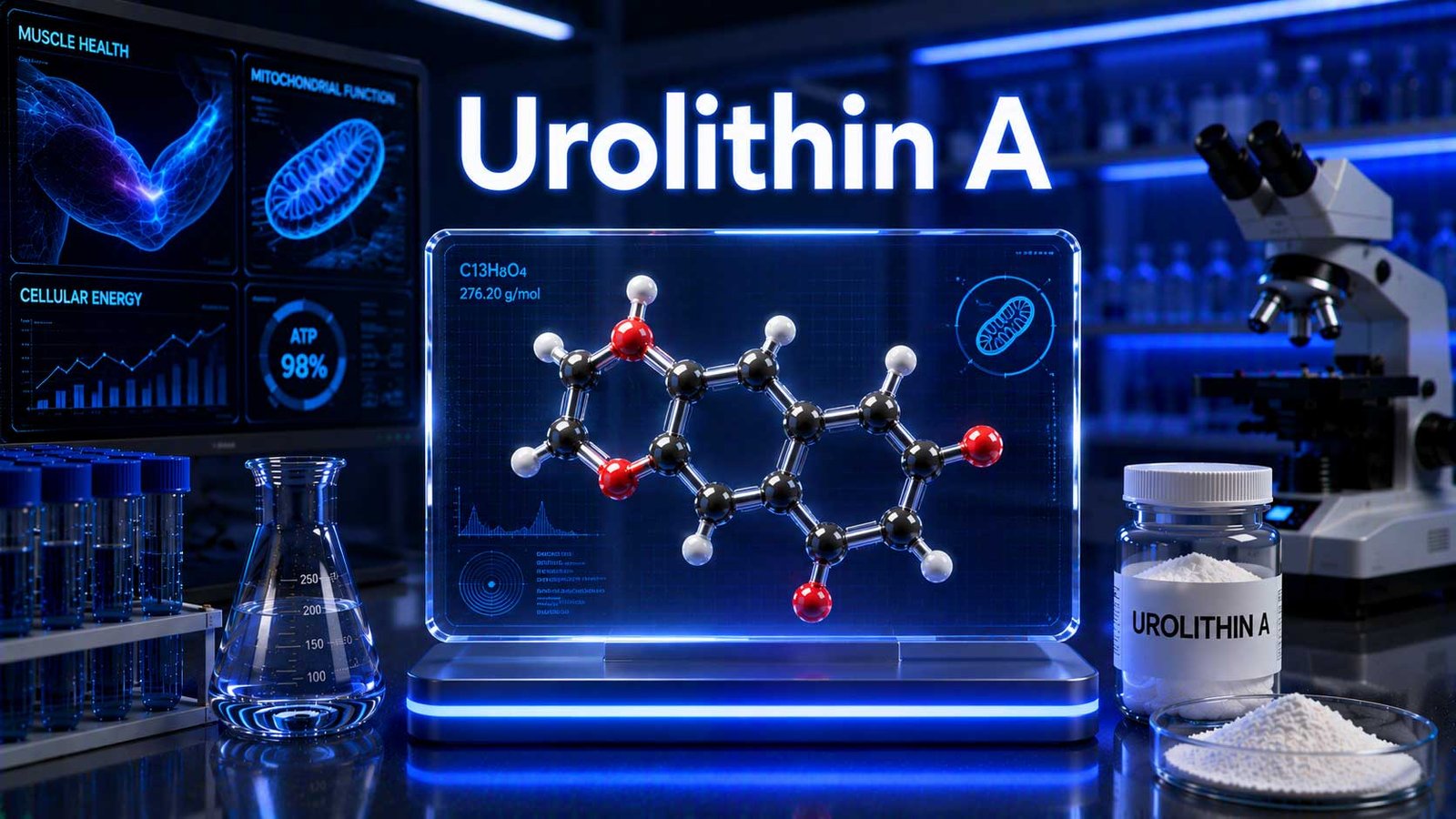
The Cellular Cleanup Crew Nobody Told You About
I still remember the first time someone asked me, half-joking, whether “eating a pomegranate a day” would keep their muscles young forever. I laughed, then caught myself, because the honest answer is more interesting than either yes or no. It’s “it depends on your gut bacteria,” which is not the kind of answer that fits neatly on a supplement label.
That’s the world we’re stepping into with Urolithin A. It isn’t a vitamin. It isn’t something you can eat directly, no matter how many pomegranates or walnuts you pile onto your plate. It’s a metabolite, a molecule your own gut microbes manufacture from compounds found in certain fruits and nuts. And depending on which bacteria happen to be living in your colon, you might make plenty of it, barely any, or somewhere in between. That variability is, frankly, the whole story of Urolithin A, and it’s why the compound has become such a hot topic in conversations about mitochondrial health, muscle, and aging.
Table of Contents


Let’s back up for a second. Mitochondria are the little engines inside nearly every cell in your body, converting food and oxygen into usable energy. As we age, or as we go through periods of inactivity, illness, or just chronic stress, mitochondria start to accumulate damage. Some of them become dysfunctional, sputtering out less energy and more oxidative byproducts. Normally, your cells have a built-in quality control system called mitophagy, essentially a recycling process that identifies worn-out mitochondria and clears them away so healthier ones can take their place. The trouble is, mitophagy tends to slow down with age, and that slowdown has been linked to the kind of muscle decline that creeps up on people in their fifties, sixties, and beyond.

Urolithin A is one of the few compounds identified so far that appears to directly stimulate this recycling process. Researchers at the Swiss institute EPFL first identified it as a “first-in-class” mitophagy activator back in 2016, showing that it extended lifespan in roundworms and improved muscle function in aging rodents by preventing the accumulation of dysfunctional mitochondria with age and extending lifespan in C. elegans, effects that translated to improved exercise capacity in rodent models of age-related muscle decline. That preclinical groundwork is what set off a wave of human trials, and it’s why you’ll now find Urolithin A capsules sitting on shelves next to creatine and collagen.
Here’s where I’ll put my cards on the table: I think Urolithin A is one of the more genuinely interesting compounds to emerge from the longevity and sports-nutrition space in the last decade, not because it’s a miracle molecule (it isn’t), but because the human research, while still limited, is unusually consistent for something in this category. Multiple randomized trials, run by different research groups, have pointed in the same direction. That’s rare. Most “muscle health” supplements have a single promising rat study and a mountain of marketing copy. Urolithin A actually has a paper trail.
But I also think the enthusiasm has outpaced the nuance in a lot of places online. People talk about it like it’s interchangeable with eating pomegranates, and that’s simply not accurate given what we know about individual variation in gut bacteria. Some of you reading this could eat a pomegranate every single day for a year and barely register a blip in your Urolithin A levels, while your neighbor could eat one pomegranate and produce a robust amount. That’s not a hypothetical; it’s been measured directly in clinical research, and I’ll get into the specifics of that later.
So, what exactly does the research say Urolithin A does for the body, where does it come from, how much do people typically take, and are there risks worth knowing about? I want to walk through this the way I would if we were sitting down with the actual studies open on the table, not the way most “top 10 benefits” articles handle it, which is to cherry-pick headlines and skip the caveats. Mitochondrial health and muscle function are things that matter to almost everyone eventually, whether you’re an athlete chasing marginal gains or someone in your seventies just trying to get up from a chair without wincing. Urolithin A sits at an interesting intersection of both audiences, and understanding how it actually works, rather than just what it’s rumored to do, is worth the fifteen minutes it’ll take to read through this.
One more thing before we move on: nothing here is medical advice, and none of this should replace a conversation with your own doctor, especially if you’re managing a chronic condition or taking medications. Consider this a grounded, research-based starting point rather than the final word.
Key Health Benefits
When people ask me what Urolithin A “does,” I usually steer the conversation back to mitochondria first, because that’s genuinely the mechanism everything else hangs on. It’s not a stimulant, it doesn’t directly build muscle tissue the way protein does, and it isn’t an anti-inflammatory in the classic sense either, even though it does seem to nudge inflammatory markers in a favorable direction. What it does, as far as the evidence shows, is help cells clear out the mitochondrial deadwood so the remaining machinery runs more efficiently.
Muscle Strength and Endurance
The most talked-about human trial here is the one nicknamed ATLAS, conducted in middle-aged adults who were largely untrained. Over four months, participants took either 500 mg or 1,000 mg of Urolithin A daily, and the results showed a roughly 12% improvement in muscle strength with Urolithin A intake, along with clinically meaningful improvements in aerobic endurance and physical performance measured by a six-minute walk test, though the primary endpoint of peak power output didn’t reach statistical significance. That’s an important detail, and I want to flag it rather than bury it: not every measured outcome improved, and that kind of mixed result is actually a sign of a well-reported study rather than a red flag. Real biology is messy.
On the biomarker side, the same trial found significantly lower plasma acylcarnitines and C-reactive protein levels with Urolithin A supplementation, suggesting higher mitochondrial efficiency and reduced inflammation, alongside a measurable increase in proteins linked to mitophagy and mitochondrial metabolism in skeletal muscle. In plain terms, the muscle tissue itself showed molecular fingerprints consistent with better mitochondrial turnover, not just self-reported “I feel stronger” survey answers.
A separate trial in older adults, this one specifically examining endurance and mitochondrial health, reinforced the pattern. And a systematic review pulling together the available randomized controlled trials in humans noted that a study of untrained, overweight, middle-aged adults given Urolithin A for four months showed improved leg muscle strength of roughly 10 to 12%, along with better aerobic endurance and favorable changes in mitophagy proteins in skeletal muscle, though body composition itself didn’t shift. That last point matters. Urolithin A isn’t shown to be a fat-loss or muscle-building compound in the way creatine or resistance training are; the changes are functional and cellular, not necessarily visible on a scale or in the mirror.
Athletic Performance in Trained Individuals
It’s one thing to see benefits in sedentary, untrained adults. Would a highly trained athlete, already close to their physiological ceiling, notice anything at all? A trial in competitive male distance runners during a four-week altitude training camp gives a partial answer. The athletes supplementing with 1,000 mg of Urolithin A daily showed a significant increase in maximal aerobic capacity along with reduced perceived exertion and lower indirect markers of muscle damage following exercise, compared to the placebo group undergoing the same brutal training block. Altitude training is a demanding physiological stress test, and seeing measurable protection against muscle damage in that context is a meaningful, if still preliminary, finding.
Mitochondrial Health Markers
I keep circling back to mitophagy because it really is the throughline. The first human safety and mechanism trial, run in healthy but sedentary elderly adults, found that four weeks of treatment with Urolithin A at doses of 500 mg and 1,000 mg modulated plasma acylcarnitines and skeletal muscle mitochondrial gene expression, producing a molecular signature consistent with improved mitochondrial and cellular health. This was the study that essentially opened the door for everything that followed. It wasn’t designed to prove Urolithin A makes you stronger; it was designed to prove the compound was safe and biologically active in humans at all, and it succeeded on both counts.
A Few Things Worth Tempering
I’d be doing you a disservice if I didn’t mention that a recent systematic review flagged real limitations in the field. Reviewers pointed out that the currently available randomized human evidence is limited to a small number of short-term trials conducted in clinically varied populations, which means we’re still working with a modest sample of studies rather than the kind of decades-deep evidence base that exists for something like resistance training or basic protein intake. I don’t say that to dismiss the research, I say it because good skepticism is part of respecting the science. Promising and proven are two different words, and right now Urolithin A sits closer to the former.
What strikes me most, having read through this body of work more than once, is how consistently the effects cluster around endurance and mitochondrial efficiency rather than raw hypertrophy or explosive power. If your goal is bigger muscles fast, Urolithin A is not your lever. If your goal is muscles and cells that hold up better under sustained effort as the years accumulate, this is exactly the kind of compound worth watching closely.
- Improved muscle strength (roughly 10-12%) in trials of untrained middle-aged and older adults
- Better aerobic endurance and six-minute walk test performance
- Favorable shifts in plasma acylcarnitines and C-reactive protein, markers tied to mitochondrial efficiency and inflammation
- Increased expression of mitophagy-related proteins directly in skeletal muscle tissue
- Reduced perceived exertion and lower markers of exercise-induced muscle damage in trained athletes under heavy training loads
Dietary Sources
This is the section where I think most articles about Urolithin A go a little sideways, so let’s get it right. You cannot eat Urolithin A directly from a grocery store shelf, at least not from whole foods. It doesn’t exist, in any meaningful quantity, inside a pomegranate, a walnut, or a raspberry. What those foods actually contain are precursor compounds called ellagitannins and ellagic acid, and it’s your gut bacteria, not your digestive enzymes, that do the real work of converting those precursors into Urolithin A.
The Foods That Supply the Raw Material
Ellagitannins and ellagic acid show up most abundantly in a specific, fairly short list of foods: pomegranates, certain berries, walnuts, and pecans are the standouts. Pomegranate tends to get the most attention because it’s simply the richest natural source, but strawberries and raspberries also contribute meaningfully, and walnuts have been studied specifically for their ellagitannin content as well.
Here’s the metabolic journey those compounds take once you eat them. Ellagitannins are first converted into ellagic acid in the small intestine, and as that ellagic acid moves into the lower gastrointestinal tract, gut bacteria progressively transform it through a series of intermediate urolithin compounds before finally arriving at Urolithin A. It’s a multi-step relay, not a single conversion, and every step depends on specific bacterial species being present and active in your colon.
Why Some People Just Don’t Make Much of It
This is the part that genuinely surprised me the first time I read the research closely. A clinical study designed specifically to measure this gave 100 healthy adults a standardized glass of pomegranate juice and then tracked how much Urolithin A showed up in their bloodstream. The results were not evenly distributed. The trial compared urolithin A exposure from pomegranate juice against direct supplementation with a 500 mg dose, finding that direct supplementation produced dramatically more consistent and higher circulating levels than dietary exposure to precursor compounds alone. Separately, that same body of research established that people who successfully produce Urolithin A from dietary precursors tend to have a distinctly different gut bacterial composition than non-producers, including a higher ratio of Firmicutes to Bacteroidetes.
Researchers have since organized people into what they call “urolithin metabotypes.” Broadly speaking, some individuals are efficient producers, some make a related compound called isourolithin A instead, and a substantial portion of the population produces very little of any final urolithin at all, regardless of how many ellagitannin-rich foods they eat. Estimates on the exact breakdown vary between studies, but the consistent theme is that a meaningful chunk of people, possibly the majority in some populations, simply aren’t equipped with the right bacterial toolkit to make much Urolithin A from food, no matter how diligently they eat pomegranates.
So Does That Mean Diet Doesn’t Matter?
Not exactly, and I don’t want to overcorrect into “food is pointless” territory, because that’s not true either. Eating ellagitannin-rich foods still supports a healthier gut ecosystem overall, delivers fiber, antioxidants, and other beneficial plant compounds, and for people who do happen to carry the right bacteria, it genuinely can raise Urolithin A levels. The honest takeaway is that food-based intake is unreliable as a strategy if your specific goal is to hit the levels used in the clinical trials showing muscle and mitochondrial benefits. If you want that level of exposure with any consistency, direct supplementation with synthesized Urolithin A, the form used in essentially all of the human trials referenced throughout this article, is the more dependable route. Whole pomegranates and walnuts remain a smart addition to your diet regardless, just don’t expect them to substitute for a calibrated dose if performance outcomes are what you’re after.
A few practical food notes worth keeping in mind:
- Fresh pomegranate arils or 100% pomegranate juice (without added sugar) are the most concentrated natural sources of ellagitannins
- Raspberries and strawberries contribute smaller but still relevant amounts of ellagic acid
- Walnuts and pecans provide ellagitannins alongside healthy fats, making them a reasonable everyday addition
- None of these foods deliver a standardized, measurable dose of Urolithin A itself, which is the core limitation to understand
What About Testing Your Own Producer Status
People sometimes ask me if there’s a simple way to just check whether they’re a “good producer” without waiting on a research lab. The honest answer is that reliable consumer testing for this specific trait isn’t widely available yet, and most of what exists is buried in academic study protocols rather than anything you could order online with confidence. Some functional medicine practitioners run stool-based microbiome panels that estimate the presence of urolithin-producing bacterial species, but I’d be cautious about paying a premium for a test whose predictive accuracy hasn’t been thoroughly validated outside a research setting. For now, the more practical approach is assuming you might be a low or non-producer, since that describes a meaningful share of the population, and adjusting your strategy accordingly.
The Bigger Picture on Whole Foods
I don’t want this section to read as an argument against eating pomegranates, berries, or walnuts, because that’s not the point I’m making. These foods carry their own independent value, well beyond whatever fraction of Urolithin A your particular gut bacteria manage to squeeze out of them. Pomegranates bring a dense package of polyphenols and vitamin C. Walnuts deliver omega-3 fatty acids and a favorable fat profile that most people could stand to eat more of. Berries bring fiber and a whole separate category of antioxidant compounds tied to cardiovascular and cognitive health. None of that changes just because the ellagitannin-to-Urolithin-A pathway happens to be unreliable for a lot of people.
What does change, if you’re specifically chasing the muscle and mitochondrial outcomes documented in the clinical research, is your expectation of how to get there. Think of it this way: eating ellagitannin-rich foods is a bit like buying raw ingredients for a recipe when you don’t actually know whether your kitchen has a working oven. The ingredients themselves are good. Whether they get turned into the finished product depends on equipment you may or may not have, and in this case, that equipment lives in your colon, not on your countertop. For the subset of people who do carry efficient urolithin-producing bacteria, dietary intake genuinely can move the needle, and I don’t want to erase that reality either. It’s simply not something you can count on without more direct testing than most people have access to.
Dosage & Deficiency
Urolithin A occupies an unusual category because “deficiency” isn’t really the right word for it, at least not in the way we’d talk about a vitamin or mineral deficiency. Nobody needs a baseline level of Urolithin A to avoid a disease state. It’s better understood as a compound some people naturally produce at meaningful levels and others essentially don’t, which changes the conversation from “am I deficient” to “am I even capable of making enough of this on my own.”
What the Clinical Trials Actually Used
Across the human research referenced throughout this article, doses have clustered fairly tightly. The original first-in-human safety trial tested Urolithin A at doses of 500 mg and 1,000 mg daily over a four-week period in healthy, sedentary elderly individuals, and found the compound bioavailable in plasma at both dose levels. The larger ATLAS trial in middle-aged adults used the same 500 mg and 1,000 mg range across four months, and the distance-runner study used 1,000 mg daily for four weeks during an intensive altitude training block. A separate systematic review of the muscle-focused trials noted that a dose of 1 gram per day was used across all of the included studies, with one trial also testing a 500 mg per day arm, and intervention durations ranging from eight weeks to four months.
So if you’re looking for the range actually validated in controlled human research, it sits between 500 mg and 1,000 mg daily, typically sustained for at least four to sixteen weeks before functional improvements in strength or endurance became measurable. That timeline matters. This isn’t a same-day energy compound; the benefits documented in trials showed up gradually, as mitochondrial quality control processes accumulated their effects over months, not days.
Why the Producer-Status Problem Matters for Dosing
Because of the wide variation in how much Urolithin A people naturally generate from food, direct supplementation is really the only way to reliably hit those trial-validated doses. If you’re relying on pomegranate juice alone, your actual exposure could be a fraction of what a supplement delivers, and you’d have no easy way of knowing where you personally fall on that spectrum without lab testing. This is precisely why virtually every clinical trial showing benefit used a standardized, synthesized form of the compound rather than dietary intake.
Practical Considerations
I’ll say this plainly: there’s no officially established “optimal” dose the way there is for something like vitamin D, because Urolithin A hasn’t been evaluated by major regulatory bodies for a specific health claim or recommended daily intake. What exists instead is a cluster of doses that repeatedly showed measurable biological effects in controlled trials, and 500 to 1,000 mg daily is where that cluster sits. Some people choose to start at the lower end of that range and assess tolerance before considering an increase, which strikes me as a reasonably sensible approach given that higher doses haven’t consistently shown proportionally larger benefits in the available research.
If you’re pregnant, breastfeeding, managing a chronic illness, or taking prescription medications, this is exactly the kind of decision worth bringing to your doctor rather than settling based on an online dosage chart, including this one. The research population in most of these trials was healthy, middle-aged to older adults, and that’s a meaningfully different starting point than someone managing a complex medical history.
Timing and Consistency Matter More Than People Expect
One detail that gets glossed over in a lot of the online discussion is how the trials actually structured their dosing schedules. Participants weren’t taking Urolithin A sporadically or “as needed.” They took it daily, at a consistent dose, for the full duration of the study, whether that was four weeks or four months. That consistency appears to matter, given that mitophagy is an ongoing cellular housekeeping process rather than a one-time event. Taking a dose here and there, then forgetting for a week, isn’t the pattern reflected in any study showing benefit, and I’d be skeptical of anyone claiming meaningful results from irregular use.
Most formulations on the market today are taken once daily, often with a meal containing some fat, since Urolithin A’s absorption profile appears to benefit from being taken alongside food rather than on an empty stomach. This isn’t universally standardized across every product, so checking the specific brand’s guidance is worth the extra minute.
Does More Always Mean Better
It’s tempting to assume that if 500 mg produces a benefit, doubling the dose to 1,000 mg or beyond would produce double the benefit, but that’s not really how the data reads. The trials comparing 500 mg against 1,000 mg dosing arms generally found the two doses performed similarly on most outcome measures, rather than showing a clean dose-response curve where higher consistently meant better. That’s a useful piece of information if you’re deciding where to start, because it suggests the lower end of the studied range may deliver most of the practical benefit without necessarily needing to reach for the higher dose right away. I’d rather see someone start conservatively and build confidence in how their body responds than assume more is automatically better, a mistake I see people make constantly across the supplement world in general, not just with this particular compound.
A Note on “Deficiency” Language
I mentioned earlier that deficiency isn’t quite the right frame here, and I want to underline why that distinction matters practically. With a true nutrient deficiency, like iron or vitamin D, there’s a clinical threshold below which the body experiences measurable dysfunction, and correcting that deficiency restores normal function. Urolithin A doesn’t work that way. Nobody has established a “normal” baseline level that everyone should be hitting, nor is there a diagnosed condition tied to having low endogenous production. What the research actually supports is narrower and more honest: certain doses, taken consistently over a period of months, have produced measurable improvements in specific outcomes like muscle strength and mitochondrial biomarkers, in specific populations, under study conditions. That’s a meaningfully different claim than “you’re deficient and need to correct it,” and I think it’s worth holding onto that distinction rather than letting supplement marketing blur the two together.
Toxicity & Risks
I appreciate compounds that have actually been through formal toxicology testing rather than just anecdotal “people seem fine” reporting, and Urolithin A falls into the former category, which is one of the reasons I take the research more seriously than I do for a lot of trendier ingredients.
What the Formal Safety Studies Found
Before Urolithin A ever reached human trials, researchers ran a dedicated genotoxicity and repeated-dose toxicology program in rats. The findings were reassuring across the board. A battery of genotoxicity assays demonstrated that Urolithin A is not genotoxic, and 28-day and 90-day repeated dosing studies showed no alterations in clinical parameters, blood chemistry, or hematology, with no evidence of target organ toxicity or any specific toxic mechanism. The no-observed-adverse-effect level, meaning the highest dose tested that produced zero measurable harm, was the highest dose tested, 5% Urolithin A by weight in the diet, translating to roughly 3,451 mg per kilogram of body weight per day in males and 3,826 mg per kilogram per day in females. To put that in perspective, that’s an enormous margin above the 500 to 1,000 mg total daily doses used in human trials, not per kilogram, but total.
Human Trial Safety Data
The pattern holds up in people, too. The original first-in-human trial specifically listed favorable safety as its primary outcome, and it delivered on that front. Subsequent trials, including the four-month ATLAS study and the athlete-focused altitude training trial, reported no serious adverse events tied to Urolithin A supplementation. When side effects have shown up at all, they’ve tended to be mild and self-limiting, things like occasional headache, mild digestive upset, or muscle soreness that resolved without intervention. None of the available trials have reported signals affecting liver enzymes, kidney function, or cardiovascular markers at the doses studied.
Urolithin A has also received Generally Recognized As Safe status in the United States, following FDA review of the submitted safety data, which is a meaningful regulatory milestone even though it’s worth remembering that GRAS status pertains to safety as a food ingredient rather than serving as an endorsement of any specific health claim.
Where the Real Caution Lies
None of this means the safety picture is complete, and I want to be straightforward about the gaps rather than glossing over them. The available human trials are still relatively short, generally topping out around four months, and conducted in fairly narrow, healthy populations. Long-term safety data spanning years, and safety data in people with significant preexisting conditions, simply doesn’t exist yet. That’s not a reason for alarm, but it is a reason for a bit of humility about what we do and don’t know.
There’s also the theoretical question of Urolithin A’s interaction with cancer biology. Because it acts on cellular pathways involved in autophagy and mitochondrial turnover, and because some of those pathways intersect with processes relevant to tumor growth and cellular proliferation, people with an active cancer diagnosis or a history of certain cancers are generally advised to discuss supplementation with their oncologist before starting, rather than assuming a “clean safety profile in healthy adults” automatically extends to their specific situation. This is a theoretical caution based on biological plausibility rather than direct evidence of harm, but it’s exactly the kind of nuance that gets lost when people skim past the fine print.
Pregnant and breastfeeding individuals have essentially no dedicated safety data available, which means the responsible default is to avoid supplementation in that population until research fills that gap. And as with any supplement sold in the United States, remember that the FDA doesn’t pre-approve or routinely verify the contents of individual products before they reach shelves, so sourcing from a reputable, third-party-tested brand matters more than people tend to appreciate.
- Formal rat toxicology studies found no genotoxicity and an extremely high margin of safety relative to human trial doses
- Human trials up to four months reported no serious adverse events
- Mild, self-resolving side effects (headache, GI upset) have been reported occasionally
- Long-term safety data beyond several months doesn’t yet exist
- Individuals with active cancer, pregnancy, or breastfeeding status should consult a physician before use
- Third-party testing matters given the lack of FDA pre-approval for supplements
Putting the Margin of Safety in Perspective
I mentioned the no-observed-adverse-effect level earlier, but it’s worth pausing on just how large that margin actually is, because numbers like “3,451 milligrams per kilogram of body weight” don’t mean much without context. For a person weighing around 70 kilograms, roughly 154 pounds, that would translate to well over 200,000 mg of Urolithin A daily in the rat study, before any toxic effect was observed. Compare that to the 500 to 1,000 mg doses used in human trials, and you’re looking at a safety margin measured in the hundreds-fold range. That’s a genuinely comfortable buffer, and it’s part of why I don’t lose much sleep over the toxicology side of this particular compound, even though I remain more cautious about the long-term human data, which simply hasn’t had time to accumulate yet.
Drug Interactions Worth Knowing About
There isn’t a well-documented list of drug interactions for Urolithin A the way there is for something like St. John’s Wort or grapefruit juice, largely because it hasn’t been in wide clinical use long enough to generate that kind of pharmacovigilance data. That absence of documented interactions shouldn’t be mistaken for proof that none exist. If you’re on medications metabolized through pathways that overlap with polyphenol metabolism, or if you’re managing a condition where your care team is already tracking inflammatory markers or liver enzymes closely, it’s worth mentioning any new supplement, Urolithin A included, at your next appointment rather than assuming it’s inert simply because it originated from food.
Reading Supplement Labels Carefully
Because Urolithin A supplements are a relatively recent category, quality control varies more than you’d want it to across brands. Some products use the specific, well-characterized synthetic form tested in clinical trials, while others rely on pomegranate extract and imply equivalent effects without actually delivering standardized Urolithin A. If a label doesn’t specify the milligram amount of Urolithin A per serving, and instead lists something vaguer like “pomegranate extract,” you’re likely not getting what the research trials actually tested.
My Honest Read on the Risk Profile
Weighing all of this together, I’d characterize Urolithin A as one of the lower-risk compounds in the broader mitochondrial-health and longevity supplement category, based on what’s currently documented. The combination of clean preclinical toxicology, a wide safety margin, and consistently mild human trial results gives it a stronger foundation than a lot of trendier ingredients that reach the market on hype alone. That said, “lower risk” isn’t the same as “risk-free,” and the honest gaps, particularly around long-term use and use in people with significant health conditions, deserve to be taken seriously rather than glossed over for the sake of a tidy conclusion. If you fall into one of the higher-caution categories mentioned above, the extra step of looping in your physician costs you very little and could save you a genuine headache down the road.
Where the Science Leaves Us, and Where It’s Headed
If you’d asked me a decade ago whether a gut-bacteria-derived pomegranate metabolite would become one of the more credible names in the mitochondrial health conversation, I probably would have been skeptical. The supplement world produces a lot of noise, and it takes real, repeated, independently conducted human trials to cut through it. Urolithin A has largely earned its spot through exactly that kind of evidence, not through marketing alone.
What I keep coming back to is the humility built into the research itself. The scientists behind these trials aren’t claiming Urolithin A reverses aging or that it will turn a sedentary person into an athlete. What they’re showing, carefully and repeatedly, is that this specific compound seems to support the cellular recycling process that naturally slows down as mitochondria age, and that this support translates into measurable, if modest, improvements in muscle strength, endurance, and biological markers tied to cellular energy production. That’s a meaningfully different claim than the sweeping ones you’ll see slapped across product packaging, and it’s the one actually backed by the data.
The producer-status issue is, to me, the most underappreciated piece of this whole picture. It reframes the entire conversation. Instead of “should I eat more pomegranates,” the more useful question becomes “do I even have the gut bacteria to benefit from pomegranates in the first place,” and for a large share of people, the honest answer is probably not enough to matter. That’s precisely why direct, standardized supplementation has become the default approach in essentially every trial that’s shown a benefit.
If you’re weighing whether Urolithin A deserves a place in your routine, a few practical anchors are worth carrying forward. The evidence base points toward doses of 500 to 1,000 mg daily, sustained for at least a few months, as the range studied and shown to be safe. The benefits documented so far cluster around muscle strength, endurance, and mitochondrial efficiency rather than dramatic transformations, so tempering expectations accordingly will save you disappointment. And the safety profile, while still built on a relatively short track record, has been unusually clean across both the preclinical toxicology work and the human trials that followed it.
I’d also gently push back on treating any single compound, this one included, as a replacement for the fundamentals. Resistance training, adequate protein intake, quality sleep, and consistent aerobic activity remain the most powerful levers we have for muscle and mitochondrial health, by a wide margin. Urolithin A looks like a legitimate, evidence-supported complement to those fundamentals, not a substitute for them. Approached that way, with clear eyes about what the research does and doesn’t yet show, it’s one of the more reasonable additions to consider if long-term muscle function and cellular energy production matter to you.
Think about the people who stand to notice this compound the most. Someone in their sixties who’s watched their grip strength quietly decline over the past few years, someone recovering from a period of forced inactivity who’s trying to rebuild endurance without overtaxing a body that’s already under stress, an athlete stacking a long training season on top of an already demanding travel and competition schedule. None of these people are looking for a shortcut around the hard work; they’re looking for something that helps the hard work pay off a little more reliably. That’s the honest niche Urolithin A seems to occupy based on the evidence so far, and it’s a genuinely useful niche, even if it isn’t the dramatic transformation story that sells more bottles.
I also think it’s worth acknowledging how the research landscape here is likely to keep shifting over the next few years. Larger trials with longer durations are already underway, and as that data matures, we’ll get a clearer picture of whether the strength and endurance improvements seen in these initial studies hold up, plateau, or perhaps even extend into areas like cognitive function or cardiovascular markers that early preclinical work has hinted at but human trials haven’t yet confirmed at scale. I’d encourage you to treat anything written about Urolithin A, this article included, as a snapshot of where the science currently stands rather than a permanent verdict. That’s simply the nature of an actively researched compound; the story isn’t finished being written.
If there’s one thing I hope sticks with you after reading this, it’s the producer-status issue, because I think it reframes so much of the conversation people have about “natural” versus “supplemental” approaches to health in general. It’s not that supplements are inherently superior to whole foods, and it’s not that whole foods are always sufficient on their own. It’s that the two paths sometimes deliver genuinely different outcomes depending on factors specific to your own biology, and pretending otherwise does a disservice to anyone trying to make an informed decision. Urolithin A happens to be one of the clearest, best-documented examples of that principle in action, which is part of why I find it such a compelling case study, independent of whatever personal decision you ultimately land on about whether to try it yourself.
The science is still evolving, more trials are underway, and I’ll be watching closely to see whether the encouraging early signal holds up as the evidence base grows.
Article Sources
At AncientHerbsWisdom, our content relies on reputable sources, including peer-reviewed studies, to substantiate the information presented in our articles. Our primary objective is to ensure our content is thoroughly fact-checked, maintaining a commitment to accuracy, reliability, and trustworthiness.
- Andreux, P. A., Blanco-Bose, W., Ryu, D., Burdet, F., Ibberson, M., Aebischer, P., Auwerx, J., Singh, A., & Rinsch, C. (2019). The mitophagy activator urolithin A is safe and induces a molecular signature of improved mitochondrial and cellular health in humans. Nature Metabolism, 1(6), 595-603. https://doi.org/10.1038/s42255-019-0073-4
- Heilman, J., Andreux, P., Tran, N., Rinsch, C., & Blanco-Bose, W. (2017). Safety assessment of Urolithin A, a metabolite produced by the human gut microbiota upon dietary intake of plant derived ellagitannins and ellagic acid. Food and Chemical Toxicology, 108(Pt A), 289-297. https://doi.org/10.1016/j.fct.2017.07.050
- Liu, S., D’Amico, D., Shankland, E., Bhayana, S., Garcia, J. M., Aebischer, P., Rinsch, C., Singh, A., & Marcinek, D. J. (2022). Effect of urolithin A supplementation on muscle endurance and mitochondrial health in older adults: A randomized clinical trial. JAMA Network Open, 5(1), e2144279. https://doi.org/10.1001/jamanetworkopen.2021.44279
- Ryu, D., Mouchiroud, L., Andreux, P. A., Katsyuba, E., Moullan, N., Nicolet-dit-Félix, A. A., Williams, E. G., Jha, P., Lo Sasso, G., Huzard, D., Aebischer, P., Sandi, C., Rinsch, C., & Auwerx, J. (2016). Urolithin A induces mitophagy and prolongs lifespan in C. elegans and increases muscle function in rodents. Nature Medicine, 22(8), 879-888. https://doi.org/10.1038/nm.4132
- Singh, A., D’Amico, D., Andreux, P. A., Fouassier, A. M., Blanco-Bose, W., Evans, M., Aebischer, P., Auwerx, J., & Rinsch, C. (2022). Urolithin A improves muscle strength, exercise performance, and biomarkers of mitochondrial health in a randomized trial in middle-aged adults. Cell Reports Medicine, 3(5), 100633. https://doi.org/10.1016/j.xcrm.2022.100633
- Singh, A., D’Amico, D., Andreux, P. A., Dunngalvin, G., Kern, T., Blanco-Bose, W., Auwerx, J., Aebischer, P., & Rinsch, C. (2022). Direct supplementation with Urolithin A overcomes limitations of dietary exposure and gut microbiome variability in healthy adults to achieve consistent levels across the population. European Journal of Clinical Nutrition, 76(2), 297-308. https://doi.org/10.1038/s41430-021-00950-1
- Systematic review authors. (2025). The effects of urolithin A supplementation on muscle strength, muscle mass and physical performance in humans – a systematic review. medRxiv. https://doi.org/10.1101/2025.07.10.25331277
- Effects of Urolithin A supplementation on muscle health outcomes in humans from randomized controlled trials. (2026). Frontiers in Nutrition. https://doi.org/10.3389/fnut.2026.1834344

- Phosphatidic Acid: Supporting Muscle Growth and Strength - July 31, 2026
- Ceramides: Supporting Healthy Skin From Within - July 31, 2026
- Synbiotics: Combining Prebiotics and Probiotics Together - July 31, 2026