
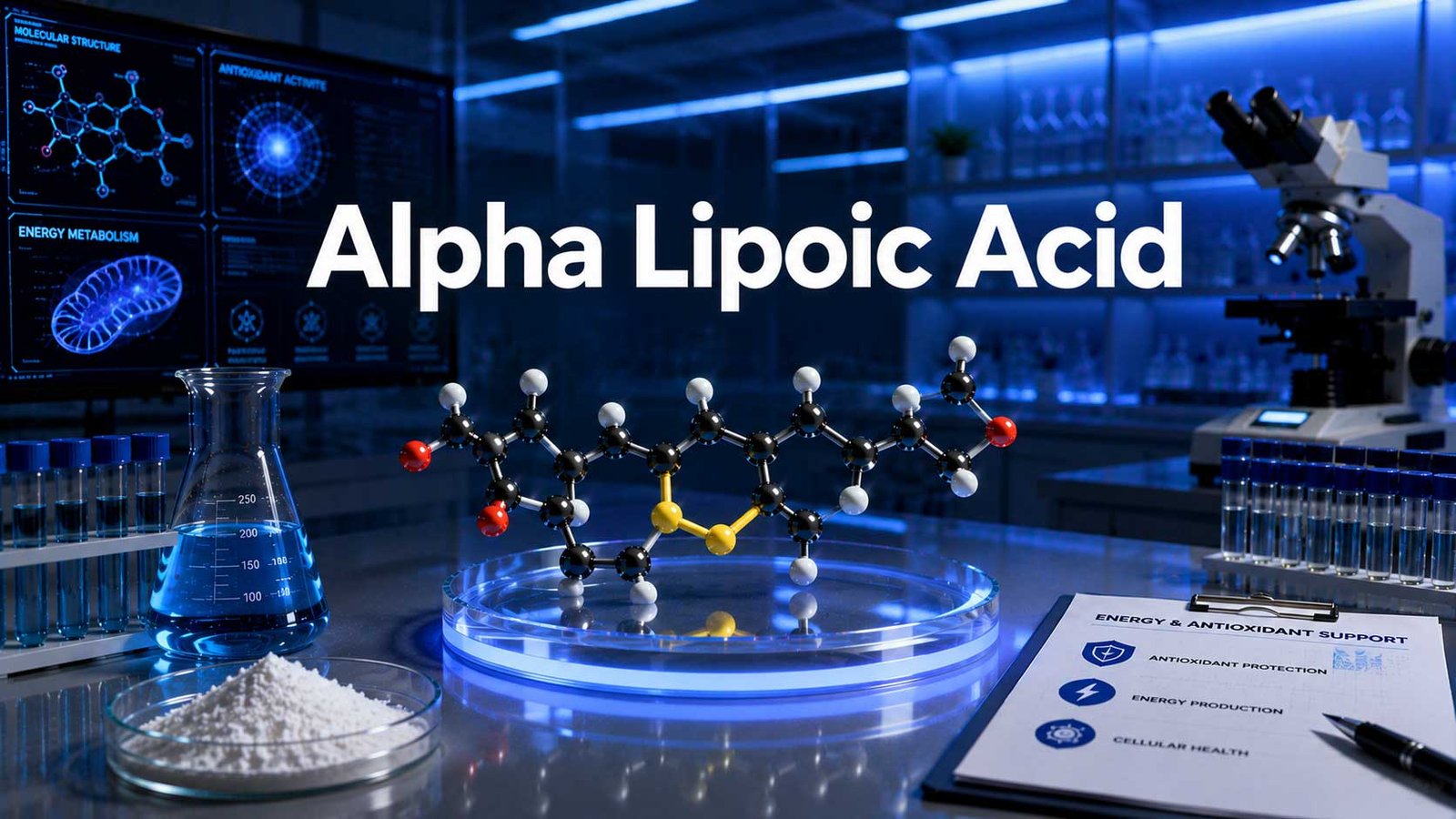
The Tiny Molecule Doing Double Duty Inside Your Cells
I’ve spent more hours than I’d like to admit reading through mitochondrial biochemistry papers, and if there’s one compound that keeps showing up in the margins of that research, quietly doing more than its fair share of work, it’s Alpha Lipoic Acid. Most people have never heard of it. The ones who have usually know it from a supplement bottle promising “cellular energy” or “antioxidant support,” phrases so overused they’ve lost most of their meaning. But underneath the marketing noise, Alpha Lipoic Acid is genuinely one of the more interesting molecules your body makes and uses every single day, whether you supplement with it or not.
Here’s the thing that surprises people first: Alpha Lipoic Acid isn’t some exotic plant extract or a nutrient you need to hunt down in a rainforest superfood. It’s produced naturally inside your mitochondria, the energy factories of your cells, where it acts as a cofactor for enzymes that convert food into usable energy. Without it, or without enough of it, the whole process of turning glucose and fat into ATP gets clumsy. That’s the “energy support” part of the story, and it’s not hype, it’s basic biochemistry.
Table of Contents


The “antioxidant” half of the equation is where things get more interesting, and honestly a little unusual compared to most other antioxidants you’ve heard of. Vitamin C is water-soluble. Vitamin E is fat-soluble. Each one works in its own lane, protecting either watery or fatty parts of the cell. Alpha Lipoic Acid, though, is both fat- and water-soluble at the same time, which means it can move freely between different compartments in the cell and mop up free radicals wherever they show up. Researchers have described it as amphipathic for this exact reason, and it’s part of why the compound has attracted so much scientific attention since the 1950s, when it was first isolated as a growth factor cofactor for bacteria before anyone understood its broader role in mammalian metabolism it was originally studied as a growth factor for bacteria, with early fractionation work identifying it as an accessory nutrient before its therapeutic relevance in humans was understood.

What really pulled Alpha Lipoic Acid out of academic obscurity and into clinical relevance was its behavior in diabetic patients. Researchers noticed that supplementing with it seemed to ease some of the nerve-related complications of diabetes, and that observation opened up decades of clinical trials, particularly in Germany, where the compound (also called thioctic acid in some of the older literature) became a fairly standard part of diabetic neuropathy management. That clinical track record is a big part of why Alpha Lipoic Acid has more rigorous human trial data behind it than a lot of trendy supplements you’ll see marketed alongside it on a shelf.
There’s also something almost poetic about how the body handles Alpha Lipoic Acid as we age. Production naturally declines over the years, mirroring what happens with other endogenous antioxidants like glutathione. Whether that decline is a meaningful driver of age-related oxidative stress, or just a correlation that happens to track with getting older, is still debated. But it’s one of the reasons the compound keeps showing up in longevity and anti-aging research circles, sometimes with more enthusiasm than the evidence strictly supports.
I want to be upfront about something before we go further: Alpha Lipoic Acid is not a miracle molecule, and anyone who tells you it is hasn’t read the actual trial data closely enough. It has real, measurable effects backed by legitimate research, especially around glucose metabolism, nerve function, and oxidative stress markers. It also has real limitations, dosage considerations, and a few genuine safety concerns that don’t get discussed nearly as often as the benefits do. My goal here isn’t to sell you on a supplement. It’s to walk through what the science actually says, where it’s solid, where it’s shaky, and where you need to be careful, so you can make an informed decision rather than a hopeful one.
Think of this as the kind of conversation you’d have with a friend who happens to have read way too many journal articles on the subject. We’re going to cover what Alpha Lipoic Acid actually does inside your body, where you can find it in food (spoiler: not very much, and not very easily), how much of it people typically take and what happens if your levels run low, and finally, the risks and toxicity concerns that responsible use requires you to understand. No fluff, no exaggerated claims, just a grounded look at a molecule that deserves more nuance than it usually gets.
Key Health Benefits
A Genuinely Unique Antioxidant Profile
Let’s start with what makes Alpha Lipoic Acid stand out among antioxidants, because this is where a lot of the scientific enthusiasm originates. Most antioxidants specialize. They work well in one environment and poorly in another. Alpha Lipoic Acid, along with its reduced form dihydrolipoic acid, operates across both fat and water-based environments, which lets it neutralize free radicals in places other antioxidants simply can’t reach as effectively. Research reviewing its molecular mechanisms describes it as capable of scavenging reactive oxygen species, chelating metal ions, and regenerating other antioxidants that have already been “used up” in the process of neutralizing free radicals Alpha lipoic acid scavenges free radicals, chelates metals, and restores intracellular glutathione levels which otherwise decline with age.
That last part deserves a moment of attention: Alpha Lipoic Acid doesn’t just fight oxidative stress on its own, it helps recycle other antioxidants your body has already spent. Vitamin C, vitamin E, and glutathione all get “regenerated” to some degree through this process, which is part of why researchers sometimes call it the antioxidant’s antioxidant. It’s a helper molecule as much as it is a direct fighter, and that dual role is genuinely rare among the compounds we typically lump into the antioxidant category.
Blood Sugar Regulation and Insulin Sensitivity
If there’s one area where Alpha Lipoic Acid has the deepest and most consistent research base, it’s glucose metabolism. The compound appears to improve insulin sensitivity and glucose uptake in tissues, likely through activation of certain intracellular signaling pathways involved in glucose transport. A review focused specifically on diabetes noted that lipoic acid possesses insulin-mimetic properties and plays a meaningful role in glucose disposal at the cellular level LA is a potent antioxidant with insulin-mimetic and anti-inflammatory activity.
This isn’t just theoretical biochemistry either. Clinical trials in people with type 2 diabetes have measured real improvements in markers like fasting glucose and insulin resistance scores with supplementation. That said, I want to be careful here, because “improves insulin sensitivity” is not the same as “treats diabetes” or “replaces medication,” and no reputable researcher in this space would frame it that way. It’s a supportive tool, not a substitute for medical management, and anyone with diabetes should be coordinating any supplement use with their healthcare provider, particularly because of how it can interact with blood sugar lowering medications, something we’ll come back to in the risks section.
Nerve Health and Diabetic Neuropathy
This is genuinely the best-studied clinical application of Alpha Lipoic Acid, and it’s not close. Decades of European trials, many involving intravenous administration, have looked specifically at whether the compound can ease the burning, tingling, and numbness associated with diabetic peripheral neuropathy. A meta-analysis pooling several of these trials concluded that treatment with 600 mg per day intravenously over three weeks significantly improved both the subjective symptoms and objective neurological deficits associated with the condition treatment with alpha-lipoic acid over three weeks is safe and significantly improves both positive neuropathic symptoms and neuropathic deficits to a clinically meaningful degree in diabetic patients with symptomatic polyneuropathy<.
Later research pushed further into oral dosing rather than IV administration, since most people obviously aren’t going to get infusions for a chronic condition. The SYDNEY 2 trial specifically tested oral doses ranging from 600 to 1800 mg daily and found measurable symptom improvement, though higher doses came with a corresponding increase in gastrointestinal side effects without a proportional increase in benefit, which is an important nuance we’ll unpack more in the dosage section. This body of evidence is honestly the strongest argument for Alpha Lipoic Acid having a legitimate place in clinical nutrition, not just wellness culture.
Cardiovascular and Broader Metabolic Support
Beyond glucose and nerves, there’s a growing, if less mature, body of research looking at Alpha Lipoic Acid’s role in cardiovascular health, largely through its anti-inflammatory and antioxidant actions on blood vessel walls. Chronic oxidative stress plays a role in the development of atherosclerosis and vascular dysfunction, and by reducing that oxidative burden, Alpha Lipoic Acid may offer some downstream cardiovascular protection. Research reviewing its therapeutic potential across chronic diseases has pointed to potential benefits extending into areas like cognitive function, liver health, and even certain inflammatory conditions actions have been shown in experimental studies emphasizing the use of alpha-lipoic acid as a potential therapeutic agent for many chronic diseases including brain diseases and cognitive dysfunctions, obesity, nonalcoholic fatty liver disease, and cardiovascular disease.
I’d put a mental asterisk next to most of these broader claims, though. Diabetic neuropathy and glucose metabolism have solid human trial data. Cardiovascular, cognitive, and liver applications are promising but much earlier stage, often built on animal studies or small human trials that need replication before anyone should treat them as settled science. That distinction matters, and it’s one that gets blurred constantly in supplement marketing.
Dietary Sources
Why Food Alone Won’t Get You There
Here’s something that catches a lot of people off guard: despite how much research exists on Alpha Lipoic Acid, actually getting a meaningful amount from food is remarkably difficult. The compound exists in food in a protein-bound form called lipoyllysine, and the amounts present are genuinely tiny compared to the doses used in clinical research. One resource summarizing food content data put red meat at roughly 1 to 3 micrograms per gram of dry weight, and spinach slightly higher at around 3.2 micrograms per gram red meat, especially muscle from beef, typically contains 1 to 3 micrograms per gram dry weight of lipoic acid in the form of lipoyllysine, while spinach contains about 3.2 micrograms per gram dry weight.
Micrograms, not milligrams. That distinction matters enormously, because clinical trials investigating diabetic neuropathy have used doses in the 600 to 1800 milligram range, meaning food-based intake sits somewhere in the range of a few hundred to a few thousand times lower than what’s been studied therapeutically. You could eat an enormous plate of spinach and organ meats every single day and still fall wildly short of anything close to a research dose.
Animal-Based Sources
Organ meats consistently top the list of food sources, particularly beef liver, kidney, and heart. This tracks with what we know about lipoic acid’s biological role, since it’s concentrated in metabolically active tissue, and organ meats are about as metabolically dense as food gets. Muscle meat, like a standard steak, contains meaningfully less than organ meat, though it’s still a better source than most plant foods. If you’re someone who already eats organ meats regularly, whether out of nose-to-tail eating philosophy or just family tradition, you’re probably getting more dietary Alpha Lipoic Acid than the average person without even trying.
Plant-Based Sources
For anyone who isn’t eating liver on a regular basis, spinach and broccoli are the standout plant sources, though “standout” is relative given how small the total amounts are across the board. Tomatoes, potatoes, and Brussels sprouts show up in most food composition breakdowns as secondary contributors. There’s an interesting wrinkle here too: cooking method matters. Heat-sensitive compounds like this one tend to degrade with prolonged boiling, so steaming or light sautéing preserves more of the nutrient than dropping vegetables into a rolling boil for twenty minutes.
I’ll be honest, though: I don’t think anyone should be building a diet around chasing dietary Alpha Lipoic Acid the way you might for, say, vitamin C or fiber. It’s simply not present in significant quantities in the food supply, and the compound’s biological relevance in supplement and clinical contexts comes almost entirely from concentrated, isolated dosing rather than dietary intake. Eating spinach and broccoli regularly is a good idea for a dozen other reasons. Getting therapeutic levels of Alpha Lipoic Acid from them isn’t realistically one of those reasons.
Why the Body’s Own Production Matters More
Since dietary intake contributes so little, your body’s own synthesis becomes the more relevant story for baseline levels. Alpha Lipoic Acid is produced endogenously in mitochondria from octanoic acid, using a set of enzymes that require adequate iron and certain B vitamins as cofactors. This is part of why nutrient status in general, not just direct Alpha Lipoic Acid intake, can influence how much of the compound your body is producing and using effectively. It’s also part of why the age-related decline in natural production has drawn research interest, since it’s tied to broader mitochondrial function rather than being an isolated nutritional gap you can simply eat your way out of.
Where Supplements Fill the Gap
This is precisely why virtually all the clinical research on Alpha Lipoic Acid, and virtually all the meaningful health applications discussed in the previous section, rely on supplementation rather than dietary intake. Supplements typically come in the racemic form, a mix of the R and S enantiomers, though some formulations isolate the R-form specifically, since that’s believed to be closer to what the body naturally produces and may be somewhat better absorbed. If dietary sources genuinely can’t get you into a therapeutic range, understanding supplement dosing becomes the practical question, which is exactly where we’re headed next.
Dosage & Deficiency
What “Typical” Dosing Actually Looks Like
Dosage for Alpha Lipoic Acid varies more than almost any other supplement I can think of, largely because the research spans such a wide range of applications, delivery methods, and patient populations. General wellness use, the kind you’ll see recommended on most supplement labels, tends to sit somewhere between 100 and 300 milligrams daily. Clinical research targeting diabetic neuropathy, on the other hand, has used doses considerably higher, generally somewhere between 600 and 1800 milligrams daily for oral administration, with intravenous dosing in earlier trials also centered around 600 milligrams per day.
What’s interesting, and worth paying attention to if you’re considering supplementation, is that higher doses don’t necessarily translate into proportionally better outcomes. Trials comparing oral doses found that while 1200 and 1800 milligram doses did show somewhat stronger symptom improvement compared to 600 milligrams, the difference wasn’t dramatic, and it came paired with a noticeably higher rate of gastrointestinal complaints like nausea gastrointestinal effects were the most commonly reported adverse events, including abdominal pain, constipation, diarrhea, dyspepsia, flatulence, gastritis, nausea, and toothache, with vomiting occurring more often at higher doses. In other words, there’s a point of diminishing returns, and pushing past 600 to 1200 milligrams daily mostly seems to buy you more side effects rather than proportionally more benefit for most people.
Absorption, Timing, and Form
One practical detail that doesn’t get discussed nearly enough: Alpha Lipoic Acid absorption is significantly affected by food, particularly meals high in carbohydrates or protein, which can reduce how much of the compound actually makes it into your bloodstream. Most clinical protocols and manufacturer recommendations suggest taking it on an empty stomach, generally 30 minutes before eating or a couple of hours after, to maximize absorption. This is one of those small logistical details that can meaningfully change how effective a given dose actually ends up being, and it’s worth building into a routine if you’re taking it consistently rather than sporadically.
The R-form versus racemic question also matters more than casual users tend to realize. The R-enantiomer is the form your body naturally produces and appears to have better bioavailability, but it’s also less stable and more expensive to manufacture, which is why most over-the-counter products still use the cheaper racemic mixture. If you’re specifically chasing the clinical outcomes described in trial data, it’s worth checking which form a given product actually contains, since the research isn’t uniformly interchangeable between the two.
What Deficiency Actually Looks Like
Here’s where I need to be straightforward with you: there isn’t a well-defined, universally recognized “Alpha Lipoic Acid deficiency syndrome” the way there is for something like vitamin D or iron. Because the body synthesizes it endogenously and requires it in trace amounts for its core enzymatic role, outright deficiency in otherwise healthy individuals eating a reasonable diet is not a commonly documented clinical entity. That said, the story isn’t quite that simple either.
Certain populations, particularly people with poorly managed diabetes, chronic alcohol use, or conditions that impair mitochondrial function, may experience functionally lower levels of active Alpha Lipoic Acid or reduced capacity to use what’s available effectively. This is different from a classic nutritional deficiency, more a case of increased demand or impaired utilization outpacing supply. It’s part of why the compound’s clinical research has concentrated so heavily on diabetic populations specifically, since that’s where the gap between demand and endogenous production seems most pronounced, particularly regarding nerve tissue, which is especially vulnerable to oxidative damage in poorly controlled blood sugar states.
Practical Takeaways on Dosing
If you’re weighing whether or how to use Alpha Lipoic Acid, a few practical points from the research are worth keeping in mind:
- General antioxidant support: most research and product labeling clusters around 100 to 300 mg daily.
- Neuropathy-specific protocols studied in trials: 600 mg daily is the most consistently supported starting point, with higher doses showing a shakier benefit-to-side-effect ratio.
- Take it away from meals, ideally 30 minutes before eating, to support absorption.
- There’s no established need for healthy adults without diabetes or specific metabolic concerns to supplement at the higher clinical doses used in neuropathy trials.
None of this is a substitute for a conversation with a healthcare provider, especially if you’re managing diabetes, taking blood sugar medication, or dealing with any nerve-related symptoms that haven’t been formally diagnosed. Self-dosing at clinical trial levels without medical oversight is exactly the kind of decision that leads into the next, and honestly more important, section of this article.
Toxicity & Risks
The Side Effects Nobody Mentions Enough
Alpha Lipoic Acid has a reasonably good safety profile at moderate doses, which is part of why it’s sold over the counter without much regulation. But “reasonably good” doesn’t mean “risk-free,” and the higher end of studied dosing carries real, documented side effects that deserve more attention than they typically get in supplement marketing. Gastrointestinal symptoms are by far the most common complaint, ranging from mild nausea to more disruptive issues like vomiting and abdominal discomfort, particularly at doses of 1200 milligrams and above. Skin reactions, including rash and itching, have also been reported in a smaller subset of users, generally resolving after discontinuation.
There’s also a dose-dependent pattern worth understanding clearly: research comparing different oral doses found that while higher amounts produced somewhat better symptom outcomes for neuropathy, they also came with meaningfully more gastrointestinal complaints, to the point where the tradeoff becomes genuinely questionable for a lot of people trials utilizing higher doses demonstrated more pronounced improvements in neuropathic symptom scores compared to lower doses, but higher doses were also associated with increased gastrointestinal side effects, particularly nausea, suggesting that 600 to 1200 milligrams daily represents an optimal balance between efficacy and tolerability for most patients. That’s a genuinely useful piece of practical guidance buried in the clinical literature that doesn’t often make it into consumer-facing supplement descriptions.
Insulin Autoimmune Syndrome: A Rare but Serious Risk
This is the part of the Alpha Lipoic Acid safety conversation that I think gets dramatically underreported, and it’s worth taking seriously even though it’s rare. Alpha Lipoic Acid contains a sulfhydryl group in its chemical structure, a feature it shares with a small number of medications known to occasionally trigger a condition called insulin autoimmune syndrome, also known as Hirata disease. In this condition, the body begins producing antibodies against its own insulin, which can cause unpredictable and sometimes severe episodes of hypoglycemia, occurring both after meals and, more alarmingly, spontaneously without any clear trigger.
This isn’t a theoretical risk pulled from animal studies. It’s been documented in a growing number of published case reports, including cases involving otherwise healthy, non-diabetic individuals who developed the condition after taking over-the-counter supplements containing Alpha Lipoic Acid. One recent case involved a woman who was hospitalized unresponsive due to severe hypoglycemia, later traced back to recent use of an Alpha Lipoic Acid supplement, requiring steroid treatment to manage the resulting antibody response a non-diabetic female presented with unresponsiveness due to severe hypoglycemia, with investigations revealing high fasting insulin levels, elevated C-peptide, and positive anti-insulin antibodies traced to recent ingestion of alpha-lipoic acid supplements, requiring symptomatic measures and steroid treatment. While this condition was initially described almost exclusively in Japanese patients, case reports have since expanded to include patients in Europe, India, and North America, suggesting it isn’t confined to any single genetic population, even though certain HLA gene variants do appear to increase individual susceptibility.
I want to be clear that this remains a rare occurrence relative to the number of people who take Alpha Lipoic Acid supplements without incident. But rare doesn’t mean irrelevant, particularly because the presentation, sudden unexplained hypoglycemia, can be genuinely dangerous and easily missed if a clinician doesn’t think to ask about supplement use. If you or someone you know experiences unexplained episodes of shakiness, confusion, or fainting related to low blood sugar while taking Alpha Lipoic Acid, that’s a pattern worth bringing to a doctor’s attention immediately, along with a clear account of what supplements are being used.
Medication Interactions Worth Knowing About
Because Alpha Lipoic Acid has genuine blood sugar lowering effects, combining it with diabetes medications, particularly insulin or sulfonylureas, carries a real risk of additive hypoglycemia. This isn’t a rare or exotic interaction; it’s a fairly predictable pharmacological overlap that anyone managing diabetes with medication needs to account for before adding Alpha Lipoic Acid into their routine, ideally with blood sugar monitoring adjusted accordingly during the transition period.
There’s also some evidence, though less robust, suggesting potential interactions with thyroid medication and certain chemotherapy agents, largely tied to Alpha Lipoic Acid’s metal-chelating properties, which could theoretically interfere with how some drugs are absorbed or metabolized. This area needs more research to draw firm conclusions, but it’s enough of an open question that anyone on complex medication regimens, particularly for thyroid conditions or active cancer treatment, should loop in their care team before adding this supplement rather than assuming it’s automatically compatible.
Who Should Be Especially Cautious
Pregnant and breastfeeding individuals should avoid Alpha Lipoic Acid supplementation, simply because the safety data in these populations is too thin to draw confident conclusions either way, and the compound does cross biological barriers given its small size and dual solubility. People with a history of thyroid dysfunction, active cancer treatment, or diabetes on blood sugar lowering medication all fall into a category where medical supervision isn’t optional, it’s genuinely necessary. And given the insulin autoimmune syndrome risk, anyone with a personal or family history of autoimmune conditions might reasonably want to have a more cautious conversation with their doctor before starting, even though the current evidence doesn’t point to autoimmune history specifically as a defined risk factor.
None of this is meant to scare anyone away from a compound with real, legitimate benefits. It’s meant to put those benefits in proper context, next to the risks that deserve equal airtime but rarely get it in supplement marketing copy.
Finding the Right Balance With a Powerful Little Molecule
After spending this much time in the research, my honest takeaway on Alpha Lipoic Acid is that it deserves more nuance than it usually gets, in either direction. It’s not the cure-all that some supplement marketing implies, and the broader claims around cognitive enhancement, anti-aging, or general “detox” benefits are riding on far thinner evidence than the well-established research around glucose metabolism and diabetic neuropathy. At the same time, it’s not a compound to dismiss either. The clinical trial history here, particularly around nerve health in diabetes, is genuinely more substantial than what exists for most things sold in the same aisle.
What stands out to me most, honestly, is how much the practical details matter with this one. Timing relative to meals affects absorption meaningfully. Dosage has a real diminishing-returns curve where more isn’t simply better, and can actually mean more gastrointestinal discomfort for marginal extra benefit. And the insulin autoimmune syndrome risk, while rare, is exactly the kind of thing that gets glossed over in casual supplement recommendations but genuinely matters if it happens to you or someone you care about.
If you’re considering Alpha Lipoic Acid, whether for general antioxidant support or something more specific like nerve-related symptoms, my suggestion is simple: start conservative, pay attention to timing around meals, and treat any blood sugar medication you’re already taking as a reason to loop in your doctor before adding this into the mix, not after. Diet alone realistically won’t get you meaningful amounts of this compound, so if you want the effects that show up in the research, supplementation is genuinely the only practical path, but that makes getting the dosage and safety considerations right even more important, not less.
Alpha Lipoic Acid earns its reputation as a legitimately interesting antioxidant and metabolic support compound. It just deserves to be used with the same care and attention to detail that the researchers who’ve spent decades studying it clearly bring to their own work.
Article Sources
At AncientHerbsWisdom, our content relies on reputable sources, including peer-reviewed studies, to substantiate the information presented in our articles. Our primary objective is to ensure our content is thoroughly fact-checked, maintaining a commitment to accuracy, reliability, and trustworthiness.
- Baburaj, K., Jabir, M. P., & Vimal, M. V. (2024). Alpha-lipoic acid induced insulin autoimmune antibody syndrome. The Egyptian Journal of Internal Medicine, 36(1), 1-3. https://doi.org/10.1186/s43162-024-00331-7
- Golbidi, S., Badran, M., & Laher, I. (2011). Diabetes and alpha lipoic acid. Frontiers in Pharmacology, 2, 69. https://doi.org/10.3389/fphar.2011.00069
- Gomes, M. B., & Negrato, C. A. (2014). Alpha-lipoic acid as a pleiotropic compound with potential therapeutic use in diabetes and other chronic diseases. Diabetology & Metabolic Syndrome, 6(1), 80. https://doi.org/10.1186/1758-5996-6-80
- Rochette, L., Ghibu, S., Muresan, A., & Vergely, C. (2015). Alpha-lipoic acid: molecular mechanisms and therapeutic potential in diabetes. Canadian Journal of Physiology and Pharmacology, 93(12), 1021-1027. https://doi.org/10.1139/cjpp-2014-0353
- Shay, K. P., Moreau, R. F., Smith, E. J., Smith, A. R., & Hagen, T. M. (2009). Alpha-lipoic acid as a dietary supplement: Molecular mechanisms and therapeutic potential. Biochimica et Biophysica Acta – General Subjects, 1790(10), 1149-1160. https://doi.org/10.1016/j.bbagen.2009.07.026
- Ziegler, D., Ametov, A., Barinov, A., Dyck, P. J., Gurieva, I., Low, P. A., Munzel, U., Yakhno, N., Raz, I., Novosadova, M., Maus, J., & Samigullin, R. (2006). Oral treatment with alpha-lipoic acid improves symptomatic diabetic polyneuropathy: The SYDNEY 2 trial. Diabetes Care, 29(11), 2365-2370. https://doi.org/10.2337/dc06-1216
- Ziegler, D., Nowak, H., Kempler, P., Vargha, P., & Low, P. A. (2004). Treatment of symptomatic diabetic polyneuropathy with the antioxidant alpha-lipoic acid: A meta-analysis. Diabetic Medicine, 21(2), 114-121. https://doi.org/10.1111/j.1464-5491.2004.01109.x

- Phosphatidic Acid: Supporting Muscle Growth and Strength - July 31, 2026
- Ceramides: Supporting Healthy Skin From Within - July 31, 2026
- Synbiotics: Combining Prebiotics and Probiotics Together - July 31, 2026