
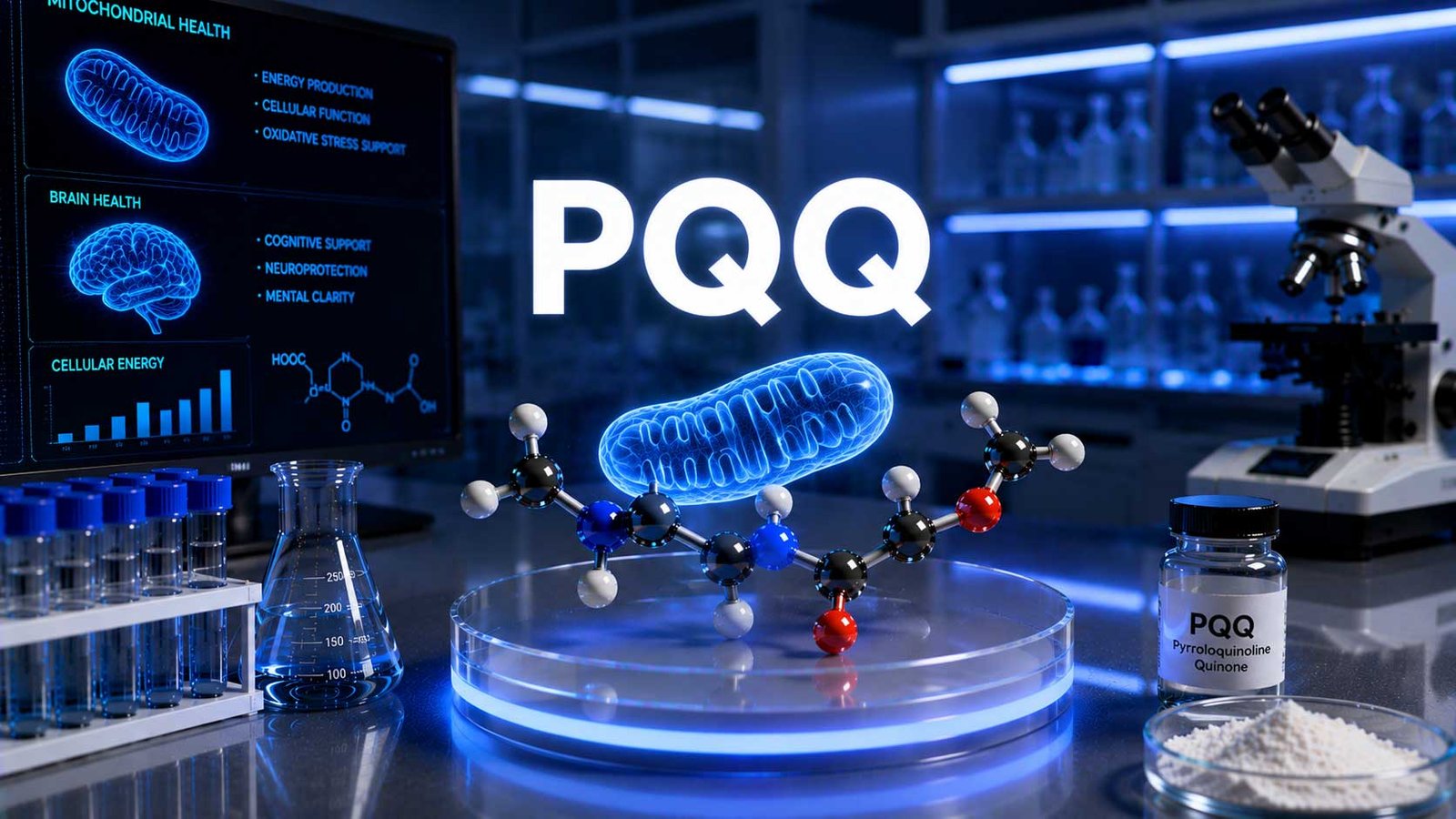
The Tiny Molecule Quietly Rewriting the Rules on Cellular Energy
The wellness aisle is crowded with molecules promising to fix your fatigue, and most of them fade into obscurity within a couple of years. PQQ has stuck around, and honestly, the more I dug into the research, the more I understood why.
Pyrroloquinoline quinone, or PQQ, is not a household name the way vitamin C or vitamin D are. It doesn’t have decades of public health messaging behind it. It was actually discovered as a bacterial enzyme cofactor back in the 1960s and 1970s, long before anyone thought to ask whether mammals used it too. Researchers eventually found that animals deprived of dietary PQQ showed impaired growth, reproductive problems, and immune dysfunction, which raised an interesting question: if a compound is essential for normal biological function and the body can’t manufacture it on its own, doesn’t that start to look a lot like a vitamin? That debate hasn’t been fully settled by regulatory bodies, but the nutritional science community has increasingly treated PQQ as a vitamin-like nutrient, sometimes even nicknaming it a “new vitamin.”
Table of Contents


What makes PQQ so interesting is its redox chemistry. Redox, short for reduction-oxidation, refers to a molecule’s ability to accept and donate electrons repeatedly without breaking down in the process. Most antioxidants get used up after a single reaction — vitamin C, for example, sacrifices itself to neutralize a free radical and then needs to be regenerated by other systems in the body. PQQ, on the other hand, can cycle through oxidized and reduced states thousands of times, which is part of why researchers have described it as an unusually stable and efficient redox agent. This isn’t a minor technical detail. It’s the whole reason PQQ has drawn such intense scientific curiosity, because a molecule that can shuttle electrons over and over again, without degrading, has a very different relationship with cellular chemistry than a one-and-done antioxidant.

The mitochondrial angle is where things get genuinely exciting, and also where a lot of the marketing hype tends to outpace the science, so let’s be careful here. Mitochondria are the structures inside your cells responsible for converting food and oxygen into usable energy, in the form of ATP. As we age, or as cells come under chronic stress, mitochondrial function tends to decline — they become less efficient, more prone to producing damaging byproducts, and slower to regenerate. Laboratory research has shown that PQQ activates specific signaling pathways involved in the creation of new mitochondria, a process scientists call mitochondrial biogenesis. This isn’t a fringe finding from one obscure paper; it’s been demonstrated across multiple studies, including work published in the Journal of Biological Chemistry showing that PQQ stimulates a pathway involving a protein called PGC-1α, which acts almost like a master switch for mitochondrial growth (Chowanadisai et al., 2010).
I want to be upfront about something here, because it matters for how you interpret everything that follows in this article. A lot of the most compelling PQQ data comes from cell cultures and animal models. Human research exists, and it’s growing, but it’s still relatively thin compared to nutrients that have been studied for a century. That doesn’t mean the findings aren’t meaningful — mechanistic research in cells and animals is often how nutrition science builds its foundation before larger human trials catch up. It does mean you should hold the more dramatic claims about PQQ with a bit of healthy skepticism, the same way you’d want a friend to keep you grounded if you got a little too excited about a new discovery.
There’s also a practical, everyday reason PQQ deserves attention: it’s already in your diet, whether you’ve heard of it or not. Trace amounts show up in fermented soy products, leafy greens, certain fruits, and even human breast milk, which researchers have pointed to as evidence of its biological importance in early development. The amounts you get from food are small, though, which is part of why supplemental PQQ has become popular among people chasing the doses used in clinical research.
Over the course of this article, we’re going to walk through what the science actually says about PQQ — the potential benefits, where you can find it naturally, how much people tend to take, and what the safety data looks like at higher doses. I’ll be honest about where the evidence is strong and where it’s still developing, because that’s the only way this kind of information is actually useful to you. PQQ isn’t magic, but as a redox-active nutrient tied to mitochondrial health, it’s earned a legitimate seat at the table in conversations about cellular aging and energy metabolism, and I think it’s worth understanding on its own terms rather than through the lens of supplement marketing.
Key Health Benefits
Mitochondrial Biogenesis and Cellular Energy
The headline benefit associated with PQQ, and the one most of the research circles back to, is its role in mitochondrial biogenesis — essentially, the creation of new mitochondria within existing cells. This isn’t just about having “more” mitochondria for the sake of it. It’s about maintaining a cell’s capacity to produce energy efficiently, especially in tissues that are metabolically demanding, like the brain, heart, and muscles.
The mechanism researchers have identified involves PQQ activating a signaling cascade that includes CREB (cAMP response element-binding protein) and PGC-1α, a coactivator often described as the master regulator of mitochondrial biogenesis. In a widely cited study, exposure to PQQ increased PGC-1α expression and downstream mitochondrial activity in cell models, an effect the authors linked to phosphorylation of CREB (Chowanadisai et al., 2010). A separate study a few years later found that PQQ also activates the SIRT1 pathway, another route tied to mitochondrial regulation, partly by boosting cellular NAD+ levels (Saihara et al., 2017). What I find compelling here isn’t just that PQQ hits one target — it’s that multiple independent research groups, using different cell models, keep landing on the same general conclusion: this molecule nudges cells toward building more mitochondrial capacity.
Antioxidant and Redox Protection
Because PQQ can cycle repeatedly between its oxidized and reduced forms without breaking down, it behaves differently than many conventional antioxidants. Some early laboratory assays actually positioned PQQ as one of the more resilient redox-active compounds tested, capable of neutralizing reactive oxygen species across many catalytic cycles rather than being consumed in a single reaction.
This matters because oxidative stress — the accumulation of damaging free radicals faster than the body can clear them — is implicated in everything from normal aging to chronic disease processes. In a human trial, researchers gave PQQ to healthy adults and measured markers of inflammation and antioxidant status; they found that PQQ intake was associated with reductions in certain inflammatory markers, alongside shifts in metabolites tied to mitochondrial-related metabolism (Harris et al., 2013). It’s a modest but genuinely interesting piece of human evidence, and one of the few studies actually conducted in people rather than cells or rodents.
Cognitive Support and Neuroprotection
This is probably the benefit that gets the most attention in consumer marketing, and there’s a real scientific basis behind it, even if the human evidence is still developing. Animal research has repeatedly shown that PQQ can protect neurons from oxidative damage and support mitochondrial function in brain tissue. One study using a rotenone-induced model of Parkinson’s disease found that PQQ treatment reduced dopaminergic neuron loss and preserved mitochondrial structure in the midbrain, an effect the researchers linked to activation of the AMPK signaling pathway (Cheng et al., 2021).
On the human side, an open-label trial gave adults 20 mg of PQQ daily for eight weeks and tracked measures of stress, fatigue, mood, and sleep quality using validated questionnaires. The results showed significant improvements across several mood-related measures, including vigor, tension, and confusion scores, along with better scores on sleep quality indices (Nakano et al., 2012). I want to flag something important: this was an open-label study, meaning there was no placebo group, so we can’t rule out expectation effects. Still, it’s one of the more detailed human datasets we have on PQQ’s subjective effects, and it lines up reasonably well with the mechanistic story around mitochondrial support in neural tissue.
Cardiovascular and Metabolic Considerations
Animal research has also explored PQQ’s relationship with cardiovascular tissue and metabolic function, with some studies suggesting protective effects against oxidative injury in heart tissue and improvements in markers related to fat metabolism. This area of research is younger than the neurological and mitochondrial biogenesis work, and I’d encourage caution about overstating it. What’s fair to say is that the underlying mechanism — supporting mitochondrial density and function in metabolically active tissue — provides a plausible biological rationale for why researchers are interested in PQQ’s cardiovascular and metabolic effects, even though we don’t yet have robust, large-scale human trials confirming clinical benefits in these areas.
Here’s a quick summary of where the research currently stands:
- Mitochondrial biogenesis: strong mechanistic evidence in cell and animal studies, limited but growing human data
- Antioxidant/redox activity: well-documented in laboratory assays, some supportive human biomarker data
- Cognitive and mood support: promising open-label human trial data, needs placebo-controlled confirmation
- Cardiovascular and metabolic effects: mostly preclinical, plausible mechanism but early-stage evidence
None of this means PQQ is a cure-all, and I’d be doing you a disservice if I framed it that way. What it does mean is that this redox-active nutrient has a genuinely interesting and biologically coherent story behind it, one that’s increasingly being tested in the population that actually matters most: us.

Dietary Sources
Where PQQ Naturally Shows Up in Food
One of the things that surprised me when I first started researching PQQ is just how widespread it is in the food supply, even though most people have never heard of it. A classic 1995 analysis using gas chromatography-mass spectrometry measured PQQ levels across a range of common foods and found detectable amounts in nearly every sample tested, ranging from roughly 3.7 to 61 nanograms per gram, depending on the food (Kumazawa et al., 1995). That’s a pretty wide range, and it tells you something important: PQQ isn’t concentrated in one exotic superfood. It’s scattered in small amounts throughout a fairly ordinary, varied diet.
Fermented soy products tend to top the list. Natto, the sticky fermented soybean dish popular in Japanese cuisine, consistently shows up as one of the richest known sources, likely because the bacterial fermentation process itself involves organisms capable of producing PQQ. Other fermented foods, including miso and tempeh, contain meaningful amounts as well, though generally less than natto.
Beyond fermented foods, PQQ shows up in a surprisingly ordinary list of fruits and vegetables:
Interestingly, human breast milk contains some of the highest measured concentrations of PQQ of any biological fluid, which researchers have pointed to as evidence that this compound may play a role in early growth and development. That’s a detail I find genuinely fascinating, because it suggests an evolutionary or physiological importance that goes beyond what you’d expect from a random trace nutrient.
Why Food Alone Rarely Matches Supplemental Doses
Here’s where I want to manage expectations a bit. The amounts of PQQ found in food are measured in nanograms per gram, while most of the human clinical research — including the open-label trial on stress, fatigue, and sleep — has used doses in the range of 20 milligrams per day (Nakano et al., 2012). Nanograms and milligrams are separated by a factor of a million, so realistically, even a diet packed with natto, parsley, and green tea is going to deliver a small fraction of the PQQ used in most of the studies people cite when discussing benefits.
This doesn’t mean dietary PQQ is meaningless. Researchers analyzing human tissue and body fluids have found that PQQ levels in the body are generally lower than what’s found in food, which has led some scientists to conclude that dietary intake, even at low levels, is likely the primary source of the PQQ present in mammalian tissues (Kumazawa et al., 1995). In other words, your body probably isn’t manufacturing meaningful amounts of PQQ on its own — what little PQQ shows up in your bloodstream and tissues is likely coming from what you eat, however modest that contribution is.
Practical Ways to Boost Dietary Intake
If you’d rather lean on food than supplements, a few practical habits can help:
- Add fresh parsley to salads, soups, or grain bowls rather than treating it as a garnish
- Include a serving of green tea in your daily routine, since it’s one of the more consistently studied dietary sources
- Rotate in kiwifruit or papaya as a snack, both of which pair PQQ with a solid dose of vitamin C
- Experiment with fermented soy products if they fit your diet and cultural food preferences, since fermentation appears to concentrate PQQ levels
- Cook vegetables gently rather than boiling them extensively, since prolonged high heat can degrade sensitive plant compounds, PQQ included
I don’t think you need to obsess over hitting a specific PQQ target through diet alone. A varied, plant-forward diet that includes some fermented foods is going to give you meaningful, if modest, PQQ exposure alongside a long list of other nutrients that matter for mitochondrial and overall health anyway. That’s really the underappreciated point here — PQQ doesn’t act in isolation, and eating for mitochondrial support usually means eating well across the board, not chasing one obscure compound.
A Note on Food Variety Over Single “Superfoods”
I get a little wary whenever a nutrient gets attached to a single miracle food, because it usually oversimplifies things and sends people chasing one ingredient instead of building better overall habits. With PQQ, the temptation is to fixate on natto simply because it tops the charts in raw concentration. But natto isn’t part of most people’s regular diet outside Japan, and frankly, its strong flavor and sticky texture are an acquired taste for a lot of people I’ve talked to. The good news is that you don’t need natto specifically to get meaningful dietary exposure to PQQ. The measured levels across parsley, green peppers, kiwifruit, spinach, and green tea are close enough to each other that a diet built around variety will likely give you comparable cumulative exposure over the course of a week, without requiring you to force down a food you don’t enjoy.
This is also a good moment to mention that PQQ research is still refining exactly how much of the compound survives digestion and makes it into circulation from different food matrices. Fermented foods may have an advantage here, not just because of higher raw PQQ content, but potentially because fermentation can also affect bioavailability, though this is an area where the research is still developing rather than settled. My honest advice is to think of PQQ-rich foods the way you’d think about polyphenol-rich foods generally: more variety, more color, more diversity in your plate, rather than betting everything on one specific ingredient showing up in your diet in large quantities.
Dosage and Deficiency
What the Research Says About Dosing
Because PQQ doesn’t have an established Recommended Dietary Allowance the way vitamin C or vitamin D does, there’s no official government dosing guideline to point you toward. What we have instead is a patchwork of clinical research using specific doses, which gives us a reasonable, if imperfect, sense of what’s been tested in humans.
The most detailed human trial I mentioned earlier used 20 milligrams of PQQ disodium salt daily, delivered as a single capsule after breakfast, over an eight-week period (Nakano et al., 2012). This dose was chosen based on prior research into PQQ’s effects, and it produced measurable improvements in several subjective wellness measures, including sleep quality and mood-related scores. Other studies examining PQQ’s absorption and effects on human biomarkers have used somewhat lower doses, in the range of a few milligrams based on body weight, administered as single or repeated doses over shorter observation windows (Harris et al., 2013).
Putting these together, most of the human research on PQQ clusters somewhere between roughly 10 and 20 milligrams per day, which is also the range you’ll typically see reflected in commercially available PQQ supplements, often sold as BioPQQ or similar branded forms of PQQ disodium salt. I’d gently push back on any product or article claiming to know a precise “optimal” dose, though. The honest answer is that we don’t have enough large-scale, dose-ranging human trials to say with confidence where the ceiling of benefit sits, or whether more is meaningfully better within that range.
Absorption and Practical Timing
Human research suggests PQQ is absorbed relatively efficiently after oral ingestion, with a portion of the ingested dose later recovered in urine as unmetabolized PQQ, indicating direct systemic absorption rather than complete breakdown in digestion (Harris et al., 2013). In the primary sleep and mood trial, participants took their PQQ capsule once daily after breakfast, which is a reasonable, low-friction approach if you’re considering supplementation — taking it with food may help with tolerability, particularly for anyone prone to digestive sensitivity.
Is PQQ Deficiency a Real Concern?
This is a nuanced question, and I think it deserves an honest answer rather than a dramatic one. Animal studies have shown that diets completely devoid of PQQ lead to measurable problems: impaired growth, reduced reproductive success, and altered immune function in rodents raised on PQQ-free chow. Those findings are part of why some researchers have argued PQQ functions like a vitamin — because its complete absence produces identifiable deficiency symptoms in controlled settings.
That said, true dietary PQQ deficiency in humans hasn’t been documented as a recognized clinical condition, and there isn’t a standard blood test or diagnostic criterion doctors use to identify it. This is partly because PQQ is so widely distributed across ordinary foods that a genuinely PQQ-free human diet would be almost impossible to maintain outside of a highly controlled laboratory setting. If you’re eating a reasonably varied diet with some fruits, vegetables, and occasional fermented foods, outright deficiency isn’t something I’d lose sleep over.
Where it gets more interesting is the question of “sufficiency” versus “optimal levels” for specific goals, like mitochondrial support during aging or recovery from chronic stress. That’s a different conversation than deficiency, and it’s the territory where PQQ supplementation research is really focused. People supplementing with PQQ generally aren’t doing it to correct a deficiency state — they’re doing it to explore whether pushing PQQ intake above typical dietary levels produces the kinds of mitochondrial and antioxidant benefits seen in laboratory and early clinical research.
Who Tends to Consider PQQ Supplementation
In practice, the people most drawn to PQQ supplementation tend to fall into a few categories: those interested in cognitive performance and mental clarity, people focused on healthy aging and mitochondrial support, and individuals dealing with persistent fatigue who are looking for something beyond the usual caffeine-and-B-vitamins approach. I’d add one more category, which is simply curious, research-minded people who like to understand the mechanism behind what they’re putting in their bodies rather than following supplement trends blindly. If that’s you, the honest takeaway is this: the mechanistic and early clinical research on PQQ is genuinely interesting, the doses used in studies cluster around 10 to 20 milligrams daily, and deficiency in the classic sense isn’t something most people need to worry about given how common PQQ is in everyday food.
Stacking PQQ With Other Compounds
You’ll notice that a lot of commercial PQQ products don’t sell it alone — it’s frequently paired with CoQ10, another mitochondria-related compound involved in the electron transport chain. This combination shows up often enough in the supplement market and in some of the animal research that it’s worth addressing directly. The rationale researchers have proposed is that PQQ supports the creation of new mitochondria, while CoQ10 supports the functioning of existing ones, so pairing the two theoretically covers both ends of the mitochondrial health equation. I think that logic is reasonable on paper, but I’d caution against assuming that combination products are automatically superior just because the mechanism sounds complementary. Each compound should be evaluated on its own merits, and if you’re trying PQQ for the first time, there’s something to be said for testing it in isolation before adding more variables, simply so you have a clearer sense of how your body responds to PQQ specifically.
Consistency Matters More Than Perfect Timing
One thing that stands out to me across the human research is that meaningful effects, where they were observed, tended to build gradually over weeks rather than appearing immediately. The primary sleep and mood trial ran for a full eight weeks before final measurements were taken, and the mitochondrial biogenesis process itself is inherently a slower, cumulative biological process rather than something that happens overnight. If you decide to try PQQ, I’d encourage patience and consistency over rigid timing rituals. Taking it around the same time each day, with food, and giving it a reasonable trial period of at least six to eight weeks before deciding whether it’s doing anything for you seems far more aligned with how the compound actually appears to work than expecting a noticeable effect within a few days.
Toxicity and Risks
What Animal Toxicity Studies Have Shown
Before any nutrient makes it into human trials at meaningful doses, it typically goes through animal toxicity testing, and PQQ is no exception. Subchronic toxicity studies conducted as part of regulatory safety reviews found a no-observed-adverse-effect level, or NOAEL, of 100 milligrams per kilogram of body weight per day in rats, which was the highest dose tested in that particular study design (documented in FDA GRAS Notice 000701). To put that in perspective, for an average adult, that would translate into a dose far higher than anything used in human clinical research, which suggests a fairly wide margin of safety at the doses people actually take.
That said, higher-dose animal studies have identified some warning signs worth knowing about. A safety review conducted by the European Food Safety Authority examined repeated-dose toxicity data and noted kidney-related changes in rats given high doses of PQQ disodium salt over extended periods, concluding that this indicated a toxic effect on the kidneys specifically at elevated dose levels (EFSA NDA Panel, 2017). Acute toxicity studies have also established that extremely high doses — far beyond anything found in supplements or used in human research — can be lethal in animal models, with median lethal dose estimates in the range of several grams per kilogram of body weight, doses that are simply not comparable to typical human supplementation.
Human Safety Data
Human safety data on PQQ remains more limited than what we have for well-established vitamins, which is an honest limitation of the current evidence base. The available human trials, including the eight-week trial using 20 milligrams daily, haven’t reported serious adverse events at that dose, and general safety reviews have noted no evidence of overt toxicity at doses up to roughly 60 milligrams per day in the human data reviewed so far. That’s reassuring, but it’s also worth remembering that these trials have generally been small, short in duration, and not always designed with rigorous long-term safety monitoring as their primary goal.
Common, milder side effects reported anecdotally and in some safety literature include digestive upset, such as mild nausea or changes in bowel habits, particularly when doses exceed what’s typically recommended. These effects tend to be transient rather than serious, but they’re a reasonable signal to start at a lower dose if you’re trying PQQ for the first time, rather than jumping straight to the higher end of the studied range.
Kidney Considerations and Special Populations
Given the kidney-related findings in high-dose animal studies, this is an area where I’d encourage genuine caution rather than dismissing it. Anyone with existing kidney disease or reduced kidney function should talk to a healthcare provider before adding PQQ supplementation, since the available toxicology data suggests the kidneys may be a target organ for adverse effects at sufficiently high or prolonged exposure, even though normal supplemental doses appear to carry a much lower risk profile based on current research.
There’s also a specific and somewhat under-discussed interaction worth flagging: PQQ can interfere with certain glucose dehydrogenase-based blood glucose monitoring systems, potentially producing falsely elevated glucose readings. This is a meaningful consideration for people managing diabetes with home glucose monitors, particularly in clinical settings like dialysis, where accurate glucose readings are critical for safe insulin dosing. If you use a glucose meter and are considering PQQ supplementation, it’s worth checking with your healthcare provider or pharmacist about whether your specific device could be affected.
Pregnant and breastfeeding individuals are another group where the data is simply too thin to offer clear guidance. Regulatory safety assessments reviewing PQQ as a food ingredient have specifically excluded these populations from their conclusions due to insufficient data, and most manufacturers advise against supplementation during pregnancy and lactation until more research becomes available (EFSA NDA Panel, 2017).
A Reasonable, Grounded Approach
If you’re considering PQQ supplementation, the sensible approach mirrors what I’d recommend for most emerging nutrients: start with the lower end of the studied dose range, pay attention to how your body responds, avoid stacking excessive doses “just in case,” and loop in a healthcare provider if you have kidney concerns, are managing blood sugar with a monitoring device, or fall into a population — like pregnancy — where the safety data simply hasn’t caught up yet. None of this is meant to scare you away from a genuinely interesting compound. It’s meant to keep you grounded in what the evidence actually supports, rather than what enthusiastic marketing copy might suggest.
Medication Interactions Worth Discussing With a Provider
Because PQQ interacts with cellular energy metabolism, there’s a theoretical case for caution around combining it with medications that also affect mitochondrial activity or energy pathways, even though direct interaction studies in humans are limited. This is one of those areas where the honest answer is that we simply don’t have enough dedicated research to give you a definitive list of contraindications. If you’re on prescription medication for a chronic condition, particularly anything related to blood sugar regulation, kidney function, or cardiovascular health, it’s worth having a specific conversation with your prescribing physician or a pharmacist rather than assuming a supplement is automatically compatible with your regimen just because it’s sold over the counter.
Regulatory Status Provides Some Reassurance
It’s worth knowing that PQQ disodium salt has gone through a formal safety review process in more than one regulatory jurisdiction. It received Generally Recognized as Safe status through the FDA notification process, and the European Food Safety Authority conducted its own independent safety assessment before approving it as a novel food ingredient for the European market. Neither of these designations means a compound is risk-free at any dose — that’s simply not how regulatory safety reviews work — but it does mean that independent scientific panels have examined the available toxicology data, including the kidney findings from high-dose animal studies, and concluded that PQQ disodium salt is reasonably safe for its intended use in food and supplements at the doses under review. That’s a meaningfully different starting point than an unregulated compound with no formal safety evaluation behind it, and it’s part of why I feel comfortable discussing PQQ’s benefits and risks as openly as I have throughout this article.
Where the Science of PQQ Actually Leaves Us
After spending this much time in the research, I keep coming back to the same conclusion: PQQ is one of those rare nutrients where the mechanistic story is genuinely compelling, even while the human evidence is still catching up to the hype. That’s not a knock against it — it’s just an honest description of where the science currently sits, and I think you deserve that honesty more than you deserve another breathless supplement pitch.
What we know with reasonable confidence is that PQQ is a redox-active compound capable of cycling repeatedly between oxidized and reduced states, that it activates specific cellular pathways tied to mitochondrial biogenesis, and that it shows up naturally, if modestly, throughout a normal, varied diet. What we know with less confidence, but genuine scientific interest, is how meaningfully those laboratory and animal findings translate into measurable benefits for the average person managing everyday fatigue, brain fog, or the slow mitochondrial decline that comes with age. The open-label human trial on stress, fatigue, and sleep is encouraging, but it’s a starting point, not a final answer, and I’d be doing you a disservice if I dressed it up as anything more definitive.
If you’re the kind of person who likes to understand the “why” behind what you put in your body, PQQ is a satisfying rabbit hole to go down, precisely because the redox chemistry and mitochondrial mechanisms are so well characterized at the cellular level. If you’re looking for a guaranteed, proven-in-large-trials energy fix, I’d temper your expectations a bit and treat PQQ as one piece of a broader picture that includes sleep, movement, stress management, and a genuinely nutrient-dense diet — the boring fundamentals that, frankly, still do most of the heavy lifting for mitochondrial health.
My honest, practical take: getting PQQ through a varied diet rich in fermented foods, leafy greens, and colorful fruit is a reasonable baseline for everyone, and it comes with zero downside since these are foods worth eating anyway. Supplementation is a more personal decision, one worth making with clear eyes about the current state of the evidence, a conversation with your healthcare provider if you have any kidney concerns or use a glucose monitor, and realistic expectations about what a still-emerging nutrient can and can’t promise. Science on PQQ isn’t finished being written, and I’d rather you go in curious and clear-headed than convinced by a bottle label. That, to me, is what actually respects both the research and your own well-being.
If there’s one habit worth carrying forward from everything we’ve covered, it’s this: treat PQQ as a supporting player in a bigger story about mitochondrial resilience, not the star of the show. The redox properties that make it scientifically interesting are real, and the mechanistic pathways connecting it to mitochondrial biogenesis are about as well-documented as this kind of emerging nutrient research gets. But mitochondrial health has always been, and will probably remain, a numbers game built from dozens of small daily inputs — how well you sleep, how consistently you move, how you manage chronic stress, and yes, what you eat. PQQ can be one input among many, and for some people, a genuinely useful one.
What I’d encourage you to avoid is the trap of thinking a single capsule can substitute for those fundamentals, because nothing in the research supports that kind of shortcut thinking, and honestly, no nutrient ever really does. Instead, let your curiosity about PQQ become a doorway into paying closer attention to your mitochondrial health more broadly. Notice your energy patterns across the day. Pay attention to how your body responds to different foods, different sleep schedules, different stress loads. If you decide to try PQQ supplementation on top of those fundamentals, do it thoughtfully, start low, watch how you feel, and stay open to the possibility that the research a few years from now might refine or even revise some of what we currently believe. That’s not a weakness of nutritional science — that’s exactly how it’s supposed to work.
I’ll also say this, because it’s easy to lose sight of amid all the biochemistry: there’s something almost humbling about a molecule this small carrying this much influence over how your cells generate the energy that lets you get through an ordinary day. We spend so much time thinking about diet in terms of calories, macronutrients, and the handful of vitamins everyone learned about in school, and here’s a compound that was hiding in plain sight in parsley and green tea the whole time, quietly involved in some of the most fundamental processes your body runs. That’s part of why nutrition science stays interesting decade after decade — there’s always another layer, another cofactor, another redox reaction nobody had fully mapped out yet.
So where does that leave you, practically speaking? Eat the varied, colorful, occasionally fermented diet that gives you baseline PQQ exposure along with dozens of other beneficial compounds. Approach supplementation as an informed, personal experiment rather than a guaranteed fix, checking in with a healthcare provider if you have any of the risk factors covered earlier. And keep an eye on this research over the next several years, because PQQ is very much still being studied, and I suspect we’ll know a lot more about its true place in human health sooner rather than later.
Article Sources
At AncientHerbsWisdom, our content relies on reputable sources, including peer-reviewed studies, to substantiate the information presented in our articles. Our primary objective is to ensure our content is thoroughly fact-checked, maintaining a commitment to accuracy, reliability, and trustworthiness.
- Cheng, Q., Chen, J., Guo, H., et al. (2021). Pyrroloquinoline quinone promotes mitochondrial biogenesis in rotenone-induced Parkinson’s disease model via AMPK activation. Acta Pharmacologica Sinica, 42(5), 665-678. https://doi.org/10.1038/s41401-020-0487-2
- Chowanadisai, W., Bauerly, K. A., Tchaparian, E., Wong, A., Cortopassi, G. A., & Rucker, R. B. (2010). Pyrroloquinoline quinone stimulates mitochondrial biogenesis through cAMP response element-binding protein phosphorylation and increased PGC-1alpha expression. Journal of Biological Chemistry, 285(1), 142-152. https://doi.org/10.1074/jbc.M109.030130
- European Food Safety Authority Panel on Dietetic Products, Nutrition and Allergies. (2017). Safety of pyrroloquinoline quinone disodium salt as a novel food pursuant to Regulation (EC) No 258/97. EFSA Journal, 15(11), e05058. https://doi.org/10.2903/j.efsa.2017.5058
- Harris, C. B., Chowanadisai, W., Mishchuk, D. O., Satre, M. A., Slupsky, C. M., & Rucker, R. B. (2013). Dietary pyrroloquinoline quinone (PQQ) alters indicators of inflammation and mitochondrial-related metabolism in human subjects. Journal of Nutritional Biochemistry, 24(12), 2076-2084. https://doi.org/10.1016/j.jnutbio.2013.07.008
- Kumazawa, T., Sato, K., Seno, H., Ishii, A., & Suzuki, O. (1995). Levels of pyrroloquinoline quinone in various foods. Biochemical Journal, 307(2), 331-333. https://doi.org/10.1042/bj3070331
- Nakano, M., Yamamoto, T., Okamura, H., Tsuda, A., & Kowatari, Y. (2012). Effect of oral supplementation with pyrroloquinoline quinone on stress, fatigue, and sleep. Functional Foods in Health and Disease, 2(8), 307-324. https://doi.org/10.31989/ffhd.v2i8.81
- Saihara, K., Kamikubo, R., Ikemoto, K., Uchida, K., & Akagawa, M. (2017). Pyrroloquinoline quinone, a redox-active o-quinone, stimulates mitochondrial biogenesis by activating the SIRT1/PGC-1alpha signaling pathway. Biochemistry, 56(50), 6615-6625. https://doi.org/10.1021/acs.biochem.7b01185
- U.S. Food and Drug Administration. (2016). GRAS Notice 000701: Pyrroloquinoline quinone disodium salt. https://www.fda.gov/files/food/published/GRAS-Notice-000701–Pyrroloquinoline-quinone-disodium-salt.pdf

- Phosphatidic Acid: Supporting Muscle Growth and Strength - July 31, 2026
- Ceramides: Supporting Healthy Skin From Within - July 31, 2026
- Synbiotics: Combining Prebiotics and Probiotics Together - July 31, 2026