
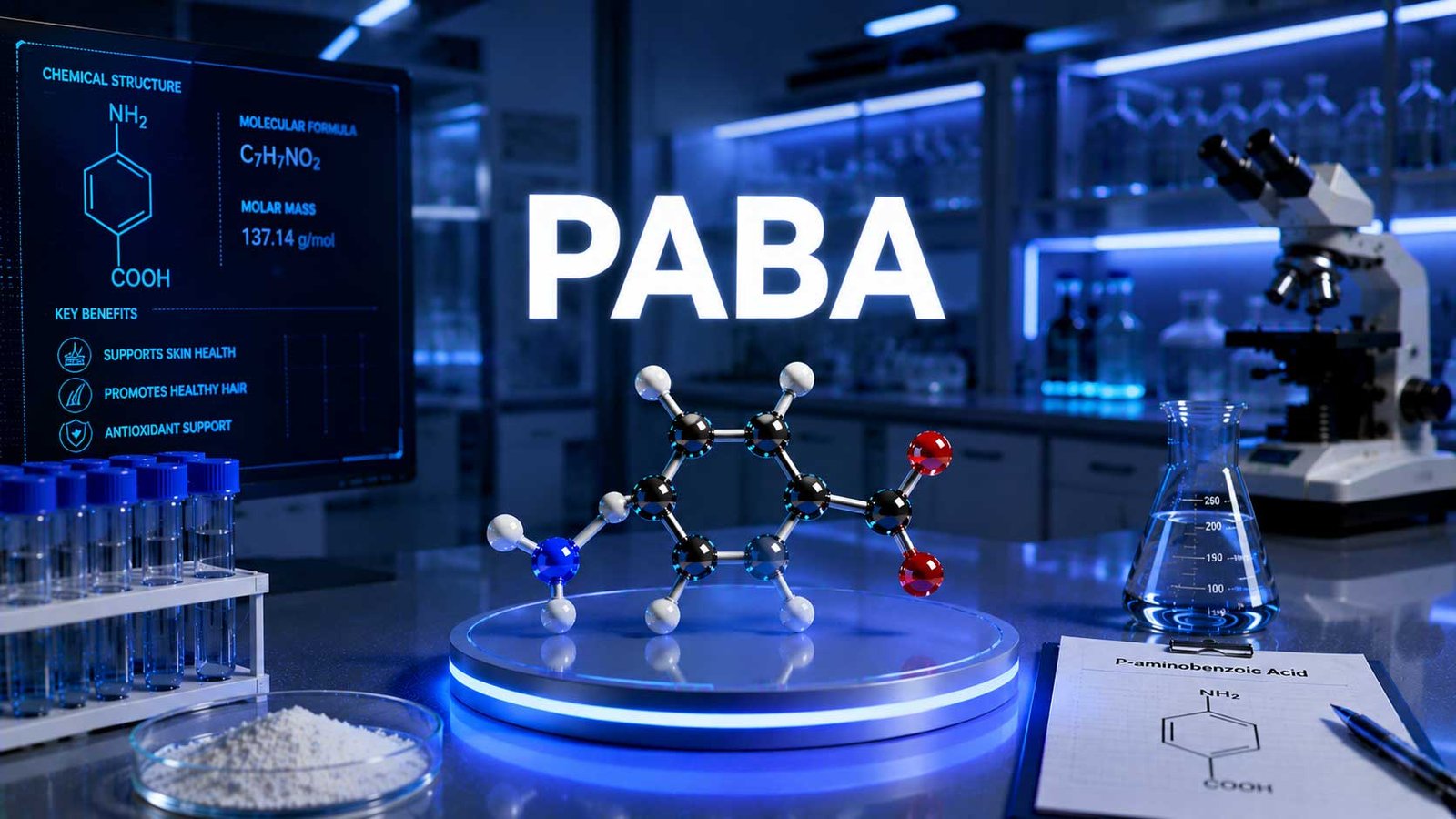
The B-Vitamin That Almost Wasn’t
There’s a strange little compound sitting in the back aisle of nutrition history, and most people have never heard its name unless they’ve squinted at the ingredient list on an old bottle of sunscreen. That compound is para-aminobenzoic acid, or PABA, and for a stretch of the twentieth century it wore the label “vitamin Bx” with something close to pride. Researchers thought they’d found a new essential nutrient. Dermatologists slathered it on skin to block the sun. Physicians handed it out for everything from graying hair to scleroderma. Then, slowly, the story got more complicated, and PABA got quietly demoted from vitamin to “interesting organic compound with some historical baggage.”
That demotion doesn’t mean PABA stopped mattering. It just means the conversation around it needs a little more nuance than a supplement label usually offers.
Table of Contents


Here’s the short version, and we’ll unpack every piece of it as we go: PABA is a small molecule that your gut bacteria use as a building block for folate, the B-vitamin your body needs for DNA synthesis, red blood cell production, and a long list of other jobs you’d rather not think about until something goes wrong. Humans don’t make PABA on their own — we don’t have the enzymes for it — but the bacteria living in our intestines do, and they use PABA as raw material to manufacture folic acid internally. That’s the connection that earns PABA its place in any conversation about vitamins, skin, and folate, even though technically speaking, PABA itself isn’t classified as a vitamin humans require from food.
So why does anyone still care about vitamin PABA in 2026? A few reasons, honestly. It shows up naturally in whole grains, organ meats, eggs, and mushrooms, which means most people who eat a reasonably varied diet are getting some exposure to it without ever thinking about it. It has a documented, if imperfect, history in skin care — both as a sunscreen ingredient and as an oral treatment for certain fibrotic skin conditions. And it sits at this odd intersection of “used to be considered essential” and “now considered a curiosity,” which makes it a genuinely interesting case study in how nutritional science evolves.
I’ll be upfront about something: PABA is not going to be the star of your supplement routine. It’s not folate. It’s not vitamin D. It’s a supporting character, and a somewhat controversial one at that, given the allergic reactions and rare liver concerns tied to higher oral doses. But supporting characters matter too, especially when you’re trying to understand how your body actually produces the folate it needs, rather than just supplementing folic acid and calling it a day.
There’s also a practical reason this compound deserves a closer look. A lot of people encounter PABA not through a vitamin bottle but through skin care — old-formula sunscreens, certain acne treatments, or dermatological products marketed for pigmentation issues. If you’ve ever had an unexplained rash after using a sunscreen, there’s a real chance PABA or one of its derivatives was the culprit. Understanding what this compound does, where it comes from, and where it can go wrong gives you a much clearer picture than the vague “it’s good for your skin” messaging you’ll find on most wellness blogs.
What makes PABA worth writing about isn’t that it’s a miracle nutrient. It’s that the story is messier and more honest than most supplement marketing allows for. There’s real biochemistry here — a genuine link between this compound, the folate your gut bacteria produce, and the health of your skin. There’s also real risk, particularly at the higher oral doses once prescribed for fibrotic conditions like Peyronie’s disease and scleroderma. Somewhere between the old claims that PABA could restore hair color and the newer FDA scrutiny over its use in sunscreens, there’s a grounded, evidence-based picture worth putting together.
That’s what we’re doing here. Not hype, not dismissal — just a clear look at what para-aminobenzoic acid actually does, where you’ll find it, how much people typically use, what happens if you don’t get enough exposure to it (rare as that is), and what happens if you get too much, especially in supplement form. Along the way, expect some detours into the history of sunscreen chemistry and a case report or two about liver enzymes, because that’s genuinely part of the PABA story.
If you came here because you saw “vitamin PABA” mentioned on a supplement label or in a skin care ingredient list and wondered what you were actually looking at, you’re in the right place. If you came here because you’re curious about the folate connection specifically, that’s covered too. Either way, by the end you should have a realistic sense of where this compound fits — not as a forgotten miracle vitamin, but as a genuinely useful piece of the folate and skin health puzzle, with some caveats attached that are worth taking seriously.
Key Health Benefits
Folate Synthesis and Why That Matters
The single most legitimate claim attached to PABA is its role as a precursor in folate synthesis — not in human cells, but in the gut bacteria that live alongside us. Certain strains of intestinal bacteria, including some E. coli populations, use enzymes to convert PABA into folic acid, which the body then absorbs and puts to use. Folate itself is involved in DNA and RNA synthesis, red blood cell formation, and the breakdown of homocysteine, a compound that in excess has been linked to cardiovascular strain. None of that folate activity happens without adequate folate intake in the first place, whether that comes from leafy greens, fortified grains, or the bacterial synthesis pathway that depends partly on PABA availability.
This is also exactly why certain antibiotics work the way they do. Sulfonamide drugs are structurally similar to PABA, and they interfere with bacterial folate production by essentially impersonating PABA and jamming the pathway. Bacteria that rely on synthesizing their own folate can’t survive without it, so blocking PABA utilization starves them out. It’s a clever mechanism, and it also explains why PABA supplementation can sometimes counteract sulfa-based antibiotics — feeding the pathway that the drug is trying to shut down.
Skin Tone, Texture, and UV Defense
PABA’s reputation in skin care didn’t come out of nowhere. Its chemical structure absorbs ultraviolet light, particularly in the UVB range, which is exactly why it became one of the earliest widely used sunscreen ingredients back in the 1970s. At its peak, some formulations contained as much as 15 percent PABA. It genuinely worked at reducing sunburn from UVB exposure, and for a while it was the gold standard.
Beyond sun protection, PABA has also been explored for its potential role in supporting even skin tone and texture, largely tied to its participation in cellular metabolic processes and its historical use in treating pigmentation disorders like vitiligo. The evidence here is older and thinner than people sometimes assume, so it’s worth holding this benefit loosely rather than treating it as settled science.
Antioxidant Activity and Cellular Protection
PABA has documented antioxidant properties, meaning it can help neutralize free radicals generated by things like cigarette smoke and general air pollution exposure. This antioxidant behavior is also thought to help protect collagen, the structural protein that keeps skin firm and elastic, from oxidative damage that would otherwise accelerate the kind of fibrotic changes seen in aging or scarred tissue.
A few practical notes on where this benefit tends to show up:
- Reduced oxidative stress markers in cellular studies involving PABA exposure
- A theorized protective effect on collagen structures exposed to environmental pollutants
- Historical interest in PABA as a general “tissue protective” compound, though modern antioxidants like vitamin C and E have far more robust supporting research
Historical Use in Fibrotic Skin Conditions
This is where PABA’s story gets genuinely interesting from a medical history standpoint. Potassium para-aminobenzoate, a specific salt form of PABA, has been used for decades to treat Peyronie’s disease and scleroderma, both conditions involving abnormal fibrous tissue formation. The proposed mechanism involves PABA increasing tissue levels of monoamine oxidase, which in turn is thought to reduce serotonin levels that contribute to scar tissue formation.
Clinical results have been mixed. Some studies report meaningful improvement in a majority of treated patients, while others show more modest effects. What’s notable is that this use case represents one of the only contexts where PABA has been studied in controlled, long-term clinical settings, rather than the more anecdotal skin and hair claims that circulate elsewhere.

Dietary Sources
Animal-Based Sources
If you’re eating a fairly typical omnivorous diet, you’re almost certainly getting some PABA without any intention of doing so. Organ meats, particularly liver and kidney, contain notable amounts of the compound. Eggs and dairy products contribute smaller but consistent amounts, and various cuts of meat round out the picture. None of this is usually the reason people choose these foods, but it’s a fair bonus given how central these same foods are to overall B-vitamin intake, folate included.
Plant, Fungal, and Whole-Grain Sources
For anyone eating plant-forward, whole grains are probably your best bet — think brown rice, whole wheat, and other minimally processed grain products. Mushrooms also contain meaningful levels of PABA, which is a nice overlap with their broader reputation as a source of B-vitamins in general. Brewer’s yeast, a staple in some nutrition circles for its dense B-vitamin profile, is another source worth knowing about if you’re trying to round out intake without relying on animal products.
A rough list of where PABA tends to concentrate in food:
- Organ meats (liver, kidney)
- Whole grains (brown rice, whole wheat products)
- Mushrooms
- Eggs and dairy
- Brewer’s yeast
None of these foods are marketed for their PABA content specifically — you won’t find a cereal box bragging about it — but if you’re already eating a diet rich in whole grains, mushrooms, and quality protein sources, you’re covering your bases without needing to think about it further.
The Gut Microbiome Angle
Here’s the part that tends to surprise people: humans can’t synthesize PABA on our own, because we lack the necessary enzymatic pathway. Instead, gut bacteria handle it. Certain intestinal microbes use enzymes with names like 4-amino-4-deoxychorismate synthase to build PABA from a precursor compound called chorismate, and from there, some of those same bacteria continue the process into folic acid production.
This means your dietary PABA intake isn’t the only variable at play — the composition and health of your gut microbiome matters too. A disrupted microbiome, whether from illness, antibiotic use, or chronic gut conditions like inflammatory bowel disease, can interfere with this internal folate production pathway regardless of how much PABA-containing food you’re eating. It’s a good reminder that nutrient status isn’t just about what goes on your plate; it’s also about what’s happening in the ecosystem living inside you.
Dosage & Deficiency
Typical Dosage Ranges
Because PABA isn’t classified as an essential nutrient, there’s no official recommended dietary allowance the way there is for folate or vitamin C. That said, supplement products typically suggest somewhere between 100 and 500 milligrams daily for general use, taken orally and often spread across a couple of doses given how quickly the water-soluble compound moves through the body and out through urine.
Clinical use tells a different story. In the context of treating Peyronie’s disease or scleroderma, doses have historically run much higher — often in the range of several grams per day, divided into multiple doses, and typically under medical supervision given the higher risk profile at those levels. This is not a comparison most people should draw casually; therapeutic dosing under a physician’s care is a very different situation from casual supplementation.
What Deficiency Might Look Like
Here’s an honest admission: there isn’t a well-documented, clearly defined “PABA deficiency syndrome” the way there is for something like vitamin C deficiency causing scurvy. Because PABA isn’t considered essential and the body can typically source what it needs through diet and bacterial synthesis, outright deficiency in healthy individuals eating a varied diet is not something you’ll find well-characterized in the research.
Where things get murkier is in folate status generally. Since PABA availability theoretically supports bacterial folate synthesis, conditions that impair gut absorption — inflammatory bowel disease, celiac disease, or other malabsorptive conditions — could plausibly affect this pathway alongside broader folate deficiency. People in these categories are more likely to experience anemia tied to low folate, though attributing that specifically to low PABA rather than general malabsorption would be overstating the evidence.
Who’s More Likely to Fall Short
A few groups worth keeping in mind, more from a folate-status perspective than a strict PABA deficiency angle:
- People with chronic gastrointestinal conditions affecting nutrient absorption
- Individuals on long-term antibiotic therapy that disrupts gut bacterial populations
- Those with very restrictive diets lacking whole grains, mushrooms, or animal proteins
- Anyone with diagnosed folate deficiency or folate-dependent anemia, where the underlying cause is worth investigating with a healthcare provider rather than self-treating with PABA supplements
Toxicity & Risks
Liver Concerns
This is probably the most clinically significant risk associated with oral PABA supplementation, particularly at the higher doses used for fibrotic conditions. Case reports dating back to the mid-1980s have documented instances of acute liver injury associated with potassium para-aminobenzoate use, typically appearing four to eight weeks after starting treatment and generally resolving once the supplement was discontinued.
It’s worth noting the evidence here isn’t entirely consistent. A retrospective analysis comparing scleroderma patients who received potassium para-aminobenzoate against those who didn’t actually found no clear pattern of elevated liver enzymes tied to the treatment, and in some measures, treated patients had fewer abnormal liver function results than untreated patients. So the picture is genuinely mixed: rare, documented cases of liver injury exist, but a broader hepatotoxic pattern hasn’t been consistently demonstrated. Anyone using PABA supplements at higher therapeutic doses, especially long-term, would be reasonable to discuss periodic liver function monitoring with a healthcare provider.
Allergic and Skin Reactions
If PABA has a defining weakness, it’s this one. Allergic contact dermatitis and photoallergic reactions to PABA are well documented, particularly from topical sunscreen use. Studies examining patients with suspected photosensitivity have found allergic reaction rates to PABA in the low single digits as a percentage of tested individuals, with some specialized dermatology clinic samples reporting notably higher rates among patients specifically presenting with sun-related skin reactions.
Because PABA is chemically related to local anesthetics like benzocaine and procaine, people with sensitivities to those compounds face a meaningfully increased risk of cross-reactivity. Symptoms typically show up as itchy, red rashes at the site of topical application, sometimes accompanied by a burning or stinging sensation, especially in alcohol-based formulations. In rare cases, more severe reactions including generalized hives or swelling have been reported. This reaction profile is a major reason PABA fell out of favor in sunscreen formulations, eventually being replaced by derivatives like padimate O, and more recently by mineral filters such as zinc oxide and titanium dioxide.
Drug and Supplement Interactions
The most clinically relevant interaction involves sulfonamide antibiotics. Because these drugs work by blocking bacterial folate synthesis through PABA pathway interference, taking PABA supplements alongside a sulfa antibiotic can directly undermine the medication’s effectiveness. This isn’t a theoretical concern — it’s a well-established pharmacological antagonism that anyone on sulfa-based antibiotics should be aware of before adding a PABA supplement.
A few other interaction points worth flagging:
- Potassium-containing PABA formulations may pose additional risk for people on potassium-sparing medications, given the potential for elevated potassium levels
- People on insulin or oral diabetes medications should be cautious, as PABA has been associated with blood sugar-lowering effects in some reports
- Anyone with known liver or kidney conditions should approach oral PABA supplementation cautiously, given the compound’s primary elimination pathway through the kidneys and its documented, if uncommon, liver-related case reports
None of this means PABA is inherently dangerous at typical low-dose supplement levels. It does mean the compound deserves the same respect you’d give any bioactive substance — read labels, know your allergy history, and loop in a healthcare provider if you’re combining it with prescription medications.
Where PABA Actually Fits Into the Picture
After going through all of this, here’s where I land: PABA is a legitimately interesting compound with a real, if narrow, role to play in the broader folate story, and a genuinely mixed track record in skin care and clinical medicine. It’s not the forgotten vitamin some corners of the supplement world make it out to be, and it’s not the dangerous chemical other corners paint it as either. The truth sits in the middle, which is usually where these things end up once you actually read the research instead of the marketing copy on either side.
What stands out most is the folate connection. PABA isn’t something your body needs directly from food in the way it needs actual vitamins, but its role as a building block for bacterial folate synthesis means it’s quietly involved in a process that affects DNA synthesis, red blood cell production, and overall cellular health. If you’re eating a reasonably varied diet with whole grains, mushrooms, eggs, and some animal protein, you’re almost certainly getting enough PABA exposure without ever having to think about it, and your gut bacteria are handling the rest.
The skin health angle is real but needs qualifying. PABA’s UV-absorbing properties made it historically useful in sunscreen, and its antioxidant activity offers some theoretical protective benefit against environmental damage to collagen. But the allergic reaction profile is significant enough that it’s largely fallen out of favor in topical formulations, replaced by gentler, equally effective alternatives. If you’re specifically shopping for sunscreen, checking the label for PABA or its derivatives — and choosing something else if you have any history of skin sensitivity — is a reasonable precaution rather than an overreaction.
For anyone considering oral PABA supplementation specifically, the honest takeaway is that the strongest evidence exists for its use in fibrotic conditions like Peyronie’s disease and scleroderma, and even there, results are inconsistent enough that it’s typically framed as one option among several rather than a first-line treatment. The liver injury case reports, while rare, are real enough that anyone taking therapeutic doses should have some level of medical oversight rather than self-directing treatment based on internet research alone.
If there’s a practical takeaway here, it’s this: don’t go out of your way to supplement PABA on the assumption that it’s an essential nutrient you might be missing. It isn’t classified that way for good reason, and most people get what functional exposure they need through ordinary eating patterns and a reasonably healthy gut microbiome. Where PABA becomes worth a real conversation with a healthcare provider is in specific clinical contexts — fibrotic skin conditions, unexplained folate-related concerns tied to malabsorption, or genuine curiosity about ingredients in a skin care product you’re already using.
Vitamins and nutrition compounds don’t all need to be dramatic to be worth understanding. PABA is a good example of a substance that matters more for the biochemical story it tells — about folate, about skin, about how gut bacteria and human physiology work together — than for any single, standalone health claim. Understanding that story doesn’t require adding another pill to your routine. It just requires knowing what’s actually going on beneath a label most people walk past without a second thought.
Article Sources
At AncientHerbsWisdom, our content relies on reputable sources, including peer-reviewed studies, to substantiate the information presented in our articles. Our primary objective is to ensure our content is thoroughly fact-checked, maintaining a commitment to accuracy, reliability, and trustworthiness.
- Borum, M., Nsien, E., & Zimmerman, H. (1991). Hepatotoxicity from paraaminobenzoic acid. Digestive Diseases and Sciences, 36(12), 1793. https://pubmed.ncbi.nlm.nih.gov/1748050/
- Kantor, G. R., & Ratz, J. L. (1985). Liver toxicity from potassium para-aminobenzoate. Journal of the American Academy of Dermatology, 13(4), 671-672. https://pubmed.ncbi.nlm.nih.gov/3878370/
- Zarafonetis, C. J., Dabich, L., DeVol, E. B., Rossi, C., & Skovronski, J. J. (1986). Potassium para-aminobenzoate and liver function test findings. Journal of the American Academy of Dermatology, 15(1), 144-149. https://pubmed.ncbi.nlm.nih.gov/3487559/
- Roy, J., & Carrier, S. (2008). Acute hepatitis associated with treatment of Peyronie’s disease with potassium para-aminobenzoate (Potaba). The Journal of Sexual Medicine, 5(12), 2967-2969. https://doi.org/10.1111/j.1743-6109.2008.00918.x
- Plüß, M., Tampe, D., Schwörer, H., Bremer, S. C. B., & Tampe, B. (2022). Case report: Kinetics of human leukocyte antigen receptor HLA-DR during liver injury induced by potassium para-aminobenzoate as assessed for causality using the updated RUCAM. Frontiers in Pharmacology, 13, 966910. https://doi.org/10.3389/fphar.2022.966910
- National Institutes of Health, Office of Dietary Supplements. (2022). Folate: Fact sheet for health professionals. https://ods.od.nih.gov/factsheets/Folate-HealthProfessional/
- Ngan, V. (2024). Allergy to PABA. DermNet NZ. https://dermnetnz.org/topics/allergy-to-paba
- WebMD. (n.d.). Para-aminobenzoic acid (PABA): Overview, uses, side effects, precautions, interactions, dosing and reviews. https://www.webmd.com/vitamins/ai/ingredientmono-1004/para-aminobenzoic-acid-paba

- Phosphatidic Acid: Supporting Muscle Growth and Strength - July 31, 2026
- Ceramides: Supporting Healthy Skin From Within - July 31, 2026
- Synbiotics: Combining Prebiotics and Probiotics Together - July 31, 2026