
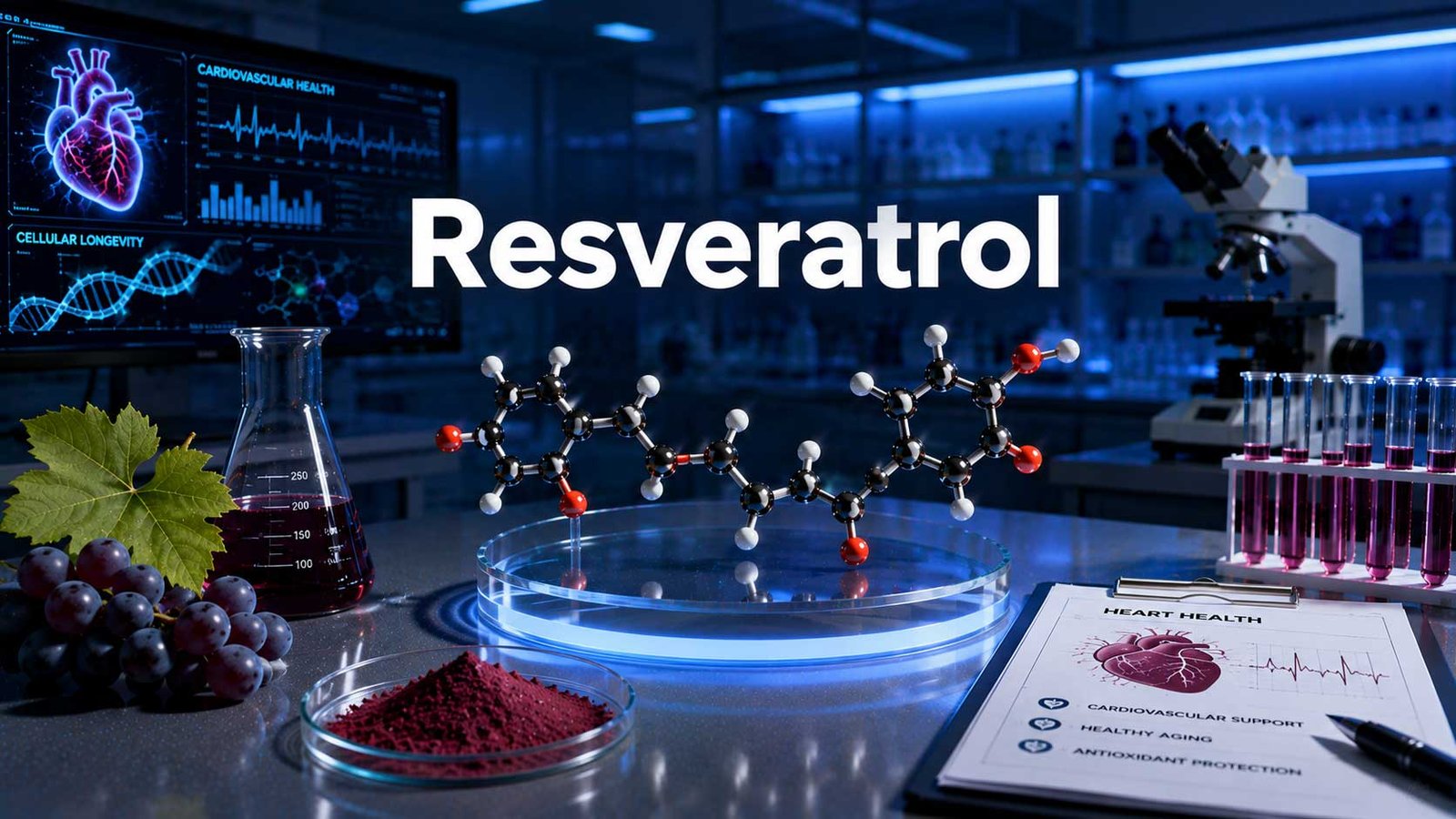
The Compound That Turned a Glass of Wine Into a Science Story
I still remember the first time someone told me red wine might be “good for my heart.” It sounded like the kind of thing you tell yourself to feel better about a second glass on a Friday night. Turns out, there was actually a molecule behind that story, and its name is resveratrol.
Resveratrol is a plant compound that falls into a family called stilbenes, which is itself a subgroup of the much larger polyphenol family. Plants make it as a kind of chemical armor. When grapevines get attacked by fungus, stressed by drought, or hit with too much ultraviolet light, they ramp up resveratrol production in their skin as a defense response. It’s found most famously in the skin of red grapes, but also shows up in peanuts, blueberries, cranberries, pistachios, and a handful of other plants that face similar environmental pressures.
Table of Contents


The reason resveratrol became a household name has a lot to do with something researchers call the French Paradox. Back in the early 1990s, scientists noticed something that didn’t add up on paper: French populations were eating diets loaded with saturated fat, butter, cheese, all of it, yet their rates of coronary heart disease were noticeably lower than in other Western countries with similar dietary fat intake. Red wine consumption became one of the leading theories for why, and resveratrol, present in relatively higher concentrations in wine than in fresh grapes, got pulled into the spotlight almost overnight.
From there, things escalated fast. Researchers started finding that resveratrol activated a class of proteins called sirtuins, the same proteins linked to the life-extending effects seen in caloric restriction studies in animals. Suddenly you had headlines suggesting a pill might mimic the benefits of fasting without anyone having to skip a meal. Labs around the world piled into resveratrol research, and for a while it felt like the anti-aging holy grail had been found in a grape skin.
Reality, as it tends to do, complicated the picture. Some of the boldest early claims about resveratrol directly triggering sirtuin activity turned out to be more nuanced than first reported, and newer methods, including CRISPR-based studies, have questioned whether resveratrol activates sirtuins directly at all or whether the relationship is more indirect. That doesn’t mean the compound is worthless. It means the story is more textured than “grape juice equals fountain of youth,” which, frankly, is a more honest and more interesting place to start.
What resveratrol does appear to do, and this is where the actual science holds up reasonably well, is act as an antioxidant and anti-inflammatory agent that interacts with several metabolic pathways your body already relies on for maintaining cardiovascular and cellular health. It’s been studied for its effects on endothelial function, the health of the thin layer of cells lining your blood vessels, on blood pressure regulation, on insulin sensitivity, and on markers of oxidative stress that tend to climb as we get older.
I’ll be upfront about something before we go further: resveratrol is not a miracle molecule, and anyone who tells you otherwise is selling you something. It’s also not nothing. The clinical trial data is a mixed bag, partly because doses, formulations, and study populations vary wildly from one study to the next, and partly because resveratrol has a genuinely difficult pharmacokinetic profile. Your body absorbs a decent amount of it after you eat or drink something containing it, but it gets metabolized and cleared out remarkably fast, which has made it tricky to translate promising lab results into consistent human outcomes.
Here’s a way to think about where resveratrol actually sits, before we dig into specifics:
- It is not a vitamin. There’s no deficiency syndrome, no minimum requirement your body needs to function.
- It behaves more like a dietary bioactive, something your body can use to modest benefit when it’s present, but that you won’t suffer without.
- Its effects seem to depend heavily on dose, form, and who’s taking it. People with existing metabolic or cardiovascular risk factors tend to show more measurable change than healthy young adults with nothing to improve.
- Bioavailability is its Achilles heel. Get too excited about resveratrol without understanding this piece and you’ll end up disappointed by how little of an oral dose actually reaches your bloodstream in an active form.
None of that context is meant to talk you out of caring about resveratrol. Quite the opposite, actually. Once you understand what this compound is realistically capable of, and where the evidence is genuinely encouraging versus where it’s still catching up to the hype, you’re in a much better position to decide whether it deserves a place in your routine. Cardiovascular disease remains one of the leading causes of death worldwide, and the world’s population keeps getting older, which means anything with legitimate mechanistic promise for heart and aging support is worth a serious, clear-eyed look. That’s exactly what we’re going to do.
Key Health Benefits of Resveratrol
Let’s get into what resveratrol has actually been shown to do, because this is where the compound earns its reputation, and also where it sometimes falls short of it.
Cardiovascular and Vascular Support
The heart-health angle is where resveratrol first made its name, and it’s still where the bulk of serious research has landed. Reviewers examining the accumulated clinical and preclinical evidence have described resveratrol as having cardioprotective potential across several conditions, including atherosclerosis, myocardial infarction, and heart failure, largely through its effects on cell signaling pathways tied to inflammation, oxidative stress, and cardiac remodeling.
A big piece of this story involves the endothelium, that inner lining of your blood vessels that regulates how well arteries dilate and constrict. Resveratrol has been linked to improved endothelial function, in part by supporting nitric oxide production, which helps blood vessels relax appropriately. Reviewers looking specifically at resveratrol’s cardiovascular effects have noted its influence spans multiple molecular targets tied to cardioprotection, including pathways involved in cell longevity and energy metabolism inside heart muscle cells.
That said, I want to be honest with you here rather than just cheerleading. Not every trial agrees. A review focused specifically on vascular outcomes found that results across clinical studies have been genuinely contrasting, without a clean dose-dependent pattern showing up consistently. Interestingly, some of the more convincing effects on vascular biomarkers came from studies where resveratrol was delivered through food sources like red wine rather than as an isolated high-dose supplement, even though the wine-based doses were considerably lower. That’s a detail worth sitting with. It suggests the surrounding matrix, the other polyphenols and compounds traveling alongside resveratrol in a whole food or beverage, might matter more than we initially assumed.
Blood pressure is another area getting attention. Some research indicates resveratrol, particularly at higher doses, can help lower blood pressure by supporting nitric oxide-driven vasodilation. The effect tends to be more noticeable in people who already have elevated cardiovascular risk factors rather than in metabolically healthy individuals, which fits the broader pattern we keep seeing throughout resveratrol research: this is a compound that seems to shine brightest when there’s actually something to correct.
Metabolic and Blood Sugar Support
Resveratrol’s influence doesn’t stop at the blood vessels. It appears to touch fat and glucose metabolism in ways that circle back to cardiovascular health indirectly. Research has pointed to resveratrol’s ability to enhance insulin sensitivity and support healthier lipid handling, partly by inhibiting a receptor called PPARγ that’s involved in fat cell formation, and partly through modulation of pathways like AMPK and NF-κB that play a role in inflammation and blood sugar regulation.
In practical terms, this means resveratrol has been explored as a way to support the body’s ability to manage blood sugar and reduce excess fat storage, particularly visceral fat, which is more metabolically active and more strongly tied to cardiovascular risk than fat stored elsewhere. Clinical research summarized in longevity-focused reviews has connected regular resveratrol intake with improved insulin sensitivity and modest reductions in fat cell size, though as with the cardiovascular data, results vary based on dose and the metabolic starting point of participants.
Cellular Aging and the Sirtuin Connection
This is the part of the resveratrol story that made it famous, so it deserves a fair hearing, warts and all. Sirtuins are a family of proteins, seven of them in mammals, that play roles in DNA repair, stress resistance, and metabolic regulation. SIRT1 is the most studied of the bunch, and it’s long been associated with the beneficial effects seen in caloric restriction, the well-documented phenomenon where eating meaningfully fewer calories extends lifespan in various organisms.
Early lab work suggested resveratrol could directly activate SIRT1, essentially offering a shortcut to some of caloric restriction’s benefits without the caloric restriction part. That idea captured imaginations for good reason. Who wouldn’t want that trade? But more recent structural and mechanistic research has complicated the “direct activation” narrative, with some studies suggesting resveratrol’s interaction with sirtuins may work through more indirect routes, and possibly induce a degree of cellular stress rather than a clean, straightforward activation.
Where this leaves us: resveratrol does appear to influence pathways tied to mitochondrial function, oxidative stress resistance, and cellular stress responses, all of which matter for how tissues age over time. Whether that translates into meaningfully extended human lifespan, the way it appeared to in some short-lived model organisms, remains unproven. Studies in genetically diverse mouse populations, which better mimic human genetic variability than the inbred strains used in early experiments, haven’t shown the same lifespan extension that generated so much early excitement. I think that’s an important reality check, not a reason to write resveratrol off, but a reason to hold the anti-aging claims with realistic expectations.
Anti-Inflammatory and Antioxidant Activity
Underneath almost every benefit attributed to resveratrol sits its core identity as a polyphenolic antioxidant. Free radicals, those unstable molecules generated through normal metabolism, UV exposure, pollution, and other stressors, contribute to cellular damage that accumulates over time and is implicated in a long list of age-related conditions. Resveratrol’s structure allows it to help neutralize some of this oxidative burden, and it also appears to dial down certain inflammatory signaling pathways, including NF-κB, which plays a central role in chronic low-grade inflammation.
This dual action, antioxidant plus anti-inflammatory, is likely the connective tissue explaining why resveratrol keeps showing up across such different areas of research, from joint health to skin conditions to metabolic disease. It’s not doing one specific job. It’s nudging several interconnected systems that tend to drift toward dysfunction as we age.
Other Areas Under Investigation
Beyond the cardiovascular and metabolic angles, researchers have also looked at resveratrol’s effects on hormonal conditions like polycystic ovary syndrome, where trial data has shown reductions in testosterone and other hormone markers, and on neurological health, where early trials suggest it’s detectable in cerebrospinal fluid and may influence biomarkers relevant to conditions like Alzheimer’s disease. These areas are earlier stage and less conclusive than the cardiovascular research, worth watching rather than betting on just yet.

Dietary Sources of Resveratrol
If you’re picturing yourself drinking bottle after bottle of red wine to chase resveratrol’s benefits, let’s pump the brakes right now, because the actual numbers involved are pretty humbling.
Red Wine and Grapes
Red wine remains the most culturally famous resveratrol source, and for good reason: it genuinely contains more of the compound than most other common foods, largely because the fermentation process keeps grape skins in prolonged contact with the juice. Reported concentrations vary a lot depending on grape variety and winemaking region, but a typical 5-ounce glass of red wine generally lands somewhere between roughly 0.3 and 1.9 milligrams of resveratrol. White wine contains dramatically less, since the skins are removed early in production, before much resveratrol has a chance to transfer into the liquid.
Fresh grapes themselves, especially dark-skinned varieties, contain resveratrol mainly in the skin, with a cup of red grapes providing somewhere in the range of a quarter to just over one milligram. Muscadine grapes, a variety grown mostly in the southeastern United States, tend to run notably higher than standard table grapes.
Peanuts and Other Plant Foods
Peanuts are one of the more surprising entries on this list. Resveratrol shows up throughout the peanut, not just the skin, and how the peanut is prepared changes the resveratrol content considerably. Boiled peanuts, in particular, tend to retain more resveratrol than roasted ones, since roasting at high, dry heat appears to degrade some of the compound.
Blueberries and cranberries contain measurable, if modest, amounts as well, generally less concentrated than what you’d find in grapes but still contributing to overall polyphenol intake when eaten regularly. Cocoa and dark chocolate contain trace amounts too, adding one more small reason to appreciate a square of the good stuff after dinner.
Why Food Sources Rarely Match Supplement Doses
Here’s the piece that trips people up. Clinical trials investigating resveratrol’s effects on things like insulin sensitivity, blood pressure, or inflammatory markers have typically used doses ranging anywhere from 10 milligrams up to several grams a day, with 500 milligrams being a fairly common study dose. Compare that to the milligram, sometimes sub-milligram, amounts found in a serving of grapes or a glass of wine, and the gap becomes obvious.
Getting anywhere close to trial-level doses through diet alone would require consuming an unrealistic quantity of grapes, wine, or peanuts, day after day, which isn’t practical or advisable given the sugar, alcohol, or calorie load that would come along for the ride. This is exactly why resveratrol supplements exist and why so much research has shifted toward studying concentrated, purified forms rather than relying on whole foods to deliver a therapeutic dose.
That doesn’t mean the whole-food route is pointless. Remember that detail from earlier, the finding that lower resveratrol doses delivered through red wine sometimes produced more favorable vascular results than higher isolated supplement doses. Whole foods bring along a whole cast of supporting polyphenols, fiber, and other compounds that may work together in ways an isolated capsule simply can’t replicate. I tend to think of dietary resveratrol as a nice bonus layered onto an already sensible eating pattern, rather than a therapeutic strategy on its own.
A Practical List of Everyday Sources
For anyone wanting a quick reference, common resveratrol-containing foods include:
- Red wine and, to a much lesser extent, red grape juice
- Fresh red and purple grapes, especially the skins
- Boiled or raw peanuts, more so than roasted
- Blueberries and cranberries
- Pistachios
- Cocoa and dark chocolate, in smaller amounts
None of these will get you anywhere near clinical trial doses on their own, but stacking a few of them into a normal week of eating is a reasonable, low-effort way to nudge your polyphenol intake upward.
Regional and Variety Differences
One detail that surprises a lot of people is just how much resveratrol content can swing depending on where a grape was grown and which variety it is. Spanish red grapes, for instance, have been noted for producing some of the higher concentrations found in table grapes, while Pinot Noir and Merlot grapes, thanks partly to thinner skins and the growing conditions they tend to favor, often show up on the higher end among red wine varietals. Muscadine grapes, grown widely across the American South, are something of an outlier too, sometimes containing resveratrol levels many times higher than standard red wine grapes, largely because their thick skins face more fungal pressure and respond by producing more of the compound as a defense.
This variability is worth knowing about mainly so you don’t assume every red wine or every bunch of grapes delivers the same amount. If someone tells you a specific bottle or brand is a resveratrol powerhouse, take it with a grain of salt unless there’s an actual lab analysis behind that claim, because the range across ordinary consumer products is genuinely wide.
Cooking, Processing, and Storage Effects
How a food is grown, harvested, and prepared changes its resveratrol content more than most people expect. Heat and prolonged processing tend to degrade resveratrol, which is part of why boiled peanuts often test higher than roasted ones, and why juice, especially pasteurized juice, generally contains less than fresh, unprocessed fruit. Fermentation, on the other hand, appears to help. Red wine typically contains more resveratrol than fresh grape skins alone would suggest, in part because the extended maceration period during winemaking pulls more of the compound out of the skins and into the liquid.
Storage conditions and even light exposure during growing can shift resveratrol content too, since the compound is fundamentally a stress response. Grapes and peanuts grown under more environmental pressure, whether that’s UV exposure, drought stress, or fungal challenge, tend to produce more of it as a defense mechanism. This is one of those quirks of nature where a slightly tougher growing season for the plant can translate into a small nutritional upside for whoever eats it later.
Practical Takeaways for Everyday Eating
If your goal is simply to include more resveratrol-rich foods in a normal week without overthinking it, a few habits go a long way. Reaching for whole, dark-skinned grapes instead of grape juice keeps more of the compound intact. Choosing boiled or raw peanuts over heavily roasted, processed peanut products preserves more resveratrol along with other nutrients that tend to get stripped out during industrial processing. And if you already enjoy red wine, sticking to moderate intake, generally understood as up to one drink daily for women and up to two for men according to most health guidance, lets you capture some benefit without taking on the well-documented risks that come with higher alcohol consumption. None of this needs to feel like a strict protocol. It’s more about leaning slightly toward the resveratrol-richer version of foods you’re probably already eating anyway.
Dosage & Deficiency
Let’s clear something up right away: there is no such thing as a resveratrol deficiency. This isn’t a vitamin or mineral your body requires to avoid disease. Nobody develops a medical condition from a lack of resveratrol, and there’s no established recommended daily allowance the way there is for, say, vitamin C or iron. That distinction matters, because it changes the whole conversation from “how much do I need” to “how much makes sense to take, if any, and why.”
What Clinical Research Has Used
Trials investigating resveratrol have used a genuinely wide dosage range, generally spanning from around 10 milligrams up through 5,000 milligrams per day, though 500 milligrams has emerged as one of the more frequently studied amounts. Supplements on the market typically come in capsules or tablets containing anywhere from under 1 milligram up to 500 milligrams, so the products available to consumers roughly mirror the range used in research, which is at least reassuring from a consistency standpoint.
Safety data from formal toxicology work offers a useful anchor point. Animal studies established a no-observed-adverse-effect-level, meaning the highest dose tested that produced no measurable harm, of around 200 milligrams per kilogram of body weight per day in rats and roughly 600 milligrams per kilogram per day in dogs. Translating those figures directly to humans isn’t straightforward, but they do suggest a fairly wide margin of safety at the doses typically used in human trials.
Finding a Reasonable Starting Point
If you’re considering a resveratrol supplement, and I’d encourage anyone in that position to have this conversation with a healthcare provider first, especially if you take other medications, doses in the range of 100 to 500 milligrams daily are where most of the encouraging human research clusters. This range appears to be well tolerated in the majority of trial participants and lines up with what’s commercially available.
A few practical points worth keeping in mind:
- Micronized or specially formulated resveratrol products are sometimes used in research because standard resveratrol has notoriously poor bioavailability, meaning much of what you swallow never makes it into active circulation before your liver metabolizes it.
- Splitting a daily dose into two smaller doses, rather than one large one, has been used in some trial designs and may help with absorption and tolerability, though this isn’t universally established.
- Taking resveratrol with food, particularly food containing some fat, may support absorption, since it’s a fat-soluble-leaning compound in terms of how it behaves in the gut.
- Consistency matters more than chasing an especially high dose. The research showing benefit tends to involve sustained daily intake over weeks or months, not sporadic use.
Bioavailability: The Underappreciated Obstacle
I mentioned this earlier, but it deserves its own moment here because it explains so much of the inconsistency across resveratrol research. Once resveratrol is absorbed in the gut, it gets rapidly conjugated by the liver and intestines into metabolites, glucuronides and sulfates mostly, and cleared from the bloodstream within just a few hours. That means the free, active form of resveratrol circulating in your blood at any given time is a small fraction of what you actually consumed.
This single fact is probably the biggest reason clinical trials of resveratrol have produced such a mixed bag of results over the years. A dose that looks impressive on paper might deliver far less active compound to your tissues than expected, which is part of why some manufacturers have moved toward micronized formulations or resveratrol paired with compounds like piperine, extracted from black pepper, which has some evidence of improving the absorption of various plant compounds. Whether these enhanced formulations meaningfully change health outcomes, rather than just blood concentration numbers, is still an open question in the research.
Who Should Be Extra Careful With Dosage
Certain groups warrant more caution before starting resveratrol supplementation, including anyone on blood-thinning medications, anyone with a hormone-sensitive condition, pregnant or breastfeeding individuals, and people taking medications metabolized through the liver’s cytochrome P450 pathway, which we’ll get into more in the next section. If any of that applies to you, this is a “talk to your doctor before you start” situation rather than a “figure it out yourself” one.
Reading Labels and Choosing a Product
Walk into any supplement aisle and you’ll find resveratrol sold under several different names and forms, which can make comparing products more confusing than it needs to be. Trans-resveratrol is the biologically active form that most research has focused on, so that’s the term worth looking for on a label rather than just “resveratrol” generically, since some cheaper products use less-studied cis-resveratrol or poorly standardized grape or Japanese knotweed extracts with inconsistent actual content. Japanese knotweed, incidentally, is one of the most common commercial sources of extracted resveratrol, not grapes, since it’s a far more concentrated and cost-effective raw material for manufacturers.
Look for products that specify the milligram amount of trans-resveratrol per serving rather than just listing a proprietary blend weight, since blend labeling can obscure how much of the actual active compound you’re getting. Third-party testing, through organizations that verify a product’s contents match its label, adds another layer of confidence, particularly given how unregulated the broader supplement industry tends to be.
Timing and Consistency Considerations
Because resveratrol clears the bloodstream fairly quickly, some researchers and formulators have experimented with splitting doses across the day rather than taking everything at once, aiming to maintain more consistent blood levels rather than a single sharp spike followed by a long trough. Whether this meaningfully changes outcomes for the average person taking a moderate dose isn’t fully settled, but it’s a reasonable, low-risk approach if you’re already committed to daily supplementation and want to make the most of it.
What does seem to matter more consistently across the research is simply sticking with it. Many of the metabolic and cardiovascular improvements observed in trials took weeks or months of continuous use to show up, not days. If you’re going to try resveratrol, treating it as a long-term addition to your routine, reassessed periodically with bloodwork or a conversation with your doctor, makes more sense than a short trial run followed by disappointment that nothing dramatic happened in two weeks.
Toxicity & Risks
Resveratrol has a reasonably good safety track record across the studies conducted so far, but “reasonably good” doesn’t mean “risk-free,” and I think it’s worth walking through the real concerns honestly rather than glossing over them.
Gastrointestinal Effects at Higher Doses
The most consistently reported issue across trials is gastrointestinal discomfort at higher doses, generally above the 1,000 milligram per day mark. Symptoms reported have included nausea, abdominal pain, flatulence, and diarrhea. In one trial involving healthy volunteers given a single 5,000 milligram dose, no serious adverse events occurred, but repeated dosing above 1,000 milligrams daily over several weeks did produce these mild-to-moderate digestive symptoms in a meaningful portion of participants.
Trials in cancer patients using very high doses, in the range of 5 grams daily for extended periods, reported a notably higher rate of gastrointestinal side effects, including nausea, diarrhea, and vomiting in a majority of participants, along with fatigue and, in some cases, more serious effects like kidney complications in a small number of individuals already dealing with underlying disease and other treatments. It’s worth noting these were clinical populations receiving doses far beyond what any standard supplement would provide, so I don’t want to overstate the relevance to someone considering a standard 250 or 500 milligram capsule. Still, it illustrates that “natural” doesn’t automatically mean “no risk at high enough amounts.”
Liver Considerations
Some studies using high daily doses, in the range of 1.5 to 3 grams, observed mild, temporary elevations in liver enzymes, specifically ALT and AST, markers that indicate some degree of liver stress. Importantly, these elevations were not accompanied by jaundice or other symptoms of liver dysfunction, and levels returned to normal after stopping supplementation. At more typical supplemental doses, this pattern hasn’t been a significant concern, but it’s a reasonable argument for not assuming that more resveratrol automatically means more benefit.
Drug Interactions
This is probably the most practically important risk category for everyday supplement users. Resveratrol, particularly at higher doses, can inhibit several cytochrome P450 liver enzymes, including CYP3A4, CYP2D6, and CYP2C9. These enzymes are responsible for metabolizing a huge number of common medications. When resveratrol interferes with their activity, it can change how quickly certain drugs are cleared from your system, potentially increasing their concentration and effects.
Medications flagged as having potential interaction concerns based on preclinical and case-level evidence include blood thinners like warfarin, certain calcium channel blockers, some antiarrhythmic medications, HIV protease inhibitors, antihistamines, and immunosuppressant drugs. If you’re on any medication with a narrow therapeutic window, meaning the difference between an effective dose and a harmful one is small, this interaction risk is not something to brush off. It’s the single strongest reason to loop in a pharmacist or physician before adding resveratrol to your routine, rather than just grabbing a bottle off a supplement store shelf.
Hormonal Considerations
Because resveratrol has demonstrated some estrogen-like activity in laboratory studies, it’s sometimes referred to as a phytoestrogen. This has led to caution around its use in people with hormone-sensitive conditions, including certain breast, ovarian, or uterine cancers, where estrogen-mimicking compounds could theoretically influence disease progression. The clinical significance of this effect at typical supplemental doses isn’t fully settled, but it’s a legitimate reason for anyone with a history of hormone-sensitive cancer to have a specific conversation with their oncologist before using resveratrol supplements.
Pregnancy and Breastfeeding
There isn’t sufficient safety data on resveratrol supplementation during pregnancy or breastfeeding to consider it established as safe in these situations. Given the lack of dedicated research and the compound’s known interactions with hormonal and metabolic pathways, the more conservative and generally recommended approach is to avoid supplemental resveratrol during pregnancy and while breastfeeding, sticking instead to whatever naturally occurs in a normal, varied diet.
The Bigger Picture on Safety
Stepping back, the overall pattern across the safety literature is reassuring at moderate doses and more nuanced at high ones. Toxicology studies in animals found only minimal toxicity even at fairly substantial doses, and human trials using doses up to a gram daily have generally reported resveratrol as well tolerated. The risks scale upward mainly as doses climb into multi-gram territory, or when resveratrol is combined with medications it’s known to interact with. For most healthy adults considering a standard supplemental dose, the primary things to watch for are mild digestive symptoms and medication interactions, both of which are manageable with reasonable caution and a conversation with a healthcare provider before you start.
Where Resveratrol Actually Fits Into a Healthy Life
After spending this much time in the research, here’s where I land on resveratrol: it’s a legitimately interesting compound with real, if modest and context-dependent, benefits for cardiovascular and metabolic health, wrapped inside a origin story that got a little ahead of the science in the early 2000s. The French Paradox gave resveratrol a compelling narrative, and the sirtuin research gave it a scientific hook that made for irresistible headlines. But the deeper the research has gone, the more it’s revealed a compound that works subtly, that depends heavily on dose and delivery form, and that seems to help most in people who already have some cardiovascular or metabolic ground to make up.
That’s not a disappointing conclusion, in my opinion. It’s actually a more useful one than the “miracle molecule” framing ever was, because it gives you something you can act on realistically. If you enjoy a glass of red wine now and then, or you regularly eat grapes, peanuts, and berries, you’re already getting a reasonable trickle of resveratrol alongside a bunch of other beneficial plant compounds, and that combination appears to matter more than any single molecule in isolation. If you’re specifically targeting cardiovascular or metabolic support and considering a supplement, the research supports doses in the 100 to 500 milligram range as a reasonable, generally well-tolerated starting point, provided you’ve ruled out interactions with any medications you’re taking.
What I’d steer you away from is treating resveratrol as a substitute for the fundamentals. No amount of resveratrol offsets a diet heavy in processed food, chronic poor sleep, a sedentary routine, or unmanaged blood pressure. Where it seems to earn its keep is as a supporting player, one piece nested inside a broader pattern of choices that actually move the needle on aging and heart health: regular movement, a diet built around whole plant foods, decent sleep, and routine checkups that catch problems while they’re still small.
I think it also helps to separate the two very different conversations that get lumped together under the resveratrol umbrella. One conversation is about cardiovascular and metabolic support, and that’s the one with the sturdier evidence behind it, particularly for people who already carry some elevated risk. The other conversation is about longevity and anti-aging in a broader, more dramatic sense, the sirtuin-activation, fountain-of-youth version of the story, and that one still has real gaps between what’s been shown in cells and short-lived organisms versus what’s been confirmed in humans over a full lifespan. Keeping those two conversations separate in your own head will save you from either dismissing resveratrol entirely or expecting more from it than the current evidence can support.
It’s also worth remembering that supplements exist within a much bigger picture of how the body ages, and no single compound, however promising, operates in isolation from everything else you’re doing. Someone taking a resveratrol capsule while otherwise ignoring their blood pressure, skipping physical activity, and eating mostly processed food isn’t likely to see the kind of results reported in controlled trials, where diet and other variables were carefully managed. Conversely, someone already doing the foundational things well, moving regularly, eating a varied plant-forward diet, sleeping enough, managing stress, may find that resveratrol offers a genuinely useful marginal boost layered on top of habits that were already working in their favor.
If there’s one habit worth taking from all of this, it’s simply eating more of the whole foods that naturally contain resveratrol as part of a normal week, grapes, peanuts, berries, maybe a glass of wine if that’s something you already enjoy, rather than chasing a specific milligram target through pills alone. Save the supplement conversation for a moment when you have a clear reason for it, whether that’s an existing cardiovascular risk factor or a specific health goal you and your doctor have discussed, and a provider who can weigh in on your specific situation, medications, and health history. Aging and heart health are long games, measured in years and decades rather than weeks, and resveratrol, used sensibly and with realistic expectations, is one small but genuinely reasonable piece of that longer game. It’s not a shortcut. It’s a supporting character in a story where the daily basics are still, and probably always will be, the main event.
Article Sources
At AncientHerbsWisdom, our content relies on reputable sources, including peer-reviewed studies, to substantiate the information presented in our articles. Our primary objective is to ensure our content is thoroughly fact-checked, maintaining a commitment to accuracy, reliability, and trustworthiness.
- Berman, A. Y., Motechin, R. A., Wiesenfeld, M. Y., & Holz, M. K. (2017). The therapeutic potential of resveratrol: a review of clinical trials. npj Precision Oncology, 1, 35. https://doi.org/10.1038/s41698-017-0038-6
- Breuss, J. M., Atanasov, A. G., & Uhrin, P. (2019). Resveratrol and Its Effects on the Vascular System. International Journal of Molecular Sciences, 20(7), 1523. https://doi.org/10.3390/ijms20071523
- Dyck, G. J. B., Raj, P., Zieroth, S., Dyck, J. R. B., & Ezekowitz, J. A. (2019). The Effects of Resveratrol in Patients with Cardiovascular Disease and Heart Failure: A Narrative Review. International Journal of Molecular Sciences, 20(4), 904. https://doi.org/10.3390/ijms20040904
- Fragopoulou, E., Argyrou, C., Detopoulou, M., Tsitsou, S., Seliniotaki, A., Tsoupras, A., & Antonopoulou, S. (2024). Resveratrol and vascular health: evidence from clinical studies and mechanisms of actions related to its metabolites produced by gut microbiota. Frontiers in Pharmacology, 15, 1368949. https://doi.org/10.3389/fphar.2024.1368949
- Higgins, L. G. (2026). Resveratrol. Linus Pauling Institute, Micronutrient Information Center, Oregon State University. https://lpi.oregonstate.edu/mic/dietary-factors/phytochemicals/resveratrol
- National Institute of Diabetes and Digestive and Kidney Diseases. (2024). Resveratrol. In LiverTox: Clinical and Research Information on Drug-Induced Liver Injury. National Institutes of Health. https://www.ncbi.nlm.nih.gov/books/NBK548465/
- Salehi, B., Mishra, A. P., Nigam, M., Sener, B., Kilic, M., Sharifi-Rad, M., Fokou, P. V. T., Martins, N., & Sharifi-Rad, J. (2018). Resveratrol: A Double-Edged Sword in Health Benefits. Biomedicines, 6(3), 91. https://doi.org/10.3390/biomedicines6030091
- Song, J., Huang, Y., Zheng, W., Yan, J., Cheng, M., Zhao, R., Chen, L., Hu, C., & Jia, W. (2021). Mechanisms of Aging and the Preventive Effects of Resveratrol on Age-Related Diseases. International Journal of Molecular Sciences, 22(2), 623. https://doi.org/10.3390/ijms22020623
- Springer, M., & Moco, S. (2019). Resveratrol and Its Human Metabolites—Effects on Metabolic Health and Obesity. Nutrients, 11(1), 143. https://doi.org/10.3390/nu11010143
- Thackray, S. J., & Bruning, J. B. (2013). A Molecular Mechanism for Direct Sirtuin Activation by Resveratrol. PLOS ONE, 7(11), e49761. https://doi.org/10.1371/journal.pone.0049761

- Phosphatidic Acid: Supporting Muscle Growth and Strength - July 31, 2026
- Ceramides: Supporting Healthy Skin From Within - July 31, 2026
- Synbiotics: Combining Prebiotics and Probiotics Together - July 31, 2026