
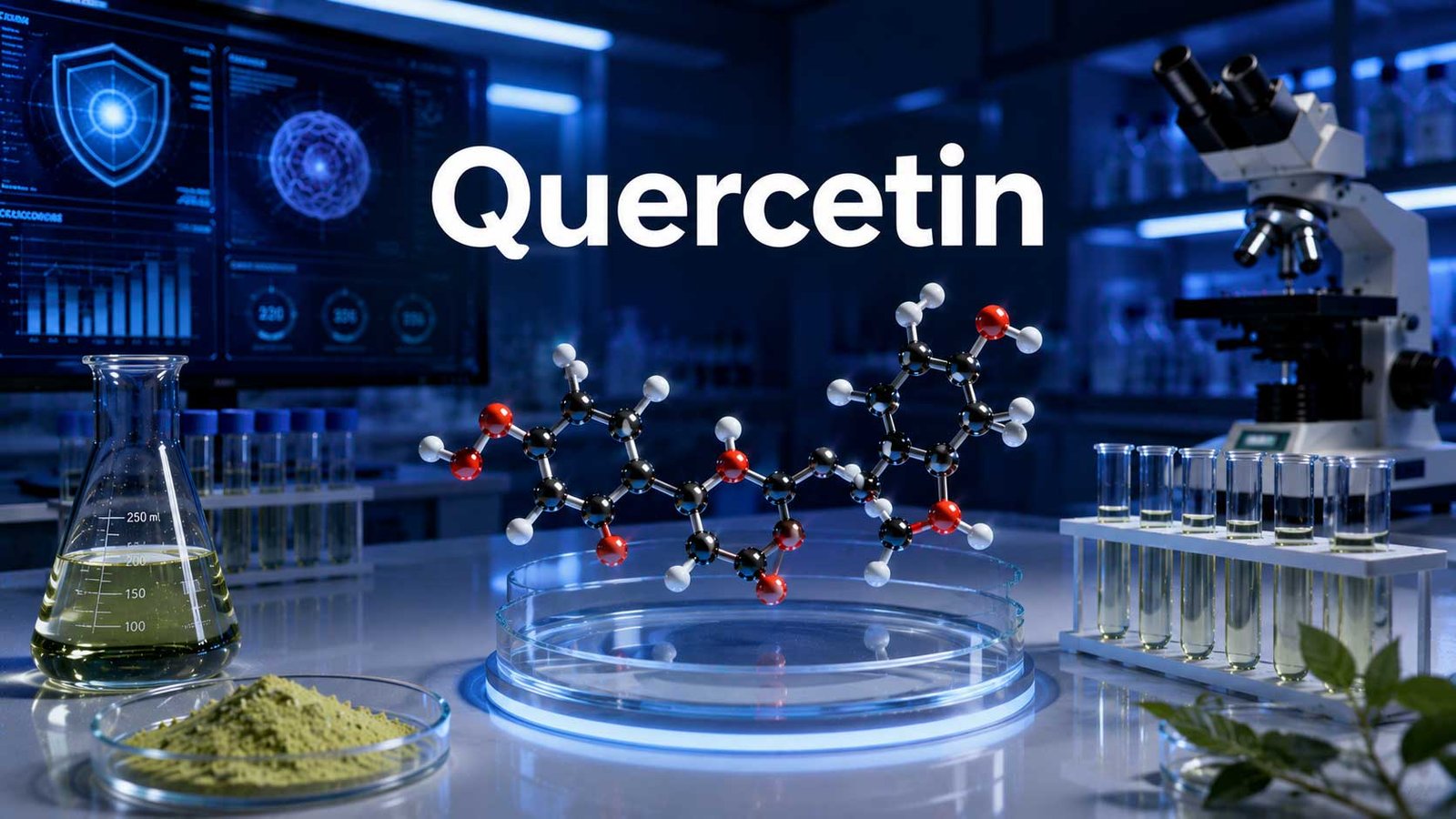
The Yellow Pigment Quietly Powering Your Immune System
If you’ve ever bitten into a red apple without peeling it, or tossed a handful of capers onto a piece of salmon, you’ve already met quercetin, whether you knew its name or not. It’s the compound responsible for a lot of the yellow and red pigmentation you see scattered across the produce aisle, and it’s been sitting in the human diet for about as long as humans have been eating plants. That’s not a small thing. We’re talking about a molecule our bodies have had thousands of years to get used to, long before anyone slapped a label on a bottle and called it a supplement.
Quercetin belongs to a family of plant compounds called flavonoids, and within that family, it sits in a subgroup called flavonols. I’ve spent a long time looking at different botanical compounds, and quercetin is one of the few that keeps showing up in research across wildly different fields, immunology, cardiology, allergy medicine, even oncology labs, without losing its footing. That’s rare. A lot of trendy compounds get one good headline and fade. Quercetin has staying power because the science, while not perfect, keeps pointing in a consistent direction.
Table of Contents

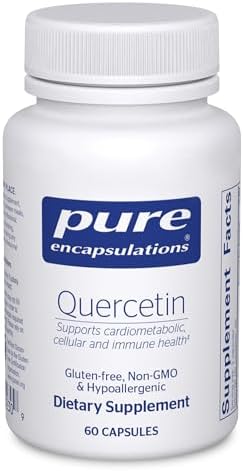

Here’s the thing people often get wrong about quercetin: they treat it like a single-purpose ingredient, something you take for “immune support” and nothing else. That’s selling it short. Quercetin’s real claim to fame is its antioxidant capacity, its ability to neutralize free radicals before they damage your cells. But it doesn’t stop there. It also appears to calm inflammatory signaling, interfere with how certain cells release histamine, and support the lining of your blood vessels. Some researchers even describe it as having a kind of “cellular housekeeping” role, helping clear out stressed or aging cells. Whether or not that translates into a longer, healthier life for the average person is still being worked out, but the mechanism itself isn’t controversial.
I’ll be upfront about something: quercetin is not a miracle molecule, and I get a little tired of seeing it marketed that way. It’s not going to replace a flu shot, and it’s not going to undo a diet built on ultra-processed food. What it can do, when it’s part of a broader pattern of eating well, is give your body a bit more resilience against the everyday wear and tear of oxidative stress. Think of it less like a superhero and more like a reliable coworker who quietly does their job without needing credit for it.
Where does quercetin actually come from? You’ll find meaningful amounts in onions, especially red and yellow varieties, in apples with the skin left on, in capers, in berries, and in leafy greens like kale. It also shows up in tea, red wine, and a surprising number of fresh herbs. Humans can’t manufacture quercetin on their own, so unlike vitamin D, which your skin can produce with enough sunlight, quercetin has to come from what you eat, or from a supplement if your diet happens to be light on colorful produce.
One thing that surprises people is how little quercetin the body actually absorbs from food. Its bioavailability is genuinely poor when eaten in its raw, “aglycone” form, the kind you’d get if you isolated pure quercetin in a lab. In real food, quercetin is usually bound to sugar molecules, forming what’s called a glycoside, and that form tends to absorb somewhat better. This is part of why supplement companies have gotten creative with delivery systems, pairing quercetin with things like vitamin C, bromelain, or phytosome technology to help the body actually make use of it rather than just passing it through.
There’s also a public health angle worth mentioning. Diets naturally high in flavonoids, quercetin included, have been associated in population studies with lower rates of chronic inflammatory conditions and cardiovascular disease. I want to be careful here, because association is not causation, and nutrition science is notoriously messy when it comes to isolating the effect of one compound from everything else a person eats. Still, the pattern is consistent enough that most researchers in this space take it seriously.
Over the course of this article, I want to walk through what quercetin actually does inside the body, where you can reliably find it in food, how much people typically take when supplementing, and where the real safety concerns lie, because there are some, and I’d rather you hear them from me than find out the hard way. This isn’t going to be a cheerleading piece for quercetin. It’s going to be an honest look at a compound that’s earned its reputation, but that also deserves to be understood accurately rather than hyped.
By the end, you should have a clear, grounded sense of whether quercetin belongs in your daily routine, and if it does, how to approach it the way someone with a decade of experience in this space actually would: with curiosity, a healthy dose of skepticism, and respect for what the research does and doesn’t say.
Key Health Benefits
Antioxidant Defense at the Cellular Level
Let’s start with the thing quercetin is most famous for, its antioxidant activity. Every day, your cells produce free radicals as a byproduct of normal metabolism, and your environment adds even more through pollution, UV exposure, and everyday stress. Left unchecked, these free radicals can damage cell membranes, proteins, and even DNA. That’s the basic definition of oxidative stress, and it’s a contributing factor in a long list of chronic conditions.
Quercetin works as a free radical scavenger. Its chemical structure, particularly the arrangement of hydroxyl groups on its molecular backbone, makes it unusually good at donating electrons to unstable molecules, essentially neutralizing them before they can do damage. Researchers have described quercetin as one of the more potent naturally occurring antioxidants studied to date, and its effects have been observed both in laboratory cell cultures and in animal models. It also appears to support the body’s own internal antioxidant systems, encouraging the activity of enzymes like glutathione peroxidase and superoxide dismutase rather than just acting alone.
Anti-Inflammatory Signaling
Inflammation gets a bad reputation, but it’s not inherently bad, it’s your immune system doing its job. The problem arises when inflammation becomes chronic, low-grade, and constant, which is increasingly common in modern life. Quercetin appears to interrupt some of the signaling pathways responsible for this, particularly NF-kB, a protein complex that acts like a switchboard operator for inflammatory gene expression. When quercetin dampens NF-kB activation, it appears to reduce the downstream production of inflammatory messengers like TNF-alpha, interleukin-6, and interleukin-1 beta.
This matters because chronic low-grade inflammation has been linked to a huge range of conditions, from joint discomfort to metabolic dysfunction. Quercetin isn’t a substitute for anti-inflammatory medication when you genuinely need it, but as part of a food-first approach, it seems to nudge the body’s inflammatory tone in a calmer direction.
Immune Support and Allergy Relief
This is where quercetin earns its “immune support” reputation, and it’s a bit more nuanced than the marketing suggests. Quercetin has documented antihistamine properties, it seems to stabilize mast cells and basophils, the immune cells responsible for releasing histamine during an allergic reaction. That’s why you’ll often see quercetin included in supplements aimed at seasonal allergies, sometimes stacked with bromelain, which may help improve absorption.
On the antiviral and antimicrobial side, laboratory studies have shown quercetin interfering with how certain viruses attach to and replicate inside host cells. This research is genuinely interesting, but I want to be careful not to overstate it. Much of this evidence comes from in vitro studies, meaning cells in a dish, not full clinical trials in humans fighting an active infection. A large community trial involving over a thousand adults found that quercetin supplementation didn’t meaningfully reduce the overall rate of upper respiratory infections, though a subgroup of older, physically fit adults taking 1,000 milligrams daily did see fewer sick days and milder symptoms. That’s a modest, conditional result, not a blanket “quercetin prevents colds” claim.
Cardiovascular and Metabolic Support
Quercetin has also been studied for its effects on blood pressure, cholesterol, and blood vessel function. Some trials have observed modest reductions in systolic and diastolic blood pressure with regular quercetin supplementation, alongside improvements in how well blood vessels dilate, a marker of endothelial health. The proposed mechanism ties back to its antioxidant and anti-inflammatory effects, since oxidative damage to the vascular lining is a known driver of hypertension and atherosclerosis over time.
There’s also emerging interest in quercetin’s role in metabolic health, including how it may influence insulin sensitivity and fat metabolism. The data here is still developing, and I wouldn’t recommend anyone lean on quercetin as a primary strategy for blood sugar management, but as a supporting player in a broader lifestyle approach, it has a reasonable evidence base behind it.
Cognitive Support and Healthy Aging
One of the more fascinating threads of quercetin research involves the brain. Quercetin is lipophilic, meaning it’s fat-soluble, which allows it to cross the blood-brain barrier more easily than many other polyphenols. Once there, it appears to reduce neuroinflammation and oxidative stress within brain tissue, two processes heavily implicated in age-related cognitive decline.
Animal studies have shown protective effects against markers associated with neurodegenerative conditions, and some human research has linked quercetin-rich diets, onions in particular, to slower cognitive decline over time. I want to be clear that this is still an emerging area, and quercetin is not a treatment for any diagnosed neurological condition. But as part of a long game around healthy aging, it’s one of the more promising compounds on researchers’ radar right now.
Dietary Sources
Capers, Onions, and Apples: The Usual Suspects
If you’re trying to get more quercetin from food rather than a capsule, three ingredients consistently top the list. Capers are the single richest natural source by weight, with some analyses putting concentrations well over 200 milligrams per 100 grams, and certain preparations reporting even higher figures. The catch is that nobody eats 100 grams of capers in one sitting. A tablespoon or two scattered over a piece of fish or stirred into a pasta sauce still adds a meaningful, if modest, quercetin contribution, along with a punch of briny flavor that I happen to be a big fan of.
Onions are the more practical everyday source, mostly because people actually eat them in real quantities. Red and yellow onions tend to carry noticeably more quercetin than white onions, and the outer layers hold more than the inner flesh, which is a good argument for not over-peeling them before cooking. Quercetin content in onions ranges widely depending on variety, growing conditions, and storage, but it consistently lands as one of the more reliable dietary sources available in a typical grocery store.
Then there’s the apple, specifically the peel. The flesh of an apple contributes very little quercetin on its own; nearly all of it is concentrated in the skin. This is one of those small, practical takeaways that’s easy to apply: if you’re peeling your apples before eating them, you’re leaving a good portion of the quercetin, along with other beneficial compounds, behind in the compost bin.
Berries, Leafy Greens, and Tea
Beyond the headline ingredients, quercetin shows up in smaller but still useful amounts across a wider range of produce. Berries, particularly blueberries and elderberries, carry some quercetin alongside their own suite of antioxidant pigments. Leafy greens like kale and red leaf lettuce contribute meaningfully too, red leaf lettuce in particular has shown surprisingly high quercetin content in food composition studies, more than you’d probably guess for something so mild-tasting.
Tea is another steady contributor, especially green and black tea. The amounts per cup are modest compared to capers or onions, but tea is something many people drink multiple times a day, and those smaller doses add up over the course of a week. Herbs like dill, cilantro, and Mexican oregano also carry notable quercetin concentrations, which is a good reminder that seasoning your food generously isn’t just about flavor.
A realistic day of eating that includes a serving of onions, an unpeeled apple, a spoonful of capers, some leafy greens, and a cup or two of tea can add up to somewhere in the range of 40 to 90 milligrams of quercetin, depending on preparation and portion size. That’s a meaningful baseline, even before considering supplementation.
Cooking, Storage, and Bioavailability Considerations
How you prepare quercetin-rich foods matters more than most people realize. Boiling tends to leach a significant portion of quercetin out of vegetables and into the cooking water, sometimes losing more than half the original content. If you’re boiling onions for a soup, that lost quercetin isn’t necessarily wasted, it’s just relocated into the broth, so drinking the liquid rather than discarding it helps preserve the benefit. Sautéing, roasting, and light stir-frying tend to retain more quercetin within the food itself compared to boiling.
Storage plays a role too. Quercetin content in onions and apples can actually shift over time in storage, sometimes increasing slightly as the produce ages, which is one of those quirky findings that reminds you nutrition science rarely gives you a clean, static number to work with.
Then there’s the absorption issue I mentioned earlier. Even when you eat quercetin-rich foods, your gut doesn’t absorb all of it efficiently. The glycoside forms found in onions tend to absorb better than the pure aglycone form found in most basic supplements, which is part of why some supplement manufacturers pair quercetin with enhancers like bromelain, vitamin C, or phospholipid complexes designed to improve uptake. If you’re supplementing, it’s worth paying attention to the formulation rather than assuming all quercetin products behave the same way in your body.
Dosage & Deficiency
Is There Such a Thing as a Quercetin Deficiency?
I get this question a lot, and the honest answer is no, not in the way you’d think about a vitamin D or iron deficiency. Quercetin isn’t classified as an essential nutrient, meaning your body doesn’t have a defined biological requirement for it the way it does for something like vitamin C. There’s no recognized deficiency syndrome, no specific set of symptoms doctors screen for that get labeled “low quercetin.”
That said, I’d push back gently on the idea that this means quercetin intake doesn’t matter. Populations that consistently eat diets low in fruits, vegetables, and other flavonoid-rich foods tend to show, in observational research, higher markers of oxidative stress and inflammation over time. Whether that’s specifically about quercetin or about the whole constellation of plant compounds working together is genuinely hard to untangle. My honest take, after following this research for years, is that quercetin is best understood as one thread in a much larger fabric of dietary polyphenols, not a standalone essential nutrient you need to hit a magic number on.
Typical Supplemental Dosing Ranges
When people move from food-based quercetin to supplements, dosing tends to fall into a fairly consistent range across the research. Clinical trials have most commonly used doses between 500 and 1,000 milligrams per day, often for periods of eight to twelve weeks. This range shows up repeatedly across cardiovascular studies, allergy research, and the upper respiratory infection trial I mentioned earlier.
A few practical notes if you’re considering a supplement:
- Most commercial quercetin capsules are dosed between 250 and 500 milligrams, meaning a typical daily target of 500 to 1,000 milligrams usually means one or two capsules.
- Formulations combined with bromelain or vitamin C are common and may improve absorption, though head-to-head comparisons across brands are limited.
- Consistency seems to matter more than timing. Most studies have participants take their dose once or twice daily with food, without any strong evidence that a specific time of day changes the outcome.
- Short-term use, in the range of studied trial durations, has a more established safety record than indefinite long-term daily use at high doses.
I want to be honest here: there’s no universally agreed “optimal dose.” What the research supports is a range that’s been tested and generally tolerated well, not a precise number that guarantees a specific benefit. If you’re taking quercetin for a specific reason, seasonal allergies, general antioxidant support, or something else, it’s worth discussing your particular situation with a healthcare provider, especially if you take other medications.
Food-First Versus Supplemental Approaches
I lean toward a food-first philosophy for most people, and quercetin is a good example of why. Getting quercetin through onions, apples, capers, and tea comes bundled with fiber, vitamins, and a whole ecosystem of other beneficial plant compounds that likely work together in ways we don’t fully understand yet. Supplements isolate one compound and deliver it in a concentrated dose, which has its place, particularly when someone has a specific goal and struggles to get consistent intake from food, but it’s not automatically superior.
If your diet already includes a reasonable amount of colorful produce, you may be getting a meaningful baseline of quercetin without ever touching a supplement bottle. If it doesn’t, a supplement can reasonably fill that gap, but I’d still encourage building the dietary habit alongside it rather than treating the capsule as a replacement for actual food.
Toxicity & Risks
What the Safety Data Actually Shows
Quercetin has a fairly reassuring safety profile within the doses that have actually been studied. Clinical trials using oral doses up to 1,000 milligrams per day for as long as twelve weeks have generally not found evidence of significant toxicity or serious adverse effects in healthy adults. It’s also recognized as generally safe when consumed through food, which makes sense given how long it’s been part of ordinary human diets.
Where the safety picture gets more serious is with intravenous quercetin at very high doses, a route and dosage that has essentially nothing to do with oral supplements you’d buy off a shelf. Early-phase clinical trials using IV quercetin in cancer research found dose-limiting kidney toxicity at doses in the range of 1,000 to 1,700 milligrams per square meter of body surface area, administered directly into the bloodstream. That’s a completely different exposure than swallowing a 500-milligram capsule, and conflating the two is a common source of confusion online. Rodent studies that raised nephrotoxicity concerns typically used doses that translate to tens of thousands of milligrams in human terms, far beyond anything used in standard supplementation.
At more moderate doses above the typical 1,000 milligram mark, some people report mild flushing or a tingling sensation, generally attributed to quercetin’s effect on blood vessel dilation rather than any sign of organ damage. These effects tend to be self-limiting and aren’t considered medically serious, though they’re worth knowing about so they don’t catch you off guard.
Who Should Be Cautious
A few groups genuinely warrant extra caution:
- People with pre-existing kidney disease, since some research suggests quercetin could place additional stress on an already compromised kidney, even though this concern is drawn largely from animal and high-dose data rather than typical supplemental use.
- Pregnant and breastfeeding individuals, simply because there isn’t enough robust human safety data at supplemental doses to make a confident recommendation beyond normal dietary intake.
- People with hormone-sensitive cancers, since some laboratory research has raised theoretical concerns about estrogenic activity at high concentrations, though this remains an area of ongoing investigation rather than settled science.
- Children and adolescents, where supplemental dosing simply hasn’t been studied enough to establish clear guidance, even though quercetin from ordinary food is considered safe at any age.
None of this means quercetin is dangerous for the average healthy adult. It means the populations above deserve a more careful, individualized conversation with a healthcare provider before adding a concentrated supplement to their routine.
Drug Interactions Worth Knowing
This is the section I think gets underemphasized the most, and it’s arguably more relevant to daily safety than the nephrotoxicity concern. Quercetin inhibits certain liver enzymes involved in drug metabolism, particularly CYP3A4 and CYP2C9. In plain terms, that means quercetin can slow down how quickly your body clears certain medications, which can raise their levels in your bloodstream higher than expected.
The most clinically significant example involves warfarin, a blood thinner metabolized through one of these same enzyme pathways. Taking quercetin alongside warfarin could theoretically increase bleeding risk by altering how the medication is processed. Similar caution applies to certain statins, some antibiotics, and immunosuppressant drugs like cyclosporine. If you’re on any prescription medication, especially something with a narrow therapeutic window like a blood thinner, this is exactly the kind of thing to flag with your doctor or pharmacist before starting quercetin, rather than assuming a “natural” supplement can’t interact with anything.
I’ll say this plainly, because I think it needs saying: “natural” doesn’t automatically mean risk-free. Quercetin has a good safety record within studied parameters, but that record exists because researchers respected dosing limits and screened for interactions. Approaching it with the same care, rather than treating it as an inert wellness product you can stack endlessly with everything else in your cabinet, is simply the responsible way to use it.
Finding the Balance Between Curiosity and Caution
After spending this much time walking through quercetin’s benefits, sources, dosing, and risks, I keep coming back to the same conclusion: this is a genuinely useful compound, but it works best as part of a pattern, not as a standalone fix. The research on its antioxidant and anti-inflammatory activity is some of the more consistent evidence in the flavonoid world, and its connection to immune resilience, cardiovascular support, and even brain health gives it a broader relevance than a lot of trendier compounds that get their fifteen minutes and fade.
What I’d actually encourage you to walk away with isn’t a specific number or a shopping list, it’s a mindset. Start by looking at your plate. Are onions, apples with the skin on, leafy greens, and a bit of tea showing up regularly? If so, you’re likely already getting a reasonable baseline of quercetin without thinking about it too hard. If your diet leans heavily processed or produce-light, that’s probably a more valuable place to focus than jumping straight to a supplement bottle.
If you do decide supplementation makes sense for you, whether that’s for seasonal allergies, general antioxidant support, or something else specific to your health picture, stick within the ranges that have actually been studied, pay attention to how your body responds, and loop in a healthcare provider if you’re on other medications or managing a chronic condition. Quercetin has earned its reputation through decades of consistent research, but respect for dosing and honest expectations is what keeps a good compound from turning into a cautionary tale.
At the end of the day, quercetin isn’t magic, and it was never meant to be a substitute for the fundamentals: real food, reasonable habits, and paying attention to your own body over time. Used with that mindset, it’s a genuinely worthwhile addition to how you think about antioxidant and immune support, not because it does everything, but because it does its specific job quietly and consistently, which, honestly, is more than most trendy supplements can say.
Article Sources
At AncientHerbsWisdom, our content relies on reputable sources, including peer-reviewed studies, to substantiate the information presented in our articles. Our primary objective is to ensure our content is thoroughly fact-checked, maintaining a commitment to accuracy, reliability, and trustworthiness.
- Anand David, A. V., Arulmoli, R., & Parasuraman, S. (2016). Overviews of biological importance of quercetin: A bioactive flavonoid. Pharmacognosy Reviews, 10(20), 84–89. https://doi.org/10.4103/0973-7847.194044
- Batiha, G. E., Beshbishy, A. M., Ikram, M., Mulla, Z. S., El-Hack, M. E. A., Taha, A. E., Algammal, A. M., & Elewa, Y. H. A. (2020). The pharmacological activity, biochemical properties, and pharmacokinetics of the major natural polyphenolic flavonoid: Quercetin. Foods, 9(3), 374. https://doi.org/10.3390/foods9030374
- Dabeek, W. M., & Marra, M. V. (2019). Dietary quercetin and kaempferol: Bioavailability and potential cardiovascular-related bioactivity in humans. Nutrients, 11(10), 2288. https://doi.org/10.3390/nu11102288
- Deepika, & Maurya, P. K. (2022). Health benefits of quercetin in age-related diseases. Molecules, 27(8), 2498. https://doi.org/10.3390/molecules27082498
- Li, Y., Yao, J., Han, C., Yang, J., Chaudhry, M. T., Wang, S., Liu, H., & Yin, Y. (2016). Quercetin, inflammation and immunity. Nutrients, 8(3), 167. https://doi.org/10.3390/nu8030167
- Nieman, D. C., Henson, D. A., Gross, S. J., Jenkins, D. P., Davis, J. M., Murphy, E. A., Carmichael, M. D., Dumke, C. L., Utter, A. C., McAnulty, S. R., McAnulty, L. S., & Mayer, E. P. (2007). Quercetin reduces illness but not immune perturbations after intensive exercise. Medicine & Science in Sports & Exercise, 39(9), 1561–1569. https://doi.org/10.1249/mss.0b013e318076b566
- Heinz, S. A., Henson, D. A., Austin, M. D., Jin, F., & Nieman, D. C. (2010). Quercetin supplementation and upper respiratory tract infection: A randomized community clinical trial. Pharmacological Research, 62(3), 237–242. https://doi.org/10.1016/j.phrs.2010.05.001
- Harwood, M., Danielewska-Nikiel, B., Borzelleca, J. F., Flamm, G. W., Williams, G. M., & Lines, T. C. (2007). A critical review of the data related to the safety of quercetin and lack of evidence of in vivo toxicity, including lack of genotoxic/carcinogenic properties. Food and Chemical Toxicology, 45(11), 2179–2205. https://doi.org/10.1016/j.fct.2007.05.015
- Sultana, B., & Anwar, F. (2008). Flavonols (kaempferol, quercetin, myricetin) contents of selected fruits, vegetables and medicinal plants. Food Chemistry, 108(3), 879–884. https://doi.org/10.1016/j.foodchem.2007.11.053
- Kawabata, K., Mukai, R., & Ishisaka, A. (2015). Quercetin and related polyphenols: New insights and implications for their bioavailability, metabolism, and function. Food & Function, 6(5), 1399–1417. https://doi.org/10.1039/c4fo01178c
- Andres, S., Pevny, S., Ziegenhagen, R., Bakhiya, N., Schäfer, B., Hirsch-Ernst, K. I., & Lampen, A. (2018). Safety aspects of the use of quercetin as a dietary supplement. Molecular Nutrition & Food Research, 62(1), 1700447. https://doi.org/10.1002/mnfr.201700447

- Phosphatidic Acid: Supporting Muscle Growth and Strength - July 31, 2026
- Ceramides: Supporting Healthy Skin From Within - July 31, 2026
- Synbiotics: Combining Prebiotics and Probiotics Together - July 31, 2026