
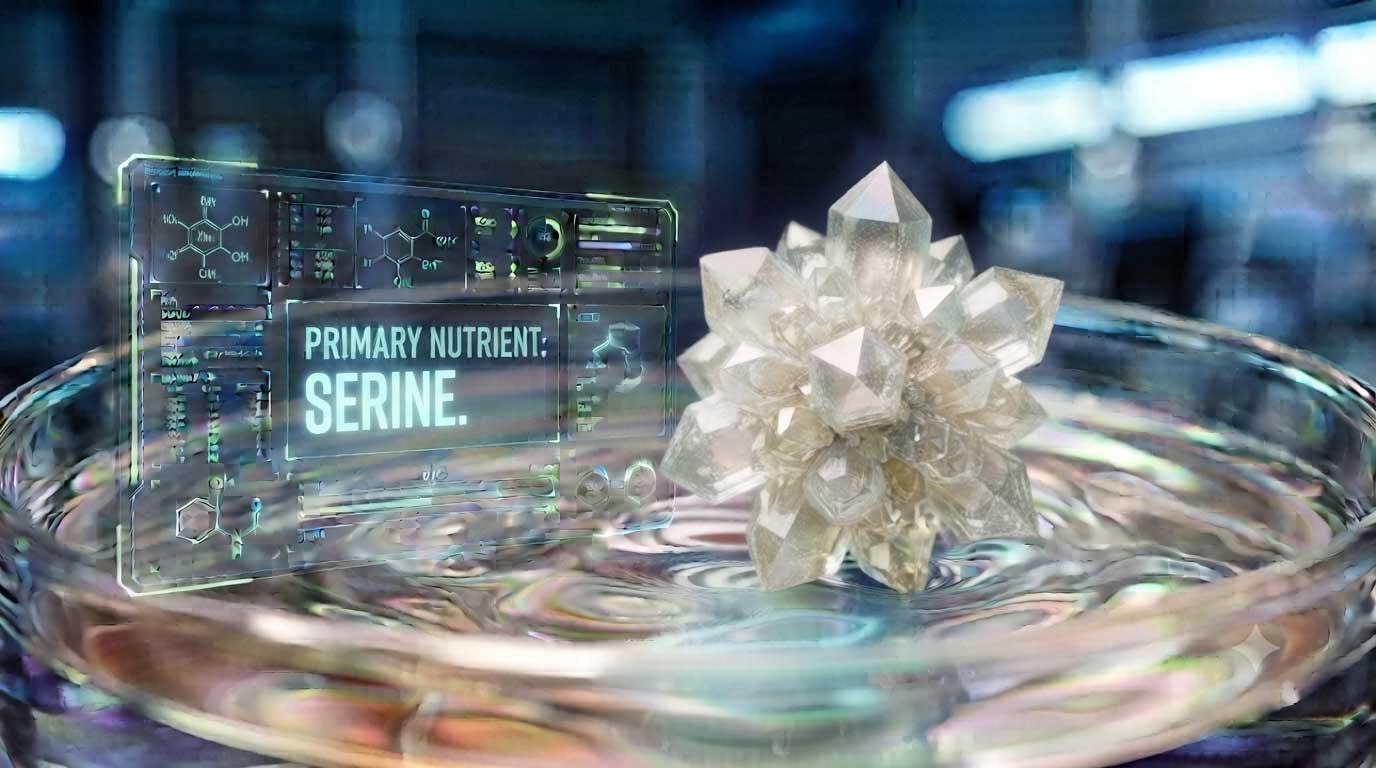
The Quiet Amino Acid Running the Show Behind Your Brain
Ask most people to name an amino acid and you’ll hear the usual suspects: tryptophan, because everyone loves blaming turkey for their post-dinner nap, or maybe glutamine, thanks to the supplement aisle. Serine rarely makes the list. It doesn’t have a dramatic origin story, it isn’t marketed on protein powder tubs with bold neon lettering, and most people go their entire lives without knowing it exists. And yet, if you pulled serine out of your body’s chemistry for even a short while, the consequences would be immediate and serious.
That’s the strange paradox of this molecule. Serine sits in the background of biology textbooks, filed under “non-essential amino acids,” a label that, frankly, undersells what it actually does. Non-essential in the technical sense simply means your body can build it from scratch, using glucose and other amino acids as raw material. It does not mean unimportant. If anything, the opposite is true. Serine is one of those building blocks that shows up everywhere once you start looking: it’s stitched into the structural backbone of proteins, it’s a core ingredient in the membranes that wrap every one of your cells, and in the brain specifically, it becomes something closer to a lifeline for neurons.
Table of Contents

Here’s a fact that tends to surprise people who assume “non-essential” means the body has it fully handled: neurons themselves cannot make enough serine on their own. They depend on nearby support cells called astrocytes to manufacture it and hand it over, almost like a relay race happening at the microscopic level. Without that supply chain running smoothly, brain cells struggle to build the phospholipids they need to survive, communicate, and grow new connections. Researchers studying this pathway have noted that L-serine is required for particular types of central nervous system neurons to undergo neuritogenesis, the process of growing new branches, and simply to stay alive.
I’ve spent a long time reading through metabolic pathways and amino acid chemistry, and serine is one of those compounds that keeps popping up in places you wouldn’t expect. Trying to understand phospholipid metabolism? Serine is there. Curious about how the body handles one-carbon metabolism, the pathway responsible for shuttling small carbon units around for DNA synthesis? Serine again. Interested in neurotransmission, specifically the receptors involved in learning and memory? You guessed it. Serine acts as the precursor for both glycine and D-serine, two molecules involved in NMDA receptor activity, the same receptor system tied to memory formation and synaptic plasticity.
None of this is meant to suggest serine is some miracle molecule you should be obsessing over. That’s not how amino acid metabolism works, and frankly, that kind of hype does a disservice to how nuanced and context-dependent nutrient science actually is. What’s true is that serine occupies a genuinely central position in cell biology, particularly for the nervous system, and understanding it gives you a much better appreciation for how the body’s structural and signaling systems overlap.
There’s also a clinical side to this story that deserves attention. Rare genetic conditions exist where the body simply cannot produce enough serine because of defects in the enzymes responsible for its synthesis. The results are severe: seizures that resist standard medication, abnormally small head circumference at birth, and significant developmental delays. What’s remarkable is that in some of these cases, supplementing with serine directly has led to measurable improvement, particularly in reducing seizure frequency. That’s a striking demonstration of just how load-bearing this amino acid is for the developing brain.
For the average healthy adult, serine deficiency in that dramatic sense isn’t something to worry about day to day. Your liver, kidneys, and brain cells are generally quite capable of producing what’s needed under normal circumstances. But “normal circumstances” is doing some work in that sentence. Illness, metabolic stress, rapid growth periods, and certain chronic conditions can shift the equation, which is part of why some researchers have pushed back against the strict “non-essential” label and suggested serine be considered conditionally essential instead, meaning there are situations where dietary intake becomes genuinely important rather than optional.
This article is going to walk through what serine actually does for your body, where you can find it in food, what’s known (and not known) about dosing and deficiency, and where the line sits between beneficial intake and pushing things too far. I’ll be upfront: some corners of amino acid research are still being actively worked out, and I’m not going to pretend otherwise or dress up preliminary findings as settled science. But there’s enough solid research here to paint a genuinely useful picture, one that goes well beyond the surface-level “eat more protein” advice you’ll find scattered across wellness blogs.
Minerals get their spotlight, vitamins get theirs, and amino acids like serine tend to sit quietly in the wings, doing structural and signaling work that rarely gets acknowledged unless something goes wrong. Let’s give it its due.
Key Health Benefits
Building the Architecture of Cell Membranes
If you strip away the biochemistry jargon, serine’s most fundamental job is architectural. Every cell in your body is wrapped in a membrane made of phospholipids, and one of the most important of these, particularly in nervous tissue, is phosphatidylserine. As the name suggests, serine is quite literally built into its structure. This phospholipid is concentrated on the inner layer of the cell membrane in neurons, where it plays a role in everything from membrane fluidity to the signaling processes that tell cells when to divide, repair themselves, or in some cases, self-destruct in a controlled way.
Serine is also the starting material for sphingolipids, another major class of membrane fats. These aren’t just passive structural filler. Sphingolipids are deeply involved in cell signaling, and disruptions to their synthesis have been linked to problems in neuronal development and survival. Put simply: without adequate serine, the raw materials for building and maintaining healthy cell membranes, especially in the brain, start running short.
Supporting Brain Cell Growth and Neurotransmission
Beyond membrane structure, serine has a direct hand in neurotransmission. It serves as the metabolic precursor to glycine, produced through an enzyme called serine hydroxymethyltransferase, and to D-serine, produced via serine racemase. Both of these molecules act as co-agonists at NMDA receptors, meaning they’re required, alongside glutamate, for these receptors to function properly. NMDA receptors are central to synaptic plasticity, the cellular mechanism thought to underlie learning and memory formation.
This is part of why serine deficiency disorders present with such severe neurological symptoms. When the pathway that produces serine breaks down, the downstream production of glycine and D-serine breaks down with it, and neurotransmission that depends on these molecules gets disrupted at a fundamental level.
There’s also research pointing to a role for L-serine in supporting neuronal growth itself, specifically in helping neurons extend the branching processes (neurites) needed for forming new connections. Preclinical work has additionally explored whether serine has anti-inflammatory properties within the brain, though it’s worth being honest that human data confirming a protective effect against age-related cognitive decline remains limited and inconclusive at this stage.
A Role in One-Carbon Metabolism and DNA Synthesis
Serine is the primary donor of one-carbon units in a metabolic system known as one-carbon metabolism, which is tightly linked to the folate cycle. This might sound abstract, but the practical implication is significant: one-carbon metabolism supplies the building blocks needed to synthesize purines and pyrimidines, the bases that make up DNA and RNA. Any tissue that’s dividing rapidly, whether that’s a developing fetus, a healing wound, or the lining of your gut, depends on this pathway running efficiently.
This connection also explains why serine metabolism intersects with methionine metabolism and homocysteine regulation, areas of ongoing interest for cardiovascular and metabolic researchers, though much of this work is still developing and shouldn’t be oversold as a finished picture.
Contributing to Protein Structure and Cellular Communication
At a more basic level, serine is one of the twenty standard amino acids used to build proteins, and its particular chemistry gives it a special job once incorporated into a protein chain. The hydroxyl group on serine’s side chain is a common site for phosphorylation, a process where a phosphate group gets attached to a protein to switch its activity on or off. This kind of regulatory tagging happens constantly throughout the body and underlies a huge range of cellular communication processes, from hormone signaling to immune responses. Serine and its chemical cousin threonine are, in a sense, molecular switchboards.
Emerging Interest in Metabolic and Neurological Research
Researchers have also been examining serine’s potential relevance to conditions like diabetes, certain neuropathies, and neurodegenerative diseases including amyotrophic lateral sclerosis (ALS). Some of this research stems from serine’s proposed role in counteracting a neurotoxin called BMAA, which has been implicated in certain neurodegenerative processes. Early-phase clinical trials have explored whether supplemental L-serine might be safe and potentially useful in ALS patients, and while findings have been promising enough to justify further study, this remains investigational territory rather than an established treatment. I want to be careful here, because it would be easy to overstate this line of research, and that’s not the goal of this piece.
A Supporting Role in Cellular Growth and Repair
It’s worth pausing on something that often gets glossed over: serine’s involvement in cell proliferation. Any tissue in your body that’s replacing cells quickly, skin, the gut lining, immune cells responding to a challenge, needs a reliable supply of nucleotides for DNA replication. Because serine feeds directly into that one-carbon metabolism pathway I mentioned earlier, it’s indirectly supporting all of that turnover. This isn’t the kind of benefit you can feel or measure with a home test, but it’s foundational in the sense that cell division simply doesn’t happen efficiently without the metabolic groundwork serine helps provide.
There’s also ongoing scientific interest in how serine metabolism intersects with kidney health, gut integrity, and inflammatory regulation, areas where animal studies have shown some encouraging signals, though human evidence in these specific domains is still fairly early. I mention this less as a settled benefit and more as a sign of just how many corners of physiology this one amino acid seems to touch. That breadth is exactly why researchers keep circling back to it.
Dietary Sources
Why Diet Still Matters for a “Non-Essential” Amino Acid
Given that the body can synthesize serine on its own, it would be reasonable to assume dietary intake barely matters. In practice, things are more nuanced. Because neurons rely heavily on astrocytes for their serine supply, and because that internal production system can be strained under certain conditions, having a steady dietary intake acts as a kind of insurance policy. It’s not that you’ll develop a deficiency from skipping serine-rich meals occasionally, but consistently low intake, especially paired with high metabolic demand, isn’t ideal either.
On average, protein-containing foods tend to include somewhere around 2 to 5 percent serine by weight of total protein, which means most people eating a reasonably varied, protein-inclusive diet are getting a steady trickle of it without ever thinking about it.
Animal-Based Sources
Animal proteins tend to be some of the more concentrated sources of serine, largely because of their overall amino acid density.
- Eggs are frequently cited as one of the more serine-rich everyday foods, and they’re versatile enough to work into almost any meal.
- Poultry, including chicken and turkey, contributes meaningfully to serine intake alongside a solid overall amino acid profile.
- Red meat and organ meats provide serine as part of their broader protein content.
- Fish and shellfish, particularly options like cod and other whitefish, are commonly listed among serine-containing seafood.
- Dairy products, including cheese (parmesan in particular gets mentioned often in nutrient databases) and milk, add smaller but consistent contributions.
Plant-Based Sources
For anyone following a vegetarian or vegan pattern, there’s no shortage of options either.
- Soybeans and soy-based foods, including tofu, tempeh, and edamame, are among the most frequently cited plant sources of serine, reflecting soy’s generally strong overall amino acid profile.
- Legumes such as lentils and chickpeas contribute meaningfully as part of a plant-based protein rotation.
- Nuts and seeds, including peanuts, almonds, walnuts, and sesame seeds, provide serine along with healthy fats and fiber.
- Whole grains offer smaller amounts but still add up as part of an overall varied diet.
Does Cooking Affect Serine Content?
This is a fair question, and one people rarely think to ask about amino acids specifically. Unlike some vitamins that degrade meaningfully with heat or light exposure, amino acids like serine are fairly heat-stable under normal cooking conditions. Boiling, baking, grilling, or sautéing your protein sources isn’t going to meaningfully strip out the serine content the way, say, prolonged boiling might reduce vitamin C in vegetables. Where you do lose some amino acid content is through processing methods that involve extended high-heat industrial treatment or significant protein denaturation combined with fluid loss, which is more of a food-manufacturing consideration than something home cooks need to worry about.
What matters more than cooking method is simply total protein intake across the day. Since serine typically makes up a fairly consistent percentage of total protein in most whole foods, hitting your general protein targets, whatever those look like for your activity level and goals, is usually going to bring adequate serine along with it as a natural byproduct.
Practical Takeaways for Everyday Eating
You don’t need to obsess over serine milligram counts the way some people track protein grams or fiber intake. This isn’t a nutrient with a widely publicized deficiency epidemic, and there’s no consumer-facing tracking app built around it for good reason. What actually matters practically is this: eat a reasonably varied diet that includes protein from multiple sources, animal or plant depending on your preferences, and serine intake will largely take care of itself.
If I were advising someone specifically interested in supporting brain health through food rather than supplements, I’d point them toward a rotation that includes eggs a few times a week, some soy or legumes, a regular seafood habit if that fits their diet, and a handful of nuts or seeds as a snack. None of that is groundbreaking advice, admittedly, but it happens to check the serine box along with a dozen other nutritional boxes at the same time, which is usually how good nutrition works in practice rather than chasing single nutrients in isolation.
One more thing worth mentioning: people following highly restrictive diets, whether for medical reasons, disordered eating patterns, or extreme elimination protocols, are the ones most likely to end up with genuinely low overall amino acid intake, serine included. If that describes your situation, the more useful conversation is usually about restoring adequate, varied protein intake broadly, rather than fixating on any single amino acid in isolation. Serine deficiency in a healthy, unrestricted eater is simply not something the research suggests you need to lose sleep over.
Dosage & Deficiency
The Honest Answer: There’s No Official RDA
Unlike vitamins and essential minerals, serine doesn’t have a Recommended Dietary Allowance established by health authorities, and there isn’t a widely agreed-upon “optimal” daily intake for the general population. This isn’t an oversight; it reflects the fact that serine is classified as non-essential, meaning the body’s endogenous production is generally considered sufficient to meet ordinary metabolic needs under typical, healthy conditions.
That said, this doesn’t mean intake is irrelevant, and it certainly doesn’t mean the topic has been fully settled by researchers. Some scientists working in this area have specifically argued that serine should be reconsidered as a conditionally essential amino acid, meaning that under certain circumstances, such as illness, genetic conditions affecting its biosynthesis, or periods of high metabolic demand, dietary or supplemental serine becomes genuinely necessary rather than a nutritional nicety.
What Deficiency Actually Looks Like
True serine deficiency in a healthy adult eating a varied diet is genuinely rare. The clearest and most severe examples of deficiency come from inherited metabolic disorders affecting the enzymes responsible for serine biosynthesis, specifically 3-phosphoglycerate dehydrogenase, phosphoserine aminotransferase, and phosphoserine phosphatase. When any of these enzymes malfunction due to genetic mutation, the result is a cluster of conditions known collectively as serine deficiency disorders.
These conditions present along a spectrum. On the most severe end sits Neu-Laxova syndrome, a devastating prenatal-onset condition. Infantile-onset serine deficiency typically presents with intractable seizures, congenital microcephaly (an unusually small head at birth), significant developmental delay, and in some cases spastic quadriplegia. Milder juvenile and adult-onset forms exist too, sometimes presenting later in life as progressive polyneuropathy, skin changes like ichthyosis, or milder developmental concerns.
What’s genuinely encouraging about these otherwise serious conditions is the treatment response. Case reports and small clinical studies have documented that oral L-serine supplementation, sometimes combined with glycine, can lead to significant improvement in seizure control, occasionally within just days to weeks of starting treatment, along with improvements in EEG abnormalities over time. Prenatal and early postnatal treatment, when the condition is caught early through screening or genetic risk, tends to produce far better outcomes than treatment started after significant neurological damage has already occurred. This is precisely why researchers have emphasized checking cerebrospinal fluid and plasma serine concentrations in cases of unexplained severe microcephaly, since these are treatable causes of neurometabolic disease when identified early.
Supplemental Dosing in Research Settings
Outside of these rare genetic disorders, serine supplementation has been studied in other contexts, most notably in ALS research. A Phase I clinical trial evaluated oral L-serine doses ranging from 0.5 grams to 15 grams, taken twice daily, over six months in ALS patients. That trial found the amino acid to be generally well tolerated across that entire dose range, with some participants experiencing gastrointestinal symptoms like bloating, nausea, or reduced appetite at higher doses. It’s worth noting this research was conducted in a specific patient population under close medical supervision, not as a general supplementation guideline for healthy adults, and it shouldn’t be read as an endorsement for casual high-dose use outside of that context.
For everyday context, average dietary intake of L-serine in a typical diet has been estimated at somewhere in the range of a few grams per day, meaning that research-grade supplemental doses used in some clinical trials substantially exceed what a person would normally consume through food alone.
How Serine Status Gets Measured
For anyone wondering how a clinician would actually check serine levels, the answer involves measuring amino acid concentrations in blood plasma and, in cases where a central nervous system disorder is suspected, cerebrospinal fluid obtained through a lumbar puncture. This isn’t a routine test included in a standard annual bloodwork panel; it gets ordered specifically when a metabolic disorder is suspected, typically in infants or children presenting with unexplained microcephaly, treatment-resistant seizures, or significant developmental delay. Because dietary amino acids can temporarily influence blood levels, these tests are usually performed after a period of fasting to get an accurate baseline reading. Some researchers have also pointed out that reduced serine levels can potentially be detected in fetal cord blood as early as 30 weeks into pregnancy, which opens the door to earlier diagnosis and intervention in families with a known genetic risk.
If You’re Considering Supplementation
I’ll be straightforward here: for the average healthy adult without a diagnosed metabolic condition, there isn’t strong evidence supporting a need for serine supplementation, and the research supporting cognitive or performance benefits in healthy populations remains preliminary at best. If you have a genuine medical reason to consider it, whether due to a diagnosed deficiency disorder or involvement in a clinical research context, that conversation belongs with a physician or metabolic specialist who can guide dosing appropriately and monitor for any issues, rather than something to self-direct based on general wellness content.
Toxicity & Risks
Regulatory Standing and General Safety Profile
L-serine holds Generally Recognized as Safe (GRAS) status with the FDA as a food additive, with the specific stipulation that it shouldn’t exceed roughly 8.4 percent of total dietary protein. That regulatory classification reflects a long history of serine being present in ordinary food without associated safety concerns at typical dietary levels. This isn’t a novel, exotic compound being introduced into the food supply; it’s a naturally occurring amino acid your body already produces and handles as part of normal metabolism.
What Clinical Research Has Shown About Higher Doses
The most detailed safety data available on higher-than-dietary doses of L-serine comes from the ALS clinical trials mentioned earlier. In that six-month Phase I trial, doses up to 15 grams twice daily, which works out to roughly 30 grams per day, a level that meaningfully exceeds typical dietary intake, were generally tolerated without evidence of serious toxicity build-up over the trial period. The side effects that did occur were mostly gastrointestinal: bloating, nausea, and appetite loss, with a couple of participants withdrawing from the study because of these symptoms at the higher dose tiers. Separately, research involving patients with hereditary sensory autonomic neuropathy used doses in a comparable range without reported adverse effects over a shorter ten-week period.
It’s worth being clear-eyed about the limitations of this data, though. These trials involved small numbers of participants, specific patient populations dealing with serious underlying conditions, and were conducted under direct medical supervision with monitoring. That’s a very different context from someone picking up a supplement bottle and self-dosing at home, and it would be a mistake to treat “tolerated in a small clinical trial” as equivalent to “proven safe for casual long-term use in the general population.”
The BMAA Question
Part of the reason researchers became interested in higher-dose serine in the first place involves a compound called BMAA (β-N-methylamino-L-alanine), a neurotoxin that has been linked, controversially, to certain neurodegenerative conditions. The theory researchers have explored is that BMAA can get mistakenly incorporated into brain proteins in place of serine, contributing to protein misfolding, and that supplying additional L-serine might competitively block this process. This is genuinely interesting mechanistic science, but it’s also a good example of a hypothesis still being actively tested rather than settled fact. In the ALS safety trial, BMAA itself was rarely detected in patient samples, and while there were some encouraging signals regarding disease progression, this line of research needs larger, longer trials before any firm conclusions can be drawn.
Theoretical Concerns Worth Knowing About
One mechanistic consideration that’s come up in the research literature involves amino acid transport across the blood-brain barrier. Very high doses of L-serine may compete with other amino acids for the same transport systems (specifically the y+ transporter), potentially affecting the availability of other amino acids in the brain at sufficiently high doses. This is a theoretical concern raised in the scientific literature around high-dose trials rather than a documented clinical problem in the studies conducted so far, but it’s a reasonable part of why researchers approach dose escalation carefully rather than assuming “more is simply better.”
Populations That Should Be Cautious
Anyone with kidney or liver conditions affecting amino acid metabolism and clearance should be particularly cautious about supplementing with any amino acid, serine included, without medical guidance, given that these organs play central roles in amino acid processing. Pregnant or breastfeeding individuals should also avoid supplementing beyond typical dietary levels without first discussing it with a healthcare provider, simply because the safety data in these populations at supplemental doses is not well established. And, as with virtually any supplement, if you’re on other medications or managing a chronic condition, it makes sense to loop in your physician before adding a new amino acid supplement to your routine, rather than assuming “it’s just an amino acid” means it carries no interaction potential.
Interaction Considerations
Because serine sits at a metabolic crossroads connecting glycine, D-serine, and one-carbon metabolism, there’s a reasonable argument for caution when combining high-dose serine supplementation with other amino acid supplements, particularly glycine, which is already being co-administered in some of the deficiency-disorder treatment protocols under medical supervision. Stacking multiple amino acid supplements without professional guidance is generally not a great idea regardless of which specific amino acids are involved, simply because these pathways don’t operate in isolation from one another, and pushing several of them simultaneously in a self-directed way makes it harder to identify the source if something does go wrong.
The Bottom Line on Safety
For most healthy people getting serine through ordinary food, this isn’t a nutrient that carries meaningful risk. The concerns that do exist center almost entirely around supplemental, above-dietary doses, and even there, the available safety data, while limited in scope, has been reassuring rather than alarming. Still, “reassuring in a small trial” isn’t the same as “no risk under all circumstances,” and that distinction matters, especially for anyone considering doses well beyond what a normal diet would provide.
What Serine Teaches Us About the Body’s Hidden Engineering
There’s something genuinely fascinating about spending time with a molecule like serine. It doesn’t have the cultural cachet of vitamin D or the marketing muscle of creatine, and it will probably never headline a supplement campaign or trend on social media. But that quiet, background nature is exactly what makes it worth understanding. Serine is a reminder that the body’s most important work often happens without fanfare, in the structural scaffolding of cell membranes, in the phosphate switches that regulate protein activity, in the metabolic handoffs between astrocytes and neurons that keep your brain cells alive and functioning.
Think about how much of nutrition messaging is built around dramatic claims, the nutrient that will supposedly transform your energy, your focus, your longevity, almost overnight. Serine offers a useful corrective to that pattern. Its story isn’t dramatic. It’s steady, structural, and largely invisible when everything is working correctly, which is arguably the hallmark of good physiology in general. The systems that get the most attention are often the ones that are already malfunctioning; the ones running smoothly rarely make headlines. Serine, for the vast majority of people reading this, falls firmly into the second category, and that’s genuinely a good thing.
What strikes me most after digging through the research is how serine sits at this intersection of structure and signaling. It’s not just a passive building block sitting inertly in a membrane. It’s actively involved in growth, in DNA synthesis through one-carbon metabolism, in neurotransmission through its role as a precursor to glycine and D-serine, and in disease, both as something whose absence causes real harm in rare genetic disorders and as something researchers are cautiously exploring for its potential role in conditions like ALS.
If there’s a practical takeaway here, it’s this: you almost certainly don’t need to supplement with serine, and you definitely shouldn’t feel like you’re missing some critical piece of your nutrition puzzle if you’ve never heard of it before today. A varied diet with regular protein intake, whether that’s eggs, soy, legumes, fish, or meat, is going to supply what a healthy body needs without any special effort. Where serine becomes genuinely important is in specific, identifiable circumstances: rare inherited metabolic disorders where supplementation is medically necessary and can be genuinely life-changing, and ongoing clinical research exploring its potential in neurodegenerative disease, where the science is promising but still developing.
I think it’s also worth sitting with the contrast this amino acid represents. On one hand, you have healthy adults for whom serine is essentially a non-issue, quietly synthesized and recycled without any conscious effort required. On the other, you have families dealing with a serine deficiency disorder, where getting the diagnosis right and starting treatment early can be the difference between a child who develops typically and one who faces a lifetime of severe neurological impairment. That gap, between “doesn’t matter at all” and “matters more than almost anything else,” is a good illustration of why nutrition and metabolic science resist simple headlines. Context determines everything.
If you take one thing away from all this beyond the food list and the safety notes, let it be a bit of skepticism toward any single-nutrient narrative, whether that’s serine or anything else making the rounds in wellness spaces. The body doesn’t run on isolated heroic molecules; it runs on interconnected systems where serine talks to folate metabolism, which talks to methionine cycling, which talks to neurotransmitter synthesis, and so on down the line. Respecting that complexity, rather than chasing the next single-ingredient fix, tends to serve people far better in the long run.
What I’d encourage you to take from this isn’t a new supplement to add to your morning routine. It’s a slightly deeper appreciation for how interconnected your body’s chemistry really is, and how something as unglamorous as an amino acid metabolic pathway can have life-altering consequences when it breaks down, and remarkable therapeutic potential when researchers figure out how to intervene. Biology rewards this kind of attention. The molecules that get the least press are often doing the most structurally essential work, quietly holding cell membranes together and keeping neurons talking to each other, one phosphate group and one phospholipid at a time.
Article Sources
At AncientHerbsWisdom, our content relies on reputable sources, including peer-reviewed studies, to substantiate the information presented in our articles. Our primary objective is to ensure our content is thoroughly fact-checked, maintaining a commitment to accuracy, reliability, and trustworthiness.
- Holeček, M. (2022). Serine metabolism in health and disease and as a conditionally essential amino acid. Nutrients, 14(9), 1987. https://doi.org/10.3390/nu14091987
- Levine, T. D., Miller, R. G., Bradley, W. G., Moore, D. H., Saperstein, D. S., Flynn, L. E., Katz, J. S., Forshew, D. A., Metcalf, J. S., Banack, S. A., & Cox, P. A. (2017). Phase I clinical trial of safety of L-serine for ALS patients. Amyotrophic Lateral Sclerosis and Frontotemporal Degeneration, 18(1-2), 107–111. https://doi.org/10.1080/21678421.2016.1221971
- Murtas, G., Marcone, G. L., Sacchi, S., & Pollegioni, L. (2020). L-serine synthesis via the phosphorylated pathway in humans. Cellular and Molecular Life Sciences, 77(13), 5131–5148. https://doi.org/10.1007/s00018-020-03574-z
- Phone Myint, S. M. M., & Sun, L. Y. (2023). L-serine: Neurological implications and therapeutic potential. Biomedicines, 11(8), 2117. https://doi.org/10.3390/biomedicines11082117
- van der Crabben, S. N., de Koning, T. J., Verhoeven-Duif, N. M., Brilstra, E. H., Van Maldergem, L., Coskun, T., Rubio-Gozalbo, E., & Berger, R. (2013). An update on serine deficiency disorders. Journal of Inherited Metabolic Disease, 36(4), 613–619. https://doi.org/10.1007/s10545-013-9592-4
- van der Crabben, S. N., & de Koning, T. J. (2023). Serine deficiency disorders. In M. P. Adam, J. Feldman, G. M. Mirzaa, R. A. Pagon, S. E. Wallace, L. J. H. Bean, K. Gripp, & A. Amemiya (Eds.), GeneReviews. University of Washington, Seattle. https://www.ncbi.nlm.nih.gov/books/NBK592681/
- Ye, L., Sun, Y., Jiang, Z., & Wang, G. (2021). L-serine, an endogenous amino acid, is a potential neuroprotective agent for neurological disease and injury. Frontiers in Molecular Neuroscience, 14, 726665. https://doi.org/10.3389/fnmol.2021.726665

- Phosphatidic Acid: Supporting Muscle Growth and Strength - July 31, 2026
- Ceramides: Supporting Healthy Skin From Within - July 31, 2026
- Synbiotics: Combining Prebiotics and Probiotics Together - July 31, 2026