
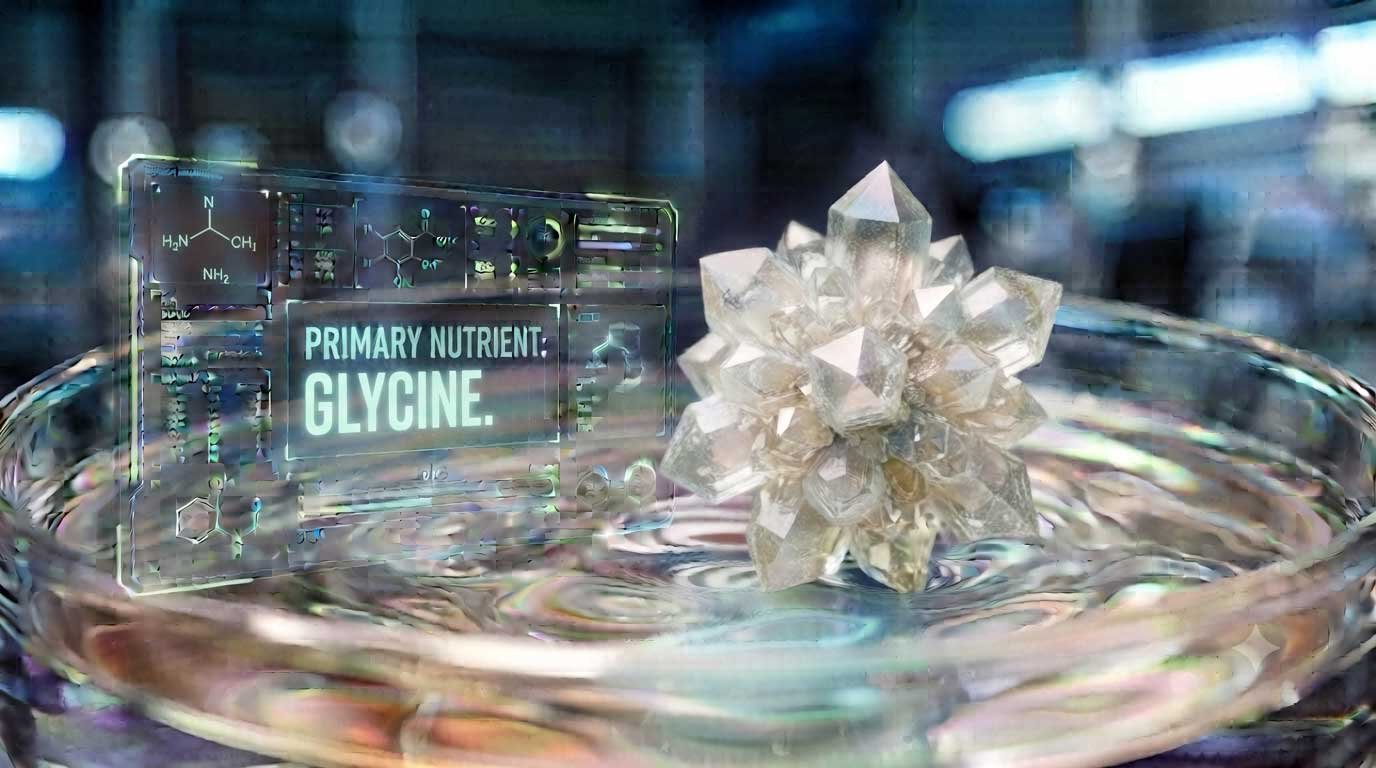
The Smallest Amino Acid With an Outsized Job
If you had to guess which molecule does the most unglamorous heavy lifting in the human body, glycine probably wouldn’t make your shortlist. It doesn’t have the marketing muscle of vitamin C or the trendy glow-up that collagen powder has enjoyed over the last few years. And yet, glycine is quietly involved in both of those stories, along with a dozen others that rarely get top billing.
Glycine is the simplest of all amino acids. Structurally, it’s almost embarrassingly minimal, just a single hydrogen atom sitting where every other amino acid has a bulkier side chain. That simplicity is exactly what makes it so versatile. Because it takes up so little physical space, glycine can slot into tight molecular corners that other amino acids simply can’t reach. This is a big part of why it ends up being the single most abundant amino acid in collagen, the structural protein that holds your skin, tendons, cartilage, and bones together.
Table of Contents

But collagen is only one chapter. Glycine also acts as an inhibitory neurotransmitter in the spinal cord and brainstem, meaning it helps calm and regulate nerve signaling rather than excite it. It’s a building block for glutathione, one of the body’s primary internal antioxidants. It contributes to creatine synthesis, bile acid production, and the formation of heme, the iron-containing part of hemoglobin that carries oxygen through your blood. Researchers have described glycine as playing a role in gluconeogenesis, purine synthesis, and even chlorophyll-related biochemistry in plants, though our focus here is squarely on the human side of that ledger.
Technically, glycine is classified as a nonessential amino acid, which means your body can manufacture it on its own from other compounds like serine, choline, and threonine. But here’s where things get interesting, and where a decade of following this research has genuinely changed my view. A growing body of scientific literature suggests that under normal dietary conditions, the body’s own synthesis often falls short of what’s needed for optimal collagen turnover, glutathione production, and other glycine-demanding processes. Some researchers now argue glycine should be considered conditionally essential, a nutrient your body technically produces but frequently doesn’t produce enough of, especially as you age or if your diet leans heavily on lean muscle meat rather than the connective tissue, skin, and bones that traditional diets used to include far more of.
That distinction matters more than it might seem at first glance. A nutrient labeled “nonessential” tends to get dismissed, both by the public and, historically, by nutrition science itself. Meanwhile, glycine has been sitting there, structurally embedded in a third of your collagen, participating in nervous system regulation, and supporting detoxification pathways in the liver, without much fanfare. I’ve come to think of it as one of the more underrated compounds in human physiology, not because it’s exotic or rare, but because its absence is subtle. You don’t necessarily feel a glycine shortfall the way you’d feel an iron deficiency. It shows up instead as slower recovery, less resilient skin and joints, and sleep that never quite feels restorative.
There’s also a nostalgic angle here worth mentioning. Traditional food cultures across the world, from bone broth in East Asian and European kitchens to nose-to-tail eating traditions in many indigenous diets, were inadvertently glycine-rich diets. Modern eating patterns, built around boneless, skinless cuts of muscle meat, have quietly drifted away from that. Whether or not that shift has meaningful consequences for the average person is still being studied, but the pattern itself is hard to ignore once you start looking at amino acid composition tables.
Throughout this article, we’ll walk through what current research actually says about glycine’s role in the body, where you can realistically get it from food, how much the science suggests might be useful, what deficiency may look like, and where the line sits between a helpful dose and one that starts to cause problems. None of this is medical advice, and glycine isn’t a miracle molecule that fixes everything from insomnia to wrinkles overnight. But it is a genuinely interesting piece of human biochemistry that deserves more attention than it usually gets, and understanding it a little better tends to change how you think about protein, aging, and recovery more broadly.
One quick note before we go further: glycine sits within the broader category of amino acids, the building blocks of every protein in your body, and it’s easy to lose track of individual amino acids inside that larger conversation about protein intake. Zooming in on this one specifically is worthwhile, though, precisely because its functions extend so far beyond simple muscle building. Let’s get into it.
Key Health Benefits
Collagen Production and Structural Support
Start with the most obvious connection first. Collagen is the most abundant protein in the human body, forming the scaffolding for skin, tendons, ligaments, cartilage, and bone. Roughly a third of the amino acids in collagen are glycine, positioned at every third spot along the protein’s triple-helix structure. That regular spacing isn’t decorative. It’s what allows collagen strands to coil tightly together into the dense, rope-like fibers that give connective tissue its strength and flexibility.
Without adequate glycine, collagen synthesis doesn’t happen efficiently, full stop. Researchers reviewing glycine’s physiological roles have noted that the amino acid is essential for the structural stability of collagen and elastin, the two proteins that give skin and connective tissue their combination of firmness and elasticity. This is part of why glycine shows up so often in conversations about skin aging, joint health, and post-exercise tissue repair. It isn’t that glycine alone determines how youthful your skin looks or how quickly your knees recover from a hard training block, but it is a nonnegotiable raw material in that process.
A Calming Voice in the Nervous System
Here’s the part that surprises people who only know glycine as “the collagen amino acid.” In the central nervous system, particularly the spinal cord and brainstem, glycine functions as an inhibitory neurotransmitter. That means it works by dampening neural excitability rather than ramping it up, similar in spirit to GABA, though through a distinct receptor system.
This inhibitory role has made glycine a subject of interest for conditions involving motor control, muscle tone, and sensory processing. It also intersects with sleep physiology in a fairly direct way. Some research has connected glycine’s neurological activity with a reduction in core body temperature, one of the physiological cues that helps signal to the brain that it’s time to wind down. It’s a good example of how a single molecule can operate on two seemingly unrelated systems, structural and neurological, without those roles competing with each other.
Sleep Quality and Recovery
This is probably the most well-studied of glycine’s practical applications. A frequently cited trial examined glycine’s effects in people whose sleep was partially restricted, finding that a dose taken before bed was associated with reduced time to fall asleep, improvements in subjective sleep quality, and better next-day performance on cognitive tasks (Bannai et al., 2012). That’s a meaningful finding, because sleep restriction is such a common, low-grade problem in modern life, and interventions that meaningfully move the needle without heavy sedation are genuinely useful.
Beyond subjective sleep quality, glycine has also drawn interest from the sports science community. A recent literature review exploring glycine’s role in physical performance and recovery pointed to cytoprotective effects on muscle tissue, along with preliminary evidence suggesting glycine may support muscle regeneration, reduce lactic acid accumulation during intense exercise, and complement sleep-related recovery processes (Ramos-Jiménez et al., 2024). The authors were careful to note that human trials remain limited relative to animal and cell-based research, which is a fair and honest caveat, and one I’d encourage anyone reading enthusiastic supplement marketing to keep in mind.
Antioxidant and Metabolic Support
Glycine is one of three amino acids, alongside cysteine and glutamate, required to synthesize glutathione, often described as the body’s master antioxidant. Glutathione plays a central role in neutralizing reactive oxygen species and protecting cells from oxidative stress, a process that becomes increasingly relevant with age as oxidative damage tends to accumulate faster than the body clears it.
Clinical research combining glycine with N-acetylcysteine, a glutathione precursor pairing often abbreviated as GlyNAC, has shown that supplementation can meaningfully improve markers of glutathione status and oxidative stress in older adults, alongside benefits related to mitochondrial function, inflammation, insulin resistance, and even muscle strength and cognitive performance in a pilot clinical trial (Kumar et al., 2021). A separate randomized trial testing different GlyNAC doses in healthy older adults confirmed the intervention was safe and well tolerated, though it didn’t uniformly improve every glutathione marker across all dose groups, a reminder that even promising nutrients don’t behave like on-off switches (Lizzo et al., 2022). Glycine has also been studied for its role in liver metabolism, where deficiency has been observed in people with obesity, and where supplementation has been shown to help correct that shortfall and support related detoxification pathways.
Dietary Sources
Animal-Based Sources
If you eat animal products, the richest sources of dietary glycine aren’t the cuts of meat most people reach for by default. Lean chicken breast or a trimmed sirloin steak contains glycine, but nowhere near the concentration found in skin, cartilage, tendons, and slow-cooked, collagen-heavy cuts.
Gelatin, which is essentially cooked-down collagen, is one of the most concentrated food sources available. Bone broth, made by simmering bones and connective tissue for extended periods, extracts glycine-rich gelatin into the liquid, though the exact glycine content varies considerably depending on how long it’s cooked and what parts of the animal are used. Pork skin and chicken skin are similarly dense in glycine, since skin is largely composed of collagen. Tougher cuts of meat, the kind that benefit from long, slow cooking methods like braising or stewing, such as short ribs, oxtail, or pork shoulder, also carry meaningfully more glycine than a quick-cooked, lean filet.
A few practical patterns worth keeping in mind:
- Slow-cooked, connective-tissue-rich cuts consistently outperform quick-cooked lean muscle meat for glycine content
- Skin-on poultry and pork contribute noticeably more glycine than skinless equivalents
- Homemade bone broth tends to have more variable, and often higher, glycine content than commercial store-bought versions, depending on cook time
- Collagen peptide supplements, now widely available as flavorless powders, are essentially concentrated glycine delivery, since glycine makes up roughly a third of collagen’s amino acid profile
Plant-Based and Vegetarian Options
Glycine is technically present in nearly all protein-containing foods, including plant sources, though generally at lower concentrations than in collagen-rich animal foods. Legumes, including lentils and various beans, contribute a modest amount. Seeds, particularly pumpkin and sesame seeds, are among the better plant-based contributors. Soy products, tofu, and certain nuts round out the picture.
The honest caveat here, and one I don’t think gets said often enough in wellness content, is that it’s genuinely more difficult to hit a substantial glycine intake through plant foods alone compared to a diet that includes bone broth, gelatin, or collagen-rich animal cuts. That’s not a reason for anyone following a vegetarian or vegan diet to panic, since the body does synthesize its own glycine from other amino acids regardless of diet. It’s simply a practical reality worth knowing if you’re specifically trying to boost intake through food rather than relying entirely on endogenous production.
Practical Ways to Boost Intake
For people who want to increase glycine intake without overhauling their entire diet, a few realistic adjustments tend to work well. Swapping a regular stock for a longer-simmered bone broth in soups and sauces is one of the easiest changes. Choosing bone-in, skin-on cuts of poultry rather than boneless, skinless breast is another. Adding a scoop of unflavored gelatin or collagen peptides to coffee, oatmeal, or a smoothie is a low-effort way to add a concentrated dose without changing the flavor of much of anything.
None of this needs to feel like a project. The point isn’t to chase a specific number on a nutrition label every day, but to shift your default choices slightly in a direction that includes more of the connective tissue and collagen-containing parts of the foods you’re already eating, rather than exclusively the lean muscle portions that modern food culture tends to favor.
Dosage & Deficiency
How Much Do We Actually Need
There isn’t a formally established Recommended Dietary Allowance for glycine the way there is for many vitamins and minerals, largely because it’s classified as nonessential and the body produces its own supply. That said, researchers estimate that endogenous production in a typical adult is on the order of several grams per day, and multiple scientists studying glycine metabolism have suggested this internal production may not fully meet the demands of collagen turnover, glutathione synthesis, and other glycine-dependent processes, particularly during periods of physical stress, illness, or aging.
This is where the “conditionally essential” framing becomes genuinely useful in practice rather than just an academic distinction. It suggests that under normal, low-stress circumstances, most people probably produce and consume enough glycine to get by. But under higher demand conditions, intense training, recovery from injury or surgery, advancing age, or diets low in collagen-containing foods, the gap between supply and demand may widen.
Signs You Might Be Running Low
Glycine deficiency isn’t a clinical diagnosis in the way iron deficiency or vitamin B12 deficiency are, and there’s no standard blood test threshold that clinicians use to flag it in routine practice. Research has, however, identified reduced plasma glycine levels in specific populations, notably in people with obesity, where lower glycine has been associated with greater insulin resistance and metabolic dysfunction.
Beyond that specific research context, the practical signs people associate with insufficient glycine tend to be indirect: slower recovery from exercise or injury, skin and joints that feel less resilient over time, and sleep that doesn’t feel particularly restorative despite adequate hours in bed. None of these symptoms are exclusive to glycine status, of course, and jumping to that conclusion without broader context would be a mistake. But they’re worth keeping in mind as part of a bigger picture rather than dismissing outright.
Common Supplemental Doses in Research
Clinical and research doses of glycine vary quite a bit depending on the goal. Sleep-focused studies have generally used around 3 grams taken shortly before bedtime, a dose that’s been associated with improvements in subjective sleep quality and next-day alertness. Metabolic and glutathione-focused research, particularly the GlyNAC trials in older adults, has tested doses in the range of roughly 2.4 to 7.2 grams of glycine per day paired with N-acetylcysteine, generally administered over weeks rather than as a single dose. Some obesity-focused research has used doses calculated by body weight, in the neighborhood of 100 milligrams per kilogram daily.
These figures are useful as reference points for understanding how researchers have approached glycine supplementation, not as a personal prescription. Anyone considering supplementing with glycine for a specific goal, sleep, recovery, or otherwise, would do well to think of these study doses as context rather than instructions, and to loop in a healthcare provider if they have any underlying health conditions or are taking other medications.
Toxicity & Risks
How Safe Is Glycine at Normal Doses
Broadly speaking, glycine has a strong safety profile at the doses used in most published research, and it’s naturally present in the protein you already eat every day. The doses tested in sleep and glutathione-related studies, generally in the single-digit grams per day, have consistently been described as safe and well tolerated, including in trials specifically designed to test tolerability across multiple dose levels in healthy older adults.
This is one area where I’d push back gently on some of the more breathless supplement marketing that treats glycine as risk-free at any dose. Safety at a studied dose doesn’t automatically extend to unlimited quantities, and it’s worth separating “well tolerated in a two-week clinical trial” from “safe indefinitely at any amount,” since those are genuinely different claims even if marketing copy tends to blur them together.
When Excess Becomes a Problem
Here’s where the research gets more specific, and more useful, than most consumer-facing content acknowledges. A recent review of glycine supplementation for athletic performance specifically flagged that very high doses, above roughly 500 milligrams per kilogram of body mass, could produce cytotoxic effects and contribute to acute glutamate toxicity (Ramos-Jiménez et al., 2024). For context, that threshold is far beyond the gram-level doses used in most human sleep and recovery studies, but it’s a meaningful data point for anyone assuming that “natural” automatically means “no upper limit.”
At more moderate excess, rather than extreme overdose, the more commonly reported issue is simple gastrointestinal discomfort, including nausea or an upset stomach, particularly when large single doses are taken on an empty stomach. This tends to resolve with dose reduction rather than indicating anything more serious, but it’s a reasonable signal from your body that you’ve overshot a comfortable amount.
Who Should Be Cautious
People with kidney or liver conditions, since amino acid metabolism and clearance involve both organs, should be particularly cautious about supplementing with glycine or any amino acid outside of guidance from a healthcare provider. The same goes for anyone taking medications metabolized through pathways that overlap with amino acid processing, or anyone managing a chronic condition where amino acid balance is already being monitored clinically.
Pregnant and breastfeeding individuals should also default to caution with concentrated glycine supplements specifically, simply because the research base in these populations is thin, even though glycine from ordinary food sources isn’t a concern. As is true across nearly every supplement category, the gap between “found naturally in food” and “concentrated in supplement form” is where most of the actual risk calculus lives, and glycine is no exception to that pattern.
Small Molecule, Big Return on Attention
Glycine doesn’t ask for much attention, and that’s probably exactly why it’s been overlooked for as long as it has. It’s not flashy, it’s not marketed as a miracle compound, and its “nonessential” label has done it a disservice for years by suggesting it’s optional rather than foundational. But once you start tracing its fingerprints, through collagen structure, nervous system regulation, glutathione production, and sleep physiology, it becomes hard to see it as anything other than one of the more quietly important amino acids in human biochemistry.
The practical takeaways here are refreshingly simple. If you eat animal products, incorporating more collagen-rich foods, bone broth, gelatin, skin-on cuts, slow-cooked connective tissue, is a low-effort way to support glycine intake through real food rather than relying entirely on your own synthesis. If you’re curious about supplementation, the research points toward modest, single-digit gram doses for goals like sleep quality, with higher combination doses studied specifically in the context of aging and oxidative stress under clinical supervision. And if you’re the type to chase every trending compound at maximum dose because more must be better, glycine is a good reminder that even the gentlest, most naturally occurring nutrients have an upper boundary worth respecting.
What I find most compelling about glycine, after spending real time in this research, isn’t any single headline benefit. It’s the range. Few nutrients show up meaningfully in both structural biology, literally holding your skin and joints together, and neurological function, calming your nervous system enough to help you sleep. That combination is rare, and it’s a good argument for paying more attention to the unglamorous, foundational building blocks of nutrition rather than only chasing whatever compound is trending this month. Glycine has been doing its job in the background the entire time. It’s just been waiting for someone to notice.
Article Sources
At AncientHerbsWisdom, our content relies on reputable sources, including peer-reviewed studies, to substantiate the information presented in our articles. Our primary objective is to ensure our content is thoroughly fact-checked, maintaining a commitment to accuracy, reliability, and trustworthiness.
- Bannai, M., Kawai, N., Ono, K., Nakahara, K., & Murakami, N. (2012). The effects of glycine on subjective daytime performance in partially sleep-restricted healthy volunteers. Frontiers in Neurology, 3, 61. https://doi.org/10.3389/fneur.2012.00061
- Kumar, P., Liu, C., Hsu, J. W., Chacko, S., Minard, C., Jahoor, F., & Sekhar, R. V. (2021). Glycine and N-acetylcysteine (GlyNAC) supplementation in older adults improves glutathione deficiency, oxidative stress, mitochondrial dysfunction, inflammation, insulin resistance, endothelial dysfunction, genotoxicity, muscle strength, and cognition: Results of a pilot clinical trial. Clinical and Translational Medicine, 11(3), e372. https://doi.org/10.1002/ctm2.372
- Lizzo, G., Migliavacca, E., Lamers, D., Frézal, A., Corthesy, J., Vinyes-Parès, G., Bosco, N., Karagounis, L. G., Hövelmann, U., Heise, T., von Eynatten, M., & Gut, P. (2022). A randomized controlled clinical trial in healthy older adults to determine efficacy of glycine and N-acetylcysteine supplementation on glutathione redox status and oxidative damage. Frontiers in Aging, 3, 852569. https://doi.org/10.3389/fragi.2022.852569
- Ramos-Jiménez, A., Hernández-Torres, R. P., Hernández-Ontiveros, D. A., Ortiz-Ortiz, M., López-Fregoso, R. J., Martínez-Sanz, J. M., Rodríguez-Uribe, G., & Hernández-Lepe, M. A. (2024). An update of the promise of glycine supplementation for enhancing physical performance and recovery. Sports, 12(10), 265. https://doi.org/10.3390/sports12100265
- Razak, M. A., Begum, P. S., Viswanath, B., & Rajagopal, S. (2017). Multifarious beneficial effect of nonessential amino acid, glycine: A review. Oxidative Medicine and Cellular Longevity, 2017, 1716701. https://doi.org/10.1155/2017/1716701
- Tan, H. C., Hsu, J. W., Tai, E. S., Chacko, S., Kovalik, J. P., & Jahoor, F. (2025). Metabolic impact of dietary glycine supplementation in individuals with severe obesity. Scientific Reports, 15, 36433. https://doi.org/10.1038/s41598-025-20511-x

- Phosphatidic Acid: Supporting Muscle Growth and Strength - July 31, 2026
- Ceramides: Supporting Healthy Skin From Within - July 31, 2026
- Synbiotics: Combining Prebiotics and Probiotics Together - July 31, 2026