
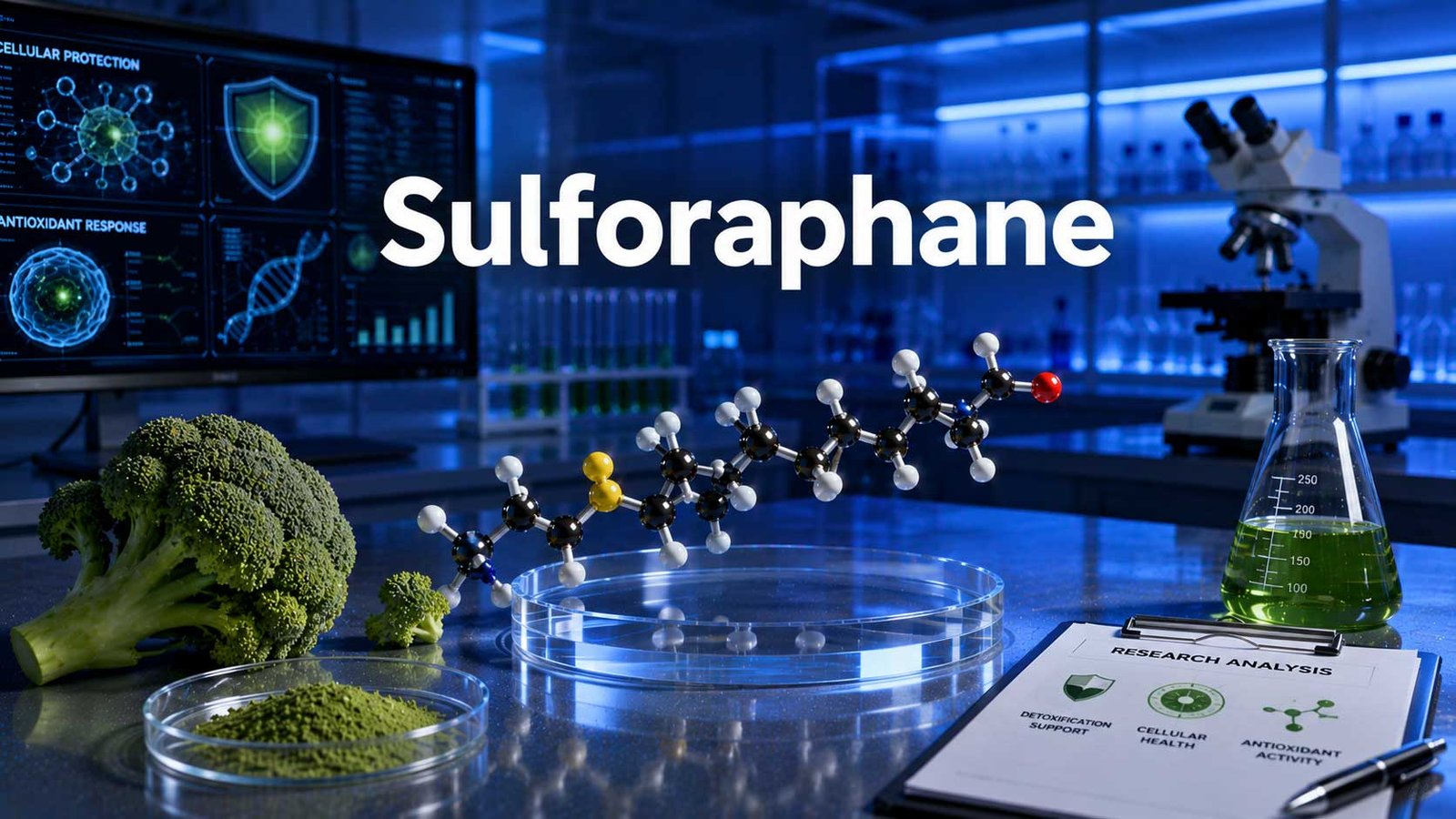
The Vegetable Compound Nobody Warned You About
I still remember the first time someone told me that broccoli sprouts were “basically a superfood in miniature.” I was skeptical. I’d heard that phrase applied to everything from goji berries to bee pollen, and most of the time it was marketing fluff dressed up as science. But then I actually sat down with the research on sulforaphane, and I had to eat my words, so to speak.
Sulforaphane isn’t some exotic botanical extract shipped in from a rainforest. It’s a compound your body makes from a plant chemical sitting quietly in broccoli, Brussels sprouts, kale, and especially broccoli sprouts. When you chew these vegetables, or when your gut bacteria get to work on them, an enzyme reaction converts a precursor compound called glucoraphanin into sulforaphane. It’s a plant defense mechanism, really. Cruciferous vegetables produce these sulfur compounds to fend off insects and fungi, and it just so happens that the same chemistry that irritates a hungry aphid also switches on a network of protective genes in human cells.
Table of Contents


That’s the part that got my attention. Sulforaphane doesn’t act like a typical antioxidant that mops up free radicals directly. Instead, it nudges your own cellular machinery to produce its own defenses, at a scale a vitamin supplement could never match. Researchers call this an indirect antioxidant effect, and it’s one of the reasons sulforaphane has become one of the most heavily studied phytochemicals in nutrition science over the past two decades.
I want to be upfront about something before we go further: this is not a magic bullet. Sulforaphane is not going to reverse a poor diet, undo years of smoking, or replace medical treatment for a diagnosed condition. What it does appear to do, based on a genuinely large body of laboratory, animal, and human clinical research, is support several of the biological systems that keep us resilient against everyday oxidative stress and inflammation. That’s worth understanding in some depth, because the mechanism is genuinely fascinating.
Here’s the short version of the biology, and I promise I’ll keep the jargon to a minimum. Inside your cells there’s a protein called Keap1 that normally keeps a transcription factor named Nrf2 locked down and inactive. Sulforaphane interacts with Keap1 in a way that releases Nrf2, allowing it to travel into the cell nucleus and switch on genes responsible for producing your body’s own antioxidant and detoxification enzymes, things like glutathione S-transferase and NAD(P)H quinone oxidoreductase 1. Think of Nrf2 as a fire alarm system, and sulforaphane as the compound that tests the alarm regularly enough to keep the whole system primed and functional. This isn’t a fringe theory; it’s been described repeatedly in the peer-reviewed literature, including detailed reviews of sulforaphane’s cancer-preventive mechanisms (Yagishita et al., 2019).
What makes broccoli and its sprouts unique among vegetables is the sheer concentration of the glucoraphanin precursor, particularly in young sprouts harvested just a few days after germination. Mature broccoli florets contain some, but broccoli sprouts can contain dramatically higher levels of glucosinolates relative to their weight. That’s part of why you’ll see broccoli sprouts singled out again and again in the clinical trials I’ll reference throughout this piece.
I’ll also say this: sulforaphane research has a somewhat unusual pedigree compared to a lot of nutrition science. Much of the foundational work traces back to a research group at Johns Hopkins University, led for decades by the late Paul Talalay, who essentially built the field of chemoprotection research around this molecule. That lineage matters, because it means the studies on sulforaphane tend to be more mechanistically rigorous than the average “eat this superfood” headline would suggest. There’s real chemistry here, real pharmacokinetics, real dose-response data. It’s not just correlation dressed up as causation.
So where does that leave someone who just wants to know whether adding more broccoli, or broccoli sprouts, to their plate is worth the effort? That’s exactly what the rest of this article is going to unpack. We’ll look at what the health benefits actually look like in the research, where you can realistically get sulforaphane from your diet, how much seems to matter for a meaningful effect, and where the genuine risks and open questions lie. I’ll try to keep my own strong opinions in check where the science is still unsettled, but I won’t pretend I don’t have them. After spending real time in this literature, it’s hard not to come away thinking broccoli sprouts deserve a permanent spot in the produce drawer.
One more thing before we move on. You’ll notice I keep saying “sulforaphane” rather than “broccoli” throughout this piece, and that’s intentional. Broccoli is simply the delivery vehicle. The compound itself is what the research is actually measuring, and that distinction turns out to matter quite a bit when we get into dosage and bioavailability later on.
Key Health Benefits of Sulforaphane
Let’s get into what sulforaphane actually seems to do once it’s in your system. I want to organize this by the body systems where the research is strongest, because sulforaphane’s fingerprints show up in a surprising number of places.
Cellular Defense and Antioxidant Support
I already touched on the Nrf2 pathway in the introduction, but it deserves more space here because it’s genuinely the backbone of almost everything else on this list. When sulforaphane activates Nrf2 signaling, your cells ramp up production of enzymes that neutralize reactive oxygen species and help process potentially harmful compounds before they can do damage. A comprehensive review on sulforaphane’s role as an anticancer agent describes this cytoprotective signaling as central to how the compound reduces cellular vulnerability to carcinogens and oxidative insults (Vanduchova et al., 2021).
What I find compelling about this mechanism is that it’s not a one-and-done antioxidant hit like you’d get from, say, a vitamin C tablet. Because sulforaphane works by upregulating your own enzyme systems, the protective effect can persist for longer after the compound itself has cleared your system, since those enzymes keep doing their job in the meantime.
Cardiometabolic and Heart Health
This is an area where the human trial data has actually gotten fairly robust in recent years. A systematic review and meta-analysis of broccoli sprout interventions found meaningful associations between sulforaphane-yielding broccoli sprout consumption and improvements in several cardiometabolic markers, including blood pressure and markers of oxidative stress, in adults with metabolic risk factors (Beneficial Effects of Sulforaphane-Yielding Broccoli Sprout on Cardiometabolic Health, 2022).
That said, the picture isn’t uniformly rosy. The same body of research noted inconsistent effects on cholesterol markers like LDL and HDL across different trials, and hypertensive participants in a four-week trial referenced in that review showed no significant change in lipid panels. This is one of those cases where I’d rather give you the nuanced truth than the tidy marketing version: sulforaphane appears to support several cardiovascular risk factors, particularly blood pressure and oxidative stress markers, but it’s not a guaranteed cholesterol fix.
Blood Sugar and Metabolic Regulation
There’s a growing body of preclinical and early clinical work looking at sulforaphane and glucose metabolism. A review focused specifically on broccoli and sulforaphane in the context of diabetes summarized data showing reductions in hyperglycemia, hyperlipidemia, insulin resistance, and diabetes-associated oxidative stress across multiple studies (Beneficial role of broccoli and its active ingredient, sulforaphane in the treatment of diabetes, 2023). Some of this evidence comes from animal models, which is worth flagging, but there are human trials in this space too, and the mechanistic story lines up with what we know about oxidative stress driving insulin resistance.
I’ll be honest, this is one area I find myself watching closely rather than declaring settled. The signal is promising, but I wouldn’t tell someone managing blood sugar to rely on broccoli sprouts instead of their prescribed treatment plan. Food as one supportive piece of a broader strategy, yes. Substitute for medical care, no.
Brain and Neurological Support
This might be the most quietly exciting frontier in sulforaphane research right now. A recent review on the neuroprotective mechanisms of sulforaphane laid out how the compound mitigates oxidative stress and prevents neuroinflammation, two processes heavily implicated in neurodegenerative and neurodevelopmental conditions (Broccoli for the brain: a review of the neuroprotective mechanisms of sulforaphane, 2024). The review specifically highlighted a hormetic pattern, where lower doses of sulforaphane were consistently more beneficial in preclinical neuronal models than higher doses, which actually shifted toward cytotoxicity.
That hormetic detail matters and I want to underline it because it runs against the “more is better” instinct a lot of people bring to supplements. With sulforaphane, there does appear to be a sweet spot, not a straight line.
On the clinical side, one of the more talked-about trials in this space is the randomized, placebo-controlled study led by researchers at Johns Hopkins and the University of Massachusetts Medical School, which gave sulforaphane derived from broccoli sprout extract to young men with autism spectrum disorder over 18 weeks. The trial reported substantial and largely reversible improvements in behavioral measures compared with placebo (Singh et al., 2014). I want to be careful here: this was a relatively small trial, and subsequent replication efforts have shown more mixed results, so this is not settled science. But it’s a genuinely interesting data point in the broader neurological story, and it helped spark a wave of follow-up research into sulforaphane and neurodevelopmental and psychiatric conditions.
Cancer-Preventive Mechanisms
I’m going to tread carefully here because this is exactly the kind of claim that gets oversold in wellness content, and I don’t want to be part of that problem. What the research actually shows is that sulforaphane has demonstrated anticancer effects across a substantial number of in vitro, in vivo, and early-phase clinical studies, primarily through mechanisms like Nrf2 activation, inhibition of histone deacetylase activity, and modulation of carcinogen-metabolizing enzymes (Vanduchova et al., 2021).
That’s meaningfully different from saying sulforaphane prevents or treats cancer in humans, which the current evidence doesn’t support as a direct claim. What it does support is a plausible, mechanistically grounded chemopreventive role, which is exactly why institutions like Johns Hopkins have run multiple clinical trials examining sulforaphane in populations at elevated cancer risk, including studies in former smokers and men with recurrent prostate cancer. Those trials are ongoing areas of research, not settled conclusions, and I’d encourage skepticism toward anyone presenting this as a cure for anything.
Anti-Inflammatory Activity
Threaded through nearly every category above is sulforaphane’s effect on inflammatory signaling. The broader review literature on broccoli’s bioactive compounds consistently describes anti-inflammatory activity alongside the antioxidant, anticancer, and antimicrobial effects attributed to glucosinolates and their breakdown products (The Multifaceted Health Benefits of Broccoli, 2025). Chronic low-grade inflammation is implicated in nearly every condition discussed above, from cardiometabolic disease to neurodegeneration, so this isn’t really a separate benefit so much as a thread connecting all the others.
If I had to summarize this section in one sentence, it would be this: sulforaphane’s real strength isn’t any single dramatic effect, it’s the breadth of biological systems where a consistent, well-understood mechanism keeps showing up with modest but repeated benefits.
Dietary Sources of Sulforaphane
Here’s where things get practical, and also where a lot of well-meaning advice online goes slightly off the rails. Sulforaphane itself isn’t sitting in broccoli waiting to be eaten. What’s actually in the raw vegetable is glucoraphanin, a stable precursor compound, along with an enzyme called myrosinase that converts glucoraphanin into sulforaphane when plant cells are damaged, meaning when you chew, chop, or crush the vegetable.
Broccoli Sprouts: The Concentrated Source
If you want the most sulforaphane potential per bite, broccoli sprouts are where the research keeps pointing. Sprouted broccoli seeds contain their highest glucosinolate concentrations within roughly three to seven days of growth, and this window produces levels far exceeding what you’d find in mature broccoli heads (Beneficial Effects of Sulforaphane-Yielding Broccoli Sprout on Cardiometabolic Health, 2022). This is genuinely one of those rare cases in nutrition where the “concentrated superfood” framing isn’t hype. Three-day-old broccoli sprouts really do pack a disproportionate punch relative to their size.
I like tossing a handful of broccoli sprouts onto a sandwich or salad specifically because of this. They have a peppery, slightly radish-like bite, and a little goes a long way, which is convenient since you don’t need to eat much to get a meaningful dose.
Mature Broccoli, Cabbage, and Other Crucifers
Regular broccoli, cauliflower, cabbage, kale, Brussels sprouts, and watercress all contain glucoraphanin, just at lower concentrations than sprouts (Sulforaphane: A Broccoli Bioactive Phytocompound with Cancer Preventive Potential, 2021). Watercress in particular deserves a mention since it’s often overlooked but carries a respectable glucosinolate profile.
Why Preparation Method Changes Everything
This is the part I really wish more articles emphasized, because it changes the practical advice significantly. Myrosinase, the enzyme responsible for converting glucoraphanin into active sulforaphane, is heat-sensitive. Cook broccoli too long, and you deactivate the enzyme before it can do its job.
A cross-over feeding study comparing raw and cooked broccoli found sulforaphane bioavailability of roughly 37% of the administered dose from raw broccoli, compared with just 3.4% from cooked broccoli, a more than tenfold difference (Egner et al., 2011). That’s not a subtle effect. That’s the difference between a food that delivers meaningfully on its reputation and one that barely registers.
A few practical takeaways from this:
- Light steaming, around three to four minutes, appears to preserve more myrosinase activity than boiling or extended cooking.
- Chopping or crushing broccoli and letting it sit for several minutes before cooking gives the myrosinase enzyme time to start converting glucoraphanin before heat can deactivate it, a trick sometimes called the “hack” method in food science circles.
- Pairing cooked crucifers with a raw myrosinase source, like a bit of mustard powder or daikon radish, can help restore conversion, since these foods carry their own active myrosinase (Exogenous myrosinase from mustard seed increases bioavailability of sulforaphane, 2026).
- Gut bacteria can also convert glucoraphanin to sulforaphane even without dietary myrosinase, though this route is slower and much more variable between individuals (Bioavailability of Sulforaphane from two broccoli sprout beverages, 2011).
I’ll admit this preparation detail changed how I personally cook broccoli. I used to roast it until it was deeply caramelized because, frankly, that’s when it tastes best. Now I’ll often steam it briefly or eat a portion raw, specifically to preserve that enzyme activity, and save the deep roasting for when I’m not particularly focused on the sulforaphane angle.
Supplements and Extracts
Broccoli sprout extracts and glucoraphanin supplements have become widely available, and the clinical trial literature actually relies heavily on standardized extracts precisely because dietary intake is so variable. If you’re considering a supplement, look specifically for products that either contain active myrosinase alongside glucoraphanin, or that list sulforaphane directly rather than only glucoraphanin, since conversion without myrosinase can be inconsistent. I’ll get into the bioavailability numbers behind this recommendation in the next section.
Dosage & Deficiency
Sulforaphane occupies an interesting category here because, unlike a vitamin or mineral, there’s no established recommended daily intake and no clinical deficiency syndrome. Nobody gets diagnosed with “sulforaphane deficiency.” So the more useful question isn’t “how much do I need to avoid a deficiency,” it’s “how much has actually been studied, and what does it take to get a meaningful dose.”
What the Clinical Trials Actually Used
Doses across human trials vary quite a bit depending on the study’s goal, but a few reference points are worth knowing. The autism spectrum disorder trial from Johns Hopkins used daily oral doses in the range of 50 to 150 micromoles of sulforaphane, adjusted by body weight, over an 18-week period (Singh et al., 2014). Cardiometabolic trials reviewed in the systematic literature generally used broccoli sprout extract doses in a comparable micromole range, administered over several weeks to a few months (Beneficial Effects of Sulforaphane-Yielding Broccoli Sprout on Cardiometabolic Health, 2022).
To put “micromoles” into something more tangible: a modest serving of fresh broccoli sprouts, somewhere around a cup, can realistically deliver somewhere in the range of tens of micromoles of glucosinolates, though the actual sulforaphane yield depends enormously on chewing, preparation, and individual gut microbiota, which brings us to the next point.
Bioavailability Is the Real Variable
This is, in my opinion, the single most underappreciated fact in the entire sulforaphane conversation. It’s not really about how much glucoraphanin you eat. It’s about how much of it actually converts to sulforaphane and gets absorbed.
Research out of Johns Hopkins found that when glucoraphanin is consumed without active myrosinase, meaning the enzyme has been deactivated by cooking, average bioavailability drops to roughly 10% of the administered dose, and that figure is highly variable between individuals, ranging anywhere from about 1% to 40% depending on a person’s gut microbiome (Bioavailability of Sulforaphane Following Ingestion of Glucoraphanin-Rich Broccoli Sprout and Seed Extracts, 2019). When active myrosinase is present alongside the glucoraphanin, bioavailability jumps to roughly 40% on average, and when the conversion happens outside the body entirely before dosing, bioavailability can reach as high as 90% (Sulforaphane Bioavailability from Glucoraphanin-Rich Broccoli, 2015).
That’s roughly a nine-fold difference between the worst-case and best-case delivery method. If you take one practical lesson away from this entire section, let it be this: how you prepare and consume crucifer vegetables matters just as much as, if not more than, how much you eat.
Individual Variability
A few factors seem to influence how well someone converts and absorbs sulforaphane:
- Gut microbiome composition, since certain bacterial species carry their own myrosinase-like activity
- Frequency of habitual vegetable intake, which may shift microbial populations over time
- Body weight and metabolic factors
- Whether the food is eaten raw, lightly cooked, or thoroughly cooked
There was even a small pilot study looking at whether proton pump inhibitors, common acid-reducing medications, affect sulforaphane bioavailability, given that stomach acidity can influence enzymatic and microbial activity in the gut (Bioavailability of Sulforaphane Following Ingestion of Glucoraphanin-Rich Broccoli Sprout and Seed Extracts, 2019). It’s a reminder that this isn’t a simple “eat X, absorb X” equation for anyone.
Practical Guidance
Given the lack of an official recommended intake, I’ll offer what I consider a sensible, research-informed approach rather than a hard number: aiming for a small daily or near-daily serving of broccoli sprouts, roughly a quarter to half a cup, prepared raw or very lightly cooked, lines up reasonably well with the lower end of doses used in clinical research, especially once you account for the improved bioavailability of fresh, minimally cooked sprouts. If you’re leaning on supplements instead, look for products that specify sulforaphane content directly, or glucoraphanin paired with active myrosinase, rather than glucoraphanin alone.
Toxicity & Risks
I don’t think any honest discussion of a bioactive compound is complete without a clear-eyed look at where things can go wrong, and sulforaphane does have some genuine considerations worth knowing, even though its overall safety profile across clinical trials has been reassuring.
General Safety Profile
Across the clinical trial literature, sulforaphane has generally been described as well tolerated at the doses studied. In one trial examining sulforaphane’s effects on prostate tissue, adverse events reported in the treatment group were mostly mild, gastrointestinal in nature, things like bloating, burping, heartburn, and flatulence, occurring at rates not dramatically different from placebo (Effects of Sulforaphane on Normal Prostate Tissue, clinical trial data). Similarly, safety monitoring in autism-focused trials described sulforaphane as showing no significant toxicity at the doses studied, with the most commonly reported side effects being mild digestive changes and, in one trial, a modest increase in weight gain in the treatment group compared with placebo (Sulforaphane in a New Jersey Population of Individuals With Autism, clinical trial protocol).
Digestive Discomfort
The most consistently reported issue across trials is gastrointestinal, and it makes intuitive sense given that sulforaphane is a reactive sulfur compound derived from a high-fiber vegetable family already known for causing gas in sensitive individuals. Flatulence, bloating, and changes in stool consistency show up repeatedly in trial safety data. Generally these effects are described as mild, dose-related, and temporary, but if you’re introducing broccoli sprouts or concentrated extracts to your diet for the first time, starting with a smaller amount and working up isn’t a bad idea.
The Thyroid Question
This is probably the most persistent concern people bring up about cruciferous vegetables broadly, and it deserves a straight answer rather than a dismissive one. Cruciferous vegetables contain goitrogenic compounds capable of interfering with iodine uptake by the thyroid gland, at least in theory, and at sufficiently high doses in the absence of adequate iodine intake.
The actual research on sulforaphane specifically is more reassuring than the general “crucifers are goitrogenic” folklore suggests. A 12-week randomized trial specifically examining broccoli sprout beverage consumption and thyroid function found the intervention to be safe with respect to thyroid hormonal and autoimmune status (Broccoli sprout beverage is safe for thyroid hormonal and autoimmune status, 2019). That said, the same body of research acknowledges that goitrin, a related compound, can impair iodine uptake when administered directly, and that the question of long-term, high-dose Nrf2 modulation and thyroid function is still an area of active investigation.
My honest read on this: for someone with a healthy thyroid and adequate iodine intake, typical dietary or even moderate supplemental sulforaphane intake does not appear to pose a meaningful thyroid risk based on current evidence. For someone with an existing thyroid condition, particularly one involving iodine deficiency, this is worth discussing with a healthcare provider before adding concentrated sulforaphane supplements, simply because the long-term data in that specific population is thinner than I’d like.
Medication Interactions
Sulforaphane is a potent inducer of phase II detoxification enzymes and can also inhibit certain cytochrome P450 enzymes involved in drug metabolism (Beneficial role of broccoli and its active ingredient, sulforaphane in the treatment of diabetes, 2023). In plain terms, this means sulforaphane has the theoretical potential to alter how quickly your body processes certain medications, either speeding up or slowing down clearance depending on the specific drug and enzyme pathway involved. This is a more relevant concern for concentrated supplements than for dietary amounts from food, but if you’re on medications with a narrow therapeutic window, particularly blood thinners, this is a reasonable thing to flag with a pharmacist or physician before starting a concentrated broccoli sprout extract regimen.
Pregnancy and Breastfeeding
The safety of concentrated sulforaphane supplementation during pregnancy and breastfeeding hasn’t been well established through dedicated clinical trials. Dietary amounts from normal vegetable consumption are generally considered fine, since broccoli has been a normal part of human diets for a very long time, but I’d be cautious about recommending concentrated extracts or high-dose supplements during pregnancy without a conversation with an obstetric provider first, simply because the research base specific to that population doesn’t exist yet.
Allergic Reactions
True allergic reactions to broccoli, as distinct from simple digestive intolerance, are rare, though individuals with known sensitivities to cruciferous vegetables should obviously exercise the same caution with concentrated sulforaphane sources that they would with the whole food.
Where the Evidence Gaps Actually Are
If I’m being fully candid, the honest gaps in sulforaphane safety research are less about acute toxicity, which looks well characterized and reassuring, and more about long-term, high-dose supplementation in vulnerable populations: pregnant women, people with existing thyroid disease, and people on multiple interacting medications. For the average healthy adult eating broccoli sprouts as food, the risk profile looks quite favorable. For someone considering high-dose, long-term supplementation, a bit more caution and a conversation with a healthcare provider seems like the sensible path.
The Case for Making Peace With Broccoli
If there’s one thing I hope sticks with you after all of this, it’s that sulforaphane is one of the rare cases in nutrition science where the mechanism, the human trial data, and the practical dietary advice all actually line up with each other. That doesn’t happen often. A lot of “superfood” compounds get their reputation from a single flashy headline built on a petri dish study that never translates to anything meaningful in living, breathing humans. Sulforaphane isn’t that. It’s been chased through decades of mechanistic research, tested in dozens of human clinical trials, and it keeps showing up as biologically active in ways that make sense given what we know about oxidative stress, inflammation, and cellular defense.
None of that means broccoli sprouts are a cure-all, and I’d gently push back on anyone selling them as one. What the evidence actually supports is more modest and, honestly, more believable: a compound that can meaningfully support your body’s own antioxidant and detoxification machinery, with a research base spanning cardiometabolic health, neurological function, and cellular defense against oxidative damage, and a safety profile that looks reassuring for most people at food-level intake.
What I’d actually do with this information, and what I tell people when they ask, is fairly simple. Get comfortable with broccoli sprouts specifically, not just broccoli in general, since the concentration difference is significant enough to matter. Pay attention to preparation, since raw or lightly cooked delivers dramatically more active compound than something boiled into submission. And if you’re dealing with a thyroid condition or take medications with a narrow safety margin, loop in a healthcare provider before going all-in on concentrated extracts.
Beyond that, treat this the way I try to treat most nutrition science: as one useful piece of a much bigger picture, not a silver bullet. Sulforaphane earns its reputation. It just doesn’t need the exaggeration that so often gets layered on top of genuinely good science.
Article Sources
At AncientHerbsWisdom, our content relies on reputable sources, including peer-reviewed studies, to substantiate the information presented in our articles. Our primary objective is to ensure our content is thoroughly fact-checked, maintaining a commitment to accuracy, reliability, and trustworthiness.
- Beneficial Effects of Sulforaphane-Yielding Broccoli Sprout on Cardiometabolic Health: A Systematic Review and Meta-analysis. (2022). Jundishapur Journal of Natural Pharmaceutical Products. https://brieflands.com/journals/jjnpp/articles/129402
- Bioavailability of Sulforaphane from two broccoli sprout beverages: results of a short-term, cross-over clinical trial in Qidong, China. Egner, P. A., Chen, J. G., Wang, J. B., Wu, Y., Sun, Y., Lu, J. H., Zhu, J., Zhang, Y. H., Chen, Y. S., Friesen, M. D., Jacobson, L. P., Muñoz, A., Ng, D., Qian, G. S., Zhu, Y. R., Chen, T. Y., Botting, N. P., Zhang, Q., Fahey, J. W., Talalay, P., Groopman, J. D., & Kensler, T. W. (2011). Cancer Prevention Research, 4(3), 384–395. https://doi.org/10.1158/1940-6207.CAPR-10-0296
- Sulforaphane Bioavailability from Glucoraphanin-Rich Broccoli: Control by Active Endogenous Myrosinase. Fahey, J. W., Wehage, S. L., Holtzclaw, W. D., Kensler, T. W., Egner, P. A., Shapiro, T. A., & Talalay, P. (2015). PLOS ONE, 10(11), e0140963. https://doi.org/10.1371/journal.pone.0140963
- Bioavailability of Sulforaphane Following Ingestion of Glucoraphanin-Rich Broccoli Sprout and Seed Extracts with Active Myrosinase: A Pilot Study of the Effects of Proton Pump Inhibitor Administration. Fahey, J. W., Wade, K. L., Wehage, S. L., Holtzclaw, W. D., Liu, H., Talalay, P., Fuchs, E., & Stephenson, K. K. (2019). Nutrients, 11(7), 1489. https://doi.org/10.3390/nu11071489
- Exogenous myrosinase from mustard seed increases bioavailability of sulforaphane from a glucoraphanin-rich broccoli seed extract in a randomized clinical study. (2026). Scientific Reports. https://doi.org/10.1038/s41598-026-39389-4
- Sulforaphane: A Broccoli Bioactive Phytocompound with Cancer Preventive Potential. Vanduchova, A., Anzenbacher, P., & Anzenbacherova, E. (2021). Nutrients, 13(9), 4796. https://doi.org/10.3390/nu13094796
- The Multifaceted Health Benefits of Broccoli—A Review of Glucosinolates, Phenolics and Antimicrobial Peptides. (2025). Foods. https://www.ncbi.nlm.nih.gov/pmc/articles/PMC12156470/
- Beneficial role of broccoli and its active ingredient, sulforaphane in the treatment of diabetes. (2023). Phytomedicine Plus. https://doi.org/10.1016/j.phyplu.2023.100425
- Broccoli for the brain: a review of the neuroprotective mechanisms of sulforaphane. (2024). Journal of Neuroinflammation. https://www.ncbi.nlm.nih.gov/pmc/articles/PMC12271217/
- Singh, K., Connors, S. L., Macklin, E. A., Smith, K. D., Fahey, J. W., Talalay, P., & Zimmerman, A. W. (2014). Sulforaphane treatment of autism spectrum disorder (ASD). Proceedings of the National Academy of Sciences of the United States of America, 111(43), 15550–15555. https://doi.org/10.1073/pnas.1416940111
- Broccoli sprout beverage is safe for thyroid hormonal and autoimmune status: Results of a 12-week randomized trial. (2019). Journal of Toxicology and Environmental Health, Part A. https://doi.org/10.1016/j.psyneuen.2019.02.010

- Phosphatidic Acid: Supporting Muscle Growth and Strength - July 31, 2026
- Ceramides: Supporting Healthy Skin From Within - July 31, 2026
- Synbiotics: Combining Prebiotics and Probiotics Together - July 31, 2026