
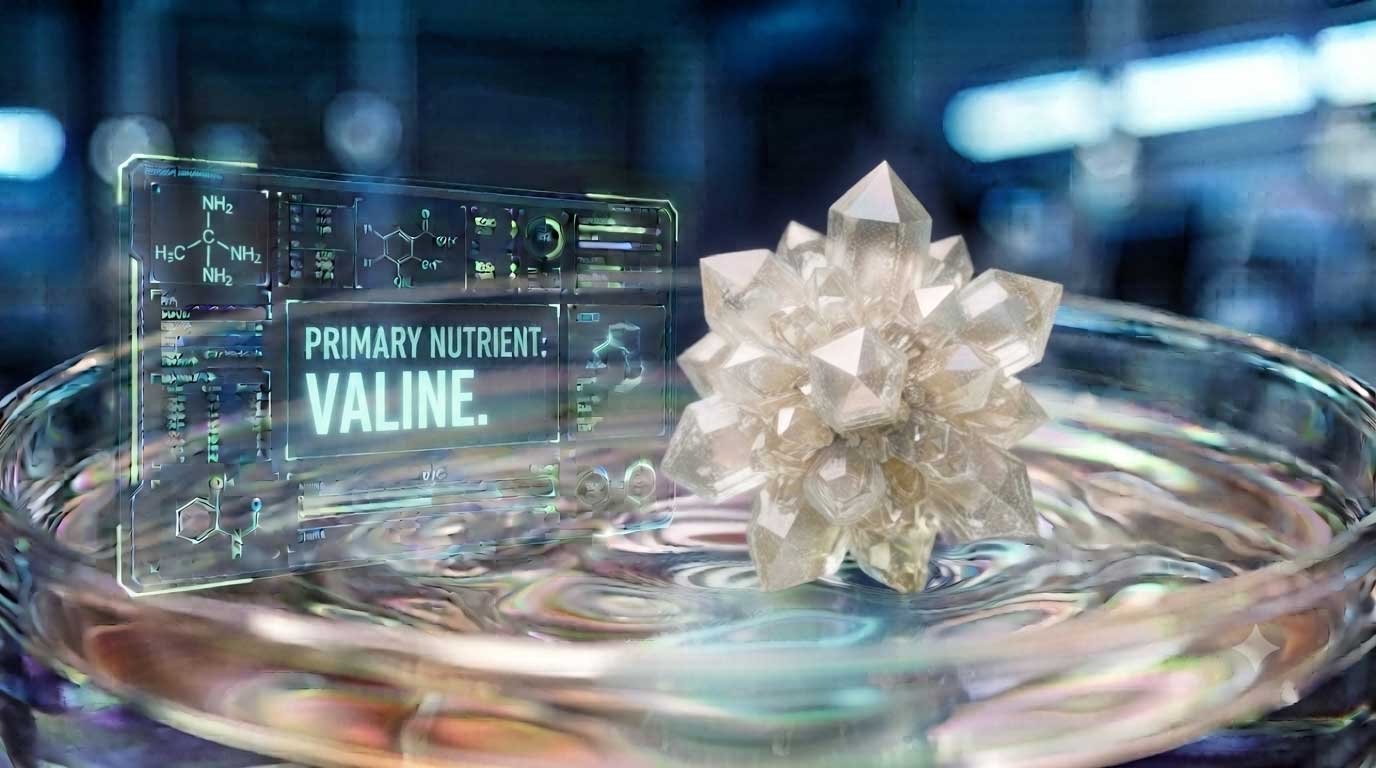
The Amino Acid That Works While You’re Not Looking
I’ve spent more hours than I’d like to admit staring at amino acid profiles on the back of protein powders, cross-referencing them against nitrogen balance studies, trying to figure out which of these tiny molecules actually deserve the hype and which ones are just riding leucine’s coattails. Valine is the one that keeps surprising me. It’s rarely the star of the show. Ask most gym-goers to name a branched-chain amino acid and they’ll say leucine, maybe isoleucine if they’ve read a supplement label closely. Valine gets mentioned almost as an afterthought, tacked onto the end of the sentence like a plus-one at a wedding. That’s a mistake, and I say that after years of watching people obsess over the wrong variables in their diet.
Here’s the thing about valine: it’s not flashy, but it’s foundational. This is one of nine essential amino acids, meaning your body has no internal factory for it. Zero. You don’t make valine from scratch the way you can synthesize some other amino acids by rearranging what’s already floating around in your bloodstream. It has to come from what you eat, full stop. And once it’s inside you, it doesn’t behave like most other amino acids either. Instead of getting shuttled to the liver for processing like the majority of dietary protein components, valine — along with its two BCAA siblings, leucine and isoleucine — heads straight for skeletal muscle. That’s an unusual metabolic shortcut, and it’s a big part of why this amino acid punches above its weight in conversations about muscle metabolism.
Table of Contents

I think what draws me to valine, professionally and honestly just out of curiosity, is that it sits at this intersection of energy metabolism and structural maintenance. It’s not simply a building block that gets bolted into muscle protein and left there. During periods of physical exertion, valine can actually be oxidized for fuel directly within muscle tissue. Think about that for a second. Most amino acids are bit players in energy production; carbohydrates and fats do the heavy lifting under normal circumstances. But when glycogen stores start running low — during a long run, a grueling training block, or honestly just a rough week of not eating enough — valine and its branched-chain cousins step in as a backup generator. That’s not a minor detail. That’s a survival mechanism baked into your biochemistry.
There’s also a quieter, less discussed role valine plays that I find genuinely fascinating: its relationship with nitrogen balance. Nitrogen balance sounds like a dry, textbook concept, but it’s really just a measure of whether your body is in a building state or a breaking-down state. Positive nitrogen balance means you’re synthesizing more protein than you’re losing. Negative nitrogen balance means the opposite — your body is cannibalizing its own tissue to meet demands elsewhere. Valine, by contributing to overall amino acid pools and supporting muscle protein turnover, helps tip that balance in a favorable direction, particularly during recovery from illness, injury, or intense training.
I want to be upfront about something before we go further: this article isn’t going to make wild promises. Valine isn’t a miracle molecule, and anyone who tells you a single amino acid will transform your physique or fix a sluggish metabolism is oversimplifying a genuinely complex system. What valine does is support processes that are already happening in your body — muscle repair, energy production, nitrogen regulation — and it does so in a way that’s easy to overlook precisely because it works quietly, in the background, without demanding credit.
What I find most useful, after years of looking at this stuff, is understanding where valine actually sits in the bigger nutritional picture. It’s not a supplement you need to chase down in isolated powder form, though plenty of companies would love to sell it to you that way. For the vast majority of people eating a reasonably varied diet with adequate protein, valine intake takes care of itself. The interesting questions are: how much do you actually need, what happens if you fall short, what happens if you go overboard, and which foods deliver it most efficiently alongside the rest of your amino acid needs. Those are the questions worth spending real time on, and that’s exactly where we’re headed.
I’ll also say this: amino acids don’t work in isolation, and valine is a great case study in why context matters more than any single nutrient. It competes with other amino acids for transport into the brain, it depends on adequate overall protein and caloric intake to be used efficiently, and its downstream effects are tangled up with leucine and isoleucine in ways that make it almost impossible to talk about one without the other two. So while this piece keeps its focus on valine specifically, don’t be surprised when leucine and isoleucine keep popping up in the margins. They’re part of the same family, and understanding valine properly means understanding how it fits into that trio.
By the end of this, my hope is that you’ll have a clear, grounded sense of what valine does, where to get it, how much you actually need, and where the real risks lie — not the manufactured anxieties you find on supplement marketing pages, but the legitimate, research-backed concerns that matter. Let’s get into it.
Key Health Benefits
Fueling Muscle Tissue Directly
The single most distinctive thing about valine, from a biochemistry standpoint, is where it gets metabolized. Most amino acids from a meal travel through the portal vein to the liver, where they’re processed, redistributed, or broken down before entering general circulation. Valine skips that step almost entirely. Because of its branched molecular structure, it’s picked up by skeletal muscle tissue and processed right there, on-site. This matters enormously for anyone thinking about muscle metabolism, because it means valine can be available for use — whether for protein synthesis or direct oxidation as fuel — without waiting in line behind everything else the liver has to sort through.
I think this is worth sitting with for a moment because it explains a lot about why BCAAs, and valine specifically, have such an outsized reputation among endurance athletes and strength trainees alike. During intense or prolonged exercise, when muscle glycogen is being depleted, valine can be oxidized directly within the muscle to generate energy. It’s not the primary fuel source — carbohydrates and fats still do most of the work — but it’s a meaningful supporting player, especially in the later stages of a hard training session when glycogen is running thin and the body is scrambling for alternatives.
Supporting Nitrogen Balance and Tissue Repair
Nitrogen balance isn’t a term most people think about outside of a physiology classroom, but it’s genuinely one of the more useful lenses for understanding whether your body is in a repair-and-build mode or a breakdown mode. Valine contributes to the overall pool of nitrogen-containing compounds your body uses for tissue repair, and adequate valine intake supports the kind of positive nitrogen balance that’s associated with proper wound healing, post-exercise recovery, and general tissue maintenance.
This becomes particularly relevant during periods of physical stress — recovery from surgery, healing from an injury, or bouncing back after a demanding training block. Your body’s protein turnover rate increases in these situations, and having sufficient valine on hand (along with the rest of your essential amino acids) supports that elevated demand rather than forcing your body to break down existing muscle tissue to meet it.
A Role in the Muscle-Brain Connection
One of the more unexpected areas of valine research involves its relationship with the nervous system, largely through its interaction with tryptophan. Valine and the other BCAAs compete with tryptophan for the same transport mechanism across the blood-brain barrier. Tryptophan is the precursor to serotonin, and elevated serotonin production during prolonged exercise has been linked to what researchers call central fatigue — that heavy, foggy, “I can’t push anymore” feeling that sets in well before your muscles are actually spent.
By competing with tryptophan for that transport route, valine may help modulate how much tryptophan actually reaches the brain, potentially influencing the timing or intensity of central fatigue during long bouts of physical exertion. I’d stop short of calling this a proven performance enhancer — the research is genuinely mixed and the effect size, where it exists, tends to be modest. But it’s a legitimate area of inquiry, and it speaks to how interconnected valine’s role is between physical and cognitive endurance as part of a broader muscle-brain metabolic axis involving energy metabolism and neurological function.
Lipid Metabolism and Metabolic Health
There’s a growing body of research examining how branched-chain amino acids, valine included, interact with lipid metabolism at the cellular level. Some of this work has been done in muscle cell models, where researchers found that BCAA deprivation decreased both lipid oxidation and lipogenesis, suggesting these amino acids play a genuine mechanistic role in how muscle tissue handles fat, not just protein.
I want to flag something important here, though, because this is an area where the research gets genuinely nuanced rather than simply supportive. Not every finding about valine and metabolic health points in a straightforwardly positive direction, and I’ll dig into that complexity later in this piece when we talk about toxicity and risk. For now, the takeaway is that valine isn’t just involved in muscle repair and energy production — it’s woven into broader metabolic signaling in ways researchers are still mapping out.
Immune Function and General Vitality
Amino acids as a category are essential for immune function, since antibodies, cytokines, and various immune cell components are all protein-based structures that require a steady supply of building blocks. Valine, as one of the essential amino acids your body cannot manufacture on its own, contributes to this broader pool. While I wouldn’t frame valine as an “immune booster” in the way supplement marketing tends to oversell such claims, adequate intake of all essential amino acids, valine included, supports the baseline protein synthesis machinery that immune function depends on.
What strikes me most, reviewing all of this together, is that valine’s benefits aren’t really about one dramatic mechanism. They’re about consistent, quiet support across several interconnected systems — muscle repair, energy production, nitrogen regulation, and even some cognitive fatigue signaling. That’s a less exciting story than “this one amino acid changes everything,” but it’s a far more honest one.
Dietary Sources
Animal-Based Sources
If you eat meat, dairy, or eggs regularly, you’re probably getting plenty of valine without thinking about it at all. Animal proteins tend to be complete proteins, meaning they contain all nine essential amino acids in reasonably well-balanced proportions, and valine is no exception to that pattern.
Beef, poultry, and fish are all solid contributors. A serving of chicken breast or lean beef delivers a meaningful dose of valine alongside the rest of its amino acid profile, and because these foods are typically eaten in reasonably large portions as part of a meal, they tend to be efficient sources in practical, everyday terms. Fish, particularly tuna, also shows up consistently on valine-content lists, which is worth knowing if you’re someone who leans toward seafood over red meat for other health reasons.
Dairy deserves its own mention here because it’s one of the more underrated categories. Milk, cheese, and yogurt all contain valine, and cottage cheese in particular tends to rank highly when you look at valine density relative to serving size. There’s something almost old-fashioned about recommending a bowl of cottage cheese for amino acid support, but the nutritional data backs it up. Eggs round out the animal-based category nicely, offering a compact, versatile source that fits into just about any meal pattern.
Plant-Based Sources
Here’s where I think a lot of people underestimate their options. There’s a persistent myth that plant-based eaters have to work unusually hard to get sufficient branched-chain amino acids, and while it’s true you need to be a bit more intentional, “hard” isn’t really the right word.
Soy products are the standout here. Tofu, tempeh, edamame, and soy milk all deliver valine as part of a genuinely complete amino acid profile, which is fairly rare among plant proteins. Legumes more broadly — lentils, chickpeas, black beans, kidney beans, peanuts — all contribute meaningful amounts as well, and they come with the added benefit of fiber, which most animal protein sources lack entirely.
Nuts and seeds are another reliable category. Almonds, sunflower seeds, pumpkin seeds, sesame seeds, and cashews all show up with respectable valine content, and they’re easy to fold into a diet as snacks or meal toppers rather than requiring dedicated meal planning. Whole grains and pseudocereals — quinoa, brown rice, oats, buckwheat, wheat germ — add smaller but still meaningful contributions, particularly when eaten alongside legumes, which is a pairing that’s been a staple of traditional diets across multiple cultures for good reason.
I’ll also mention algae and seaweed, since they tend to get overlooked. Spirulina, nori, and similar products aren’t dietary staples for most people in Western countries, but they do contain valine and other amino acids in useful amounts, and they’re worth considering if you’re already incorporating them for other reasons.
Building a Practical Plate
Rather than obsessing over individual foods, I think the more useful approach is thinking in terms of combinations. A meal built around a legume, a whole grain, and some kind of dairy or soy product is going to deliver a well-rounded amino acid profile, valine included, without requiring you to track milligrams. Something like:
- Lentils with brown rice and a side of yogurt
- A tofu stir-fry over quinoa with sesame seeds
- Grilled chicken with cottage cheese and a handful of almonds on the side
- A bean and cheese burrito with whole grain tortillas
None of these require supplementation or careful calculation. They’re just reasonably balanced meals that happen to deliver adequate amino acids, including valine, as a byproduct of eating real, varied food. That’s really the underlying message here — valine isn’t a nutrient most people need to chase separately. It shows up reliably when protein intake and dietary variety are both reasonably solid.
Dosage & Deficiency
How Much Valine Do You Actually Need
Amino acid requirements are usually expressed relative to body weight, and valine is no exception. The WHO and FAO have estimated an adult requirement of roughly 26 milligrams per kilogram of body weight per day, which works out to something in the neighborhood of 1.8 grams daily for a person weighing around 70 kilograms. That figure comes from the 2007 joint FAO/WHO/UNU expert consultation on protein and amino acid requirements, which revised earlier estimates upward after reviewing newer isotope-tracer research methods.
It’s worth noting that earlier research using different measurement techniques produced somewhat lower figures. One set of 13C tracer studies estimated the average adult valine requirement closer to 16 milligrams per kilogram, which illustrates something important about amino acid science generally: these numbers aren’t as fixed and universal as they’re sometimes presented. Measurement methodology matters, and estimates have shifted over the decades as techniques have improved. For practical purposes, though, the 26 mg/kg figure represents current consensus guidance and is a reasonable benchmark to work from.
Children and infants require proportionally more valine relative to body weight than adults do, which makes sense given the demands of growth and development. Research on toddlers around one to two years of age has put the average daily intake requirement closer to 36 milligrams per kilogram, reflecting the elevated protein synthesis needs of that developmental stage.
For most people eating a reasonably protein-adequate diet, hitting these targets isn’t a challenge. A single serving of chicken, beef, fish, dairy, or a solid plant-based combination like tofu and rice will typically deliver a meaningful chunk of the daily requirement, and most adults eating three balanced meals a day exceed the minimum without any special effort.
What Deficiency Looks Like
True dietary valine deficiency is genuinely rare in people eating a varied diet with adequate overall protein and calories. It tends to show up in specific contexts: severe malnutrition, restrictive eating patterns that eliminate entire food groups without adequate substitution, certain malabsorption conditions, or situations involving significant physical stress like major illness or trauma where amino acid demands spike faster than intake can keep up.
When deficiency does occur, the signs tend to reflect valine’s core functions — impaired growth in children, reduced muscle mass and strength, general fatigue, and compromised immune response. Because valine is essential and can’t be synthesized internally, a genuine shortfall means your body has no backup plan; it simply has less raw material to work with for protein synthesis and energy production, and tissues that turn over quickly, like immune cells and muscle, tend to show the effects first.
I’d also point out that isolated valine deficiency almost never happens in a vacuum. If your diet is lacking enough to create a valine shortfall, you’re very likely short on other essential amino acids too, along with total protein and probably several micronutrients as well. This is why addressing suspected deficiency should always start with an honest look at overall dietary adequacy rather than jumping straight to a single-amino-acid supplement.
When Supplementation Comes Up
BCAA supplements, including standalone valine or valine-containing blends, are heavily marketed toward athletes and gym-goers. For someone eating enough total protein already, the added benefit of supplementing is genuinely debatable, and a fair amount of the research on isolated BCAA supplementation in well-nourished populations has produced mixed or underwhelming results. Where supplementation makes more sense is in specific clinical contexts — certain metabolic conditions, malnutrition related to illness, or situations where whole-food protein intake is genuinely difficult to achieve.
If you’re curious about your own intake, the honest answer for most people is that a food-first approach, built around the sources I outlined earlier, will meet your needs without any need to measure milligrams or buy a tub of powder.
Toxicity & Risks
The Genetic Elephant in the Room
I can’t talk honestly about valine toxicity without starting with maple syrup urine disease, or MSUD, because it’s the clearest illustration of what happens when this amino acid isn’t properly metabolized. MSUD is a rare, inherited metabolic disorder caused by a deficiency in the enzyme complex responsible for breaking down all three branched-chain amino acids — leucine, isoleucine, and valine. Without functional enzyme activity, these amino acids and their toxic byproducts accumulate abnormally in the body, and in the classic, severe form of the condition, plasma concentrations begin rising within hours of birth.
The neurological consequences of untreated MSUD are severe. Symptoms typically emerge within the first day or two of life, starting with lethargy, irritability, and poor feeding, and progressing to abnormal movements, spasticity, seizures, and coma if left untreated. Interestingly, and this surprised me when I first dug into the research, the toxicity in MSUD is largely driven by leucine specifically, to the point that extra valine and isoleucine are often deliberately administered as part of treatment to help rebalance the amino acid ratios and support anabolic processes during a metabolic crisis.
This is an important distinction to sit with. MSUD isn’t caused by “too much valine” in any straightforward dietary sense — it’s caused by a genetic inability to process all three BCAAs together, and the clinical picture is dominated by leucine’s neurotoxic effects specifically. For someone without this rare enzymatic deficiency, eating valine-rich foods carries none of this risk. But it’s a powerful reminder that amino acid metabolism is a tightly regulated system, and when a single enzyme complex fails, the downstream consequences can be severe.
Metabolic Health Considerations in Healthy Adults
Beyond the rare genetic disorder, there’s a more nuanced and frankly more relevant conversation happening in current research about how excess valine intake might interact with metabolic health in otherwise healthy people, particularly in the context of high-fat diets. One study using animal models found something worth taking seriously: while leucine supplementation appeared to improve insulin sensitivity under high-fat diet conditions, valine feeding actually worsened glucose tolerance and insulin sensitivity. The researchers traced this effect to an accumulation of a valine-derived metabolite called 3-hydroxyisobutyrate, which drove elevated glucose uptake in skeletal muscle and contributed to glucotoxicity and impaired insulin signaling.
I think this finding deserves more attention than it typically gets in mainstream discussions of BCAA supplementation. It doesn’t mean valine is dangerous for the average person eating normal amounts through whole food. But it does suggest that megadosing valine, particularly through concentrated supplements and particularly alongside a diet that’s already high in fat, isn’t the metabolic slam dunk that supplement marketing often implies. The relationship between BCAAs and insulin sensitivity is genuinely more complicated than “amino acids are good, more is better,” and researchers are still working out exactly how these mechanisms play out in humans across different dietary contexts.
The Broader BCAA Supplementation Debate
Stepping back to look at branched-chain amino acids as a category, researchers reviewing the field have acknowledged that despite decades of study, there remains no clear consensus regarding their use as nutritional supplements, even though BCAA supplementation has been explored across a wide range of conditions including liver disease, kidney failure, sepsis, trauma, and cancer-related muscle wasting. That lack of consensus, coming from researchers who’ve spent careers studying this exact question, tells you something important: the confident claims you see on supplement packaging often outpace what the underlying science actually supports.
For otherwise healthy adults getting valine through a varied diet, none of this should be a source of anxiety. The risks I’ve described here relate primarily to rare genetic disorders on one end and concentrated, high-dose supplementation on the other — not to the amount of valine you’d get from eating chicken, lentils, or yogurt as part of normal meals.
Practical Takeaways on Safety
There’s currently no officially established tolerable upper intake level for valine from major health authorities, largely because toxicity from food sources alone essentially doesn’t occur in people with normal metabolic function. The relevant caution applies almost entirely to concentrated supplementation, particularly at high doses sustained over time, and particularly for people who might have undiagnosed metabolic vulnerabilities.
If you’re considering a BCAA or valine-specific supplement for athletic performance or recovery, it’s worth having that conversation with a healthcare provider who knows your full health picture, rather than assuming that a molecule your body needs in small amounts is automatically beneficial in large ones. That’s a mistake people make with nutrients across the board, and valine is a pretty clean example of why the assumption doesn’t always hold.
Small Molecule, Steady Work
If there’s one thing I hope sticks after all of this, it’s that valine doesn’t need to be dramatic to be important. We live in a nutrition culture that rewards the loudest claims — the single supplement that supposedly transforms everything, the one food you must eat or must avoid. Valine doesn’t fit that mold, and honestly, that’s exactly why I trust it. It shows up reliably in ordinary food, does genuinely essential work in muscle metabolism and tissue repair, and asks for almost nothing in return beyond a reasonably varied diet.
What I keep coming back to is how much of valine’s value lies in its partnerships. It doesn’t function as a solo act; it works alongside leucine and isoleucine as part of the branched-chain amino acid trio, it depends on adequate total protein and caloric intake to be used efficiently, and its downstream effects on things like central fatigue and lipid metabolism are tangled up with broader physiological systems rather than existing in isolation. That interconnectedness is, I think, the real lesson here — chasing a single amino acid in supplement form rarely gets you as far as simply eating enough varied, quality protein across the day.
The dosage and safety picture reinforces that same theme. Food-based valine intake is remarkably safe and, for most healthy adults, essentially self-regulating. The real risks live at the extremes — the rare genetic inability to metabolize BCAAs at all, or the deliberate overconsumption through concentrated supplements without a clear clinical reason to do so. For everyone in between, which is to say nearly everyone reading this, valine is simply one small, steady contributor to a much larger system that mostly runs on its own once you feed it properly.
If you take one practical thing away from this, let it be this: build meals around a decent protein source, mix in some legumes, dairy, or soy a few times a week, and don’t overthink the rest. Your muscles, your recovery, and honestly your nervous system will handle the details from there. Valine has been quietly doing its job in the human diet for as long as we’ve been eating protein-rich food, and it doesn’t need a marketing campaign to keep doing it well.
Article Sources
At AncientHerbsWisdom, our content relies on reputable sources, including peer-reviewed studies, to substantiate the information presented in our articles. Our primary objective is to ensure our content is thoroughly fact-checked, maintaining a commitment to accuracy, reliability, and trustworthiness.
- Elango, R., Ball, R. O., & Pencharz, P. B. (2012). Amino acid requirements in humans: with a special emphasis on the metabolic availability of amino acids. Amino Acids, 42(4), 1233-1242. https://doi.org/10.1007/s00726-010-0722-z
- Food and Agriculture Organization of the United Nations, World Health Organization, & United Nations University. (2007). Protein and amino acid requirements in human nutrition: Report of a joint FAO/WHO/UNU expert consultation. World Health Organization Technical Report Series, No. 935. https://iris.who.int/handle/10665/43411
- Food and Nutrition Board, Institute of Medicine. (1989). Protein and amino acids. In Recommended Dietary Allowances (10th ed.). National Academies Press. https://www.ncbi.nlm.nih.gov/books/NBK234922/
- Holecek, M. (2018). Branched-chain amino acids in health and disease: Metabolism, alterations in blood plasma, and as supplements. Nutrition & Metabolism, 15, 33. https://doi.org/10.1186/s12986-018-0271-1
- Jang, C., Oh, S. F., Wada, S., Rowe, G. C., Liu, L., Chan, M. C., Rhee, J., Hoshino, A., Kim, B., Ibrahim, A., Baca, L. G., Kim, E., Ghosh, C. C., Parikh, S. M., Jiang, A., Chu, Q., Forman, D. E., Lecker, S. H., Krishnaiah, S., Rabinowitz, J. D., Weljie, A. M., Baur, J. A., Kasper, D. L., & Arany, Z. (2016). A branched-chain amino acid metabolite drives vascular fatty acid transport and causes insulin resistance. Nature Medicine, 22(4), 421-426. https://doi.org/10.1038/nm.4057
- Neinast, M. D., Jang, C., Hui, S., Murashige, D. S., Chu, Q., Morscher, R. J., Li, X., Zhan, L., White, E., Anthony, T. G., Rabinowitz, J. D., & Arany, Z. (2019). Quantitative analysis of the whole-body metabolic fate of branched-chain amino acids. Cell Metabolism, 29(2), 417-429. https://doi.org/10.1016/j.cmet.2018.10.013
- Strauss, K. A., Wardley, B., Robinson, D., Hendrickson, C., Rider, N. L., Puffenberger, E. G., Shellmer, D., Moser, A. B., & Morton, D. H. (2010). Classical maple syrup urine disease and brain development: Principles of management and formula design. Molecular Genetics and Metabolism, 99(4), 333-345. https://doi.org/10.1016/j.ymgme.2009.12.007
- Yoon, M. S. (2016). The emerging role of branched-chain amino acids in insulin resistance and metabolism. Nutrients, 8(7), 405. https://doi.org/10.3390/nu8070405
- Ziadlou, M., & MacDonald, A. (2022). Alternative sources of valine and isoleucine for prompt reduction of plasma leucine in maple syrup urine disease patients: A case series. JIMD Reports, 63(6), 583-590. https://doi.org/10.1002/jmd2.12327

- Phosphatidic Acid: Supporting Muscle Growth and Strength - July 31, 2026
- Ceramides: Supporting Healthy Skin From Within - July 31, 2026
- Synbiotics: Combining Prebiotics and Probiotics Together - July 31, 2026