
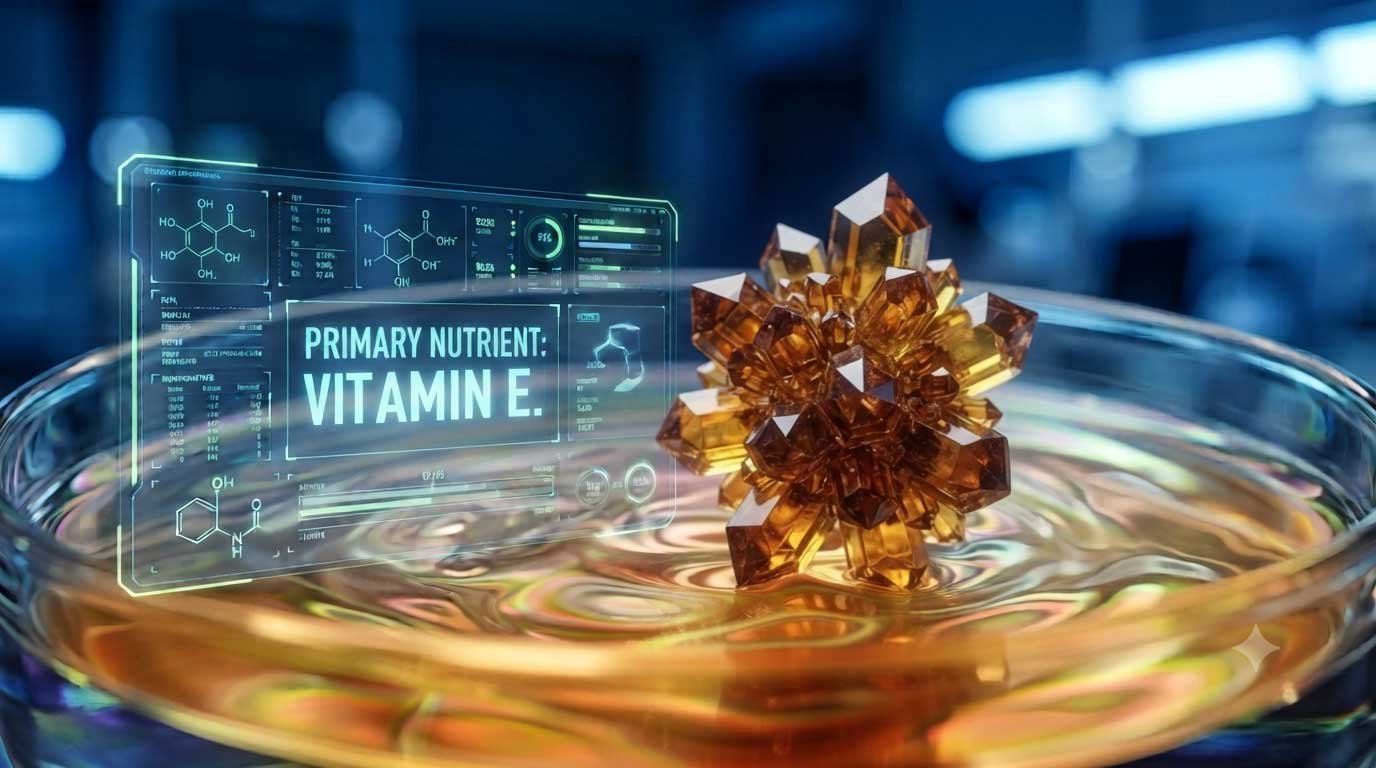
The Quiet Nutrient Working Behind the Scenes
I’ve spent more years than I care to admit reading nutrient labels, arguing with colleagues about supplement trends, and watching certain vitamins go in and out of fashion like hemlines. Vitamin E has never really been trendy. It doesn’t have the celebrity status of Vitamin C, the “sunshine vitamin” branding of Vitamin D, or the muscle-building reputation of protein. And yet, it’s one of the nutrients I find myself coming back to again and again, because it does something genuinely important that most people never think about: it protects the fat in your body from going rancid, essentially, before that damage can spiral into something bigger.
That might sound like an odd way to describe a vitamin, but stick with me. Every cell in your body is wrapped in a membrane made largely of fat. Those membranes are constantly bombarded by unstable molecules called free radicals, generated from ordinary metabolism, pollution, cigarette smoke, and ultraviolet light. Left unchecked, free radicals set off a chain reaction called lipid peroxidation, which is essentially fat going rancid inside your own cells. Vitamin E steps into that chain reaction and breaks it. It’s not flashy work. It’s maintenance work. But maintenance work is often the difference between a car that runs for twenty years and one that falls apart at year eight.
Table of Contents


Vitamin E isn’t actually one single compound. It’s a family of eight related compounds, four tocopherols and four tocotrienols, though when people talk about vitamin E in a dietary or supplement context, they’re almost always referring to alpha-tocopherol, since that’s the form your body preferentially retains and uses to help protect cells from the damage caused by free radicals. The rest get broken down and excreted fairly quickly. This matters because it explains why some vitamin E-rich foods “count” more than others in terms of what your body actually absorbs and holds onto.
I want to be upfront about something before we go further: this article isn’t going to tell you that vitamin E cures anything, prevents heart disease outright, or that you need to run to the pharmacy for a bottle of high-dose capsules. The research on vitamin E is more nuanced than the supplement aisle would have you believe, and some of the most interesting findings are actually cautionary. We’re going to walk through what vitamin E does for your cells and your skin, where you can reliably get it from food, how much you actually need, and where the risks of overdoing it come in. That last part is often the piece people skip past, and it’s arguably the most important.
What draws me to this topic, honestly, is how differently vitamin E behaves depending on context. As an antioxidant sitting quietly in a cell membrane, it’s protective and stabilizing. As a megadose supplement taken for years on end, the evidence gets murkier and, in some cases, concerning. That contrast is worth sitting with. Nutrition rarely gives us a nutrient that’s simply “good” in all doses and all forms, and vitamin E is a textbook example of why context and dose matter more than a single headline claim ever could.
There’s also a skin-deep angle here, literally. Vitamin E has been used in dermatology for decades, showing up in everything from scar creams to sunscreens to moisturizers marketed for “repair.” Some of that is backed by real research; some of it is marketing dressed up in lab-coat language. I’ve always found it useful to separate the two, because knowing which claims have legitimate science behind them changes how you shop, how much you spend, and what you actually expect from a product.
So let’s get into it. Not as a dry list of facts, but as a working understanding of why this nutrient earns its place in your diet, what it’s doing at the cellular level, where your skin fits into the picture, and how to think about intake without falling into the trap of “more is better.” Vitamin E rewards a measured approach, and by the end of this, I think you’ll see why moderation isn’t just a cautious suggestion here. It’s actually where the science points.
One more thing before we move on, because I think it frames everything that follows. A lot of nutrition writing treats vitamins as isolated superheroes, each one solving a discrete problem on its own. Vitamin E doesn’t really work that way. It’s part of a network, dependent on adequate dietary fat for absorption, working in tandem with other antioxidants like Vitamin C to stay active, and interacting with other nutrients like selenium in ways researchers are still mapping out. Thinking about vitamin E in isolation, the way a supplement bottle often encourages you to, misses most of the interesting biology. It’s a team player, and understanding it that way changes how you should actually approach getting enough of it, which, as you’ll see, usually means paying attention to your overall diet pattern rather than chasing one nutrient on its own.
I’d also add that the story of vitamin E is a good reminder of how nutrition science evolves over time. Early research in the mid-twentieth century linked vitamin E deficiency to reproductive problems in laboratory animals, which is actually where the name tocopherol comes from, borrowed from Greek words roughly meaning “to bring forth offspring.” That early framing shaped decades of public perception around vitamin E as a fertility-related nutrient, even though the modern understanding of its role centers far more on antioxidant defense and cellular protection. Nutrients often carry the baggage of how they were first discovered, and vitamin E is a good example of a reputation that’s had to catch up with better research over time.
Key Health Benefits of Vitamin E
Cellular Protection Through Free Radical Neutralization
The core job of vitamin E, the one everything else builds from, is antioxidant defense. In the body, it acts as an antioxidant, helping to protect cells from the damage caused by free radicals, compounds formed when our bodies convert the food we eat into energy. People are also exposed to free radicals in the environment from cigarette smoke, air pollution, and ultraviolet light from the sun.
Here’s the mechanism in plain terms. Cell membranes are built from polyunsaturated fatty acids, which are structurally vulnerable to oxidation because of their chemical bonds. When a free radical attacks one of these fatty acids, it can trigger a chain reaction, pulling apart neighboring fatty acids one after another. Vitamin E, because it’s fat-soluble, sits directly inside that membrane. When a free radical comes through, vitamin E donates an electron to it, essentially sacrificing itself to stop the chain reaction before it spreads. This is why vitamin E is often described as a “chain-breaking” antioxidant, as opposed to water-soluble antioxidants like Vitamin C, which work in the fluid outside and inside cells rather than in the fatty membrane itself.
I find this distinction genuinely useful when thinking about how antioxidants work as a team rather than solo agents. Vitamin C actually regenerates spent vitamin E, recycling it back into an active form after it’s neutralized a free radical. That’s part of why you’ll often see the two paired together in both food combinations and skincare formulations, and it’s not just clever marketing. There’s a real biochemical partnership there.
Immune Function and Vascular Support
Beyond its antioxidant role, the body also needs vitamin E to boost its immune system so that it can fight off invading bacteria and viruses. It helps to widen blood vessels and keep blood from clotting within them. This dual role, immune support paired with circulatory function, is part of why vitamin E deficiency, when it does occur, tends to show up with a mix of symptoms rather than one isolated problem.
I should note that outright vitamin E deficiency is uncommon in people eating a reasonably varied diet. Frank vitamin E deficiency is rare, and overt deficiency symptoms have not been found in healthy people who obtain little vitamin E from their diets. Where it does show up is in specific populations, and we’ll cover that more directly in the dosage section, but it’s worth flagging here that this isn’t a nutrient most people are walking around critically short on. The benefits show up more in the “optimizing what’s already adequate” range than in a rescue-from-deficiency narrative for the average adult.
Cell Signaling and Communication
In addition, cells use vitamin E to interact with each other and to carry out many important functions. This is a less-discussed role, but it’s an active area of research. Vitamin E isn’t just sitting passively as a shield; it participates in signaling pathways that influence how cells communicate, grow, and regulate inflammation. Some researchers have proposed that certain forms of vitamin E, particularly gamma-tocopherol, might have distinct anti-inflammatory properties separate from the antioxidant function of alpha-tocopherol, though this is still an evolving area and I wouldn’t overstate it.
Skin Health and Photoprotection
This is where vitamin E earns a lot of its consumer-facing reputation, and for good reason, though the details matter. Vitamin E is an important fat-soluble antioxidant and has been in use for more than 50 years in dermatology, protecting the skin from various deleterious effects due to solar radiation by acting as a free-radical scavenger. Skin is uniquely exposed to oxidative stress because it’s on the front line against UV radiation, and vitamin E naturally concentrates there, largely delivered through sebaceous gland secretions, giving it a front-row seat to that damage.
The photoprotective angle is genuinely well-studied. Topical application of vitamin E has been shown to decrease the incidence of UV-induced skin cancer in mice, providing protection against UV-induced skin photodamage through a combination of antioxidant and UV-absorptive properties. That’s animal research, worth noting, but the underlying mechanism, absorbing and neutralizing UV-generated free radicals before they damage DNA and collagen, is consistent with what’s observed in human skin tissue as well.
What’s particularly interesting is that vitamin E rarely works alone in this context. A stable topical formulation combining vitamin C, vitamin E, and ferulic acid provided significant and meaningful photoprotection for human skin against UV-induced erythema, sunburn cell formation, and DNA damage markers. The combination outperforms either antioxidant alone, which circles back to that recycling relationship I mentioned earlier. If you’ve ever wondered why a lot of well-formulated vitamin C serums also list vitamin E and ferulic acid on the ingredient panel, this is why. It’s not a coincidence; it’s chemistry.
I’ll be honest, though: vitamin E applied topically after sun exposure isn’t going to undo a sunburn, and taking an oral supplement isn’t a substitute for sunscreen. Where the evidence is strongest is in prevention, applied consistently, ideally alongside other antioxidants, and even then it’s a support player rather than a stand-in for actual sun protection. I’d also gently push back on any product claiming vitamin E alone will erase fine lines or reverse years of sun damage. The realistic picture is more modest: it helps preserve what you have and reduce the rate of ongoing oxidative damage, which, over years, does add up.
Supporting Long-Term Cellular Health
Zooming out, the cumulative effect of consistent antioxidant support, vitamin E included, is thought to relate to slower rates of oxidative damage accumulation over a lifetime. This connects to broader conversations about aging, chronic inflammation, and long-term wellness, though I want to be careful here not to overstate causality. Vitamin E supports a system; it doesn’t override genetics, lifestyle, or the dozens of other variables that determine how someone ages. Anyone telling you a single nutrient is the key to longevity is oversimplifying, and I’d be skeptical of that framing regardless of which nutrient it’s attached to.

Dietary Sources of Vitamin E
Why Food-Based Vitamin E Tends to Work Better
Before diving into specific foods, I want to address something I see misunderstood constantly: food sources of vitamin E generally outperform supplements in terms of how well your body actually uses them. Research comparing fortified foods to encapsulated supplements found that vitamin E from fortified breakfast cereal showed greater bioavailability than the same nutrient delivered in a supplement capsule. Whole foods also bring along a package of complementary nutrients and fats that support absorption, since vitamin E is fat-soluble and needs dietary fat present to be absorbed properly in the first place.
Nuts, Seeds, and Oils
Nuts, seeds, and vegetable oils are among the best sources of alpha-tocopherol. This is the category I’d point almost anyone toward first. A small handful of almonds or sunflower seeds, a drizzle of wheat germ oil over a salad, or a spoonful of hazelnut butter, these aren’t dramatic dietary overhauls, but they’re consistent, easy ways to build in meaningful vitamin E intake.
A few practical standouts worth keeping on your radar:
- Sunflower seeds, which are among the most concentrated everyday sources
- Almonds, easy to snack on and versatile in cooking
- Wheat germ oil, less common in the average kitchen but exceptionally rich
- Hazelnuts, both as a whole nut and as a butter or oil
- Sunflower oil and safflower oil, useful for cooking or dressings
Green Leafy Vegetables and Fortified Foods
Significant amounts are also available in green leafy vegetables and fortified cereals. Spinach and broccoli, cooked or raw, contribute a smaller but still meaningful amount, and they come with the added benefit of fiber, folate, and a range of other micronutrients that nuts and oils don’t offer in the same way. I like recommending leafy greens here specifically because they let people diversify their sources instead of relying purely on fats and oils, which can add up calorically if someone’s tracking intake closely.
Fortified foods deserve a mention too, since most vitamin E in American diets actually comes in the form of gamma-tocopherol from soybean, canola, corn, and other vegetable oils and food products used widely in processed foods. This is a bit of a double-edged sword. It means a lot of people are getting vitamin E somewhat passively through cooking oils used in restaurant food and packaged products, but it also means the quality and diversity of that intake can be inconsistent depending on someone’s overall diet pattern.
Reading a Label Without Getting Confused
The Daily Value for vitamin E is 15 mg for adults and children age 4 years and older, and foods providing 20 percent or more of the DV are considered high sources of the nutrient. If you’re the type who actually reads nutrition labels, and I’d encourage more people to be, that 20 percent threshold is a useful mental shortcut. Anything hitting that mark on a regular basis is meaningfully contributing to your intake, not just a token amount.
One quirk worth knowing: one milligram of vitamin E equals one milligram of RRR-alpha-tocopherol, or two milligrams of the synthetic all-rac-alpha-tocopherol form, which means natural and synthetic forms aren’t interchangeable milligram for milligram. This matters more for supplements than food, but if you ever compare labels between a “natural” vitamin E supplement and a synthetic one, this is why the numbers might look different for what’s supposedly the same dose.
Building a Realistic Weekly Pattern
I generally tell people not to overthink this one. Vitamin E isn’t a nutrient that requires meticulous daily tracking for most healthy adults. A realistic weekly pattern might include a serving of nuts or seeds most days, cooking with a vitamin E-rich oil like sunflower or safflower a few times a week, and regularly including leafy greens as a side. That’s genuinely enough for most people to land in a reasonable range without supplements, and it avoids the pitfalls we’re about to get into with high-dose supplementation.
A quick anecdote, because I think it illustrates the point better than another list would. A friend of mine went through a phase of buying every “superfood” oil she came across, argan, avocado, flaxseed, rotating them weekly, convinced she needed variety to cover every micronutrient base. When she actually sat down and mapped out what she was eating regularly, sunflower seeds sprinkled on her morning oatmeal and a basic bottle of sunflower oil in her pantry were doing more heavy lifting for her vitamin E intake than any of the specialty oils combined. The lesson there wasn’t that exotic oils are useless, some genuinely offer other benefits, but that the boring, consistent staples often outperform the trendy occasional purchase when it comes to actually hitting your numbers over time.
Cooking Considerations Worth Knowing
Heat and light both degrade vitamin E over time, which matters more than people realize when it comes to how oils are stored and used. An oil left in a clear bottle on a sunny countertop is slowly losing potency before it even reaches your pan. Storing vitamin E-rich oils in a cool, dark cupboard, and using them within a few months of opening, helps preserve more of the nutrient than most people bother to think about. High-heat frying also degrades vitamin E more than gentler cooking methods like sautéing or using the oil raw in a dressing, so if you’re specifically trying to maximize intake from a particular oil, a salad dressing application will generally retain more of the nutrient than deep frying with the same oil.
It’s also worth knowing that vitamin E content varies noticeably depending on how a food is grown and processed. Cold-pressed oils tend to retain more vitamin E than heavily refined versions, since refining processes can strip out some of the naturally occurring tocopherols along with other compounds. This isn’t a reason to panic over pantry staples, but if you’re choosing between two similar oils on a grocery shelf and cost isn’t a major barrier, the less processed option is often the better bet nutritionally.
Dosage and Deficiency
Recommended Daily Amounts
Vitamin E needs shift with age and life stage. The Daily Value for vitamin E is 15 mg for adults and children age 4 years and older, which lines up closely with the Recommended Dietary Allowance for most adult men and women. Pregnant individuals typically need slightly more, and lactating individuals need more still, given the nutrient’s role in supporting infant development through breast milk.
Children need considerably less as they age up from infancy, which is intuitive but worth stating, since supplement dosing errors in households with kids often come from parents assuming “a little extra can’t hurt.” With a fat-soluble vitamin like this one, that assumption doesn’t hold up the way it might with a water-soluble vitamin your body simply flushes out in excess.
Who’s Actually at Risk of Deficiency
As mentioned earlier, deficiency is rare in the general population. Where it becomes a genuine clinical concern is fairly specific:
- Premature infants with very low birth weight, where supplementation might reduce the risk of certain complications, such as those affecting the retina, though it can also increase infection risk, requiring careful medical management
- People with fat-malabsorption disorders, since the digestive tract requires fat to absorb vitamin E, making these individuals more likely to become deficient than the general population
- Certain rare genetic conditions affecting alpha-tocopherol transport in the body
For the vast majority of people reading this, deficiency simply isn’t the relevant concern. If you have a diagnosed digestive condition affecting fat absorption, like cystic fibrosis, Crohn’s disease, or certain liver conditions, that’s a conversation to have directly with a healthcare provider rather than something to self-manage with over-the-counter supplements.
Recognizing Deficiency Symptoms
When deficiency does occur, it tends to show up neurologically before anything else, since nerve tissue is particularly sensitive to prolonged oxidative stress without adequate antioxidant protection. Symptoms can include muscle weakness, coordination and balance difficulties, and in some cases, vision changes related to retinal health. These aren’t symptoms someone should try to self-diagnose against, though, since they overlap with numerous other conditions. If anything here sounds familiar, that’s a reason to see a doctor, not a reason to start megadosing a supplement on your own.
Supplement Dosing Realities
Most vitamin-E-only supplements provide 67 mg or more, roughly 100 IU of natural vitamin E, substantially higher than the RDA. This gap between what supplements actually contain and what the body needs is worth sitting with. It’s not necessarily dangerous at that level for most healthy adults, but it does raise the question of why the supplement industry defaults to doses several times higher than the recommended intake. Part of the answer is simply that this is how supplement manufacturing and dosing conventions evolved decades ago, not necessarily because higher doses were proven more beneficial.
My general take, after years of looking at this research, is that food-first is the right default for vitamin E specifically. Supplementation has a role for people with diagnosed deficiencies or absorption issues, but for a healthy adult eating a reasonably varied diet, a standalone vitamin E supplement is often solving a problem that doesn’t exist, while introducing a dosing question that does.
How Age and Life Stage Shift the Picture
It’s worth spending a moment on how needs shift across a lifetime, because the “one number fits all adults” framing can be misleading. Infants have relatively low absolute requirements, but because they’re small, adequate intake still matters enormously, particularly for those born prematurely, where fat absorption and storage capacity are still developing. As children grow, requirements increase gradually, and by adolescence, needs approach the adult range.
Pregnancy is a period worth flagging specifically. Vitamin E requirements increase modestly during pregnancy to support fetal development, and lactating individuals need more still, since vitamin E is transferred through breast milk to support the infant’s own developing antioxidant defenses. This is generally achievable through diet for most people, but it’s a conversation worth having with an obstetrician or midwife rather than assuming a standard prenatal vitamin automatically covers it at an ideal level.
Older adults are a somewhat under-discussed group here too. Absorption efficiency for fat-soluble vitamins can decline gradually with age, and dietary intake patterns sometimes narrow as people eat smaller, less varied meals. This doesn’t necessarily mean older adults need supplementation by default, but it does mean it’s worth paying a little closer attention to whether nuts, seeds, and oils remain part of a regular diet as eating habits evolve later in life.
When Testing Might Actually Make Sense
For most healthy people, there’s no real reason to test vitamin E blood levels. It’s not a routine part of standard bloodwork, and unless there’s a specific clinical reason, a diagnosed malabsorption condition, unexplained neurological symptoms, or a known genetic transport issue, testing typically isn’t warranted. If a healthcare provider does order it, results are usually interpreted alongside cholesterol and other lipid markers, since vitamin E travels through the bloodstream attached to lipoproteins, and total lipid levels can affect how the results are read. This is a detail worth knowing simply so you’re not caught off guard if a doctor explains your vitamin E result in the context of your broader lipid panel rather than as a standalone number.
Toxicity and Risks
Why More Isn’t Automatically Better Here
This is the section I think gets skipped over far too often in casual nutrition writing, and it’s arguably the most important part of understanding vitamin E responsibly. Because vitamin E is fat-soluble, your body doesn’t excrete excess amounts the way it does with water-soluble vitamins like C or the B-complex group. That excess gets stored, primarily in fatty tissue and the liver, which means chronic overconsumption, particularly through high-dose supplements, can accumulate over time.
What the Research Actually Shows
Research suggests that taking vitamin E supplements even below the upper intake limits might cause harm, with one study finding that men who took 400 IU, roughly 180 mg, of synthetic vitamin E daily for several years had an increased risk of prostate cancer. That’s a striking finding, and it’s part of why the blanket “antioxidants are always protective” narrative doesn’t hold up under scrutiny. Context, dose, and the specific population studied all matter enormously.
There’s also a bleeding risk to be aware of. High doses of vitamin E supplements might increase the risk of bleeding in the brain, known as hemorrhagic stroke, and high levels may also increase the risk for birth defects, though this particular link needs more research. This is relevant specifically for people already on blood-thinning medications, where vitamin E’s mild anticoagulant properties can compound the effect of those medications in ways that matter clinically.
Upper Intake Limits
The highest safe level of vitamin E supplements for adults is 1,000 mg per day, equal to 1,500 IU per day for natural forms of vitamin E, and 1,100 IU per day for the synthetic form. I want to be clear that this upper limit exists specifically because of research showing increased risk beyond it, not as an arbitrary conservative buffer. It’s also worth repeating that even doses well below this upper limit have shown associations with health risks in certain studies, which is a good reminder that “under the upper limit” doesn’t automatically mean “risk-free.”
Reassuringly, eating vitamin E through food is not considered risky or harmful, which reinforces the food-first approach I mentioned earlier. It’s genuinely difficult to overconsume vitamin E through diet alone; the concerning research almost universally centers on concentrated supplement doses taken consistently over extended periods.
Cancer Treatment Interactions
One interaction that doesn’t get enough attention: vitamin E supplementation may interfere with certain cancer treatments. High-dose antioxidant supplementation during chemotherapy or radiation therapy has raised concern among oncologists, since some cancer treatments work partly by generating oxidative stress specifically targeted at cancer cells, and flooding the body with antioxidants could theoretically blunt that mechanism. Anyone undergoing cancer treatment should discuss any supplement use, vitamin E included, directly with their oncology team before continuing or starting it.
A Grounded Take on Risk
None of this means vitamin E is dangerous in any meaningful sense for the average person eating almonds and spinach. The risk profile here is really about concentrated, prolonged supplementation, not about the nutrient itself as it exists in food. I’d encourage anyone considering a vitamin E supplement, for skin, for general health, for whatever reason, to ask what specific problem they’re trying to solve, and whether food sources could reasonably address it first. If there’s a diagnosed reason for supplementation, that’s a different conversation, ideally had with a healthcare provider who can factor in your specific health history, medications, and lab work.
Medication Interactions Worth Flagging
Beyond blood thinners, vitamin E supplements can interact with a handful of other medications in ways that aren’t always disclosed clearly on a supplement label. Chemotherapy and radiation therapy, as mentioned, are one category. Statins and niacin, sometimes prescribed together for cholesterol management, are another area where high-dose antioxidant supplementation, including vitamin E, has been studied for potentially blunting the beneficial effects of niacin on HDL cholesterol. This is a fairly specific interaction, but it’s a good example of why “it’s just a vitamin” isn’t always a safe assumption once you’re taking concentrated doses alongside prescription medications. Anyone on regular medication who’s considering adding a vitamin E supplement should run it by a pharmacist or prescribing physician, since interaction checelists on supplement bottles are rarely comprehensive.
Surgical Considerations
One practical detail that surprises people: because of vitamin E’s mild effect on blood clotting, many surgeons recommend discontinuing high-dose vitamin E supplements in the weeks leading up to a scheduled surgery, similar to guidance often given for fish oil and certain other supplements. This is a precaution to reduce bleeding risk during and after a procedure. If you’re supplementing at doses above what a typical multivitamin provides and have surgery scheduled, it’s worth mentioning to your surgical team well in advance rather than assuming it’s irrelevant simply because it’s not a prescription medication.
The Bigger Picture on Antioxidant Supplementation
Vitamin E’s more complicated safety profile at high doses also fits into a broader pattern researchers have observed with isolated antioxidant supplementation generally. Several large trials looking at beta-carotene, Vitamin E, and other antioxidants in isolated, concentrated supplement form have failed to show the protective benefits that were expected based on observational studies of food intake, and in some cases showed increased risk instead. The leading explanation isn’t that antioxidants are bad, it’s that whole foods deliver antioxidants in combinations, ratios, and contexts that isolated supplements simply don’t replicate. That pattern shows up again and again across nutrition research, and vitamin E is one of the clearer examples of it.
Getting the Balance Right
If there’s one thing I hope sticks after all this, it’s that vitamin E rewards a fairly unglamorous approach: eat a varied diet with regular nuts, seeds, oils, and greens, and skip the impulse to supplement your way to “more antioxidants” without a clear reason. This isn’t a nutrient that benefits from a maximalist mindset. The research is fairly consistent on that point, even if it runs counter to how supplements are marketed.
What I find genuinely compelling about vitamin E is how it operates at two very different scales simultaneously. At the cellular level, it’s doing quiet, continuous maintenance work, stabilizing membranes and interrupting oxidative chain reactions before they cascade into something worse. At the skin level, that same mechanism shows up in a way you can almost tangibly connect to sun exposure, aging, and the products people put on their faces every morning. It’s one of the few nutrients where the microscopic and the visible line up so clearly, and I think that’s part of why it’s stayed relevant in dermatology circles for over half a century, even as flashier ingredients have come and gone around it.
I also think vitamin E is a genuinely good case study for how to think about nutrition claims in general. When you see a supplement bottle promising dramatic skin transformation or sweeping protection against disease, it’s worth asking what dose the underlying research actually used, whether that research was done on food intake or isolated supplementation, and whether the outcome measured was something that actually matters to your daily life or just a marker on a lab report. Vitamin E has a genuinely strong evidence base for specific things, membrane stability, photoprotection support, general antioxidant defense, but it doesn’t have strong evidence for reversing aging, curing chronic disease, or acting as a stand-alone solution to anything. Holding both of those truths at once, real benefit and real limits, is a more useful way to relate to any nutrient than treating it as either miraculous or useless.
There’s a practical takeaway here for how you actually shop and eat, too. Next time you’re at the grocery store, you don’t need a supplement aisle detour to improve your vitamin E intake. A bag of sunflower seeds, a bottle of decent sunflower or safflower oil, a handful of almonds tossed into your regular rotation, and consistent servings of leafy greens will get most healthy adults into a solid range without a second thought. If you’re someone who enjoys cooking, treating a good cold-pressed oil as a finishing ingredient rather than just a frying medium is a simple way to preserve more of its nutrient content while also, frankly, making your food taste better.
For skin specifically, if you’re drawn to vitamin E through a skincare lens rather than a dietary one, look for it paired with vitamin C and ideally ferulic acid in a well-formulated, stable product, and treat it as a preventive layer alongside sunscreen rather than a replacement for one. That combination has the strongest research behind it, and it’s a more evidence-based place to spend your money than a product built around vitamin E as its sole active ingredient.
And if you’re someone considering a standalone vitamin E supplement, whether for skin, heart health, or general wellness, I’d encourage a moment of honest reflection before you do. What specific outcome are you hoping for, and is there research showing that isolated supplementation, at the dose you’re considering, actually achieves it? If the answer is unclear, that’s usually a sign to lean back on food sources and revisit the question with a healthcare provider who knows your full health picture, rather than making the decision based on a product description alone.
Vitamin E isn’t going to be the nutrient anyone builds a dramatic before-and-after story around. It works too quietly for that. But quiet, consistent, cellular-level maintenance is exactly the kind of thing that tends to matter most over the long run, even when it doesn’t make for an exciting headline. That’s reason enough, in my view, to make sure it has a steady place in how you eat.
Looking back over everything we’ve covered, from the biochemistry of how it interrupts oxidative chain reactions inside cell membranes, to its role in skin defense, to the very real caution flags around high-dose supplementation, the throughline is consistency over intensity. Nutrients that work this way rarely get the recognition they deserve, precisely because their value shows up as an absence of problems rather than a dramatic improvement you can point to. You won’t wake up one morning and feel your vitamin E status. What you’re more likely to notice, if anything, is the gradual accumulation of a diet that supports your body’s own defense systems doing their job efficiently, year after year, without needing an intervention to compensate for what a decent plate of food could have handled in the first place. That’s not the most exciting conclusion to land on, but it’s the honest one, and honestly, I’ve come to trust the unglamorous nutrients more than the ones chasing a headline.
Article Sources
At AncientHerbsWisdom, our content relies on reputable sources, including peer-reviewed studies, to substantiate the information presented in our articles. Our primary objective is to ensure our content is thoroughly fact-checked, maintaining a commitment to accuracy, reliability, and trustworthiness.
- National Institutes of Health, Office of Dietary Supplements. (2021). Vitamin E: Fact sheet for health professionals. https://ods.od.nih.gov/factsheets/VitaminE-HealthProfessional/
- National Institutes of Health, Office of Dietary Supplements. (2021). Vitamin E: Fact sheet for consumers. https://ods.od.nih.gov/factsheets/VitaminE-Consumer/
- MedlinePlus, National Library of Medicine. (2025). Vitamin E. https://medlineplus.gov/ency/article/002406.htm
- Keen, M. A., & Hassan, I. (2016). Vitamin E in dermatology. Indian Dermatology Online Journal, 7(4), 311-315. https://pmc.ncbi.nlm.nih.gov/articles/PMC4976416/
- Lin, J. Y., Selim, M. A., Shea, C. R., Grichnik, J. M., Omar, M. M., Monteiro-Riviere, N. A., & Pinnell, S. R. (2003). UV photoprotection by combination topical antioxidants vitamin C and vitamin E. Journal of the American Academy of Dermatology, 48(6), 866-874. https://pubmed.ncbi.nlm.nih.gov/18603326/
- Thiele, J. J., Hsieh, S. N., & Ekanayake-Mudiyanselage, S. (2005). Vitamin E: Critical review of its current use in cosmetic and clinical dermatology. Dermatologic Surgery, 31(7), 805-813. https://pubmed.ncbi.nlm.nih.gov/11139138/
- Miller, E. R., Pastor-Barriuso, R., Dalal, D., Riemersma, R. A., Appel, L. J., & Guallar, E. (2005). Meta-analysis: High-dosage vitamin E supplementation may increase all-cause mortality. Annals of Internal Medicine, 142(1), 37-46. https://ods.od.nih.gov/factsheets/VitaminE-HealthProfessional/

- Phosphatidic Acid: Supporting Muscle Growth and Strength - July 31, 2026
- Ceramides: Supporting Healthy Skin From Within - July 31, 2026
- Synbiotics: Combining Prebiotics and Probiotics Together - July 31, 2026