
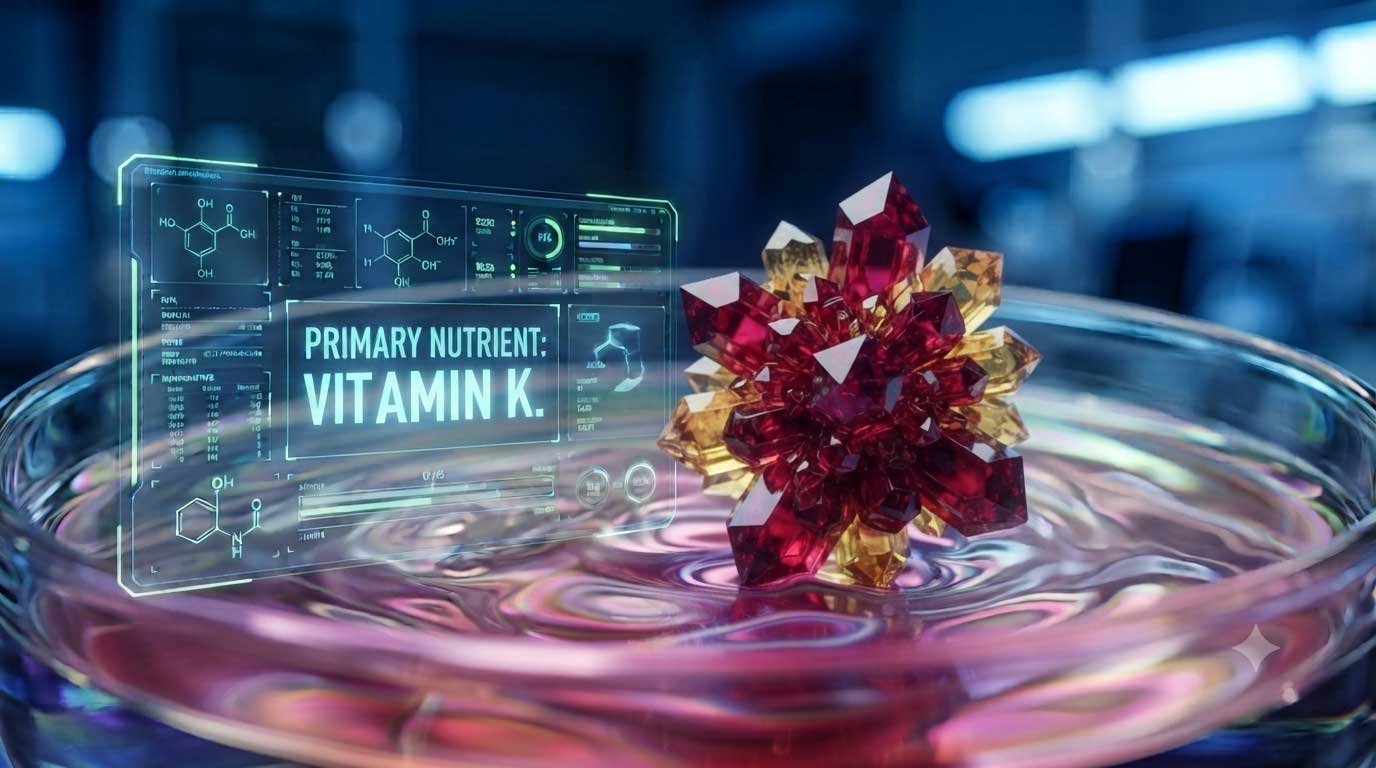
The Vitamin That Quietly Runs the Show
Ask most people to name a vitamin and you’ll hear Vitamin C, maybe Vitamin D if they’ve been paying attention to wellness trends. Vitamin K rarely makes the list, and that’s a shame, because it’s been working behind the scenes in your body since before you took your first breath. Literally — one of the first things that happens to a newborn in most hospitals is a Vitamin K shot, because without it, a baby’s blood can’t clot properly.
I’ve spent more time than I’d like to admit reading through clinical nutrition literature, and Vitamin K keeps showing up in places you wouldn’t expect. Vitamin K is not just about blood. It’s tangled up in bone metabolism, cardiovascular function, and a handful of processes researchers are still mapping out. And yet it gets a fraction of the attention that flashier vitamins receive. Part of the reason, I think, is that Vitamin K deficiency is genuinely rare in healthy adults, so it doesn’t generate headlines the way, say, Vitamin D deficiency does. But rare doesn’t mean unimportant.
Table of Contents


Here’s the basic picture. Vitamin K isn’t a single compound — it’s a family of fat-soluble compounds that share a common chemical backbone. The two main branches of that family are phylloquinone, known as Vitamin K1, and a group of compounds called menaquinones, or Vitamin K2. Phylloquinone comes mostly from plants, especially the leafy green kind. Menaquinones show up in fermented foods and some animal products, and your own gut bacteria produce a portion of them too. There’s also a synthetic form called menadione, or Vitamin K3, but that one has fallen out of favor in supplements after research linked it to liver damage in laboratory studies decades ago.
What makes Vitamin K unusual among vitamins is how it works. It doesn’t act as a raw material the way, say, calcium does for bone structure. Instead, it functions as a coenzyme — a helper molecule — for an enzyme with the tongue-twisting name of gamma-glutamyl carboxylase. This enzyme performs a chemical modification on certain proteins, adding a carboxyl group that essentially switches those proteins on. Without Vitamin K, this activation step doesn’t happen, and the proteins stay dormant, unable to do their jobs.
Two of those proteins matter most for what most people care about. Prothrombin, a clotting factor, needs Vitamin K to function, which is why blood clotting is the vitamin’s most famous role. Osteocalcin, a protein embedded in bone tissue, also depends on Vitamin K activation, which is why bone health keeps coming up in the same conversation. There’s a third player worth mentioning too — matrix Gla-protein, found in blood vessels and cartilage, which researchers believe helps prevent unwanted calcium deposits from building up where they shouldn’t.
I want to be upfront about something before we go further: the research on Vitamin K is a mixed bag in places. Some outcomes, like its role in clotting, are settled science with decades of consensus behind them. Others, like its exact contribution to cardiovascular health, are still being worked out through ongoing trials. I’ll try to be clear about which is which as we go, because I think readers deserve that kind of honesty rather than a tidy narrative that overstates what we actually know.
One thing that surprised me when I first dug into the food composition data was how differently absorbable Vitamin K is depending on its source. The Vitamin K1 packed into a leaf of spinach is bound up tightly with the plant’s chloroplasts, so your body only pulls out a fraction of what’s technically present — somewhere in the range of 4% to 17%, compared to nearly 80% absorption from a supplement or from oils. That doesn’t mean leafy greens aren’t worth eating; it just means the numbers on a nutrition label don’t always translate directly into what ends up doing work in your bloodstream. Pairing those greens with a bit of fat, like olive oil in a salad dressing, measurably improves how much your body actually absorbs.
There’s also a quieter story here about gut health and Vitamin K. A meaningful portion of your Vitamin K2 supply doesn’t come from food at all — it’s synthesized by bacteria living in your large intestine. This is one of the more fascinating threads in vitamin biology generally: your microbiome isn’t just digesting what you eat, it’s manufacturing nutrients your body needs. This is part of why long courses of antibiotics can occasionally nudge Vitamin K status downward, since they can wipe out some of the bacterial populations responsible for this production.
Over the next several sections, I want to walk through what the science actually says about Vitamin K’s benefits, where you can reliably find it in your diet, how much you actually need, and what happens at both ends of the spectrum — too little and, though it’s uncommon, too much. My goal isn’t to sell you on a supplement or scare you into eating six cups of kale a day. It’s to give you a grounded, accurate picture of a nutrient that deserves more attention than it usually gets.
Key Health Benefits
Blood Clotting: The Original Discovery
Vitamin K owes its name and its discovery to blood clotting research from the 1920s and 1930s, when Danish scientist Henrik Dam noticed that chickens fed a fat-free diet developed bleeding problems. He named the fat-soluble substance that fixed the issue “Koagulationsvitamin” — the German word for coagulation — and the K stuck. It’s one of those rare cases where a vitamin’s name literally tells you its founding function.
The mechanism is elegant once you see it laid out. Your liver produces several clotting factors, including prothrombin, but these proteins are useless in their initial form. They need a chemical tag — a carboxyl group — attached at specific points before they can bind calcium and participate in the clotting cascade. Vitamin K is the essential cofactor for the enzyme that adds this tag. No Vitamin K, no activation, no functional clotting factors. This is precisely why warfarin, a widely prescribed blood thinner, works by interfering with Vitamin K’s activity — it deliberately blunts this pathway to prevent dangerous clots in people at risk for stroke or other clotting-related events.
This is also why people on blood thinners are told to keep their Vitamin K intake consistent rather than avoiding it altogether, which is a common misconception. Wild swings in Vitamin K consumption — going from almost none to a big spinach salad, for example — can throw off how the medication behaves. Consistency matters more than restriction.
For everyone else, adequate Vitamin K keeps this system quietly functioning in the background. You don’t notice it working until something goes wrong, which is part of why deficiency, when it does occur, can show up as unexpected bruising, nosebleeds, or bleeding gums. In newborns, whose Vitamin K stores are naturally low at birth, the stakes are considerably higher, which is why that injection at birth has become standard practice across most developed healthcare systems.
Bone Health: A Newer Chapter
The blood-clotting story was settled science by the mid-twentieth century, but researchers kept noticing Vitamin K showing up in bone tissue, which raised an obvious question — what is Vitamin K doing there? The answer centers on osteocalcin, a protein produced by bone-building cells called osteoblasts. Osteocalcin needs Vitamin K-dependent carboxylation to bind calcium properly and contribute to bone mineralization.
The observational data here is genuinely interesting. Multiple population studies have found associations between higher Vitamin K intake and better bone mineral density, along with lower rates of hip fracture in some cohorts. A systematic review and meta-analysis published in the Archives of Internal Medicine pooled data from randomized controlled trials and found that Vitamin K supplementation, particularly with high-dose menaquinone-4, was associated with meaningfully reduced rates of hip, vertebral, and other fractures in the trials examined, most of which were conducted in postmenopausal Japanese women.
That said, I don’t want to oversell this. Not every trial has replicated these findings, and some well-designed studies in Western populations found no significant effect of Vitamin K supplementation on bone mineral density, even though it did lower levels of undercarboxylated osteocalcin — meaning it did what it was supposed to do biochemically, without necessarily translating into a measurable bone density improvement. Researchers have pointed out that co-administration of calcium and Vitamin D alongside Vitamin K may be part of what explains the discrepancy between studies. Bone health is a team sport nutritionally, and isolating one player’s contribution is trickier than it sounds.
In Japan, a pharmacological dose of menaquinone-4 is actually used as a treatment for osteoporosis, a practice that hasn’t caught on in the same way in the United States. The European Food Safety Authority has gone as far as approving a health claim linking Vitamin K intake to normal bone maintenance, while regulatory bodies in the U.S. have not authorized an equivalent claim, largely reflecting differences in how much weight regulators give to the mixed trial results.
Cardiovascular Function: The Emerging Frontier
This is where things get genuinely exciting from a Vitamin K research standpoint, though I’d stop short of calling it settled. Matrix Gla-protein, one of the Vitamin K-dependent proteins mentioned earlier, is found in the walls of blood vessels, and in its active form, it appears to help inhibit abnormal calcium deposits from accumulating in arterial tissue. When Vitamin K status is inadequate, matrix Gla-protein stays in its inactive form, and some researchers believe this may allow vascular calcification to progress more readily.
A 2021 narrative review published in the journal Open Heart summarized a growing body of evidence suggesting Vitamin K2 plays a role in cardiovascular health through its regulation of calcium homeostasis, largely mediated through activation of matrix Gla-protein. Observational research backs this up to a degree — a large Dutch cohort study, the Rotterdam Study, found that people with the highest dietary menaquinone intake had a meaningfully lower risk of coronary heart disease mortality compared to those with the lowest intake, while phylloquinone intake showed no such association. That’s a notable distinction — it suggests K2 specifically, not K1, may be doing the cardiovascular heavy lifting, possibly because menaquinones circulate longer in the bloodstream and reach peripheral tissues like arterial walls more effectively.
Interventional trial data, though, is thinner on the ground. A three-year randomized trial testing phylloquinone supplementation in older adults found no overall difference in coronary artery calcification between treatment and control groups, though a secondary analysis of participants who stuck closely to the protocol did show a modest reduction in calcification progression. That’s the kind of result that generates more questions than answers — promising, but not the kind of slam-dunk finding that changes clinical guidelines overnight.
I bring this up because I think it’s a good example of how nutrition science actually progresses. It’s rarely a straight line from correlation to certainty. Right now, the honest summary is that Vitamin K, and Vitamin K2 specifically, has a plausible and biologically coherent mechanism for supporting vascular health, decent observational support, and inconclusive but not discouraging trial data. Researchers in the field, particularly those studying chronic kidney disease patients who experience accelerated vascular calcification, continue to investigate this actively.
Beyond the Big Three
A few other areas show up in the research, though with less depth of evidence. Some studies have explored Vitamin K’s relationship to insulin sensitivity and glucose metabolism, with mixed and largely inconclusive results so far. There’s also preliminary interest in Vitamin K2’s role in supporting healthy inflammatory responses, given its connections to vascular and connective tissue. None of these areas have matured into anything resembling a firm recommendation, but they’re worth watching as the research continues to develop over the coming years.
Dietary Sources
Where Vitamin K1 Comes From
If you’re trying to get enough Vitamin K through food, green leafy vegetables are your best bet for Vitamin K, and it’s not particularly close. Collard greens and turnip greens sit at the very top of the list, with a half-cup serving providing well over 400% of the daily value. Spinach and kale aren’t far behind, and even a modest serving delivers more than you’d need for the day. Broccoli offers a respectable amount too, along with iceberg lettuce, though at a lower concentration per serving.
Vegetable oils are another significant contributor, particularly soybean and canola oil, which is part of why salad dressings and cooked vegetables tend to deliver more usable Vitamin K than raw greens alone — the fat helps liberate the vitamin from the plant’s chloroplasts and improves absorption. Some fruits carry smaller but still meaningful amounts, including blueberries, grapes, and figs, along with juices like pomegranate and carrot juice.
Here’s a practical list of standout sources, based on values from food composition databases:
- Natto (fermented soybeans), 3 ounces — extremely high, over 700% of the daily value
- Collard greens, frozen and boiled, ½ cup — over 400% of the daily value
- Turnip greens, frozen and boiled, ½ cup — over 350% of the daily value
- Spinach, raw, 1 cup — over 100% of the daily value
- Kale, raw, 1 cup — close to the full daily value
- Broccoli, chopped and boiled, ½ cup — close to the full daily value
- Soybean oil, 1 tablespoon — around 20% of the daily value
- Edamame, frozen and prepared, ½ cup — around 18% of the daily value
One quirk worth mentioning: because phylloquinone is bound up in plant chloroplasts, its bioavailability from raw vegetables is genuinely lower than what’s listed on a nutrient chart. Cooking and pairing greens with a bit of fat noticeably improves how much your body can actually extract and use.

Where Vitamin K2 Comes From
Menaquinones follow a different distribution pattern entirely, and this is where things get culturally interesting. Natto, a fermented soybean dish popular in parts of Japan, is by far the richest known source of Vitamin K2, specifically the long-chain menaquinone-7 form, and its concentration dwarfs nearly everything else on a standard food list. It’s an acquired taste for a lot of people outside of Japan — sticky, pungent, and fermented in a way that either clicks with you or doesn’t — but nutritionally, it’s in a category of its own.
Beyond natto, menaquinones show up in modest amounts in animal products and other fermented foods. Aged cheeses, particularly harder varieties, contain some menaquinone content, as does egg yolk. Meat contains a form called menaquinone-4, which the body can also synthesize on its own by converting phylloquinone, making it somewhat unique among the menaquinone family. Chicken, especially dark meat, and to a lesser extent beef and pork, contribute modest amounts. It’s worth noting that the specific menaquinone content of fermented foods can vary substantially depending on the bacterial strains and fermentation conditions used, so two brands of cheese might differ meaningfully in their K2 content even if they look nutritionally similar on paper.
Supplement Forms
Vitamin K shows up in most standard multivitamin and mineral supplements, though typically at less than the full daily value. Standalone Vitamin K supplements exist too, sometimes combined with calcium, magnesium, or Vitamin D given how these nutrients interact in bone metabolism. You’ll generally see two forms on supplement labels — phylloquinone or phytonadione (a synthetic version of K1), and menaquinone-4 or menaquinone-7 for the K2 side.
Research comparing these forms found that menaquinone-7 has a notably longer half-life in the bloodstream compared to phylloquinone, meaning it stays active in circulation longer, which some researchers believe could make it more effective at reaching peripheral tissues like bone and blood vessels. That said, both forms were shown to be well absorbed in the studies that compared them directly. Doses on the label can vary wildly, too — some Vitamin K supplements sold specifically for bone support come in at several thousand micrograms of Vitamin K per serving, which is a completely different order of magnitude than what you’d get from food. That’s not automatically dangerous given how forgiving Vitamin K tends to be, but it’s still worth knowing what you’re taking and why.
If you’re considering a supplement, it’s worth talking to a healthcare provider first, particularly if you take any medications that interact with Vitamin K — a topic we’ll get into shortly. It’s also worth checking the label for menadione, the synthetic K3 form. You’re unlikely to encounter it in reputable modern supplements since it fell out of favor decades ago, but it’s a detail worth double-checking rather than assuming.
A Quick Word on Meal Planning
If you’re trying to build Vitamin K into your regular eating pattern rather than treating it as an afterthought, the easiest approach is to anchor one meal a day around a leafy green — a spinach omelet, a kale salad, sautéed collards alongside dinner. Because the daily requirement is so low relative to what these foods provide, you genuinely don’t need to overthink it. A rotating handful of greens, a drizzle of olive or canola oil, and maybe the occasional curious detour into fermented foods like aged cheese or natto if that appeals to you, covers the bases without turning grocery shopping into a spreadsheet exercise.
Dosage & Deficiency
How Much You Actually Need
Vitamin K doesn’t have a Recommended Dietary Allowance in the way that, say, Vitamin C does. Instead, nutrition authorities set what’s called an Adequate Intake for Vitamin K, a slightly less rigorous benchmark used when there isn’t quite enough data to pin down a precise requirement. These figures come from observing what healthy populations typically consume rather than from calculating a minimum threshold needed to prevent deficiency symptoms.
For adult men, the Adequate Intake sits at 120 micrograms per day. For adult women, it’s 90 micrograms per day. Pregnant and breastfeeding women are also recommended to aim for 90 micrograms daily, with teens in that category at a slightly lower 75 micrograms. Children’s needs scale down with age — 30 micrograms for toddlers between one and three years old, climbing to 55 micrograms for ages four through eight, 60 micrograms for nine through thirteen, and 75 micrograms for teenagers fourteen through eighteen. Infants have their own tiny benchmarks, starting at 2.0 micrograms for the first six months of life.
To put those numbers in context, a single cup of raw spinach or a half-cup of broccoli comfortably covers a full day’s requirement for most adults. This is one of the more forgiving vitamins in that sense — you don’t need to engineer your diet around it the way you might for something like Vitamin D, where food sources are genuinely scarce.
National survey data suggests most American adults get enough Vitamin K from food alone, with average intakes hovering around 122 micrograms daily for women and 138 micrograms for men, rising further when supplement use is factored in. That said, some analyses have flagged that only about a third of the population clears the Adequate Intake threshold, though the practical significance of this finding is debated, partly because these figures only account for phylloquinone and don’t capture the meaningful contribution from gut bacteria or dietary menaquinones.
What Deficiency Actually Looks Like
Clinically significant Vitamin K deficiency is genuinely uncommon in healthy adults eating a reasonably varied diet. Achieving an intake low enough to meaningfully impair blood clotting through diet alone is, for most people, nearly impossible. When deficiency does occur, the telltale sign is an increase in prothrombin time — meaning blood takes longer than it should to clot — which can manifest as easy bruising, bleeding gums, nosebleeds, or in more severe cases, internal bleeding.
Newborns are a notable exception to the “deficiency is rare” rule. Vitamin K doesn’t cross the placenta particularly well, and breast milk is naturally low in it, which leaves infants vulnerable during the first weeks of life to a condition called vitamin K deficiency bleeding, previously known by the more dramatic name of hemorrhagic disease of the newborn. This can show up as bleeding from the umbilical stump, gastrointestinal tract, or in rare and serious cases, as bleeding inside the skull. Because of this risk, the American Academy of Pediatrics recommends a single intramuscular dose of Vitamin K given at birth to prevent this condition, a practice now standard in most hospitals.
Beyond infancy, a handful of groups face elevated risk. People with malabsorption disorders — celiac disease, cystic fibrosis, ulcerative colitis, and short bowel syndrome among them — may struggle to absorb enough Vitamin K through the digestive tract, since it requires bile and pancreatic function to be properly absorbed alongside dietary fat. Patients who’ve undergone bariatric surgery sometimes show reduced Vitamin K status too, even without obvious clinical symptoms, which is why monitoring is often recommended in these cases. People on long-term antibiotic therapy, particularly certain classes that interfere with gut bacteria or directly inhibit Vitamin K activity, may also see their status drift downward if antibiotic use extends beyond several weeks combined with inadequate dietary intake.
If any of this sounds like it applies to you or someone you’re caring for, it’s worth bringing up with a doctor rather than trying to self-diagnose based on symptoms alone, since bruising and bleeding tendencies can stem from plenty of causes unrelated to Vitamin K.
How Vitamin K Status Gets Measured
Here’s a detail that doesn’t come up often: there’s no simple, universally agreed-upon blood test for Vitamin K status the way there is for something like Vitamin D. In most clinical settings, Vitamin K status isn’t routinely checked at all unless someone is on anticoagulant therapy or shows signs of a bleeding disorder. The main measure doctors rely on is prothrombin time — essentially, how long it takes a blood sample to clot — because that’s the clinically meaningful endpoint that actually matters for patient safety. Researchers studying Vitamin K in more depth sometimes measure plasma phylloquinone directly, or look at levels of undercarboxylated osteocalcin as an indirect marker of tissue-level Vitamin K activity, but neither of these has become a standard part of routine bloodwork. This is part of why Vitamin K deficiency, when it happens outside of infancy, often gets identified only after symptoms appear rather than through a scheduled screening test.
Life Stages Worth Paying Closer Attention To
Beyond the groups already mentioned, a couple of life stages deserve a bit of extra thought. Pregnancy is one — while the Adequate Intake for pregnant women isn’t dramatically different from the standard adult recommendation, some research has looked at whether maternal Vitamin K status affects the newborn’s own reserves at birth, reinforcing why that infant injection remains such a standard safety net regardless of how well the mother’s diet covered her own needs. Older adults are another group worth a second look, not because aging itself changes Vitamin K requirements dramatically, but because this population is more likely to be on multiple medications simultaneously, including anticoagulants, antibiotics, or cholesterol-lowering drugs that can each nudge Vitamin K status in one direction or another. If you fall into either category, it’s less about panicking over the numbers and more about keeping your healthcare provider in the loop about your overall diet and medication list.
Toxicity & Risks
Why Vitamin K Toxicity Is Barely a Concern
Here’s something that surprised me when I first looked into Vitamin K toxicity: unlike Vitamin A or Vitamin D, which can cause real harm in excessive amounts, nutrition authorities haven’t even established a Tolerable Upper Intake Level for Vitamin K. The reasoning given is straightforward — no adverse effects from Vitamin K consumption through food or supplements have been documented in either humans or animal studies, even at fairly high intakes. This is a genuinely low-risk nutrient from a toxicity standpoint, which is part of why some supplement products contain doses many times higher than the Adequate Intake without raising safety flags in the available research.
That doesn’t mean unlimited amounts are automatically a good idea — more isn’t always better just because the ceiling hasn’t been mapped — but compared to the fat-soluble vitamins that do carry documented toxicity risks, Vitamin K is in a different category entirely. The synthetic form, menadione, is the one exception worth flagging, since older laboratory research linked it to liver cell damage, which is exactly why it’s no longer used in dietary supplements or added to fortified foods in most countries.
Where the Real Risk Lies: Medication Interactions
The genuine safety conversation around Vitamin K isn’t about toxicity — it’s about how Vitamin K interacts with certain medications, and this is where people need to pay real attention. The most important interaction by far involves warfarin and related anticoagulants like phenprocoumon and acenocoumarol, more commonly used in parts of Europe. These drugs work specifically by blocking Vitamin K’s activity, so consuming it — particularly in inconsistent, unpredictable amounts — can directly interfere with how well the medication controls clotting risk. This isn’t a reason to avoid Vitamin K-rich foods if you’re on these medications; the actual clinical guidance is to keep intake steady and consistent, since sudden increases or decreases are what throw the balance off, not a stable baseline diet.
Antibiotics represent a second category worth understanding. Because a portion of your Vitamin K supply comes from gut bacteria, antibiotics that disrupt the microbiome can, over time, reduce how much menaquinone your body is producing internally. Certain classes, particularly some cephalosporin antibiotics, may compound this by also directly interfering with Vitamin K’s activity in the body. This typically isn’t a concern for a standard week-long antibiotic course, but becomes more relevant with prolonged use stretching beyond several weeks, especially if it’s paired with poor dietary intake.
Bile acid sequestrants, a class of cholesterol-lowering medications including cholestyramine and colestipol, can reduce absorption of Vitamin K and other fat-soluble vitamins since they work by binding bile acids needed for fat absorption. The clinical significance here is somewhat murky, but monitoring is generally recommended for people on these medications long-term. Orlistat, a weight-loss medication that blocks dietary fat absorption, carries a similar consideration, and there’s documented evidence that combining it with warfarin specifically can meaningfully increase prothrombin time, so that combination in particular warrants close medical supervision.
A Note on Newer Anticoagulants
It’s worth flagging that not every blood thinner interacts with Vitamin K the same way. Newer classes of anticoagulants, sometimes called direct oral anticoagulants, work through a different mechanism entirely and don’t depend on Vitamin K antagonism the way warfarin does. If you’re on one of these newer medications, the strict dietary consistency rules that apply to warfarin generally don’t apply in the same way, though it’s still worth confirming this directly with your prescribing physician rather than assuming, since medication regimens and individual circumstances vary. This is a good example of why blanket statements about “Vitamin K and blood thinners” can be misleading without knowing exactly which medication is in play.
Practical Signs Worth Watching For
If you’re ever unsure whether a medication you’re taking might be affecting your Vitamin K status, a few practical signs can offer a hint, though they’re not a substitute for an actual conversation with a healthcare provider. Bruising more easily than usual, noticing that small cuts take longer to stop bleeding, or unexplained nosebleeds are the kinds of things worth mentioning at your next appointment rather than brushing off. On the flip side, because Vitamin K toxicity essentially isn’t a documented concern, there’s no equivalent list of excess-related symptoms to watch for the way there is with, say, Vitamin A. That asymmetry alone tells you something about where the real risk in this whole conversation actually sits.
The Bottom Line on Safety
If you’re not on blood-thinning medication and don’t have a condition affecting fat absorption, Vitamin K is about as low-risk a nutrient as you’ll find, whether from food or a reasonably dosed supplement. If you are on warfarin or a similar anticoagulant, the goal isn’t avoidance — it’s consistency, and an honest conversation with whoever manages your medication about how your diet typically looks. And if you’re considering a high-dose Vitamin K supplement for bone or cardiovascular support, it’s worth looping in a healthcare provider, not because the research suggests danger, but because they can help you weigh it against your specific medication list and health history. Vitamin K is one of the few nutrients where the safety conversation is almost entirely about interactions rather than the vitamin itself, and once you understand that distinction, most of the anxiety around it tends to fall away.
What This Quiet Vitamin Deserves From You
I started writing this because Vitamin K struck me as one of the more underrated players in the nutrition world, and having gone through the research in depth, I still think that holds up. It’s not a trendy ingredient. Nobody’s putting it on a supplement bottle with dramatic marketing language about transformation and energy. But it’s doing foundational work — keeping your blood able to clot when you need it to, keeping calcium where it belongs in your skeleton instead of drifting into your arteries, and quietly supporting a handful of other processes researchers are still working to fully understand.
The practical takeaway, if you want one sentence, is this: eat leafy greens regularly, don’t fear fat alongside them, and pay attention to medication interactions if you’re on a blood thinner. For most people reading this, that’s genuinely enough. Vitamin K deficiency in healthy adults eating a reasonably varied diet is rare enough that I wouldn’t lose sleep over it, and the vitamin’s toxicity profile is about as forgiving as nutrients get.
Where I’d encourage a bit more curiosity is around Vitamin K2 specifically, and its emerging role in cardiovascular and bone health. The research isn’t fully settled, and I don’t think anyone honest about the science would tell you it is. But the mechanistic story — matrix Gla-protein, calcium regulation, arterial elasticity — is compelling enough that I think it’s worth watching closely over the next several years as more interventional trials report their results. If you eat fermented foods, or you’re curious about incorporating something like natto or aged cheese into your rotation, there’s a reasonable case for it beyond just novelty.
I’d also gently push back on the idea that Vitamin K is only relevant to niche populations — people on warfarin, newborns, or those with digestive disorders. Yes, those groups need to think about Vitamin K with more precision than the average healthy adult. But everyone’s skeleton is depending on Vitamin K-dependent osteocalcin activation every single day, whether or not you ever think about it, and everyone’s clotting cascade is quietly relying on the same vitamin to keep functioning correctly. The fact that it works so reliably in the background, for most people, most of the time, is exactly why it’s easy to overlook. That’s not a flaw in the vitamin — it’s a testament to how well the underlying biology usually holds up when dietary intake is reasonably adequate.
I also think it’s worth remembering that the vitamin’s two main forms, K1 and K2, aren’t interchangeable in every respect, even though they share the same core function. K1 dominates your intake if you eat a typical Western diet built around vegetables and oils. K2 tends to be the smaller, more variable slice, shaped heavily by how much fermented food, cheese, and animal product you eat, along with what your gut bacteria happen to be producing on any given day. Understanding that distinction — rather than treating “Vitamin K” as one monolithic thing — is probably the single most useful mental shift you can walk away with from everything covered here.
What I’d push back on is the instinct some people have to jump straight to a high-dose supplement without first looking at what’s already on their plate. Whole foods deliver Vitamin K alongside fiber, other micronutrients, and the kind of dietary variety that tends to serve overall health better than any single isolated compound. Supplements have their place, particularly for people with malabsorption issues or specific medical needs, but they’re a tool for filling gaps, not a substitute for the basics.
If there’s one thing I hope sticks with you, it’s that a vitamin doesn’t need to be famous to matter. Vitamin K has been quietly doing essential work in your body since the day you were born, largely without recognition, and the more researchers learn about it, the more that quiet competence looks like it deserves a bigger seat at the table.
I’ll also say this, because I think it’s easy to lose sight of amid all the mechanism talk and study citations: nutrition is rarely about any single vitamin operating in isolation. Vitamin K works alongside calcium, Vitamin D, and a whole supporting cast of nutrients to keep your skeleton and circulatory system functioning the way they’re supposed to. Chasing one nutrient in isolation, whether it’s Vitamin K or anything else, tends to miss the bigger picture of how a genuinely balanced diet supports the body as an interconnected system rather than a collection of separate parts to optimize individually.
So here’s where I’ll leave it. Next time you’re at the grocery store, glance at the leafy greens section a little differently. That unassuming bag of spinach or bunch of kale is carrying a nutrient that’s been keeping humans from bleeding out over minor injuries and helping build the bones we stand on for our entire lives. It’s not flashy, and it never will be, but Vitamin K has earned its place on your plate, and now you know exactly why.
Article Sources
At AncientHerbsWisdom, our content relies on reputable sources, including peer-reviewed studies, to substantiate the information presented in our articles. Our primary objective is to ensure our content is thoroughly fact-checked, maintaining a commitment to accuracy, reliability, and trustworthiness.
- National Institutes of Health, Office of Dietary Supplements. (2021). Vitamin K: Fact sheet for health professionals. https://ods.od.nih.gov/factsheets/VitaminK-HealthProfessional/
- National Institutes of Health, Office of Dietary Supplements. (2021). Vitamin K: Fact sheet for consumers. https://ods.od.nih.gov/factsheets/VitaminK-Consumer/
- Hariri, E., Kassis, N., Iskandar, J. P., Schurgers, L. J., Saad, A., Abdelfattah, O., Bansal, A., Isogai, T., Harb, S. C., & Kapadia, S. (2021). Vitamin K2—a neglected player in cardiovascular health: A narrative review. Open Heart, 8(2), e001715. https://doi.org/10.1136/openhrt-2021-001715
- Cockayne, S., Adamson, J., Lanham-New, S., Shearer, M. J., Gilbody, S., & Torgerson, D. J. (2006). Vitamin K and the prevention of fractures: Systematic review and meta-analysis of randomized controlled trials. Archives of Internal Medicine, 166(12), 1256–1261. https://pubmed.ncbi.nlm.nih.gov/16801507/
- Geleijnse, J. M., Vermeer, C., Grobbee, D. E., Schurgers, L. J., Knapen, M. H., van der Meer, I. M., Hofman, A., & Witteman, J. C. (2004). Dietary intake of menaquinone is associated with a reduced risk of coronary heart disease: The Rotterdam Study. The Journal of Nutrition, 134(11), 3100–3105. https://pubmed.ncbi.nlm.nih.gov/15514282/
- American Academy of Pediatrics, Committee on Fetus and Newborn. (2003). Controversies concerning vitamin K and the newborn. Pediatrics, 112(1), 191–192. https://pubmed.ncbi.nlm.nih.gov/12837888/

- Phosphatidic Acid: Supporting Muscle Growth and Strength - July 31, 2026
- Ceramides: Supporting Healthy Skin From Within - July 31, 2026
- Synbiotics: Combining Prebiotics and Probiotics Together - July 31, 2026