
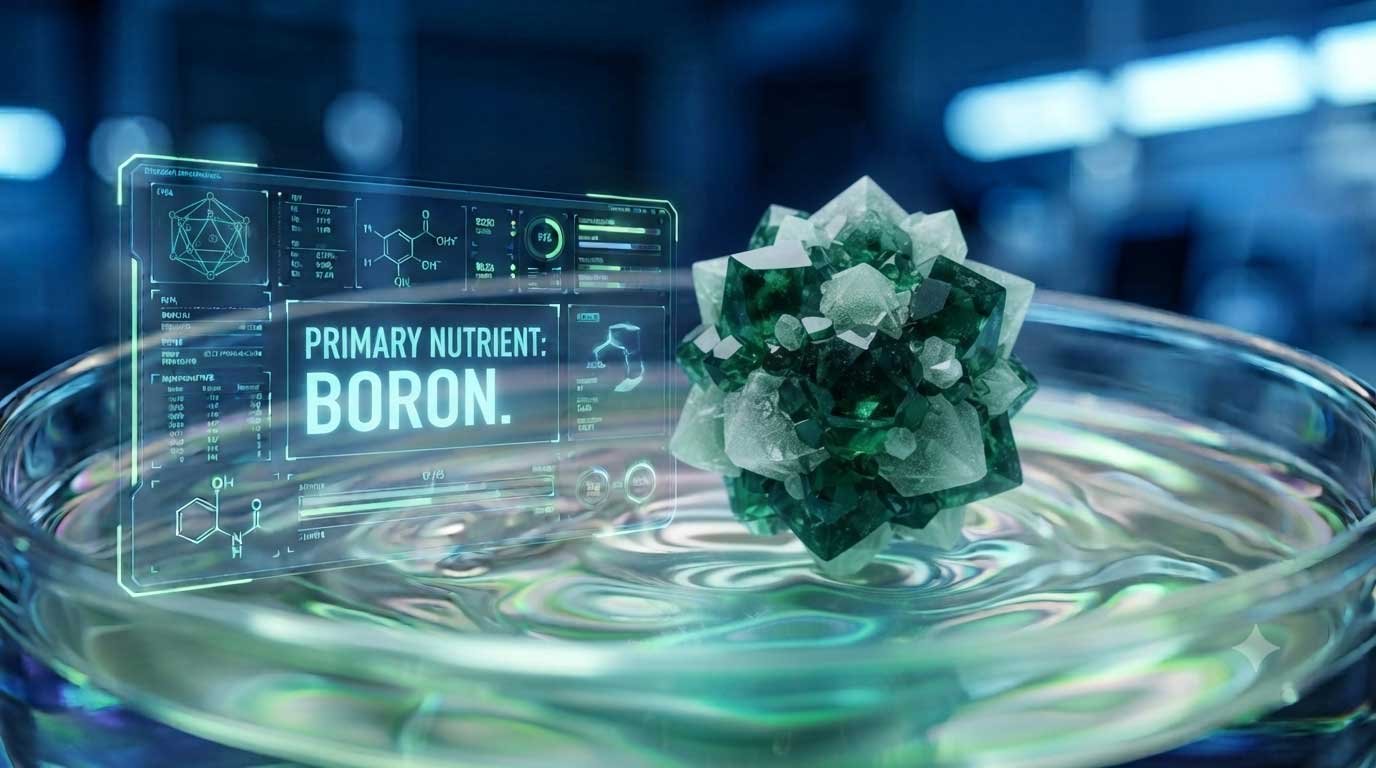
The Overlooked Mineral Hiding in Your Fruit Bowl
Walk down any supplement aisle and you’ll see calcium, magnesium, and vitamin D getting all the attention when it comes to bone health. Zinc and iron dominate the mineral conversation too. Boron rarely gets a mention, and that’s a little strange when you consider how long humans have actually been consuming it. It’s been part of the human diet for as long as we’ve been eating fruit, nuts, and legumes, quietly doing its work in the background without ever demanding credit.
Here’s the thing about boron that makes it genuinely interesting: it isn’t officially classified as an essential nutrient, at least not in the strict sense that vitamin C or iron are. The World Health Organization has called it “probably essential,” which is a bit of a scientific shrug. Researchers know boron does something important in the body. They just haven’t nailed down the precise biochemical pathway the way they have with, say, calcium’s role in bone mineralization. That ambiguity has kept boron out of the spotlight for decades, even as a steady stream of research has piled up showing it affects everything from bone density to how your body handles testosterone and estrogen.
Table of Contents


I’ve spent a long time looking at trace minerals, and boron is one of those substances that keeps surprising people once they actually dig into it. It’s not flashy. Nobody’s putting boron on the cover of a fitness magazine. But if you’re someone who cares about long-term bone strength, hormonal balance as you age, or just filling in the nutritional gaps that a modern diet tends to leave behind, boron deserves a seat at the table.
So what exactly is this mineral? Boron is found naturally in soil, water, and a wide range of plant foods. Prunes, raisins, avocados, almonds, and legumes tend to be among the richer sources, though the actual boron content of any given food depends heavily on how boron-rich the soil was where it grew. That’s part of why boron intake varies so much from person to person and region to region. Someone eating produce grown in boron-depleted soil could be getting noticeably less than someone eating the same foods grown elsewhere.
What makes boron particularly relevant to bone and hormone health is its relationship with other nutrients. Boron doesn’t seem to act alone. Instead, the research suggests it works as a kind of metabolic assistant, helping the body use calcium, magnesium, and vitamin D more efficiently, and influencing how long certain hormones like estrogen and testosterone stay active in the bloodstream. Reviews have specifically pointed to boron’s involvement in the growth and maintenance of bone and its impact on how the body uses estrogen, testosterone, and vitamin D. That’s a fairly broad reach for a mineral most people have never heard of.
There’s also a generational angle worth mentioning. As people live longer and worry more about osteoporosis, joint degeneration, and hormonal shifts during aging (menopause and andropause both come to mind), interest in supportive nutrients like boron has grown. It’s not a miracle fix, and I want to be upfront about that from the start. But dismissing it because it isn’t as well-known as calcium would be a mistake. Some researchers have gone so far as to suggest boron supplementation is worth considering for people whose diets are low in fruits and vegetables or who face elevated risk for bone-related conditions.
Boron also has an interesting history. For a long time, it was mostly studied in the context of plant biology, where it’s unambiguously essential — plants can’t complete their life cycle without it. It wasn’t until researchers like Rex Newnham started connecting boron intake to arthritis symptoms decades ago that the conversation shifted toward human health. That early work, controversial as it was at the time, opened the door to a much larger body of research examining boron’s role in bone metabolism, inflammation, and hormone regulation.
What you’ll find as we go through this is that boron isn’t a one-trick mineral. Its effects touch multiple systems at once, which is exactly why it’s hard to summarize in a single sentence. Bone density, joint comfort, hormone metabolism, even markers of inflammation and oxidative stress — boron seems to have a hand in all of it, even if the exact mechanisms are still being mapped out. The dose matters, the food sources matter, and understanding where the line sits between “helpful” and “too much” matters even more. That’s what we’re going to work through here: the real, evidence-based picture of what boron does, how to get enough of it, and where the caution flags actually belong.
Minerals like this one tend to get lost in the noise of trendier supplements, and that’s unfortunate, because the data on boron is more substantial than most people realize. It’s not a mineral you need to obsess over daily, but understanding its role gives you one more lever to pull when you’re thinking about long-term skeletal and hormonal health.
Key Health Benefits
Boron’s benefits cluster around a few specific areas, and bone health is probably the best-documented of them. But it doesn’t stop there. Let’s go through what the research actually shows, section by section, without overselling any of it.
Bone Density and Skeletal Strength
Bone is living tissue, constantly being broken down and rebuilt in a process called remodeling. Calcium and vitamin D get most of the credit for keeping that process balanced, but boron appears to play a supporting role that’s easy to overlook. Research has connected boron to the growth and maintenance of bone, partly through its influence on how the body metabolizes calcium, magnesium, and phosphorus.
One mechanism researchers have proposed involves magnesium. Boron seems to improve magnesium absorption and its deposition into bone tissue, which matters because a substantial portion of the body’s magnesium is stored in bone, where it acts as a cofactor for enzymes regulating calcium metabolism. If boron is helping magnesium do its job more effectively, that’s a meaningful indirect contribution to skeletal integrity, even without boron doing anything dramatic on its own.
There’s also a hormonal piece to this. Estrogen plays a protective role in bone density, which is why bone loss accelerates so noticeably after menopause. Boron appears to extend the biological activity of estradiol and support the pathways involved in its production, which in turn supports the hormone’s protective effects on bone. This connection between boron, estrogen, and bone density has been observed in studies on postmenopausal women, where boron supplementation was associated with reduced urinary excretion of calcium and magnesium — essentially, less mineral loss.
I’d stop short of calling boron a bone-building powerhouse. It’s not going to reverse osteoporosis by itself, and nobody serious in this field is claiming that. But as a supporting nutrient, especially for people already doing the heavy lifting with calcium, vitamin D, and weight-bearing exercise, boron seems to smooth out some of the metabolic wrinkles that can undermine bone density over time.
Hormone Regulation
This is where boron gets genuinely interesting, and it’s probably the reason it’s picked up more attention in recent years, particularly among people interested in testosterone and midlife hormonal changes.
Several small human studies have looked at what happens to free testosterone and estradiol levels when boron intake increases. In one frequently cited trial, healthy men who took boron supplements for about a week saw measurable increases in free testosterone alongside decreases in estradiol. The proposed mechanism centers on sex hormone-binding globulin, or SHBG, a protein that binds to testosterone and keeps it from being biologically active. Boron appears to reduce SHBG levels, which frees up more testosterone to actually do its job in the body.
Now, a week-long study with a modest sample size isn’t the kind of evidence that should convince anyone boron is a hormonal miracle. It’s a signal, not a verdict. Larger, longer trials are needed before anyone can say with confidence how meaningful these changes are over months or years rather than days. Still, the consistency of the direction — boron up, SHBG down, free testosterone up — across multiple small studies is worth paying attention to.
Boron’s hormonal effects aren’t limited to men, either. Research in postmenopausal women found that boron supplementation influenced estrogen metabolism in ways that could matter for bone health and general well-being during a period when estrogen naturally declines. That dual relevance — supporting testosterone availability in men and estrogen activity in women — is part of what makes boron worth understanding regardless of your age or sex.
There’s also a vitamin D connection tucked into this hormonal story. Vitamin D functions essentially as a hormone in the body, and boron appears to extend its half-life, meaning the vitamin D you already have circulating stays active longer. Given how common vitamin D insufficiency is, especially in places with limited sun exposure, this is a quietly useful mechanism.
Inflammation and Joint Comfort
Boron’s third major area of interest involves inflammation, particularly in the context of joint health. Older research on boron and arthritis, some of it going back decades, sparked interest in whether boron intake correlates with lower rates of joint discomfort in populations with boron-rich diets. More recent work has looked at specific inflammatory markers.
Short-term boron supplementation has been shown to reduce levels of C-reactive protein and other inflammatory biomarkers in some studies, along with a documented drop in tumor necrosis factor-alpha after just one week of supplementation in one trial. Chronic low-grade inflammation is linked to a long list of age-related conditions, so a mineral that nudges inflammatory markers downward, even modestly, is worth taking seriously.
For people dealing with joint stiffness or general achiness that seems to worsen with age, boron isn’t going to replace anti-inflammatory medication or physical therapy. But as part of a broader nutritional strategy focused on reducing systemic inflammation, it has a reasonable, if still developing, evidence base behind it.
Cognitive and Antioxidant Support
Less talked about, but still notable, is boron’s connection to cognitive function and antioxidant activity. Some research has suggested boron may support electrical activity in the brain and short-term memory performance, particularly in older adults, along with increases in antioxidant enzymes like superoxide dismutase, catalase, and glutathione peroxidase. These enzymes help the body neutralize oxidative stress, which is implicated in aging and a wide range of chronic conditions.
This isn’t the strongest pillar of boron’s benefit profile, and I don’t want to overstate it. But it’s a reminder that trace minerals rarely do just one thing. Boron’s fingerprints show up in bone, hormones, inflammation, and even brain function, which is part of what makes it such an underrated piece of the nutritional puzzle.
Dietary Sources
Boron isn’t something you need to supplement aggressively if your diet already includes a healthy variety of plant foods. It shows up naturally in a wide range of fruits, vegetables, nuts, and legumes, and for most people, food alone can supply a reasonable amount.
Fruits That Deliver the Most Boron
Dried fruits tend to be some of the most concentrated sources, simply because removing water concentrates everything else, including minerals. Prunes and raisins are frequently cited as standout sources. Fresh fruits like avocados, apples, pears, peaches, and grapes also contribute meaningfully, especially when eaten regularly rather than occasionally.
- Prunes (dried plums)
- Raisins
- Avocados
- Apples
- Pears
- Peaches and nectarines
- Grapes
If you’re someone who snacks on dried fruit or keeps a bowl of apples on the counter, you’re probably getting more boron than you’d assume without ever thinking about it.
Legumes, Nuts, and Seeds
Legumes are another strong category. Kidney beans, chickpeas, and lentils all contain notable amounts of boron, which adds one more reason to include them regularly in meals beyond their fiber and protein content. Nuts, particularly almonds and walnuts, round out the picture nicely.
- Kidney beans
- Chickpeas
- Lentils
- Almonds
- Walnuts
- Peanuts
Peanut butter, for what it’s worth, tends to retain a decent amount of boron too, which is a small win for anyone who eats it regularly.
Vegetables and Other Sources
Leafy greens and certain root vegetables contribute smaller but still meaningful amounts of boron. Broccoli, potatoes, and onions have all shown up in nutritional analyses as reasonable contributors. Wine and coffee, interestingly, have also been noted as dietary sources of boron for adults who consume them, though obviously not recommended as a primary strategy for anyone.
Soil quality genuinely does affect boron content in produce. Crops grown in boron-depleted soil, which happens more often with intensive conventional farming that doesn’t replenish trace minerals, tend to contain less boron than the same crop grown in richer soil. This is one of those cases where your food comes from actually does matter, not just what the food technically is. Two apples can look identical on the outside and carry noticeably different mineral profiles depending on the farm they came from, which is part of why nutrient tables for boron tend to list ranges rather than fixed numbers.
There’s a practical implication here that’s easy to miss. If you’re eating what looks like a produce-rich diet but the underlying soil quality is poor, you might still be running lower on boron than the food list would suggest. This isn’t a reason to panic or start testing your soil, but it’s a reasonable argument for variety. Rotating through different sources of fruit, legumes, and nuts, rather than relying on the same two or three staples, spreads your exposure across different growing conditions and reduces the odds that you’re consistently missing out.
A Simple Way to Think About Daily Intake
If you wanted to build a day of eating that comfortably covers boron without any special effort, it might look something like this: a handful of almonds or walnuts with breakfast, a lunch that includes chickpeas or kidney beans, an apple or pear as an afternoon snack, and a dinner that leans on legumes or leafy vegetables. None of that requires tracking anything or buying specialty products. It’s just ordinary, produce-forward eating, and it tends to land in the range that researchers associate with meaningful benefit.
Compare that to a diet built mostly around refined grains, processed snacks, and minimal produce, and the gap becomes obvious. Processed foods generally don’t retain much boron through manufacturing, and diets low in fruits and vegetables are consistently flagged in the research as the primary risk factor for inadequate boron intake. This is one of those minerals where the fix, for most people, really is as simple as eating more plants.
What About Supplements?
Boron supplements exist in several forms, including sodium borate, boron citrate, boron glycinate, and calcium fructoborate. Supplement Facts labels list the amount of elemental boron, not the total weight of the compound, which is worth checking closely if you’re comparing products. There isn’t strong evidence that one form absorbs meaningfully better than another, so this often comes down to personal tolerance and product quality more than anything else.
For most people eating a reasonably varied diet with regular fruit, legume, and nut intake, supplementation isn’t strictly necessary. It becomes more relevant for people whose diets are consistently low in fruits and vegetables, or for those specifically targeting the bone or hormonal effects discussed earlier, where dietary intake alone may fall short of the amounts used in clinical research.
Dosage & Deficiency
This is where boron gets a little unusual compared to most minerals you’re familiar with. There’s no established Recommended Dietary Allowance for boron, and no formal Estimated Average Requirement either. Human boron requirements remain officially undefined, and the only firm number regulatory bodies have settled on is a tolerable upper intake level, which sits around 20 mg per day for adults.
How Much Do People Actually Need?
Despite the lack of an official RDA, researchers have offered informal guidance based on the available evidence. Some have suggested humans need at least around 0.2 mg per day at a bare minimum to avoid outright deficiency-related effects, while a more functional target for supporting bone and hormonal health tends to land somewhere between 1 and 3 mg daily from diet.
Most Western diets fall short of even the higher end of this range. Estimates suggest the standard American diet often provides less than 1 mg of boron per day, particularly among people who don’t eat much fruit or produce. That’s a meaningful gap when you consider the mineral’s connection to bone and hormone metabolism discussed earlier.
For the specific hormonal effects studied in clinical trials — the changes in free testosterone, SHBG, and inflammatory markers — researchers have typically used higher doses, generally in the range of 6 to 10 mg per day. These are short-term study doses, not necessarily amounts intended for indefinite daily use, and I think it’s important to separate “the dose used in a week-long research trial” from “the dose someone should take forever without medical guidance.”
A reasonable, conservative supplemental target that shows up repeatedly in the literature is around 3 mg per day, particularly for people whose diets lack sufficient fruits and vegetables or who are managing bone density concerns. That amount sits comfortably below any level associated with adverse effects while still being high enough to meaningfully move the needle compared to a boron-poor diet.
What Deficiency Actually Looks Like
Because boron isn’t classified as a strictly essential nutrient, there’s no textbook deficiency syndrome the way there is with, say, vitamin C and scurvy. That said, low boron status has been associated in research with poorer bone mineral metabolism, altered calcium and magnesium handling, and less favorable hormonal profiles, particularly in postmenopausal women.
Symptoms aren’t dramatic or immediately obvious, which is part of why boron insufficiency tends to fly under the radar. It’s not something you’d notice the way you’d notice iron deficiency fatigue or vitamin D deficiency bone pain. Instead, it likely contributes incrementally to suboptimal bone density and less efficient hormone metabolism over years, which is a much harder thing to trace back to a single nutrient.
People most likely to be running low include those eating diets consistently low in fruits, vegetables, nuts, and legumes — think heavily processed, low-produce eating patterns. Athletes and physically active individuals may also have somewhat elevated needs, since boron is lost through sweat and urine, and one study specifically examined boron status in athletic versus sedentary women, finding differences in mineral excretion patterns.
Practical Takeaways on Dosage
If you’re eating a diet rich in fruit, legumes, and nuts on a regular basis, you’re probably getting a reasonable amount of boron without thinking about it much. If your diet leans heavily processed or produce-light, that’s where a gap is more likely to exist. A modest supplement in the 1 to 3 mg range is generally considered a conservative, low-risk way to fill that gap, though as always, checking with a healthcare provider before adding any new supplement is the responsible move, particularly if you’re pregnant, managing a hormone-sensitive condition, or taking other medications.
Timing and Consistency Matter More Than the Number
One detail that tends to get lost in dosage conversations is consistency. Boron doesn’t appear to build up in the body the way fat-soluble vitamins do, and its effects on things like SHBG and inflammatory markers seem to be tied to relatively steady intake rather than occasional large doses. A comparison of daily versus weekly boron supplementation found differences in how plasma steroid hormones and inflammatory cytokines responded, which suggests that spreading a given weekly total across daily doses may behave differently than taking the same amount all at once. Practically speaking, that points toward a steady, small daily habit rather than an occasional larger dose, if the goal is to support the hormonal and inflammatory pathways discussed earlier.
This also lines up with how boron shows up naturally in food. Nobody eats a week’s worth of almonds in one sitting. The body seems to have evolved alongside a pattern of small, frequent boron exposure through diet, and supplementation that mirrors that pattern is probably the more physiologically sensible approach, even if the research on optimal timing is still fairly thin.
Who Might Need More Than Average
A few groups stand out as potentially having higher boron needs or being more likely to fall short. Older adults, particularly postmenopausal women dealing with declining bone density, are frequently discussed in the research given the mineral’s interaction with estrogen metabolism. Athletes and people who sweat heavily on a regular basis may lose more boron through perspiration and urine than sedentary individuals, which was specifically noted in research comparing athletic and sedentary women. People recovering from bone injuries or managing diagnosed osteopenia or osteoporosis are another group where the existing evidence, while not definitive, points toward boron being a reasonable nutrient to discuss with a healthcare provider.
None of this means these groups need to run out and start supplementing immediately. It simply means that if you fall into one of these categories, boron might be a more relevant conversation to have with your doctor or dietitian than it would be for the average, well-nourished adult eating a varied diet.
Toxicity & Risks
Boron has a genuinely good safety profile at the doses relevant to human nutrition and supplementation, but “generally safe” doesn’t mean “risk-free at any amount,” and it’s worth being precise about where the actual danger zone starts.
The Established Upper Limit
Health authorities have set the tolerable upper intake level for boron at approximately 20 mg per day for adults. Below that threshold, boron has an extensive track record without documented harm across the research literature, which is part of why some researchers have felt comfortable recommending supplemental doses in the 3 mg range for people who could benefit.
It’s worth noting that the doses used in clinical studies examining testosterone and inflammatory effects (typically 6 to 10 mg daily) sit comfortably under that 20 mg ceiling, but they’re also notably higher than what most people would get from food alone. That gap between “typical dietary intake” and “study doses” is where individual judgment and, ideally, professional guidance come into play.
Acute Toxicity: A Different Story Entirely
Where things get genuinely serious is with acute, high-dose exposure, which is a completely different scenario from dietary or supplemental intake. This mostly applies to boric acid and borax, compounds historically used in pesticides, cleaning products, and industrial applications rather than nutrition.
Clinical case reviews of boric acid ingestion, including one analysis of hundreds of documented poisoning cases, found that acute toxicity symptoms can include gastrointestinal distress, skin reactions, and in severe, high-dose cases, more serious systemic effects. These cases overwhelmingly involve accidental ingestion of household or industrial boron products, not dietary boron from food or standard supplements, and it’s important not to conflate the two. Eating an extra handful of almonds is not remotely comparable to ingesting borax-based pest control products.
Who Should Be More Cautious
Certain groups warrant extra caution around boron supplementation, even though the overall risk profile is favorable. Pregnant women are generally advised to avoid high-dose boron supplementation specifically, since animal studies have raised questions about reproductive and developmental effects at elevated doses, even though this hasn’t been definitively established in humans at typical supplemental levels. Erring on the side of caution here makes sense.
People taking hormone-sensitive medications, or managing conditions like hormone-receptor-positive cancers, should also talk to a healthcare provider before adding boron supplements, given its documented influence on estrogen and testosterone metabolism. The same logic applies to anyone on medications that affect kidney function, since boron is primarily cleared through the kidneys.
Reading Supplement Labels Carefully
One practical risk that has nothing to do with the mineral itself involves supplement dosing errors. Because boron compounds vary in molecular weight, and supplement labels are supposed to list elemental boron content, it’s possible to misjudge how much you’re actually taking if you’re not reading labels carefully. A product listing “500 mg of boron citrate” isn’t giving you 500 mg of actual boron; the elemental amount is almost always a small fraction of that. Sticking to reputable brands, checking third-party testing where available, and starting at the lower end of the dosage range (that 1 to 3 mg territory) rather than jumping straight to study-level doses is a sensible, low-drama approach.
This kind of labeling confusion isn’t unique to boron, but it’s especially relevant here because the difference between a therapeutic dose and an excessive one, while still wide by mineral standards, is narrower than people assume once you’re stacking multiple boron-containing products. Someone taking a boron supplement, a multivitamin that also includes boron, and eating a boron-rich diet on top of that could plausibly approach the upper limit without realizing it, simply because nobody is adding up the totals. It’s worth doing that math occasionally, especially if you’re combining several supplements.
Drug and Nutrient Interactions
Because boron influences how the body handles calcium, magnesium, and steroid hormones, it has the potential to interact with medications that touch those same systems. People on hormone replacement therapy, hormonal contraceptives, or medications for hormone-sensitive cancers should flag boron supplementation with their prescribing physician before starting, simply because the mineral’s estrogen- and testosterone-modulating effects could theoretically compound with those treatments in ways that haven’t been thoroughly studied.
Similarly, anyone taking medications that already affect magnesium or calcium levels, such as certain diuretics or bone-density medications, should mention boron use to their doctor or pharmacist. This isn’t because there’s strong evidence of dangerous interactions, but because the overlapping mechanisms make it a reasonable thing to disclose rather than assume is irrelevant.
Putting the Risk in Perspective
It’s easy for any discussion of toxicity to sound scarier than it needs to. Context helps here. Boron sits in a similar risk category to many trace minerals people already take for granted, including zinc and selenium, both of which have narrower safety windows in some respects than boron does. The mineral has been consumed as part of the human diet for as long as humans have eaten fruit, and the population-level data doesn’t show a pattern of harm at ordinary dietary or modest supplemental intakes.
The real-world risk almost entirely concentrates at the extremes: industrial or accidental exposure to concentrated boron compounds like borax, not the boron found in an apple, a handful of almonds, or a well-formulated 3 mg supplement. Keeping that distinction clear is probably the single most useful thing to take away from this section.
None of this should read as alarmist. Boron’s risk profile compares favorably to plenty of minerals people take without a second thought. The point is simply that “safe” has boundaries, and knowing where those boundaries sit lets you make a more informed decision rather than assuming more is automatically better, which is a trap people fall into with supplements more often than they’d like to admit.
The Quiet Case for Paying Attention to Boron
We started this conversation by pointing out how strange it is that boron gets so little attention compared to calcium, magnesium, and vitamin D, given how consistently it shows up across the research on bone density, hormone metabolism, and inflammation. Having gone through the mechanisms, the food sources, the dosing considerations, and the safety profile, that oddity makes a bit more sense. Boron doesn’t fit neatly into the categories people usually use to sort supplements. It isn’t a vitamin with a clear deficiency disease attached to it, and it isn’t a headline mineral like calcium with an obvious, singular job. It sits in a gray zone that science hasn’t fully mapped, which is exactly the kind of nutrient that tends to get overlooked by mainstream nutrition advice, even when the underlying research is genuinely compelling.
If there’s one thing worth taking away from all of this, it’s that boron doesn’t need to be dramatic to be worthwhile. It’s not going to headline a supplement marketing campaign the way collagen or creatine do, and it’s never going to replace the fundamentals of bone health: adequate calcium, sufficient vitamin D, resistance training, and a diet that isn’t chronically low in produce. But it fills in gaps that those fundamentals don’t fully cover, particularly around how efficiently your body uses the minerals and hormones it already has.
What strikes me most about boron is how quietly it operates. It’s not creating new hormones or building bone from scratch. It’s optimizing processes that are already happening, extending the useful life of estrogen and vitamin D, freeing up testosterone that would otherwise sit bound and inactive, nudging inflammatory markers in a more favorable direction. That’s a different kind of value than the more dramatic effects people often expect from supplements, but it’s arguably more sustainable and realistic as a long-term strategy.
The practical path forward is fairly simple. Eat a variety of fruits, legumes, and nuts regularly, and you’re likely covering your bases without needing to think about boron as a separate line item. If your diet leans processed and produce-light, or if you’re specifically interested in the bone and hormonal benefits the research points toward, a modest supplement in the 1 to 3 mg range is a reasonable, well-supported place to start, ideally after a conversation with your doctor, especially if you’re pregnant, managing a hormone-sensitive condition, or on medications that could interact.
It’s also worth resisting the urge to treat boron as a shortcut. Nothing about the research suggests it can substitute for the basics of skeletal and hormonal health: enough protein, resistance training, adequate sleep, and the core nutrients like calcium and vitamin D that carry most of the load. Boron works at the margins, tightening up processes that are already underway rather than initiating new ones. That’s a less exciting story than a miracle mineral, but it’s a more honest one, and honest is generally more useful when you’re making decisions about your own health over the long haul.
There’s also something worth saying about how we evaluate nutrients like this one. Boron doesn’t have the decades of large-scale, double-blind trials that vitamin D or calcium have accumulated, and it probably won’t anytime soon, given how little commercial incentive exists to fund that kind of research on an inexpensive trace mineral nobody can patent. That doesn’t make the existing evidence worthless. It means treating boron the way any careful reader should treat an emerging area of nutrition science: taking the signal seriously, staying honest about the limits of what’s been proven, and making decisions that make sense given the size and quality of the evidence actually in hand, rather than waiting indefinitely for certainty that may never fully arrive.
Trace minerals like boron rarely get their due, mostly because their effects are subtle and cumulative rather than immediate and obvious. You won’t feel a dramatic difference a week after adding more boron-rich foods to your plate. But over months and years, the kind of steady support boron offers to bone density, hormone metabolism, and inflammatory balance is exactly the sort of thing that adds up. Sometimes the most useful nutrients are the ones that never asked for the spotlight in the first place, quietly doing their job in the background while the flashier supplements get all the attention.
Article Sources
At AncientHerbsWisdom, our content relies on reputable sources, including peer-reviewed studies, to substantiate the information presented in our articles. Our primary objective is to ensure our content is thoroughly fact-checked, maintaining a commitment to accuracy, reliability, and trustworthiness.
- Khaliq, H., Juming, Z., & Ke-Mei, P. (2018). The physiological role of boron on health. Biological Trace Element Research, 186(1), 31-51. https://pubmed.ncbi.nlm.nih.gov/29546541/
- Litovitz, T. L., Klein-Schwartz, W., Oderda, G. M., & Schmitz, B. F. (1988). Clinical manifestations of toxicity in a series of 784 boric acid ingestions. The American Journal of Emergency Medicine, 6(3), 209-213. https://pubmed.ncbi.nlm.nih.gov/3355436/
- Naghii, M. R., Mofid, M., Asgari, A. R., Hedayati, M., & Daneshpour, M. S. (2011). Comparative effects of daily and weekly boron supplementation on plasma steroid hormones and proinflammatory cytokines. Journal of Trace Elements in Medicine and Biology, 25(1), 54-58. https://pubmed.ncbi.nlm.nih.gov/21129941/
- Nielsen, F. H., & Eckhert, C. D. (2019). Boron. Advances in Nutrition, 10(Suppl 2), S439-S442. https://pubmed.ncbi.nlm.nih.gov/32147056/
- Nielsen, F. H., Hunt, C. D., Mullen, L. M., & Hunt, J. R. (1987). Effect of dietary boron on mineral, estrogen, and testosterone metabolism in postmenopausal women. The FASEB Journal, 1(5), 394-397. https://pubmed.ncbi.nlm.nih.gov/3678698/
- Office of Dietary Supplements, National Institutes of Health. (2025). Boron: Fact sheet for health professionals. https://ods.od.nih.gov/factsheets/Boron-HealthProfessional/
- Pizzorno, L. (2015). Nothing boring about boron. Integrative Medicine (Encinitas), 14(4), 35-48. https://pmc.ncbi.nlm.nih.gov/articles/PMC4712861/

- Phosphatidic Acid: Supporting Muscle Growth and Strength - July 31, 2026
- Ceramides: Supporting Healthy Skin From Within - July 31, 2026
- Synbiotics: Combining Prebiotics and Probiotics Together - July 31, 2026