
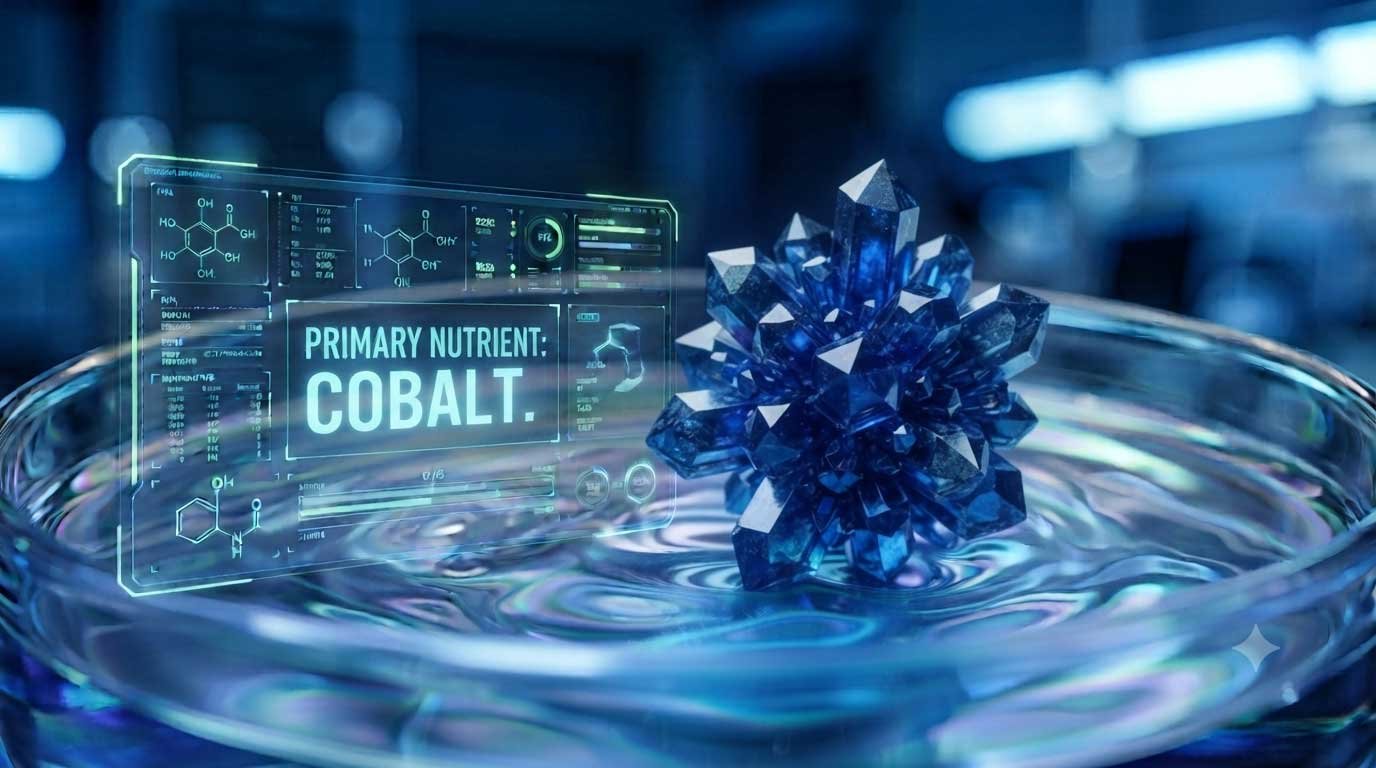
The Blue Metal Hiding Inside Your Blood
There’s a strange little irony sitting at the center of human nutrition, and it goes something like this: one of the most biologically essential minerals in your body is also one you’ll almost never hear a doctor mention by name. Ask someone about iron and they’ll talk about spinach and fatigue. Ask about calcium and you’ll get a lecture on bones. But cobalt? Most people couldn’t tell you a single thing about it, even though without it, a huge portion of their cellular machinery would grind to a halt.
Cobalt is a trace mineral, meaning your body needs only a whisper of it compared to something like calcium or magnesium. We’re talking micrograms, not milligrams. And yet its role is disproportionately large, because cobalt sits at the literal center of vitamin B12, wedged inside a ring-shaped molecular structure called a corrin ring, acting as the metallic heart of one of the most chemically complex vitamins ever discovered. Take the cobalt out, and you don’t have vitamin B12 anymore. You have nothing. The molecule simply doesn’t function.
Table of Contents

This is, frankly, one of the more elegant partnerships in biochemistry. Researchers who’ve spent careers studying this relationship describe vitamin B12 as a “paradigm for protein metalation,” meaning it’s a textbook case of how cells manage to get the right metal into the right molecular slot despite a chaotic cellular environment full of competing minerals that could easily bind to the wrong site instead. Cobalt isn’t just tolerated by the corrin ring. It’s the only metal that makes the whole system work, largely because of its unusual ability to form and break metal-carbon bonds in a controlled, reversible way that other metals simply cannot replicate.
Here’s where things get a little more complicated, though, and it’s worth clearing up early. When people say “cobalt is essential,” what they usually mean is that vitamin B12 is essential, and cobalt happens to be its non-negotiable ingredient. Humans cannot synthesize cobalamin (the technical name for B12) on their own. Only certain bacteria and archaea can perform that feat, stitching together a molecule so intricate that its biosynthetic pathway involves upwards of thirty separate enzymatic steps. We get our B12, and therefore our cobalt in its useful biological form, secondhand: from animals that either eat those bacteria or host them in their gut, or from fortified foods engineered to deliver it directly.
That distinction matters more than it might seem. Elemental cobalt, the kind you’d find in soil, certain vegetables, or industrial products, isn’t the same as the cobalt tucked safely inside a B12 molecule. Your body can absorb small amounts of ionic cobalt from plant foods, but this form doesn’t do much for you nutritionally on its own. It’s cobalt’s marriage to the corrin ring, engineered by microbial enzymes over billions of years of evolution, that turns an otherwise unremarkable transition metal into something your nervous system and blood cells depend on daily.
I’ve always found it a bit humbling that something this consequential remains this obscure. Cobalt doesn’t get its own aisle in the supplement store. Nobody’s marketing “cobalt gummies.” And honestly, that’s mostly appropriate, since supplementing cobalt directly is neither necessary nor particularly wise, a point we’ll come back to later. But understanding what cobalt actually does, how it ended up as vitamin B12’s engine room, where you get it from food, and what happens when levels swing too high or too low, gives you a genuinely useful piece of the nutritional puzzle. It’s not a mineral you need to obsess over. It’s a mineral you need to understand, mostly so you can stop worrying about it and start focusing on the vitamin it makes possible.
The name itself has a curious backstory, too. German miners centuries ago blamed a mischievous underground spirit, a “kobold,” for contaminating silver ore with a metal that released toxic fumes when smelted. They had no idea they were naming an element that would one day be found sitting at the core of a vitamin without which human blood, nerves, and DNA replication simply cannot function properly. There’s something fitting about a mineral once associated with goblins and poison turning out to be an indispensable partner in human health, provided it stays exactly where biology intends it to be.
What follows is a closer look at that relationship: the benefits cobalt makes possible through B12, where to actually find it in your diet, how much your body needs versus how little it often gets, and the genuine, well-documented risks that show up when cobalt exposure goes off the rails. None of this requires fear or supplementation. It requires a bit of context, and that’s exactly what we’re going to build.
Key Health Benefits
It’s tempting to talk about cobalt’s health benefits as if cobalt itself were doing the heavy lifting, popping into your bloodstream and fixing things directly. That’s not quite how it works. Cobalt’s benefits are almost entirely mediated through vitamin B12, since that’s the only biologically active form your body actually uses. So when we talk about what cobalt does for you, we’re really talking about what B12 does for you, with cobalt as the indispensable structural component that makes the whole thing possible in the first place.
Red Blood Cell Formation
This is probably the most well-established role, and it’s not a subtle one. Vitamin B12 is required for the maturation of red blood cells in bone marrow. Without adequate cobalamin, the body’s ability to divide and produce properly sized, functional red blood cells breaks down, and you end up with a specific condition called megaloblastic anemia, characterized by red blood cells that are unusually large, oddly shaped, and poor at doing their actual job of carrying oxygen. People with this kind of anemia often describe a bone-deep fatigue that doesn’t resolve with sleep, along with paleness, shortness of breath during ordinary activity, and sometimes a racing heart as the body compensates for reduced oxygen delivery.
What’s happening at the cellular level is fascinating. B12 works in tandem with folate to support DNA synthesis during cell division. Bone marrow cells divide extremely quickly, which makes them particularly sensitive to any disruption in this pathway. When cobalamin runs low, DNA synthesis stumbles, and the cells that would normally mature into healthy red blood cells get stuck in an oversized, dysfunctional state instead. It’s not that the body stops making red blood cells; it’s that it starts making bad ones.
Nervous System Support and Myelin Maintenance
Vitamin B12 also plays a defining role in maintaining myelin, the fatty insulating sheath that wraps around nerve fibers and allows electrical signals to travel quickly and efficiently between neurons. Think of myelin as the rubber coating on an electrical wire. Strip it away, and the signal doesn’t just weaken, it can misfire, short-circuit, or fail to transmit altogether.
This is why prolonged B12 deficiency doesn’t just cause fatigue; it can cause genuine neurological symptoms. Tingling or numbness in the hands and feet, a condition called paresthesia, is often one of the earliest warning signs. Left unaddressed for long enough, deficiency can progress toward more serious nerve damage, memory difficulties, mood changes, and in severe or prolonged cases, damage that doesn’t fully reverse even after B12 levels are corrected. This is the part of the story that tends to worry clinicians the most, because unlike anemia, which usually resolves cleanly with treatment, neurological damage from chronic deficiency can leave lasting effects.
There’s also a growing body of research looking at B12’s relationship with cognitive function and mood more broadly. A systematic review and meta-analysis examining B12 supplementation found associations between adequate cobalamin status and better cognitive memory function, along with a role in reducing depressive symptoms in populations with insufficient levels, noting that vitamin B12 is significant for nervous system function and that inadequate levels may be associated with a higher risk of depression. It’s worth being careful here, though. This isn’t a case where more B12 equals a sharper brain or a better mood if you’re not actually deficient. The benefit shows up specifically in correcting an existing shortfall, not in loading up beyond what your body needs.
Energy Metabolism
If you’ve ever seen B12 marketed as an “energy booster,” this is the biochemical basis for that claim, even if the marketing tends to oversell it. Cobalamin acts as a cofactor in the metabolic pathways that convert fats, carbohydrates, and proteins into usable cellular energy. It’s not that B12 itself supplies energy the way a carbohydrate does. Rather, it’s a necessary participant in the enzymatic reactions that unlock energy from the food you eat.
This distinction matters because it explains why B12 supplementation only really moves the needle on energy levels in people who are actually deficient. If your levels are already adequate, taking more B12 isn’t going to give you some extra reserve of vitality sitting in a bottle. The fatigue that lifts after treating a genuine deficiency isn’t magic; it’s simply the metabolic machinery finally running the way it’s supposed to.
DNA Synthesis and Cellular Growth
Every time a cell in your body divides, it needs to replicate its DNA accurately, and vitamin B12 is a required participant in that process, working alongside folate to keep the pathway running smoothly. This becomes especially relevant in tissues that regenerate quickly, like the lining of your digestive tract, your skin, and, as mentioned earlier, your bone marrow. A shortfall in cobalamin doesn’t just show up as one isolated symptom; it ripples across every system that depends on efficient cell turnover.
A Note on What Cobalt Does Not Do
It’s worth being upfront about something here, mostly because supplement marketing loves to blur these lines. Cobalt itself, separate from its role inside B12, doesn’t have a well-established list of standalone health benefits in humans. There’s no meaningful evidence that taking cobalt directly, outside the context of cobalamin, provides some additional boost to red blood cells, energy, or nerve function beyond what B12 already delivers. The benefits described above are B12’s benefits, made possible by cobalt’s structural presence at its core. Conflating the two, or assuming more elemental cobalt intake translates to more benefit, is a mistake worth avoiding, and one we’ll unpack further when we get to the risks of excess exposure.
Dietary Sources
Here’s where the practical question comes in: if cobalt’s value is almost entirely tied to vitamin B12, how do you actually get enough of it? The honest answer is that most people navigating a reasonably varied, omnivorous diet don’t think about this at all, because animal-based foods do the job quietly and effectively. It’s really only certain groups, which we’ll get into, who need to pay closer attention.
Animal-Based Sources: Where B12 (and Its Cobalt) Actually Lives
Vitamin B12 is, almost exclusively, a nutrient of animal origin. It’s not naturally present in plant foods in any meaningful, reliable amount, which is a direct consequence of the fact that plants don’t host the bacteria capable of synthesizing cobalamin the way animals and their gut microbiomes do. This is genuinely worth sitting with for a second, because it explains an entire category of dietary risk that shows up later in the deficiency conversation.
Organ meats sit at the very top of the list. Beef liver in particular is remarkably concentrated in both cobalt and B12, delivering far more than a day’s requirement in a single modest serving. Kidney follows a similar pattern. If organ meats aren’t your thing, and I’ll admit they’re an acquired taste for a lot of people, you’re not out of luck. Red meat more broadly, including beef and pork, contributes meaningfully to cobalt intake, though at lower concentrations than organ meats specifically.
Seafood is another strong category here. Fish like salmon, mackerel, and sardines carry substantial B12, and shellfish, especially clams and oysters, rank among the richest natural sources available. If you eat seafood regularly, you’re likely getting a solid, steady supply without ever thinking about it.
Dairy and eggs round out the animal-based picture. Milk, cheese, and eggs all contain B12, generally in more modest amounts than meat or seafood, but consistently enough that they matter for people who eat dairy regularly, including many vegetarians who avoid meat but still consume animal products. This is actually one of the more important nutritional distinctions between vegetarian and vegan diets: lacto-ovo vegetarians typically maintain reasonable B12 status through dairy and eggs, while strict vegans have no reliable dietary source unless they deliberately seek one out.
Plant and Fortified Sources
This is where things get genuinely tricky, and where a lot of well-meaning nutritional advice goes sideways. Plant foods can contain small amounts of ionic cobalt, mostly absorbed from soil, in vegetables like spinach, kale, cabbage, and other leafy greens, along with trace amounts in nuts, whole grains, and some dried fruits like figs and apricots. But this is a critical distinction worth repeating: ionic cobalt from plants is not the same as cobalamin. Eating a mountain of kale will not meaningfully raise your B12 status, because the cobalt in those vegetables hasn’t been assembled into the corrin ring structure that makes it biologically usable in the way your body actually needs.
This is why fortified foods matter so much for people avoiding animal products. Many breakfast cereals are fortified with synthetic B12, and because that form isn’t bound to protein the way naturally occurring B12 is, it’s actually absorbed quite efficiently, arguably more efficiently than B12 from some whole foods, since it skips the initial digestive step of separating the vitamin from its protein carrier. Fortified nutritional yeast is another commonly cited source, though there’s an important caveat worth flagging: plain nutritional yeast doesn’t naturally contain B12 at all. It only provides meaningful amounts if the specific product has been deliberately fortified, so checking the label matters more than assuming.
Seaweed, particularly nori, gets mentioned frequently in vegan nutrition circles as a potential plant-based B12 source, and it does contain small amounts of biologically active cobalamin. But the amount varies wildly depending on the type and preparation, and some varieties contain none at all, which makes it an unreliable primary source rather than something to build a nutritional strategy around.
Cobalt in Water and the Broader Food Supply
Beyond dedicated food sources, small amounts of cobalt also show up in drinking water and throughout the general food supply, contributing to a total daily dietary intake that researchers estimate falls somewhere in the range of a few micrograms up to several dozen micrograms for most adults, depending on diet and regional soil or water conditions. This background exposure is generally inconsequential and isn’t something the average person needs to track or worry about; it simply reflects cobalt’s natural presence throughout the environment as a trace element found in rocks, soil, and water systems worldwide.
Practical Takeaway
If you’re eating meat, seafood, dairy, or eggs regularly, cobalt and B12 intake generally take care of themselves without any deliberate effort. The people who genuinely need to think proactively about this are vegans, strict vegetarians who avoid dairy and eggs as well, and anyone with digestive conditions that interfere with absorption, which we’ll cover in more detail next. For everyone else, this is less a daily calculation and more a background awareness: know where it comes from, and you’ll recognize the situations where it’s worth paying closer attention.
Dosage & Deficiency
Cobalt itself doesn’t have an official recommended daily allowance the way vitamins do, largely because human nutrition science tracks it through the lens of vitamin B12 rather than as an isolated mineral target. So when we talk about “how much cobalt you need,” what we’re really discussing is how much B12 your body requires to keep that cobalt-containing molecule doing its job properly.
How Much B12 Do You Actually Need
For most adults aged nineteen and older, the recommended dietary allowance sits at 2.4 micrograms per day. That’s an almost absurdly small number when you picture it, roughly the mass of a few grains of table salt, and yet it’s enough to sustain hematological health and proper nervous system function in the overwhelming majority of healthy individuals. Requirements shift slightly during pregnancy, rising to around 2.6 micrograms daily, and further during breastfeeding, to about 2.8 micrograms, reflecting the added demand of supporting fetal and infant development. Children need less, scaling down with age, from roughly 0.4 micrograms as adequate intake in early infancy up to the adult level by the later teenage years.
One quirk worth knowing: your body is remarkably good at storing B12 compared to most other vitamins. The liver holds onto a reserve that’s estimated to be a thousand to two thousand times larger than what you’d typically consume in a single day. This is actually why deficiency, when it happens, tends to develop slowly, sometimes over several years, rather than showing up quickly the way a deficiency in a water-soluble vitamin with minimal storage capacity might.
Who Actually Runs Low
Deficiency isn’t common across the general population eating a varied diet, but it’s far from rare in specific groups, and the reasons vary quite a bit depending on who you’re talking about.
Vegans and strict vegetarians face the most straightforward risk, simply because they’re not consuming the animal products that naturally supply B12. This isn’t a hypothetical concern; it’s a well-documented nutritional gap that requires deliberate management through fortified foods or supplementation, and it becomes especially important for pregnant or breastfeeding individuals following plant-based diets, since inadequate B12 status can also affect nursing infants.
Older adults represent a second major risk group, though for a completely different reason. A condition called atrophic gastritis, which becomes more common with age, reduces stomach acid production, and stomach acid is required to separate B12 from the protein it’s bound to in food. Without that separation step, even a diet rich in animal products doesn’t translate into good absorption. This is actually why health authorities specifically recommend that adults over fifty get most of their B12 from fortified foods or supplements rather than relying solely on whole food sources, since the synthetic form in fortified products and supplements doesn’t require that same acid-dependent separation step.
People with digestive or autoimmune conditions make up a third category. Pernicious anemia, an autoimmune condition where the body attacks the cells responsible for producing intrinsic factor, a protein essential for B12 absorption in the small intestine, is a classic and well-studied cause of deficiency. Conditions like celiac disease and Crohn’s disease can similarly interfere with absorption by damaging the intestinal lining. And anyone who’s had stomach or intestinal surgery, including weight-loss procedures that remove or bypass portions of the stomach, may lose the capacity to produce enough stomach acid and intrinsic factor to absorb B12 effectively from food.
Certain medications add another layer worth knowing about. Metformin, one of the most widely prescribed medications for type 2 diabetes, has been shown to reduce B12 absorption over time with prolonged use. Long-term use of acid-reducing medications, including proton pump inhibitors, can have a similar effect, since they suppress the stomach acid that B12 absorption depends on.
Recognizing Deficiency
Symptoms tend to build gradually, which is part of what makes deficiency easy to miss early on. Persistent fatigue and weakness are usually the first things people notice, though they’re frustratingly nonspecific and easy to attribute to stress, poor sleep, or just being busy. As things progress, more distinctive signs can appear: pale skin, a swollen or sensitive tongue, tingling or numbness in the extremities, difficulty with balance, and in more advanced cases, memory problems or mood changes. Blood testing typically measures serum B12 directly, though because that marker isn’t perfectly sensitive, clinicians sometimes check methylmalonic acid levels as a more specific confirmatory marker when results fall into an ambiguous range.
If any of this sounds like it applies to you, particularly if you fall into one of the risk groups above, the right move is a conversation with a healthcare provider and appropriate testing, not self-diagnosis based on a symptom checklist. Deficiency is very treatable once identified, typically through oral supplementation, fortified foods, or in cases involving absorption problems, injectable forms that bypass the digestive tract altogether.
Toxicity & Risks
This is the part of the cobalt conversation that tends to surprise people, mostly because we spend so much time thinking about deficiency that the idea of having too much rarely crosses anyone’s mind. But cobalt toxicity is real, well documented in medical literature, and worth understanding, even though it’s genuinely rare for the average person to encounter it through diet alone.
Why Dietary Toxicity Is Uncommon
Under normal circumstances, getting too much cobalt from food is extremely difficult. Average dietary cobalt intake sits somewhere in the range of a handful of micrograms up to several dozen micrograms daily, and the body has reasonably effective mechanisms for handling and excreting excess amounts absorbed through normal eating patterns. This is a mineral where the food-based route to toxicity is, for almost everyone, essentially a non-issue.
Where things get more serious is through concentrated, non-dietary exposure, and the medical literature on this is surprisingly extensive.
The Cardiac Connection: Beer Drinkers and Metal Hips
One of the earliest and strangest documented cases of cobalt toxicity dates back to the mid-1960s, when cobalt sulfate was added to certain Canadian beers as a foam stabilizer. The resulting cobalt concentration in that beer ended up roughly ten times higher than typical levels, and a cluster of heavy drinkers developed a severe, sometimes fatal heart condition that came to be known as “beer drinkers’ cardiomyopathy”, first described in 1967 following a case series of thirty patients after cobalt sulphate was added to certain Canadian beers to stabilize foam, leading to concentrations roughly ten times higher than normal. It remains one of the clearest illustrations of what happens when cobalt exposure spikes well beyond what the body is built to handle.
A more contemporary and clinically relevant version of this story involves metal-on-metal hip replacements. These implants, once considered a durable, high-performance option, use cobalt-chromium alloy components that can wear against each other over time, releasing microscopic cobalt particles directly into the surrounding tissue and, eventually, the bloodstream, where cobalt in excess levels may cause cellular damage including apoptosis, necrosis, and oxidative damage to DNA. Patients with failing or corroding implants have developed a genuine, if uncommon, systemic toxicity syndrome, with symptoms spanning multiple organ systems: cardiomyopathy severe enough in some cases to cause heart failure, hypothyroidism, peripheral neuropathy, hearing and vision changes, and cognitive decline, with adverse effects related to cobalt toxicity generally occurring at blood levels of around seven to ten micrograms per liter or higher. One systematic review of suspected prosthetic hip-associated cobalt toxicity cases found that when the implant is identified and removed through revision surgery, symptoms and elevated blood cobalt levels often improve, sometimes substantially, though the review’s authors were also careful to note that not every case resolves completely, and some neurological or cardiac effects can persist even after the metal source is removed.
This connection became well known enough within orthopedics that it prompted regulatory attention. It’s worth being clear, though, that this scenario applies to a small subset of hip implant patients, generally those with device complications, wear, or corrosion, not something relevant to the general population without such implants.
Occupational and Inhalation Exposure
Outside of medical devices, occupational exposure represents the other major pathway for meaningful cobalt toxicity. Workers in industries involving hard metal manufacturing, tool sharpening, cobalt refining, and certain pigment or paint production face inhalation exposure to cobalt dust and fumes that can accumulate at levels far exceeding anything encountered through food or water. Regulatory bodies have set specific occupational exposure limits precisely because of this risk, reflecting documented effects on respiratory and cardiovascular health among exposed workers, with the Occupational Safety and Health Administration setting a permissible exposure limit of 0.1 milligrams per cubic meter and the National Institute for Occupational Safety and Health recommending an even lower exposure limit based on respiratory system effects. Chronic inhalation exposure has also been linked in occupational studies to a form of interstitial lung disease sometimes referred to as “hard metal disease,” along with an increased risk of respiratory sensitization and, in some assessments, elevated lung cancer risk with prolonged high-level exposure.
Thyroid and Other Systemic Effects
Beyond the cardiac and respiratory concerns, cobalt in excess has a documented history of interfering with thyroid function. This isn’t a new observation. Cobalt chloride was actually once used medically as a treatment to stimulate red blood cell production in certain anemic patients, precisely because it has a biological effect on erythropoiesis, but this use was discontinued after it became clear that it also suppressed thyroid hormone production, sometimes leading to goiter or clinical hypothyroidism. Workers with even relatively low-level chronic occupational cobalt exposure have shown measurable alterations in thyroid hormone metabolism in some studies, even in the absence of overt clinical disease, which suggests the thyroid is a genuinely sensitive target for cobalt’s effects.
Skin Sensitivity
On a much less severe but far more common note, cobalt is also a well-recognized cause of allergic contact dermatitis. It’s found in various metal alloys, certain pigments, and some consumer products, and for people with a cobalt sensitivity, even routine skin contact can trigger an itchy, persistent rash. This is a fundamentally different kind of risk than the systemic toxicity described above, more of a nuisance for sensitized individuals than a serious health threat, but it’s common enough that cobalt has been formally recognized within the dermatology field as a significant contact allergen.
The Bottom Line on Risk
None of this should translate into anxiety about eating liver, salmon, or a fortified breakfast cereal. The toxicity cases described here involve either historically unusual circumstances, like heavily cobalt-dosed beer, specific medical device complications, or sustained occupational exposure at levels nowhere close to what shows up in a normal diet. What it does underscore is a point worth remembering about trace minerals generally: the dose genuinely makes the difference between essential and harmful, and cobalt sits about as squarely in that category as any mineral in human nutrition.
The Small Metal That Makes a Big Molecule Possible
If there’s one thing worth carrying away from all of this, it’s that cobalt is a lesson in nutritional proportion. A mineral your body needs in almost immeasurably small amounts turns out to be structurally irreplaceable, sitting at the exact center of a vitamin that governs your blood, your nerves, and your ability to replicate DNA correctly. That’s a lot of biological weight resting on something most people have never given a second thought.
What I appreciate about cobalt’s story is how it resists the two extremes that so much nutrition conversation tends to fall into. It’s not a mineral to fear, and it’s not a mineral to chase with supplements either. For the vast majority of people eating some combination of meat, seafood, dairy, or eggs, cobalt and its partner vitamin B12 take care of themselves quietly in the background, no tracking required. The real action items here apply narrowly: if you’re vegan or largely plant-based, build a deliberate strategy around fortified foods or supplementation rather than hoping leafy greens will cover the gap, because they genuinely won’t. If you’re over fifty, keep an eye on absorption rather than intake, since the issue for many older adults isn’t a lack of B12 in the diet but a reduced ability to extract it from food. And if you take metformin long-term, or you’re managing a digestive condition that affects absorption, it’s worth a conversation with your healthcare provider about periodic monitoring rather than waiting for symptoms to show up.
On the flip side, the toxicity picture is a good reminder that “essential” and “more is better” are not the same idea. Cobalt’s risks live almost entirely outside the realm of normal eating, in industrial exposure, certain medical devices, and genuinely unusual historical circumstances involving contaminated beer. That’s not a call to relax vigilance around cobalt broadly; it’s a call to place your vigilance where the actual evidence points, which for most readers means simply not worrying about dietary cobalt at all while staying aware of B12 status if you fall into one of the higher-risk categories.
There’s something almost poetic about a mineral discovered by miners who blamed it on a malevolent spirit turning out to be the quiet engineering marvel inside one of biology’s most complex vitamins. Cobalt doesn’t ask for much. A few micrograms, tucked properly inside a corrin ring, delivered through ordinary food. In exchange, it keeps an entire cascade of cellular processes running the way they’re supposed to. That’s a fair trade, and honestly, it’s a reminder that some of the most consequential things in human health are also the ones that require the least fuss, provided you understand them well enough to know when they actually deserve your attention.
Article Sources
At AncientHerbsWisdom, our content relies on reputable sources, including peer-reviewed studies, to substantiate the information presented in our articles. Our primary objective is to ensure our content is thoroughly fact-checked, maintaining a commitment to accuracy, reliability, and trustworthiness.
- Osman, D., Cooke, A., Young, T. R., Deery, E., Robinson, N. J., & Warren, M. J. (2021). The requirement for cobalt in vitamin B12: A paradigm for protein metalation. Biochimica et Biophysica Acta – Molecular Cell Research, 1868(1), 118896. https://doi.org/10.1016/j.bbamcr.2020.118896
- National Institutes of Health, Office of Dietary Supplements. (2025). Vitamin B12: Fact sheet for health professionals. https://ods.od.nih.gov/factsheets/VitaminB12-HealthProfessional/
- National Institutes of Health, Office of Dietary Supplements. (2026). Vitamin B12: Fact sheet for consumers. https://ods.od.nih.gov/factsheets/VitaminB12-Consumer/
- Mayo Clinic. (2025). Vitamin B-12. https://www.mayoclinic.org/drugs-supplements-vitamin-b12/art-20363663
- Harvard T.H. Chan School of Public Health. (2024). Vitamin B12. The Nutrition Source. https://nutritionsource.hsph.harvard.edu/vitamin-b12/
- Alzahrani, H. (2024). Assessment of vitamin B12 efficacy on cognitive memory function and depressive symptoms: A systematic review and meta-analysis. Cureus, 16(11), e73350. https://doi.org/10.7759/cureus.73350
- Springer, B. D., Odum, S. M., Vegari, D. N., Fehring, T. K., & Beaver, W. B. (2013). Systemic toxicity related to metal hip prostheses. Journal of Bone and Joint Surgery. https://pubmed.ncbi.nlm.nih.gov/25132471/
- Devlin, J. J., Pomerleau, A. C., Brent, J., Morgan, B. W., Deitchman, S., & Schwartz, M. (2013). Clinical features, testing, and management of patients with suspected prosthetic hip-associated cobalt toxicity: A systematic review of cases. Journal of Medical Toxicology, 9(4), 405-415. https://doi.org/10.1007/s13181-013-0320-0
- Zywiel, M. G., Brandt, J. M., Overgaard, C. B., Cheung, A. C., Turgeon, T. R., & Syed, K. A. (2013). Fatal cardiomyopathy after revision total hip replacement for fracture of a ceramic liner. Bone and Joint Journal. https://pmc.ncbi.nlm.nih.gov/articles/PMC5563425/
- Zorman, D., Movva, K., Cummins, A., & Lopez, R. (2020). Cobalt-induced toxicity and spasticity secondary to hip arthroplasty: Case report and review of the literature. Toxicology Communications. https://www.ncbi.nlm.nih.gov/pmc/articles/PMC7842236/
- Grant, S. R., Whitlock, M., & Hunter, D. J. (2023). Systemic cobalt toxicity secondary to metal-on-metal prosthetic hip replacement: A case report. Journal of General Internal Medicine. https://doi.org/10.1007/s11606-023-08490-z
- Agency for Toxic Substances and Disease Registry. (2024). Toxicological profile for cobalt. U.S. Department of Health and Human Services. https://www.atsdr.cdc.gov/toxprofiles/tp33.pdf
- U.S. Environmental Protection Agency. (1999). Cobalt compounds hazard summary. https://www.epa.gov/sites/default/files/2016-09/documents/cobalt-compounds.pdf

- Phosphatidic Acid: Supporting Muscle Growth and Strength - July 31, 2026
- Ceramides: Supporting Healthy Skin From Within - July 31, 2026
- Synbiotics: Combining Prebiotics and Probiotics Together - July 31, 2026