
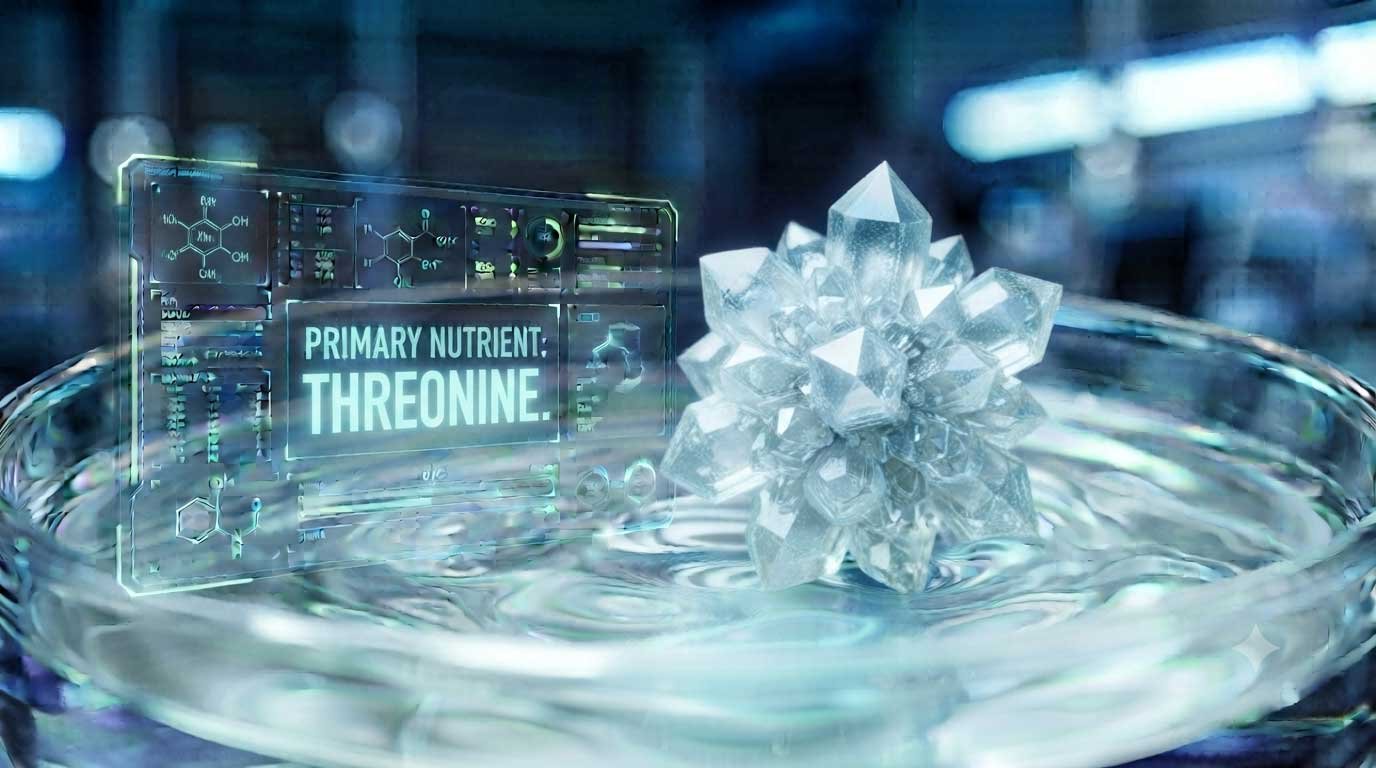
The Quiet Workhorse Behind Your Body’s Protein Machinery
If you asked ten people to name an amino acid, you’d probably hear tryptophan, maybe leucine if they lift weights, perhaps glutamine if they’ve spent time in a supplement aisle. Threonine rarely makes the list. And that’s a shame, because threonine is one of those nutrients that does its job so consistently, so quietly, that it almost never gets credit for the work.
Here’s the thing about threonine that I find genuinely fascinating after years of digging through amino acid research: it was the last of the nine essential amino acids to be identified, discovered back in 1936. Everything else had already been mapped out, and threonine was still hiding, doing its business in the background. That pattern of being overlooked has more or less continued ever since. Ask someone about protein balance and they’ll talk about “getting enough protein” in vague terms. They won’t mention that protein balance is really a story about individual building blocks, and threonine is one of the load-bearing ones.
Table of Contents

Let’s back up for a second, because I think it helps to understand what “essential” actually means here. Your body can manufacture some amino acids on its own—these are called non-essential, which is a slightly misleading term because they’re still important, just not dietarily required. Threonine isn’t one of those. Your body has no internal factory for it. None. Every molecule of threonine you use for muscle repair, immune signaling, or connective tissue formation has to come from what you eat. That single fact changes how I think about dietary planning, and it should change how you think about it too.

So what does threonine actually do once it’s inside you? A few things, and they’re not small. It’s a structural component of collagen and elastin, the proteins that give your skin its elasticity and your joints their cushioning. It plays a role in fat metabolism inside the liver, helping to prevent the kind of fatty buildup that nobody wants to hear their doctor mention at a checkup. It’s deeply involved in gut health, specifically in the production of mucin, the protective slime layer that lines your intestinal wall. And it has a hand in immune function, supporting the mechanisms that let your T-cells do their job of recognizing and responding to threats.
I want to be upfront about something: threonine deficiency is not common in people eating a reasonably varied, protein-inclusive diet. This isn’t one of those nutrients where headlines scream about a hidden epidemic. But “not common” doesn’t mean “never happens,” and there are populations—people on restrictive diets, certain elderly individuals, people recovering from illness or surgery—where threonine intake deserves a second look. Protein balance, after all, isn’t just about hitting a gram target. It’s about making sure the individual amino acids that build and repair your body are actually present in the right amounts.
What makes threonine particularly interesting to me, compared to some of the flashier amino acids, is how much of it gets used right where it enters your body. A striking proportion of dietary threonine is extracted by the gut itself before it ever reaches general circulation. Your intestines are, in a very real sense, first in line for this nutrient. That’s not true of most amino acids, which get absorbed and distributed more evenly. Threonine is a gut-first amino acid, and once you understand that, its relationship to digestive health starts to make a lot more sense.
I also want to touch on something that gets glossed over in a lot of amino acid content: the idea that these compounds work in isolation. They don’t. Threonine interacts with glycine and serine synthesis, meaning its usefulness is tied up with other amino acids in ways that are easy to overlook if you’re just scanning an ingredient label for “threonine content” and calling it a day. Protein balance is a systems issue, not a single-nutrient issue, and threonine is one of the more underappreciated pieces of that system.
Over the course of this article, I want to walk through what the research actually says about threonine—not the supplement marketing version, but the version grounded in nutrition science and clinical study. We’ll get into where it comes from in food, how much you plausibly need, what happens when intake runs low, and where the line sits for excessive intake. My hope is that by the end, threonine stops being an amino acid you’ve vaguely heard of and becomes one you actually understand, the way you might already understand protein or fiber. It deserves that level of attention, even if it’s never going to be the amino acid with its own energy drink.
There’s also a broader point buried in here about how we think about nutrition generally. We tend to obsess over macronutrients—protein, carbs, fat—while treating the micro-level details, like which specific amino acids make up that protein, as an afterthought. But protein quality isn’t just about grams. It’s about composition. And threonine, unglamorous as it is, happens to be one of the amino acids where composition genuinely matters for things like gut lining integrity and connective tissue resilience. That’s worth thirty seconds of your attention, even on a subject this under-discussed.
Key Health Benefits
Threonine’s benefits don’t announce themselves the way some other nutrients do. There’s no immediate energy jolt, no dramatic mood shift, nothing you’ll notice within an hour of eating a threonine-rich meal. Its effects are structural and cumulative, which is exactly why they’re so easy to underestimate and so important to actually understand.
Supporting Collagen and Elastin Production
Let’s start with the most talked-about role: connective tissue. Threonine contributes to the synthesis of collagen and elastin, two proteins responsible for skin firmness, joint cushioning, and the general structural integrity of your tissues. It does this partly by serving as a precursor for glycine and serine, both of which are heavily represented in collagen’s amino acid sequence. Glycine alone makes up roughly a third of collagen’s composition, so anything that supports glycine availability indirectly supports collagen output.
I’ve talked to people who assume collagen production is purely about “eating more collagen” or taking a collagen supplement. That’s an oversimplified way of looking at it. Collagen synthesis is a manufacturing process, and threonine is one of the raw material suppliers feeding that process. Skip the raw material, and the manufacturing line slows down regardless of how much finished product you’re trying to consume directly.
Gut Barrier and Digestive Health
This is, in my opinion, threonine’s most underrated function. The intestinal lining is coated with mucin, a glycoprotein layer that protects your gut wall from digestive acids, bacteria, and mechanical wear. Mucin happens to be unusually rich in threonine—some estimates put threonine content at close to a third of the amino acids in certain mucin proteins. That’s an extraordinary concentration for a single amino acid.
Because mucin is constantly being produced and shed, your gut has a near-continuous demand for threonine. Research in animal models has shown that when dietary threonine runs short, mucin production and the structural quality of the gut lining both suffer. That’s not a minor footnote; it points to threonine playing a direct role in maintaining the barrier that keeps digestive contents where they belong and keeps unwanted material from crossing into circulation.
Immune System Support
Threonine also intersects with immune function in a way that surprised me when I first read into it. A specific class of enzymes called serine/threonine kinases regulate the internal signaling programs that determine how T-cells behave during an immune response. These kinases essentially act as switches, turning immune activity on or off in response to signals from antigens and cytokines. Adequate threonine availability supports the broader amino acid pool these processes draw from, which is part of why chronic inadequate protein intake is so often linked to weakened immune resilience.
Fat Metabolism and Liver Function
Threonine is considered a lipotropic compound, meaning it helps regulate fat accumulation in the liver. It supports mitochondrial function within liver cells, which in turn helps the liver process and clear fat rather than allowing it to accumulate. This isn’t a weight-loss claim—I want to be careful about that distinction—but it does speak to threonine’s role in maintaining normal liver metabolic function over time.
Muscle Tissue and Growth Support
Like other essential amino acids, threonine contributes to the pool of building blocks used for muscle protein synthesis. It’s not typically singled out the way leucine is for muscle-building purposes, since leucine has a more direct signaling role in triggering protein synthesis. But threonine still needs to be present in sufficient quantity for the overall synthesis process to run efficiently. Think of it less as the spark plug and more as one of the necessary components sitting further down the assembly line—still essential, just less glamorous.
A Role in Nervous System Function
There’s emerging, though still limited, evidence connecting threonine to nervous system processes, particularly through its relationship with glycine, which acts as an inhibitory neurotransmitter in the central nervous system. Some research has examined oral L-threonine supplementation in the context of spasticity, including in conditions like amyotrophic lateral sclerosis, with modest reported effects on muscle contraction control. This is an area where I’d urge caution about overstating the evidence—the research here is exploratory rather than conclusive, and threonine should not be viewed as a treatment for neurological conditions. But it does illustrate how far-reaching this amino acid’s biochemical fingerprints are.
Taken together, these benefits paint a picture of an amino acid that’s less about a single dramatic effect and more about ongoing structural and functional maintenance—skin, gut, immune signaling, liver metabolism, muscle protein synthesis. It’s the connective tissue of your nutritional needs, both literally and figuratively.
Dietary Sources
If there’s good news buried in this discussion, it’s that threonine is not hard to find in a typical diet. It’s present across a wide range of protein-containing foods, and most people eating a balanced diet with regular protein intake are getting adequate amounts without thinking about it at all. Still, it’s worth knowing where it’s concentrated, especially if you’re managing a restrictive diet or trying to optimize protein balance more deliberately.
Animal-Based Sources
Animal proteins tend to be the most concentrated and most “complete” sources of threonine, meaning they deliver it alongside the full spectrum of essential amino acids in ratios your body can use efficiently.
- Poultry — chicken and turkey are reliable, everyday sources, particularly the breast meat.
- Red meat — beef and pork contribute meaningful amounts of threonine as part of their overall amino acid profile.
- Fish and seafood — cod, salmon, and tuna all provide threonine, with the added benefit of omega-3 fatty acids.
- Eggs — a genuinely efficient source, since egg protein is often used as a reference standard for amino acid quality.
- Dairy — cottage cheese, milk, and whey-based products are particularly notable, since whey protein is comparatively rich in threonine relative to many other protein sources.
Plant-Based Sources
Plant sources can absolutely supply threonine, though the concentration per serving tends to be lower than in animal proteins, and combining sources matters more for hitting adequate levels.
- Legumes — lentils, chickpeas, and beans are solid contributors, and they’re a mainstay for anyone eating plant-forward.
- Soy products — tofu, tempeh, and edamame carry a relatively complete amino acid profile compared to most other plant proteins.
- Nuts and seeds — sesame seeds, pumpkin seeds, and pistachios contain threonine in smaller but still useful amounts.
- Whole grains — quinoa stands out here because, unlike most grains, it delivers a fairly complete amino acid spread, threonine included.
- Wheat germ — often overlooked, but a reasonably good contributor within a grain-based diet.
Why Food Combining Still Matters
Here’s something I think gets lost in a lot of modern nutrition advice: the old idea of “complementary proteins” wasn’t just a fad from decades-old vegetarian cookbooks. It has real biochemical grounding. Because plant proteins vary in which amino acids they’re relatively low in, eating a diverse mix across a day—legumes with grains, nuts with seeds—helps ensure your overall intake pattern doesn’t leave threonine, or any other essential amino acid, chronically underrepresented.
I’m not going to tell you that you need to obsessively pair foods at every single meal. That level of precision isn’t necessary for most people, and the research on protein complementation has moved toward a more relaxed “over the course of the day” view rather than a rigid per-meal requirement. But if your diet leans heavily plant-based and heavily repetitive—same three meals on rotation—it’s worth taking stock of whether threonine-containing foods are actually showing up with any regularity.
Practical Meal Patterns
For someone eating an omnivorous diet, threonine intake usually isn’t something you need to plan around directly. A day that includes eggs at breakfast, a chicken or fish-based lunch, and a dinner with some dairy or additional meat will comfortably meet needs. For someone eating plant-based, a day built around lentils, tofu, quinoa, and a mix of nuts and seeds can absolutely get there too—it just requires slightly more intentional variety.
One thing worth mentioning: cooking methods and food processing generally don’t destroy threonine the way heat can degrade certain vitamins. Amino acids are fairly heat-stable in this context, so you don’t need to worry that grilling your chicken or boiling your lentils is meaningfully reducing threonine content. The bigger variable is simply whether protein-containing foods are showing up in your diet with enough regularity and diversity in the first place.
Dosage & Deficiency
This is the part of the conversation where things get more precise, and also where I think a lot of online content gets a little sloppy. Amino acid requirements aren’t as widely publicized as vitamin RDAs, so let’s actually walk through what the data shows.
How Much Threonine Do You Need
Historical estimates from the 1985 FAO/WHO/UNU expert consultation put the threonine requirement at around 7 mg per kilogram of body weight per day. That number has since been revisited. More recent research using indicator amino acid balance techniques—a more precise method for pinning down amino acid requirements—has suggested the actual mean requirement is closer to 15 mg per kilogram of body weight per day, roughly double the older estimate, based on a proposed tentative mean requirement of 15 mg per kilogram per day derived using a 24-hour indicator amino acid balance technique. For a 70-kilogram adult, that works out to somewhere in the neighborhood of 1,000 milligrams of threonine daily, though individual needs vary based on body size, activity level, and overall protein intake.
It’s worth noting that these are research-derived estimates rather than an official, universally standardized RDA the way you’d see for something like vitamin C. Amino acid requirement research has evolved over the decades as measurement techniques have improved, and threonine’s recommended intake has been revised upward as a result. If you’re eating a diet that meets general protein recommendations—roughly 0.8 grams of protein per kilogram of body weight for a sedentary adult, more for active individuals—you’re very likely covering your threonine needs without any special effort.
Signs of Threonine Deficiency
True isolated threonine deficiency, meaning a shortfall in threonine specifically rather than protein generally, is genuinely uncommon in people eating varied diets. Deficiency tends to show up as part of broader inadequate protein intake rather than as its own distinct phenomenon. That said, when threonine intake does run low, a cluster of symptoms has been associated with it:
- Digestive disturbances, including impaired gut lining integrity given threonine’s role in mucin production
- Fatty liver changes, related to threonine’s lipotropic function
- Muscle weakness and slower recovery from physical exertion
- Impaired immune response and increased susceptibility to infection
- Mood changes, irritability, and difficulty concentrating
- In more severe or prolonged cases, poor growth and development, particularly relevant in pediatric contexts
Who Should Pay Closer Attention
A few groups are worth flagging specifically. People on very restrictive diets—whether for medical, ethical, or personal reasons—that limit variety in protein sources are more likely to fall short on specific amino acids like threonine, even if total protein intake looks adequate on paper. Older adults, who often experience reduced appetite and lower overall food intake, are another group where amino acid adequacy deserves attention, particularly since maintaining muscle mass becomes more physiologically demanding with age. People recovering from illness, surgery, or significant physical trauma also have elevated protein and amino acid needs during the recovery window, threonine included, since tissue repair draws heavily on the same building blocks.
Premature infants represent a special case worth mentioning, since research has shown that formula-fed preterm infants can show reduced intestinal threonine utilization compared to those receiving colostrum, with implications for gut barrier development. This is a highly specific clinical context, not something that applies to general adult nutrition, but it underscores how central threonine is to gut tissue formation during periods of rapid growth.
Should You Supplement
For most people, the honest answer is no—dietary sources are sufficient, and there’s limited justification for standalone threonine supplementation outside of clinical contexts like managing spasticity symptoms under medical supervision, or specific gastrointestinal conditions where a healthcare provider has identified a targeted need. If you’re concerned about your intake, the more sensible first step is looking at your overall dietary protein pattern rather than reaching for an isolated amino acid supplement. Whole protein sources deliver threonine alongside the full amino acid complement your body needs, in ratios that don’t require guesswork.
Toxicity & Risks
Threonine has a reputation, deserved in my view, as one of the gentler amino acids when it comes to excess intake. That doesn’t mean “unlimited is fine,” but the margin of safety here is genuinely wider than for some other supplemented amino acids.
What Happens With Excess Intake
Clinical research on L-threonine supplementation in healthy adults has found a fairly reassuring safety profile at commonly studied doses. A randomized, double-blind controlled trial evaluating graded doses of L-threonine supplementation—up to 12 grams per day over four weeks in healthy adult men—found that anthropometric parameters, dietary intake, and most biochemical parameters were not affected by supplementation, with the study establishing a no-observed-adverse-effect-level of 12 grams per day. That’s a substantially higher intake than anyone would realistically get from food alone, which puts typical dietary threonine consumption well within a comfortable safety margin.
Earlier research on threonine supplementation in the context of spasticity treatment reinforced this general picture, with no serious adverse effects reported at daily doses up to 6 grams sustained over a two-week period. Some minor symptoms like headache and backache have been reported at very high intravenous doses in older studies, but these are far removed from anything relevant to oral dietary intake or typical supplementation.
Animal Research and Amino Acid Imbalance
It’s worth mentioning that animal studies have shown a different picture at genuinely extreme intake levels. Research in rats found that adding threonine at 2% or 4% of the diet—well beyond anything achievable through normal eating—caused notable reductions in weight gain and food intake, along with elevated markers suggesting increased muscle protein breakdown. This reflects a broader principle in amino acid nutrition known as amino acid imbalance, where a large excess of one amino acid can interfere with the transport and utilization of others, since many amino acids compete for the same transport mechanisms into cells and across the blood-brain barrier.
This is a useful reminder that “essential” doesn’t mean “more is automatically better.” Amino acids operate within a balanced system, and disrupting that balance in either direction—too little or a significant excess—can create problems. The doses required to trigger these effects in animal studies, however, are far beyond what a person would encounter through diet or standard supplementation practices.
Practical Risk Considerations
For the average person eating threonine through whole food sources, there is essentially no realistic risk of toxicity. Food-based intake is self-limiting; you would need to eat an enormous and unrealistic quantity of protein-rich food to approach anything resembling the doses studied in supplementation trials, let alone the extreme levels used in animal research.
Where more caution is warranted is with isolated amino acid supplements, particularly for people managing kidney or liver conditions, since amino acid metabolism places demands on both organs. Anyone considering threonine supplementation for a specific therapeutic purpose, rather than general dietary adequacy, should be doing so under medical guidance rather than self-directing dosage based on general wellness content. This isn’t a compound with dramatic acute danger, but “generally well-tolerated in research settings” is not the same thing as “appropriate for unsupervised self-experimentation,” especially at gram-level doses.
Interactions Worth Knowing About
Because threonine shares transport pathways with other amino acids, particularly other large neutral amino acids, very high intake of one can theoretically influence the absorption and utilization of others. This is more of a theoretical and research-context concern than a practical everyday one for most people, but it’s part of why balanced whole-food protein sources are generally preferable to isolated single amino acid supplementation for anyone without a specific clinical reason to do otherwise.
Getting the Balance Right Without Overthinking It
After spending this much time in the weeds of threonine research, here’s where I land: this is not a nutrient that demands anxiety or obsessive tracking. It’s a nutrient that rewards basic dietary competence. Eat a reasonably varied diet with regular protein intake—animal or plant-based, doesn’t matter which, as long as it’s diverse—and threonine takes care of itself.
What I’d actually encourage you to take away from this isn’t a specific number to hit or a supplement to add to your cart. It’s a shift in how you think about protein generally. “Getting enough protein” is only half the picture. The other half is making sure that protein is coming from varied enough sources that all nine essential amino acids, threonine included, are showing up in adequate amounts. Someone eating the same three foods on repeat, even if the total protein number looks fine on a tracking app, may still be shortchanging specific amino acids without realizing it.
If you take one practical action from everything above, let it be this: look at your week, not your day. Are you rotating through different protein sources—some poultry, some fish, some legumes, some dairy, some eggs? Or are you stuck in a loop of the same two or three items? Amino acid adequacy, threonine’s included, is much more forgiving when you zoom out to a weekly pattern rather than obsessing over a single meal.
For the vast majority of people, threonine deficiency simply isn’t going to happen if basic dietary variety is in place. And on the flip side, excess intake through food is essentially a non-issue; the safety margin for this amino acid is wide, based on what the clinical research has shown. The real risk isn’t toxicity—it’s a kind of quiet neglect, where an unglamorous but genuinely important nutrient gets left out of the conversation entirely because it doesn’t have the marketing presence of something like collagen powder or a BCAA blend.
Threonine deserves a spot in how you think about nutrition, not because it’s dramatic, but precisely because it isn’t. It does structural, background work—gut lining, connective tissue, immune signaling, liver metabolism—the kind of work that doesn’t announce itself until it’s missing. Respect that, feed it consistently through a varied diet, and it will keep doing its job without asking for much in return.
Article Sources
At AncientHerbsWisdom, our content relies on reputable sources, including peer-reviewed studies, to substantiate the information presented in our articles. Our primary objective is to ensure our content is thoroughly fact-checked, maintaining a commitment to accuracy, reliability, and trustworthiness.
- Borgonha, S., Regan, M. M., Oh, S. H., Condon, M., & Young, V. R. (2002). Threonine requirement of healthy adults, derived with a 24-h indicator amino acid balance technique. American Journal of Clinical Nutrition, 75(4), 698-704. https://doi.org/10.1093/ajcn/75.4.698
- Finlay, D., & Cantrell, D. (2011). The coordination of T-cell function by serine/threonine kinases. Cold Spring Harbor Perspectives in Biology, 3(1), a002261. https://doi.org/10.1101/cshperspect.a002261
- Matsumoto, H., Miura, N., Naito, M., & Elango, R. (2025). Evaluation of safe utilization of L-threonine for supplementation in healthy adults: A randomized double blind controlled trial. Amino Acids, 57(1), 30. https://doi.org/10.1007/s00726-025-03461-6
- National Academies of Sciences, Engineering, and Medicine (Institute of Medicine). (2005). Protein and amino acids. In Dietary Reference Intakes for Energy, Carbohydrate, Fiber, Fat, Fatty Acids, Cholesterol, Protein, and Amino Acids. National Academies Press. https://www.ncbi.nlm.nih.gov/books/NBK234922/
- Cleveland Clinic. (2023). Amino acids. https://my.clevelandclinic.org/health/articles/22243-amino-acids
- Yang, Z., & Liao, S. F. (2019). Physiological effects of dietary amino acids on gut health and functions of swine. Frontiers in Veterinary Science, 6, 169. https://doi.org/10.3389/fvets.2019.00169

- Phosphatidic Acid: Supporting Muscle Growth and Strength - July 31, 2026
- Ceramides: Supporting Healthy Skin From Within - July 31, 2026
- Synbiotics: Combining Prebiotics and Probiotics Together - July 31, 2026