
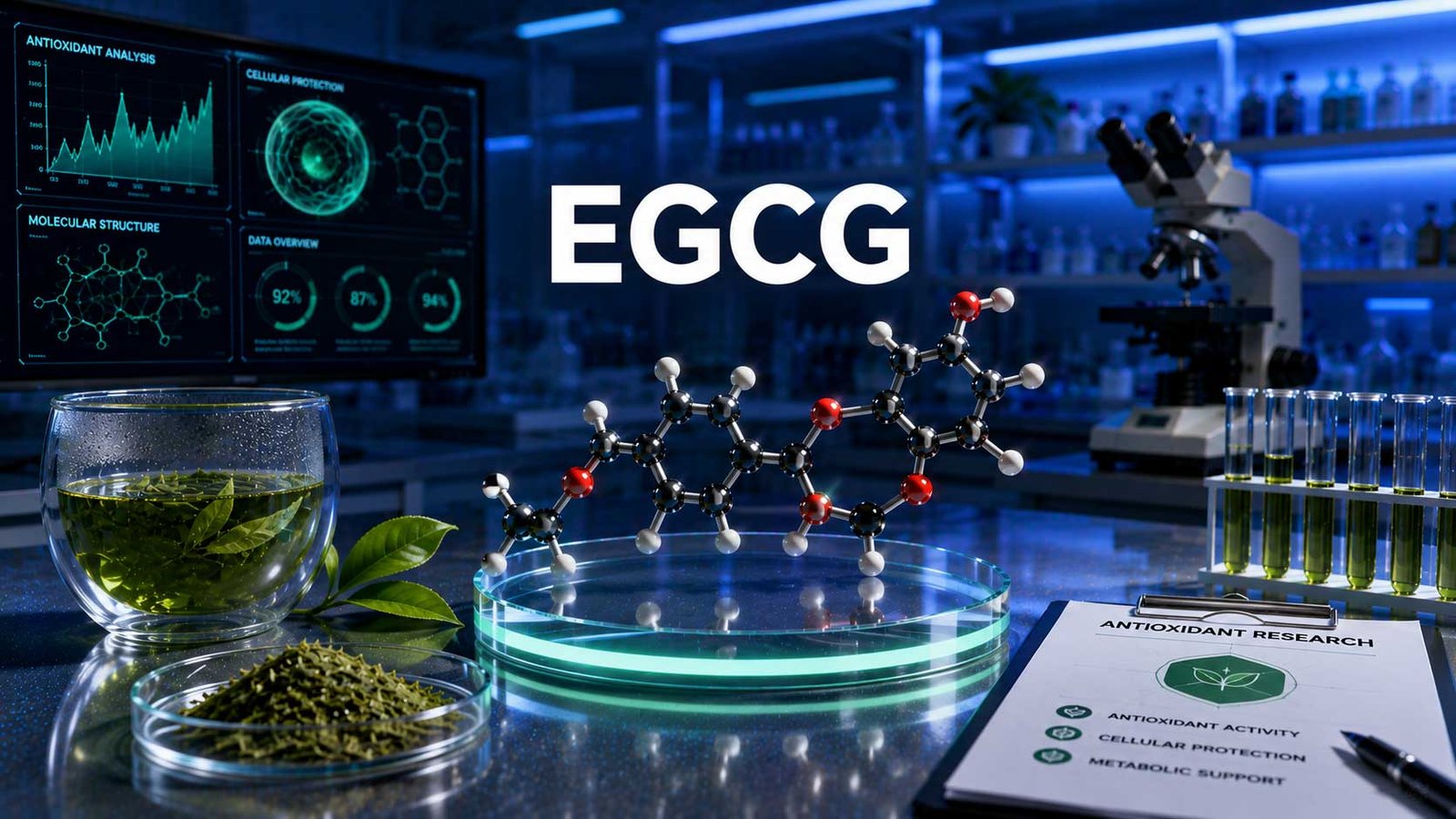
The Molecule Hiding in Every Cup of Green Tea
There’s a moment, somewhere around the third or fourth sip of a fresh cup of green tea, when the slightly bitter, grassy edge stops feeling harsh and starts feeling almost medicinal. That’s not your imagination. That bitterness is largely EGCG doing its thing, and if you’ve spent any real time reading about tea, supplements, or antioxidants, you’ve probably run into this acronym dozens of times without ever getting a straight answer about what it actually is.
So let’s fix that. EGCG stands for epigallocatechin gallate, and it’s the most abundant and most studied catechin in green tea. Catechins themselves are a family of plant compounds that belong to the broader flavonoid group, and green tea happens to be one of the richest dietary sources of them on the planet. Depending on how the leaves are grown, harvested, and processed, catechins can make up a quarter to a third of the dry weight of green tea leaves, and EGCG alone is thought to account for roughly half of that total polyphenol content. That’s a striking concentration for a single compound, and it’s a big part of why green tea gets singled out among beverages the way it does.
Table of Contents


I’ve been fascinated by this molecule for a long time, not because it’s some miracle cure (it isn’t, and anyone who tells you otherwise is selling something), but because the research behind it is genuinely deep. We’re talking about a compound that scientists have poked and prodded in petri dishes, animal models, and human clinical trials for decades now, and the picture that’s emerged is nuanced in a way that a lot of the marketing copy around “green tea extract” conveniently skips over.
Here’s the short version, and we’ll unpack all of it: EGCG behaves like an antioxidant, meaning it can help neutralize unstable molecules called free radicals before they damage your cells. But it doesn’t stop there. Researchers have documented that EGCG interacts with dozens of signaling pathways in the body, ones connected to inflammation, fat metabolism, blood vessel function, and even how cells age and divide. It’s absorbed in your gut, partly metabolized by your gut bacteria, and eventually makes its way through your bloodstream to tissues throughout the body, including, notably, across the blood-brain barrier.
What makes EGCG different from a lot of trendy “superfood” compounds is that it isn’t hiding in some exotic berry you’ve never heard of. It’s sitting in the mug on your desk right now, assuming you’re a tea drinker, or it’s an easy addition if you’re not. That accessibility is part of the appeal. You don’t need to source it from a specialty shop or take a leap of faith on a supplement with questionable manufacturing standards. A basic cup of green tea gets you a meaningful dose.
That said, I want to be upfront about something before we go further: the enthusiasm around EGCG has a flip side. Concentrated green tea extracts, the kind sold in capsules for weight loss or “detox,” deliver EGCG in amounts and forms that your body never evolved to handle from a beverage, and that distinction matters enormously once we get to the dosage and safety sections later on. This isn’t a “more is better” compound, and treating it that way is where people run into trouble.
There’s also a reasonable question worth asking upfront: why does green tea’s EGCG content get so much more attention than the catechins in black tea or oolong? The answer comes down to processing. Black tea undergoes full oxidation, a process that converts much of the EGCG into other compounds called theaflavins and thearubigins. Oolong sits somewhere in the middle, partially oxidized. Green tea, by contrast, is steamed or pan-fired shortly after harvest specifically to halt oxidation, which is why it preserves so much more of its original catechin profile, EGCG included. If you’re chasing EGCG specifically, green tea (and matcha, which we’ll get to) is where you want to be looking.
Over the next few sections, I want to walk through what the science actually supports when it comes to EGCG’s health benefits, where you can realistically get it in your diet, how much is considered a reasonable and safe intake, and where the genuine risks lie, because they do exist, and pretending otherwise would be doing you a disservice. My goal isn’t to hype this compound up or tear it down. It’s to give you the working knowledge that lets you make an informed decision about your own tea habit, or your own supplement cabinet, without falling for either extreme.
Key Health Benefits
I want to start this section with a caveat, because it matters: most of what we know about EGCG’s health effects comes from a mix of cell studies, animal research, and human clinical trials of varying size and quality. Some of the findings are quite robust and replicated across multiple studies. Others are promising but still preliminary. I’ll try to be clear about which is which as we go, because the worst thing I could do here is flatten a nuanced evidence base into a list of confident claims.
Antioxidant and Anti-Inflammatory Activity
This is EGCG’s bread and butter, the mechanism that most of its other effects seem to flow from. Free radicals are unstable molecules that your body produces naturally through metabolism, and also picks up from things like pollution, UV exposure, and cigarette smoke. In small amounts, they’re not a big deal. Your cells have their own defense systems. But when free radical production outpaces your body’s ability to neutralize them, a state called oxidative stress sets in, and that’s been linked to accelerated cellular aging and a long list of chronic conditions.
EGCG’s chemical structure, specifically the arrangement of hydroxyl groups on its aromatic rings, makes it an unusually effective radical scavenger. Research has found that its antioxidant capacity, at least in laboratory settings, actually outperforms vitamins C and E on a molecule-for-molecule basis. It also has metal-chelating properties, meaning it can bind to certain trace metals in a way that prevents them from catalyzing further free radical formation.
On the inflammation side, EGCG has been shown in multiple studies to suppress the activity of NF-κB, a protein complex that acts like a master switch for inflammatory gene expression. When EGCG dampens NF-κB signaling, it tends to reduce the downstream production of inflammatory enzymes and messengers. This is one of the more consistently replicated findings in the EGCG literature, showing up in cell studies, animal models of conditions like colitis, and some human research as well.
Cardiovascular Support
If you’ve ever heard that green tea drinkers tend to have lower rates of heart disease, EGCG is usually the compound credited with that association. A number of clinical trials and reviews point to modest but meaningful effects on markers like LDL cholesterol, blood pressure, and endothelial function, which is essentially how well your blood vessels dilate and respond to changes in blood flow.
A 2020 systematic review covering more than three thousand participants across dozens of trials found that green tea consumption was generally associated with reductions in total cholesterol and LDL cholesterol. Separately, research has documented that EGCG can help reduce oxidation of LDL particles themselves, which matters because oxidized LDL is considered more directly implicated in plaque formation than LDL cholesterol levels alone. Some trials involving people with prehypertension or type 2 diabetes have also reported reductions in both systolic and diastolic blood pressure with regular EGCG intake.
None of this means green tea replaces cardiovascular medication or a heart-healthy lifestyle. But as one piece of a broader pattern of eating and drinking, the evidence for a supportive role here is fairly consistent.
Metabolic and Weight Management Effects
This is probably the benefit most people associate with green tea, thanks to decades of supplement marketing, and the actual research is more modest than the marketing suggests but not nonexistent. Several systematic reviews have looked at EGCG’s effects on resting metabolic rate, fat oxidation, and body composition. One review covering fifteen studies and nearly five hundred participants found that EGCG supplementation, at doses generally between 100 and 800 milligrams, showed measurable effects on respiratory quotient, a marker that reflects a shift toward burning more fat for fuel.
Other trials have reported reductions in body weight, BMI, and waist circumference with daily green tea or EGCG intake over periods of eight to twelve weeks, though the magnitude tends to be small, often just a few pounds over months rather than dramatic transformations. The proposed mechanisms include EGCG’s activation of AMPK, an enzyme that plays a central role in how cells regulate energy, along with its ability to inhibit pancreatic lipase, an enzyme involved in digesting dietary fat.
I’d frame this one honestly: EGCG appears to nudge metabolism in a favorable direction, not override it.
Blood Sugar and Metabolic Health
Emerging research has also looked at EGCG’s role in insulin sensitivity and glucose regulation. Clinical trials involving people with type 2 diabetes have reported improvements in insulin sensitivity, fasting glucose, and lipid profiles with EGCG supplementation, with proposed mechanisms including reduced oxidative stress in pancreatic cells and improved insulin signaling pathways. Animal studies suggest EGCG may also slow glucose absorption in the intestine, blunting post-meal blood sugar spikes.
Cognitive and Neuroprotective Potential
Because EGCG can cross the blood-brain barrier, researchers have taken a serious interest in its potential neuroprotective properties. Reviews of human, animal, and cell culture research point to antioxidant and anti-inflammatory activity within brain tissue, along with effects on pathways connected to amyloid protein aggregation, which is relevant to Alzheimer’s research specifically. This area remains earlier-stage than the cardiovascular or metabolic research, and researchers are candid that more work is needed before we can say anything definitive about EGCG preventing or treating degenerative brain conditions in humans. Still, it’s one of the more exciting directions the science is heading.
Skin and Anti-Aging Effects
EGCG’s antioxidant and anti-inflammatory properties have also drawn attention in dermatology research, particularly around UV protection. Studies on skin cells have found that EGCG can help protect against UV-induced damage and modulate inflammatory signaling in ways that may reduce photoaging. This has led to its inclusion in a growing number of topical skincare formulations, separate from any benefit gained through drinking tea.
Taken together, the pattern across all of these areas is consistent: EGCG shows up as a genuine, mechanistically plausible contributor to health, generally through antioxidant and anti-inflammatory pathways, with the clinical trial evidence ranging from solid (cardiovascular markers) to promising but early (cognitive protection). It’s not a cure for anything, and no reputable researcher in this space claims it is. It’s a compound worth taking seriously as part of a broader pattern of healthy habits, which brings us to the practical question of where you actually get it.
Dietary Sources
Here’s where things get genuinely useful, because knowing EGCG has benefits doesn’t help much if you don’t know how to actually get a meaningful amount into your diet. The good news is that this isn’t a compound requiring an exotic shopping list. The bad news is that content varies a lot more than most people realize, depending on the type of tea, how it’s grown, how it’s brewed, and even the season it was harvested in.
Green Tea, the Obvious Source
A standard eight-ounce cup of traditionally brewed green tea generally provides somewhere in the range of 30 to 80 milligrams of EGCG, though some analyses have found ranges as wide as 20 to 80 milligrams depending on the specific product, growing conditions, and brewing method. That’s a meaningful spread, and it means two cups of green tea from different brands or regions could deliver noticeably different amounts of the compound you’re actually after.
A few variables consistently show up as the biggest influences on final EGCG content:
- Growing conditions. Tea plants grown in full sun tend to produce more catechins overall than shade-grown varieties, since catechin production is partly a plant defense response to UV exposure.
- Harvest timing. Younger, spring-picked leaves generally differ in catechin concentration compared to leaves harvested later in the season.
- Processing method. Steamed Japanese-style green teas (like sencha) and pan-fired Chinese-style green teas can have meaningfully different catechin profiles, even though both count as “green tea.”
- Brewing temperature and time. Water that’s too cool won’t extract catechins efficiently, while water that’s too hot (boiling) can degrade some of them. Most guidance points toward water in the 160 to 180°F range, steeped for two to three minutes, as a reasonable middle ground for preserving EGCG content without over-extracting bitterness.
Matcha, the Concentrated Option
If you want to maximize your EGCG intake per cup, matcha is genuinely the strongest widely available option. Because matcha is made from whole, ground tea leaves that you consume directly rather than steeping and discarding, you’re getting the full catechin content of the leaf rather than whatever happens to leach into the water during a brief steep. Estimates for matcha’s EGCG content per prepared serving range fairly widely, roughly 70 to 200 milligrams depending on the grade and preparation, with some sources reporting figures on the higher end of that range for ceremonial-grade matcha.
I’ll flag one common myth here, because it circulates a lot: you may have seen claims that matcha contains over a hundred times more EGCG than regular green tea. That figure has been traced back to a single, methodologically flawed study taken wildly out of context, and it doesn’t hold up. A more accurate, evidence-based estimate puts matcha at roughly two to three times the EGCG concentration of a standard cup of steeped green tea, which is still a meaningful bump, just not the outlandish figure that gets repeated in marketing materials.
White Tea and Oolong
White tea, which undergoes minimal processing and no oxidation, also retains a solid catechin profile, sometimes comparable to or even exceeding certain green teas, though research specifically quantifying white tea’s EGCG content is less abundant than the green tea literature. Oolong, being partially oxidized, generally falls somewhere between green and black tea in terms of preserved catechin content.
Black Tea
Black tea undergoes full oxidation during processing, a step that converts much of its original EGCG into theaflavins and thearubigins, the compounds responsible for black tea’s characteristic color and flavor. This doesn’t mean black tea lacks health-promoting polyphenols entirely, but if EGCG specifically is your target, black tea is a comparatively weak source.
Beyond Tea
EGCG does show up in small amounts in other foods, though nothing comes close to tea’s concentration. Trace amounts have been identified in certain fruits like apples and berries, as well as in some nuts and even cocoa, though these contributions are generally minor compared to what a cup of green tea delivers.
Supplements and Extracts
Green tea extract supplements are widely available, typically standardized to a specific EGCG percentage, and they range enormously in dose, from as little as 20 milligrams to as much as 500 milligrams or more per serving. This is precisely the category where the dosage conversation becomes critical, because concentrated extracts deliver EGCG in a form and quantity that bypasses the natural buffering effect of drinking a beverage slowly over time. We’ll get into exactly why that distinction matters in the next section, but it’s worth flagging here as you’re thinking about where your EGCG is coming from.
A practical takeaway if you’re trying to build EGCG into your routine through food and drink: a cup or two of properly brewed green tea or a serving of quality matcha, worked into your normal day, is a sustainable way to get a meaningful and biologically reasonable dose, without venturing into the territory where concentrated extracts start raising legitimate safety questions.
Dosage & Deficiency
I want to address something upfront that trips a lot of people up: EGCG isn’t a nutrient in the traditional sense, like vitamin C or iron, where your body has an established biological requirement and a clear deficiency syndrome if you don’t get enough. It’s a bioactive plant compound. Nobody develops a diagnosable “EGCG deficiency.” So this section is less about a minimum you need to hit and more about what a reasonable, evidence-informed intake range looks like, along with what the research says about upper limits.
What a Typical Intake Looks Like
Research on population-level intake gives us a useful baseline. Data reviewed by European food safety authorities found that the average daily EGCG intake among adults who regularly drink green tea infusions ranges from roughly 90 to 300 milligrams per day, with some heavier tea drinkers reaching up to about 866 milligrams daily just from beverages. That’s a wide range, but it tells you something important: people have been consuming EGCG at these levels through ordinary tea-drinking habits for a very long time, and it’s generally regarded as safe territory.
Doses Used in Clinical Research
When you look at the clinical trials investigating specific benefits, the doses tested cluster in a fairly consistent range. Studies examining metabolic effects, like resting metabolic rate and fat oxidation, have generally used EGCG doses between 100 and 800 milligrams per day, administered either acutely or over periods of eight to twelve weeks. Trials looking at cardiovascular markers and blood sugar regulation have used similar ranges, often in the 300 to 800 milligram territory. Some pharmacokinetic studies have pushed single doses as high as 1,600 milligrams to study absorption and safety, though that’s research-context dosing, not something reflected in typical consumer products or recommended for regular use.
What’s notable is that benefits have been documented across a fairly broad dose range, meaning you don’t necessarily need to chase the highest number to see meaningful effects. Several reviews have found favorable metabolic outcomes at doses as modest as 100 to 460 milligrams daily, which lines up comfortably with what you’d get from two to four cups of green tea or a serving or two of matcha.
The 800 Milligram Threshold
This number deserves its own attention because it’s become something of a bright line in the regulatory and research literature. Following a comprehensive safety review, food safety regulators in the European Union concluded that doses of EGCG at or above 800 milligrams per day, when consumed as a concentrated food supplement, were associated with a statistically significant increase in liver enzymes, specifically markers like ALT and AST that indicate liver stress. Below that threshold, the same review found no clear evidence of liver injury, even over supplementation periods extending up to twelve months.
It’s worth being precise about what this means and doesn’t mean. The concern is specifically tied to concentrated supplements, not brewed tea consumed as a beverage. Regulators explicitly distinguished green tea infusions, even heavy consumption of them, as generally safe, noting that the rare cases of liver injury associated with tea beverages appeared to stem from unpredictable, individual reactions rather than a dose-dependent pattern. The 800 milligram concern is really about the concentrated, isolated form of the compound delivered through capsules and extracts, which is a fundamentally different exposure pattern than sipping tea across a morning.
Absorption Considerations
A few practical factors affect how much of the EGCG you consume actually gets absorbed and used by your body:
- Fasting versus fed state. Research has found that EGCG absorption is generally higher when taken on an empty stomach, though this same condition has also been linked to a greater likelihood of liver enzyme elevation in some studies, which is part of why supplement labels often recommend taking green tea extract with food.
- Vitamin C. Some research suggests that vitamin C may enhance EGCG’s bioavailability, which is one reason you’ll sometimes see the two paired in supplement formulations.
- Iron and other minerals. EGCG can bind to iron and reduce its absorption, an interaction that matters more for people managing iron levels than for the general population, but worth knowing if you take iron supplements around the same time as your tea.
- Individual variation. Genetic differences in enzymes like COMT, which metabolizes EGCG, mean that two people consuming the exact same dose can end up with meaningfully different blood concentrations.
A Reasonable Framework
If I had to distill this into practical guidance: getting your EGCG from brewed tea, whether that’s a couple of cups of green tea or a serving of matcha most days of the week, sits comfortably within the range that decades of population data and clinical research both support as reasonable and generally safe. If you’re considering a concentrated supplement for a specific reason, staying meaningfully under that 800 milligram daily threshold, taking it with food rather than on an empty stomach, and not stacking it with other stimulant or fat-burning supplements are all reasonable precautions grounded in what the research actually shows.
Toxicity & Risks
This is the section I think gets the least attention in most green tea content online, and it’s the one I’d actually encourage you to read most carefully, especially if you’re the type of person who sees “natural” and assumes that means “risk-free.” EGCG is a genuinely bioactive compound, and bioactive compounds, by definition, can cause harm as well as benefit depending on the dose and context.
The Liver Injury Signal
The most well-documented risk associated with EGCG is hepatotoxicity, meaning liver injury, and it’s specifically tied to concentrated green tea extract supplements rather than brewed tea. Regulatory reviewers who examined dozens of intervention trials found that doses at or above 800 milligrams of EGCG per day, taken as a supplement, produced statistically significant elevations in liver transaminases in a meaningful percentage of participants, generally under ten percent of those studied, though one large study found moderate to severe liver function abnormalities in just over five percent of treated subjects.
Beyond controlled trials, there’s also a body of real-world case reports. Certain weight-loss and fat-burner supplements containing concentrated green tea extract have been directly implicated in documented liver injury cases, serious enough in some instances to prompt product recalls. One frequently cited case-review estimated liver toxicity occurring in roughly one out of every hundred thousand boxes of a particular green tea extract product sold, typically emerging after around fifty days of use, which underscores that this isn’t necessarily an immediate reaction but can develop with sustained exposure.
It’s important to be fair to the research here: reviewers examining these cases have generally concluded that many instances of liver injury linked to green tea products likely reflect idiosyncratic reactions, meaning unpredictable, individual susceptibility rather than a straightforward dose-response relationship that applies uniformly to everyone. That’s actually part of what makes this risk tricky. Regulators have been explicit that they were unable to identify a dose that could be confidently labeled as universally safe, even below the 800 milligram mark, given this variability between individuals.
Why Brewed Tea Is a Different Story
I want to keep returning to this distinction because it’s the single most important nuance in this entire conversation. Traditional green tea infusions, brewed with hot water and consumed the way people have consumed tea for centuries, have consistently been found to carry a much lower risk profile than concentrated extracts. The reasoning comes down to both concentration and delivery: a cup of tea delivers EGCG gradually, diluted in liquid, alongside other tea compounds, and absorbed over the course of drinking rather than as a single concentrated bolus the way a capsule delivers it. The rare liver injury cases associated with beverages specifically have generally been described as unpredictable individual reactions rather than a systematic dose-related pattern.
Interactions Worth Knowing About
EGCG doesn’t exist in a vacuum, and there are a few interactions worth flagging:
- Iron absorption. EGCG inhibits the absorption of non-heme iron, the type found in plant foods, in a dose-dependent way. This is a bigger consideration for people with iron-deficiency anemia or those relying heavily on plant sources of iron, who may want to space their tea consumption away from iron-rich meals or supplements.
- Folate. Some research has identified an interaction between tea catechins and the folate transporter, potentially reducing folic acid bioavailability. This has led some researchers to suggest caution around heavy tea and folic acid co-consumption for pregnant women or others where folate status carries particular clinical significance.
- Medications. Because EGCG is metabolized through liver pathways and can influence certain drug-metabolizing enzymes, there’s ongoing research interest in potential interactions with various medications. Anyone on prescription medications, particularly those with known liver metabolism considerations, should mention regular high-dose green tea extract use to their doctor or pharmacist.
- Combination supplements. Historical cases of serious liver injury have often involved products combining green tea extract with other stimulant compounds, like caffeine sources or, in now-discontinued formulations, ephedra. Stacking multiple bioactive stimulant ingredients tends to compound risk rather than simply adding benefits.
Common, Milder Side Effects
Away from the liver injury conversation, which involves high-dose extracts specifically, the more common side effects people report with green tea or moderate EGCG intake are considerably milder: mild nausea, stomach discomfort, abdominal pain, and occasional headaches. These tend to correlate more with caffeine content and drinking tea on an empty stomach than with EGCG specifically, and they’re generally the kind of thing that resolves by adjusting how and when you drink it.
Populations Who Should Be Especially Cautious
A few groups warrant extra thought before reaching for concentrated EGCG supplements specifically: people with existing liver conditions, given the documented hepatotoxicity signal; pregnant or breastfeeding individuals, since safety research specifically in these populations is notably limited; anyone with iron-deficiency anemia, given the absorption interaction; and people currently taking medications that affect or are affected by liver enzyme activity. None of these groups need to avoid green tea as a beverage in ordinary amounts, but concentrated extract supplements are a different conversation, and one worth having with a healthcare provider rather than deciding on your own based on a product label.
I’ll say this plainly, because I think it gets lost in a lot of the content written about green tea: EGCG has a genuinely favorable overall safety profile at the doses most people encounter through drinking tea. This isn’t a compound to be afraid of. But the gap between “a cup of green tea” and “a concentrated 800-milligram capsule” is enormous, and treating them as interchangeable, which a surprising amount of marketing language implicitly does, is exactly where people get into trouble.
Where the Cup Meets the Science
If there’s one thing I hope sticks after all of this, it’s that EGCG deserves its reputation, just not the exaggerated version of it that shows up in supplement marketing. This is a compound with a genuinely deep research base behind it, spanning antioxidant chemistry, cardiovascular medicine, metabolic research, and even early neuroscience, and the through-line across almost all of it is the same: EGCG works quietly, through plausible biological mechanisms, at doses that are entirely achievable through ordinary tea drinking.
That’s actually the more satisfying conclusion, in my opinion, compared to the “miracle compound” framing you see elsewhere. You don’t need to hunt down some rare extract or commit to an expensive supplement regimen to get meaningful exposure to this molecule. A couple of cups of well-brewed green tea, or a serving of quality matcha worked into your week, sits comfortably within the ranges that both population data and clinical trials support. It’s sustainable in a way that a lot of trendier health interventions simply aren’t, because it doesn’t ask you to overhaul your life. It asks you to make one beverage choice a little more often.
Where I’d urge genuine caution is the extract and supplement side of this conversation. The 800 milligram threshold isn’t an arbitrary number regulators pulled out of thin air. It came out of a careful review of intervention trials that found a real, measurable signal for liver stress at and above that level, particularly when EGCG arrives in concentrated capsule form rather than diluted in a cup of tea sipped slowly over ten or fifteen minutes. If you’re drawn to supplements for a specific reason, that’s a conversation worth having with a doctor, not a decision to make based on a bottle’s marketing copy.
A few practical takeaways worth carrying forward. If you’re optimizing for EGCG content specifically, look toward green tea and matcha over black tea or oolong, since the oxidation process that black tea undergoes converts much of the original EGCG into different compounds entirely. Brew with water in the 160 to 180°F range rather than boiling, since overly hot water can degrade some of the catechin content you’re after. If you have iron-deficiency concerns, consider spacing your tea away from iron-rich meals or supplements, given the documented absorption interaction. And if liver health is already a concern for you personally, that’s a reasonable moment to be more conservative with concentrated extracts specifically, even while ordinary tea consumption remains a low-risk habit.
I think what I find most compelling about EGCG, after spending real time with this research, is how well it illustrates a broader truth about nutrition science generally: the dose and the delivery method matter every bit as much as the compound itself. The same molecule that shows genuine promise for cardiovascular and metabolic health at moderate intake becomes a documented liver stressor at concentrated, high doses. That’s not a contradiction. It’s just how biology actually works, and it’s a more honest way to think about “natural” compounds than the all-or-nothing framing that so much online content defaults to.
So the next time you’re standing in front of a kettle deciding what to brew, know that reaching for green tea isn’t just a pleasant ritual. There’s a genuinely well-supported compound in that cup, doing quiet, measurable work in your body, provided you’re getting it the way people have for centuries: brewed, diluted, and enjoyed rather than concentrated and maximized.
Article Sources
At AncientHerbsWisdom, our content relies on reputable sources, including peer-reviewed studies, to substantiate the information presented in our articles. Our primary objective is to ensure our content is thoroughly fact-checked, maintaining a commitment to accuracy, reliability, and trustworthiness.
- Abunofal, O., & Mohan, C. (2022). Salubrious effects of green tea catechins on fatty liver disease: A systematic review. Medicines, 9(3), 20. https://doi.org/10.3390/medicines9030020
- Capasso, L., De Masi, L., Sirignano, C., Maresca, V., Basile, A., Nebbioso, A., Rigano, D., & Bontempo, P. (2025). Epigallocatechin gallate (EGCG): Pharmacological properties, biological activities and therapeutic potential. Molecules, 30(3), 654. https://doi.org/10.3390/molecules30030654
- EFSA Panel on Food Additives and Nutrient Sources added to Food (ANS). (2018). Scientific opinion on the safety of green tea catechins. EFSA Journal, 16(4), e05239. https://doi.org/10.2903/j.efsa.2018.5239
- European Food Safety Authority. (2018, April 18). EFSA assesses safety of green tea catechins. https://www.efsa.europa.eu/en/press/news/180418
- Ferrari, E., & Naponelli, V. (2025). Catechins and human health: Breakthroughs from clinical trials. Molecules, 30(15), 3128. https://doi.org/10.3390/molecules30153128
- Isemura, M. (2019). Catechin in human health and disease. Molecules, 24(3), 528. https://doi.org/10.3390/molecules24030528
- Rondanelli, M., Riva, A., Petrangolini, G., Allegrini, P., Perna, S., Faliva, M. A., Peroni, G., Naso, M., Nichetti, M., Perdoni, F., & Gasparri, C. (2021). Effect of acute and chronic dietary supplementation with green tea catechins on resting metabolic rate, energy expenditure and respiratory quotient: A systematic review. Nutrients, 13(2), 644. https://doi.org/10.3390/nu13020644

- Phosphatidic Acid: Supporting Muscle Growth and Strength - July 31, 2026
- Ceramides: Supporting Healthy Skin From Within - July 31, 2026
- Synbiotics: Combining Prebiotics and Probiotics Together - July 31, 2026