
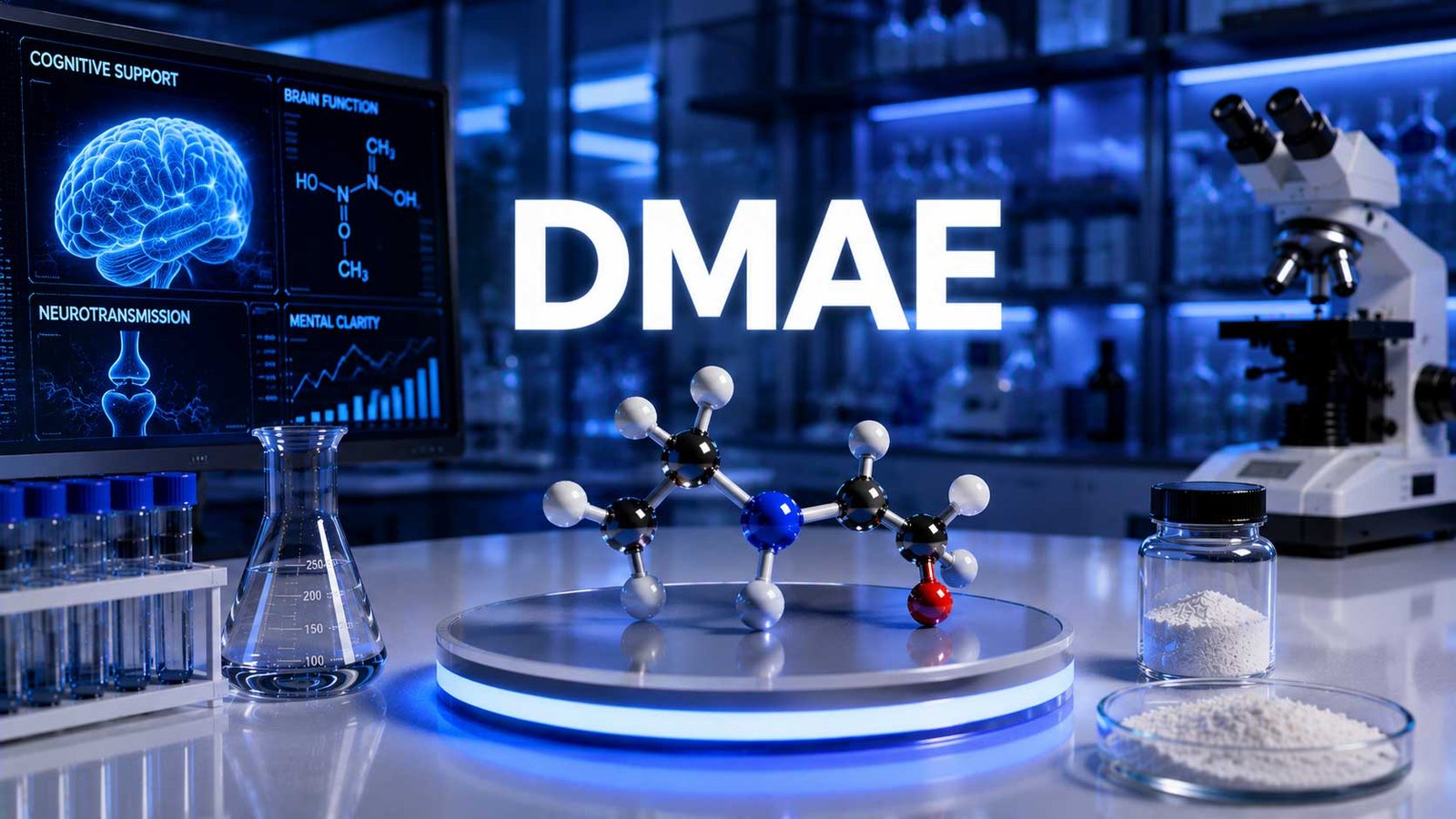
The Little Molecule That Fish Oil Never Told You About
Ask someone to name a brain-supporting nutrient and you’ll probably hear omega-3s, maybe B12, possibly ginkgo if they’ve been down a supplement aisle rabbit hole recently. DMAE almost never comes up, and that’s a little strange given how long it’s actually been around. Dimethylaminoethanol has been studied, sold, pulled from pharmacy shelves, rebranded as a supplement, and quietly folded into anti-aging skin creams, all within the span of about seventy years. It’s had more career changes than most people I know.
Here’s the short version of what DMAE actually is. It’s a small organic compound, structurally related to choline, that your body produces in trace amounts on its own and that also shows up naturally in certain fatty fish. Chemists sometimes call it deanol. For a stretch in the mid-twentieth century, it was sold under prescription as a treatment aimed at children with attention and behavioral difficulties, back before the diagnostic language we use today (ADHD, ADD) had really solidified. It got pulled from the market in the early 1980s, not because of some dramatic safety scandal, but mostly because the cost of running large modern clinical trials didn’t make sense for a compound that was cheap to produce and already understood reasonably well from decades of smaller studies. So it drifted into the supplement world instead, where it’s lived ever since.
Table of Contents
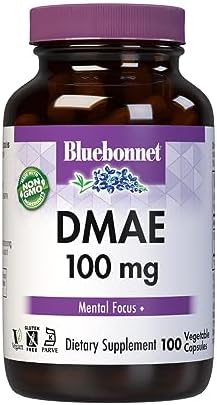


What keeps DMAE interesting, at least to me, is the mechanism people propose for it. The working theory is that DMAE acts as a precursor material the brain can use, indirectly, to help support production of acetylcholine — a neurotransmitter that plays a central role in memory, muscle signaling, and attention. Whether DMAE actually crosses into that pathway efficiently, and how much of a real-world difference it makes for a healthy adult brain, is where things get murkier and more contested. I’ll be upfront about that tension throughout this piece, because pretending otherwise wouldn’t do you any favors.
There’s also a second life DMAE has carved out that has nothing to do with cognition: skin care. Topical DMAE gels have actually been through more rigorous, modern, placebo-controlled human trials than the oral cognitive form has, which is a strange twist. So depending on where you encountered DMAE, you might know it as a “brain supplement,” a “skin firming ingredient,” or both. It’s genuinely the same molecule doing double duty in two very different product categories.
A few things make DMAE worth a serious, clear-eyed look rather than a dismissive shrug or a starry-eyed endorsement. First, it’s inexpensive and widely available, so plenty of people are already taking it, often without fully understanding what the current evidence does and doesn’t support. Second, the human research base is old — a lot of the foundational cognitive studies date to the 1970s and 1980s, using methodology that wouldn’t pass muster in a modern peer-reviewed journal today. That doesn’t automatically make the findings wrong, but it does mean we should hold conclusions a bit more loosely than the enthusiastic marketing copy you’ll find on some supplement sites. Third, and this is the part I find most compelling professionally, DMAE sits at an interesting intersection of neuroscience, dermatology, and consumer wellness culture, which makes it a genuinely useful case study in how a single compound gets interpreted very differently depending on which industry is talking about it.
I’ve spent a fair amount of time working through the primary literature on cholinergic precursors, and DMAE tends to provoke stronger opinions than the evidence quality probably warrants — in both directions. Some corners of the nootropic community treat it as an underrated, criminally overlooked memory enhancer. Other more skeptical voices treat it as a relic that never should have survived past 1985. My own read, after digging through what’s actually been published, lands somewhere in the middle, and I think that’s a more useful place to start than either extreme.
So here’s what we’re going to do. We’ll walk through what DMAE is genuinely proposed to help with, where you’d actually find it in food if you wanted to get it that way, how people typically dose it and what “deficiency” even means for a compound like this, and finally the risks and downsides that don’t always make it into the glossy supplement marketing. My goal isn’t to talk you into buying anything. It’s to give you an honest, well-sourced map of the terrain so you can make your own call — ideally alongside a conversation with your own doctor if you’re seriously considering adding it to your routine.
One last framing note before we get into it. DMAE is not classified as an essential nutrient. Your body isn’t going to fall apart without it the way it would without adequate choline or B12. That single fact changes how we should think about “dosage” and “deficiency” for this compound compared to something like iron or vitamin D, and I’ll come back to that distinction more than once as we go.
Key Health Benefits
Let’s start with the claim that gets DMAE the most attention: cognitive support. The proposed mechanism is fairly straightforward on paper. Acetylcholine is one of the brain’s primary neurotransmitters for memory formation, attention, and neuromuscular signaling. DMAE is structurally similar to choline, and the hypothesis — dating back to research from the 1970s — is that DMAE can serve as a kind of raw material that supports acetylcholine synthesis, potentially by influencing choline availability in the brain.
Memory and Cognitive Performance
The clearest piece of modern human evidence comes from a French clinical study examining a compound called DMAE p-glutamate, a pairing of DMAE with pyroglutamic acid. Researchers gave healthy young men an intravenous dose of scopolamine, a drug that reliably induces short-term memory impairment in clinical research settings, and then tested whether DMAE p-glutamate could blunt that impairment. It did — participants who received the compound showed measurably better scores on a standard memory test compared to those who didn’t, along with a modest improvement in choice reaction time. The same paper also included animal work showing that the compound increased extracellular acetylcholine levels in the rat prefrontal cortex, which lines up with the proposed mechanism.
That’s a genuinely interesting result, but a few caveats matter here. This trial used a combination compound, not plain DMAE bitartrate the way most supplements sell it. It was conducted in healthy young men experiencing a chemically-induced memory deficit, not in people with age-related cognitive decline or everyday forgetfulness. And it’s one study. It doesn’t confirm that popping a DMAE capsule will make your memory sharper on an average Tuesday, but it does support the idea that the mechanism isn’t purely theoretical.
Older research from the 1970s through early 1980s explored DMAE’s effects on children with learning and attention difficulties, with some studies reporting improvements in attention span and reduced irritability. I want to flag clearly that this research predates modern ADHD diagnostic criteria, used smaller sample sizes than we’d expect today, and hasn’t been meaningfully replicated with contemporary trial standards. It’s historically interesting and part of why DMAE was originally sold as a prescription medication, but it isn’t strong enough on its own to serve as a current recommendation for children.
Antioxidant Activity
A separate strand of research looks at DMAE from a completely different angle: free radical scavenging. Using electron spin resonance spectroscopy — a lab technique for directly measuring radical activity — researchers demonstrated that DMAE can react with hydroxyl, ascorbyl, and lipid radicals in a dose-dependent way. Oxidative stress is implicated in a huge range of aging-related processes, cellular and cognitive alike, so an antioxidant mechanism gives DMAE a plausible secondary pathway for supporting brain health that doesn’t rely purely on the acetylcholine story.
Skin Firmness and Structure
This is where DMAE actually has its strongest, most modern clinical backing, even though it has nothing to do with cognition directly. A randomized, placebo-controlled trial using a 3% DMAE facial gel applied daily for sixteen weeks found statistically significant improvements in forehead lines, fine wrinkles around the eyes, and lip fullness, with the effects holding even after a two-week break from application. A one-year extension of that same trial reported a good long-term safety profile. Separately, animal research using a D-galactose-induced skin aging model in rats found that DMAE, when co-injected with amino acids directly into skin tissue, meaningfully increased collagen expression and skin thickness compared to untreated aging skin.
It’s worth pausing on why this matters even for people who only care about the cognitive angle: it tells us DMAE has real, measurable biological activity in living tissue, observed through actual controlled trials rather than anecdote. That doesn’t automatically transfer to brain benefits, since skin and neural tissue behave very differently, but it does undercut the idea that DMAE is inert or purely a placebo story.
Mood and General Well-Being
Some of the older literature and a fair amount of contemporary anecdotal reporting suggests DMAE users notice improved mood, reduced mental fatigue, and a subtle lift in alertness. This ties back to the same proposed cholinergic mechanism, since acetylcholine activity influences more than just memory — it plays a role in overall central nervous system arousal and mood regulation too. I’d categorize this benefit as the least rigorously studied of the bunch. It shows up consistently in user reports and older case-style research, but hasn’t been isolated and tested with the kind of controlled methodology that would let us say something more definitive.
Taking a step back across all of this, the honest summary is that DMAE has multiple plausible mechanisms of action, some clinical support (strongest for skin, moderate for acute memory performance under pharmacological challenge, weaker for general everyday cognition), and a research base that skews older for the cognitive claims specifically. That’s not nothing, but it’s also not the slam-dunk that some marketing suggests.

Dietary Sources
Unlike a nutrient with a Recommended Dietary Allowance and a neat little chart of food sources, DMAE occupies an odd middle ground. Your body produces small amounts of it endogenously, and it also shows up naturally in food — primarily seafood — but there’s no official database tracking exact milligram amounts the way there is for something like vitamin C or potassium.
Fatty Fish Lead the List
If you wanted to raise your DMAE intake through diet alone, oily, cold-water fish are where you’d look. The species most consistently mentioned across the research and clinical literature include:
- Sardines
- Anchovies
- Salmon (particularly wild-caught)
- Mackerel
- Squid and fish roe, to a lesser extent
This is actually part of the folk-nutrition explanation for why fish earned the nickname “brain food” long before omega-3 fatty acids became the more scientifically fashionable explanation. DMAE content was part of that original reasoning, even if the modern conversation has shifted almost entirely toward EPA and DHA.
Why the Exact Numbers Are Fuzzy
Here’s where I have to be honest about a gap in the evidence rather than paper over it. There isn’t a robust, standardized, modern dataset quantifying DMAE content across fish species, catch locations, seasons, or preparation methods the way we have for macronutrients or even for something like choline. Older references (some dating to the late 1950s) estimated only a few milligrams of DMAE per pound of seafood consumed, but that figure hasn’t been meaningfully updated or expanded with contemporary analytical methods. If a website tells you a specific milligram count for DMAE in a 4-ounce salmon fillet, treat that number skeptically — it’s very likely an extrapolation rather than a directly measured, peer-reviewed figure.
What we can say with more confidence is directional: fatty, cold-water fish are meaningfully richer in DMAE than lean fish, poultry, or plant foods, and regular fish consumption (a couple of times a week, roughly) is a reasonable way to get some dietary DMAE alongside its more well-documented nutritional companions like omega-3s and choline itself.
The Mercury Trade-Off
I’d be doing you a disservice if I recommended loading up on fish for DMAE without mentioning the obvious counterpoint: some of the same fish species prized for DMAE and omega-3 content also carry a mercury exposure risk, particularly larger predatory species. Salmon tends to carry a comparatively lower mercury burden than something like swordfish or king mackerel, and wild-caught salmon generally comes with a better environmental contaminant profile than farmed salmon, which has been associated in some analyses with higher levels of PCBs and other pollutants. Sardines and anchovies, being smaller and lower on the food chain, are typically among the safer choices from a mercury standpoint while still delivering solid DMAE and omega-3 content. If you’re pregnant, nursing, or feeding young children, it’s worth checking current regional seafood advisories rather than assuming all fish carry equal risk.
Beyond Fish
Small amounts of DMAE-related activity have also been noted in certain algae, though the research here is thinner than the fish literature and not something I’d build dietary planning around. For nearly everyone interested in dietary DMAE, seafood remains the practical, evidence-backed focus.
Supplements as an Alternative Route
For people who don’t eat fish regularly — whether due to preference, allergy, cost, or dietary restriction — DMAE supplements exist as capsules, tablets, powders, and liquids, almost always formulated as DMAE bitartrate, since pure DMAE itself is an unstable, volatile liquid that isn’t practical to package directly. Bitartrate is simply DMAE bound to tartaric acid, which stabilizes it into a solid, shelf-stable form. This matters when comparing labels, because a capsule listing “500 mg DMAE bitartrate” is not delivering 500 mg of actual DMAE — the bitartrate salt reduces the effective DMAE content meaningfully, something worth knowing before you start doing dosage math based on label numbers alone.
Dosage & Deficiency
This section requires a slightly different framing than a typical vitamin or mineral write-up, because DMAE doesn’t have an established Recommended Dietary Allowance, an Adequate Intake, or a recognized deficiency syndrome. It’s not classified as an essential nutrient, which means the entire conversation shifts from “how much do I need to avoid a problem” to “what amounts have people actually used, and what does that tell us.”
Typical Supplemental Ranges
Across clinical literature and contemporary supplement guidance, DMAE dosing has generally clustered into a fairly wide band:
- Lower, more conservative daily amounts: roughly 100 to 400 mg
- Moderate ranges used in some cosmetic and general wellness products: up to 600 mg
- Higher amounts used in select older clinical studies: as much as 1,600 to 1,800 mg per day, though these were typically supervised research settings rather than casual self-directed supplementation
If you’re new to DMAE, the near-universal advice across sources — and honestly, just good practice with any compound that affects neurotransmitter activity — is to start low. Something in the 100 to 150 mg range initially, taken earlier in the day rather than at night, gives you room to gauge your own response before considering any increase. DMAE has a mild stimulating quality for a lot of people, which is exactly why the “not before bed” guidance shows up so consistently.
Why “Deficiency” Isn’t Really the Right Word Here
Because DMAE isn’t essential, there’s no recognized clinical deficiency state tied to low DMAE levels the way there is for, say, vitamin B12 deficiency causing neurological symptoms, or iron deficiency causing anemia. Your body’s ability to function normally doesn’t hinge on maintaining a baseline DMAE level from external sources. Some reference sources explicitly state that no deficiencies of DMAE have been documented or are believed to occur, and that supplementation isn’t something that’s medically indicated to correct a shortfall, since there isn’t a shortfall condition to correct in the first place.
This is an important distinction to sit with for a second, because it reframes what “taking DMAE” actually means. You’re not replenishing something your body needs and isn’t getting. You’re introducing a compound in the hope of an added effect on top of normal baseline function. That’s a completely different risk-benefit conversation than, say, correcting a genuine vitamin D deficiency, and it’s worth being clear-eyed about which category you’re in before deciding whether supplementation makes sense for you.
Practical Titration Advice
If someone were determined to try DMAE despite the mixed evidence base — and to be clear, that’s a personal decision best made with your own healthcare provider, not from an article on the internet — the general pattern researchers and formulators have used looks something like this: begin at a low dose for the first one to two weeks, monitor for any of the mild stimulating or sleep-disrupting effects covered in the next section, and only consider a gradual increase if the lower dose is well tolerated and you’re not seeing the response you were hoping for. Jumping straight to the higher end of the historical dosing range without that gradual approach is where most of the reported unwanted effects seem to cluster.
Special Populations
A few groups warrant extra caution or outright avoidance regardless of dose. People with epilepsy or bipolar disorder are consistently flagged across multiple sources as needing to avoid DMAE, given theoretical concerns about its influence on neurotransmitter activity potentially affecting seizure threshold or mood stability. Pregnant and breastfeeding women are also advised to steer clear, since there’s essentially no modern safety data for these populations, and at least one older animal study raised concerns about effects on fetal brain development. If you fall into either category, this isn’t a “start low and see how it goes” situation — it’s a “skip it and talk to your doctor about alternatives” situation.
Toxicity & Risks
DMAE has a reputation, deserved to a real extent, as being relatively mild compared to more aggressive stimulant-style nootropics. But “relatively mild” is not the same as “risk-free,” and I think this is the section where a lot of casual supplement write-ups get lazy. Let’s not do that here.
Common, Milder Side Effects
The side effects reported most consistently across clinical case reports, safety reviews, and aggregated user experiences include:
- Headaches, sometimes attributed to DMAE’s effect on blood vessel dilation
- Insomnia or disrupted sleep, especially when DMAE is taken later in the day
- Muscle tension, particularly in the jaw, neck, and shoulders
- Digestive discomfort, including nausea, bloating, or in some cases diarrhea
- Mood changes, including irritability or restlessness in sensitive individuals
- Mild drowsiness, somewhat counterintuitively, has also been reported in a subset of users
These effects tend to show up within hours to a few days of starting or increasing a dose, and generally resolve once the dose is lowered or discontinued. They’re most common above roughly 300 to 500 mg daily, which reinforces the earlier point about starting conservatively.
Less Common but More Serious Reports
Beyond the milder, more frequently reported effects, the literature also includes scattered reports of more concerning reactions: elevated blood pressure, confusion, and in rare instances, effects on movement and coordination. There’s a documented case report of a woman who developed severe tardive dyskinesia — a movement disorder involving involuntary muscle movements — after taking DMAE for roughly a decade to manage a hand tremor. That’s a single case report, not a signal of common risk, but it’s exactly the kind of data point that shouldn’t get buried under enthusiastic marketing copy. Long-term, high-dose use over years is a different risk category than short courses at conservative doses, and the tardive dyskinesia case is a sobering illustration of why that distinction matters.
Populations That Should Avoid DMAE
A few groups come up repeatedly across safety sources as needing to avoid DMAE specifically, beyond the general “start low, talk to your doctor” advice that applies to everyone:
- People with epilepsy, due to theoretical concerns about seizure threshold
- People with bipolar disorder, due to potential mood destabilization
- People with schizophrenia or a predisposition toward psychotic symptoms, since some sources note a possible association between DMAE and worsened symptoms in vulnerable individuals
- Pregnant or breastfeeding women, given the lack of safety data and at least one animal study linking DMAE exposure to neural tube defects
- Anyone with a known fish allergy, since some DMAE supplements are derived from or associated with fish-based sourcing
Drug Interaction Considerations
The interaction data for DMAE isn’t extensively documented in modern pharmacology databases, which itself is worth noting rather than glossing over — it means the absence of well-known interactions reflects a research gap as much as it reflects genuine safety. That said, because DMAE is theorized to influence cholinergic activity, it makes sense to be cautious if you’re taking other medications that affect the same neurotransmitter systems, including certain dementia medications or other cholinergic-acting drugs, and to loop in a pharmacist or physician before combining them.
Contested Claims Worth Flagging
You’ll occasionally see stronger claims circulating online — including allegations linking DMAE bitartrate to liver toxicity or liver damage. I want to be direct about this: I was not able to find a body of peer-reviewed clinical evidence substantiating liver toxicity as an established risk of DMAE at typical supplemental doses. That doesn’t mean the claim is definitely false, but it does mean it shouldn’t be repeated as settled fact. If liver health is a specific concern for you — say, you have existing liver disease — that’s a conversation to have directly with your doctor rather than something to resolve based on unverified claims found on a supplement retail page.
The Bottom Line on Safety
For most healthy adults, taking DMAE at conservative doses for a limited period appears to carry a relatively mild risk profile, broadly consistent with a compound that’s been used, studied, and sold in one form or another for decades without generating widespread reports of serious harm. But “relatively mild” still means real side effects happen, meaningful populations should avoid it outright, and the long-term safety data — particularly for years of continuous use — remains thinner than I’d like it to be. Treat DMAE the way you’d treat any compound that measurably interacts with brain chemistry: with genuine respect for what we don’t yet know, not just enthusiasm for what looks promising.
Where DMAE Actually Fits Into a Real Brain-Health Strategy
If you’ve made it this far, you’ve probably picked up on the throughline: DMAE is a genuinely interesting compound with a real, if incomplete, evidence base, sitting in an awkward spot between “promising cholinergic precursor” and “supplement industry darling that’s outrun its data.” Both of those descriptions are true at once, and I don’t think that’s a contradiction worth resolving artificially just to give you a cleaner headline.
What I’d actually encourage you to walk away with is a sense of proportion. DMAE is not a miracle nootropic, and the person telling you it will meaningfully sharpen your memory within days is overselling data that mostly comes from decades-old studies or narrow clinical models involving pharmacologically-induced memory impairment, not everyday brain fog. At the same time, dismissing it entirely ignores real mechanistic plausibility, a legitimate antioxidant profile, and — in the skin care lane specifically — some genuinely solid modern clinical trial data.
If you’re generally healthy, curious about DMAE, and not in one of the higher-risk categories we covered, a cautious, low-dose trial approach with your physician’s input is a reasonable way to explore it. If you’re pregnant, managing epilepsy or bipolar disorder, or already juggling several medications that affect neurotransmitter activity, this is a compound to sit out rather than experiment with. And if what you’re really after is dietary support for brain function rather than a supplement bottle, working more fatty fish into your regular rotation gives you DMAE alongside a far better-documented nutrient — omega-3 fatty acids — in the same bite.
The most practical takeaway I can offer is this: treat DMAE claims the way you’d treat any supplement claim that sounds a little too tidy. Ask where the study came from, how old it is, who it was tested on, and whether the result has ever been repeated. DMAE has earned a place in that conversation. It just hasn’t earned unconditional trust, and neither, frankly, should any single compound promising to sharpen your mind.
Article Sources
At AncientHerbsWisdom, our content relies on reputable sources, including peer-reviewed studies, to substantiate the information presented in our articles. Our primary objective is to ensure our content is thoroughly fact-checked, maintaining a commitment to accuracy, reliability, and trustworthiness.
- Blin, O., Audebert, C., Pitel, S., Kaladjian, A., Casse-Perrot, C., Zaim, M., Micallef, J., Tisne-Versailles, J., Sokoloff, P., Chopin, P., & Marien, M. (2009). Effects of dimethylaminoethanol pyroglutamate (DMAE p-Glu) against memory deficits induced by scopolamine: evidence from preclinical and clinical studies. Psychopharmacology, 207(2), 201–212. https://doi.org/10.1007/s00213-009-1648-7
- Flood, J. F., Smith, G. E., & Cherkin, A. (1983). Memory retention: potentiation of cholinergic drug combinations in mice. Neurobiology of Aging, 4(1), 37–43. https://doi.org/10.1016/0197-4580(83)90052-0
- Grossman, R. (2005). The role of dimethylaminoethanol in cosmetic dermatology. American Journal of Clinical Dermatology, 6(1), 39–47. https://doi.org/10.2165/00128071-200506010-00005
- Institute of Medicine. (1998). Choline. In Dietary Reference Intakes for Thiamin, Riboflavin, Niacin, Vitamin B6, Folate, Vitamin B12, Pantothenic Acid, Biotin, and Choline (pp. 390–422). National Academies Press. https://www.ncbi.nlm.nih.gov/books/NBK114308/
- Liu, S., Chen, Z., Cai, X., Sun, Y., Zhao, C., Liu, F., & Liu, D. (2014). Effects of dimethylaminoethanol and compound amino acid on D-galactose induced skin aging model of rat. The Scientific World Journal, 2014, 507351. https://doi.org/10.1155/2014/507351
- Malanga, G., Aguiar, M. B., Martinez, H. D., & Puntarulo, S. (2012). New insights on dimethylaminoethanol (DMAE) features as a free radical scavenger. Drug Metabolism Letters, 6(1), 54–59. https://doi.org/10.2174/187231212800229282
- National Institutes of Health, Office of Dietary Supplements. (2022). Choline: Fact sheet for health professionals. https://ods.od.nih.gov/factsheets/Choline-HealthProfessional/

- Phosphatidic Acid: Supporting Muscle Growth and Strength - July 31, 2026
- Ceramides: Supporting Healthy Skin From Within - July 31, 2026
- Synbiotics: Combining Prebiotics and Probiotics Together - July 31, 2026