
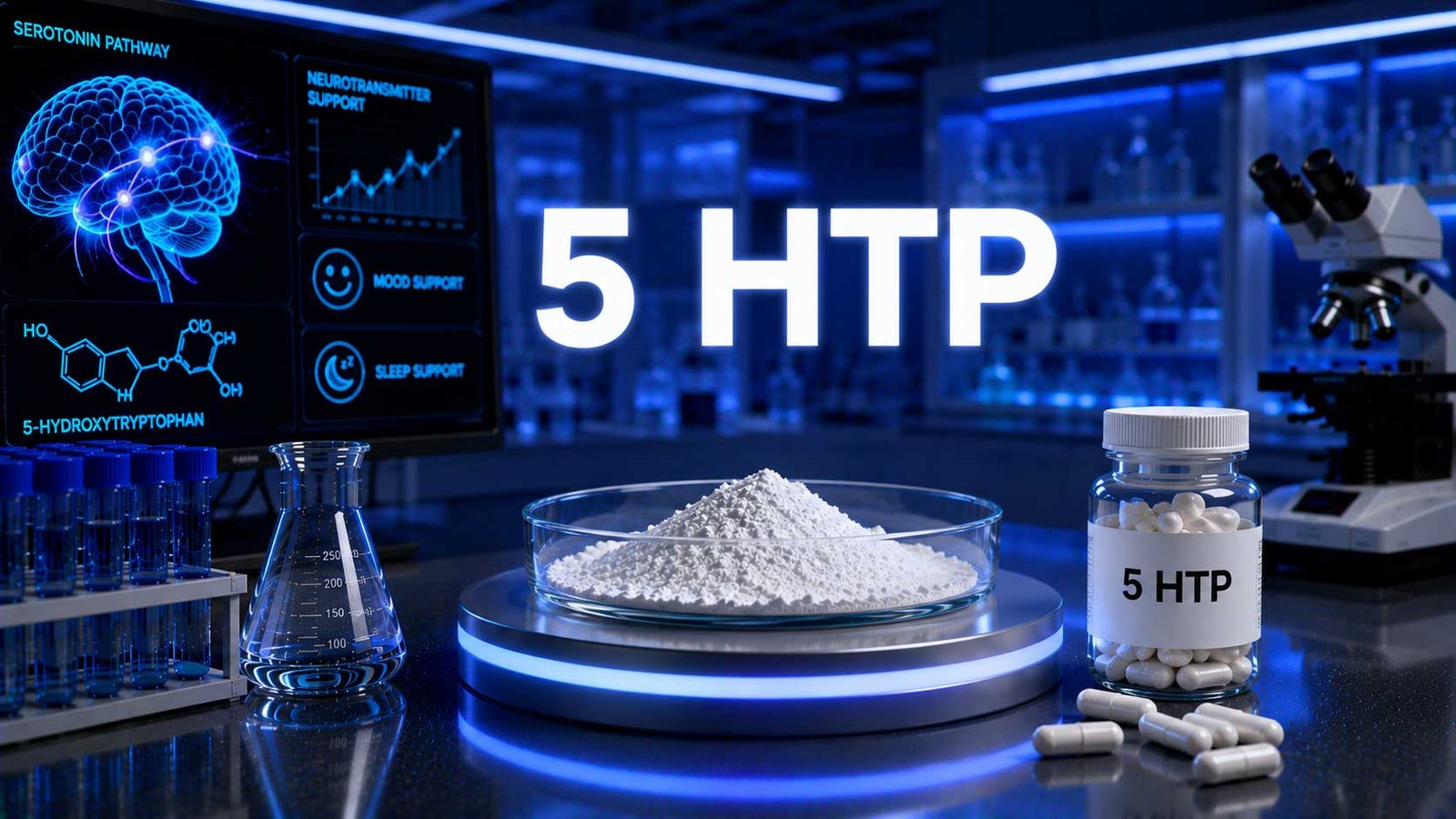
The Serotonin Shortcut Hiding in Your Supplement Cabinet
I’ve been asked about 5-HTP more times than I can count over the years, usually by someone who’s tried melatonin, tried valerian, maybe tried a prescription sleep aid that left them groggy, and is now Googling their way toward something that sounds a little more “natural” but still feels like it might actually do something. And 5-HTP tends to come up fast in that search, right alongside the words serotonin, mood, and sleep, because that’s essentially its whole job description.
Here’s the short version, and then we’ll get into the long version. 5-HTP, or 5-hydroxytryptophan, is a compound your body makes on its way to producing serotonin. Not a vitamin, not an herb exactly, though it’s most commonly sold as an extract from the seeds of an African shrub. It sits in the metabolic chain between the amino acid tryptophan and serotonin itself, which is why supplementing with it appeals to people who want to nudge their serotonin levels upward without going the pharmaceutical route. Serotonin, for anyone who needs the refresher, is a neurotransmitter with its fingers in an almost absurd number of pies — mood regulation, sleep-wake cycles, appetite, pain perception, even gut motility. So when someone raises their serotonin availability, at least in theory, a lot of downstream systems can shift.
Table of Contents


I want to be upfront about something before we go further: 5-HTP is not a miracle molecule, and anyone who tells you it is hasn’t spent much time actually reading the research. It’s also not nothing. Somewhere between those two extremes is where the honest answer lives, and that’s where I’ll try to keep us for the rest of this piece.
What makes 5-HTP interesting, at least to me, is the mechanism itself. Your body doesn’t make tryptophan — you have to eat it, since it’s an essential amino acid found in protein-rich foods. Once you’ve got tryptophan circulating, an enzyme called tryptophan hydroxylase converts it into 5-HTP. That step happens to be the rate-limiting one in serotonin production, meaning it’s the bottleneck. Supplementing directly with 5-HTP bypasses that bottleneck entirely. It skips the traffic jam. From there, another enzyme converts 5-HTP into serotonin itself, and this conversion happens both in the gut and, crucially, in the brain, because 5-HTP is small enough to cross the blood-brain barrier, unlike serotonin, which cannot. That’s the whole reason 5-HTP supplements exist rather than serotonin supplements — you can’t just take serotonin orally and expect it to reach your brain.
Once in the brain, some of that new serotonin gets converted further into melatonin, the hormone most people associate with sleep regulation. So you end up with this cascade: tryptophan to 5-HTP to serotonin to, partially, melatonin. It’s a tidy little pathway on paper, and it’s the reason 5-HTP gets marketed for both mood and sleep in the same breath rather than as two separate products.
Now, does taking a pill that skips a metabolic bottleneck actually translate into feeling calmer, sleeping better, or shaking off a low mood? That’s genuinely more complicated than the marketing copy suggests, and it’s worth sitting with the nuance rather than rushing past it. The clinical research on 5-HTP goes back decades — some of the earliest depression trials date to the 1970s — and the picture that’s emerged is one of “promising but incomplete.” Small trials, mixed methodologies, and a supplement industry that’s understandably eager to round up rather than report honestly. I’ve seen this pattern before with other precursor and cofactor supplements, and 5-HTP fits the mold: real biological plausibility, some genuinely encouraging human data, and a persistent gap between what’s been studied and what’s been definitively proven.
There’s also a history here that gets glossed over on a lot of supplement websites, and I think it deserves mention right up front rather than being buried at the end. Tryptophan supplements, 5-HTP’s close chemical cousin, were pulled from the U.S. market in 1989 after contaminated batches from a single manufacturer were linked to a serious and sometimes fatal condition called eosinophilia-myalgia syndrome. 5-HTP is a different compound, made through a different process — most commercial 5-HTP comes from the seeds of Griffonia simplicifolia rather than bacterial fermentation — but the shadow of that episode still follows the category, and rightly so. We’ll come back to that.
For now, think of 5-HTP as a precursor supplement with a specific, well-mapped job: raise the raw material available for serotonin synthesis, and let the body’s own regulatory systems decide what to do with the extra supply. Whether that translates into better sleep, a steadier mood, or fewer 3 p.m. carbohydrate cravings depends on the person, the dose, and honestly a fair amount of individual biochemistry that we still don’t fully understand. Let’s dig into what the actual benefits look like when you strip away the hype.
Key Health Benefits
Mood and Emotional Balance
This is where most people’s interest in 5-HTP starts, and it makes sense given how directly it’s tied to serotonin, the neurotransmitter most associated with emotional regulation in popular science writing (even if that “happiness chemical” framing is oversimplified). The research here is genuinely one of the more interesting threads in the supplement world. Several small trials going back to the early 1970s compared 5-HTP against placebo in people dealing with depressive symptoms, and a number of them found meaningful improvement, sometimes on par with what’s seen with standard antidepressant comparators used in the same studies. One frequently cited six-week trial pitted 5-HTP against a prescription SSRI-class drug and found comparable improvement between the two groups, which is the kind of result that gets people’s attention.
I’d be doing you a disservice, though, if I didn’t add the caveat that almost none of these trials would meet today’s standards for rigor. Sample sizes were small, often a few dozen participants. Dosing varied wildly between studies, anywhere from 20 mg to well over 3,000 mg daily, which makes it hard to draw a single clean conclusion. And a review looking specifically at treatment-resistant depression found 5-HTP didn’t move the needle for that particular population, so it’s not a universal fix even within the mood category.
Where 5-HTP seems to earn a bit more confidence is in milder, situational mood dips rather than clinical depression. Some research has also looked at anxiety and panic symptoms specifically. A study involving people with panic disorder found that 5-HTP reduced anxiety and panic frequency in that group, though it didn’t show the same effect in people without a panic disorder diagnosis — an interesting distinction that suggests the compound may do more for dysregulated serotonin systems than for baseline anxious feelings in an otherwise steady nervous system.
Sleep Quality and Sleep Architecture
Sleep is the other pillar, and it’s connected to mood in a way that’s honestly hard to untangle — anyone who’s had a genuinely bad night of sleep knows how quickly that bleeds into irritability and low mood the next day, and vice versa. 5-HTP’s role here comes largely through its downstream conversion into melatonin, though there’s also research suggesting serotonin itself plays a direct role in sleep architecture, particularly in the transition into and stabilization of REM sleep.
One study I find particularly compelling looked at people with Parkinson’s disease who also had REM sleep behavior disorder, a condition where the muscle paralysis that normally accompanies REM sleep fails, leading people to physically act out their dreams. In that randomized, placebo-controlled trial, a modest 50 mg daily dose of 5-HTP increased the overall percentage of REM sleep without making the behavior disorder itself worse, and patients also reported improvements in their global clinical impression. That’s a fairly narrow population, so I wouldn’t over-extend the finding to “5-HTP fixes sleep for everyone,” but it does support the idea that 5-HTP has a genuine, measurable effect on sleep architecture rather than just a placebo-driven sense of drowsiness.
Other, smaller studies have looked at general sleep latency — how long it takes to fall asleep — and total sleep time, with some reporting improvements at doses in the 100 to 300 mg range taken before bed. There’s also older research suggesting 5-HTP may reduce night terrors and sleepwalking episodes, particularly in children, though I’d treat pediatric use of any serotonin-affecting supplement with real caution and a conversation with a pediatrician rather than a DIY approach.
Appetite, Cravings, and Weight
This benefit gets less airtime than mood and sleep, but the research is actually some of the more consistent in the whole 5-HTP literature. Serotonin has a well-established role in satiety signaling — it’s part of why SSRIs sometimes cause appetite changes as a side effect — and 5-HTP supplementation has been studied specifically for its effect on eating behavior in people with obesity.
In one notable trial out of Rome, 20 obese patients took either 900 mg of 5-HTP daily or placebo. During the first six weeks, with no dietary restrictions imposed, the 5-HTP group still lost weight and reported earlier satiety along with a spontaneous drop in carbohydrate intake. When a calorie-restricted diet was added for the second half of the study, the 5-HTP group lost significantly more weight than the placebo group and, notably, found it easier to stick to the diet — probably because they simply felt less hungry doing it. That adherence piece is, in my opinion, the most underrated finding in that whole body of research. A lot of weight loss interventions fail not because they don’t work in theory but because people can’t sustain them, and anything that makes a calorie deficit feel less like a fight is worth paying attention to.
That said, weight loss studies on 5-HTP have generally used higher doses than the mood or sleep research, often 750 to 900 mg daily, and higher doses come with a higher likelihood of gastrointestinal side effects, which we’ll get into later.
Beyond Mood and Sleep
A handful of smaller studies have looked at 5-HTP for chronic headache and migraine prevention, fibromyalgia symptoms, and even as an adjunct alongside SSRIs for treatment-resistant depression cases. The fibromyalgia data is worth a quick mention — one trial found improvements across pain, stiffness, sleep, and fatigue measures in patients taking 5-HTP compared to placebo. None of these secondary uses have anywhere close to the evidence base of the mood, sleep, and appetite findings, so I’d file them under “interesting but preliminary” rather than anything close to established.

Dietary Sources
Why Food Alone Won’t Get You There
Here’s something that trips people up, and I want to clear it up directly: there isn’t really a meaningful dietary source of 5-HTP itself. Unlike, say, vitamin C or magnesium, you can’t build a meal plan around foods naturally rich in 5-HTP, because it simply doesn’t occur in any appreciable quantity in the food supply. What you can do is eat foods rich in tryptophan, the amino acid that your body converts into 5-HTP internally, using that rate-limiting enzyme we talked about earlier.
This distinction matters because a lot of casual health content conflates the two, implying that eating turkey or bananas will meaningfully spike your 5-HTP levels the way a supplement would. It won’t, at least not to the same degree, and the reason comes down to competition. Tryptophan has to compete with several other amino acids for transport across the blood-brain barrier, and dietary protein tends to deliver a flood of those competing amino acids alongside the tryptophan itself, which can blunt the amount that actually makes it into the brain to be converted. This is part of why eating a big protein-heavy meal doesn’t reliably make people sleepy or calm the way popular wisdom suggests it should — the tryptophan is competing for a crowded doorway.
Tryptophan-Rich Foods That Feed the Pathway
Still, feeding the pathway with dietary tryptophan isn’t pointless, and it’s a reasonable foundational habit even if it’s not going to replicate what a concentrated supplement does. Foods worth knowing about include:
- Turkey and chicken, the classic examples, though the tryptophan content isn’t actually dramatically higher than in most other meats
- Eggs, particularly the whites, which carry a solid tryptophan-to-protein ratio
- Pumpkin seeds and other seeds, which pack tryptophan alongside magnesium, a mineral involved in the same relaxation pathways
- Oats and other whole grains, which pair carbohydrates with a modest tryptophan load — the carbohydrate piece is relevant because insulin release helps clear those competing amino acids from the bloodstream, theoretically giving tryptophan an easier path into the brain
- Cheese and dairy, another traditional source, tied culturally to the old “warm milk before bed” advice
- Salmon and other fatty fish, offering tryptophan alongside omega-3s that have their own separate mood research behind them
None of these foods are going to replicate the effect of a 100 to 300 mg 5-HTP capsule, and I think it’s important to say that plainly rather than let people believe a turkey sandwich is doing the same job. But building meals around tryptophan-containing proteins, especially paired with a modest carbohydrate source in the evening, is a sensible low-risk habit that supports the same biochemical pathway 5-HTP supplements are designed to shortcut.
Griffonia Simplicifolia — The Actual Source of Supplemental 5-HTP
If you’re taking a 5-HTP supplement, it almost certainly comes from the seeds of Griffonia simplicifolia, a woody shrub native to West and Central Africa. These seeds contain a notably high natural concentration of 5-HTP, which is what makes them commercially viable as an extraction source rather than relying on synthetic production. This is actually a meaningful safety consideration, and I’ll expand on it more in the toxicity section, but it’s worth flagging here too: because 5-HTP from Griffonia seeds is extracted rather than fermented the way problematic tryptophan batches were in the 1980s, the contamination risk profile is genuinely different, even though it hasn’t been entirely ruled out.
When you’re shopping for a 5-HTP supplement, you’ll typically see it labeled as derived from Griffonia simplicifolia seed extract, sometimes standardized to a specific percentage of 5-HTP content. That standardization matters more than people realize — an unstandardized extract can vary quite a bit in actual 5-HTP delivered per capsule, which makes consistent dosing harder to pin down. If a label doesn’t mention a standardized percentage at all, that’s usually a sign to look elsewhere, since it means you’re essentially guessing at how much active compound you’re actually getting per serving.
I also get asked fairly often whether the plant itself, or its raw seeds, can be consumed directly rather than as a processed extract. Practically speaking, no — Griffonia simplicifolia isn’t a food crop, it’s not sold in grocery stores, and the seeds aren’t something you’d want to experiment with outside of a properly manufactured, dosed, and tested product. The extraction and standardization process exists precisely because raw plant material is too inconsistent to dose safely or predictably. This is one supplement category where the “just eat the plant” instinct genuinely doesn’t apply.
Cofactors That Support the Whole Pathway
One thing that rarely gets mentioned alongside 5-HTP dietary sources is the role of supporting nutrients in the broader conversion pathway. Vitamin B6, specifically its active form pyridoxal-5-phosphate, is required as a cofactor for the enzyme that converts 5-HTP into serotonin. If someone is low in B6 — which isn’t rare, particularly in older adults or people on certain medications that deplete it — the conversion step can bottleneck even with adequate 5-HTP on board. Foods like chickpeas, poultry, potatoes, and fortified cereals are reasonable everyday sources of B6, and some 5-HTP supplement formulations include a small amount of B6 directly in the capsule for exactly this reason. Magnesium and zinc also play supporting roles in broader neurotransmitter synthesis, which is part of why a scattershot, poor-quality diet tends to undercut any single-nutrient intervention, 5-HTP included. You can’t out-supplement a foundation that isn’t there.
Dosage & Deficiency
Typical Dosage Ranges by Goal
There isn’t a single universal 5-HTP dose, and honestly, one of the more frustrating things about the research is how much dosing varies from study to study, which makes it tough to hand someone one clean number. That said, patterns do emerge when you look across the literature by use case.
- For mood support, most trials have clustered somewhere in the 150 to 300 mg range daily, often split into two or three smaller doses rather than one large one
- For sleep, doses tend to run lower, frequently 100 to 300 mg taken 30 to 45 minutes before bed, though the Parkinson’s-related sleep study I mentioned earlier used a comparatively modest 50 mg
- For appetite and weight-related goals, the research has generally used considerably higher doses, in the 750 to 900 mg daily range, split across multiple doses with meals
- For general, low-key supplementation without a specific therapeutic target, many practitioners and product labels suggest starting around 50 to 100 mg daily and building from there
I’ll be honest with you: I’m generally in favor of starting low and being patient rather than chasing the higher end of these ranges right out of the gate. Serotonin-related supplements aren’t something to just max out on because a bottle label suggests you can. Start at the bottom, give it a week or two, and adjust based on how your body actually responds rather than how fast you want results.
Timing and Absorption
5-HTP is typically taken on an empty stomach, often 20 to 30 minutes before meals, because food — again, that competing amino acid issue — can reduce absorption efficiency. For sleep-specific use, taking it in the evening on a relatively empty stomach tends to be the more common recommendation. Some people find splitting the daily dose into two or three smaller servings reduces the nausea that can come with taking a larger amount all at once. The half-life of 5-HTP in the body is estimated to be somewhere around four to five hours, which is part of why twice-daily dosing shows up so often in the clinical research rather than a single large morning or evening dose.
I’ll also add a practical note that gets skipped in a lot of dosing guides: absorption is remarkably efficient with 5-HTP compared to plain tryptophan. Somewhere around 70 percent of an oral dose reaches systemic circulation, which is notably higher than what you’d see with tryptophan itself, and it’s a big part of why smaller doses of 5-HTP can meaningfully outperform much larger doses of dietary tryptophan when it comes to actually raising brain serotonin availability. That efficiency is also exactly why the earlier caution about combining it with other serotonergic substances matters so much — you’re not dealing with a weak, poorly absorbed compound here.
Extended Use and Building Tolerance
Most of the clinical research on 5-HTP has looked at relatively short windows, typically a few weeks up to around six months, with some depression trials extending out to a year. There isn’t a robust body of evidence on multi-year continuous use, which means anyone taking it long-term is, to some degree, in territory the research hasn’t fully mapped. Some practitioners recommend periodic breaks, sometimes called cycling, though the evidence supporting that specific practice is more theoretical than proven. What does show up reasonably consistently is that the gastrointestinal side effects tend to fade with continued use as the body adjusts, even when other benefits persist.
What “Deficiency” Really Means Here
What “Deficiency” Really Means Here
This is a slightly unusual section to write, because 5-HTP isn’t an essential nutrient in the way vitamin D or iron is — there’s no defined dietary requirement, and you can’t technically become “deficient” in it the way you can in a vitamin. What can happen is a functional shortfall in the broader serotonin pathway, driven by low dietary tryptophan intake, certain genetic variations in the enzymes involved in the conversion process, chronic stress (which burns through tryptophan via a completely separate metabolic pathway called the kynurenine pathway), or inadequate levels of the cofactors — vitamin B6, in particular — that the conversion enzymes rely on to function properly.
So when people describe feeling “serotonin deficient,” what they’re usually pointing to is this broader functional picture rather than a measurable 5-HTP blood level, since there isn’t a standard clinical reference range for 5-HTP the way there is for, say, vitamin B12. If you suspect your mood or sleep issues are tied to this pathway, it’s worth having an actual conversation with a healthcare provider rather than self-diagnosing off supplement marketing, especially since low mood and poor sleep have plenty of other possible causes that deserve to be ruled out first.
Toxicity & Risks
Common Side Effects
Let’s start with the mundane stuff, because it’s the most likely thing you’ll actually experience if you try 5-HTP. Gastrointestinal symptoms are, by a wide margin, the most commonly reported side effect — nausea, stomach cramping, occasional diarrhea. These effects tend to be dose-dependent, meaning they show up more at higher intakes, and they’re generally more pronounced when 5-HTP is taken alone rather than alongside a peripheral decarboxylase inhibitor, which some clinical formulations include specifically to reduce this issue. Less commonly, people report headache, mild insomnia (somewhat ironic, given the sleep marketing), heart palpitations, or vivid, sometimes unsettling dreams.
Most of this is uncomfortable rather than dangerous, and it typically eases once your body adjusts to a steady dose, which is part of why the “start low, go slow” approach tends to serve people well.
Serotonin Syndrome and Drug Interactions
This is the section I’d ask you to actually slow down and read carefully, because it’s the genuinely serious risk associated with 5-HTP, and it’s not hypothetical. Serotonin syndrome happens when serotonin activity in the body climbs too high, and it can range from uncomfortable — agitation, sweating, shivering, rapid heartbeat — to life-threatening, involving high fever, muscle rigidity, and seizures in severe cases.
Because 5-HTP directly increases serotonin production, combining it with anything else that also raises serotonin activity meaningfully increases that risk. This includes SSRIs, SNRIs, MAO inhibitors, tricyclic antidepressants, certain migraine medications called triptans, the pain medication tramadol, the antibiotic linezolid, and other serotonergic supplements like St. John’s Wort, SAMe, or straight tryptophan. There are documented case reports of serotonin syndrome occurring when people combined 5-HTP with prescription antidepressants, sometimes without realizing the risk, which is exactly the scenario I’d want anyone reading this to avoid. If you’re on any medication that touches serotonin in any way, this genuinely isn’t a supplement to add on your own without talking to the prescriber first.
The Eosinophilia-Myalgia Syndrome Question
I mentioned this earlier and promised we’d come back to it, so here it is. Eosinophilia-myalgia syndrome, or EMS, is a rare but serious condition involving abnormally elevated eosinophils (a type of white blood cell), severe muscle pain, and in the worst cases, organ damage. It’s the condition that led to the 1989 removal of tryptophan supplements from U.S. shelves after contaminated batches from a single manufacturing source were linked to dozens of deaths and thousands of illnesses.
5-HTP is chemically related to tryptophan, and that relationship has kept researchers watching closely for decades. A comprehensive safety review looking specifically at 5-HTP concluded that no definitive cases of toxicity had emerged despite decades of widespread global use, with the exception of a single unresolved case, and that extensive analysis of commercial 5-HTP sources had not turned up the same contaminant, sometimes called “Peak X,” that was implicated in the original tryptophan outbreak. Separately, there have been isolated case reports describing EMS-like symptoms in individuals taking 5-HTP, and at least one analysis found trace contaminant-related impurities in a small number of tested products. The honest summary is that the risk appears real but very low, and it’s tied more to manufacturing quality control than to the 5-HTP molecule itself. That’s exactly why buying from a reputable, ideally third-party-tested manufacturer isn’t just a nice-to-have with this particular supplement — it’s a meaningfully protective choice given the history.
Who Should Avoid It
I’d steer clear of 5-HTP, or at minimum only use it under direct medical supervision, if you fall into any of these categories:
- Anyone currently taking an SSRI, SNRI, MAOI, tricyclic antidepressant, triptan, tramadol, or other serotonergic medication
- Pregnant or breastfeeding individuals, since safety data in these populations simply doesn’t exist in any meaningful way
- People with existing liver or kidney conditions, given limited data on long-term metabolism and clearance
- Anyone scheduled for surgery, since serotonergic supplements are generally advised to be stopped in advance due to interaction risks with anesthesia
- People with a history of carcinoid syndrome or other conditions involving serotonin-producing tumors
- Children, outside of specific medically supervised contexts
None of this is meant to scare you away from a supplement that has a genuinely interesting research base behind it. It’s meant to make sure that if you do try it, you’re doing it with your eyes open rather than treating it like a harmless herbal tea just because it’s sold over the counter.
Recognizing When Something’s Wrong
I think it’s worth being concrete about what to actually watch for, rather than leaving “serotonin syndrome” as an abstract term you’d only recognize in hindsight. Early warning signs tend to include restlessness or agitation that feels disproportionate, a racing heart, sweating that doesn’t match the room temperature, shivering or muscle twitching, and confusion. If any of that shows up after starting 5-HTP, particularly alongside another serotonergic medication, that’s not a “wait and see” situation — it’s a stop-the-supplement-and-seek-medical-care situation, and it’s worth telling whoever’s treating you exactly what you’ve been taking and at what dose, since serotonin syndrome can otherwise be mistaken for other conditions in an emergency room setting.
On the milder end, if you notice ongoing gastrointestinal discomfort that isn’t improving after a week or two of consistent use, that’s a reasonable signal to lower your dose rather than push through it, or to try taking it with a small amount of food even though that may modestly reduce absorption. There’s no prize for tolerating unnecessary nausea in the name of hitting some higher dose you read about online.
I’d also add a note on supplement quality that applies beyond just the EMS concern. The supplement industry in most countries, including the United States, doesn’t require the same premarket safety and efficacy testing that pharmaceutical drugs go through. That means the burden of quality control falls more heavily on the manufacturer’s own practices and on independent testing organizations rather than a government regulator checking every batch before it reaches a shelf. For a compound with 5-HTP’s specific history, that’s not a small detail to wave off. Looking for third-party testing seals, choosing brands that are transparent about their sourcing from Griffonia simplicifolia specifically, and being skeptical of unusually cheap products in this category are all reasonable, practical ways to reduce your risk without needing to become a toxicology expert yourself.
Where 5-HTP Actually Fits Into the Bigger Picture
If you’ve made it this far, you’ve probably picked up on the theme running through this whole piece: 5-HTP sits in that uncomfortable middle ground between “promising supplement with real biochemical logic behind it” and “not the guaranteed fix the marketing suggests.” I don’t think that’s a disappointing place for it to land. Most things worth taking seriously live in that middle ground rather than at either extreme.
What I’d actually tell a friend who asked me about this is roughly what I’ve laid out here. The mechanism is legitimate — 5-HTP genuinely bypasses a rate-limiting step in serotonin production and crosses into the brain in a way that plain tryptophan or serotonin itself can’t manage as efficiently. The research on mood, sleep, and appetite is real, if imperfect, with some studies showing effects comparable to established treatments and others showing more modest results. The dosage ranges depend heavily on what you’re actually trying to address, and starting conservatively is almost always the smarter move than chasing the highest number you find on a label. And the risks, particularly around serotonin syndrome when combined with other serotonergic substances, are not theoretical — they’re documented, and they deserve real respect rather than a quick skim before you close the tab.
If I had to boil it down to a few practical takeaways: talk to a healthcare provider before starting 5-HTP if you’re on any medication that touches serotonin, start at a low dose and give your body time to tell you how it’s responding, buy from a manufacturer that does third-party testing given the historical contamination concerns in this category, and don’t expect it to replace the more foundational stuff — consistent sleep habits, stress management, adequate protein and micronutrient intake — that any serotonin-related pathway ultimately depends on to function well in the first place. Supplements work best as one piece of a larger picture, not as a substitute for the picture itself. 5-HTP, used thoughtfully, can be a genuinely useful piece. Used carelessly, it’s just another bottle in the cabinet promising more than it can consistently deliver.
I’d also gently push back on the framing, common in a lot of wellness spaces, that a rough patch of mood or a stretch of bad sleep automatically means your serotonin is “broken” and needs fixing with a capsule. Sometimes that’s part of the story. Just as often, it’s poor sleep hygiene, chronic stress that’s never actually been addressed, a diet that’s quietly missing the amino acids and cofactors this whole pathway depends on, or something that genuinely warrants a conversation with a doctor rather than a trip to the supplement aisle. 5-HTP works best, in my experience watching how people actually use it, when it’s layered onto a life that’s already reasonably supportive of good mood and good sleep — not when it’s asked to compensate for one that isn’t.
There’s also something to be said for patience here that gets lost in a culture of same-day results. The people who report the most meaningful, sustained benefit from 5-HTP tend to be the ones who gave it real time, tracked how they actually felt rather than how they expected to feel, and adjusted their dose gradually rather than jumping straight to the highest number they could find. That’s not a particularly exciting takeaway, I know. But it’s an honest one, and honest is what I’d rather leave you with than a tidy promise this compound can’t actually keep on its own.
Article Sources
At AncientHerbsWisdom, our content relies on reputable sources, including peer-reviewed studies, to substantiate the information presented in our articles. Our primary objective is to ensure our content is thoroughly fact-checked, maintaining a commitment to accuracy, reliability, and trustworthiness.
- Cangiano, C., Ceci, F., Cascino, A., Del Ben, M., Laviano, A., Muscaritoli, M., Antonucci, F., & Rossi-Fanelli, F. (1992). Eating behavior and adherence to dietary prescriptions in obese adult subjects treated with 5-hydroxytryptophan. The American Journal of Clinical Nutrition, 56(5), 863-867. https://doi.org/10.1093/ajcn/56.5.863
- Das, Y. T., Bagchi, M., Bagchi, D., & Preuss, H. G. (2004). Safety of 5-hydroxy-L-tryptophan. Toxicology Letters, 150(1), 111-122. https://doi.org/10.1016/j.toxlet.2003.12.070
- Meloni, M., Figorilli, M., Carta, M., Tamburrino, L., Cannas, A., Sanna, F., Defazio, G., & Puligheddu, M. (2021). Preliminary finding of a randomized, double-blind, placebo-controlled, crossover study to evaluate the safety and efficacy of 5-hydroxytryptophan on REM sleep behavior disorder in Parkinson’s disease. Sleep and Breathing, 26(2), 581-588. https://doi.org/10.1007/s11325-021-02417-w
- Ceci, F., Cangiano, C., Cairella, M., Cascino, A., Del Ben, M., Muscaritoli, M., Sibilia, L., & Rossi Fanelli, F. (1989). The effects of oral 5-hydroxytryptophan administration on feeding behavior in obese adult female subjects. Journal of Neural Transmission, 76(2), 109-117. https://doi.org/10.1007/BF01578751
- Memorial Sloan Kettering Cancer Center. (n.d.). 5-HTP. About Herbs, Botanicals & Other Products. https://www.mskcc.org/cancer-care/integrative-medicine/herbs/5-htp-01
- National Capital Poison Center. (n.d.). 5-HTP safety concerns. Poison Control. https://www.poison.org/articles/5htp-safety-concerns-173
- Iovieno, N., Dalton, E. D., Fava, M., & Mischoulon, D. (2011). Second-tier natural antidepressants: Review and critique. Journal of Affective Disorders, 130(3), 343-357. https://doi.org/10.1016/j.jad.2010.06.010

- Phosphatidic Acid: Supporting Muscle Growth and Strength - July 31, 2026
- Ceramides: Supporting Healthy Skin From Within - July 31, 2026
- Synbiotics: Combining Prebiotics and Probiotics Together - July 31, 2026