
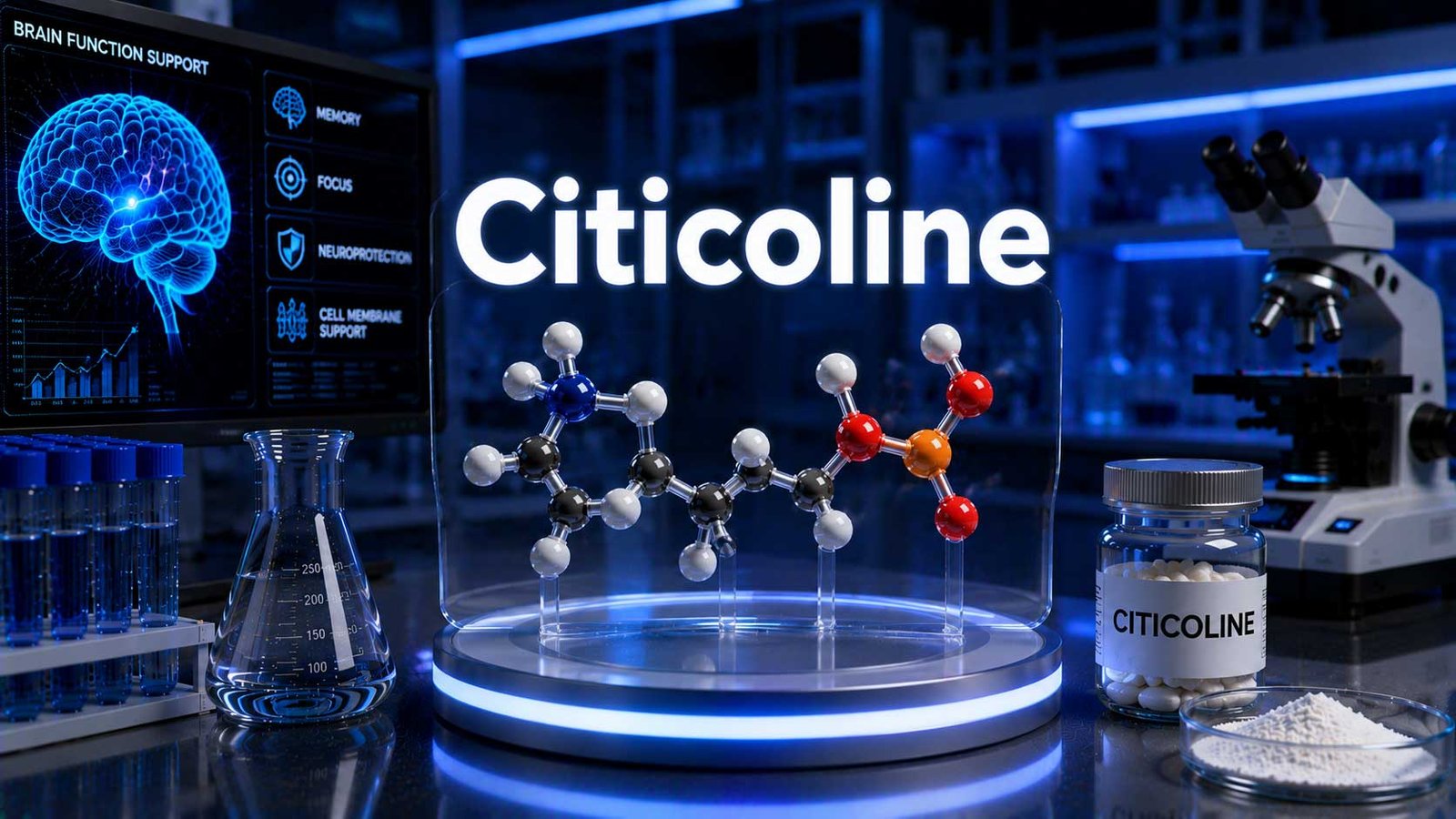
The Brain Nutrient Hardly Anyone Talks About
If you’ve spent any time browsing the supplement aisle lately, or scrolling through nootropic forums at midnight when you probably should be sleeping, you’ve likely bumped into the word citicoline. It sits there next to the omega-3s and the adaptogens, quietly making some pretty big promises. Sharper memory. Better focus. Support for aging brains. And unlike a lot of trendy ingredients that show up one year and vanish the next, citicoline has actually been around for decades, first developed in Japan back in the 1970s as a treatment for stroke patients, long before anyone thought to put it in a capsule and sell it as a “brain booster.”
That history matters. Citicoline isn’t some obscure herb pulled from folk medicine with a handful of anecdotes behind it. It’s a molecule your body already makes on its own, every single day, in every cell you have. Chemically, it’s known as cytidine 5′-diphosphocholine, or CDP-choline if you want the shorter version, and it plays a rate-limiting role in building phosphatidylcholine, one of the main structural fats that make up your cell membranes. Brain cells, in particular, lean on this pathway heavily, since neurons are constantly repairing and remodeling their membranes as part of normal function.
Table of Contents


Here’s where it gets interesting for anyone thinking about brain function specifically. When citicoline breaks down in your gut, it splits into two pieces, choline and cytidine, both of which cross into the bloodstream and eventually make their way to the brain, where they get reassembled back into citicoline. Once there, it feeds into two separate but related jobs: rebuilding neuronal membranes and supplying raw material for acetylcholine, a neurotransmitter that’s central to learning, attention, and memory formation. Grieb’s pharmacological review describes citicoline as having pleiotropic, or multi-pathway, effects on brain metabolism, meaning it doesn’t just do one thing, it nudges several systems at once (Grieb, 2014).
I’ll be honest with you, having followed this ingredient for years, I think citicoline is one of the more legitimately interesting compounds in the cognitive health space, mostly because it isn’t hype dressed up as science. It’s the opposite. A lot of the research started in clinical settings, treating people recovering from strokes or traumatic brain injuries, and only later did researchers start asking whether healthy people might notice benefits too. That’s a very different trajectory than, say, a trendy mushroom extract that jumped straight from a lab rat study to a bottle with a rocket ship on the label.
Now, does that mean citicoline is some kind of miracle molecule? No, and I’d be doing you a disservice if I framed it that way. The research is genuinely mixed in certain areas, and I’ll get into exactly where the evidence is strong versus where it’s still shaky. But the core biology is solid, and that’s worth sitting with for a second. Choline itself is already recognized as an essential nutrient, one that most people don’t get enough of through food. Citicoline offers a different route to deliver choline (and cytidine) to the brain, one that appears to be efficiently absorbed and well tolerated based on decades of pharmacokinetic study.
What I want to do in this article is walk through what citicoline actually does for brain function, where you’d realistically get it, how much people tend to use, and what the safety picture looks like. No fluff, no exaggerated claims, just a grounded look at a compound that deserves more nuance than either the “miracle nootropic” crowd or the dismissive skeptics tend to give it. Whether you’re dealing with brain fog, keeping an eye on cognitive aging in a parent, or just curious what’s behind the marketing claims on your multivitamin, there’s real substance here to dig into.
One more thing before we move on. Citicoline sometimes gets lumped in with generic “choline supplements,” and while that’s technically not wrong, it undersells what makes it distinct. Unlike choline bitartrate or lecithin, citicoline appears to cross the blood-brain barrier with notable efficiency, and its cytidine component gets converted to uridine, another compound with its own roles in brain membrane synthesis. So when people ask whether they should just eat more eggs instead of bothering with citicoline, the answer isn’t quite that simple. We’ll unpack that too.
I also think it’s worth pausing on why brain function, specifically, keeps coming up whenever citicoline gets mentioned. Most of the tissue in your brain is, structurally speaking, fat. Neuronal membranes are built almost entirely from phospholipids, and those membranes aren’t static, they’re constantly being broken down and rebuilt as part of normal signaling, plasticity, and repair. That turnover requires a steady supply of building blocks, and citicoline sits right at the front of that supply chain. It’s not a stimulant, it’s not sedating, and it doesn’t act like a typical psychoactive substance at all. It’s closer to a construction material for a process your brain is already running around the clock, whether you’re twenty-five or seventy-five.
That framing matters because it explains why researchers first got interested in citicoline for acute injury before anyone thought to test it in healthy people chasing sharper focus. When brain tissue is under acute stress, from oxygen deprivation during a stroke or the mechanical damage of a traumatic injury, membrane repair becomes urgent, and having more raw material on hand seemed like a logical intervention worth testing. Only decades later did the conversation shift toward a subtler question: if this compound helps repair stressed brain tissue, could it also support gradual, ongoing maintenance in tissue that isn’t acutely injured but is simply aging? That’s the question most of the newer research, including the studies we’ll get into shortly, has been trying to answer.
I’ll also say this, because I think it’s the kind of thing that gets glossed over in most articles on the topic: citicoline research spans an unusually wide geographic and clinical range. It’s been studied extensively in Japan, where it was first developed, across parts of Europe where it’s sold as a prescription neuroprotective drug rather than a supplement, and increasingly in the United States, where it’s classified and sold as a dietary ingredient. That regulatory split is actually kind of fascinating on its own. In some countries, citicoline requires a prescription because of its use in stroke and cognitive impairment treatment. In others, you can buy it at a pharmacy counter next to fish oil. Neither classification changes the underlying chemistry, but it does explain why you might see wildly different framing depending on which country’s research or marketing you’re reading.
So with all of that as a foundation, let’s get into specifics. What does citicoline actually appear to do for memory, attention, and recovery, where does that evidence hold up best, where should you be more skeptical, and how does citicoline fit realistically into a broader approach to supporting brain function over time. That’s the ground we’re covering next.
Key Health Benefits
Let’s get into what citicoline is actually associated with, based on the clinical research rather than marketing copy. I want to be upfront that the strength of evidence varies quite a bit depending on which benefit we’re talking about and which population was studied. Some of this is backed by solid randomized trials. Some of it is still preliminary. I’ll try to be clear about which is which as we go.
Memory Support in Aging Adults
This is probably the area with the most convincing data for otherwise healthy people. A randomized, double-blind, placebo-controlled trial published in The Journal of Nutrition looked at 100 adults between 50 and 85 years old who had age-associated memory impairment, meaning normal age-related decline rather than dementia. Participants took either 500 mg of citicoline daily or a placebo for 12 weeks. The citicoline group showed significantly greater improvement in episodic memory, the kind involved in recalling specific events and experiences, along with a composite memory score built from four separate cognitive tests (Nakazaki et al., 2021).
What I appreciate about this particular study is the population. These weren’t stroke patients or people with diagnosed cognitive disorders, they were regular older adults noticing the kind of memory slips most of us dread, misplaced keys, forgotten names, that sort of thing. Seeing a measurable difference in that group over just three months is meaningful, even if it’s a single trial and shouldn’t be treated as the final word.
Cognitive Recovery After Brain Injury
Citicoline’s original clinical use was in stroke and traumatic brain injury recovery, and this remains one of its best-studied applications. A systematic review and meta-analysis of citicoline in acute ischemic stroke, pooling data from multiple randomized trials, found favorable trends for citicoline in improving neurological recovery, though the authors noted that results varied depending on trial design and dosing (Secades et al., 2016). A separate meta-analysis focused specifically on traumatic brain injury in the acute phase found that citicoline treatment was associated with a significantly higher rate of patient independence at follow-up, based on data pooled from 11 clinical studies and over 2,700 patients.
That said, I don’t want to oversell this. Not every study agrees. The large multicenter COBRIT trial, which enrolled over 600 patients with traumatic brain injury, didn’t find a significant difference between citicoline and placebo on its primary functional outcome measure. A Cochrane systematic review of citicoline for acute ischemic stroke similarly found the overall quality of evidence to be limited, and stopped short of recommending it as a standard treatment. So the honest picture here is one of genuine promise mixed with real inconsistency, and I think anyone telling you otherwise, in either direction, isn’t giving you the full story.
Attention and Processing Speed
Beyond memory, there’s a growing body of research on citicoline and attention specifically. Studies cited in a systematic pharmacological review found that oral citicoline supplementation improved attention performance compared with placebo in middle-aged women taking 250 mg daily for a month, and in adolescent males taking 250 to 500 mg daily over four weeks (Nakazaki et al., 2021). Separate research has also reported improvements in reaction time among young adults. These are smaller, shorter studies, so I’d file this under “promising but early” rather than settled science, but the direction of the findings has been fairly consistent across different age groups, which is reassuring.
Neuroprotection and Cellular Support
At the mechanistic level, citicoline has been shown in laboratory and animal research to support several protective processes in brain tissue, including preserving mitochondrial membrane integrity, supporting the resynthesis of phospholipids after cellular stress, and helping regulate processes tied to neuronal survival during periods of reduced oxygen or blood flow (Grieb, 2014). A broader pharmacological review out of Italy summarized citicoline’s proposed mechanisms as involving both structural repair of neuronal membranes and modulation of neurotransmitter systems, particularly dopamine and norepinephrine pathways (Gareri et al., 2015). These mechanisms help explain why citicoline was first developed for acute brain injury, where cellular stress is severe and immediate.
Cognitive Decline and Neurodegenerative Conditions
A systematic review examining citicoline across a range of neurological disorders found supportive evidence for its use in slowing progression of cognitive symptoms in vascular cognitive impairment and certain dementia-related conditions, alongside benefits reported in stroke recovery and even some neuropathic pain models (Jasielski et al., 2020). I want to be careful here, because “may slow progression” is a very different claim from “prevents” or “treats,” and the review authors themselves noted that many of the included studies had methodological limitations, including small sample sizes and inconsistent outcome measures. Still, taken as a whole body of research spanning several decades and multiple countries, citicoline has accumulated more evidence in this space than the vast majority of ingredients marketed for brain health today.
A Grounded Bottom Line on Benefits
Pulling all of this together, here’s roughly how I’d rank the evidence, from strongest to more speculative:
- Memory support in older adults with mild age-related decline, backed by a solid randomized trial
- Attention and processing speed, supported by several smaller controlled studies
- Recovery support after traumatic brain injury, with meta-analyses showing benefit but at least one large trial showing no effect
- Stroke recovery, with mixed results across systematic reviews and Cochrane analyses
- General neuroprotection, well-supported at the mechanistic and animal-study level, less so in large human trials
None of this amounts to citicoline being a cure-all, and I’d be skeptical of anyone who tells you it is. But as far as brain-focused nutrients go, it’s got more legitimate research behind it than most.
Dietary Sources
Here’s something that tends to surprise people the first time they hear it: citicoline itself isn’t something you can really eat. It’s not sitting in your morning eggs or your salmon fillet in any meaningful quantity. That’s a pretty important distinction, and it separates citicoline from a lot of other “brain nutrients” you might be used to hearing about, like omega-3s or B vitamins, which show up naturally across a wide range of whole foods.
Why Citicoline Isn’t a Food-Based Nutrient
Citicoline is produced endogenously, meaning your body manufactures it internally as an intermediate step in a larger metabolic pathway, rather than absorbing it ready-made from what you eat. It’s technically present in every living cell because it’s part of the biosynthesis process for phosphatidylcholine, but natural foods don’t contain it in any significant, measurable amount. So if you’re specifically hunting for “foods high in citicoline,” you’re going to come up empty, and that’s not because the research is incomplete, it’s just how the biochemistry works.
The Choline Connection
What you can do through diet is support the raw materials citicoline is built from, primarily choline. Choline is an essential nutrient in its own right, meaning your body can’t produce enough of it on its own to meet its needs, and you have to get a meaningful portion from food. The richest dietary sources of choline include:
- Eggs, particularly the yolk, which is one of the most concentrated food sources available
- Beef liver and other organ meats
- Lean meats and poultry
- Fish, especially salmon and other fatty varieties
- Dairy products like milk and yogurt
- Cruciferous vegetables such as broccoli and Brussels sprouts, in smaller amounts
- Legumes, including soybeans and kidney beans
A cohort study examining dietary choline intake patterns found that animal-based foods, particularly eggs, milk, and lean fish, contributed the largest share of total choline intake, with phosphatidylcholine as the dominant form consumed. The NIH Office of Dietary Supplements notes that adequate choline intake sits around 550 milligrams per day for adult men and 425 milligrams per day for adult women, yet most people in Western diets fall short of these targets.
Why Food-Based Choline Isn’t the Same as Supplemental Citicoline
This is where I think a lot of confusion sets in, and I want to clear it up plainly. Eating more eggs will absolutely help your overall choline status, and that’s genuinely good for you, choline plays roles in liver function, cell membrane integrity, and neurotransmitter production well beyond just brain health. But dietary choline doesn’t behave identically to supplemental citicoline once it hits your bloodstream. Citicoline appears to have particularly efficient delivery to brain tissue, given that ingested citicoline yields both choline and cytidine, the latter of which converts to uridine, a compound with its own distinct role in supporting phospholipid synthesis in neurons. Standard dietary choline sources don’t deliver that same cytidine component.
So think of it less as “citicoline versus food” and more as two different tools with some overlap. If your goal is general nutritional adequacy, prioritizing choline-rich foods is the sensible, evidence-based foundation. If you’re specifically interested in the more targeted brain-membrane and neurotransmitter support that citicoline research focuses on, food alone likely won’t get you there in the same way.
Where Supplemental Citicoline Actually Comes From
Since it’s not extracted from food, the citicoline found in supplements and pharmaceutical products is manufactured synthetically, most commonly through a fermentation-based production process. This isn’t some red flag, by the way. Plenty of nutrients you already trust, including certain forms of vitamin B12 and probiotics, are produced through fermentation rather than harvested from plants or animals. One widely studied branded form, used in several of the clinical trials referenced throughout this article, is produced this way and has an extensive safety and pharmacokinetic dataset behind it, arguably more than most “natural extract” ingredients you’ll find on a supplement shelf.
Practical Takeaway on Sources
If you’re trying to build a brain-supportive diet from the ground up, focus first on getting enough dietary choline through whole foods like eggs, fish, and lean meats, since that’s foundational and benefits far more than just cognition. If you’re specifically curious about the effects studied in citicoline research, that generally means looking at a supplement, since there’s no realistic way to reach research-level citicoline exposure through diet alone. It’s a bit like the distinction between eating turmeric in your cooking versus taking a concentrated curcumin extract, related, but not interchangeable when it comes to the doses used in actual studies.
A Quick Word on Cytidine, the Other Half of the Equation
While choline gets most of the attention, it’s worth remembering that citicoline is really two nutrients working together. The cytidine portion is also present in a range of foods, particularly organ meats and brewer’s yeast, as a natural constituent of RNA. In humans, cytidine converts efficiently to uridine, which appears to play its own independent role in supporting phospholipid synthesis in neurons, somewhat parallel to what choline does. So when citicoline gets described as delivering both membrane-building blocks and neurotransmitter precursors in one package, that’s really referring to this dual choline-and-cytidine contribution, something you won’t get from choline-only supplements or choline-rich foods alone.
What About Food Fortification or Combination Products
You’ll occasionally see citicoline added to fortified beverages, energy drinks, or combination nootropic blends, alongside caffeine or other stimulants. I’d encourage a bit of caution here, not because citicoline itself is problematic in that context, but because it becomes much harder to evaluate what’s actually driving any effect you notice. If a product combines citicoline with a hefty dose of caffeine, and you feel sharper after drinking it, that’s more likely the caffeine talking. If you’re genuinely trying to assess whether citicoline itself is doing anything for you, a standalone product where it’s the primary active ingredient makes it far easier to judge honestly, rather than guessing at which ingredient in a crowded formula deserves the credit.
Comparing Citicoline to Other Choline-Delivery Supplements
For context, it helps to see how citicoline stacks up against other choline-based supplement forms people commonly encounter. Alpha-GPC, another popular choline donor, has also been studied for cognitive support and tends to deliver a higher percentage of elemental choline per dose compared with citicoline. Choline bitartrate, by contrast, is a more basic and less expensive form, commonly found in multivitamins, but with comparatively less brain-specific research behind it. Citicoline’s distinguishing feature isn’t necessarily that it delivers more choline per milligram, since it actually yields a relatively modest amount, roughly a fifth of its weight in elemental choline. What sets it apart is the added cytidine component and the specific clinical research base built around cognitive and neurological outcomes rather than choline status alone. If your primary goal is simply raising blood choline levels efficiently, other forms might get you there more cheaply. If your interest is specifically in the outcomes studied in citicoline research, that distinction matters quite a bit.
Dosage & Deficiency
Dosage is one of those areas where I see a lot of scattered, inconsistent information online, so let’s ground this in what’s actually been used in clinical research rather than guesswork.
What Doses Have Been Studied
Citicoline doses in human research have ranged fairly widely depending on the goal. For general cognitive support and memory in healthy or mildly impaired older adults, studies have commonly used doses in the 250 to 500 milligram per day range, with the previously mentioned Journal of Nutrition trial using 500 mg daily over 12 weeks and finding measurable memory benefits (Nakazaki et al., 2021). For attention-focused outcomes, some studies used doses as low as 250 mg daily. On the higher end, doses of 1,000 to 2,000 milligrams per day have been used in research targeting more significant cognitive decline related to aging, and doses up to 2,000 mg daily, sometimes delivered intravenously, have been used in acute stroke and brain injury research settings, which is a very different clinical context than a daily supplement routine.
It’s worth pointing out that higher doses used in acute medical settings, often under direct medical supervision and sometimes via IV administration, are not the same thing as what you’d find in an over-the-counter capsule, and shouldn’t be used as a reference point for typical supplementation.
A Reasonable Starting Range
Based on the pattern across the research, doses between 250 and 500 milligrams daily appear to be where most of the general cognitive and attention-related benefits have been observed in otherwise healthy adults, particularly in studies lasting one to three months. That’s not medical advice, and I’d always encourage checking with a healthcare provider before starting any new supplement, especially if you’re managing an existing health condition or taking medications, but it gives you a sense of where the actual research clusters rather than the inflated numbers sometimes thrown around in marketing materials.
How Quickly Effects Show Up
One thing that stands out across the trials is that citicoline isn’t typically a fast-acting compound in the way caffeine or certain other nootropics are. The memory study referenced earlier ran for a full 12 weeks before differences became statistically significant. Attention-related studies have shown effects within a month in some cases. If you’re trying citicoline and expecting an immediate, noticeable jolt, you’re likely to be disappointed, this appears to be more of a slow-building, structural kind of support, consistent with its role in rebuilding cell membranes over time rather than acutely stimulating the nervous system.
Is There Such a Thing as Citicoline Deficiency?
This is a nuanced question, and the honest answer is no, not in the traditional sense. Citicoline isn’t classified as an essential nutrient the way vitamin C or choline itself is, because your body manufactures it internally as part of normal metabolism rather than requiring a dietary source. So you won’t find a recognized “citicoline deficiency syndrome” the way you would with, say, vitamin B12 deficiency.
That said, there’s a related and more useful concept here: choline inadequacy. Since choline is one of citicoline’s key building blocks, and most people don’t consume enough choline through diet, some researchers have proposed that suboptimal choline status over time could limit the availability of raw materials needed for healthy brain membrane turnover, particularly as natural production capacity may decline with age. A pharmacological review noted that plasma choline uptake in the brain appears to decrease in older adults, which has been proposed as one contributing factor to age-related cognitive changes, though this remains an area of ongoing investigation rather than settled fact (Nakazaki et al., 2021).
Who Might Be More Likely to Fall Short
Certain groups are more prone to inadequate choline status, which indirectly affects the raw materials available for citicoline-related pathways in the brain:
- Older adults, due to both lower dietary intake patterns and potentially reduced brain choline uptake efficiency
- Vegans and strict vegetarians, since some of the richest choline sources are animal-based
- Pregnant and breastfeeding individuals, whose choline requirements increase substantially
- People with certain genetic variations affecting choline metabolism, which can increase dietary requirements
None of this means these groups are automatically citicoline-deficient in a clinical sense, but it does help explain why researchers have been particularly interested in studying citicoline supplementation in aging populations specifically, rather than young, healthy adults with no cognitive complaints.
Timing and Consistency Matter More Than People Expect
Something I don’t see discussed often enough is how much consistency seems to matter with citicoline, more so than precise timing of day. Unlike caffeine, where timing relative to sleep is a real consideration, citicoline studies haven’t reported strong time-of-day effects. What they have consistently required is daily, uninterrupted use across the full study period, whether that’s four weeks or twelve. If you’re the type of person who takes a supplement for a week, forgets for three days, then picks it back up, you’re unlikely to replicate what the research actually measured. Given that citicoline’s proposed mechanism involves gradual membrane rebuilding rather than acute neurotransmitter spikes, skipping days probably blunts whatever cumulative effect might otherwise build over time.
Should You Cycle Citicoline?
This comes up a lot, and there isn’t strong research specifically addressing whether cycling citicoline, meaning taking planned breaks, offers any advantage over continuous use. Given that its mechanism centers on ongoing structural support rather than receptor downregulation or tolerance buildup, the kind of concern that drives cycling recommendations for stimulants, there isn’t an obvious biological rationale for cycling citicoline the way people sometimes cycle caffeine or certain adaptogens. That said, taking periodic breaks isn’t likely to cause harm either, it simply isn’t something the current evidence base speaks to directly, so I’d file it under personal preference rather than an evidence-based necessity.
Combining Citicoline With Other Nutrients
Because citicoline’s benefits are thought to stem partly from choline availability, some research and clinical practice has explored combining it with other cognitively active compounds, including cholinesterase inhibitors used in dementia care, and separately with other B-vitamin-related nutrients involved in methylation and neurotransmitter synthesis. These combination approaches sit outside the scope of typical over-the-counter supplementation and generally involve medical supervision, so I wouldn’t recommend attempting to replicate them casually. For general, self-directed use, citicoline as a standalone ingredient, at doses reflected in the research above, is the more grounded and better-supported approach.
Toxicity & Risks
I think this is honestly one of the more reassuring parts of the citicoline story, and it’s worth spending real time on because safety data matters just as much as efficacy data, arguably more.
Overall Safety Profile
Across decades of research, citicoline has consistently been described as well tolerated with a favorable safety profile. A comprehensive pharmacological review noted that citicoline is a safe compound based on extensive toxicological testing, without significant systemic cholinergic side effects, and has been used clinically in various countries for treating cerebrovascular disease and cognitive impairment for decades (Secades & Lorenzo, 2006). The Journal of Nutrition trial in older adults reported no serious adverse events over the 12-week supplementation period at a 500 mg daily dose (Nakazaki et al., 2021). Reviews describing citicoline’s toxicological profile have similarly noted several-fold lower toxicity relative to other supplemental forms of choline, based on animal studies.
Reported Side Effects
That doesn’t mean citicoline is entirely free of side effects for every person. Reported issues, while generally mild and infrequent, have included things like trouble sleeping, headache, digestive upset such as diarrhea or nausea, changes in blood pressure, and occasionally blurred vision or chest discomfort. These tend to be reported at low rates and are typically mild enough that they don’t lead people to discontinue use, but they’re worth knowing about rather than assuming a completely side-effect-free experience.
Duration of Safety Data
Most of the controlled research on citicoline safety covers relatively short-term use, generally up to about 90 days. Long-term safety data, covering years rather than months, is considerably more limited, though citicoline has been used clinically in some countries for far longer periods without major safety signals emerging in observational use. Still, if you’re the kind of person who likes gold-standard, multi-year randomized trial data before committing to something indefinitely, it’s fair to say citicoline’s long-term supplementation profile isn’t as thoroughly mapped out as its short-term profile.
Pregnancy and Breastfeeding
This is a case where the honest answer is “we don’t know enough,” which I think is more useful to hear than a false reassurance. There isn’t sufficient reliable safety data on citicoline supplementation specifically during pregnancy or breastfeeding, so the general recommendation is to avoid supplemental use in these situations unless specifically guided by a healthcare provider, and to rely on food-based choline sources instead, which do have established safe intake guidelines for these life stages.
Absorption and Elimination
From a pharmacokinetic standpoint, oral citicoline shows notably high absorption, with research using labeled citicoline finding nearly complete absorption after a single dose, and minimal amounts recovered unabsorbed in stool. It’s primarily eliminated through respiratory carbon dioxide and urine, rather than accumulating in tissue in a way that raises red flags for toxicity buildup. This kind of efficient absorption and elimination profile is generally viewed favorably from a safety standpoint, since compounds that build up unpredictably in the body tend to carry more long-term risk.
Drug Interactions and Precautions
Choline-related compounds, including citicoline, aren’t currently associated with significant, well-documented interactions with common medications, though that doesn’t mean interactions are impossible, particularly for people on medications affecting blood pressure, blood clotting, or dopamine-related conditions such as Parkinson’s disease treatments, given citicoline’s proposed influence on dopaminergic pathways. Anyone managing a chronic health condition or taking prescription medication should talk with a healthcare provider before adding citicoline to their routine, not because the risk is necessarily high, but because individualized medical guidance always beats generic supplement advice, especially for anything affecting neurological or cardiovascular function.
Who Should Be More Cautious
Beyond pregnancy and breastfeeding, a bit of extra caution seems reasonable for people with a history of low blood pressure, given some reported associations with blood pressure changes, and for anyone with a diagnosed neurological or psychiatric condition currently under active medical management, simply because self-directed supplementation in that context should always happen in coordination with the treating physician rather than independently.
The Bigger Picture on Risk
Zooming out, citicoline’s risk profile compares favorably to many other cognitive-focused supplements on the market, many of which have far thinner safety datasets behind them. That’s not a reason to be careless about dosing or to skip a conversation with your doctor, but it is a reason to feel reasonably confident that citicoline isn’t some fringe, under-tested ingredient riding on hype alone. The safety data, much like the efficacy data, has decades of clinical use behind it, which is more than can be said for most things sold under the “brain health” umbrella today.
What Happens if You Take Too Much
There isn’t a well-defined, universally agreed-upon toxic threshold for citicoline the way there is for some other supplements, largely because the doses tested even at the higher end of clinical research, up to around 2,000 milligrams daily in some acute care settings, haven’t produced serious toxicity signals. That said, “hasn’t shown toxicity in studied ranges” isn’t the same as “no upper limit exists,” and taking substantially more than any studied dose isn’t something I’d recommend simply because it hasn’t been formally tested. If you accidentally take more than intended on a given day, the more likely outcome based on the reported side effect profile is mild digestive discomfort or a headache rather than anything dangerous, but that’s not an invitation to experiment with megadosing.
Quality and Sourcing Considerations
Because citicoline supplements can vary in manufacturing quality, and because the clinical research has largely been conducted using specific, well-characterized branded forms rather than generic bulk material, there’s a reasonable argument for choosing products that disclose their citicoline source and ideally reference third-party testing. This isn’t unique to citicoline, it applies to most supplement categories, but it’s particularly relevant here given how much of the positive research relies on consistent, pharmaceutical-grade material. A cheaply sourced, unverified powder marketed simply as “citicoline” may not carry the same purity or bioavailability profile as the forms actually used in the trials referenced throughout this article.
Putting the Risk Picture in Context
I think it’s fair to say that, among compounds marketed for cognitive support, citicoline sits toward the safer end of the spectrum, bolstered by genuine pharmacokinetic study, favorable elimination characteristics, and a multi-decade clinical history in both prescription and supplement contexts. It isn’t risk-free, nothing genuinely active in the body is, but the risks that do exist are generally mild, well-documented, and manageable with basic common sense: reasonable dosing, awareness of your own health history, caution during pregnancy and breastfeeding, and a conversation with a healthcare provider if you’re on medication or managing a chronic condition.
Where This Leaves Your Brain Health Strategy
So where does all of this actually leave you? I think the fair, unglamorous answer is this: citicoline is a legitimately interesting compound with real biological plausibility and a reasonably solid, if imperfect, evidence base, particularly around memory support in aging adults and structural brain cell maintenance. It’s not a miracle fix for cognitive decline, and anyone marketing it that way is stretching the science further than the data actually goes. But it’s also not empty hype riding on a trendy nootropic wave, which honestly puts it ahead of a lot of what gets sold in that space.
If I had to boil this down to practical takeaways, I’d put it this way. First, prioritize your baseline choline intake through whole foods like eggs, fish, and lean meats, since that supports the broader metabolic pathway citicoline depends on and benefits your body well beyond brain function alone. Second, if you’re specifically interested in the memory and attention-related effects studied in the research, understand that this generally means looking at supplemental citicoline rather than trying to get there through diet, and that realistic expectations matter, this looks more like gradual, structural support building over weeks rather than an instant cognitive switch flipping on. Third, don’t skip the conversation with a healthcare provider, especially if you’re pregnant, managing a chronic condition, or taking medications that affect blood pressure or neurological function.
What I find genuinely compelling about citicoline, after following this research for a long time, is that it doesn’t ask you to believe in anything mystical. It’s not about detoxing your brain or unlocking some hidden percentage of unused capacity. It’s a well-characterized molecule doing a well-characterized job, supplying the raw materials your neurons need to keep rebuilding themselves, something your body does constantly whether you think about it or not. Whether that translates into a noticeable difference for you personally depends on your starting point, your age, your existing nutritional status, and frankly, some degree of individual variability that no single study can fully predict.
If you’re weighing whether to add it to your routine, my honest suggestion is to treat it the way you’d treat any evidence-based supplement decision: look at what population the research actually applies to, match that against your own situation, start at a dose that’s actually been studied rather than an inflated marketing number, give it enough time to show an effect given its slow-building nature, and keep your primary care provider in the loop. Brain function isn’t something you hack overnight, and citicoline, for all its promise, isn’t an exception to that rule. It’s a tool, a reasonably well-supported one, but a tool nonetheless, and it works best as part of a broader foundation rather than a standalone fix.
It’s also worth remembering that no single nutrient operates in isolation inside your body, and citicoline is no exception. Sleep quality, cardiovascular health, physical activity, and overall dietary pattern all influence brain function in ways that likely dwarf what any one supplement can achieve on its own. Citicoline research doesn’t happen in a vacuum where participants ignore everything else about their health, it happens against the backdrop of ordinary life, which means whatever modest, measurable benefits show up in these trials are layered on top of, not a replacement for, the fundamentals. If your sleep is consistently poor or your diet is generally lacking, addressing those factors first will likely move the needle on cognitive function more than any supplement will, citicoline included.
I’d also gently push back on the idea that you need to chase every new brain-health trend that crosses your feed. Citicoline earns its place in this conversation because it has actual research behind it spanning decades, not because it’s new or trending. That’s a meaningful distinction, and one worth applying as a filter to basically anything marketed toward cognitive enhancement going forward. Ask where the evidence actually comes from, who it was studied in, and what the realistic, unembellished outcome looked like. Citicoline holds up reasonably well under that kind of scrutiny, which is more than can be said for a lot of what’s currently sold under the same umbrella.
At the end of the day, supporting brain function is less about finding one perfect ingredient and more about stacking a handful of reasonably well-supported habits and choices on top of each other, consistently, over years rather than weeks. Citicoline, used thoughtfully and with realistic expectations, can be one of those pieces. Just don’t expect it to carry the whole structure on its own.
Article Sources
At AncientHerbsWisdom, our content relies on reputable sources, including peer-reviewed studies, to substantiate the information presented in our articles. Our primary objective is to ensure our content is thoroughly fact-checked, maintaining a commitment to accuracy, reliability, and trustworthiness.
- Gareri, P., Castagna, A., Cotroneo, A. M., Putignano, S., De Sarro, G., & Bruni, A. C. (2015). The role of citicoline in cognitive impairment: Pharmacological characteristics, possible advantages, and doubts for an old drug with new perspectives. Clinical Interventions in Aging, 10, 1421-1429. https://doi.org/10.2147/CIA.S87886
- Grieb, P. (2014). Neuroprotective properties of citicoline: Facts, doubts and unresolved issues. CNS Drugs, 28(3), 185-193. https://doi.org/10.1007/s40263-014-0144-8
- Jasielski, P., Piędel, F., Piwek, M., Rocka, A., Petit, V., & Rejdak, K. (2020). Application of citicoline in neurological disorders: A systematic review. Nutrients, 12(10), 3113. https://doi.org/10.3390/nu12103113
- Martí-Carvajal, A. J., Valli, C., Martí-Amarista, C. E., Solà, I., Martí-Fàbregas, J., & Bonfill Cosp, X. (2020). Citicoline for treating people with acute ischemic stroke. Cochrane Database of Systematic Reviews, 8, CD013066. https://doi.org/10.1002/14651858.CD013066.pub2
- Nakazaki, E., Mah, E., Sanoshy, K., Citrolo, D., & Watanabe, F. (2021). Citicoline and memory function in healthy older adults: A randomized, double-blind, placebo-controlled clinical trial. The Journal of Nutrition, 151(8), 2153-2160. https://doi.org/10.1093/jn/nxab119
- National Institutes of Health, Office of Dietary Supplements. (2022). Choline: Fact sheet for health professionals. https://ods.od.nih.gov/factsheets/Choline-HealthProfessional/
- Secades, J. J., & Lorenzo, J. L. (2006). Citicoline: Pharmacological and clinical review, 2006 update. Methods and Findings in Experimental and Clinical Pharmacology, 28(Suppl B), 1-56. https://pubmed.ncbi.nlm.nih.gov/17171187/
- Secades, J. J., Alvarez-Sabín, J., Castillo, J., Díez-Tejedor, E., Martínez-Vila, E., Ríos, J., & Oudovenko, N. (2016). Citicoline for acute ischemic stroke: A systematic review and formal meta-analysis of randomized, double-blind, and placebo-controlled trials. Journal of Stroke and Cerebrovascular Diseases, 25(8), 1984-1996. https://doi.org/10.1016/j.jstrokecerebrovasdis.2016.04.010
- Secades, J. J., Trimmel, H., Salazar, B., & González, J. A. (2023). Citicoline for the management of patients with traumatic brain injury in the acute phase: A systematic review and meta-analysis. Life, 13(2), 369. https://doi.org/10.3390/life13020369

- Phosphatidic Acid: Supporting Muscle Growth and Strength - July 31, 2026
- Ceramides: Supporting Healthy Skin From Within - July 31, 2026
- Synbiotics: Combining Prebiotics and Probiotics Together - July 31, 2026