
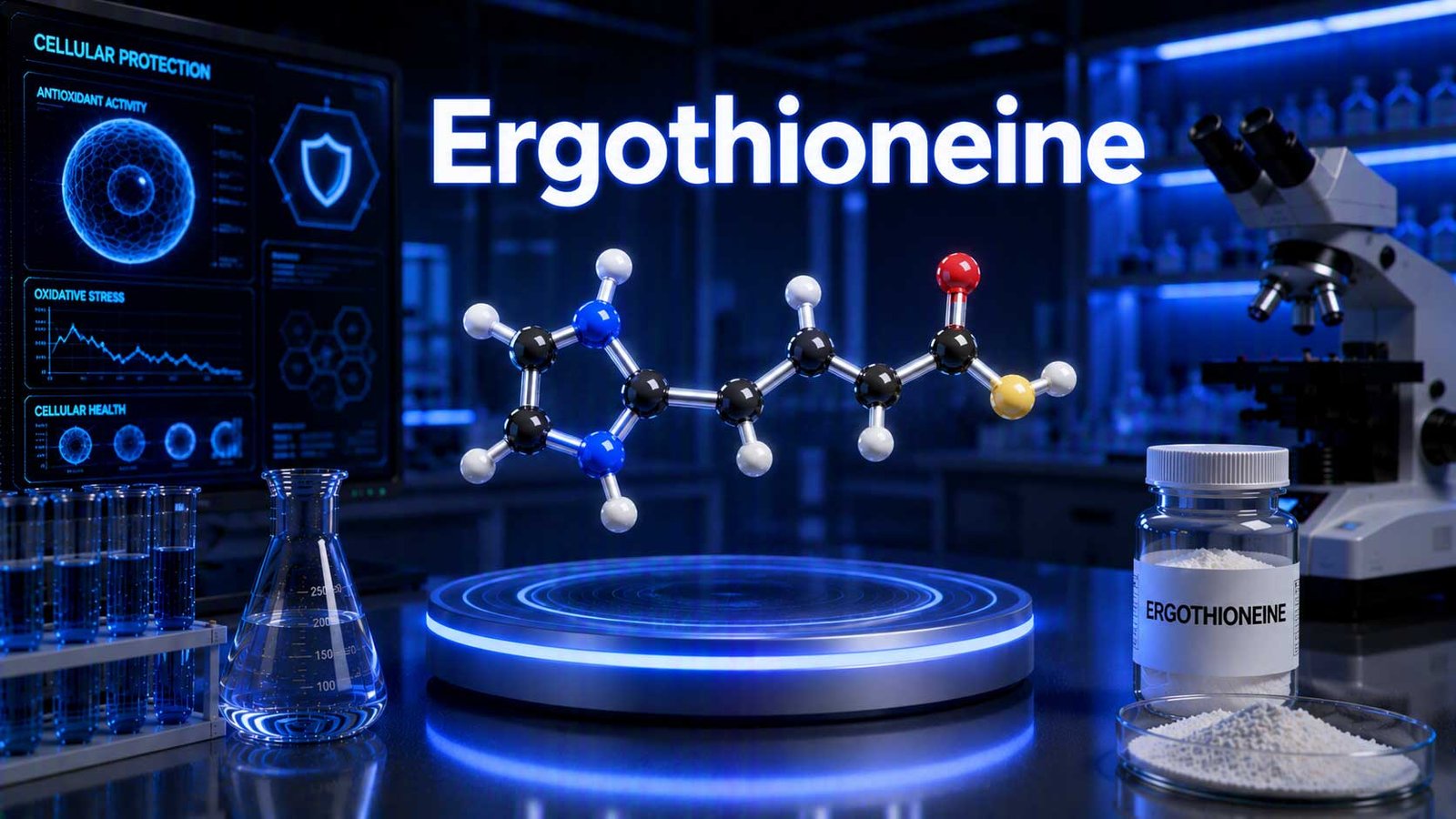
The Antioxidant Your Body Begs For But Cannot Make
There’s a strange little molecule sitting inside your red blood cells, your liver, your eyes, and the lining of your joints right now, and there’s a good chance you’ve never heard its name. Ergothioneine. Say it a few times and it starts to roll off the tongue easier than you’d think, but the real oddity isn’t the pronunciation, it’s the biology behind it. Every cell in your body seems to want this compound so badly that it built a dedicated transporter, a molecular doorway called OCTN1, whose entire job is to grab ergothioneine from your bloodstream and pull it inside cells, especially the ones under the most stress. And yet your body cannot make a single molecule of it. Not one. You are entirely dependent on your diet, and more specifically on fungi, to supply something your own cells apparently consider precious enough to hoard.
I’ve spent a long time reading through antioxidant research, and most compounds in that world follow a predictable script. Something shows promise in a petri dish, gets hyped by supplement marketers, and then quietly fades once human trials come back underwhelming. Ergothioneine has taken a different path. It was actually discovered over a century ago, back in 1909, isolated from ergot fungus by a French chemist named Charles Tanret, which is where the name comes from. For decades it sat around as a biochemical curiosity, a weird sulfur-containing cousin of the amino acid histidine that nobody quite knew what to do with. It took until the mid-2000s, when researchers identified that dedicated transporter protein, for scientists to sit up and ask the obvious question: why would the human body evolve a specific, energy-consuming mechanism to import and concentrate a nutrient it can’t even synthesize? You don’t build that kind of infrastructure for something unimportant.
Table of Contents

What makes ergothioneine genuinely interesting, and worth your attention if you care about long-term cellular health, is where it accumulates. This isn’t a nutrient that floats around evenly. Ergothioneine concentrates preferentially in tissues that take the most oxidative punishment, your bone marrow, your eyes, your liver, your kidneys, the mitochondria inside your cells. Researchers studying this compound have described it as behaving almost like the body’s own repair kit for oxidative stress, something the body stockpiles in the places most likely to need protection. There’s also something unusual about the chemistry of ergothioneine. Unlike glutathione, which most people have heard of as the body’s “master antioxidant,” ergothioneine has a much lower redox potential, meaning it can neutralize a broader range of reactive oxygen species without becoming reactive or unstable itself. Ergothioneine doesn’t seem to get consumed and depleted the way other antioxidants do. It just sits there, quietly buffering.
I’ll be honest, the fact that mushrooms are functionally the only significant dietary source of this compound changes how I think about the humble button mushroom sitting in the produce aisle. Most of us treat mushrooms as a garnish, a pizza topping, something you throw into a stir fry almost as an afterthought. But biologically, mushrooms and a handful of other fungi are doing something no plant or animal tissue can replicate on its own, they’re synthesizing a compound so biologically valuable that mammals evolved a transport system just to steal it from their diet.
None of this is to say ergothioneine is a miracle molecule, and I want to be upfront about that from the start, because the supplement industry has a habit of taking a genuinely interesting nutrient and turning it into a cure-all. What the research actually shows is more measured and, frankly, more believable. Lower blood levels of ergothioneine have been associated with markers of oxidative stress, with aging-related decline, and with certain patterns of cognitive change in older adults. Association is not causation, and I’ll keep returning to that distinction throughout this piece, because it matters. What we can say with more confidence is that this is a nutrient most people are probably under-consuming, that it appears remarkably safe even at high intakes, and that the biological plausibility behind its role in cellular protection is stronger than for a lot of trendier antioxidants currently being marketed.
So where does that leave someone trying to figure out whether ergothioneine deserves a spot in their nutritional thinking? I think it starts with understanding what this compound actually does inside your cells, moves through where you can realistically get it from food, addresses the practical question of how much you need and what happens if you’re running low, and then takes an honest look at safety, because no discussion of a bioactive compound is complete without it. Let’s work through all of that, piece by piece, the way I’d want it explained if I were hearing about this nutrient for the first time.
Key Health Benefits of Ergothioneine
The deeper you dig into ergothioneine research, the more it becomes clear that its primary value lies in cellular defense, not in flashy, headline-grabbing effects. That’s not a knock against it. Some of the most important things happening in your body are the quiet, unglamorous processes that keep cells functioning properly for decades rather than years. Ergothioneine seems to specialize in exactly that kind of maintenance work.
Mitochondrial Protection
Mitochondria are the energy factories inside your cells, and they’re also, ironically, one of the biggest sources of oxidative stress in the body because of the sheer volume of reactive byproducts generated during energy production. Ergothioneine appears to accumulate specifically within mitochondria, where it helps buffer against the reactive oxygen species produced during normal metabolic activity. Researchers who study aging biology have pointed to this mitochondrial targeting as one of the more compelling reasons ergothioneine keeps showing up in longevity-focused research. When mitochondria stay functional longer, cells generally age better, and tissues that depend heavily on consistent energy output, like the brain and heart, tend to benefit the most from this kind of protection.
Cognitive and Neurological Support
This is probably the area generating the most active research interest right now. A study out of Singapore followed a large cohort of elderly individuals attending memory clinics and found that lower plasma ergothioneine levels at baseline predicted faster subsequent decline in cognitive and functional performance across memory, attention, and executive function domains over several years of follow-up (Wu et al., 2022). That’s a meaningful finding because it’s prospective, not just a snapshot comparison. It suggests the relationship isn’t simply that sicker, more cognitively impaired people happen to eat fewer mushrooms, it’s that lower ergothioneine status may precede and predict decline. Other research groups have proposed that ergothioneine’s ability to cross into brain tissue and concentrate in areas vulnerable to oxidative damage could explain part of this pattern, though I want to be careful here: this is still an association-based body of evidence, and it would be overstepping to call ergothioneine a treatment or preventive therapy for cognitive decline. What can be said is that the signal is consistent enough across multiple studies to take seriously.
Anti-Inflammatory Activity
Chronic low-grade inflammation is one of those things that doesn’t announce itself with obvious symptoms but quietly contributes to a huge range of age-related conditions. In controlled human studies, administration of purified ergothioneine to healthy adults produced measurable reductions in biomarkers associated with oxidative damage and inflammation over a period of weeks (Cheah et al., 2017). This matters because it moves the conversation beyond cell culture experiments, where almost anything looks protective, into actual human physiology, where results are far harder to come by and far more meaningful when they show up.
Skin and Tissue Resilience
Skin is constantly exposed to ultraviolet radiation and environmental pollutants, both of which generate oxidative stress at the surface level. Ergothioneine has drawn attention in dermatological research for its capacity to protect skin cells against UV-induced damage and to support the skin’s broader antioxidant network, working alongside vitamin C, vitamin E, and glutathione rather than replacing them. I find this synergistic angle important because it reflects how antioxidants generally work in the body, not as isolated heroes but as a coordinated team, each handling different types of oxidative threats and regenerating each other when depleted.
Cardiovascular and Metabolic Relevance
There’s a growing thread of research examining ergothioneine’s relationship to vascular health, partly because oxidative stress plays such a central role in the progression of atherosclerosis and endothelial dysfunction. Some studies have even explored its potential relevance in pregnancy-related vascular disorders, where oxidative stress is a known contributing factor. This is an area where the science is still maturing, and I’d stop short of drawing firm conclusions, but the mechanistic rationale, protecting blood vessel linings and mitochondria from oxidative injury, lines up with what we already understand about cardiovascular risk.
Athletic Recovery Without Blunting Adaptation
Here’s something that genuinely surprised me when I first came across it. A lot of antioxidant supplements, when taken around exercise, can actually blunt the beneficial training adaptations your muscles are supposed to make in response to the mild oxidative stress of a workout. That’s a real concern for athletes who load up on high-dose vitamin C or E post-workout. Research on ergothioneine, however, found it improved aerobic performance in a time-to-exhaustion protocol without interfering with the early molecular signaling pathways muscles use to adapt to training (an effect the researchers attributed partly to Nrf2 pathway activation rather than blanket free-radical suppression). That distinction, supporting the antioxidant defense system without shutting down the adaptive stress response, is a fairly sophisticated mechanism and one that separates ergothioneine from cruder antioxidant approaches.
Taken together, these benefits paint a picture of a compound that works less like a dramatic intervention and more like consistent, background cellular housekeeping. That’s a less exciting sell than a lot of supplement marketing wants, but it’s probably closer to biological reality.
Dietary Sources of Ergothioneine
If there’s one thing to internalize about ergothioneine, it’s this: mushrooms are not just a good source, they are functionally the dominant source. Fungi and a small number of bacteria are the only organisms capable of synthesizing ergothioneine from scratch, using specific biosynthetic enzymes that plants and animals simply don’t possess. Everything else in the food chain, including the small amounts found in meat, beans, and grains, ultimately traces back to fungal origins, either from mushrooms themselves or from mycorrhizal fungi that transfer trace amounts into the root systems of certain plants.
Mushrooms Lead By a Wide Margin
Mushroom species vary substantially in how much ergothioneine they contain, and the differences aren’t trivial. Specialty and exotic varieties tend to run considerably higher than the common white button mushroom most grocery stores stock by default. Shiitake, oyster, maitake (hen of the woods), king oyster, and porcini mushrooms have all been identified in food chemistry analyses as particularly concentrated sources, with some measurements placing their ergothioneine content several times higher per serving than standard white button or cremini mushrooms (Ey et al., 2007). If you’re someone who currently reaches for the cheapest, blandest mushroom option out of habit, it might be worth branching out, not just for flavor but because you’re likely leaving a meaningful amount of this nutrient on the table.
A few practical notes worth knowing:
- Dried mushrooms concentrate ergothioneine relative to their fresh weight, since most of what’s removed during drying is water, not the compound itself.
- Cooking methods matter somewhat. Boiling can leach some ergothioneine into the cooking liquid, so soups and broths made with mushrooms aren’t necessarily losing the nutrient, it’s often just relocating into the broth. Sautéing and roasting tend to preserve more of it within the mushroom flesh itself.
- Even the least concentrated culinary mushrooms still outperform virtually every non-fungal food by a wide margin, so there isn’t really a “bad” mushroom choice here, just better and best.
Non-Mushroom Sources Are Modest at Best
Outside the fungal kingdom, dietary options thin out considerably. Foods that have shown up in food chemistry analyses with detectable, if comparatively small, amounts include organ meats such as liver and kidney, black beans and red beans, oat bran, and to a lesser degree garlic and certain grains (Ey et al., 2007). Tempeh, being a fermented soy product involving fungal cultures, also tends to carry some ergothioneine as a byproduct of the fermentation process. None of these come close to matching mushrooms gram for gram, but they can offer a modest supplementary contribution for people who don’t eat fungi regularly, whether by preference or by allergy.
Why Plant-Heavy Diets Aren’t a Guarantee
I think there’s a common assumption that a diet rich in fruits and vegetables automatically covers antioxidant bases, and for many antioxidants, that’s a reasonable assumption. Ergothioneine breaks that pattern. You could eat an exemplary, colorful, vegetable-forward diet and still end up with fairly low ergothioneine intake if mushrooms aren’t part of the regular rotation. This is worth sitting with for a second, because it reframes mushrooms not as an optional garnish but as a genuinely distinct food category, one that’s covering nutritional ground nothing else on your plate is covering.
Geographic and Cultural Patterns
Populations with traditionally higher mushroom consumption, certain East Asian dietary patterns being a notable example, tend to show higher average plasma ergothioneine levels in population studies compared to Western populations where mushroom intake is often minimal and inconsistent. Researchers have specifically flagged the American diet as comparatively low in ergothioneine intake relative to what’s biologically achievable through food alone, largely due to modest mushroom consumption habits. This geographic variability is itself a form of evidence, it suggests that dietary intake genuinely drives blood levels of this compound in a measurable, consistent way, rather than levels being tightly regulated regardless of what you eat.
Storage and Shelf Stability
Something I don’t see discussed often enough is how ergothioneine behaves once a mushroom leaves the store shelf. Unlike some antioxidants that degrade quickly once exposed to light, air, or moderate heat, ergothioneine has shown itself to be fairly stable in storage compared to more fragile compounds like vitamin C. That doesn’t mean quality is irrelevant, mushrooms sitting in the crisper drawer for two weeks will lose overall food quality and possibly some nutrient content, but it does mean you’re not racing against a rapidly ticking clock the way you might be with, say, fresh berries. Freezing mushrooms, whether raw or lightly sautéed first, appears to preserve much of their nutrient profile reasonably well, which is a useful thing to know if you like to buy in bulk or take advantage of seasonal availability of specialty varieties.
Building a Mushroom Habit That Actually Sticks
I’ve noticed that a lot of nutrition advice around “eat more of X” fails not because people disagree with the reasoning, but because it never translates into an actual repeatable habit. With mushrooms, a few small adjustments tend to work better than a single ambitious overhaul. Adding a handful of sliced shiitake or oyster mushrooms to an omelet a few mornings a week, tossing them into a stir fry alongside whatever vegetables are already in rotation, or blending a portion into ground meat for burgers and meatballs (a trick that also stretches the meat further and adds moisture) are all low-effort entry points. None of these require you to become a mushroom enthusiast overnight, they just require treating mushrooms as a default ingredient rather than an occasional one.
A Quick Comparative Perspective
To put the mushroom-dominance point in sharper focus, consider that even foods identified as having “detectable” ergothioneine outside the fungal kingdom, organ meats, legumes, oat bran, are typically measured in fractions of what a single serving of shiitake or oyster mushrooms provides. This isn’t a case of mushrooms being modestly better than the alternatives, it’s closer to mushrooms occupying a category of their own. If your goal is meaningfully raising ergothioneine intake through food, time spent optimizing bean or oat bran consumption is time better redirected toward simply eating more fungi, in a wider variety, more consistently.
Practical Takeaway
If you wanted a simple, actionable rule from this section, it would be something like this: aim to include mushrooms in your diet several times a week rather than occasionally, lean toward the higher-content specialty varieties when they’re available and affordable, and don’t assume that a generally healthy, plant-forward diet is automatically giving you adequate ergothioneine unless fungi are specifically part of the picture. For those with mushroom allergies or aversions, supplementation becomes a much more relevant conversation, which brings us to dosage.
Dosage and Deficiency Considerations
Unlike vitamins with decades of established recommended daily allowances, ergothioneine doesn’t yet have an official government-set intake recommendation in most countries. That absence isn’t because the compound is unimportant, it’s more a reflection of how recently the scientific community has taken it seriously as a nutrient worth formal guidelines rather than a biochemical curiosity. That said, there’s enough research now to sketch out reasonable, evidence-informed ranges.
Typical Dietary Intake
Estimates of average dietary ergothioneine intake vary quite a bit depending on the population studied and their mushroom consumption habits, but general population intakes in many Western countries have been estimated in the low single-digit milligrams per day range, occasionally lower for individuals who rarely eat mushrooms. Compare that to populations with higher fungal food consumption, where daily intake can run several times higher. This variability alone tells you something important: there is no fixed, guaranteed intake level most people are hitting by default. It depends heavily on individual food choices.
Supplement Dosing in Research and Practice
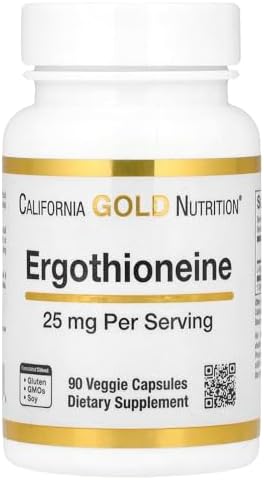
When it comes to supplemental or purified ergothioneine, most of the human clinical research and supplement industry guidance has clustered around a fairly modest range. Trials examining biomarkers of oxidative stress and inflammation in healthy adults have used doses in roughly the 5 to 30 milligram per day range over periods ranging from several weeks to a couple of months, generally without adverse findings. Some cosmetic and skin-focused trials have used doses around 30 milligrams daily over eight-week periods, reporting measurable improvements in skin parameters compared to placebo. Supplement manufacturers commonly market products in the 5 to 10 milligram range as a baseline daily dose, positioning it as a maintenance amount rather than a therapeutic megadose. I’d characterize this as a nutrient where “more” hasn’t been shown to dramatically outperform “modest and consistent,” at least not yet, and where the existing trial doses tend to cluster in a fairly narrow, conservative band.
What Low Levels Look Like
There’s no clinically defined “deficiency syndrome” for ergothioneine in the way there is for, say, vitamin C and scurvy. Instead, what the research shows is a correlational pattern: individuals with chronically low plasma ergothioneine levels tend to show higher markers of oxidative stress and, in some elderly cohorts, faster rates of cognitive and functional decline over time (Wu et al., 2022). Age itself appears to be a factor, with some studies noting a tendency for plasma ergothioneine to decline as people get older, potentially compounding the effects of reduced antioxidant capacity that already accompanies aging. Whether this represents a true “deficiency” in the classical nutritional sense, or simply reflects lower dietary intake accumulating over decades, is still being worked out. Either way, it’s a reasonable enough signal that anyone eating little to no mushrooms over a long stretch of years might be running on the lower end of what their cells would prefer.
Who Might Want to Pay Closer Attention
A few groups seem worth flagging based on the current evidence, without turning this into medical advice:
- People who rarely or never eat mushrooms, whether due to taste preference, allergy, or simply not thinking to include them
- Older adults, given the observed tendency for levels to decline with age alongside increased vulnerability to oxidative stress
- Individuals under unusually high physical or metabolic stress, such as competitive endurance athletes, where the compound’s mitochondrial-protective role may be particularly relevant
- Anyone following a highly restricted or repetitive diet that happens to exclude the primary food sources discussed earlier
A Reasonable, Conservative Approach
If someone asked me how to think about this practically, I’d suggest prioritizing food sources first, simply because whole mushrooms bring along fiber, B vitamins, potassium, and other beneficial compounds that a supplement won’t replicate. For those who genuinely can’t or won’t eat mushrooms regularly, a modest supplemental dose in the range commonly used in published research, generally somewhere between 5 and 30 milligrams daily, appears to align with what’s currently been studied without straying into speculative high-dose territory. As always, checking in with a healthcare provider before adding any new supplement is a sensible step, particularly for anyone managing existing health conditions or taking other medications.
Why There’s No Official RDA Yet
It’s worth pausing on why a compound with this much accumulating research still lacks an official recommended daily intake in places like the United States. Part of it is simply timing, formal nutrient recommendations tend to lag well behind the research that eventually justifies them, sometimes by decades. Part of it is also the nature of the evidence itself. Regulatory bodies setting official intake recommendations typically want large-scale, long-duration randomized controlled trials with hard clinical endpoints, not just biomarker improvements or observational associations, however consistent those associations might be. Ergothioneine research is still building toward that level of evidence. The EFSA safety assessments and novel food approvals represent meaningful regulatory engagement with the compound, but a safety approval is a different bar than an official intake recommendation. I’d expect that gap to close over the coming years as more prospective trials, like the ergothioneine cognitive decline pilot studies currently underway, report their results.
Reading Supplement Labels With a Critical Eye
If you do decide to explore supplementation, a bit of label literacy goes a long way. Ergothioneine supplements on the market are generally derived either from mushroom extracts or from fermentation-based synthetic production methods, both of which have shown up in the safety literature without major red flags. What’s worth checking is the actual elemental dose per serving, since some products bury a modest ergothioneine amount inside a larger proprietary blend without clearly stating the isolated quantity. Look for products that state a specific milligram amount of ergothioneine itself, ideally verified by third-party testing, rather than vague blend totals. Given how modest the effective doses studied in research tend to be, a well-formulated product doesn’t need to be expensive or highly concentrated to fall within a reasonable, evidence-aligned range.
Interactions and Timing
There isn’t strong evidence pointing to major interactions between ergothioneine and common medications, but because the compound is transported into cells via the OCTN1 pathway, and that same transporter has some involvement with certain drugs, it’s a reasonable area for a bit of caution rather than blanket reassurance. As for timing, there’s nothing in the current research suggesting ergothioneine needs to be taken at a specific time of day or alongside food to be effective, its long half-life in the body, reportedly stretching into weeks rather than hours, means daily consistency probably matters more than precise timing.
Toxicity and Risk Considerations
One of the more reassuring aspects of ergothioneine, at least from where I sit after reviewing the available safety data, is just how consistently benign it has looked across toxicology studies. That’s not something you can say about every popular antioxidant compound on the market, some of which carry real caveats around high-dose use. Ergothioneine’s safety profile stands out as unusually clean, though “unusually clean” doesn’t mean “risk-free under all circumstances,” and it’s worth walking through what the actual data shows rather than assuming that because a compound is natural, it’s automatically without limits.
Regulatory Safety Assessments
The European Food Safety Authority conducted a formal safety evaluation of synthetic L-ergothioneine as part of the novel food approval process in the European Union. Based on the toxicological data submitted, the panel identified a no-observed-adverse-effect level, or NOAEL, of 800 milligrams per kilogram of body weight per day in animal studies (EFSA NDA Panel, 2016). To put that in perspective, for an average adult, that would translate to tens of grams per day, a dose almost nobody would realistically reach through any combination of food and supplements. When EFSA compared this NOAEL against the highest realistic estimated intake levels from fortified foods, supplements, and background diet combined, they calculated margins of safety in the hundreds, meaning the gap between typical consumption and the level where any adverse effect was observed in animal studies is extremely wide. In a follow-up assessment specifically covering infants, young children, and pregnant or breastfeeding women, EFSA extended similar safety conclusions to these more sensitive populations, again finding sufficient margins of exposure (EFSA NDA Panel, 2017).
Human Trial Data
Beyond the regulatory toxicology work, human clinical trials administering purified ergothioneine to healthy adults have generally reported good tolerability, without significant adverse events attributable to the compound itself, even at doses well above typical dietary intake (Cheah et al., 2017). This kind of consistency across both animal toxicology and human trial data is part of why ergothioneine has moved fairly smoothly through novel food and supplement approval processes in multiple regulatory jurisdictions.
Where Caution Still Applies
None of this means ergothioneine is beyond any scrutiny, and a few points are worth keeping in mind:
- Long-term data at very high, sustained supplemental doses over years, rather than weeks or months, remains limited simply because the compound hasn’t been in widespread consumer use long enough to generate that kind of extended real-world data.
- As with most bioactive compounds, individual sensitivity can vary, and anyone starting a new supplement should watch for unexpected reactions and discontinue use if something feels off.
- People with certain autoimmune conditions should be aware that the OCTN1 transporter ergothioneine relies on has been implicated in some autoimmune disease research contexts, though this connection relates to transporter genetics and disease susceptibility rather than evidence that ergothioneine supplementation itself causes autoimmune problems. It’s a nuance worth mentioning rather than a settled concern, and anyone with an autoimmune condition considering supplementation should loop in their physician.
- Pregnant and breastfeeding individuals should still default to professional medical guidance before adding any supplement, even one with reassuring regulatory safety data, simply as standard practice for that life stage.
Comparing Ergothioneine’s Profile to Other Antioxidants
It’s worth putting this safety data in context against other popular antioxidant supplements, because not all of them carry equally clean records. High-dose beta-carotene supplementation, for instance, has been linked to increased lung cancer risk in smokers in large trials, a finding that genuinely surprised the research community at the time. High-dose vitamin E supplementation has raised questions in some studies about all-cause mortality risk at sustained high intakes. Against that backdrop, ergothioneine’s toxicology profile, wide margins of safety in animal studies, no significant adverse findings in human trials, and regulatory approval across multiple population groups including pregnant and breastfeeding women, stands out as comparatively reassuring. I don’t say this to suggest complacency is warranted, but rather to calibrate expectations. This isn’t a compound with a known history of overdose risk or a narrow therapeutic window that demands careful titration.
What “No Toxicity Observed” Actually Means
I think it’s worth being precise about language here, because “no toxicity observed” in a study is not the same claim as “proven completely safe under all conditions forever.” What it means, more specifically, is that within the doses and durations tested, researchers did not detect adverse effects using the measurement tools and endpoints available to them. That’s a meaningful and reassuring finding, but science tends to be humble about closing the book entirely on any compound, and ergothioneine is no exception. The realistic takeaway is that current evidence supports a favorable risk profile at doses reflecting typical dietary intake and the modest supplemental ranges used in published trials, while long-term surveillance data at sustained high-dose use over many years is still accumulating, simply because the compound hasn’t been in widespread consumer use for that long a stretch yet.
The Bigger Picture on Safety
Stepping back, I think the honest summary here is that ergothioneine has one of the more favorable safety profiles among popular antioxidant compounds currently being studied, backed by both formal regulatory toxicology and human trial data. That said, “safe” isn’t the same as “unlimited” or “necessarily beneficial at any dose,” and the sensible path remains what it usually is with any nutrient: get the bulk of your intake from whole foods, treat supplementation as a targeted addition rather than a default, and involve a healthcare provider if you fall into a more sensitive population group or are managing existing health conditions.
What Your Cells Have Been Trying to Tell You
I keep coming back to that image of a molecular doorway built specifically to import a nutrient the body cannot make for itself. There’s something almost humbling about it. Evolution doesn’t waste energy building specialized transport machinery for compounds that don’t matter, and the fact that OCTN1 exists at all, quietly funneling ergothioneine into your mitochondria, your liver, your eyes, your bone marrow, tells you that somewhere along the evolutionary timeline, access to this fungal antioxidant became worth the biological investment.
What strikes me most after working through this research isn’t any single dramatic finding, it’s the consistency of the pattern across very different types of studies. Cell biology work showing mitochondrial accumulation. Population studies linking low plasma levels to markers of oxidative stress. A prospective cohort study tying baseline ergothioneine status to the rate of subsequent cognitive decline. Human trials showing measurable reductions in inflammatory and oxidative biomarkers after supplementation. Regulatory toxicology showing an unusually wide margin of safety. None of these individually proves ergothioneine is essential in the way vitamin C or iron are essential, and I’d be doing you a disservice if I oversold that comparison. But taken together, they build a genuinely compelling case for a nutrient that most people have simply never had reason to think about.
The practical takeaway is refreshingly simple, which is rare in the world of antioxidant science. Eat more mushrooms, and don’t just default to the cheapest white button variety out of habit, branch out toward shiitake, oyster, maitake, and other specialty varieties when you can, since the difference in content between mushroom types is substantial. If mushrooms aren’t realistically going to be part of your regular diet, a modest supplement in the range commonly studied in clinical research is a reasonable option worth discussing with a healthcare provider, particularly if you’re older, physically active at a high level, or simply curious about closing a nutritional gap that conventional multivitamins don’t address. And keep the framing honest: this is a compound that supports your body’s baseline cellular resilience over the long haul, not a quick fix or a dramatic intervention.
Cells are remarkably good at telling you what they need, if you know how to listen. The existence of a dedicated transport system for a nutrient you can’t produce yourself is about as clear a biological signal as you’re going to get. Whether you act on that signal by reaching for mushrooms a little more often or considering a targeted supplement is up to you, but at this point, ignoring the message entirely feels like the less informed choice.
I think what separates ergothioneine from a lot of the antioxidant compounds that cycle in and out of wellness trends is that ergothioneine isn’t trying to be dramatic. It doesn’t promise rapid transformation, and the researchers closest to this compound have been notably careful, almost conservative, about the claims they’re willing to make on its behalf. That restraint is, in a strange way, one of the more convincing things about ergothioneine as a nutrient. Compounds that turn out to be overhyped tend to attract researchers and marketers who oversell early findings. The scientists who’ve spent the most time studying ergothioneine, people like Barry Halliwell and his collaborators in Singapore who’ve published extensively on this molecule for over a decade, tend to frame their findings with careful qualifiers rather than sweeping declarations. That’s the kind of caution you want to see from people closest to the data, and it’s part of why I find the overall body of evidence around ergothioneine more credible than louder claims made about flashier compounds.
There’s also something worth sitting with about the mismatch between how well-studied ergothioneine has become in scientific circles and how little public awareness exists around it. Most people have heard of vitamin C, vitamin E, glutathione, maybe even resveratrol from the red wine headlines a decade or two back. Ergothioneine has largely stayed within research journals and specialist nutrition circles, despite having, in some respects, a more interesting mechanistic story and a cleaner safety profile than several of its more famous counterparts. That’s beginning to shift as mushroom-focused nutrition research gains more mainstream attention, but there’s still a considerable gap between the science and the public conversation.
If you take one thing away from all of this, let it be a shift in how you look at the mushroom section at the grocery store. That unassuming bin of shiitake or oyster mushrooms isn’t just a flavor addition to your cooking, it’s one of the only reliable doors into a nutrient your cells have been quietly asking for this entire time. Small, consistent choices, a mushroom-heavy stir fry here, an omelet with sautéed shiitake there, tend to matter more over the span of years and decades than any single dramatic intervention ever could. Ergothioneine’s story is ultimately a reminder that some of the most biologically important nutrients aren’t the ones shouting the loudest, they’re the ones your body went to the trouble of building a special door for.
Article Sources
At AncientHerbsWisdom, our content relies on reputable sources, including peer-reviewed studies, to substantiate the information presented in our articles. Our primary objective is to ensure our content is thoroughly fact-checked, maintaining a commitment to accuracy, reliability, and trustworthiness.
- Cheah, I. K., Tang, R. M., Yew, T. S., Lim, K. H., & Halliwell, B. (2017). Administration of pure ergothioneine to healthy human subjects: Uptake, metabolism, and effects on biomarkers of oxidative damage and inflammation. Antioxidants & Redox Signaling, 26(5), 193-206. https://doi.org/10.1089/ars.2016.6778
- Cheah, I. K., & Halliwell, B. (2012). Ergothioneine; antioxidant potential, physiological function and role in disease. Biochimica et Biophysica Acta, 1822(5), 784-793. https://doi.org/10.1016/j.bbadis.2011.09.017
- EFSA Panel on Dietetic Products, Nutrition and Allergies (NDA). (2016). Safety of synthetic l-ergothioneine (Ergoneine®) as a novel food pursuant to Regulation (EC) No 258/97. EFSA Journal, 14(11), e04629. https://doi.org/10.2903/j.efsa.2016.4629
- EFSA Panel on Dietetic Products, Nutrition and Allergies (NDA). (2017). Statement on the safety of synthetic l-ergothioneine as a novel food – supplementary dietary exposure and safety assessment for infants and young children, pregnant and breastfeeding women. EFSA Journal, 15(11), e05060. https://doi.org/10.2903/j.efsa.2017.5060
- Ey, J., Schömig, E., & Taubert, D. (2007). Dietary sources and antioxidant effects of ergothioneine. Journal of Agricultural and Food Chemistry, 55(16), 6466-6474. https://doi.org/10.1021/jf071328f
- Halliwell, B., Cheah, I. K., & Tang, R. M. Y. (2018). Ergothioneine – a diet-derived antioxidant with therapeutic potential. FEBS Letters, 592(20), 3357-3366. https://doi.org/10.1002/1873-3468.13123
- Wu, L. Y., Kan, C. N., Cheah, I. K., Chong, J. R., Xu, X., Vrooman, H., Hilal, S., Venketasubramanian, N., Chen, C. P., Halliwell, B., & Lai, M. K. P. (2022). Low plasma ergothioneine predicts cognitive and functional decline in an elderly cohort attending memory clinics. Antioxidants, 11(9), 1717. https://doi.org/10.3390/antiox11091717

- Phosphatidic Acid: Supporting Muscle Growth and Strength - July 31, 2026
- Ceramides: Supporting Healthy Skin From Within - July 31, 2026
- Synbiotics: Combining Prebiotics and Probiotics Together - July 31, 2026