
The Flavonoid Everyone in Longevity Circles Keeps Whispering About
I remember the first time someone mentioned fisetin to me, years ago, almost in passing, the way you’d mention a promising rookie before anyone else has noticed him. Back then it was a minor character in the flavonoid story, overshadowed by quercetin and resveratrol, the two compounds that had already claimed the spotlight in every anti-aging conversation. Fast forward to now, and fisetin has quietly become one of the most discussed compounds in the entire cellular senescence field. Not because of hype, but because the data, at least in animals, has been genuinely striking.
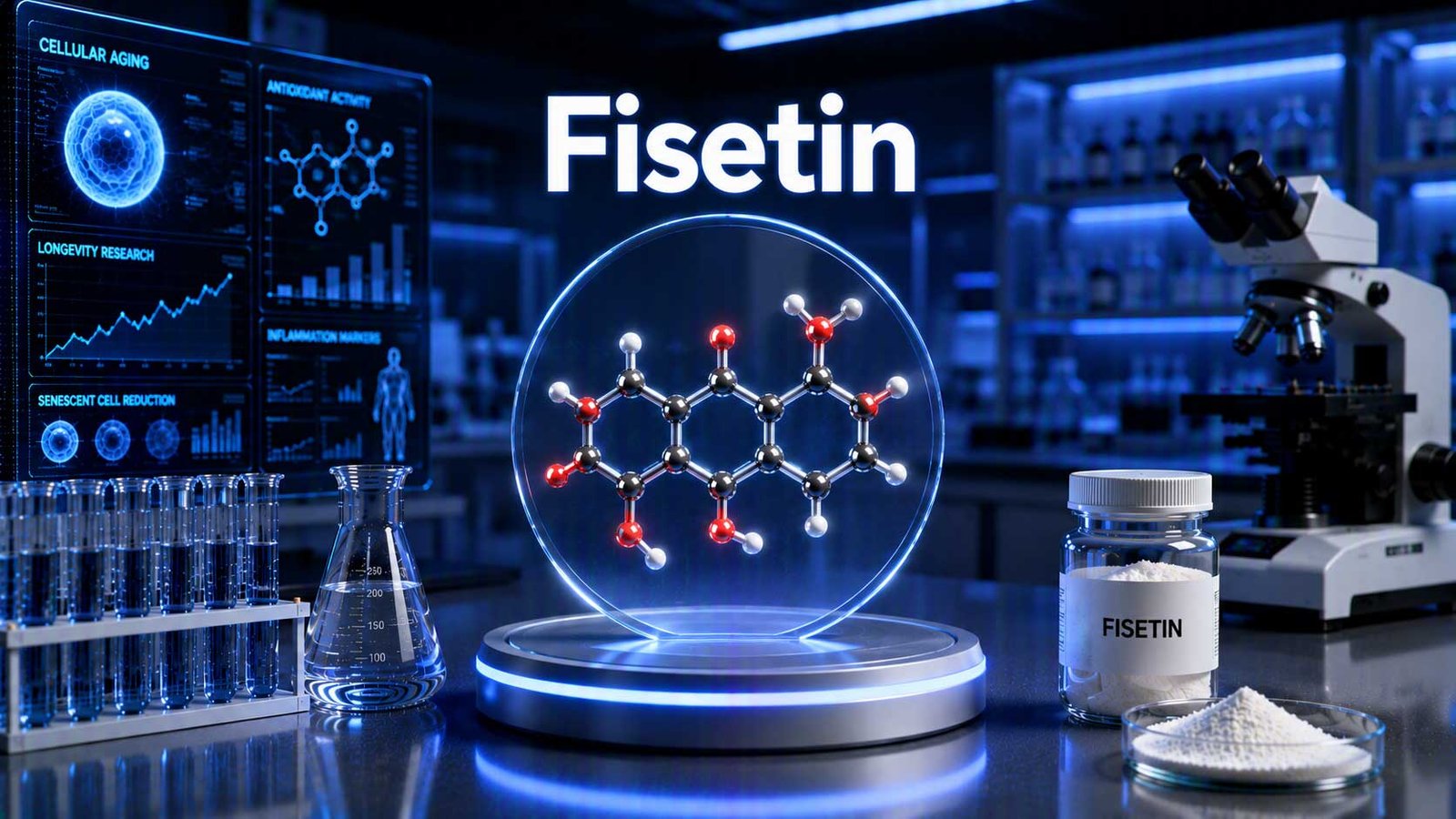
So what is fisetin, exactly? It’s a flavonol, a subclass of flavonoids, found naturally in a handful of fruits and vegetables. Chemically, it’s known as 3,3′,4′,7-tetrahydroxyflavone, which is not a phrase you need to remember, but it does tell you something: this is a polyphenol built for antioxidant work, with hydroxyl groups positioned in just the right spots to neutralize free radicals and interact with cellular signaling pathways. You’ll find it, in varying concentrations, in strawberries, apples, persimmons, onions, grapes, and cucumbers. Strawberries, as it turns out, are the undisputed champion here, containing far more fisetin than any other commonly eaten food.
Table of Contents


For a long time, fisetin sat in the background of nutrition science, studied mostly for its general antioxidant and anti-inflammatory properties, the same broad strokes you’d apply to a dozen other plant compounds. That changed around 2018, when a team of researchers screened a panel of flavonoids for what’s called senolytic activity, essentially the ability to selectively clear out senescent cells, the “zombie cells” that stop dividing but refuse to die, and instead sit around secreting inflammatory signals that damage nearby tissue. Out of everything tested, fisetin came out on top. It wasn’t just decent. It was, in that screen, the most potent senolytic flavonoid identified.
That single finding changed the trajectory of fisetin research almost overnight. Suddenly you had labs at Mayo Clinic, the Scripps Research Institute, and universities across the country running mouse studies, and eventually early-phase human trials, to see whether this humble strawberry compound could do in people what it appeared to do in rodents: reduce the burden of senescent cells, calm chronic low-grade inflammation, and support what researchers call “healthspan,” the years you spend not just alive, but functional.
I want to be upfront about something before we go further, because I think it matters more than most articles on this topic are willing to admit. There’s a meaningful gap between what fisetin does in a petri dish or a mouse cage and what it’s been proven to do in a human body. That gap is not unique to fisetin, it’s the story of nearly every promising longevity compound, but it’s worth sitting with rather than glossing over. The mouse data is genuinely exciting. The human data is early, mixed in places, and still being written.
What makes fisetin particularly interesting, beyond the senolytic angle, is how many different biological pathways it seems to touch. It interacts with mTOR signaling, a pathway heavily implicated in aging and cell growth regulation. It influences NF-κB, a master switch for inflammatory gene expression. It nudges Nrf2, the body’s own antioxidant defense coordinator, into higher gear. It even shows some interaction with sirtuins, the proteins famously linked to caloric restriction and longevity research. No single compound is a magic key that unlocks all of these locks perfectly, and I’d be doing you a disservice if I implied otherwise, but the breadth of fisetin’s mechanistic fingerprint is part of why researchers keep circling back to it.
There’s also a practical, almost democratic appeal to fisetin that I find refreshing. Unlike some experimental longevity compounds that require lab synthesis or exotic sourcing, fisetin is sitting in the produce aisle of your grocery store, hiding inside something as ordinary as a strawberry. That doesn’t mean eating strawberries replicates what’s happening in senolytic research, the doses used in studies are far higher than what diet alone provides, but it does mean the compound isn’t some obscure synthetic molecule with an unpronounceable name and zero real-world context. People have been eating fisetin, unknowingly, for as long as they’ve been eating fruit.
Over the course of this article, I want to walk through what fisetin actually appears to do for cellular health and healthy aging, where you can find it in food, how researchers are thinking about dosage in both preclinical and clinical settings, and what we currently understand about its safety profile and potential risks. My goal isn’t to sell you on fisetin as a miracle compound, because I don’t think that framing serves anyone well. My goal is to give you an honest, detailed picture of where the science actually stands, so you can make sense of the conversation the next time it comes up, whether that’s in a research headline, a supplement aisle, or a conversation with a friend who just discovered longevity podcasts.
Key Health Benefits
Let’s start with the finding that put fisetin on the map: its senolytic activity. Senescent cells are, in a sense, cells that have retired but refuse to leave the building. They stop dividing, which sounds protective on the surface since it prevents damaged cells from replicating uncontrollably, but they don’t just sit there quietly. They secrete a cocktail of inflammatory cytokines, chemokines, and proteases, a phenomenon researchers call the senescence-associated secretory phenotype, or SASP. Over time, as these cells accumulate in tissues, they contribute to a low-grade, chronic inflammatory state that’s been linked to nearly every major age-related condition, from cardiovascular disease to osteoarthritis to cognitive decline.
In the landmark 2018 study that identified fisetin’s senolytic potency, researchers found that intermittent fisetin treatment reduced markers of senescence and SASP factor expression across multiple tissues in aged mice, and extended both median and maximum lifespan in the animals studied. What struck researchers as particularly notable was that the intervention worked even when started late in life, suggesting the compound wasn’t just preventing senescence from building up, it was actively clearing out cells that had already become senescent. That’s a meaningfully different mechanism than most antioxidants, which tend to work by preventing damage rather than cleaning up existing damage.
More recent research has extended this picture into specific tissues. A 2025 study published in Aging Cell found that intermittent fisetin supplementation improved physical function and reduced markers of cellular senescence in the skeletal muscle of aged mice, with effects on frailty and grip strength that were comparable to genetic clearance of senescent cells and to synthetic senolytic drugs. That’s a fairly bold claim to make about a plant compound, and it’s part of why fisetin keeps generating research interest rather than fading into the background like so many trendy nutraceuticals before it.
Vascular health is another area getting serious attention. Research on aged mice has shown that fisetin supplementation can improve arterial and endothelial function, partly by reducing senescent cell burden in the blood vessel lining itself. Endothelial dysfunction is one of the earliest measurable changes in vascular aging, long before anything shows up on a cardiovascular risk calculator, so compounds that appear to influence it at the cellular level are of real interest to cardiovascular researchers, even if we’re still years away from knowing whether this translates into fewer heart attacks or strokes in humans.
Beyond senescence specifically, fisetin has a long research history as what scientists call a dietary antioxidant. Independent of any senolytic activity, it appears to:
- Scavenge free radicals directly, reducing oxidative stress at the cellular level
- Activate the Nrf2 pathway, which upregulates the body’s own antioxidant enzyme production
- Modulate NF-κB signaling, tempering the inflammatory cascade that gets triggered in response to cellular stress
- Influence mTOR and PI3K/Akt signaling, pathways tied to cell growth, metabolism, and, in excess, to processes linked with cancer development
That last point connects to one of the older and more established threads of fisetin research: its anticancer properties, studied extensively in cell culture and animal models across prostate, skin, and other cancer types. This work predates the senolytic craze by years and remains an active area of investigation, though it’s worth noting this research has largely stayed in preclinical settings.
There’s also a growing, though still preliminary, body of work on fisetin and brain health. Preclinical studies suggest fisetin may support neuronal health through its antioxidant and anti-inflammatory actions, with some research pointing toward benefits for memory and cognitive function in animal models, and one human trial involving strawberry supplementation, which naturally contains fisetin, showing improved cognitive performance in older adults over a placebo-controlled period. I want to be careful here, because that strawberry trial tested whole strawberry powder, not isolated fisetin, so we can’t cleanly attribute the effect to fisetin alone. Still, it’s a suggestive thread that researchers are actively pulling on.
What ties all of this together, in my view, is that fisetin doesn’t seem to work through one narrow mechanism. It’s touching senescent cell clearance, oxidative stress, inflammatory signaling, and several growth and metabolic pathways more or less simultaneously. Whether that breadth translates into meaningful, measurable benefits for a healthy adult eating a normal diet is genuinely an open question. But as a research subject, fisetin earns its reputation honestly, not through marketing, but through the sheer volume of mechanistic pathways it appears to influence.
Dietary Sources
If you want to increase your fisetin intake through food alone, there’s really one clear winner, and it’s not close. Strawberries contain dramatically more fisetin than any other commonly consumed food, with concentrations estimated around 160 micrograms per gram of fresh fruit. To put that in perspective, a pint of strawberries can provide somewhere in the range of 50 milligrams of fisetin, an amount that dwarfs what you’d get from nearly any other produce item on your typical grocery list.
Apples come in a distant second. The fisetin content is concentrated mostly in the peel, so an unpeeled apple will give you meaningfully more than a peeled one, though even a large apple provides only a small fraction of what a serving of strawberries offers. Persimmons, a fruit that doesn’t get nearly enough attention in Western diets, also contain a respectable amount, along with a pleasant, almost custard-like texture when fully ripe that makes them worth seeking out regardless of their fisetin content.
Beyond that trio, the concentrations drop off considerably. Grapes, particularly red and black varieties, contain fisetin alongside a broader spectrum of synergistic polyphenols, which is one reason whole-food sources are often more interesting nutritionally than isolated compounds, even when the isolated compound gets all the research attention. Onions and cucumbers contain fisetin as well, at levels well below the fruits mentioned, and kiwi and peaches round out the list with smaller amounts still.
Here’s a practical breakdown worth keeping in mind if you’re trying to build a fisetin-friendly plate:
- Strawberries: by far the richest source, and worth prioritizing if boosting intake is a goal
- Apples: meaningful amounts, concentrated in the skin, so eat them unpeeled
- Persimmons: a lesser-known but genuinely good source
- Grapes and onions: modest amounts, but valuable for their broader polyphenol profile
- Cucumbers, kiwi, peaches: minor contributors, more for variety than impact
Now, here’s the part of the conversation that I think gets glossed over far too often in articles enthusiastic about fisetin-rich foods: the average daily dietary intake of fisetin, across a typical diet, is estimated to be quite low, likely under a milligram or two for most people, mostly coming from occasional apple consumption rather than strawberries, simply because most people don’t eat strawberries every single day. Compare that to the doses used in the research showing senolytic effects in animals, which often work out to the human equivalent of several grams per dose when scaled by body weight. That’s an enormous gap, several orders of magnitude, between what a strawberry-forward diet provides and what preclinical studies suggest is needed to meaningfully clear senescent cells.
This is precisely why fisetin supplements exist as a separate category from “just eat more strawberries.” Supplements typically deliver isolated fisetin in doses ranging from 100 milligrams to 500 milligrams or more per serving, concentrations that would be genuinely difficult, if not impossible, to reach through diet alone without eating an unreasonable quantity of fruit every day. I’m not dismissing the value of dietary fisetin here. Whole strawberries bring fiber, vitamin C, anthocyanins, and a dozen other beneficial compounds along for the ride, benefits a supplement simply can’t replicate. But if your specific goal is to approach the doses studied in senolytic research, dietary sources alone aren’t going to get you there.
There’s a second wrinkle worth understanding, and it applies whether you’re eating strawberries or taking a supplement: fisetin has notoriously poor oral bioavailability. It’s highly lipophilic, meaning it doesn’t dissolve well in water, and it undergoes rapid metabolism once ingested. Human pharmacokinetic research has found that even a substantial 1,000 milligram dose of standard, unformulated fisetin produces relatively modest peak plasma concentrations, well below what’s needed to replicate the senolytic effects observed when cells are exposed to fisetin directly in a laboratory dish. This has pushed researchers toward developing enhanced-absorption formulations, things like hydrogel encapsulation or nanoparticle delivery systems, specifically to get more of the compound into circulation rather than having most of it metabolized before it ever reaches target tissues.
So where does that leave the practically minded reader? Eating more strawberries, apples, and persimmons is a genuinely good habit, supported by a broad base of nutritional evidence around fruit consumption generally, and it will modestly raise your fisetin intake as a side benefit. But if you’re specifically chasing the senolytic mechanisms that made fisetin famous in research circles, understand that dietary intake and the intake levels being studied in clinical trials are, at this point, two very different conversations.
Dosage & Deficiency
Let’s address the second half of that heading first, because it’s the shorter and more straightforward conversation: fisetin is not an essential nutrient. There’s no such thing as a fisetin deficiency in the way we talk about deficiencies in vitamin D or iron. Your body doesn’t require fisetin to carry out any known essential physiological process, and there’s no established recommended daily allowance, no deficiency syndrome, no set of symptoms doctors screen for that would point back to inadequate fisetin intake. It’s a bioactive plant compound, a phytochemical, not a vitamin or mineral your metabolism depends on. So if you’ve seen fisetin marketed with the same “deficiency” framing sometimes applied to actual essential nutrients, that framing is misleading. Nobody is deficient in fisetin the way someone can be deficient in vitamin B12.
Dosage, on the other hand, is a genuinely complicated and evolving conversation, and I think it’s worth walking through carefully rather than handing you a single number and moving on, because the honest answer is that there isn’t yet a well-established human dose.
Most of what we know about fisetin dosing comes from animal research, and the pattern that’s emerged is somewhat counterintuitive: rather than daily, continuous dosing, researchers have found success with intermittent, high-dose protocols. The reasoning behind this comes from the proposed “hit-and-run” mechanism of senolytics generally, the idea being that a short burst of fisetin at a sufficiently high concentration triggers apoptosis in vulnerable senescent cells, after which the compound doesn’t need to remain present in the body to sustain the effect. This is fundamentally different from how you’d think about dosing a vitamin or a standard supplement, where daily consistency is usually the goal.
In mouse studies, doses in the range of 100 milligrams per kilogram of body weight, given for a few consecutive days, have been used to demonstrate reductions in senescence markers. When researchers began translating this into human clinical trials, one of the most cited protocols, used in Mayo Clinic-affiliated studies investigating fisetin for conditions like knee osteoarthritis, involved approximately 20 milligrams per kilogram of body weight per day, taken for two consecutive days, followed by a 28-day break, with the cycle sometimes repeated a second time. For an average adult, that works out to a fairly substantial dose concentrated into just two days per month, not a daily supplement regimen at all.
It’s worth pausing on the outcome of that particular osteoarthritis trial, because I think it’s illustrative of where fisetin research honestly stands. The trial found no significant safety concerns with this dosing approach, which is reassuring. But it also found no evidence of significant benefit for pain, joint function, or cartilage health in participants with knee osteoarthritis at that specific dose and schedule. The researchers were careful to note that other dosing strategies, or fisetin combined with other senolytic agents, might still show benefit, and that the negative result doesn’t close the door on fisetin for joint health. But it’s a useful reminder that promising mouse data doesn’t automatically translate into human clinical results, even when the compound is well tolerated.
Commercial fisetin supplements, the kind you’d find on a store shelf, are typically sold in doses of 100 to 500 milligrams per capsule, often marketed for daily use rather than the intermittent, high-dose pulsing protocol used in clinical research. This creates a real disconnect worth being aware of: the dosing pattern most consumers are actually using when they buy a bottle off the shelf doesn’t necessarily match the dosing pattern that’s been studied for senolytic effects in clinical trials. Whether daily lower-dose supplementation provides meaningful benefit is, frankly, not something the current research has clearly answered one way or the other.
If you’re considering fisetin supplementation, a few practical points are worth keeping in mind:
- There is no officially established therapeutic dose for humans; research protocols vary considerably
- Intermittent, higher-dose pulsing has more research backing than continuous daily low-dose use, at least for senolytic effects specifically
- Bioavailability varies enormously between formulations, meaning two supplements listing the same milligram amount may deliver very different quantities into your bloodstream
- Speaking with a healthcare provider before starting any new supplement, particularly if you take other medications, is a reasonable and sensible step, not an overcautious one
I’ll say this plainly: anyone who tells you they know the “optimal” fisetin dose for a healthy adult trying to support longevity is speaking with more confidence than the current evidence actually supports. The research is moving quickly, but it hasn’t converged on a clear answer yet, and I’d be skeptical of anyone claiming otherwise.
Toxicity & Risks
The good news, and it is genuinely good news, is that fisetin has consistently shown a favorable safety profile across the research conducted so far. In animal studies, even at doses substantially higher than those proposed for human use, researchers monitoring activity levels, food intake, and metabolic function found no evidence of substantial toxicity. Preclinical safety work conducted ahead of human trials included dosing older, elderly primates at levels five times higher than what was eventually used in clinical protocols, with close monitoring for over a month showing no signs of debilitation, appetite loss, or gastrointestinal distress.
In the human trials conducted so far, including Mayo Clinic-affiliated studies on osteoarthritis and other conditions, short pulsed dosing of fisetin has generally been well tolerated, with no serious adverse events reported. That’s a meaningfully reassuring pattern, especially for a compound generating this much research interest. It’s worth noting, though, that these trials have been relatively small, phase one and two in scale, and none have run for the kind of extended, multi-year duration that would be needed to fully characterize long-term safety, particularly for people considering continuous daily supplementation over years rather than short research-protocol pulses.
That distinction matters more than it might seem. The absence of alarming safety signals in short-term, intermittent dosing studies is not the same thing as proof of long-term safety for daily use over months or years. I want to be direct about that gap rather than smoothing it over, because it’s exactly the kind of nuance that tends to get lost when a compound generates this much enthusiasm.
There are a few specific risk considerations worth understanding if you’re thinking about fisetin supplementation:
Drug interactions. Fisetin has been shown, in laboratory studies, to interact with certain cytochrome P450 liver enzymes, particularly CYP2C8, which plays a role in metabolizing a range of pharmaceutical drugs. This is a mechanistic concern rather than a documented case of harm in humans, but it’s exactly the kind of consideration that led researchers running fisetin clinical trials to exclude participants taking specific medication classes, including certain cancer therapies metabolized through the same enzymatic pathway. If you take prescription medications regularly, this is a genuinely important reason to talk to your doctor or pharmacist before adding fisetin, rather than a generic disclaimer thrown in for legal cover.
Blood clotting considerations. Like many flavonoids, fisetin has demonstrated mild antiplatelet activity in laboratory research. On its own, this isn’t necessarily concerning, but if you’re taking blood thinners, whether that’s warfarin, a direct oral anticoagulant, or even routine low-dose aspirin, the potential for additive effects on bleeding risk hasn’t been well characterized in human studies. This is a case where caution genuinely earns its keep rather than being reflexive hand-wringing.
Limited long-term human data. I’ve mentioned this already, but it bears repeating in a section specifically about risk: we simply don’t have large-scale, long-duration human trials establishing what happens with sustained fisetin use over years. Most of what exists is short-term, small-sample, and often focused on specific conditions like osteoarthritis rather than general healthy-aging use in otherwise well people. That’s not a reason for alarm, but it is a reason for measured expectations and reasonable caution, particularly at the higher doses used in research protocols rather than typical commercial supplement amounts.
Contact irritation. Some early research noted that fisetin, in concentrated or raw form, can cause mild irritation if it comes into direct contact with skin or eyes, an occupational consideration for people handling the raw compound rather than something relevant to swallowing a capsule, but worth mentioning for completeness.
Pregnancy and breastfeeding. As with most bioactive compounds under active research rather than established, long-term use, there simply isn’t adequate safety data for pregnant or breastfeeding individuals, and supplementation outside of normal dietary intake isn’t something I’d recommend without direct medical guidance in these circumstances.
Stepping back, I think the honest summary here is this: fisetin has, so far, shown itself to be a relatively gentle compound, at least in the doses and timeframes studied to date, with a research safety record that compares favorably to many other investigational longevity compounds. That’s genuinely encouraging. But “relatively gentle in short trials” and “proven safe for indefinite long-term use” are two different claims, and conflating them does a disservice to anyone trying to make an informed decision. If you’re considering fisetin, particularly at the higher end of studied doses, doing so alongside a conversation with a knowledgeable healthcare provider, rather than purely on the strength of a compelling headline, is simply the more responsible path.
Where the Strawberry Compound Goes From Here
I’ve spent a fair amount of time in the world of plant compounds and cellular health, and I’ll admit fisetin occupies an unusual place for me. Most trendy compounds either fade quickly once the initial excitement wears off, or they get so overhyped that the actual science becomes nearly impossible to find underneath the marketing noise. Fisetin has, so far, avoided both fates. The research keeps accumulating, the mechanistic story keeps getting more detailed, and yet the human clinical picture remains appropriately humble, still being written rather than already concluded.
What I find most compelling about fisetin isn’t any single study, it’s the consistency of the underlying biological story. A flavonoid that shows up prominently in a senolytic screen, gets validated across multiple independent research groups, extends lifespan and improves physical function markers in aged animals, and then moves into human trials with a favorable safety profile, even when efficacy results are still mixed, is a very different situation than a compound riding on a single dramatic headline. Fisetin has earned its place in the healthy aging conversation through accumulated evidence, not through a viral moment.
At the same time, I’d be doing you a disservice if I let the excitement outrun the evidence. The knee osteoarthritis trial that found no significant benefit despite good safety is an important data point, not a footnote to skip past. It’s a reminder that senescent cell burden reduction in a mouse model doesn’t automatically mean symptom relief in a human joint, and that the path from “promising mechanism” to “clinically meaningful outcome” is longer and less certain than research headlines often suggest. Good science includes the null results, not just the exciting ones, and anyone giving you the full picture on fisetin needs to include both.
So where does that leave someone genuinely curious about fisetin for their own healthy aging goals? A few practical takeaways, as I see them. Eating more strawberries, apples, and persimmons is a low-risk, high-reward habit regardless of how the senolytic research ultimately unfolds, since these foods bring fiber, vitamin C, and a broad spectrum of other beneficial compounds along with whatever fisetin they contain. If you’re considering a concentrated supplement, understand that the doses and dosing patterns most heavily studied in clinical research, intermittent, higher-dose pulsing rather than daily low-dose use, don’t necessarily match what’s sold commercially, and that bioavailability varies significantly between formulations. And if you’re on any regular medication, particularly blood thinners or drugs metabolized through the CYP2C8 pathway, that’s a conversation worth having with your doctor before adding fisetin to your routine, not an afterthought.
Cellular senescence research as a whole is still a young field, even if it feels like it’s been in every longevity headline for years now. Fisetin happens to be one of its more promising characters, backed by genuinely compelling mechanistic and animal data, moving cautiously but steadily through the kind of human trials that will eventually tell us how much of that promise holds up. I don’t think that makes it a compound to dismiss, and I also don’t think it makes it a compound to treat as a settled, proven intervention. It sits, honestly, right in that interesting middle ground where good science lives: genuinely promising, not yet fully proven, and worth watching closely as the next round of human trial results comes in.
Article Sources
At AncientHerbsWisdom, our content relies on reputable sources, including peer-reviewed studies, to substantiate the information presented in our articles. Our primary objective is to ensure our content is thoroughly fact-checked, maintaining a commitment to accuracy, reliability, and trustworthiness.
- Adhami, V. M., Syed, D. N., Khan, N., & Mukhtar, H. (2012). Dietary flavonoid fisetin: A novel dual inhibitor of PI3K/Akt and mTOR for prostate cancer management. Biochemical Pharmacology, 84(10), 1277-1281. https://doi.org/10.1016/j.bcp.2012.07.012
- Khan, N., Syed, D. N., Ahmad, N., & Mukhtar, H. (2013). Fisetin: A dietary antioxidant for health promotion. Antioxidants & Redox Signaling, 19(2), 151-162. https://doi.org/10.1089/ars.2012.4901
- Krishnakumar, I. M., Jaja-Chimedza, A., Joseph, A., Balakrishnan, A., Maliakel, B., & Swick, A. (2022). Enhanced bioavailability and pharmacokinetics of a novel hybrid-hydrogel formulation of fisetin orally administered in healthy individuals: A randomised double-blinded comparative crossover study. Journal of Nutritional Science, 11, e74. https://doi.org/10.1017/jns.2022.72
- Murray, S. A., et al. (2025). Intermittent supplementation with fisetin improves physical function and decreases cellular senescence in skeletal muscle with aging: A comparison to genetic clearance of senescent cells and synthetic senolytic approaches. Aging Cell. https://doi.org/10.1111/acel.70114
- Sandoval-Acuña, C., et al. (2024). Fisetin as a senotherapeutic agent: Evidence and perspectives for age-related diseases. Mechanisms of Ageing and Development. https://doi.org/10.1016/j.mad.2024.111962
- Sung, Y., et al. (2025). Results from a randomized clinical trial evaluating the senolytic fisetin for treating knee osteoarthritis. Osteoarthritis and Cartilage. https://www.oarsijournal.com/article/S1063-4584(25)00692-2/fulltext
- Yousefzadeh, M. J., Zhu, Y., McGowan, S. J., Angelini, L., Fuhrmann-Stroissnigg, H., Xu, M., Ling, Y. Y., Melos, K. I., Pirtskhalava, T., Inman, C. L., McGuckian, C., Wade, E. A., Kato, J. I., Grassi, D., Wentworth, M., Burd, C. E., Arriaga, E. A., Ladiges, W. L., Tchkonia, T., Kirkland, J. L., Robbins, P. D., & Niedernhofer, L. J. (2018). Fisetin is a senotherapeutic that extends health and lifespan. EBioMedicine, 36, 18-28. https://doi.org/10.1016/j.ebiom.2018.09.015

- Phosphatidic Acid: Supporting Muscle Growth and Strength - July 31, 2026
- Ceramides: Supporting Healthy Skin From Within - July 31, 2026
- Synbiotics: Combining Prebiotics and Probiotics Together - July 31, 2026