
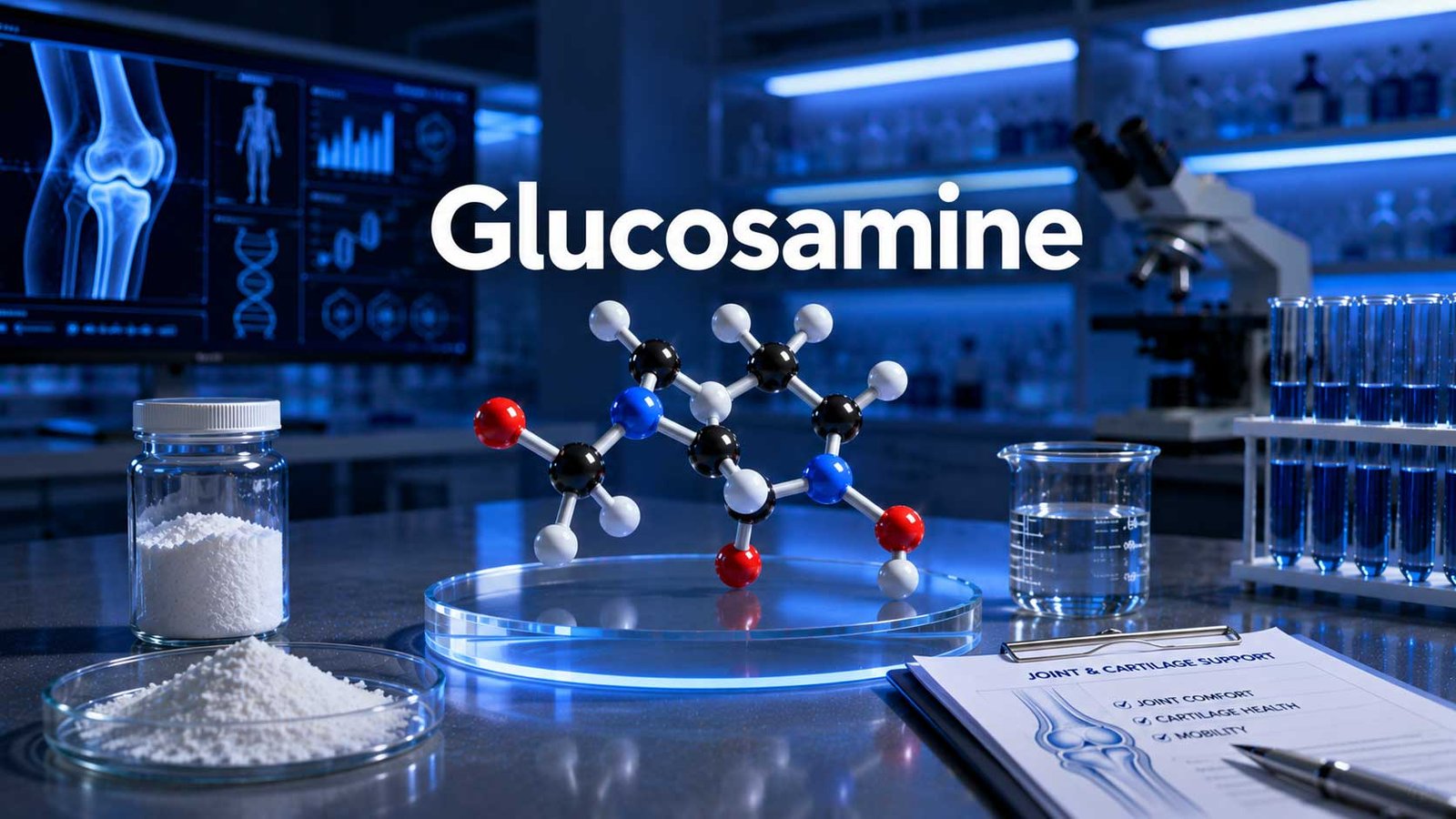
The Cartilage Conversation Nobody Has Until Their Knees Start Talking
Nobody thinks about their cartilage until it starts complaining. You don’t wake up one morning grateful that your knees bent without a hitch the day before. It’s only once there’s a catch on the stairs, or a dull ache after a long walk, that most people even remember cartilage exists at all. That’s usually the moment glucosamine enters the conversation, often via a friend, a pharmacist, or a bottle sitting on a parent’s kitchen counter that’s been there for as long as anyone can remember.
Glucosamine has been around the joint-health conversation for decades now, and it isn’t going anywhere. Walk into almost any pharmacy or health food store and you’ll find it lined up next to chondroitin, fish oil, and turmeric capsules, usually with some version of the word “joint” printed in bold letters on the label. It’s one of the most consistently purchased supplements among people managing joint discomfort, and it’s been the subject of more clinical trials than most other cartilage-related compounds combined.
Table of Contents


So what actually is it? Glucosamine is a naturally occurring compound found in the fluid around your joints and within the cartilage itself. Chemically, it’s an amino sugar, and it acts as a building block for glycosaminoglycans, which are long chains of molecules that help give cartilage its structure, its cushioning, and its ability to hold onto water so joints can glide instead of grind. Your body actually makes its own glucosamine, synthesizing it from glucose and the amino acid glutamine. But as people age, or as joints go through repetitive wear from years of movement, injury, or simply time, the amount your body produces and the amount your cartilage seems to need don’t always line up the way they used to.

This is where the supplement version comes in. Most glucosamine sold commercially is derived from the shells of shellfish like shrimp, crab, and lobster, though there are lab-synthesized and vegetarian versions too. It typically comes in a few different forms — glucosamine sulfate, glucosamine hydrochloride, and N-acetyl glucosamine — and these forms aren’t quite interchangeable, something worth knowing before you toss a bottle into your cart based on price alone.
Here’s the part that tends to surprise people: the research on glucosamine is genuinely mixed. It’s not a slam-dunk miracle compound, and it’s not snake oil either. Some large-scale studies have found little to no meaningful effect on pain, while others, particularly those using glucosamine sulfate at consistent doses, have reported improvements in comfort and joint function over time. That kind of inconsistency can be frustrating if you’re looking for a simple yes-or-no answer, but it’s also just an honest reflection of how variable human joints, dosing, and study designs can be. Anyone who tells you the science is perfectly settled either hasn’t read the research or is trying to sell you something.
What keeps glucosamine relevant, despite the mixed evidence, is the underlying logic. It’s a substance your cartilage already uses to rebuild itself, and topping up that supply, at least theoretically, gives your joints more raw material to work with. Whether that translates into a noticeably springier step is going to depend on the person, the dose, the form, and honestly, a bit of luck with how your particular joints respond.
There’s also a cultural layer to this. Glucosamine has become something of a rite of passage supplement — the one people start taking somewhere in their forties or fifties, often around the same time they start stretching before a run instead of just diving in. It sits in that category of things people take not because a doctor mandated it, but because a friend swore by it, or because the idea of doing something proactive about joint health feels better than doing nothing at all.
Part of why glucosamine has stuck around for so long, even amid mixed trial results, comes down to how it’s positioned itself relative to other options. Pain relievers can dull discomfort, but they don’t claim to support the underlying tissue. Physical therapy and weight management genuinely help, but they take real effort and time. Glucosamine slots into a different niche — a daily habit, easy to fold into a morning routine, that feels like it’s addressing the actual structure of the joint rather than just masking symptoms. Whether or not it delivers on that promise for any one person is a separate question, but the appeal of that framing is easy to understand.
It also helps that glucosamine has a long track record of being sold as a standalone ingredient rather than buried inside some sprawling proprietary blend. You generally know what you’re getting on the label, even if the amount, form, and source vary from brand to brand. That transparency, relative to a lot of the supplement aisle, has probably contributed to its staying power just as much as the research behind it has.
Over the next several sections, this article is going to walk through what glucosamine may actually offer in terms of joint and cartilage support, where it comes from, how much people typically use, and where the real risks and cautions lie. No fluff, no exaggerated promises — just a grounded look at a compound that’s earned its spot on the supplement shelf, for better or worse, and deserves a closer look before you decide whether it belongs in your own routine.
What Glucosamine Actually Does Once It’s In Your System
Let’s get into the mechanics, because understanding what glucosamine is theorized to do inside your joints makes the rest of this conversation a lot more useful. Cartilage isn’t like skin or muscle. It has no blood supply of its own, which means it can’t repair itself quickly the way other tissues do. It relies almost entirely on the surrounding joint fluid for nutrients, and that’s part of why cartilage damage tends to be such a slow, stubborn problem once it starts.
Supporting Cartilage Structure and Resilience
Glucosamine’s main job, at least on paper, is acting as a raw material for glycosaminoglycans and proteoglycans, the molecules that give cartilage its cushioning and elasticity. Cartilage needs to be able to absorb impact and then bounce back into shape, over and over, for years. That capacity comes from its ability to hold water like a sponge, and glycosaminoglycans are a big part of what makes that possible. Some laboratory research has suggested that glucosamine may stimulate cartilage cells, called chondrocytes, to produce more of these structural molecules while also helping slow down the enzymes that break cartilage down. It’s a two-sided coin: building up while also trying to limit the breakdown side of the equation.
That said, it’s worth being honest here — a lot of this mechanistic evidence comes from cell cultures and animal studies rather than people walking around on their own knees. The leap from “this happens in a petri dish” to “this happens meaningfully in your joint” isn’t guaranteed, which is part of why researchers keep circling back to test it in actual clinical trials.
Comfort and Mobility in Osteoarthritis
Most of the human research on glucosamine has centered on osteoarthritis, particularly of the knee, since that’s the joint most commonly affected and most heavily studied. Some trials, especially longer ones using glucosamine sulfate at consistent daily amounts, have reported modest improvements in pain scores and joint function compared to placebo. Other trials, including a few large, well-designed ones, found little to no meaningful difference. This is one of those areas where you’ll find genuinely respected researchers landing on different conclusions depending on which studies they weigh most heavily.
A few patterns do show up repeatedly, though:
- Glucosamine sulfate tends to perform somewhat more consistently in trials than glucosamine hydrochloride, though not universally.
- Effects, when present, tend to build gradually rather than showing up overnight.
- People with mild to moderate joint discomfort seem to report more noticeable changes than those with severe, advanced joint damage.
None of this amounts to a guarantee, and nobody credible is going to promise you it will fix an aching knee. But for a supplement this widely used, it’s reasonable to say the interest isn’t purely hype.
Potential Anti-Inflammatory Activity
Beyond the structural side, there’s ongoing interest in whether glucosamine has a mild anti-inflammatory effect within the joint. Some research has pointed to glucosamine possibly reducing certain inflammatory signals and enzymes involved in cartilage breakdown, including markers tied to the wear-and-tear cycle seen in osteoarthritis. Recent laboratory work looking at cartilage tissue and joint injury markers has found associations between glucosamine exposure and reduced inflammatory activity in cartilage cells, alongside changes in oxidative stress markers. It’s an interesting thread, though again, it’s the kind of finding that needs more consistent confirmation in real people before anyone should treat it as settled science.
Beyond the Knees: Other Areas of Interest
While knees get most of the research attention, people use glucosamine for other joints too — hips, hands, and even the lower back, in some cases. The evidence outside of knee osteoarthritis is thinner, but the underlying biological premise (supporting cartilage that exists in essentially all synovial joints) is the same. Some people also report that glucosamine seems to help with general joint stiffness after activity, though that’s more anecdotal territory than something backed by robust trial data.
It’s fair to say the appeal of glucosamine rests less on absolute certainty and more on a reasonable, biologically plausible mechanism paired with a body of research that leans cautiously encouraging for some people, particularly with consistent, longer-term use.
There’s one more angle worth mentioning, since it comes up often in conversations about long-term joint care: the question of whether glucosamine can slow the progression of joint space narrowing, not just ease day-to-day discomfort. A handful of longer trials have used imaging to track joint space over multi-year periods, comparing glucosamine against placebo. Some of these found a smaller degree of narrowing in the glucosamine group, which researchers have taken as a hint — not proof, but a hint — that the compound might be doing something structural rather than purely symptomatic. Other trials found no meaningful difference on imaging at all. It’s the kind of question that really needs decades of follow-up to answer properly, and joints don’t exactly cooperate with tidy research timelines.
What tends to get lost in the back-and-forth over “does it work” is that even the more skeptical reviews rarely describe glucosamine as harmful or pointless. The disagreement is almost always about the size of the benefit, not whether there’s a plausible one. That’s a meaningfully different conversation than the one happening around supplements with genuinely thin scientific grounding, and it’s worth keeping that distinction in mind as you weigh whether to give it a try.

Where Glucosamine Actually Comes From (Spoiler: Not Your Dinner Plate)
If you’re picturing glucosamine sitting inside a plate of pasta or a leafy salad, it’s time to reset expectations. Unlike vitamin C or iron, glucosamine isn’t a nutrient you’re going to meaningfully stock up on through a typical grocery run. This trips people up constantly, because most joint-support ingredients get lumped into the same mental category as vitamins, when in reality glucosamine behaves quite differently.
Why Glucosamine Isn’t Really a “Food” Nutrient
Your body produces glucosamine internally from glucose and glutamine, and it’s also naturally present in the connective tissue, shells, and exoskeletons of certain animals — not in the kind of everyday food quantities you’d get from eating vegetables, grains, or lean meat. There isn’t a glucosamine-rich fruit or a glucosamine superfood waiting to be discovered. This is one of those areas where dietary sources and supplemental sources genuinely diverge, and it’s the main reason glucosamine sold commercially is almost always manufactured rather than harvested from a standard food supply chain.
Shellfish Shells, Bone Broth, and Other Natural Traces
The overwhelming majority of glucosamine supplements are extracted from the exoskeletons of shellfish — shrimp, crab, and lobster shells specifically. These shells are rich in chitin, a substance that gets processed and broken down to yield glucosamine. It’s a byproduct use of something that would otherwise be discarded from the seafood industry, which is at least a practical bit of resourcefulness.
Bone broth is another source that gets mentioned a lot in wellness circles, and there’s some truth to it — simmering animal bones, cartilage, and connective tissue for extended periods can release small amounts of glucosamine and related compounds like collagen and chondroitin into the liquid. The catch is that homemade bone broth delivers these compounds in modest, inconsistent amounts compared to a standardized supplement. It might contribute a little something to overall joint support as part of a broader diet, but it isn’t a reliable substitute if you’re looking for the doses used in clinical research.
Beyond that, there really isn’t a conventional food that delivers meaningful glucosamine. It’s simply not distributed through ordinary produce, grains, dairy, or muscle meat in any significant way.
Vegetarian and Vegan Alternatives
For people who avoid shellfish for ethical, religious, or allergy-related reasons, there are alternative sources. Some manufacturers produce glucosamine through fermentation using corn or other plant-based substrates, which yields a chemically similar compound without any shellfish involvement. These vegetarian versions have become more common on store shelves in recent years, often labeled clearly as “shellfish-free” or “vegetarian glucosamine.” It’s worth checking labels carefully, since not every brand makes this distinction obvious, and the price point on plant-derived versions tends to run a bit higher.
Supplement Forms You’ll See on Shelves
When people talk about “getting” glucosamine, they’re almost always talking about supplements rather than food. On the shelf, you’ll typically encounter:
- Glucosamine sulfate — the form most frequently used in clinical research
- Glucosamine hydrochloride — often paired with chondroitin in combination products
- N-acetyl glucosamine — a slightly different structural variant, sometimes marketed for skin or gut-related uses rather than joints specifically
These aren’t interchangeable, despite sitting side by side on the same shelf. If you’re specifically trying to mirror what’s been studied for joint and cartilage support, glucosamine sulfate has the most research history behind it, though hydrochloride versions remain popular and widely available too.
The bigger takeaway here is simple: if you’re hoping to boost glucosamine intake meaningfully, food alone isn’t going to get you there. This is a supplement-driven compound, not a dietary one, and that distinction shapes almost everything about how people end up using it.
It’s worth pausing on why that gap exists, because it isn’t arbitrary. The glucosamine used in research and sold in capsules is concentrated and standardized through an extraction or fermentation process specifically so a measurable amount ends up in each dose. Eating shellfish itself doesn’t come close to replicating that, since the edible portion of shrimp or crab is mostly muscle tissue, not shell. You’d have to eat the shells themselves, which nobody does, to get anywhere near a clinically relevant amount. That’s part of why the supplement industry built an entire process around isolating chitin from shellfish waste rather than simply telling people to eat more seafood.
Sourcing and quality also vary more than people expect once you start comparing brands. Because glucosamine supplements fall under a looser regulatory framework than pharmaceuticals in most countries, the actual glucosamine content can differ from what’s printed on the label, and third-party testing organizations regularly flag inconsistencies. If you’re serious about getting a reliable amount, looking for products that carry independent verification — from organizations that test supplement purity and potency — is a more dependable strategy than assuming every bottle on the shelf delivers exactly what it claims. Price isn’t always a great proxy for quality here either, though rock-bottom pricing is often a signal worth treating with some skepticism.
How Much You Actually Need and What Happens If You Skip It
This is usually where people want a straightforward number, and glucosamine mostly obliges, though with a few caveats worth sitting with before you start counting out capsules.
Typical Dosage Used in Research
Most clinical research on glucosamine has centered around a daily amount of roughly 1,500 milligrams, often split into smaller doses throughout the day or taken as a single dose, depending on the study and the product. This has become something of a standard reference point in the supplement world, largely because it’s the amount used most consistently across decades of trials, including some of the larger studies on knee osteoarthritis.
A few practical notes on how this tends to play out in real life:
- Many products split the daily total into two or three smaller doses, often taken with meals to ease digestive tolerance.
- Effects, when they occur, generally aren’t immediate. Most studies that found benefit measured outcomes after eight to twelve weeks, sometimes longer.
- Combination products pairing glucosamine with chondroitin are common, though whether the combination outperforms glucosamine alone is still debated in the research.
There isn’t an official government-established recommended daily allowance for glucosamine the way there is for something like vitamin D or calcium, since it isn’t classified as an essential nutrient. The 1,500 milligram figure is more of a research convention than a regulatory standard, which is an important distinction if you’re used to nutrition labels with strict, government-set benchmarks.
Is There Such a Thing as Glucosamine Deficiency
Here’s where glucosamine breaks from the usual supplement conversation. There’s no recognized clinical deficiency syndrome tied to low glucosamine levels, the way there is with, say, vitamin B12 or iron. Your body manufactures glucosamine on its own from glucose and glutamine, and there’s no standardized blood test doctors run to check whether your levels are “low.” So in the strictest sense, you can’t be diagnosed as glucosamine-deficient.
What does happen, though, is a kind of functional decline. As joints go through years of mechanical stress, injury, and aging, cartilage turnover and repair processes can slow down. Some researchers theorize this may correspond with reduced local glucosamine availability within joint tissue itself, even if it’s not detectable as a deficiency in the bloodstream. This is part of the rationale behind supplementation — not correcting a measurable deficiency, but rather supporting a process that may become less efficient with age or joint stress, even though your body technically still produces the compound.
Who Tends to Consider Supplementing
In practice, people usually turn to glucosamine once joint discomfort has already shown up, rather than as a preventive measure taken from a young age. That includes:
- Adults dealing with knee, hip, or hand osteoarthritis
- Athletes and active individuals managing repetitive joint stress
- Older adults looking for general joint support as part of a broader wellness routine
- People recovering from joint injuries who are curious about supporting cartilage repair
It’s less common to see glucosamine used purely as a preventive measure in younger, joint-healthy individuals, mostly because the research base is built almost entirely around people who already have some degree of joint wear.
Timing, Consistency, and Realistic Expectations
If there’s one lesson that comes up again and again in glucosamine research, it’s that consistency matters more than any particular timing trick. This isn’t a compound that works like a painkiller, kicking in within the hour. It’s closer to a slow-building supplement, and people expecting same-day relief are usually going to be disappointed. Sticking with a steady daily dose over a couple of months, rather than sporadic use, seems to line up much more closely with the outcomes reported in supportive studies.
That patience requirement trips up a lot of first-time users, honestly. It’s easy to buy a bottle, take it for ten days, feel nothing different, and toss it in the back of a cabinet. But if you look at how the supportive trials were actually structured, almost none of them measured outcomes before the six-week mark, and most stretched to twelve weeks or beyond. Judging glucosamine on a two-week trial run is a bit like judging a strength-training program after a single gym visit — you’re just not giving the process enough runway to show whether it’s doing anything.
There’s also a reasonable question of whether stopping and restarting matters. Some people take glucosamine seasonally, ramping up during periods of heavier activity and easing off during quieter months. There isn’t strong research specifically testing that cyclical approach against continuous daily use, so it’s hard to say definitively which is better. What the research does support is that whatever pattern you choose, sticking with it long enough to actually judge the outcome is the part that matters most. Setting a personal checkpoint, say ten or twelve weeks out, and evaluating honestly at that point tends to be a more useful approach than constantly second-guessing week to week.
The Fine Print: Safety, Side Effects, and Who Should Steer Clear
Glucosamine has a reputation as one of the gentler supplements out there, and for the most part, that reputation holds up. But “generally well-tolerated” isn’t the same as “risk-free for everyone,” and it’s worth walking through the actual details rather than assuming a supplement this common must be entirely without caveats.
General Safety Profile
Across a large body of research, glucosamine has consistently shown a favorable safety profile for most healthy adults using typical doses. The most commonly reported issues are mild and digestive in nature:
- Nausea
- Heartburn
- Diarrhea or constipation
- Mild abdominal discomfort
Some people also report headaches, drowsiness, or skin reactions like itching, though these tend to be less frequent than the digestive complaints. For the vast majority of users, these effects are mild and often resolve on their own or with a dosage adjustment, such as taking glucosamine with food instead of on an empty stomach.
Shellfish Allergy Concerns
This is probably the most talked-about safety question tied to glucosamine, and it deserves a nuanced answer rather than a flat yes or no. Because most glucosamine supplements are derived from shellfish shells, there’s understandable concern among people with shellfish allergies. Interestingly, the research on this is more reassuring than you might expect. Shellfish allergies are typically triggered by proteins found in the meat of the shellfish, not the shell itself, and several small studies and case reports involving people with confirmed shellfish allergies found no allergic reaction when they used glucosamine derived from shells.
That said, “generally reassuring” isn’t the same as “guaranteed safe,” and manufacturing processes can vary, meaning trace protein contamination isn’t impossible. Health organizations and allergy specialists continue to recommend that anyone with a significant shellfish allergy speak with a healthcare provider before starting glucosamine, and many now opt for shellfish-free or vegetarian glucosamine products simply to remove the question entirely rather than assume it’ll be fine.
Drug Interactions Worth Knowing
Glucosamine isn’t in heavy competition with most medications, but there are a few interactions worth flagging clearly:
- Blood thinners such as warfarin — there are documented case reports of increased bleeding risk when combined with glucosamine, and this combination generally warrants medical supervision.
- Diabetes medications — some older research raised questions about glucosamine’s effect on blood sugar and insulin sensitivity, though more recent reviews suggest minimal impact at typical doses; people managing diabetes should still monitor blood sugar closely when starting any new supplement.
- Acetaminophen — some research suggests combining glucosamine sulfate with acetaminophen might reduce the effectiveness of one or both, though this interaction isn’t fully settled.
None of these interactions are necessarily dealbreakers, but they’re exactly the kind of thing worth mentioning to a healthcare provider or pharmacist, particularly if you’re already managing a chronic condition or taking prescription medication regularly.
Who Should Be Cautious or Avoid It
A few groups come up consistently in safety discussions around glucosamine:
- People with shellfish allergies, out of caution, even given the reassuring research
- People with asthma, since there have been isolated reports of flare-ups associated with glucosamine use
- People on blood-thinning medication
- Pregnant or breastfeeding individuals, mainly due to a lack of sufficient safety research in these populations rather than confirmed harm
- People with liver conditions, as a general precaution
- Anyone scheduled for surgery, since some clinicians recommend stopping glucosamine roughly two weeks beforehand due to potential bleeding risk
There’s also a smaller, often-overlooked safety angle worth mentioning: accidental ingestion. Poison control centers regularly field calls involving children who’ve gotten into a bottle of glucosamine, or someone who accidentally doubled up on their dose. The good news is that in the vast majority of these cases, outcomes tend to be mild, but it’s still a reminder to store supplements the same way you’d store any medication — out of reach and clearly labeled.
Taken together, glucosamine’s risk profile looks pretty modest compared to a lot of what’s sitting on supplement shelves. It’s not something to take carelessly, but for most healthy adults without the specific concerns listed above, it tends to sit comfortably on the low-risk end of the spectrum.
One practical way to sidestep the more common mild side effects is simply adjusting how you take it. Digestive complaints like nausea or heartburn are less likely to show up when glucosamine is taken alongside food rather than on an empty stomach, and splitting a daily dose into two smaller portions instead of one large one tends to be gentler on the stomach as well. If a particular product seems to bother your digestion, switching forms — from sulfate to hydrochloride, or vice versa — sometimes resolves the issue, since people can respond differently to the two.
Long-term safety data, stretching beyond a year or two of continuous use, is thinner than most people would like, simply because supplement research rarely funds multi-year follow-up the way pharmaceutical trials do. The trials that have run longer, generally in the two-to-three-year range, haven’t turned up alarming safety signals, which is reassuring as far as it goes. But “no red flags in the studies we have” isn’t quite the same as “proven safe over a lifetime of daily use,” and it’s worth holding that distinction honestly rather than treating a reasonably good safety record as an absolute guarantee.
The Bottom Line on Bones, Cartilage, and Everyday Movement
So where does all this leave us? Glucosamine isn’t a miracle cure, and it isn’t a scam either — it lives in that much less exciting, much more honest middle ground that most supplements actually occupy. The biological rationale makes sense: it’s a compound your cartilage already relies on to build the molecules that keep joints cushioned and mobile, and topping it up through supplementation, at least for some people, seems to translate into modestly better comfort and function over time. For others, the research shows little to no difference at all, and that inconsistency is worth respecting rather than glossing over.
If there’s one practical thread running through everything covered here, it’s that glucosamine rewards patience and consistency far more than urgency. This isn’t the kind of supplement you take once and judge by tomorrow morning. The people who report noticing something usually stuck with a steady daily amount, generally somewhere around 1,500 milligrams, for at least a couple of months before drawing any conclusions.
A few practical takeaways worth carrying forward:
- Glucosamine sulfate has the longest track record in research specifically tied to joint comfort and function.
- Food isn’t a realistic source — if you’re pursuing meaningful intake, supplementation is really the only practical route.
- Give it real time. Eight to twelve weeks of consistent use is a more honest test than a week or two.
- If you have a shellfish allergy, asthma, or you’re on blood thinners, loop in a healthcare provider before starting.
- Pair it with the basics that actually move the needle for joint health regardless of supplements — movement, strength around the joint, and maintaining a healthy weight to reduce mechanical load.
There’s a certain humility required in talking honestly about glucosamine, because the science genuinely doesn’t hand us a tidy, universal answer. It’s not going to regrow cartilage that’s severely worn down, and it’s not going to replace medical care for significant joint disease. But as a low-risk, well-tolerated option that some people genuinely find useful as part of a broader approach to joint and cartilage support, it’s earned its long-standing place on the shelf. The rest comes down to trying it thoughtfully, giving it a fair runway, and paying attention to how your own body actually responds — because at the end of the day, that’s the only trial that really matters to you.
Article Sources
At AncientHerbsWisdom, our content relies on reputable sources, including peer-reviewed studies, to substantiate the information presented in our articles. Our primary objective is to ensure our content is thoroughly fact-checked, maintaining a commitment to accuracy, reliability, and trustworthiness.
- Gray, H. C., Hutcheson, P. S., & Slavin, R. G. (2004). Is glucosamine safe in patients with seafood allergy? Journal of Allergy and Clinical Immunology, 114(2), 459-460. https://doi.org/10.1016/j.jaci.2004.05.050
- Mayo Clinic Staff. (2023). Glucosamine. Mayo Clinic. https://www.mayoclinic.org/drugs-supplements-glucosamine/art-20362874
- Merck Manuals Consumer Version. (2025). Glucosamine. Merck Sharp & Dohme LLC. https://www.merckmanuals.com/home/special-subjects/dietary-supplements-and-vitamins/glucosamine
- National Capital Poison Center. (n.d.). What you need to know about glucosamine. Poison Control. https://www.poison.org/articles/glucosamine
- National Center for Complementary and Integrative Health. (2023). Glucosamine and chondroitin for osteoarthritis: What you need to know. National Institutes of Health. https://www.nccih.nih.gov/health/glucosamine-and-chondroitin-for-osteoarthritis-what-you-need-to-know
- National Center for Complementary and Integrative Health. (2023). Osteoarthritis: In depth. National Institutes of Health. https://www.nccih.nih.gov/health/osteoarthritis-in-depth
- StatPearls. (2023). Glucosamine sulfate. National Library of Medicine, National Center for Biotechnology Information. https://www.ncbi.nlm.nih.gov/books/NBK558930/
- Towheed, T. E., Maxwell, L., Anastassiades, T. P., Shea, B., Houpt, J., Robinson, V., Hochberg, M. C., & Wells, G. (2005). Glucosamine therapy for treating osteoarthritis. Cochrane Database of Systematic Reviews, 2005(2), CD002946. https://doi.org/10.1002/14651858.CD002946.pub2
- Wang, X., Hu, B., Cheng, Y., Chen, W., & Liu, M. (2025). Effects of different doses of glucosamine hydrochloride on cartilage tissue and levels of joint injury markers in knee osteoarthritis. Journal of Cellular and Molecular Medicine, 29(10). https://doi.org/10.1111/jcmm.70579

- Phosphatidic Acid: Supporting Muscle Growth and Strength - July 31, 2026
- Ceramides: Supporting Healthy Skin From Within - July 31, 2026
- Synbiotics: Combining Prebiotics and Probiotics Together - July 31, 2026