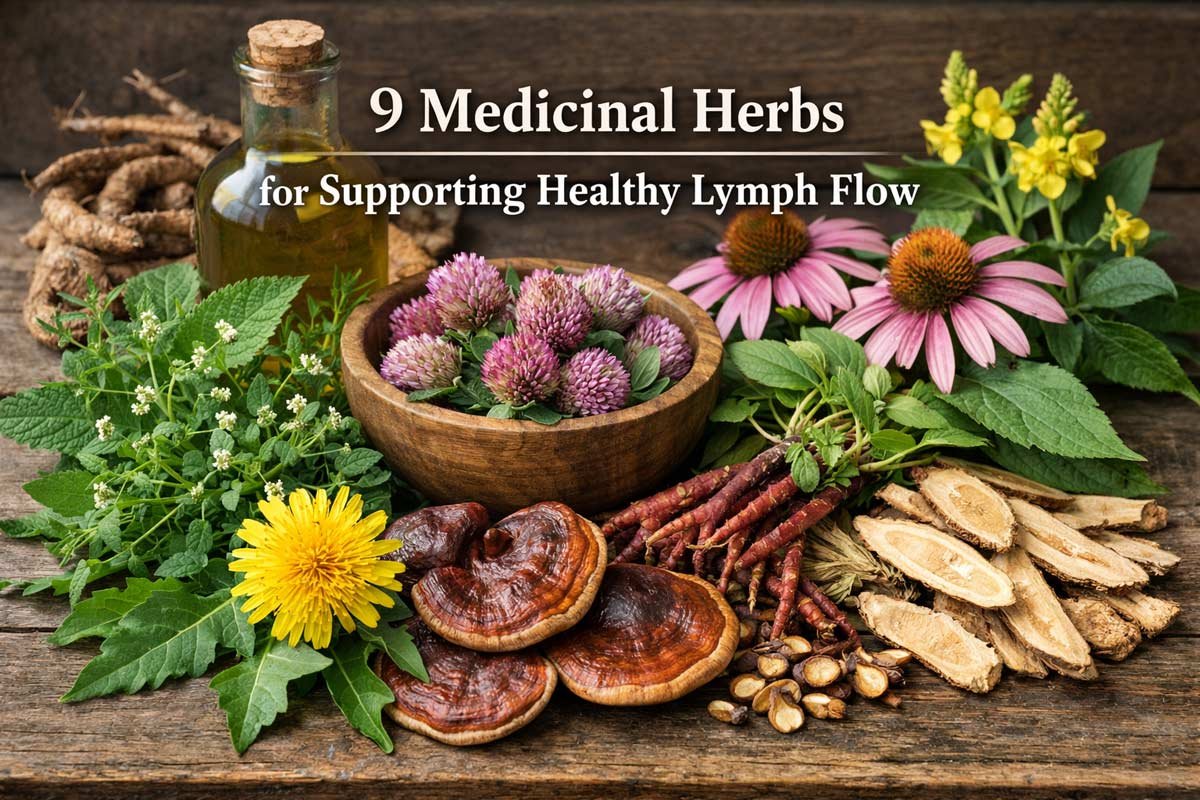
When the Lymph Starts Moving, Everything Changes
Most people never think about their lymphatic system until something feels off. A sense of heaviness. Puffiness that does not match food intake. Tender lymph nodes. Brain fog that lingers no matter how clean the diet looks on paper. When lymph flow slows, the body does not whisper. It sighs, then complains, then eventually demands attention.
The lymphatic system is not a secondary circulation. It is a living, responsive network that touches nearly every tissue in the body. It moves immune cells, clears cellular debris, transports fats, and acts as a filtration highway between the bloodstream and the outside world. Unlike blood, lymph has no pump. No heart to force movement. Lymph flow depends on breath, muscle contraction, hydration, and tissue elasticity. It depends on daily habits and long-term physiology. It also responds, often dramatically, to medicinal herbs and mushrooms that understand how to nudge movement without force.
Table of Contents

When lymph flow is healthy, the body feels lighter. Inflammation resolves more cleanly. Immune responses feel proportionate instead of exaggerated. Skin clears in ways topical products never achieve. Even mood can shift. There is a groundedness that comes from efficient internal housekeeping. When lymph stagnates, waste accumulates in the interstitial spaces. Immune signaling becomes noisy. Swelling becomes normal. Detox pathways back up, and the liver ends up carrying a burden it was never meant to handle alone.
This is why lymph flow sits at the crossroads of detoxification and immunity. It is not about flushing or purging. It is about rhythm. About encouraging steady movement so the body can process what it encounters every day, from metabolic waste to environmental exposures to emotional stress. Herbs that support lymph flow do not act like laxatives or diuretics. They work more subtly. They improve tissue tone. They thin and mobilize congested fluids. They wake up sluggish lymph nodes and encourage drainage toward elimination organs that are ready to receive the load.
Traditional herbal systems have always understood this, even if they used different language. Western herbalists spoke of alteratives and lymphagogues. Traditional Chinese Medicine described dampness, phlegm, and constrained fluids. Ayurveda focused on ama and stagnation in the rasa dhatu. Different maps, same terrain. All recognized that when lymph flow slows, chronic issues follow.
Modern life is not kind to the lymphatic system. Long hours sitting. Shallow breathing. Dehydration masked as fatigue. Tight clothing that restricts natural movement. Even chronic stress plays a role, altering connective tissue tone and slowing the subtle muscular contractions that move lymph through its vessels. Over time, this creates a baseline of stagnation that feels normal until something pushes the system past its limit.
This is where medicinal herbs and mushrooms shine. Not as quick fixes, but as teachers of movement. Some plants have an affinity for the superficial lymph, easing swelling near the skin and mucous membranes. Others reach deeper, influencing lymph nodes associated with the gut, lungs, or reproductive organs. Certain mushrooms work indirectly, improving immune communication so lymph does not thicken with unresolved signals and inflammatory debris.
Supporting lymph flow is not about chasing symptoms. Swollen glands are not the problem. They are the signpost. The work is to restore circulation, tone, and communication. Herbs that support lymph flow often have a noticeable feel in the body. A gentle warmth. A sense of drainage behind the ears or along the neck. Increased urination or bowel movements without irritation. Sometimes a temporary flare of old symptoms as stored waste begins to move. This is not a failure. It is the system re-engaging.
Lymph flow also has a seasonal rhythm. Spring has always been associated with lymphatic cleansing in traditional systems, not by coincidence. After winter inactivity, heavier foods, and reduced sunlight, lymph tends to thicken. Many classic spring herbs target lymph flow specifically, helping the body transition back into movement. Ignoring this rhythm does not stop it. It only makes the transition louder.
There is also a strong relationship between lymph flow and the immune system’s ability to stand down. When lymph is congested, immune cells linger in tissues longer than needed. Inflammation becomes chronic instead of responsive. This is why herbs that support lymph flow often help with recurrent infections, autoimmune flares, and lingering post-viral fatigue. They do not suppress immunity. They improve its logistics.
Mushrooms add another layer. Medicinal fungi like reishi influence lymph flow by modulating immune signaling and improving fluid dynamics at the cellular level. When immune communication is clearer, lymph does not need to hold onto unresolved information. It can move it along. This is especially important in people who feel stuck in a loop of inflammation, where every trigger feels like too much.
Healthy lymph flow is also deeply tied to connective tissue health. Lymph moves through fascia. Dehydrated, inflamed, or rigid fascia slows movement dramatically. Herbs that support lymph flow often double as mild anti-inflammatories and tissue tonics. Over time, they restore the elasticity that allows lymph vessels to open and close properly. This is one reason consistent use matters more than aggressive dosing.
There is a common misconception that supporting lymph flow means aggressive detox protocols. Sweating excessively. Fasting without preparation. Using harsh herbs that force elimination. This often backfires. Lymph responds best to steady encouragement, not coercion. Gentle daily movement, hydration, and botanicals that respect the pace of the system create lasting change. When lymph flow improves gradually, the body adapts without crisis.
Listening to the body becomes easier when lymph is moving. Subtle signals are no longer drowned out by congestion. Hunger cues normalize. Energy patterns stabilize. Even emotional processing can feel smoother. Lymph is not just plumbing. It is part of how the body processes experience, both physical and intangible.
Supporting lymph flow is one of the most underestimated strategies in herbal medicine. It rarely makes headlines, yet it quietly improves outcomes across a wide range of conditions. Skin issues, hormonal congestion, immune imbalance, chronic fatigue, and slow recovery all share one common thread. When lymph starts moving, the body remembers how to regulate itself.
This is why herbs and mushrooms that support lymph flow deserve respect. They work upstream. They restore movement where there has been holding. They create space for healing without forcing the issue. When used thoughtfully, they do not just move fluid. They change how the body relates to burden.
Once you feel the difference of healthy lymph flow, it becomes hard to ignore. The body feels less congested, less reactive, more adaptable. Things move when they should and rest when they can. That is not detox hype. That is physiology doing what it was designed to do, with a little help from plants and fungi that have been supporting this process for centuries.
Classic Lymphagogues for Moving Stagnation
When lymph flow has slowed enough to become palpable, heaviness in the limbs, swollen nodes, recurring infections, stubborn skin eruptions, classic lymphagogues earn their place. These are herbs with a specific relationship to the lymphatic system. They do not generalize. They do not multitask politely. They show up, grab hold of stagnation, and start moving it.
Lymphagogues have been used for centuries when congestion becomes the pattern rather than the exception. They shine when the lymph feels thick, overloaded, or stuck in particular regions of the body. Neck and tonsils. Axilla and breast tissue. Pelvic lymph. Mesenteric congestion that shows up as bloating, food sensitivity, or immune reactivity. These herbs do not force detox. They restore circulation through tissues that have lost their elasticity and tone.
There is a feel to working with true lymphagogues. The body often responds quickly, sometimes within days. Drainage sensations. Increased urination. Softer swelling. Occasional tenderness as long held material starts to mobilize. This is why they are best used with respect, hydration, and an understanding of the terrain they are moving through. Used well, they can radically improve lymph flow and change the trajectory of chronic stagnation.
1. Cleavers (Galium aparine)
Cleavers is one of the most elegant lymphatic herbs in Western herbalism. Soft, green, unassuming, almost forgettable until you need it. Then nothing else quite compares. Cleavers works primarily on the superficial lymph, the network just under the skin that often becomes congested first.
This is the herb for puffiness. For swollen glands that linger after infection. For heat trapped under the surface. For skin that feels congested rather than inflamed. Cleavers improves lymph flow by thinning lymphatic fluid and increasing the contractility of lymph vessels. It encourages drainage without irritation, which makes it invaluable for sensitive constitutions.
Fresh cleavers is noticeably more active than dried. There is a vibrancy to the fresh plant that translates directly into its effects. Taken as a fresh tincture or infusion, it often produces a cooling, clearing sensation in the body. The neck softens. Facial swelling reduces. The skin begins to look clearer, not because something was suppressed, but because waste is finally leaving.
Cleavers is especially useful when lymph stagnation is paired with heat and mild inflammation. Acne that worsens with stress. Eczema that oozes or weeps. Swollen tonsils that never quite return to baseline. In these cases, improving lymph flow can do more than topical treatments ever will.
It also has a quiet diuretic effect, supporting the kidneys as lymph drains back into circulation. This matters. When lymph starts moving, elimination pathways must be open. Cleavers helps coordinate this process, making it one of the safest entry points for people new to lymphatic work.
2. Red Root (Ceanothus americanus)
Red root is a very different animal. Where cleavers is gentle and cooling, red root is dense, grounded, and deliberate. This is the herb for deep, chronic lymph stagnation, especially involving the spleen and mesenteric lymph associated with digestion and immune function.
Red root has a strong affinity for lymph nodes that feel enlarged, fibrotic, or stubbornly unmoving. It tones lymphatic tissue rather than simply stimulating flow. This makes it particularly valuable when lymph congestion has been present for years, not weeks. Think recurrent infections that never fully resolve. Autoimmune patterns with swollen glands. Chronic fatigue paired with digestive sluggishness.
One of red root’s defining actions is its effect on protein metabolism within lymph. When lymph becomes overloaded with immune complexes and cellular debris, it thickens. Red root helps break this congestion down, improving lymph flow by restoring fluid dynamics rather than forcing movement.
This herb requires respect. Used too aggressively, it can feel drying or constricting. The goal is not to squeeze lymph nodes into submission. The goal is to restore tone so they can do their job. Lower doses, taken consistently, often outperform high doses used sporadically.
Red root shines in cases where lymph stagnation affects circulation. Cold hands and feet. Dusky skin tone. A feeling of heaviness after eating. By improving lymph flow through the spleen and associated vessels, it indirectly supports blood quality and immune surveillance.
It pairs well with gentler lymphagogues like cleavers when both superficial and deep lymph are involved. The combination allows movement without overwhelm. Red root handles the depth. Cleavers manages the overflow.
3. Calendula (Calendula officinalis)
Calendula is often pigeonholed as a skin herb, which undersells its role in lymphatic health. Internally, calendula is a mild but steady lymphagogue with a particular affinity for inflamed and irritated tissues. It supports lymph flow by calming inflammation within lymph vessels and nodes, allowing movement to resume without friction.
This is the herb for tender lymph. For nodes that hurt when touched. For congestion paired with irritation or infection. Calendula does not push. It soothes, repairs, and gently encourages drainage. Over time, this leads to more resilient lymphatic tissue.
Calendula also supports mucosal immunity, which ties directly into lymph flow. The lymphatic system is deeply involved in immune activity at mucous membranes. Sinuses, gut lining, respiratory tract. When these tissues are inflamed, lymph stagnation often follows. Calendula helps break this cycle.
Its bitter properties stimulate digestion and bile flow, indirectly supporting lymph drainage by improving waste processing in the gut. This matters more than most people realize. A sluggish digestive system almost always translates to sluggish lymph flow. Calendula acts as a quiet mediator between these systems.
Emotionally, calendula has a softening quality. While not often discussed in clinical terms, many people report feeling less reactive when using it consistently. There is less edge. Less irritation. This mirrors what happens physically. When lymph flow improves, the body does not hold onto signals longer than necessary.
Calendula is particularly useful in long term formulas designed to rebuild lymphatic health rather than deliver a dramatic short term effect. It shines through consistency. Weeks and months of gentle support that gradually restore movement and tone.
Together, these classic lymphagogues form the backbone of traditional lymphatic herbalism. Cleavers clears and cools. Red root tones and decongests deeply. Calendula repairs and soothes. Each improves lymph flow through a different mechanism, and each teaches a different lesson about stagnation.
Working with lymph flow is not about aggression. It is about listening. These herbs respond best when the body is supported as a whole. Adequate hydration. Gentle movement. Breathing that reaches the belly. When these foundations are in place, classic lymphagogues can do what they have always done. Restore movement where there was holding. Encourage drainage where there was congestion. And remind the body that flow is its natural state.
Detoxifying Herbs That Lighten the Lymph Load
Sometimes lymph flow is not slow because the vessels are weak or stagnant, but because the system is overloaded. Too much metabolic waste. Too many inflammatory byproducts. More immune debris than the lymph can reasonably move in a day. In these cases, stimulating lymph flow alone can feel uncomfortable or incomplete. The pressure builds faster than the exits can clear it.
This is where detoxifying herbs earn their role. Not detox in the dramatic sense. No harsh flushing. No depletion. These plants work by reducing what the lymph has to carry in the first place. They improve metabolic cleanup, support elimination organs, and gradually lighten the load moving through lymphatic channels. When this happens, lymph flow improves almost automatically.
These herbs do not target lymph vessels directly. They support the systems that feed into lymph. Liver, digestion, skin, kidneys. When waste processing improves upstream, lymph stops acting like a storage unit and resumes its role as a transport system. This distinction matters. Pushing lymph without reducing burden often leads to fatigue, headaches, or flare ups. Lightening the load creates sustainable movement.
4. Burdock Root (Arctium lappa)
Burdock root is one of the great lymph allies hiding in plain sight. Earthy, grounding, slow acting, and deeply effective. It supports lymph flow not by stimulation, but by improving the quality of the fluids moving through the system.
Burdock works primarily through the liver and blood, reducing the accumulation of metabolic waste that eventually ends up in lymph. When the blood is overloaded, lymph compensates. When lymph compensates too long, stagnation follows. Burdock interrupts this pattern by enhancing liver clearance and improving circulation through the skin and peripheral tissues.
This is why burdock has such a strong reputation for skin health. Acne, psoriasis, eczema, chronic rashes. These are often lymph issues wearing a skin costume. Burdock reduces the burden that pushes waste outward, allowing lymph flow to normalize internally instead of spilling over.
It also supports gut health, feeding beneficial microbes while discouraging dysbiosis. A compromised gut increases immune debris entering lymph via the mesenteric system. Burdock reduces this constant drip of irritation, giving lymph a break.
Burdock does its best work over time. Weeks, not days. The effects are cumulative. Skin clarity improves gradually. Swelling softens. Energy becomes steadier. This is not dramatic detox. It is steady housekeeping. When used consistently, burdock creates conditions where lymph flow improves without being forced.
People often notice that burdock makes other lymph herbs work better. Cleavers drains more smoothly. Red root feels less intense. This is because burdock reduces resistance. It clears the terrain so movement can happen with less friction.
5. Dandelion Root and Leaf (Taraxacum officinale)
Dandelion is a master multitasker that somehow never feels scattered. Root and leaf play different roles, both essential for supporting lymph flow through detoxification.
Dandelion root focuses on the liver and bile flow. Bile is a major exit route for waste that would otherwise circulate and burden lymph. When bile is thick or sluggish, lymph has to pick up the slack. Dandelion root restores bile quality and flow, reducing congestion at its source.
This matters especially in people with hormonal congestion, sluggish digestion, or a history of high fat diets paired with low movement. These patterns thicken bile and increase lymph load. Dandelion root gently reverses this trend, improving digestion and waste elimination without overstimulation.
Dandelion leaf works more on the kidneys and fluid balance. It increases urine output while replenishing minerals, unlike many diuretics that drain without support. This helps the body eliminate water soluble waste that would otherwise circulate through lymph.
Together, root and leaf create a balanced effect. Waste moves out through the gut and the kidneys. Fluids circulate instead of pooling. Lymph flow improves because the exits are open and reliable.
Dandelion also has a mild anti-inflammatory effect, calming the low grade irritation that keeps lymph thick and sluggish. Over time, lymph fluid becomes thinner and easier to move. Nodes feel less reactive. Swelling resolves more completely.
This is a plant that thrives in disturbed soil, and it excels at restoring disturbed physiology. When systems are overwhelmed, dandelion does not overwhelm them further. It reorganizes. It brings order. That is exactly what congested lymph needs.
6. Ginger (Zingiber officinale)
Ginger approaches lymph flow from yet another angle. Where burdock and dandelion reduce burden, ginger restores movement through warmth and circulation. It is especially useful when lymph stagnation is paired with coldness, poor circulation, or digestive weakness.
Cold slows lymph. Thick fluids move poorly when tissues lack warmth. Ginger addresses this directly. It increases peripheral circulation, improves digestive fire, and encourages subtle sweating. All of these actions reduce lymph load while improving lymph flow.
Ginger is particularly effective when lymph stagnation is accompanied by bloating, nausea, or a heavy feeling after meals. These signs point to impaired digestion feeding congestion into the lymphatic system. Ginger restores digestive efficiency, reducing the volume of waste entering lymph via the gut.
It also improves microcirculation through connective tissue. Lymph vessels rely on surrounding tissue movement and tone. Ginger’s warming effect improves this environment, allowing lymph to move more freely.
Unlike harsh stimulants, ginger adapts to context. In cold bodies, it warms deeply. In stagnant heat, it disperses without overheating. This makes it a valuable bridge herb, helping detoxifying and lymphagogic herbs work together.
Ginger often reduces the discomfort people feel when beginning lymph support. Headaches, chills, sluggishness. By improving circulation and elimination, it smooths the transition from stagnation to flow.
Used regularly, ginger changes how the body handles burden. Meals digest more completely. Fluids distribute evenly. Energy rebounds faster after stress. These shifts reduce chronic lymph overload in ways that no single targeted lymph herb could accomplish alone.
Detoxifying herbs are often underestimated in lymph work because their effects feel indirect. But lymph does not exist in isolation. It reflects the state of every system it touches. When detoxification improves, lymph flow follows.
Burdock cleans the blood and skin pathways. Dandelion opens the liver and kidneys. Ginger restores warmth and movement. Together, they lighten the load lymph has been quietly carrying for years.
When lymph no longer has to compensate for inefficient detox, it does what it does best. Transport. Communicate. Resolve. Support immunity without drama. This is the kind of change that lasts, not because something was forced, but because the system was finally given the support it needed to function as designed.
Immune-Modulating Allies for Lymphatic Resilience
Lymph flow does not exist just to move fluid. It moves information. Antigens, cytokines, immune cells in various states of activation or rest. When immune signaling is chaotic or unresolved, lymph thickens. Nodes swell. Drainage slows, not because the system is weak, but because it is busy holding conversations that never quite end.
This is where immune-modulating herbs and mushrooms become essential. Not immune stimulants. Not suppressants. Modulators. They help the immune system respond appropriately and then stand down when the job is done. When immune activity resolves cleanly, lymph flow becomes lighter, faster, and more resilient.
Chronic immune activation is one of the most common and least discussed causes of lymph stagnation. Recurrent infections. Post-viral fatigue. Autoimmune tendencies. Environmental sensitivities. In all of these cases, lymph is doing too much for too long. Supporting lymph flow here is less about drainage and more about restoring immune rhythm.
7. Echinacea (Echinacea purpurea, Echinacea angustifolia)
Echinacea is often misunderstood as a short-term immune booster, something to take at the first sign of illness and then forget. That narrow view misses its deeper relationship with lymph flow.
Echinacea has a strong affinity for lymphatic tissue, particularly lymph nodes associated with the throat, lungs, and gut. It improves lymph flow by enhancing immune cell mobility and clearance. Instead of immune cells lingering in tissues and nodes, echinacea helps them move through the system efficiently.
One of echinacea’s key actions is improving phagocytosis, the process by which immune cells engulf and remove debris. When this process slows, waste accumulates in lymph. Nodes swell. Inflammation lingers. By improving cleanup at the cellular level, echinacea reduces congestion without forcing drainage.
Echinacea angustifolia is especially useful when lymph stagnation feels dense and stubborn, paired with chronic infection patterns or deep immune fatigue. Purpurea tends to be gentler and broader, well suited for ongoing immune modulation and lymph flow support over longer periods.
There is often a noticeable sensation when echinacea begins working. A mild tingling. Increased saliva. A sense of activity in the throat or gut associated lymph tissue. These are signs of immune engagement and movement, not overstimulation.
Used consistently rather than reactively, echinacea helps retrain immune responses. Fewer exaggerated reactions. Faster resolution. Less lymph congestion after illness. Over time, this builds lymphatic resilience, the ability to respond and recover without lingering stagnation.
8. Reishi Mushroom (Ganoderma lucidum)
Reishi works quietly but deeply. It does not push lymph flow directly. It changes the internal environment that determines whether lymph needs to hold or can release.
As an immune modulator, reishi improves communication between innate and adaptive immunity. When this dialogue is clear, immune responses are proportionate. When it is not, lymph becomes the holding area for unresolved signaling.
Reishi reduces chronic inflammation while enhancing immune surveillance. This balance is critical for lymph flow. Too much inflammation thickens lymph fluid. Too little immune activity allows debris to accumulate. Reishi helps find the middle ground.
One of reishi’s underappreciated effects is its influence on stress physiology. Chronic stress alters immune signaling and tightens connective tissue, both of which impair lymph flow. Reishi softens this pattern. Breath deepens. Sleep improves. Cortisol rhythms stabilize. As the nervous system settles, lymph movement improves indirectly but reliably.
Reishi also supports liver function, another key factor in lymph load. By improving hepatic clearance and reducing inflammatory burden, it decreases the amount of immune waste entering lymph circulation.
In people with long-standing lymph stagnation, reishi often works slowly but steadily. The first changes are subtle. Less reactivity. Fewer flare cycles. Nodes that swell less often and resolve more completely. Over months, lymph flow becomes more adaptable, less prone to bottlenecking under stress or exposure.
Reishi is particularly valuable when lymph stagnation coexists with fatigue, insomnia, or emotional volatility. These are signs that immune and nervous systems are tangled together. By untangling that relationship, reishi creates space for lymph to move again.
9. Turmeric (Curcuma longa)
Turmeric supports lymph flow by addressing inflammation at its root. Chronic low grade inflammation thickens lymph fluid and damages lymphatic vessel tone. Turmeric counters this by downregulating inflammatory pathways while supporting tissue repair.
Curcumin, turmeric’s primary active compound, influences cytokine signaling and reduces oxidative stress. This matters because oxidative damage alters lymphatic endothelial cells, making vessels less responsive and more prone to stagnation.
Turmeric also supports bile flow and liver detoxification, indirectly reducing lymph load. When inflammatory byproducts are cleared efficiently through the liver and gut, lymph does not need to compensate.
Unlike sharp anti-inflammatories, turmeric works gradually. Its effects build with consistent use. Swelling reduces over time. Nodes become less tender. Recovery after illness improves. This slow pace is an advantage. It allows lymph flow to normalize without shock.
Turmeric is especially useful when lymph stagnation is paired with joint stiffness, metabolic inflammation, or post-infectious symptoms that never fully resolve. These patterns reflect systemic inflammation feeding lymph congestion.
Absorption matters with turmeric. Traditional preparations combined it with fats and warming spices to enhance bioavailability. This also aligns with lymph support, as fats enter circulation through lymphatic channels. When fats are digested and transported efficiently, lymph flow improves.
Turmeric has a grounding effect. People often describe feeling more stable, less inflamed physically and emotionally. This mirrors its action on the immune system. Responses become measured. Signals resolve instead of echoing endlessly through lymph nodes.
Immune-modulating allies teach an important lesson about lymph flow. Movement alone is not enough. The content matters. When lymph is carrying unresolved immune noise, it slows down for good reason. The goal is not to silence immunity, but to help it finish what it starts.
Echinacea mobilizes immune cleanup. Reishi restores communication and resilience. Turmeric reduces inflammatory friction. Together, they create an environment where lymph flow can adapt instead of compensate.
This is lymphatic resilience. The ability to meet challenge, respond appropriately, and then return to baseline. Not rigid. Not overwhelmed. Just responsive. Herbs and mushrooms that support this quality do more than move fluid. They help the body remember how to resolve experience without holding onto it longer than necessary.
When immune signaling clears, lymph lightens. When lymph lightens, flow returns. And when flow returns, the entire system feels less burdened, more alive, and better equipped to handle whatever comes next.
Listening to the Lymph and Working With It
The lymphatic system responds best when it is treated as a conversation, not a command. You cannot bully lymph flow into cooperation. You can only create the conditions where movement makes sense to the body. This is where many well intentioned approaches fail. They focus on stimulation without listening. They chase drainage without understanding why stagnation developed in the first place.
Healthy lymph flow is rhythmic. It responds to daily inputs. Breath, posture, hydration, movement, stress, sleep. Herbs and mushrooms work best when they are layered into this rhythm rather than used as a substitute for it. When lymph stagnates, it is often because the system has adapted to chronic signals that tell it to slow down and hold. Reversing that pattern takes patience and attention.
One of the clearest signs that lymph flow is improving is not dramatic detox symptoms, but subtle changes in how the body feels day to day. Swelling resolves more completely overnight. Energy rebounds faster after exertion. Infections pass through instead of setting up camp. Skin clears from the inside out. These shifts suggest that lymph is moving at a pace that matches the body’s needs.
Listening to the lymph starts with noticing patterns. When does swelling worsen. After certain foods. During stress. Around hormonal shifts. In response to travel or long periods of sitting. These patterns tell you where lymph flow is being challenged. Herbs then become targeted tools rather than generic solutions.
For example, puffiness that worsens with heat and stress often points to superficial lymph congestion. Cooling lymphagogues and gentle immune modulators tend to help here. Deep abdominal heaviness after meals suggests mesenteric lymph overload, where digestive and liver support make more sense. Tender nodes after every minor illness indicate immune signaling that struggles to resolve, calling for modulators rather than stimulants.
Working with lymph flow also means respecting timing. There are moments when the system is ready to move and moments when it needs support before movement makes sense. During acute illness, lymph nodes swell for a reason. Forcing drainage too early can prolong recovery. After illness resolves, gentle support can help clear what remains.
Seasonal timing matters too. In colder months, lymph tends to slow as circulation decreases and tissues contract. Supporting warmth, digestion, and steady movement becomes essential. In warmer seasons, when fluids move more freely, lymph support can focus on clearing accumulated waste and restoring tone.
Consistency matters more than intensity. Small daily actions compound. Hydration that actually reaches tissues. Walking that engages the arms and torso, not just the legs. Deep breathing that moves the diaphragm, one of the primary pumps of lymph flow. Dry brushing or gentle massage that encourages superficial drainage without irritation. These habits teach the lymphatic system that movement is safe and expected.
Herbs and mushrooms integrate into this framework as long term allies. Taken sporadically, they can help. Taken consistently, they change baseline physiology. Lymph fluid becomes thinner. Vessels regain responsiveness. Nodes swell less often and recover faster. This is not because the herbs are doing all the work, but because they are supporting the system while it relearns its own rhythm.
It is also important to recognize when lymph stagnation reflects emotional holding. Stress tightens connective tissue. Chronic vigilance alters immune signaling. Unresolved emotional patterns often show up as physical congestion. When people begin supporting lymph flow, emotions sometimes surface unexpectedly. This is not separate from the physical process. Lymph carries the residue of experience, not just waste.
This is where a gentle approach matters. When lymph begins moving after long stagnation, the body may release more than fluids. Memories, moods, old stress responses can rise briefly and then pass. This is not something to pathologize. It is part of integration. Herbs that calm the nervous system alongside lymph support often make this process smoother.
Another key aspect of listening to lymph flow is knowing when to stop pushing. If fatigue increases, sleep worsens, or irritability spikes, the system may be overwhelmed. This does not mean lymph support was wrong. It means the pace was too fast for the current state of the body. Backing off, simplifying, and focusing on nourishment often restores balance.
Food choices play a quiet but powerful role. Overeating, especially heavy or highly processed foods, increases lymph load immediately. This is because fats enter circulation through lymphatic channels. When digestion is inefficient, lymph thickens quickly. Eating in a way that supports digestion is one of the simplest ways to protect lymph flow.
Movement does not need to be intense. In fact, overly aggressive exercise can temporarily impair lymph flow if recovery is inadequate. Gentle bouncing, stretching, swimming, yoga, walking with arm swing. These movements encourage lymph without exhausting it. The best movement for lymph is the one you will actually do consistently.
Herbal formulas for lymph flow work best when they evolve. What the body needs at the beginning of the process is often different from what it needs months later. Early on, clearing and drainage may dominate. Later, toning and resilience become more important. Paying attention to how the body responds allows the approach to shift naturally.
One of the most overlooked aspects of lymphatic health is rest. Deep sleep is when tissue repair and immune recalibration happen. Without adequate rest, lymph flow remains reactive, always catching up. Herbs that support sleep and stress regulation indirectly support lymph by restoring this foundational rhythm.
Ultimately, working with lymph flow is about restoring trust between systems. Trust that waste will move when it is time. Trust that immune responses will resolve. Trust that the body does not need to hold onto everything it encounters. Herbs and mushrooms help rebuild this trust by reducing friction and improving communication.
When lymph flow becomes reliable, the body feels less burdened. There is a sense of internal spaciousness. Reactions soften. Recovery shortens. The system becomes adaptable rather than defensive. This is not a dramatic transformation. It is a quiet return to function.
Listening to the lymph means honoring subtlety. It means choosing support over force. It means recognizing that movement is not always about speed, but about timing and readiness. When approached this way, lymph flow becomes one of the most responsive and rewarding systems to work with.
And once that conversation is restored, the body does something remarkable. It takes care of itself, efficiently and without excess. Not because it was pushed, but because it was finally supported in the way it needed all along.
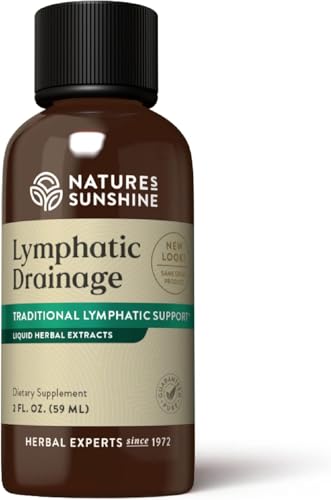
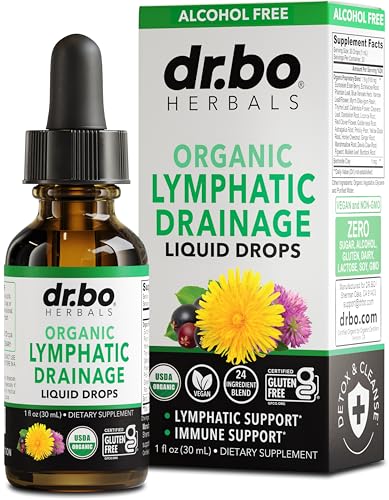
Best-selling Supplements for Lymph Flow





Article Sources
At AncientHerbsWisdom, our content relies on reputable sources, including peer-reviewed studies, to substantiate the information presented in our articles. Our primary objective is to ensure our content is thoroughly fact-checked, maintaining a commitment to accuracy, reliability, and trustworthiness.
- Bone, K., & Mills, S. (2013). Principles and practice of phytotherapy: Modern herbal medicine (2nd ed.). Churchill Livingstone. https://www.elsevier.com/books/principles-and-practice-of-phytotherapy/bone/978-0-443-06992-5
- Chevallier, A. (2016). Encyclopedia of herbal medicine (3rd ed.). DK Publishing. https://www.dk.com/us/book/9781465449818-encyclopedia-of-herbal-medicine/
- Grieve, M. (1971). A modern herbal (Vols. 1–2). Dover Publications. https://www.gutenberg.org/ebooks/48513
- European Medicines Agency. (2012). Assessment report on Echinacea purpurea (L.) Moench, herba. https://www.ema.europa.eu/en/documents/herbal-report/final-assessment-report-echinacea-purpurea-l-moench-herba_en.pdf
- European Medicines Agency. (2011). Assessment report on Taraxacum officinale Weber ex Wigg., radix cum herba. https://www.ema.europa.eu/en/documents/herbal-report/assessment-report-taraxacum-officinale-weber-ex-wigg-radix-cum-herba_en.pdf
- European Medicines Agency. (2010). Assessment report on Arctium lappa L., radix. https://www.ema.europa.eu/en/documents/herbal-report/assessment-report-arctium-lappa-l-radix_en.pdf
- Lindequist, U., Niedermeyer, T. H. J., & Jülich, W. D. (2005). The pharmacological potential of mushrooms. Evidence-Based Complementary and Alternative Medicine, 2(3), 285–299. https://doi.org/10.1093/ecam/neh107
- Paterson, R. R. M. (2006). Ganoderma – A therapeutic fungal biofactory. Phytochemistry, 67(18), 1985–2001. https://doi.org/10.1016/j.phytochem.2006.07.004
- Aggarwal, B. B., & Harikumar, K. B. (2009). Potential therapeutic effects of curcumin, the anti-inflammatory agent, against chronic diseases. International Journal of Biochemistry & Cell Biology, 41(1), 40–59. https://doi.org/10.1016/j.biocel.2008.06.010
- Tilgner, S. (2015). Herbal medicine from the heart of the earth. Wise Acres Press.https://www.wiseacrespress.com/books/herbal-medicine-from-the-heart-of-the-earth/

- Children and Plant-Based Herbal Use Safety: Tradition and Common Sense - January 25, 2026
- Sustainability in Vegan Herbal Sourcing: Why Popular Plants Are at Risk - January 25, 2026
- Vegan Herbal Rituals: Simple Daily Practices Rooted in Tradition - January 24, 2026