
The Overlooked Mineral Hiding in Your Bones
Most people can rattle off calcium and vitamin D as the go-to nutrients for bone health. Ask about strontium, though, and you’ll probably get a blank stare. That’s a little strange, considering this trace mineral has been sitting quietly in human skeletons the entire time, incorporated right alongside calcium in the mineral lattice of bone.
Strontium isn’t some exotic newcomer to nutrition science. It’s a naturally occurring element, chemically similar enough to calcium that the body treats it almost like a stand-in during bone formation. You’ll find it in soil, groundwater, and the ocean, and from there it works its way into the food chain — leafy greens, grains, seafood, and dairy all carry small amounts of it. Because strontium and calcium share a similar atomic size and charge, strontium gets folded into the mineral phase of bone tissue without much resistance from the body.
Table of Contents
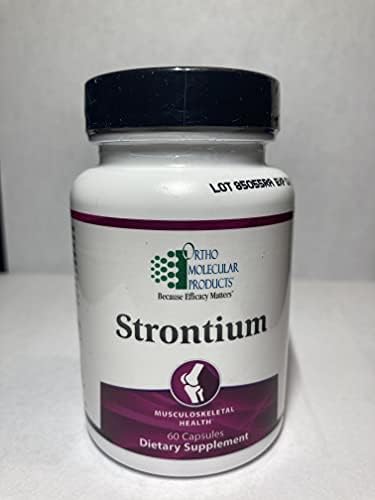


Here’s where things get interesting, and also where a lot of confusion tends to creep in. When researchers talk about “strontium and bone density,” they’re often actually talking about strontium ranelate — a synthetic, pharmaceutical-grade compound that was developed and prescribed in Europe for osteoporosis. That’s a very different animal from the strontium citrate or strontium carbonate you’d find in a supplement bottle, and it’s a different animal still from the strontium you’d get from eating a handful of spinach. Lumping them together is one of the more common mistakes people make when they start reading about this mineral, and it’s part of why the conversation around strontium can feel murkier than it needs to be.
I’ve spent a long time digging through bone health research, and if there’s one mineral that tends to get either wildly overhyped or dismissed a little too quickly, it’s this one. The truth sits somewhere in the middle, and it’s more nuanced than either camp usually admits.
What makes strontium worth paying attention to is the mechanism. Unlike a lot of nutrients that just support one side of the bone remodeling process, strontium appears to have a dual action — nudging osteoblasts (the cells that build new bone) into higher gear while also putting the brakes on osteoclasts (the cells that break bone down). That’s a compelling proposition on paper. Most osteoporosis medications only address one half of that equation. A substance that can theoretically touch both sides at once is the kind of thing that gets researchers excited.
But — and this is a big but — excitement in a lab doesn’t always translate cleanly into a green light for supplementation. Strontium also complicates one of the standard tools we use to measure bone health in the first place: the DXA scan. Because strontium is heavier than calcium, its presence in bone tissue can artificially inflate bone mineral density readings, making it look like bone density improved more than it actually did. That’s not a minor footnote. It’s a real methodological wrinkle that anyone reading strontium research — or considering supplementation — needs to understand.
There’s also a regulatory history here that’s impossible to ignore. Strontium ranelate, marketed in Europe under the name Protelos, went through a rocky road with regulators over cardiovascular safety concerns before eventually being withdrawn from the market entirely. That’s not a detail I’m including to scare anyone off the topic. It’s included because it’s directly relevant to understanding what we do and don’t know, and because the pharmaceutical form and the dietary or supplemental forms of strontium are not interchangeable when it comes to safety data.
So where does that leave someone who’s simply trying to support their bone density as they age, maybe someone who’s watched a parent deal with osteoporosis and wants to be proactive? It leaves you needing a clear-eyed look at what strontium actually does, where it comes from, how much is reasonable, and where the real risks lie. That’s exactly what we’re going to work through here — not as a sales pitch for a supplement, and not as a dismissal of an interesting mineral, but as an honest accounting of the science as it stands today. Minerals like this one rarely fit into a tidy “good” or “bad” box, and strontium is a particularly good example of why that kind of oversimplification does readers a disservice.
Let’s get into what the research actually says, starting with why strontium ended up on bone health researchers’ radar in the first place.
Key Health Benefits Tied to Strontium
The reason strontium keeps showing up in bone density conversations comes down to a fairly elegant piece of biology. Bone isn’t a static structure — it’s constantly being broken down and rebuilt in a process called remodeling. Osteoclasts resorb old bone tissue, and osteoblasts lay down new tissue to replace it. In healthy young adults, this process stays roughly balanced. As people age, particularly after menopause, that balance tips toward resorption outpacing formation, and bone density gradually declines. This is the basic mechanism behind osteoporosis.
A Dual Action on Bone Remodeling
Strontium’s proposed benefit is that it may influence both sides of that seesaw at once. Laboratory and clinical research on strontium ranelate suggested it could stimulate bone formation while simultaneously reducing bone resorption — a combination that’s uncommon among bone-focused compounds, most of which lean heavily toward one mechanism or the other. Large clinical trials, including the well-known SOTI and TROPOS trials, evaluated strontium ranelate at 2 grams per day in postmenopausal women and found measurable increases in bone mineral density at the lumbar spine, femoral neck, and total hip, along with markers indicating increased bone formation and decreased bone resorption. A retrospective study of postmenopausal women treated with strontium ranelate for one year found increases in bone formation markers alongside reductions in a key bone resorption marker, with meaningful bone mineral density gains across multiple skeletal sites.
I want to be careful here, because it’s tempting to read those numbers and assume the case is closed. It isn’t. Part of that density increase is at least partially an artifact of measurement — strontium’s atomic weight interferes with DXA scanning in a way that inflates the apparent bone mineral density reading. Researchers have actually developed correction factors to account for this distortion when interpreting strontium ranelate trial data. So when you see headline numbers about bone density improvement, some portion of that number reflects strontium sitting in the bone matrix rather than genuine new bone architecture. That doesn’t mean the effect is fake — fracture reduction data from these trials suggested real clinical benefit — but it does mean the density numbers alone should be read with a healthy dose of skepticism.
Fracture Risk Reduction
The more clinically meaningful outcome, in my opinion, isn’t the density number at all — it’s fracture incidence. This is the metric that actually matters to someone’s daily life. Large-scale trials found that strontium ranelate reduced the incidence of vertebral and non-vertebral fractures in postmenopausal women with osteoporosis, and later analyses found benefits extending to elderly women, men, smokers, and those at particularly high fracture risk. That’s a fairly broad population showing some level of protective effect, which is part of why strontium held researchers’ attention for as long as it did.
That said, later regulatory review found the benefit to be, in the EMA’s own words, “modest” when weighed against cardiovascular risk — a tradeoff we’ll come back to in more detail later.
Dental and Skeletal Considerations
There’s also preliminary evidence pointing toward strontium’s role in dental enamel strength, though this area of research is much thinner and shouldn’t be treated as an established benefit. Similarly, strontium isotopes have found a niche use in bone research as tracer compounds — scientists can use strontium’s unique isotopic signature to track bone resorption rates non-invasively, since it behaves like calcium but leaves a distinguishable isotopic trail. This is more of a research tool than a personal health benefit, but it speaks to how deeply strontium is woven into the skeleton’s biology.
An Important Distinction
I keep coming back to this because it’s the single most important thing to understand about strontium: the vast majority of the clinical evidence for bone density benefits comes from strontium ranelate, a specific pharmaceutical salt dosed at levels far higher than anything found in food or most supplements. Strontium citrate, the form typically used in over-the-counter supplements, has not been studied nearly as extensively in large randomized trials. Some smaller cohort studies have looked at strontium citrate combined with other micronutrients like vitamin D3, vitamin K2, magnesium, and DHA, and found associations with improved bone density outcomes, but these studies tend to involve multi-ingredient protocols, making it hard to isolate strontium’s individual contribution.
This is the kind of nuance that gets lost when strontium gets mentioned in passing on a supplement label or in a quick online summary. The mineral has real, mechanistically interesting potential. It also has a research base that’s narrower and more pharmaceutical-focused than most people realize, and a safety profile that depends heavily on which form of strontium you’re actually talking about.
Dietary Sources of Strontium
Unlike some trace minerals that show up in only a handful of foods, strontium is genuinely everywhere. It’s dissolved in ocean water, present in groundwater, and distributed throughout soil across the globe, which means it makes its way into an enormous range of foods almost by default. You don’t need to hunt down exotic ingredients to get strontium in your diet — you’re almost certainly getting some every day without thinking about it.
The Biggest Contributors
Research examining strontium content across food categories has found that leafy greens tend to carry the highest concentrations, followed by grains and then seafood. This tracks with what we know about how strontium moves through ecosystems — plants absorb it from soil in place of calcium, and leafy vegetables, with their high surface area and rapid growth, tend to accumulate more of it than other plant parts like roots or fruits.
A few practical examples worth knowing:
- Leafy greens — spinach, kale, and similar vegetables tend to be the richest dietary sources, largely because of how efficiently they draw minerals from soil.
- Whole grains — wheat, oats, and other grains contribute a steady, if smaller, amount of dietary strontium, and because grains make up such a large share of the average diet, their cumulative contribution adds up.
- Seafood — shellfish and certain fish species pick up strontium from ocean water, which naturally contains dissolved strontium salts.
- Dairy products — milk and cheese contribute meaningfully to dietary strontium intake, in part because dairy animals graze on strontium-containing plants.
- Root vegetables and legumes — these contribute smaller amounts, but they’re still part of the overall dietary picture for most people.
Why Soil Matters More Than You’d Think
One detail that doesn’t get discussed enough is how much regional soil composition affects strontium content in food. Because strontium comes from the earth’s crust, areas with strontium-rich soil produce crops with correspondingly higher strontium content, while strontium-poor regions produce lower levels. This is part of why dietary strontium intake varies so much from person to person and region to region — it’s less about individual food choices and more about geography and agricultural conditions upstream of the dinner table.
This variability also explains why nutrition scientists have had a hard time pinning down a single, universal “average” strontium intake figure. Estimates exist, but they shift depending on the population studied, the region’s soil and water composition, and dietary patterns like how much seafood or dairy a given group typically consumes.
Water as a Source
Drinking water is another meaningful contributor, and again, this varies enormously by location depending on the mineral content of local groundwater. Some regions have naturally strontium-rich water supplies, which can meaningfully bump up total daily intake without a person even realizing it. The EPA has actually set a guideline recommending drinking water levels of stable strontium not exceed a certain threshold, which gives you a sense that this is a genuinely monitored aspect of water quality, not an obscure afterthought.
What This Means Practically
Here’s the thing I try to get across to anyone asking about “strontium-rich foods” — you’re very unlikely to be strontium-deficient in any meaningful sense, because this mineral is so ubiquitous in the food and water supply. Unlike, say, vitamin D or iodine, where deficiency is a genuine and well-documented public health concern, strontium insufficiency from diet alone isn’t something that shows up as a recognized clinical problem. If you’re eating a reasonably varied diet with vegetables, grains, some dairy, and occasional seafood, you’re almost certainly getting strontium without ever thinking about it.
That’s part of why the conversation shifts, for most people interested in strontium and bone density, away from “how do I get more strontium in my diet” and toward “does supplementing beyond typical dietary levels actually do anything meaningful.” That’s a fair question, and it’s exactly what we need to unpack next.
Dosage and the Question of Deficiency
This is where strontium starts to diverge pretty sharply from minerals like calcium, magnesium, or zinc, and it’s worth sitting with that difference for a moment before jumping into numbers.
There’s No Established Dietary Requirement
Strontium is not classified as an essential nutrient. That’s a meaningful distinction. Essential nutrients are ones the body requires for basic physiological function and cannot synthesize on its own — calcium and vitamin D fall into that category for bone health, and there are established recommended daily intakes for both. Strontium doesn’t have that status. There’s no Recommended Dietary Allowance, no Adequate Intake level, and no officially recognized deficiency syndrome associated with low strontium intake. The body doesn’t appear to regulate strontium levels through homeostatic control the way it does with truly essential minerals, and dietary strontium intake can vary widely across populations without any documented negative health outcome tied specifically to “low” intake.
I say this not to dismiss strontium’s relevance, but because it changes the framing entirely. You’re not looking at a nutrient gap that needs correcting. You’re looking at a mineral being studied for a potential therapeutic or supportive effect above and beyond typical dietary exposure — which is a fundamentally different conversation than, say, vitamin D deficiency in someone who never sees the sun.
What Doses Have Actually Been Studied
The clinical trials that produced the fracture-reduction data used strontium ranelate at 2 grams per day — a substantial pharmaceutical dose delivering roughly 680 milligrams of elemental strontium. That’s the dose tested in the large-scale SOTI and TROPOS trials, and it’s dramatically higher than anything you’d encounter through diet alone.
In the over-the-counter supplement world, strontium citrate products commonly fall in a range of roughly 340 to 680 milligrams of elemental strontium per day, with the higher end of that range approximating the elemental dose used in the pharmaceutical trials. It’s worth being honest here: that overlap in elemental dose doesn’t mean strontium citrate has been studied with the same scientific rigor as strontium ranelate. Most of the supplement-form evidence comes from smaller cohort studies, often involving strontium alongside other bone-supportive nutrients like vitamin D3, vitamin K2, and magnesium, which makes it genuinely difficult to say how much of any observed benefit is attributable to strontium alone versus the broader nutrient combination.
Timing and Interactions Worth Knowing
One practical detail that shows up consistently in strontium supplementation guidance: strontium competes with calcium for absorption in the gut, since the body’s transport mechanisms don’t distinguish cleanly between the two. Because of this, guidance around strontium citrate supplementation typically recommends separating it from calcium intake by a couple of hours, and taking it away from meals when calcium-rich foods are involved, to avoid the two minerals competing for the same absorption pathway. Some protocols suggest taking strontium at bedtime for this reason.
It’s also worth mentioning to anyone undergoing bone density monitoring — because strontium’s atomic weight distorts DXA readings, it’s generally recommended that people supplementing with strontium disclose this to whoever is interpreting their bone scan results, so the numbers can be read in proper context rather than mistaken for genuine density improvement.
So Is There a “Right” Dose?
Honestly, there isn’t a universally agreed-upon answer, and I’d be doing you a disservice if I pretended otherwise. The pharmaceutical dose that produced fracture-reduction data in clinical trials came with cardiovascular safety concerns significant enough that regulators eventually restricted, and the manufacturer eventually withdrew, that specific product. Supplement-form strontium citrate at lower elemental doses hasn’t been tested with anywhere near the same scale or rigor. What we’re left with is a mineral where the highest-quality evidence applies to a product that’s no longer on the market, and the products that are commercially available carry a thinner, less definitive evidence base.
That’s not a reason to panic about strontium supplements sitting on store shelves. It is a good reason to treat dosing decisions carefully, ideally with input from a healthcare provider who knows your cardiovascular history and current bone health status — which brings us directly to the safety side of this conversation.
Toxicity and Risk Considerations
This is the section I’d encourage you to read most carefully, because strontium’s risk profile is more nuanced than a simple “safe” or “unsafe” label can capture, and the details genuinely matter depending on which form of strontium you’re talking about.
Stable Strontium at Normal Environmental Levels
Let’s start with the reassuring part. According to toxicological review from the Agency for Toxic Substances and Disease Registry, there is no direct evidence that stable strontium — the non-radioactive form found in food, water, and soil — is toxic to humans at the levels typically encountered in the environment. At normal dietary exposure, strontium appears to carry low toxicity for adults and for children with adequate overall nutrition. That’s a meaningfully reassuring baseline, and it’s part of why strontium isn’t treated as a hazardous contaminant in food or water under typical circumstances.
Where Toxicity Actually Shows Up
The toxicological picture changes at high oral doses, primarily in animal studies. The main toxicological effect documented in laboratory animals given excess strontium is abnormal skeletal development, essentially a rickets-like condition, which occurs specifically at relatively high oral doses and appears connected to strontium interfering with proper calcium utilization in growing bone. This effect has been observed more prominently in young, growing animals than in mature adults, and it’s part of why children are considered a more sensitive population when it comes to excessive strontium exposure — their bones are actively growing and more dependent on getting the calcium-to-strontium ratio right.
Human data reinforces this pattern to some degree. Epidemiological observations have linked higher soil strontium levels combined with reduced calcium intake, such as from shorter breastfeeding duration, to increased prevalence and severity of rickets in children in certain regions. This finding underscores an important theme running through strontium research: strontium’s effects on bone seem to depend heavily on the surrounding nutritional context, particularly calcium status, rather than strontium acting as an isolated toxin on its own.
The Cardiovascular Question
This is the piece of the puzzle that reshaped the entire strontium conversation over the past decade, and it deserves a thorough explanation rather than a passing mention.
Strontium ranelate, the pharmaceutical form used in the major osteoporosis trials, came under intense regulatory scrutiny after post-marketing data and pooled trial analysis revealed an increased risk of serious cardiovascular events. A pooled analysis of randomized studies involving roughly 7,500 postmenopausal women found an increased risk of heart attack with strontium ranelate compared to placebo, with a relative risk of 1.6. Separate analysis found that for every 1,000 patient-years of treatment, there were several additional serious heart problems and additional cases of blood clots, and regulators ultimately judged that the drug’s fracture-prevention benefit was modest relative to this elevated cardiovascular risk.
The European Medicines Agency responded by restricting strontium ranelate’s use to severe osteoporosis in patients who had no other treatment options, adding contraindications for people with ischemic heart disease, peripheral arterial disease, cerebrovascular disease, or uncontrolled hypertension, and requiring regular cardiovascular monitoring for anyone remaining on the medication. Eventually, the manufacturer discontinued the product entirely for commercial reasons, and its marketing authorization was formally withdrawn in the European Union in 2020, with the product having already been off the market since 2017.
Here’s the important nuance that often gets flattened in casual discussion of this history: the leading theory is that the cardiovascular risk is tied to the ranelate carrier molecule itself, not necessarily to strontium as an element. That’s a meaningful distinction, but it’s also one that hasn’t been definitively proven with the same scale of evidence that established the original risk. Regulatory bodies have been careful not to declare strontium citrate or other supplement forms equivalently risky, but they also haven’t been able to declare them definitively cleared, simply because that scale of cardiovascular safety data doesn’t exist for the citrate form. This is a case where absence of evidence for harm isn’t the same as evidence of safety, and I think it’s important to be upfront about that gap rather than gloss over it.
Radioactive Strontium Is a Separate Issue Entirely
It’s worth clarifying, because the topic tends to generate confusion, that radioactive strontium isotopes like strontium-90 are a completely different concern from the stable, naturally occurring strontium found in food. Radioactive strontium is a byproduct of nuclear fission and can accumulate in bone tissue in ways that pose cancer and bone marrow risk at elevated exposure levels. Regulatory agencies maintain separate, strict limits for radioactive strontium in drinking water and workplace air. General background exposure to radioactive strontium from typical food and water sources is estimated to be extremely low, and this isn’t a meaningful concern for someone simply eating a normal diet. Bringing this up mainly to draw a clear line: when we talk about dietary or supplemental strontium for bone health, we are talking about the stable, non-radioactive form, and it shouldn’t be confused with nuclear contamination concerns.
Practical Takeaways on Risk
If I were summarizing the risk picture for someone weighing whether to pay attention to strontium at all, it would look like this: dietary strontium from food and water carries essentially no documented risk at normal levels. High-dose pharmaceutical strontium ranelate carries a documented, regulator-confirmed cardiovascular risk significant enough to pull it from the market. Supplement-form strontium citrate sits in a genuine gray zone — plausibly safer given the different chemical carrier, but without the large-scale safety trials to confirm that assumption definitively. Anyone with existing cardiovascular disease, uncontrolled hypertension, or a history of blood clots has good reason to be cautious and to loop in a healthcare provider before adding strontium supplementation into the mix.
What Strontium Really Tells Us About Bone Health
If there’s one thing I hope sticks after all of this, it’s that strontium is a genuinely interesting case study in how nutrition science actually works — messy, layered, and resistant to soundbite conclusions. It’s not a miracle mineral, and it’s not a hoax either. It’s a trace element that happens to share enough chemistry with calcium to insert itself into the very structure of bone, with a research history that swings from promising clinical trial data to a fairly dramatic regulatory withdrawal, all within about two decades.
What I keep coming back to is how much context matters here. The same three letters — S, r — describe an element sitting harmlessly in your spinach, a pharmaceutical compound that once showed real fracture-reduction promise before its cardiovascular risks caught up with it, and a supplement-aisle ingredient with a considerably thinner evidence base than either of those other two. Treating all three as interchangeable is where most of the public confusion around this mineral comes from, and it’s exactly the kind of oversimplification that leads people to either dismiss strontium entirely or over-trust a bottle on a shelf.
For most people, dietary strontium from a varied diet of vegetables, grains, seafood, and dairy is simply part of the nutritional background noise, showing up without effort and without any documented need for concern. That’s genuinely fine, and there’s no reason to go chasing strontium-specific foods for the sake of it.
The more consequential decision point is supplementation, and that’s where I’d encourage real caution rather than enthusiasm. Bone density is influenced by an enormous number of factors — weight-bearing exercise, adequate protein, calcium and vitamin D status, hormonal health, and overall nutritional patterns all carry a deeper and more consistent evidence base than strontium supplementation does on its own. If bone density is a genuine concern, particularly for postmenopausal women or anyone with a family history of osteoporosis, that’s a conversation worth having directly with a healthcare provider who can look at your full picture, including cardiovascular history, before strontium supplementation enters the discussion at all.
Minerals like this one are a good reminder that “natural” and “risk-free” aren’t synonyms, and that a compound’s chemical similarity to something essential, like calcium, doesn’t automatically make it a safe substitute or an obvious addition. Strontium earned its place in bone health research fairly — the mechanism is genuinely interesting, and the fracture data from the ranelate trials wasn’t nothing. But the path from “interesting research finding” to “something you should be taking” is longer and more complicated than marketing copy tends to suggest, and strontium sits squarely in that gap.
If you take one practical thing away from all this, let it be this: get your bone density story from a full picture, not a single mineral. Strontium can be part of an informed conversation with your doctor, but it shouldn’t be the whole conversation.
Article Sources
At AncientHerbsWisdom, our content relies on reputable sources, including peer-reviewed studies, to substantiate the information presented in our articles. Our primary objective is to ensure our content is thoroughly fact-checked, maintaining a commitment to accuracy, reliability, and trustworthiness.
- Agency for Toxic Substances and Disease Registry. (2004). Toxicological profile for strontium. U.S. Department of Health and Human Services, Public Health Service. https://www.atsdr.cdc.gov/toxprofiles/tp159.pdf
- Centers for Disease Control and Prevention, Agency for Toxic Substances and Disease Registry. (2004). Strontium: ToxFAQs. https://wwwn.cdc.gov/TSP/ToxFAQs/ToxFAQsDetails.aspx?faqid=655&toxid=120
- Centers for Disease Control and Prevention, Agency for Toxic Substances and Disease Registry. Strontium: Public health statement. https://wwwn.cdc.gov/TSP/PHS/PHS.aspx?phsid=654&toxid=120
- European Medicines Agency. (2014). Recommendation to restrict the use of Protelos / Osseor (strontium ranelate). https://www.ema.europa.eu/en/news/recommendation-restrict-use-protelos-osseor-strontium-ranelate
- European Medicines Agency. Protelos: Withdrawn medicine overview. https://www.ema.europa.eu/en/medicines/human/EPAR/protelos
- Jacquet, C., Cavalier, E., & Reginster, J. Y. (2014). Cardiac concerns associated with strontium ranelate. Expert Opinion on Drug Safety, 13(10), 1373–1382. https://www.ncbi.nlm.nih.gov/pmc/articles/PMC4196504/
- National Research Council (US) Committee on Toxicology. Health effects of stable strontium. In Toxicological profile for strontium. National Center for Biotechnology Information Bookshelf. https://www.ncbi.nlm.nih.gov/books/NBK602022/
- National Research Council (US) Committee on Toxicology. Relevance to public health. In Toxicological profile for strontium. National Center for Biotechnology Information Bookshelf. https://www.ncbi.nlm.nih.gov/books/NBK602021/
- Panzone, G., Vico, F., Salerno, L. M., et al. (2014). Strontium ranelate effect on bone mineral density is modified by previous bisphosphonate treatment. Endocrine Connections, 3(4), 200–207. https://www.ncbi.nlm.nih.gov/pmc/articles/PMC4247361/
- Predoi, D., Iconaru, S. L., Predoi, M. V., Motelica-Heino, M., & Guegan, R. (2022). Strontium functionalization of biomaterials for bone tissue engineering purposes: A biological point of view. Materials, 15(5), 1710. https://www.ncbi.nlm.nih.gov/pmc/articles/PMC8911212/
- Sabet, F. A., Raymond, K., Le Cann, S., et al. (2013). Spatial distribution of the trace elements zinc, strontium and lead in human bone tissue. Bone, 60, 293–301. https://www.ncbi.nlm.nih.gov/pmc/articles/PMC3807669/
- Sietsema, W. K. (2000). Influence of strontium on bone mineral density and bone mineral content measurements by dual X-ray absorptiometry. Clinical Chemistry, 45(8), 1339–1340. https://pubmed.ncbi.nlm.nih.gov/10677790/

- Phosphatidic Acid: Supporting Muscle Growth and Strength - July 31, 2026
- Ceramides: Supporting Healthy Skin From Within - July 31, 2026
- Synbiotics: Combining Prebiotics and Probiotics Together - July 31, 2026