
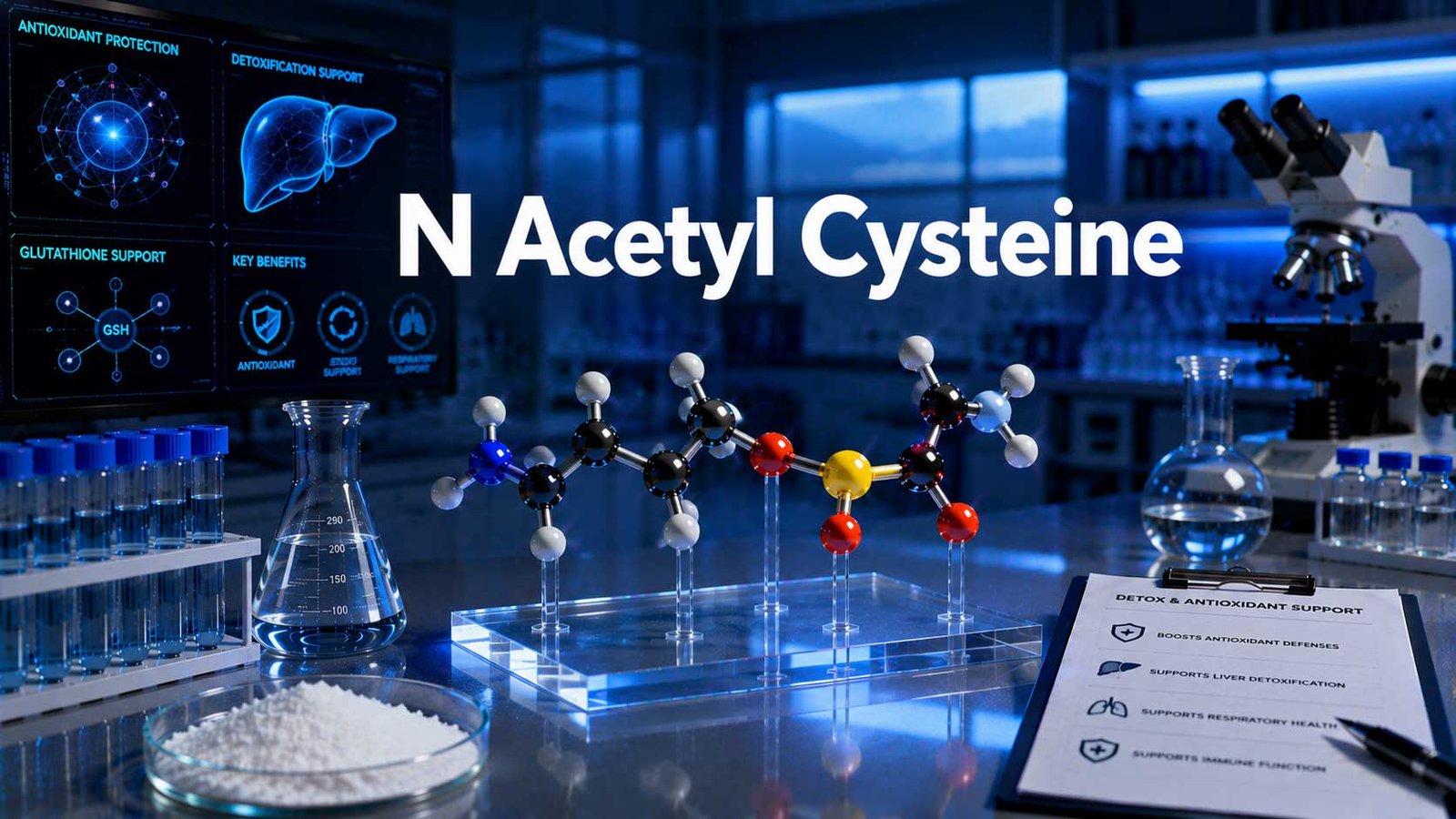
The Amino Acid Derivative Quietly Running Your Body’s Cleanup Crew
If you’ve spent any time in the supplement aisle over the last few years, you’ve probably noticed NAC popping up everywhere — powders, capsules, even in some of those trendy “liver detox” blends. And if you’re anything like me, your first reaction was probably a healthy dose of skepticism. Supplement marketing has a way of making every ingredient sound like the missing piece of the wellness puzzle. But NAC is one of those rare cases where the hype and the research actually overlap, even if not perfectly.
NAC stands for N-acetylcysteine, and it’s essentially a modified, more stable form of the amino acid cysteine. Cysteine itself is a sulfur-containing amino acid your body uses for all sorts of things, but its most important job — at least for the purposes of this conversation — is serving as the rate-limiting ingredient for glutathione, which is arguably the most important antioxidant your cells produce. I say “arguably” because there’s always someone ready to make the case for vitamin C or vitamin E, but glutathione is different. It’s made inside your own cells, it recycles other antioxidants once they’ve been used up, and it plays a central role in how your liver processes and clears out toxins.
Table of Contents


Here’s the thing about cysteine, though: it’s not the easiest amino acid for your body to hang onto. It oxidizes quickly, and taking it as a raw supplement doesn’t work particularly well because of how it’s absorbed and metabolized. N-acetylcysteine gets around that problem. The acetyl group attached to the cysteine molecule makes it far more stable, allowing it to survive the trip through your gastrointestinal tract, get absorbed, and travel to the liver, where it’s converted into usable cysteine and, from there, into glutathione. That conversion pathway is the entire reason NAC exists as a clinical and nutritional tool in the first place.
And NAC’s story in medicine goes back further than most people realize. It’s actually been used for decades as a mucolytic — something that thins mucus in the lungs — for conditions like chronic bronchitis and cystic fibrosis. It’s also the go-to antidote for acetaminophen overdose in emergency rooms, a use case where NAC has quite literally saved lives by replenishing glutathione fast enough to prevent catastrophic liver damage. That’s not a small thing. When a compound has earned its place in emergency medicine, it tends to have a research trail that’s a lot more substantial than your average trending supplement.
What’s changed more recently is the interest in NAC’s everyday, non-emergency applications — general antioxidant support, respiratory health, mental clarity, and detoxification in the more casual sense of the word (not the emergency-room sense). People are asking whether a modest daily dose might help support the body’s natural defense systems, especially in a world where we’re all dealing with more environmental stressors, more processed food, and, let’s be honest, more reasons for our glutathione stores to run low.
I’ll be upfront about something before we go any further: NAC is not a magic bullet, and anyone who tells you otherwise is probably trying to sell you something. It’s a well-studied compound with a genuinely interesting mechanism, real clinical history, and a growing body of research into broader uses. But it also has limitations, dosage considerations, and situations where caution is warranted. That’s exactly the kind of nuance that tends to get flattened into a five-word supplement label, so we’re going to unpack it properly here.
Over the course of this article, we’ll get into what NAC actually does inside your body, where you can find the nutrients that support your own natural cysteine and glutathione production, how much NAC people typically take and what happens when your glutathione status runs low, and — just as importantly — what the risks and side effects look like so you’re not going in blind. Think of this as the conversation I wish someone had with me the first time I picked up a bottle of NAC and wondered whether it was worth the money.
One more thing worth mentioning before we dive in: NAC sits in an interesting middle ground between “food-based nutrient” and “pharmaceutical-grade compound.” It’s sold over the counter as a dietary supplement in most places, yet it’s also a prescription medication in certain contexts and dosing ranges. That dual identity is part of what makes it fascinating, and also part of what makes it easy to misunderstand. So let’s clear things up, one section at a time, starting with what the research actually says NAC can do for your health.
Key Health Benefits
NAC’s benefits almost all trace back to the same root mechanism: boosting intracellular glutathione. Once you understand that connection, the rest of the picture starts making a lot more sense, because glutathione touches nearly every system in the body in one way or another. Let’s break down where the evidence is strongest and where it’s still developing.
Antioxidant Defense at the Cellular Level
This is the foundation everything else builds on. Oxidative stress happens when free radicals — unstable molecules generated by normal metabolism, pollution, UV exposure, poor diet, and plenty of other everyday sources — outpace your body’s ability to neutralize them. Left unchecked, that imbalance contributes to cellular damage over time. Glutathione is one of the primary tools your cells use to keep that balance in check, and because NAC is the precursor that keeps glutathione production going, it plays an indirect but meaningful role in your overall antioxidant capacity. Research into NAC’s biological activity has repeatedly pointed to its capacity to scavenge free radicals and support redox balance, which is really just a technical way of saying it helps keep the oxidative “wear and tear” of daily life from piling up unchecked.
Respiratory and Lung Support
This is arguably NAC’s oldest claim to fame. As a mucolytic, it helps break down the disulfide bonds in mucus, making it thinner and easier to clear. That’s why it’s been used clinically for chronic bronchitis and other conditions involving thick, difficult-to-clear mucus. Beyond the mechanical mucus-thinning effect, NAC’s antioxidant and anti-inflammatory properties also appear to play a supportive role in respiratory tissue, which has kept researchers interested in its use for chronic obstructive pulmonary disease and related conditions.
Brain and Mental Health Support
This is where things get genuinely interesting, and where a lot of the more modern interest in NAC comes from. Glutamate, one of the brain’s primary excitatory neurotransmitters, needs to stay in balance for healthy cognitive and emotional function. NAC influences glutamate regulation through a system called the cystine-glutamate antiporter, and that mechanism has made it a subject of active research in psychiatry. Reviews of the clinical literature have found encouraging, though not universally consistent, evidence for NAC as an adjunctive approach in conditions like substance use disorders, with some of the more promising findings centered on reducing cravings in cocaine and cannabis use. Evidence in mood disorders and obsessive-compulsive spectrum conditions is more mixed, with some trials showing benefit and others showing little difference from placebo — which is exactly the kind of honest, unresolved picture you’d expect from a compound that’s still being actively studied rather than one with all the answers locked in.
Liver and Detoxification Support
Here’s where I want to be careful with language, because “detox” gets thrown around so loosely in the wellness world that it’s practically lost meaning. NAC’s role in detoxification isn’t about flushing out toxins the way a juice cleanse claims to. It’s much more specific and, frankly, more impressive: by replenishing glutathione, NAC supports the liver’s own phase II detoxification pathways, which are what your body actually uses to neutralize and eliminate a wide range of compounds, from environmental pollutants to certain medications. This mechanism is so well established that NAC is the standard emergency treatment for acetaminophen toxicity, precisely because it restores glutathione fast enough to protect the liver from being overwhelmed.
Exercise Recovery and Oxidative Stress from Training
Athletes and heavy exercisers generate a lot of oxidative stress simply through the metabolic demands of training. Some research has looked at whether NAC supplementation can blunt that oxidative load and support recovery. The results here are genuinely mixed — a systematic review and meta-analysis pooling data across multiple studies found only a small, statistically insignificant improvement in performance outcomes, while also noting a dose-related increase in gastrointestinal side effects at higher intakes. So if you’re an athlete considering NAC purely for a performance edge, it’s worth tempering expectations; the antioxidant support seems real, but the performance boost is far less certain.
Taken together, these benefits paint a picture of a compound whose greatest strength isn’t any single flashy effect, but its foundational role in supporting a system — the glutathione pathway — that touches nearly every corner of your physiology. That’s a less exciting sales pitch than “cures everything,” but it’s a far more honest one.
Dietary Sources
Here’s something that surprises a lot of people: NAC itself isn’t really a “food” nutrient in the traditional sense. You won’t find N-acetylcysteine sitting on a nutrition label the way you’d find vitamin C or iron. It’s produced through a chemical acetylation process, and while trace amounts occur naturally in a few foods, most notably onions, it’s not something your diet delivers in meaningful quantities. What your diet can absolutely deliver, though, is the raw material NAC is built from — cysteine — along with the cofactors your body needs to convert that cysteine into glutathione efficiently.
Cysteine-Rich Foods
Cysteine is considered a semi-essential amino acid. Under normal circumstances, your body can synthesize it from methionine, another amino acid found abundantly in protein-rich foods. But under conditions of higher physiological demand — illness, high blood sugar, elevated blood pressure, poor overall nutrition, or chronic stress — your body’s own production may not keep pace, which is where dietary intake becomes more important. Good sources of cysteine and methionine include:
- Eggs, particularly the whites, which are dense in sulfur-containing amino acids
- Poultry like chicken and turkey
- Fish, especially varieties like salmon and tuna
- Legumes, including lentils and chickpeas
- Soy products such as tofu and edamame
- Sunflower seeds and other seeds
- Dairy products like yogurt and cottage cheese
Sulfur-Rich Vegetables
Beyond direct cysteine content, certain vegetables support the broader biochemical pathways involved in glutathione synthesis. Cruciferous vegetables — broccoli, cauliflower, Brussels sprouts, cabbage — contain sulfur compounds that support liver detoxification enzymes more broadly, even if they’re not a direct source of cysteine itself. Garlic and onions belong to the allium family, and onions in particular are one of the few foods where trace amounts of naturally occurring NAC-related compounds have actually been identified in research on the compound’s dietary presence.
Why Food Alone May Not Be Enough
I want to be honest here rather than oversell the food angle just because “eat more vegetables” sounds like the responsible answer. If you have a reasonably balanced, protein-sufficient diet, your body is probably making adequate cysteine and glutathione on its own for everyday needs. That’s the whole point of it being a semi-essential amino acid — under normal conditions, your body handles it. The conversation shifts, though, for people dealing with chronic illness, heavy environmental toxin exposure, smoking, high oxidative stress from intense training, aging (which tends to reduce baseline glutathione levels), or certain metabolic conditions. In those cases, dietary cysteine alone may not raise glutathione levels as efficiently as directly supplementing with NAC, largely because oral glutathione itself is broken down too quickly in the gut and liver to be very effective, and free-form cysteine supplements come with their own absorption challenges. NAC’s chemical stability is precisely what makes it a more reliable delivery method when dietary intake and the body’s own production aren’t cutting it.
Supporting Nutrients Worth Mentioning
A few other nutrients work alongside the cysteine-glutathione pathway and are worth having on your radar if you’re thinking about this system holistically rather than fixating on one compound:
- Selenium, found in Brazil nuts and seafood, is a cofactor for glutathione peroxidase, the enzyme that actually puts glutathione to work
- Vitamin C and vitamin E help recycle glutathione once it’s been used
- Alpha-lipoic acid, found in small amounts in spinach and broccoli, also supports glutathione regeneration
None of this means you need to overhaul your diet around a single antioxidant pathway. It just means that if you’re going to think seriously about NAC, it helps to understand that it’s one piece of a larger nutritional puzzle rather than a standalone fix.
Dosage & Deficiency
Talking about “NAC deficiency” is a little bit of a misnomer, since NAC itself isn’t an essential nutrient your body requires directly — it’s cysteine and glutathione status that actually matter physiologically. But in practical, everyday language, people use “NAC deficiency” to describe a state of depleted glutathione reserves, and that’s a genuinely useful way to think about it, even if it’s not textbook-precise terminology.
What Low Glutathione Status Can Look Like
Because glutathione touches so many systems, the signs of chronically low levels tend to be pretty nonspecific — fatigue that doesn’t have an obvious cause, a lingering sense of “fogginess,” slower recovery from illness or exercise, and increased susceptibility to oxidative stress-related issues over time. None of these symptoms point definitively to glutathione depletion on their own, which is exactly why self-diagnosing based on symptoms alone isn’t a great strategy. Certain populations are more likely to run into genuinely lower glutathione status, though, including older adults (glutathione production tends to decline with age), people with chronic illnesses involving high oxidative burden, heavy smokers and drinkers, and people under significant chronic physical or psychological stress.
Typical Dosage Ranges Used in Research
NAC dosing varies enormously depending on the purpose, and this is exactly where I’d encourage some healthy caution rather than assuming “more is better.” In respiratory and general antioxidant contexts, studies have commonly used daily doses somewhere in the 600 to 1,800 milligram range, often split into two doses. Psychiatric research, particularly studies looking at adjunctive use for mood and substance use disorders, has frequently used higher daily amounts, with reviews of the evidence identifying doses around 2,000 to 2,400 milligrams per day as fairly typical in that specific research context. At the extreme end, medical settings treating acute acetaminophen overdose use dramatically higher doses under direct clinical supervision — figures that bear no resemblance to what anyone should be taking as a casual daily supplement.
For general wellness purposes, many people take somewhere in the 600 to 1,200 milligram range daily, and regulatory risk assessments have generally supported that adults can take up to around 1,200 milligrams of NAC per day without triggering adverse effects, though that figure isn’t a hard biological ceiling so much as a conservative safety benchmark drawn from the available data.
Factors That Might Increase Your Needs
A few situations tend to come up repeatedly in the research and clinical conversation around who might benefit most from more deliberate glutathione support:
- Chronic exposure to environmental pollutants or heavy metals
- Regular alcohol consumption, which places extra demand on liver detoxification pathways
- Smoking, which significantly increases oxidative stress
- Intensive athletic training, particularly endurance sports
- Certain chronic respiratory conditions
- Older age, given the natural decline in glutathione synthesis over time
A Word on Individual Variability
I’ve seen people respond quite differently to the same NAC dose, and that’s not surprising once you consider how many variables are in play — baseline glutathione status, liver function, genetics affecting sulfur amino acid metabolism, overall diet, and even gut health, since absorption plays a role too. This is one of those supplements where starting conservatively, paying attention to how you feel, and adjusting gradually tends to serve people better than jumping straight to the higher end of the research-backed dosage range. There’s rarely a compelling reason to start at 2,000 milligrams a day when 600 might do the job for general support.
Toxicity & Risks
This is the section I think gets skipped over far too often in supplement content, and it’s honestly the one I care about getting right the most. NAC has a strong overall safety profile, especially compared to a lot of compounds floating around the supplement world, but “generally safe” doesn’t mean “risk-free for everyone in every situation,” and treating it that way does readers a disservice.
Common Side Effects
The most frequently reported issues with oral NAC are gastrointestinal — nausea, vomiting, diarrhea, and stomach discomfort. These tend to be dose-dependent, meaning they show up more often and more intensely as the dose climbs, which lines up with findings from systematic reviews showing a clear trend toward more side effects at higher intakes. Headaches have also been reported, particularly when NAC is combined with certain medications like nitroglycerin, where the combination can cause a drop in blood pressure severe enough to be genuinely unpleasant. A slight, somewhat sulfurous odor is also common with NAC products, which isn’t dangerous but does catch some people off guard the first time.
Allergic and Hypersensitivity Reactions
Less commonly, some people experience hypersensitivity-type reactions — things like rash, itching, or flushing. These reactions have historically been reported more often with intravenous NAC administration in hospital settings than with oral supplementation, but they’re not exclusive to the IV route, and people with a history of asthma appear to carry a somewhat elevated risk of bronchial reactions, which is worth flagging if that applies to you.
Who Should Be Cautious
A few groups warrant extra caution or, at minimum, a conversation with a healthcare provider before starting NAC:
- People taking nitroglycerin or other nitrate medications, due to the risk of significant blood pressure drops
- People on blood-thinning medications, since NAC may have a mild effect on clotting and platelet function
- Individuals with asthma, given the modest increased risk of bronchospasm-type reactions
- People scheduled for surgery, since NAC’s potential effect on clotting means many clinicians recommend discontinuing it before a procedure
- Pregnant or breastfeeding individuals, where safety data — while somewhat reassuring for short-term, lower-dose use in pregnancy — remains genuinely limited, particularly for breastfeeding
Drug Interactions Worth Knowing
Beyond nitroglycerin, NAC has the potential to interact with certain antibiotics when taken at the same time (largely due to absorption interference rather than a dangerous chemical reaction), and it may theoretically influence the metabolism of other medications processed through similar liver pathways. This is exactly the kind of detail that’s easy to overlook if you’re just tossing NAC into an already-crowded supplement stack without thinking about what else you’re taking.
The Upper Limit Conversation
Regulatory bodies that have reviewed NAC safety data have generally landed on the conclusion that doses up to roughly 1,200 milligrams per day appear safe for most adults without meaningful risk of harm, while acknowledging that data on higher chronic doses remains comparatively sparse. That’s an important nuance — it’s not that higher doses have been proven unsafe, it’s that the long-term safety data simply doesn’t extend as robustly into that territory, which is reason enough for caution rather than reassurance. Products on the market that recommend doses well above that range aren’t necessarily dangerous, but they are operating with less of a safety cushion behind them.
Putting the Risk Picture in Context
None of this is meant to scare anyone away from NAC. Compared to a lot of things people put in their bodies without a second thought, NAC has a genuinely reassuring track record, reinforced by decades of clinical use in hospital settings at doses far higher than anything you’d take as a daily supplement. The point is simply that “well-tolerated” and “worth taking without any thought” are two different things, and NAC deserves the same basic respect you’d give any compound that meaningfully interacts with your liver, your blood clotting system, and your medication list.
Why This Unassuming Compound Deserves a Permanent Spot on Your Radar
If there’s one thing I hope sticks after all of this, it’s that NAC’s real value isn’t in any single dramatic claim — it’s in the quiet, foundational role it plays in supporting your body’s own antioxidant machinery. Glutathione doesn’t get the same marketing attention as flashier compounds, but it’s working in the background of nearly every cell in your body, and NAC happens to be one of the most reliable tools available for keeping that system stocked.
What I appreciate most about NAC, after spending a lot of time with the research, is how unglamorous its actual mechanism is. It’s not promising to detox you in a weekend or transform your energy overnight. It’s doing something much more modest and much more real: giving your liver, your lungs, and your brain the raw material they need to keep managing oxidative stress the way they’re designed to. That’s not a flashy pitch, but it’s an honest one, and honest is exactly what I’d want from anything I’m putting into my body on a regular basis.
If you’re considering NAC, my practical advice is this: start conservatively, pay attention to how your body responds, be mindful of the medications and health conditions that call for extra caution, and don’t assume that more is automatically better. Whole food sources of cysteine and sulfur-rich vegetables are a smart baseline for most people, with NAC supplementation reserved for situations where extra support genuinely makes sense — higher oxidative stress, specific health goals backed by the research, or simply wanting a bit more insurance for a system that quietly does a lot of heavy lifting. Treat it as a supporting player in a broader picture of health, not a shortcut, and it’s far more likely to actually earn its place in your routine.
Article Sources
At AncientHerbsWisdom, our content relies on reputable sources, including peer-reviewed studies, to substantiate the information presented in our articles. Our primary objective is to ensure our content is thoroughly fact-checked, maintaining a commitment to accuracy, reliability, and trustworthiness.
- Alves, M., Paulino Ferreira, L., Durães, D., & Gamito, A. (2021). N-acetylcysteine can be the key to tackling substance use disorders. European Psychiatry, 64(S1), S534. https://doi.org/10.1192/j.eurpsy.2021.1540
- National Institute for Public Health and the Environment (RIVM). (2024). Risk assessment of food supplements containing N-acetylcysteine (NAC). https://www.rivm.nl/bibliotheek/rapporten/2024-0086.pdf
- Ooi, S. L., Green, R., & Pak, S. C. (2018). N-acetylcysteine for the treatment of psychiatric disorders: A review of current evidence. BioMed Research International, 2018, 2469486. https://doi.org/10.1155/2018/2469486
- Rhodes, K., & Braakhuis, A. (2017). Performance and side effects of supplementation with N-acetylcysteine: A systematic review and meta-analysis. Sports Medicine, 47(8), 1619-1636. https://doi.org/10.1007/s40279-017-0677-3
- Šalamon, Š., Kramar, B., Marolt, T. P., Poljšak, B., & Milisav, I. (2019). Medical and dietary uses of N-acetylcysteine. Antioxidants, 8(5), 111. https://doi.org/10.3390/antiox8050111
- Shahripour, R. B., Harrigan, M. R., & Alexandrov, A. V. (2014). N-acetylcysteine (NAC) in neurological disorders: Mechanisms of action and therapeutic opportunities. Brain and Behavior, 4(2), 108-122. https://doi.org/10.1002/brb3.208
- Tardiolo, G., Bramanti, P., & Mazzon, E. (2018). Overview on the effects of N-acetylcysteine in neurodegenerative diseases. Molecules, 23(12), 3305. https://doi.org/10.3390/molecules23123305

- Phosphatidic Acid: Supporting Muscle Growth and Strength - July 31, 2026
- Ceramides: Supporting Healthy Skin From Within - July 31, 2026
- Synbiotics: Combining Prebiotics and Probiotics Together - July 31, 2026