
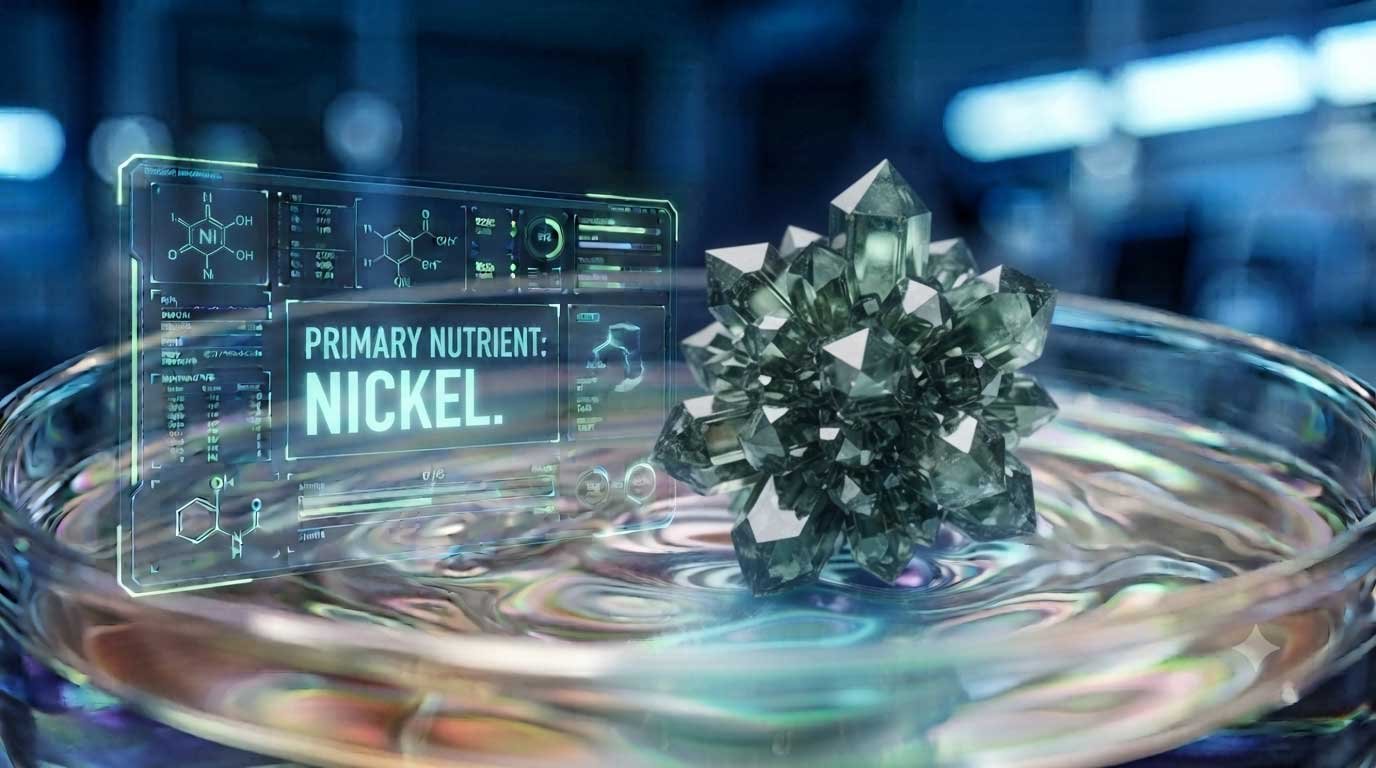
The Metal Nobody Asked About, But Everybody Carries
Walk into any conversation about minerals and you’ll hear the same names over and over. Iron. Zinc. Magnesium. Maybe calcium, if someone’s worried about their bones. Nickel almost never comes up, and honestly, I get why. It doesn’t have a marketing team. There’s no supplement aisle dedicated to it, no influencer telling you to add it to your morning smoothie. And yet, if you had a physical exam tomorrow and someone tested your blood, there’s a good chance nickel would show up in trace amounts, quietly sitting there, doing something nobody’s fully figured out yet.
That’s the strange part of working with minerals for as long as I have. Some elements get all the attention because their role in the body is dramatic and obvious, like iron’s relationship to oxygen transport. Others, like nickel, sit in this odd gray zone. Scientists know it matters in nature. They know certain enzymes in plants, bacteria, and fungi absolutely require it to function. But when it comes to humans specifically, the picture gets murkier, and I think that murkiness is exactly why nickel deserves a closer look rather than a dismissal.
Table of Contents


Here’s a fact that tends to surprise people: nickel is one of the most common allergens on the planet. Costume jewelry, belt buckles, the button on your jeans, cheap eyeglass frames. If you’ve ever had a rash from wearing certain earrings, there’s a strong chance nickel was the culprit. So this mineral has a weird dual identity. On one hand, it’s a nutrient that shows up in your food supply constantly, mostly harmless in the amounts you’d encounter at the dinner table. On the other hand, it’s infamous in dermatology offices as a trigger for allergic skin reactions. Two very different reputations, one small metal.
I want to be upfront about something before we go further. Nickel does not have the kind of clean, well-established human health story that vitamin C or iron does. There’s no recommended daily allowance for nickel. No government agency has declared “you need this many micrograms a day or you’ll get sick.” That’s not because scientists haven’t looked. It’s because, as far as anyone can tell, human nickel deficiency has essentially never been documented in a real person under normal circumstances. Compare that to something like zinc deficiency, which is a recognized clinical concern in certain populations, and you start to see why nickel occupies such a different space in nutrition science.
So why write about it at all? Because the enzyme story is genuinely fascinating, and because understanding nickel gives you a window into how biochemistry actually works at a level most people never think about. Down at the molecular level, certain enzymes are like locks that only open with a specific key, and for a handful of those locks, nickel is the key. Not iron, not zinc, not magnesium. Nickel, specifically, sitting right at the business end of the enzyme, coordinating the chemistry that makes a reaction happen. That’s a big deal if you’re the organism relying on that enzyme, whether you’re a soybean plant, a soil bacterium, or a bacterium living in someone’s stomach lining.
There’s also a public health angle that’s worth mentioning early, because it colors everything else in this piece. Nickel sensitivity, sometimes called nickel allergy, affects a meaningful chunk of the population, and dietary nickel intake can trigger flare-ups in people who are already sensitized through skin contact. That means a mineral most of us never think twice about can actually matter quite a bit if you happen to be one of the people whose immune system has decided nickel is an enemy. I’ll get into the specifics of that later, but I wanted to plant the seed now, because it reframes nickel from “boring trace mineral” to “something worth actually understanding.”
What I find compelling about nickel, after spending years looking at minerals and how they behave in biological systems, is that it forces you to hold two ideas at once. It’s essential, arguably, for life on Earth as a whole, since so many organisms in the food chain and the nitrogen cycle depend on nickel-driven enzymes. And yet for an individual human being eating a normal diet, nickel is almost a non-issue nutritionally, right up until it isn’t, either because of allergy or because of excessive occupational exposure. That tension between “critically important in nature” and “barely relevant to your personal nutrition” is rare among minerals, and it’s exactly why I think it’s worth a proper, honest look rather than either hype or dismissal.
So that’s where we’re headed. We’ll look at what nickel actually does at the enzyme level and why that matters even if it doesn’t translate into a supplement recommendation. We’ll talk about where nickel shows up in your food without you realizing it. We’ll get into the deficiency question, which turns out to be more interesting than you’d expect precisely because it’s so rare. And we’ll spend real time on toxicity and allergy, because that’s genuinely where the action is with this particular mineral. No hype, no fear-mongering, just a clear look at a metal that’s been quietly doing its thing in biology for a very long time.
Key Health Benefits
Let’s get something out of the way immediately: nickel is not going to fix your energy levels, clear your skin, or boost your immune system in any of the ways a supplement label might promise. If you came here hoping for a list of dramatic wellness claims, this isn’t that article. What nickel does have going for it is a legitimate, well-documented role in enzyme chemistry, and once you understand that role, you start to appreciate why researchers keep circling back to this element even though it rarely makes headlines.
Nickel as an Enzyme Cofactor
The clearest, most scientifically solid thing we can say about nickel is that it functions as a cofactor for a specific set of enzymes. A cofactor is basically a helper molecule or metal ion that an enzyme needs in order to do its job properly. Some enzymes need zinc. Some need copper or manganese. A smaller group needs nickel specifically, and nothing else will substitute for it, because the geometry and chemistry of nickel fits the enzyme’s active site in a way other metals simply don’t replicate.
The most well-studied example by far is urease, an enzyme responsible for breaking urea down into ammonia and carbon dioxide. This isn’t some obscure reaction confined to a lab. Urease shows up in plants, fungi, and countless microorganisms, and it plays a genuinely important role in the nitrogen cycle that supports agriculture worldwide. Structural studies have shown that urease’s active site contains a pair of nickel ions working in tandem, and researchers describe it as one of the most catalytically efficient enzymes ever characterized, accelerating the breakdown of urea by many orders of magnitude compared to how quickly that reaction would happen on its own. Without nickel sitting in that exact spot, the enzyme simply doesn’t work.
Beyond urease, researchers have identified other nickel-dependent enzymes, including certain forms of hydrogenase, glyoxalase I in some bacteria, and acireductone dioxygenase, which is a genuinely unusual enzyme because the same protein can function differently depending on whether it’s bound to nickel or iron. That last point deserves a moment of appreciation. It’s not every day you find a single protein that essentially becomes two different enzymes depending on which metal happens to be sitting in its active site. That’s the kind of detail that makes bioinorganic chemistry genuinely fun to dig into, even if it doesn’t have an obvious “so what does this mean for my breakfast” application.
Where the Human Relevance Gets Complicated
Here’s the honest caveat, and I think it’s important to say this plainly rather than dance around it. As of the most recent comprehensive reviews on the subject, no enzyme in the human body has been shown to require nickel the way urease requires it in plants and bacteria. That’s a significant distinction. The enzymes I just described are real, well-characterized, and important, but they belong to plants, fungi, and microorganisms, not to human cells directly.
So does that mean nickel is irrelevant to human health? Not exactly, and this is where things get interesting rather than disappointing. Animal studies, particularly in rodents and other livestock species, have suggested that nickel might play a supporting role in areas like bone composition, reproductive function, and certain aspects of metabolism, even though the exact molecular mechanism for these effects in animals hasn’t been fully pinned down. Researchers have been cautious about how they phrase this, and rightly so. “Might play a supporting role, mechanism unknown” is a very different claim than “essential nutrient with a defined biological pathway,” and I want to be careful not to blur that line just to make the section sound more exciting.
There’s also a genuinely underappreciated angle here involving the microbiome. Your gut is home to countless bacteria, and some of those bacteria absolutely do rely on nickel-dependent enzymes, including urease-producing organisms. That matters because urease activity from gut bacteria can influence local pH and nitrogen handling in ways that ripple outward into digestive health, even though the nickel itself isn’t being used by your own human cells. It’s an indirect benefit, mediated through your microbial passengers rather than your own biochemistry, but it’s a real connection worth understanding rather than dismissing.
The Erythropoiesis Connection
One more thread worth pulling on, because it surprised me when I first came across it: research into trace elements and anemia has found associations between nickel status and red blood cell production, or erythropoiesis. A study examining children with iron-deficiency anemia found that nickel levels tended to run lower in more severely anemic children compared to healthy controls, and the researchers proposed that nickel might promote intestinal iron absorption through a shared transport mechanism, meaning low nickel status could compound existing iron deficiency rather than cause anemia on its own.
I want to be careful with how I frame that, because association studies like this one aren’t proof of a direct causal mechanism, and the researchers themselves acknowledged that both cobalt and nickel levels, despite being lower in anemic children, still generally fell within normal reference ranges. It’s a thread worth being aware of, particularly if you work in pediatric nutrition or hematology, but it’s not the kind of finding that should send anyone running toward a nickel supplement. Frankly, given everything we’ll cover in the toxicity section later, supplementing nickel intentionally is not something I’d ever recommend regardless of what these early associations suggest.
What ties all of this together is a theme you’ll see repeated throughout this article: nickel’s benefits are real, documented, and scientifically interesting, but they live mostly in the world of enzyme chemistry, agriculture, and microbiology rather than in a direct, “take this and feel better” human health narrative. That’s not a knock against the mineral. It’s just an honest reflection of where the science currently stands, and I’d rather give you that honest picture than inflate the story to make it sound more actionable than it actually is.
Dietary Sources
If you eat a reasonably varied diet, you are almost certainly getting nickel without trying, and probably without ever noticing. This is one of those minerals that hitches a ride in a huge range of everyday foods, which is part of why true deficiency essentially doesn’t happen in humans under normal dietary conditions. Let’s walk through where it actually shows up, because the list might catch you off guard.
Plant Foods Dominate the List
Nickel concentrates disproportionately in plant-based foods, and there’s a biological reason for that. Remember how we talked about urease and nickel-dependent enzymes being essential for plants themselves? Plants actively take up nickel from soil because they need it for their own enzymatic processes, which means nickel tends to accumulate in plant tissue, especially in seeds, nuts, and legumes.
Some of the foods that reliably show up as higher-nickel sources include:
- Nuts of nearly every variety, particularly walnuts, almonds, cashews, and peanuts
- Legumes, including chickpeas, lentils, and soybeans
- Whole grains such as oats, wheat, and buckwheat
- Cocoa and dark chocolate, which tends to surprise people every single time I mention it
- Certain leafy greens and root vegetables grown in nickel-rich soil
I remember the first time I looked closely at dark chocolate’s nickel content and thought, huh, that explains a few conversations I’ve had with dermatology-minded friends who mention chocolate specifically when discussing dietary triggers for their skin. There’s a reason chocolate keeps coming up in nickel-related dietary guidance, and it’s simply that cocoa plants concentrate the mineral more than most other crops.
Legumes, Grains, and the Vegetarian Diet Question
This pattern raises an interesting, slightly uncomfortable question for anyone eating a primarily plant-based or vegetarian diet: are you getting more nickel than someone eating a more omnivorous diet? Generally, yes, somewhat, simply because legumes, nuts, and whole grains form a larger share of daily caloric intake in vegetarian eating patterns, and those are exactly the food categories where nickel concentrates. This isn’t inherently a problem for most people, since normal dietary nickel intake is not associated with toxicity in the general population. But it becomes genuinely relevant for that specific subset of people managing nickel allergy, which we’ll dig into properly in the toxicity section.
Animal Products and Seafood
Nickel shows up in much lower concentrations in most animal-derived foods compared to plant foods. Meat, poultry, dairy, and eggs generally contribute relatively little dietary nickel. Some seafood, particularly certain shellfish, can contain moderate amounts, though this varies quite a bit depending on water source and species. If you’re someone managing nickel sensitivity and looking to reduce dietary exposure, shifting the balance of a meal toward animal proteins and away from legumes and nuts is one of the more practical adjustments people make, though I’d stress that this should really be guided by a healthcare provider rather than self-directed guesswork.
Water and Processed Foods
Drinking water can be a source of nickel, particularly the first draw from a tap in the morning, since nickel can leach from certain plumbing fixtures overnight while water sits stagnant in pipes. This is a small but real contributor, and it’s one of the reasons some dietary guidance for nickel-sensitive individuals suggests running the tap for a few moments before using water for cooking or drinking first thing in the day.
Canned foods deserve a mention too. There’s some evidence that food stored in cans, particularly acidic foods, can pick up trace amounts of nickel from the can lining or from the processing equipment used in manufacturing, and this has been flagged in dietary guidance for nickel-allergic individuals as a category worth moderating. Similarly, food prepared in stainless steel cookware, especially acidic dishes like tomato sauce simmered for a long time, can leach small amounts of nickel into the food, though the amounts here tend to be genuinely minor for most people.
The Occupational and Environmental Angle
It’s worth briefly distinguishing dietary nickel from occupational or environmental nickel exposure, because these get conflated sometimes in casual conversation. People working in electroplating, stainless steel manufacturing, battery production, and similar industries can be exposed to nickel at levels far exceeding anything found in food, primarily through inhalation of nickel-containing dust or fumes rather than through eating. Industrial monitoring for nickel contamination, including biosensor technology developed to detect nickel ions in effluents from electroplating facilities, reflects how seriously occupational exposure is taken compared to the relatively minor concern of dietary intake. That’s a genuinely different risk category from the amount of nickel you’d get from a handful of almonds, and it’s important not to blur the two when thinking about your own exposure.
For the average person eating a typical, reasonably diverse diet, dietary nickel intake tends to sit in a range that most researchers consider unremarkable. It’s really only when you start layering in nickel allergy, occupational exposure, or unusually restrictive dietary patterns that the sourcing question starts to carry real weight, and we’ll unpack exactly where those thresholds sit in the sections ahead.
Dosage & Deficiency
This is where nickel really diverges from most of the minerals people are used to reading about, and I think it’s the single most interesting fact about this element from a nutrition science perspective. There is no established recommended dietary allowance for nickel. No adequate intake value. No upper limit set by a body like the Institute of Medicine in the way there is for zinc or magnesium. That’s not an oversight. It reflects a genuine scientific reality: nobody has been able to document a case of human nickel deficiency occurring under normal dietary conditions.
Why There’s No RDA
To understand why, it helps to know how nutrient requirements typically get established. Researchers usually need to observe what happens when intake of a nutrient drops below a certain threshold, ideally in controlled studies, and identify a clear, reproducible set of symptoms that resolve when the nutrient is restored. For essential minerals like iron or zinc, that process has been done extensively, in both animal models and human populations, sometimes tragically through real-world deficiency crises in vulnerable populations.
With nickel, that process essentially can’t happen in humans under normal circumstances, because dietary nickel intake reliably exceeds what appears to be the body’s minimal requirement. One frequently cited estimate places the metabolic requirement for nickel at somewhere between 25 and 35 micrograms per day, and typical dietary intake comfortably surpasses that figure through completely ordinary eating patterns. Because of that gap between requirement and typical intake, human nickel deficiency has essentially never been reported, and researchers attribute this directly to how thoroughly normal food supply covers whatever minimal need might exist.
Let that sink in for a second, because it’s genuinely unusual in the world of trace minerals. We’re not talking about deficiency being rare. We’re talking about deficiency being, as far as the scientific literature currently shows, essentially undocumented in humans under ordinary conditions.
What Animal Studies Tell Us
Where the deficiency story gets a little more textured is in animal research, mostly involving rodents, poultry, and livestock raised under tightly controlled, artificially nickel-restricted diets that would be nearly impossible to replicate in a normal human eating pattern. In these controlled experimental settings, researchers have observed effects including growth retardation, alterations to reproductive function, and disruptions in aspects of metabolism when nickel is severely restricted. These findings are part of why nickel gets classified by some researchers as a “possibly essential” trace element for animals, a category that acknowledges real biological effects in deficiency models without going so far as to declare nickel definitively essential for every species studied, including humans.
I think it’s worth being straightforward about the limits of extrapolating animal data to human nutrition here. Rodent studies conducted under extreme, artificially restricted dietary conditions tell us something about nickel’s biological plausibility as a functional nutrient, but they don’t tell us that ordinary humans need to worry about their intake. The gap between “measurable effect in a rat fed an extremely restricted, purified diet” and “relevant concern for a person eating regular food” is significant, and I’d encourage skepticism toward anyone trying to bridge that gap with a supplement recommendation.
Should You Ever Worry About Low Nickel Intake?
Practically speaking, no, not through diet alone. If you’re eating a reasonably varied diet that includes any combination of whole grains, legumes, vegetables, or nuts, you are almost certainly meeting whatever minimal nickel requirement your body has, without any conscious effort. This isn’t a mineral where restrictive eating patterns, fasting protocols, or unusual diets are likely to create a meaningful gap, unlike something such as vitamin B12, where a strict vegan diet genuinely does require supplementation or fortified foods to avoid deficiency.
There is one narrow exception worth mentioning: patients receiving long-term total parenteral nutrition, meaning nutrition delivered entirely through an IV rather than through eating, sometimes have their trace mineral formulations examined closely by clinicians, since these patients bypass the normal dietary intake pathway entirely. Even in that context, nickel deficiency isn’t typically flagged as a primary concern the way copper, zinc, or selenium deficiency might be, but it illustrates that the “you’ll never be deficient” statement really does hinge on normal oral intake through food.
The Practical Takeaway
If there’s a single sentence to carry forward from this section, it’s this: nickel is one of the rare minerals where your job as an eater is essentially already done. You don’t need to seek it out, track it, or supplement it. Your food supply, assuming it’s reasonably diverse, has this one handled without you lifting a finger. The far more relevant question, and the one that actually deserves your attention, is what happens when nickel intake tips toward the other direction, which brings us to toxicity, allergy, and the genuinely practical concerns that do exist around this mineral.
Toxicity & Risks
Here’s where nickel earns its reputation, and where I think the conversation actually gets useful for a lot of people. Unlike deficiency, which is essentially a non-issue, nickel toxicity and nickel allergy are real, documented, clinically relevant concerns that affect a meaningful portion of the population. If you’ve made it this far expecting a mineral that’s boring from start to finish, this is the section that changes that impression.
Nickel Allergy Is Shockingly Common
Nickel contact allergy is widely recognized as one of the most common causes of allergic contact dermatitis anywhere in the world. Think about how many everyday objects contain nickel: jewelry, watch backs, belt buckles, zippers, eyeglass frames, certain coins, and even some electronic devices. For a substantial number of people, repeated skin contact with these items triggers sensitization, meaning the immune system essentially flags nickel as a threat and mounts a reaction, typically presenting as an itchy, red, sometimes blistering rash at the point of contact.
Once someone becomes sensitized to nickel through skin contact, something interesting and somewhat frustrating can happen: dietary nickel, the kind you’d get from eating nuts, legumes, or chocolate, can sometimes trigger flare-ups in that same skin condition, even in areas of the body that never touched a piece of nickel-containing jewelry. This phenomenon has a name in clinical literature, systemic nickel allergy syndrome, and it describes cases where oral or dietary nickel intake provokes skin reactions, occasionally alongside gastrointestinal symptoms, in people who are already sensitized.
Researchers studying this connection have documented real clinical cases. In one case series examining patients with chronic, unexplained eczema, comprehensive patch testing eventually revealed nickel sensitivity as a contributing factor, and dietary modification became part of the treatment approach. Separately, controlled studies have shown that increasing dietary nickel intake in sensitized individuals can trigger flares of hand eczema, with one study finding that ten out of twelve nickel-sensitized patients experienced flares tied to higher nickel consumption.
The Low-Nickel Diet Approach
For people diagnosed with systemic nickel allergy syndrome, dermatologists sometimes recommend a structured low-nickel diet, which typically means reducing or avoiding foods like nuts, legumes, whole grains, chocolate, and canned goods, alongside practical steps like avoiding stainless steel cookware for acidic dishes and running tap water briefly before use each morning. This isn’t something I’d recommend anyone attempt on their own without medical supervision, both because unnecessarily restricting nutrient-dense foods like legumes and whole grains carries its own downsides, and because a proper diagnosis through patch testing is really the only reliable way to confirm nickel is actually the trigger behind a given skin condition.
There’s also genuinely encouraging research in this space. A study on celiac disease patients who continued experiencing irritable-bowel-type symptoms despite following a strict gluten-free diet found that many of these patients tested positive for nickel-related contact mucositis, and a low-nickel diet led to meaningful symptom improvement in that specific population. That’s a fascinating overlap between two seemingly unrelated conditions, and it’s exactly the kind of finding that makes we appreciate how interconnected trace element sensitivities can be with broader digestive and immune health.
Regulatory Limits and Safe Intake Thresholds
On the regulatory side, food safety authorities have done substantial work establishing safe exposure thresholds for nickel. A comprehensive risk assessment identified two separate reference points: one for chronic, long-term exposure, based on reproductive effects observed in animal studies, and a stricter one for acute exposure specifically tied to triggering systemic contact dermatitis flares in nickel-sensitized individuals. That second threshold matters more for the general population’s day-to-day concern, because it’s specifically calibrated around the allergy question rather than the more extreme toxicity endpoints.
What’s notable is that this same risk assessment found that acute dietary nickel exposure, particularly for nickel-sensitized individuals eating higher-nickel meals, can approach levels flagged as a potential health concern based on the margin of exposure calculations used in that analysis. This is precisely why clinicians take dietary nickel seriously for allergy patients specifically, even while reassuring the general, non-allergic population that ordinary dietary nickel intake isn’t something to fear.
Occupational Exposure and Broader Toxicity
Beyond allergy, nickel toxicity in higher-dose, typically occupational contexts is a separate and more serious concern. Long-term exposure to nickel compounds through inhalation, mostly relevant in industries like nickel refining, electroplating, and welding, has been associated with respiratory effects, and certain nickel compounds have been classified as carcinogenic based on evidence linking inhalation exposure to lung and nasal cancers in occupational settings. I want to be precise here: this level of risk is tied to inhaled, occupational-level exposure to specific nickel compounds, not to the amount of nickel you’d encounter through food or typical environmental contact. Conflating the two would be misleading, and comprehensive toxicology reviews are careful to draw that same distinction, noting that nickel’s toxicological profile varies significantly depending on the chemical form and route of exposure involved.
A Balanced Read on Risk
Pulling this together, I think the honest summary is this: for the vast majority of people eating a normal diet with no diagnosed nickel allergy, dietary nickel poses essentially no meaningful risk. The real risk populations are people with confirmed nickel contact sensitization, who may benefit from medically supervised dietary adjustments, and people in specific occupational settings with heavy inhalation exposure to nickel compounds, which is an entirely different exposure pathway from anything related to food. Understanding which category you fall into, if either, matters far more than trying to eliminate nickel from your diet reflexively based on general caution.
Where This Small Metal Actually Leaves Us
If you’ve stuck with me through all of this, I hope what you’re walking away with isn’t a verdict of “nickel is dangerous” or “nickel is essential and I should supplement it,” because neither of those conclusions actually reflects what the science shows. What I find genuinely worth remembering is how differently this one element behaves depending on which lens you’re looking through. Zoom out to plants, fungi, and bacteria, and nickel is indispensable, sitting at the heart of one of the most efficient enzymes ever studied. Zoom into human nutrition specifically, and nickel becomes almost a non-event, quietly present in your diet without ever creating a deficiency problem worth naming. Zoom into dermatology and allergy medicine, and suddenly nickel becomes one of the most clinically relevant contact allergens in modern life.
That range, from biochemical superstar in the microbial world to background nutrient in human physiology to genuine allergy trigger in susceptible people, is honestly what makes nickel such an interesting case study if you’re the type of person who likes to understand how the body and its environment actually interact, rather than just memorizing which supplement to buy next. There’s no dramatic call to action here, and I think that’s actually the point. You don’t need to chase nickel intake, and for most people, you don’t need to avoid it either.
If there’s a practical takeaway worth carrying forward, it’s this: pay attention to nickel specifically if you have a known metal allergy, particularly if jewelry or certain metals have ever caused a skin reaction for you, because that’s the population where dietary nickel genuinely matters and where a conversation with a dermatologist or allergist about testing could be worthwhile. For everyone else, nickel is simply one of dozens of trace elements moving through your food supply without fanfare, doing whatever small, still not entirely understood things it does, and that quiet, uneventful role might be exactly where it belongs.
Article Sources
At AncientHerbsWisdom, our content relies on reputable sources, including peer-reviewed studies, to substantiate the information presented in our articles. Our primary objective is to ensure our content is thoroughly fact-checked, maintaining a commitment to accuracy, reliability, and trustworthiness.
- Angelova, M. G., Petkova-Marinova, T. V., Pogorielov, M. V., Loboda, A. N., Nedkova-Kolarova, V. N., & Bozhinova, A. N. (2014). Trace element status (iron, zinc, copper, chromium, cobalt, and nickel) in iron-deficiency anaemia of children under 3 years. Anemia, 2014, 718089. https://doi.org/10.1155/2014/718089
- Borghini, R., De Amicis, N., Bella, A., Greco, N., Donato, G., & Picarelli, A. (2020). Beneficial effects of a low-nickel diet on relapsing IBS-like and extraintestinal symptoms of celiac patients during a proper gluten-free diet: Nickel allergic contact mucositis in suspected non-responsive celiac disease. Nutrients, 12(8), 2277. https://doi.org/10.3390/nu12082277
- EFSA Panel on Contaminants in the Food Chain (CONTAM). (2020). Update of the risk assessment of nickel in food and drinking water. EFSA Journal, 18(11), e06268. https://doi.org/10.2903/j.efsa.2020.6268
- Genchi, G., Carocci, A., Lauria, G., Sinicropi, M. S., & Catalano, A. (2020). Nickel: Human health and environmental toxicology. International Journal of Environmental Research and Public Health, 17(3), 679. https://doi.org/10.3390/ijerph17030679
- Maroney, M. J., & Ciurli, S. (2014). Nonredox nickel enzymes. Chemical Reviews, 114(8), 4206–4228. https://doi.org/10.1021/cr4004488
- Verma, N., & Singh, M. (2006). A Bacillus sphaericus based biosensor for monitoring nickel ions in industrial effluents and foods. Journal of Automated Methods and Management in Chemistry, 2006, 83427. https://doi.org/10.1155/JAMMC/2006/83427

- Phosphatidic Acid: Supporting Muscle Growth and Strength - July 31, 2026
- Ceramides: Supporting Healthy Skin From Within - July 31, 2026
- Synbiotics: Combining Prebiotics and Probiotics Together - July 31, 2026