
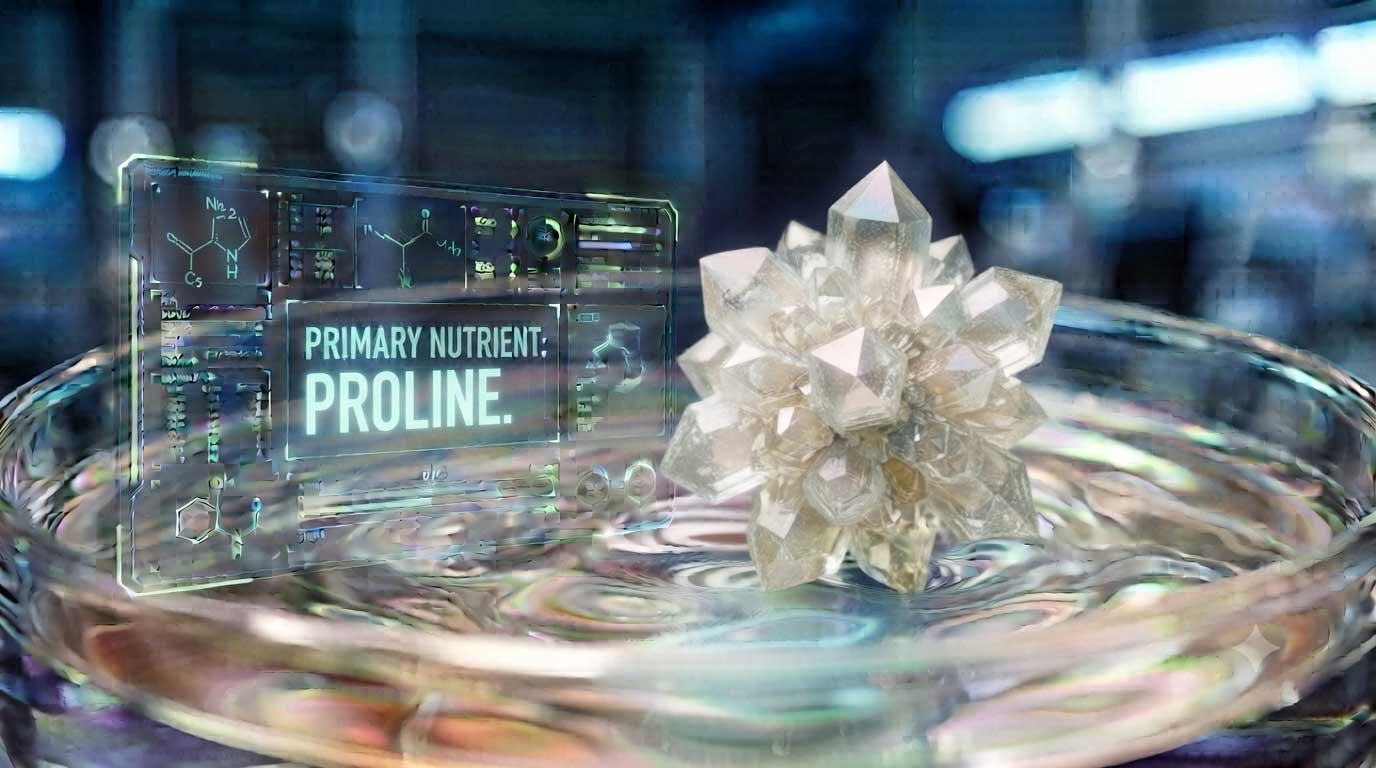
Meet Proline, the Amino Acid Nobody Talks About
Ask someone to name an amino acid and you’ll probably hear tryptophan, because of the whole turkey-and-drowsiness myth, or maybe glutamine, because it’s plastered across every protein powder tub in the supplement aisle. Proline rarely makes the list. And that’s a little strange, honestly, because proline is doing some of the most structurally important work in your entire body, every single day, without asking for any credit.
I’ve spent a long time looking at amino acids and how they behave inside the body, and proline has always struck me as the unglamorous one. It’s not flashy. It doesn’t get marketed on a can of pre-workout. But if you pulled proline out of the picture, your skin would lose its bounce, your joints would lose their cushioning, and wounds would take a lot longer to close up. That’s not a small deal.
Table of Contents

So what exactly is proline? Chemically speaking, it’s one of the twenty standard amino acids that make up proteins in the human body, but it’s a bit of an oddball among them. Most amino acids have a straightforward structure: a central carbon atom attached to an amino group, a carboxyl group, a hydrogen, and a side chain. Proline breaks that pattern. Its side chain loops back and connects to its own amino group, forming a ring shape called a pyrrolidine ring. Technically, this makes proline what chemists call an imino acid rather than a true amino acid, though in nutrition and biology conversations, it’s almost always just lumped in with the rest of the amino acids family.
That ring structure isn’t just a quirky detail. It’s the whole reason proline matters. Because of its rigid, closed shape, proline behaves differently inside a protein chain than any other amino acid. It can’t rotate freely the way glycine or alanine can. It creates kinks, bends, and tight turns in protein structures. And nowhere is that bending talent more important than in collagen, the most abundant protein in your body.
Collagen is the scaffolding that holds your skin, tendons, ligaments, cartilage, bones, and blood vessels together. It’s not one single molecule but a whole family of related proteins, and every version of it relies on a very specific, repeating pattern of amino acids: glycine, followed by two other amino acids, over and over again. Proline (and its close cousin, hydroxyproline, which is literally made from proline) fills that second and third position in the sequence an enormous number of times. Without proline in the mix, collagen simply cannot fold into its signature triple helix, the twisted, rope-like structure that gives connective tissue its strength.
Is proline something you need to think about actively? For most healthy people eating a reasonably varied diet, not really. Your body is pretty good at making its own proline internally, converting it from glutamate, which is another amino acid that’s abundant in food and in your bloodstream. That’s the reason proline gets classified as a “non-essential” amino acid, meaning your body can produce it without needing to get it directly from food. But — and this is a big but that a lot of nutrition write-ups gloss over — “non-essential” doesn’t mean “unimportant,” and it doesn’t mean your internal production is always enough. Under certain conditions, like recovering from a wound, healing after surgery, or dealing with chronic inflammation, your body’s demand for proline can outpace what it can manufacture on its own. That’s when dietary proline, or the raw materials your body uses to build it, starts to actually matter.
There’s also a metabolic side of proline that doesn’t get nearly enough attention outside of research circles. Proline isn’t just a passive building block sitting in your collagen. It’s actively involved in cellular energy production and in managing oxidative stress, meaning it plays a role in how your cells handle the wear and tear of everyday metabolism. Researchers studying cellular redox balance, essentially the chemical give-and-take that keeps your cells from being damaged by unstable molecules, have found that proline metabolism is tied into that whole system in ways that are still being mapped out.
I want to be upfront about something before we go further: this article isn’t going to turn proline into a miracle molecule you need to start supplementing tomorrow. That’s not how amino acids work, and frankly, that kind of oversimplification does readers a disservice. What I want to do instead is walk through what proline actually does in the body, where you’re realistically getting it from, what happens when levels run low or run high, and why understanding this one unassuming amino acid gives you a much clearer picture of how your connective tissue, and by extension a good chunk of your physical resilience, actually gets built and maintained.
Think of proline as the framework behind the framework. Collagen gets all the attention in skincare ads and joint-health commercials, but proline is one of the reasons collagen can do what it does in the first place. Once you understand that relationship, a lot of things about tissue repair, aging skin, and even certain rare genetic conditions start making a lot more sense. Let’s get into it.
Key Health Benefits of Proline
When people ask what proline “does” for the body, the honest answer is that its benefits are almost entirely tied to structure. This isn’t an amino acid that’s going to spike your energy or calm your nerves. Its value is architectural, and once you see it that way, the benefits actually make a lot more sense.
Skin Structure and Elasticity
Your skin’s firmness and bounce come largely from the dermal layer, which is packed with collagen and elastin fibers. Proline, alongside hydroxyproline, makes up a substantial chunk of the amino acid content of that collagen. Research has consistently pointed to proline and hydroxyproline together accounting for roughly a quarter of the total amino acids found in the collagen molecule, which is a striking proportion when you consider there are twenty amino acids to choose from.
This is part of why oral collagen peptide supplementation, which supplies the body with proline, hydroxyproline, and glycine in an easily absorbed form, has shown measurable effects in clinical trials. A randomized, double-blind, placebo-controlled study involving low-molecular-weight collagen peptides found meaningful improvements in skin hydration and a reduction in visible wrinkling after twelve weeks of daily supplementation, along with lower activity of the enzymes that break down collagen in skin tissue. That’s not proline acting alone, since collagen peptides contain a mix of amino acids, but proline’s structural role is central to why those peptides work the way they do.
I’ll be honest, the skincare industry loves to oversell this stuff. Popping a collagen gummy isn’t going to erase decades of sun damage. But there is real, published clinical evidence behind the idea that supplying the body with proline-rich collagen building blocks supports measurable improvements in skin hydration and elasticity over time, particularly with consistent use over several weeks.
Wound Healing and Tissue Repair
If you’ve ever had a deep cut or surgical incision, your body went through an intense, localized construction project to close that gap, and proline was one of the primary materials on site. Research on wound biology has found that proline levels in wound fluid can run at least fifty percent higher than levels found in plasma during the early phases of healing, which is a pretty strong hint that the body is actively pulling proline toward the injury site to fuel new collagen production.
This makes sense once you think about what wound closure actually requires. New tissue needs new collagen, and new collagen needs proline as one of its core raw materials. Surgeons and wound-care researchers have looked closely at proline precursors, amino acids like arginine and ornithine that the body can convert into proline, as potential tools to support faster, stronger healing in patients recovering from major surgery or chronic wounds.
Joint and Connective Tissue Support
Cartilage, tendons, and ligaments are all collagen-heavy tissues, and they all depend on the same proline-rich structural pattern that skin does. Anyone dealing with joint stiffness or recovering from a tendon injury is, on some level, dealing with a collagen remodeling process, and proline is part of the material list for that remodeling.
I want to be careful here not to overstate things. There isn’t strong direct clinical evidence that taking isolated proline supplements fixes joint pain, and I’d be skeptical of anyone claiming otherwise. What the research does support is proline’s foundational role in the connective tissue that makes up joints, which is a different, more modest claim, but still an important one.
Cellular Energy and Antioxidant Defense
Here’s the part that surprises most people. Proline isn’t just sitting quietly inside collagen fibers. It has an active metabolic life. When proline is broken down inside cells, that process can generate ATP, your cells’ basic energy currency, and it also intersects heavily with how cells manage oxidative stress.
Scientists studying this pathway have described proline metabolism as playing a genuine role in redox homeostasis, essentially the balancing act cells perform to avoid being overwhelmed by reactive molecules that can damage DNA, proteins, and cell membranes over time. This research is still fairly young and much of it has emerged from cancer metabolism studies, where proline’s dual role in both fueling tumor growth and stress response has drawn a lot of scientific curiosity. It’s a good reminder that amino acids often live double lives, one as a structural building block, another as an active metabolic player.
Supporting the Gut Lining
There’s a smaller but growing body of interest in proline’s role in the digestive tract. The intestinal lining turns over quickly and relies on collagen-rich connective tissue for structural integrity, and proline availability factors into how efficiently that tissue regenerates. This isn’t an area with dozens of large human trials yet, so I won’t oversell it, but it’s a thread worth watching as more research comes out.
Taken together, these benefits paint a consistent picture. Proline isn’t a supplement you take to feel something immediately. It’s a structural nutrient, one that quietly supports the tissues holding your body together, and its value becomes most obvious in situations where your body is actively rebuilding, whether that’s healing skin, mending a wound, or maintaining the everyday wear and tear on joints and connective tissue.
Dietary Sources of Proline
Since proline is a non-essential amino acid, you’re not going to see it flagged on a nutrition label the way vitamin C or iron might be. There’s no daily proline quota printed anywhere. But that doesn’t mean food sources don’t matter, especially for anyone whose body is under extra demand, like during recovery from an injury or a period of intense physical stress.
Animal-Based Sources
If you’re eating meat, dairy, or eggs regularly, you’re almost certainly getting a healthy dose of proline without thinking about it. Proline is abundant in:
- Beef, pork, and poultry, especially cuts that include connective tissue and skin
- Bone broth and gelatin, which are essentially concentrated collagen and therefore naturally rich in proline and hydroxyproline
- Dairy products like cheese, yogurt, and milk
- Eggs, particularly the whites
- Fish and seafood, including collagen-rich parts like fish skin
Bone broth deserves a special mention here because it’s had such a moment in wellness circles over the past several years. Simmering bones, skin, and connective tissue for hours breaks down collagen into more digestible peptides, and that process naturally concentrates proline and glycine into the liquid. Whether bone broth delivers all the dramatic gut-healing and joint-repairing effects some corners of the internet claim is genuinely up for debate, but as a proline source, it does hold up.
Plant-Based and Other Sources
Plant foods generally contain less proline than animal products, since plants don’t build the same kind of structural collagen that animals do. That said, proline isn’t absent from a plant-based diet. Reasonable sources include:
- Soy products, including tofu and edamame
- Legumes like lentils and beans
- Nuts and seeds
- Whole grains
- Cabbage and asparagus, which show up repeatedly in amino acid composition research as decent sources of several non-essential amino acids
Because plant-based diets tend to supply less proline directly, the body’s own internal synthesis pathway becomes more important for people eating primarily plant-based. Remember, proline is made from glutamate, and glutamate is genuinely abundant across almost all protein-containing foods, plant or animal. So even on a lower-proline diet, if total protein intake is adequate, the body usually has the raw materials to keep producing proline on its own.
What About Collagen Supplements?
This is probably the most direct way people are intentionally increasing their proline intake these days. Hydrolyzed collagen powders and collagen peptide supplements are, structurally speaking, glycine, proline, and hydroxyproline delivered in a pre-broken-down, easily absorbed form.
A few things worth knowing if you’re considering this route:
- Collagen supplements are not a complete protein source. They’re missing tryptophan entirely and are low in a few other essential amino acids, so they shouldn’t replace other protein sources in your diet.
- The clinical research on skin and joint benefits, discussed earlier, has generally used doses in the range of a few grams per day, taken consistently over multiple weeks, not a one-time dose.
- Vegetarian and vegan versions of “collagen support” supplements exist, but they typically contain the individual amino acid building blocks or plant compounds that theoretically support the body’s own collagen synthesis, rather than actual collagen peptides, since collagen itself is an animal-derived protein.
Does Cooking Affect Proline Content?
Amino acids are generally fairly heat-stable compared to something like vitamin C, which degrades quickly with heat and light exposure. Cooking meat, simmering broth, or baking generally doesn’t destroy the proline content in a meaningful way, though very high, prolonged heat can alter protein structures and potentially reduce digestibility slightly. For practical purposes, if a food is proline-rich raw, it’s going to remain a reasonably good proline source after typical home cooking.
The bigger takeaway here isn’t really about chasing a specific number of proline milligrams. It’s about recognizing that a diet with adequate total protein, from a mix of sources, is almost always going to supply enough proline and enough of proline’s precursor, glutamate, to keep collagen production running the way it should.
Dosage & Deficiency
This is where proline starts to look a little different from vitamins and minerals that come with clearly published recommended intakes. There is no official Recommended Dietary Allowance for proline, and that’s not an oversight. It reflects the fact that proline sits in a nutritional gray zone.
Why There’s No Official RDA
Government and health organizations like the ones responsible for setting nutrient guidelines generally only establish formal intake recommendations for essential nutrients, the ones your body cannot make on its own and must get from food. Since proline is classified as non-essential, meaning your body synthesizes it from glutamate through a series of enzymatic steps, it doesn’t fall into the category that triggers an official RDA.
That said, “non-essential” is doing a lot of heavy lifting in that sentence, and researchers studying amino acid metabolism have pushed back on the idea that non-essential automatically means unimportant or always sufficiently produced. Some scientists now use the term “conditionally essential” for amino acids like proline, meaning that under normal, healthy conditions the body makes enough, but during periods of illness, injury, rapid growth, or significant physical stress, demand can exceed what the body can produce internally. Infants, people recovering from surgery, burn patients, and individuals dealing with chronic wounds are the groups most often discussed in this context.
How Much Do We Actually Get
Most people eating a typical omnivorous diet with adequate total protein intake are consuming proline in the range of a few grams per day without ever tracking it, simply as a natural byproduct of eating meat, dairy, eggs, legumes, and grains. There isn’t a standardized “target” the way there is for something like calcium or vitamin D, largely because the research hasn’t identified a clear deficiency threshold in healthy individuals eating reasonable amounts of protein.
For context, dietary protein overall is generally recommended at around 0.8 grams per kilogram of body weight per day for the average sedentary adult, though this number climbs for people who are more active, recovering from injury, older adults, or pregnant. Since proline naturally comes along for the ride with total protein intake, meeting general protein recommendations from varied food sources is usually the most practical way to ensure adequate proline, rather than trying to isolate and track proline specifically.
Signs of Low Proline (and Why They’re Rare)
True dietary proline deficiency, in the sense of someone eating a reasonable diet and running critically low, is not something you’ll find well documented in the nutrition literature. The body’s ability to synthesize proline from glutamate is fairly robust under normal conditions, and glutamate itself is one of the most abundant amino acids in the human diet and in the bloodstream.
Where things get more nuanced is in specific clinical situations. Malnutrition, for instance, can affect the availability of amino acid precursors broadly, which indirectly affects proline production. Severe burns and major wound healing create a localized demand for proline that can outstrip normal production, which is part of why researchers have investigated proline precursor supplementation, like arginine and ornithine, in surgical and wound-care settings.
If you’re generally healthy, eating enough protein, and not dealing with major tissue trauma, worrying about a proline deficiency specifically is probably not a productive use of your energy. It’s one of those nutrients where adequate overall protein intake does almost all the necessary work behind the scenes.
Does Age Change the Picture?
There’s reasonable biological logic suggesting that collagen synthesis, and therefore proline utilization, becomes less efficient with age. Skin and connective tissue naturally produce less collagen as people get older, which is part of why skin loses elasticity and wounds heal more slowly in older adults. Whether this reflects reduced proline availability specifically, versus a broader slowdown in collagen-producing cell activity, is still an area of ongoing study rather than settled science. It’s an interesting thread, but I’d be cautious about anyone presenting it as a fully resolved mechanism.
Toxicity & Risks
Proline toxicity in the traditional sense, meaning eating too much proline-rich food and experiencing negative effects, essentially doesn’t happen in healthy people. This isn’t a nutrient with a known upper tolerable limit the way, say, vitamin A or iron have. But that doesn’t mean the topic of excess proline is entirely irrelevant, because there’s a specific, genetically driven condition where proline builds up in the blood to problematic levels, and it’s worth understanding even if it’s rare.
Hyperprolinemia: When the Body Can’t Break It Down
Hyperprolinemia is a genetic metabolic condition where the enzymes responsible for breaking down proline don’t function properly, causing proline to accumulate in the blood far beyond normal levels. There are two recognized types. In type I hyperprolinemia, blood proline levels run somewhere between three and ten times the normal amount, and interestingly, many people with this form show no symptoms at all. Others may experience seizures, intellectual disability, or other neurological or psychiatric issues, though the severity varies significantly from person to person.
Type II hyperprolinemia is more severe, with proline levels reaching ten to fifteen times normal, alongside elevated levels of a related compound. This form is more consistently associated with seizures and developmental effects. Both types are inherited in an autosomal recessive pattern, meaning a person needs to inherit a non-working copy of the relevant gene from both parents to develop the condition, which is part of why it’s considered rare.
It’s worth noting that hyperprolinemia can also show up secondary to other health issues, including malnutrition, liver disease, or conditions involving elevated lactic acid in the blood, since lactic acid interferes with the enzyme responsible for breaking proline down. This is a genetic and metabolic condition, not something that develops from eating too much protein or too many proline-rich foods, and it’s not something the average healthy person needs to worry about triggering through diet.
Is Supplementing Proline Risky?
For the general population without a diagnosed metabolic condition affecting amino acid processing, there’s no strong evidence that dietary proline or collagen peptide supplementation, which delivers proline in a food-form context, poses meaningful health risks. Clinical trials using collagen peptide supplementation for skin and joint outcomes have generally reported good tolerability with minimal side effects, occasionally noting mild digestive discomfort in a small percentage of participants, which is a pretty unremarkable safety profile compared to a lot of other supplements on the market.
That said, isolated free-form proline supplements, separate from collagen peptides, are much less studied in humans, and I’d be cautious about anyone taking large, unstudied doses of an isolated amino acid based on the assumption that more must be better. The research supporting proline’s benefits has largely come from food-based or collagen-peptide-based interventions, not high-dose isolated proline supplementation, so extrapolating safety data from one to the other is a stretch.
Who Should Be Cautious
People with a personal or family history of a diagnosed amino acid metabolism disorder should talk to a physician before adding concentrated proline or collagen supplements to their routine, simply because their bodies may not process it the way a typical healthy person does. Beyond that specific group, there isn’t a well-established at-risk population for proline specifically, which is honestly one of the more reassuring things about this amino acid compared to some others.
Pregnant women, people managing chronic kidney or liver conditions, or anyone on a heavily restricted protein diet for medical reasons should generally be working with a healthcare provider on their overall protein and amino acid intake anyway, and proline would simply be one small piece of that broader conversation rather than something requiring isolated attention.
The Bottom Line on Risk
Realistically, proline sits toward the low-risk end of the amino acid spectrum. The rare genetic condition where it becomes a problem is not something diet or supplementation causes, and the food sources richest in proline, like meat, dairy, and gelatin, come with their own separate nutritional considerations that have nothing specifically to do with proline itself. If you’re a generally healthy adult eating a reasonably varied diet, proline is simply not something that needs to be on your worry list.
The Thread That Holds Everything Together
Proline never asked to be interesting. It doesn’t have the dramatic backstory of vitamin C fighting off scurvy on old sailing ships, and it doesn’t have the marketing muscle of protein powders lining every gym’s checkout counter. But if you’ve followed along this far, I think it’s fair to say proline earns its place in the conversation about amino acids, minerals, and how the body actually gets built and rebuilt over time.
What stands out most to me about proline is how much of its story is really a story about shape. That odd little ring structure, the thing that makes it technically an imino acid instead of a standard amino acid, is exactly why collagen can fold the way it does, why your skin has structure, why your tendons can absorb stress without tearing, and why wounds are able to close up and heal in the first place. It’s a small structural quirk with enormous downstream consequences, and that’s a pretty elegant example of how biology often works. The tiniest details at the molecular level ripple outward into things you can actually see and feel, like skin that bounces back when you pinch it or a scar that eventually fades and smooths over.
I also think proline is a useful reminder that the “essential versus non-essential” framing around amino acids and minerals can be a little misleading if taken too literally. Yes, your body can make its own proline. But that manufacturing process depends on having enough glutamate, enough overall protein, and a body that isn’t under unusual physiological stress. The moment any of those conditions shift, whether through injury, illness, or simply the slow structural changes that come with aging, proline stops being something you can take for granted.
If there’s a practical takeaway here, it’s this: you don’t need to obsess over proline milligrams or add a new pill to your routine because of what you’ve read. What actually matters is making sure your overall protein intake is solid and comes from a reasonably varied mix of sources, since proline, along with its precursor glutamate, tends to show up naturally wherever adequate protein shows up. For most healthy people, that’s genuinely enough. Where it gets more interesting is in specific situations, recovering from a significant wound, dealing with aging skin, managing joint health, where paying a little more attention to proline-supportive nutrition, whether through food or a reasonably dosed collagen peptide supplement, has actual clinical research behind it.
And if nothing else, the next time someone brings up collagen supplements or bone broth at a dinner party, you’ll know exactly why those things are built around proline in the first place. It’s not hype. It’s biochemistry, quietly doing its job, one triple helix at a time.
Article Sources
At AncientHerbsWisdom, our content relies on reputable sources, including peer-reviewed studies, to substantiate the information presented in our articles. Our primary objective is to ensure our content is thoroughly fact-checked, maintaining a commitment to accuracy, reliability, and trustworthiness.
- Barbul, A. (2008). Proline precursors to sustain mammalian collagen synthesis. The Journal of Nutrition, 138(10), 2021S-2024S. https://doi.org/10.1093/jn/138.10.2021S
- Karna, E., Szoka, L., Huynh, T. Y. L., & Palka, J. A. (2020). Proline-dependent regulation of collagen metabolism. Cellular and Molecular Life Sciences, 77(11), 1911-1918. https://doi.org/10.1007/s00018-019-03363-3
- Kim, D. U., Chung, H. C., Choi, J., Sakai, Y., & Lee, B. Y. (2018). Oral intake of low-molecular-weight collagen peptide improves hydration, elasticity, and wrinkling in human skin: A randomized, double-blind, placebo-controlled study. Nutrients, 10(7), 826. https://doi.org/10.3390/nu10070826
- MedlinePlus Genetics. (2024). Hyperprolinemia. National Library of Medicine. https://medlineplus.gov/genetics/condition/hyperprolinemia
- Vettore, L. A., Westbrook, R. L., & Tennant, D. A. (2021). Proline metabolism and redox; maintaining a balance in health and disease. Amino Acids, 53(12), 1779-1788. https://doi.org/10.1007/s00726-021-03051-2
- Cleveland Clinic. (2022). Collagen: What it is, types, function & benefits. https://my.clevelandclinic.org/health/articles/23089-collagen

- Phosphatidic Acid: Supporting Muscle Growth and Strength - July 31, 2026
- Ceramides: Supporting Healthy Skin From Within - July 31, 2026
- Synbiotics: Combining Prebiotics and Probiotics Together - July 31, 2026