
The Sulfur Compound Nobody Talks About (Until Their Knees Start Talking Back)
There’s a moment that happens to a lot of people somewhere in their thirties or forties. You get up from a chair a little too fast, or you take the stairs two at a time like you used to, and your knee sends you a message you didn’t ask for. Nothing dramatic. Just a small, unmistakable creak that says, hey, we’re not twenty-five anymore. That’s usually when people start Googling things like glucosamine, chondroitin, and eventually, MSM.
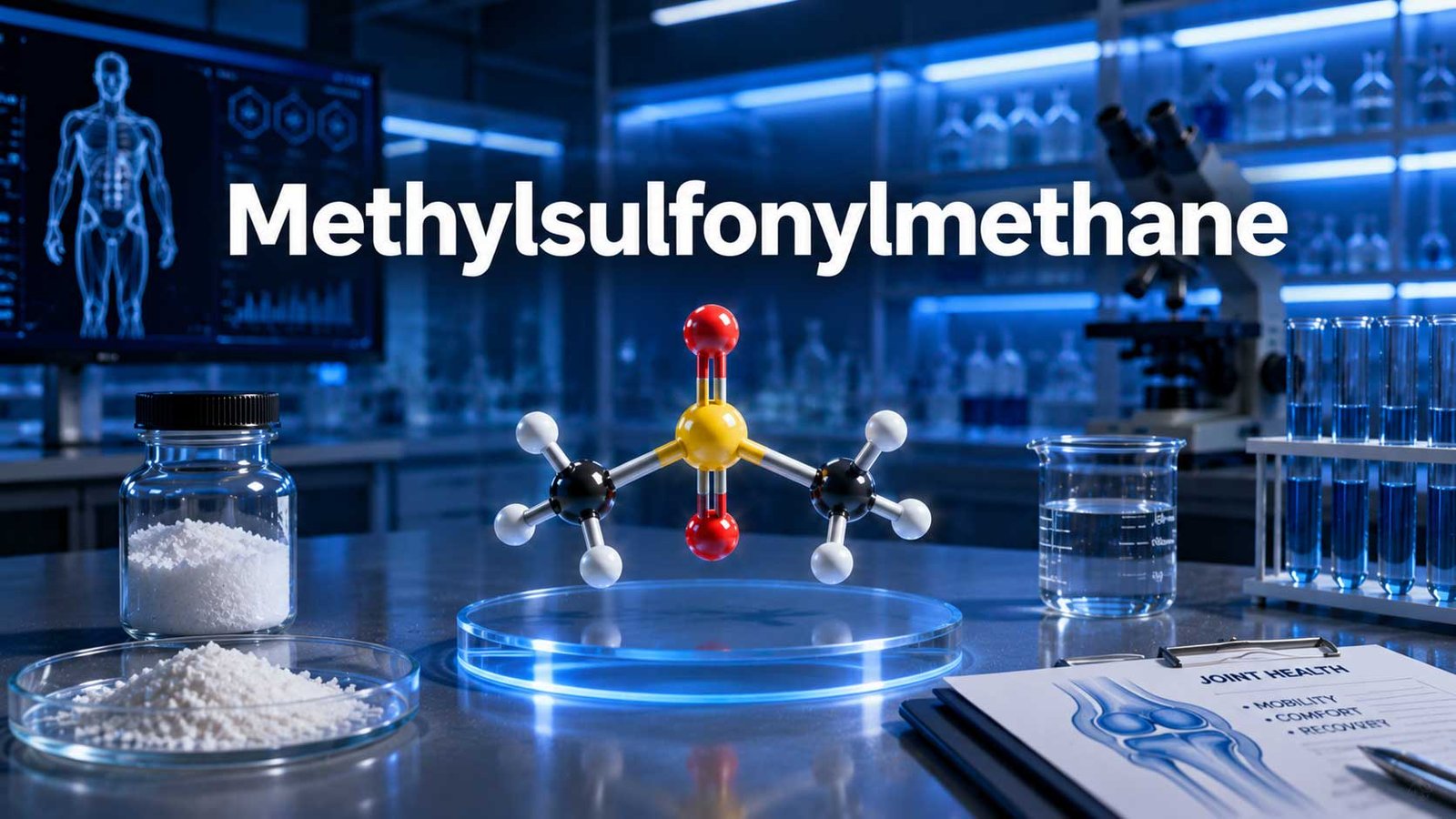
MSM stands for methylsulfonylmethane, which is a mouthful, so almost everyone just calls it MSM. It’s an organosulfur compound, meaning it’s built around a sulfur atom, and sulfur turns out to be one of those unglamorous minerals that quietly holds a lot of the body together. Collagen, keratin, and various connective tissues all depend on sulfur-containing compounds to stay flexible and strong. MSM isn’t some exotic lab invention, either. It occurs naturally, in tiny amounts, in fruits, vegetables, grains, and milk, and it’s also produced in the body as a breakdown product of dimethyl sulfoxide, or DMSO. You’ve probably consumed a few milligrams of it today without realizing it.
Table of Contents


What’s interesting is that MSM sat in relative obscurity for decades before joint health researchers and athletes started paying real attention to it in the late 1990s and 2000s. Now it’s a staple ingredient in joint support formulas, usually paired with glucosamine and chondroitin, and it shows up in recovery blends marketed to runners, weightlifters, and weekend warriors alike. The question worth asking isn’t whether MSM is trendy. Plenty of trendy things fizzle out under scrutiny. The question is whether the science backs up what the supplement aisle promises.

I’ve spent a long time reading through joint health research, and MSM occupies an interesting middle ground. It’s not a miracle molecule, and anyone who tells you it will regrow cartilage or cure arthritis overnight is overselling it. But it’s also not nothing. There’s a meaningful body of randomized, placebo-controlled research — the gold standard in nutrition science — showing it can ease knee discomfort, support physical function, and even help active people bounce back faster after hard training. That’s a fairly rare combination for a supplement: real trials, real mechanisms, and a safety profile that’s about as clean as they come.
Here’s what tends to get lost in the marketing noise, though. MSM isn’t primarily a “build new tissue” compound the way some people assume. Its main claim to fame is modulating inflammation and oxidative stress, the two processes that make joints feel stiff, swollen, and cranky in the first place. Think of it less like a bricklayer repairing a wall and more like the crew that calms down the site so the actual repair work can happen without chaos. That distinction matters, because it shapes what kind of results you should realistically expect, and on what kind of timeline.
There’s also a practical side to this conversation that rarely gets airtime. Sulfur amino acids like methionine and cysteine depend on adequate sulfur availability to do their jobs, and MSM is one dietary contributor to that pool, alongside protein-rich foods. So while MSM gets pigeonholed as a “joint supplement,” its relevance stretches a bit wider than that, touching on connective tissue health, skin, and general recovery capacity.
I want to walk through what the research actually shows about MSM’s benefits, where you can get it from food versus supplements, how much people typically use in clinical settings, and where the genuine risks and limitations lie. No hype, no fear-mongering — just a grounded look at a compound that deserves more nuance than either the supplement industry or the skeptics usually give it. Whether you’re dealing with achy knees after a long run, managing the wear and tear of years on your feet, or just curious what’s actually inside that joint formula sitting in your cabinet, there’s a lot worth understanding here before you decide if MSM earns a place in your routine.
Key Health Benefits
Easing Knee Discomfort and Supporting Joint Function
The most consistent evidence for MSM sits squarely in the knee osteoarthritis space, and it’s worth starting there because it’s the area researchers have studied most rigorously. In a randomized, double-blind, placebo-controlled trial published in BMC Complementary and Alternative Medicine, forty-nine adults with knee osteoarthritis took either MSM or a placebo for twelve weeks. The MSM group showed measurable improvements across several outcome measures, including pain, stiffness, and physical function scores, along with better results on a locomotor function test. That’s not a fringe finding — it’s a well-designed trial with objective measurement tools, not just people self-reporting that they “feel a bit better.”
A separate pilot trial published in Osteoarthritis and Cartilage looked at fifty adults with knee osteoarthritis pain, comparing three grams of MSM twice daily against placebo over twelve weeks. The MSM group experienced reductions in pain and improvements in physical function, though the researchers were careful to note that as a pilot study, it couldn’t fully confirm long-term safety or effectiveness on its own. That kind of honesty is refreshing, and it’s a good reminder that even positive trials come with caveats worth respecting.
More recently, a Japanese randomized controlled trial tested a lower daily dose — 2,000 milligrams — over twelve weeks in participants with mild knee discomfort rather than diagnosed osteoarthritis. The results still favored MSM, with significant improvements on the Japanese Knee Osteoarthritis Measure and better scores related to systemic physical function. What I find useful about this particular trial is that it wasn’t testing people with severe joint disease. It was testing everyday mild knee pain, which is closer to what most people are actually dealing with when they consider trying MSM in the first place.
Put together, these trials paint a fairly coherent picture. MSM doesn’t reverse joint damage, and nobody credible claims it does. But for people dealing with mild to moderate knee discomfort, whether from early osteoarthritis or general wear and tear, there’s real evidence that it can meaningfully ease symptoms over a period of weeks, not days.
Calming Inflammation and Oxidative Stress
Underneath the joint pain research is a mechanistic story that helps explain why MSM works the way it does. Preclinical and mechanistic research suggests MSM can influence inflammatory signaling, including pathways involving NF-κB, a transcription factor that ramps up production of inflammatory messengers like interleukin-6 and tumor necrosis factor-alpha. When that pathway gets dialed down, the downstream inflammatory cascade tends to quiet as well.
MSM also appears to support the body’s antioxidant defenses. Research on rats with induced pulmonary hypertension found that MSM supplementation helped restore levels of catalase, superoxide dismutase, and glutathione peroxidase — three of the body’s frontline antioxidant enzymes — toward normal levels. Antioxidant capacity matters here because oxidative stress and inflammation tend to feed each other in a nasty feedback loop, particularly in joints under repetitive mechanical stress.
This dual action — anti-inflammatory and antioxidant — is probably the real reason MSM shows up not just in joint formulas but in recovery products aimed at athletes. It’s not fixing tissue directly. It’s turning down the volume on the biochemical noise that makes recovery slower and more uncomfortable than it needs to be.
Supporting Exercise Recovery
This is where things get genuinely interesting for people who train hard, whether that’s marathon running, strength training, or just physically demanding work. A double-blind, placebo-controlled trial published in the Journal of the International Society of Sports Nutrition followed runners preparing for a half-marathon, giving them three grams of MSM daily for three weeks before the race and two days after. MSM supplementation attenuated post-exercise muscle and joint pain, though the effect on oxidative stress markers didn’t reach statistical significance in that particular cohort.
Another trial, this one looking at eccentric knee extension exercise — the kind that produces serious delayed-onset muscle soreness — found that four weeks of MSM supplementation at three grams daily reduced muscle soreness by roughly fifteen to twenty percent and helped isometric strength bounce back faster. Values in the MSM group returned to baseline by seventy-two hours post-exercise, while the placebo group was still eight percent below baseline at that point. That’s a tangible, practical difference if you’re trying to train again sooner without dragging around sore, weakened muscles.
More recent research has started testing lower, more sustainable daily doses. A study published in Nutrients found that even half a gram to one gram of MSM daily over thirty days modulated markers tied to inflammation, oxidative stress, and muscle recovery in experienced runners preparing for a half-marathon. That matters because it suggests you may not need to load up on multiple grams a day to get some recovery benefit, which is a more realistic ask for most people’s daily supplement routine.
None of this means MSM turns you into a recovery machine overnight. The effects in these studies are moderate, not dramatic. But for people pushing their bodies regularly — through running, lifting, or physically demanding jobs — moderate, consistent improvement in soreness and recovery time is nothing to shrug off.
Potential Skin and Allergy-Related Support
MSM’s reputation extends a little beyond joints and muscles, though the evidence here is thinner. Some research has explored its role in skin health, given sulfur’s involvement in collagen and keratin structure, with early studies suggesting topical or oral MSM may support skin texture and reduce visible signs of irritation. There’s also exploratory research into allergic rhinitis. A randomized, double-blind study evaluated MSM’s impact on nasal symptoms after standardized allergen exposure, with encouraging but preliminary findings.
I’ll be honest — this area needs a lot more research before anyone should lean on MSM specifically for allergies or skin concerns. It’s worth mentioning because it rounds out the picture of MSM as a compound with broader physiological relevance than just “joint supplement,” but I wouldn’t want anyone walking away thinking it’s a proven allergy treatment. It isn’t, not yet.
Dietary Sources
Where MSM Naturally Shows Up
Unlike vitamins with well-established recommended intakes, MSM doesn’t have an official dietary reference value, largely because the amounts naturally present in food are quite small and nobody has established a deficiency syndrome tied to inadequate intake. Still, it’s worth knowing where it comes from, because it’s genuinely present in the everyday diet, just not in concentrations anywhere close to what supplements provide.
MSM is essentially the oxidized form of dimethyl sulfoxide, or DMSO, and it turns up naturally in a range of whole foods:
- Cow’s milk, which is often cited as one of the more concentrated natural sources, though still only in the range of a few parts per million
- Fruits and vegetables, including tomatoes, and cruciferous vegetables like broccoli and Brussels sprouts
- Alliums such as onions, garlic, and leeks, which carry a variety of sulfur compounds
- Whole grains including wheat, barley, and corn
- Coffee and tea, in trace, detectable amounts
- Seafood and meat, which contribute sulfur through amino acids like methionine and cysteine as well
Here’s the thing worth sitting with for a second: these food sources provide MSM in truly minuscule amounts — we’re talking parts per million, not grams. Nobody is going to reach the three-gram doses used in clinical trials by eating tomatoes and drinking milk. That gap is exactly why MSM supplements exist in the first place. If you wanted therapeutic-level intake purely from food, you’d need to eat an unrealistic quantity of sulfur-rich produce every single day, and even then it’s unclear you’d get there.
Why Supplemental Form Became Necessary
Commercial MSM is typically produced through controlled oxidation of DMSO, refined into a pure, crystalline, odorless powder that’s then encapsulated or sold loose. This isn’t some shady synthetic shortcut — it mirrors the same chemical transformation that happens naturally in the environment and in the body, just concentrated and purified for consistent dosing. The compound has held Generally Recognized as Safe status with the FDA since 2007, which reflects decades of accumulated safety data.
For most people, food-based sulfur intake is going to matter more for baseline nutritional adequacy — supporting amino acid synthesis and general metabolic function — than for any specific joint or recovery benefit. If joint comfort or exercise recovery is the actual goal, supplementation is really the only practical route, since diet alone won’t get you into the dose range the research has actually tested.
Dosage & Deficiency
What the Research Actually Used
There’s no officially established Recommended Dietary Allowance for MSM, and there isn’t a recognized deficiency condition either, which sets it apart from something like vitamin D or iron. What we do have is a fairly consistent pattern across clinical trials, which gives a reasonable sense of the doses that have actually produced measurable results.
Most joint-focused studies have used somewhere between 1.5 and 6 grams per day, with 3 grams daily being a common middle-ground dose, often split into two or three smaller doses rather than taken all at once. The twelve-week osteoarthritis trials mentioned earlier generally fell into this range, and that’s the dosing window most joint support products on the market are built around.
Exercise recovery research has shown a bit more variety:
- Three grams daily for several weeks before an endurance event, as used in half-marathon studies
- Fifty milligrams per kilogram of body weight for shorter, ten-day protocols in some exercise-damage studies
- As little as 0.5 to 1 gram daily over a thirty-day period in more recent lower-dose recovery research
That last point is genuinely useful, because it suggests meaningful biological effects may not require the higher gram-level doses that dominate older studies. If you’re sensitive to supplement costs or just prefer a more conservative starting point, there’s now at least some evidence that lower daily amounts can still move the needle on recovery markers.
A Sensible Starting Approach
If someone asked me how to think about starting MSM, I’d say this: begin on the lower end, somewhere around one to two grams daily, and give it a genuine trial period of at least four to six weeks before deciding whether it’s doing anything for you. Joint-related benefits in the research took weeks to show up, not days, so judging MSM after three days of use isn’t really giving it a fair shot. Splitting the dose — morning and evening, ideally with food — tends to sit better with digestion than taking it all in one go.
It’s also worth remembering that absorption research shows MSM accumulates gradually. A study tracking blood sulfur levels in healthy men taking three grams daily for four weeks found levels were still rising at the four-week mark. That gradual build-up is one more reason patience matters more with this compound than with something that works immediately, like caffeine.
Deficiency Isn’t Really the Right Frame
Because MSM isn’t classified as an essential nutrient the way vitamin C or zinc are, there’s no recognized “MSM deficiency” in the medical literature. What does exist is sulfur amino acid inadequacy more broadly, tied to inadequate protein or sulfur-containing food intake, which shows up as issues with connective tissue integrity, detoxification pathways, and general metabolic sluggishness over time. MSM contributes to the broader dietary sulfur pool, but it’s one contributor among several, not a singular nutrient you need to track the way you’d track iron or B12.
Toxicity & Risks
A Genuinely Favorable Safety Profile
If there’s one thing that consistently stands out across the MSM literature, it’s how clean the safety data looks compared to a lot of other popular supplements. Animal toxicity studies using doses far beyond anything a human would realistically take — up to 2 grams per kilogram of body weight daily, five to seven times the typical human dose when scaled — found no mortality, organ pathology, or significant adverse effects. Researchers have noted that the maximum dose tested in some animal studies, twenty grams per kilogram daily, still failed to establish a lethal dose, which is about as reassuring as toxicology data gets.
In human trials, MSM has consistently held Generally Recognized as Safe status with the FDA since 2007, and it’s approved for use in foods and beverages at specified concentration limits. Clinical trials monitoring liver enzymes, kidney function markers, blood counts, and blood pressure over periods up to sixteen weeks have generally found no significant changes attributable to MSM compared to placebo. That’s a meaningful reassurance for anyone worried about organ strain from regular supplement use.
Side Effects Worth Knowing About
That said, “very safe” doesn’t mean “risk-free for everyone,” and it’s worth being honest about the mild side effects that do show up in the research:
- Mild gastrointestinal discomfort, including bloating, nausea, or loose stools, particularly when starting at higher doses
- Headache, reported occasionally in some trial participants
- Skin irritation or mild allergic reaction in rare cases, particularly with topical formulations
- Fatigue or difficulty concentrating, reported infrequently and inconsistently across studies
What’s notable is that in several trials, these side effects occurred at similar rates in both the MSM and placebo groups, suggesting a fair number of reported symptoms may not even be directly caused by the compound itself. Still, individual responses vary, and starting with a lower dose to assess tolerance is simply good practice with any new supplement.
Who Should Be More Cautious
A few groups warrant extra caution or a conversation with a healthcare provider before starting MSM. Pregnant or breastfeeding individuals should be careful, simply because human safety data in these populations remains limited, even though some animal studies on pregnant rats haven’t shown adverse effects. People taking blood thinners or preparing for surgery should also flag MSM use to their provider, given sulfur compounds’ theoretical, though not strongly established, interaction potential with clotting mechanisms.
There’s also research worth noting around MSM’s interaction potential with other supplements. A study examining co-administration of MSM with cannabidiol-rich cannabis extract found no evidence of liver toxicity or amplified enzyme induction from combining the two, which is reassuring for the growing number of people stacking multiple supplements. Still, that’s one study on one combination, and it doesn’t give a blanket green light for mixing MSM freely with every medication or supplement under the sun.
The Honest Bottom Line on Risk
I don’t say this often about supplements, but MSM genuinely earns its reputation as one of the gentler options on the shelf. The combination of decades of use, GRAS status, and consistently unremarkable safety findings across multiple well-designed trials puts it in a different category than a lot of trendier compounds that get hyped before the safety data catches up. That doesn’t mean blind trust is warranted — no supplement deserves that — but it does mean the risk-to-benefit conversation around MSM tilts pretty favorably for most healthy adults considering a reasonable dose.
Sulfur, Patience, and Realistic Expectations
If there’s one thread running through everything the research shows about MSM, it’s that this is a slow, steady compound rather than a dramatic one. It doesn’t numb pain the way a medication might. It doesn’t rebuild cartilage like some kind of biological spackle. What it seems to do, consistently and across multiple well-designed trials, is quiet the inflammatory and oxidative processes that make joints ache and muscles stay sore longer than they should.
That’s a modest claim, and I think that’s exactly why it holds up. Supplements that promise dramatic transformation tend to fall apart under real scrutiny. MSM’s story is more measured: mild to moderate improvements in knee comfort over twelve-week periods, meaningful reductions in exercise-induced soreness, and a safety profile that’s about as clean as anything in the supplement world. If you’re dealing with mild to moderate joint discomfort, or you’re someone who trains hard enough to feel it the next few days, MSM is a reasonable, low-risk option worth a real trial period — not three days, but four to six weeks of consistent use, ideally in the one to three gram daily range that most research has actually tested.
What MSM isn’t is a substitute for the fundamentals. Strength training around a joint, managing body weight, eating enough protein for connective tissue repair, and addressing sleep and overall inflammation through lifestyle all matter more than any single supplement ever will. MSM works best as a supporting player, not the whole show. Think of it as one useful tool that can take the edge off while you handle the bigger picture elsewhere.
If you do decide to try it, start low, be patient, pay attention to how your body responds, and loop in a healthcare provider if you’re pregnant, on blood thinners, or managing other health conditions. Beyond that, MSM is about as low-stakes an experiment as the supplement world offers — worth trying, worth giving a fair shot, and worth judging honestly once you’ve actually given it the weeks it needs to show what it can do.
Article Sources
At AncientHerbsWisdom, our content relies on reputable sources, including peer-reviewed studies, to substantiate the information presented in our articles. Our primary objective is to ensure our content is thoroughly fact-checked, maintaining a commitment to accuracy, reliability, and trustworthiness.
- Debbi, E. M., Agar, G., Fichman, G., Bar Ziv, Y., Kardosh, R., Halperin, N., Elbaz, A., Beer, Y., & Debi, R. (2011). Efficacy of methylsulfonylmethane supplementation on osteoarthritis of the knee: A randomized controlled study. BMC Complementary and Alternative Medicine, 11, 50. https://doi.org/10.1186/1472-6882-11-50
- Kim, L. S., Axelrod, L. J., Howard, P., Buratovich, N., & Waters, R. F. (2006). Efficacy of methylsulfonylmethane (MSM) in osteoarthritis pain of the knee: A pilot clinical trial. Osteoarthritis and Cartilage, 14(3), 286-294. https://doi.org/10.1016/j.joca.2005.10.003
- Toguchi, A., Noguchi, N., Kanno, T., & Yamada, A. (2023). Methylsulfonylmethane improves knee quality of life in participants with mild knee pain: A randomized, double-blind, placebo-controlled trial. Nutrients, 15(13), 2995. https://doi.org/10.3390/nu15132995
- Barmaki, S., Bohlooli, S., Khoshkhahesh, F., & Nakhostin-Roohi, B. (2012). Effect of methylsulfonylmethane supplementation on exercise-induced muscle damage and total antioxidant capacity. The Journal of Sports Medicine and Physical Fitness, 52(2), 170-174.
- Ahn, H., Kim, J., Lee, M. J., Kim, Y. J., Cho, Y. W., & Lee, G. S. (2015). Methylsulfonylmethane inhibits NLRP3 inflammasome activation. Cytokine, 71(2), 223-231. https://doi.org/10.1016/j.cyto.2014.11.001
- Van Hecke, T., Vossen, E., Hemeryck, L. Y., Bussche, J. V., Vanhaecke, L., & De Smet, S. (2016). Increased oxidative and nitrosative reactions during digestion could contribute to the association between well-done red meat consumption and colorectal cancer. Food Chemistry, 199, 30-39.
- Sousa Neto, I. V., Durigan, J. L. Q., Guzzoni, V., Tibana, R. A., Prestes, J., de Araújo, H. S. S., & Marqueti, R. C. (2018). Effects of methylsulfonylmethane on oxidative stress, muscle damage, and pain following a half-marathon: A double-blind, randomized, placebo-controlled trial. Journal of the International Society of Sports Nutrition, 14, 35. https://doi.org/10.1186/s12970-017-0181-z
- Nakhostin-Roohi, B., Barmaki, S., Khoshkhahesh, F., & Bohlooli, S. (2011). Effect of chronic supplementation with methylsulfonylmethane on oxidative stress following acute exercise in untrained healthy men. Journal of Pharmacy and Pharmacology, 63(10), 1290-1294. https://doi.org/10.1111/j.2042-7158.2011.01314.x
- van der Merwe, M., & Bloomer, R. J. (2016). The Influence of methylsulfonylmethane on inflammation-associated cytokine release before and following strenuous exercise. Journal of Sports Medicine, 2016, 7498359. https://doi.org/10.1155/2016/7498359
- Butawan, M., Benjamin, R. L., & Bloomer, R. J. (2017). Methylsulfonylmethane: Applications and safety of a novel dietary supplement. Nutrients, 9(3), 290. https://doi.org/10.3390/nu9030290
- Amirshahrokhi, K., Bohlooli, S., & Chinifroush, M. M. (2011). The effect of methylsulfonylmethane on the tissue damage and oxidative stress caused by monocrotaline-induced pulmonary hypertension in rats. Toxicology and Applied Pharmacology, 253(2), 138-144.
- Withee, E. T., Tippens, K. M., Dehen, R., Tibbitts, D., Hanes, D., & Zwickey, H. (2017). Effects of Methylsulfonylmethane (MSM) on exercise-induced oxidative stress, muscle damage, and pain following a half-marathon: A double-blind, randomized, placebo-controlled trial. Journal of the International Society of Sports Nutrition, 14, 24. https://doi.org/10.1186/s12970-017-0181-z
- Pearson, T. W., Dawson, H. J., & Lackey, H. B. (1981). Naturally occurring levels of dimethyl sulfoxide in selected fruits, vegetables, grains, and beverages. Journal of Agricultural and Food Chemistry, 29(5), 1089-1091. https://doi.org/10.1021/jf00107a049
- Yousefi Chaijan, P., Zaidi, S., Coulter, D. W., Trushin, N., Bevins, R. A., Trushin, N. A., & Muscat, J. E. (2019). Safety and molecular-toxicological implications of cannabidiol-rich cannabis extract and methylsulfonylmethane co-administration. Frontiers in Pharmacology, 10, 1233. https://doi.org/10.3389/fphar.2019.01233
- Barrager, E., Veltmann, J. R., Schauss, A. G., & Schiller, R. N. (2002). A multicentered, open-label trial on the safety and efficacy of methylsulfonylmethane in the treatment of seasonal allergic rhinitis. Journal of Alternative and Complementary Medicine, 8(2), 167-173. https://doi.org/10.1089/107555302317371433
- Muizzuddin, N., Benjamin, R. (2018). Beauty from within: Effects of the New Skin Care Supplement Ingredient. Journal of Cosmetic Dermatology, 17(4), 611-619.
- U.S. Food and Drug Administration. (2007). GRAS Notice No. GRN 000181: Methylsulfonylmethane. https://www.fda.gov/food/gras-notice-inventory

- Phosphatidic Acid: Supporting Muscle Growth and Strength - July 31, 2026
- Ceramides: Supporting Healthy Skin From Within - July 31, 2026
- Synbiotics: Combining Prebiotics and Probiotics Together - July 31, 2026