
The Amino Acid That Broke the Rules
Somewhere around the late 1990s, a handful of molecular biologists studying swamp-dwelling microbes ran into something that, on paper, should not have existed. They were sequencing a gene from an archaeon called Methanosarcina barkeri, and right in the middle of a protein-coding sequence sat a stop codon. Not at the end, where stop codons belong, but smack in the middle, as if the cell had simply decided to keep reading past a red light. That anomaly turned out to be the first clue to pyrrolysine, and it’s a story I still bring up whenever someone tells me biology has already handed us all its big surprises.
For decades, biochemistry textbooks taught a tidy number: twenty amino acids build every protein in every living thing, full stop. It was one of those facts that felt as solid as gravity. Then selenocysteine came along and quietly became the 21st. And then pyrrolysine showed up and took the 22nd spot, discovered in 2002 by researchers led by Joseph Krzycki at Ohio State University, who showed that a UAG “stop” codon in certain methanogenic archaea was actually being translated into this brand-new amino acid rather than ending the protein chain. I remember reading the original papers years after the fact and still feeling that jolt of “wait, that’s allowed?” It’s rare that a discovery genuinely rewrites a rule you learned as gospel, and pyrrolysine did exactly that.
Table of Contents


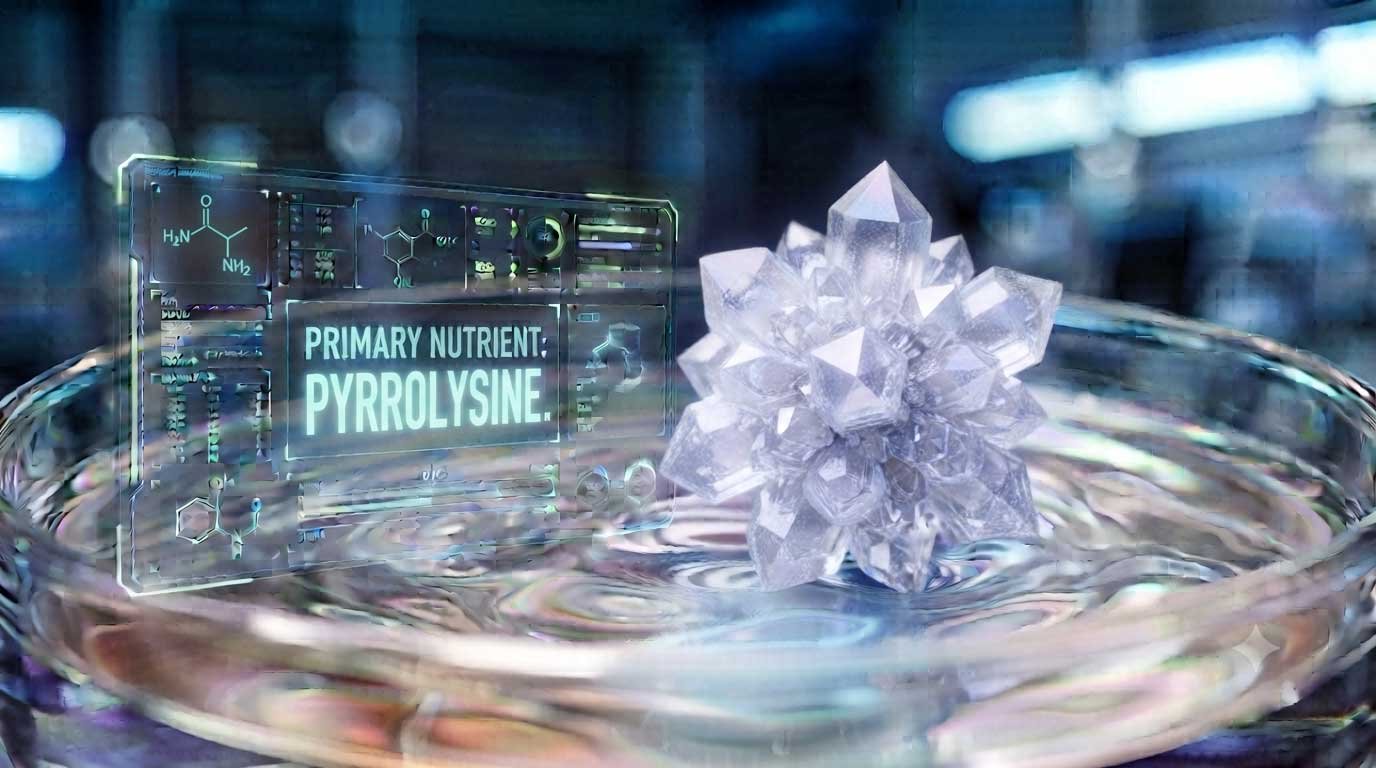
So what is pyrrolysine, structurally speaking? It’s built on a lysine backbone, with a distinctive pyrroline ring attached to the side chain nitrogen. Chemists sometimes describe it as a lysine derivative dressed up with a methylated pyrroline group, which sounds abstract until you realize that ring is doing real chemical work — it helps activate methyl groups during a very specific kind of metabolism found almost nowhere else on the planet. Pyrrolysine isn’t floating around in your bloodstream, and it isn’t something you’re going to find on a supplement label next to zinc and magnesium. It belongs to a much stranger and more exclusive club: amino acids encoded directly by the genetic code, but only in a tiny sliver of life.

That exclusivity is really the whole story here, and it’s why I find pyrrolysine more interesting than most of the trace nutrients I usually write about. Cobalt, selenium, zinc — these all have known roles inside the human body, RDAs, deficiency symptoms, the whole nutritional apparatus. Pyrrolysine has none of that, and pretending otherwise would be dishonest. What it does have is a role that’s arguably just as compelling: it’s one of only two amino acids that expand the so-called “universal” genetic code, and it does so specifically to let certain microorganisms perform a chemical trick that almost nothing else on Earth can pull off — pulling methyl groups off small nitrogen-containing molecules and using them to generate energy, with methane as the byproduct.
Where does pyrrolysine actually show up? Almost exclusively in archaea from the order Methanosarcinales — organisms with names like Methanosarcina barkeri and Methanosarcina acetivorans — along with a scattering of anaerobic bacteria and a separate lineage of archaea called the Methanomassiliicoccales, some of which live quietly in the human gut. These are organisms that thrive without oxygen, tucked into swamp sediment, the guts of ruminant animals, landfill waste, and yes, the human digestive tract. Pyrrolysine sits inside enzymes called methylamine methyltransferases, and those enzymes are the workhorses that let these microbes metabolize monomethylamine, dimethylamine, and trimethylamine — small nitrogen compounds that most organisms can’t touch as an energy source.
Here’s the part that made me sit up when I first dug into this topic seriously: pyrrolysine isn’t inserted into proteins the way an amino acid normally would be, through one of the twenty standard codons. Instead, cells that use it have evolved a specialized transfer RNA, tRNA-Pyl, paired with a dedicated enzyme called pyrrolysyl-tRNA synthetase, or PylRS. Together, this pair recognizes the UAG amber codon — normally a hard stop — and reassigns it, at least in that specific genetic context, to mean “insert pyrrolysine here.” It’s a natural example of genetic code expansion, something synthetic biologists have spent the last two decades trying to engineer artificially for their own purposes, not realizing certain archaea had already figured it out millions of years earlier.
I’ll be upfront about something before we go further: pyrrolysine is not a mineral, not a vitamin cofactor, and not something your diet supplies or regulates. If you came here expecting a supplement guide, this isn’t going to read like one, and I’d rather tell you that plainly than dress up a microbiology story as a nutrition one. What follows is an honest look at what pyrrolysine actually does, where it’s actually found, why the usual “how much do I need” framing doesn’t apply to it, and why researchers — including some studying human gut archaea — still think it’s worth paying attention to. There’s a strange kind of respect I’ve developed for this molecule over the years; it’s a reminder that even after a century of amino acid biochemistry, biology still has a few tricks tucked in its back pocket. Let’s get into it.
Key Health Benefits
I want to be straightforward here, because so much health content online blurs a line that really shouldn’t be blurred: pyrrolysine does not have established, direct health benefits for humans the way vitamin B12 or omega-3 fatty acids do. It isn’t absorbed from food, it isn’t incorporated into human proteins, and no credible nutritional body lists it as playing any role in human physiology. If an article tells you pyrrolysine “boosts” anything in your body, treat that claim skeptically — it’s not something current science supports.
That said, calling this section pointless would be a mistake, because pyrrolysine’s relevance to human health runs through a more indirect, and honestly more interesting, channel: the microbes that use it.
The Gut Archaea Connection
Your digestive tract isn’t just home to bacteria. It also hosts a smaller, quieter population of archaea, and among them are members of the order Methanomassiliicoccales — organisms like Methanomassiliicoccus luminyensis and Methanomethylophilus alvi. These archaea encode the pyrrolysine system and use it to metabolize methylamines, most notably trimethylamine, or TMA. Why does that matter to you? Because TMA is a byproduct of gut bacteria breaking down choline, carnitine, and lecithin — nutrients found in eggs, red meat, and certain fish. Once absorbed, TMA gets converted by the liver into trimethylamine N-oxide, or TMAO, a molecule that’s been studied for its association with cardiovascular disease risk in a fair amount of epidemiological research.
Here’s where it gets genuinely interesting. Pyrrolysine-dependent archaea in the gut can use TMA as fuel for their own methane-producing metabolism, effectively pulling it out of circulation before the liver ever gets a chance to convert it into TMAO. Researchers have floated a concept called “archaebiotics” — essentially, the idea of using these methylamine-consuming archaea as a kind of next-generation probiotic to reduce TMA levels in the gut, with downstream implications for both trimethylaminuria (a condition sometimes called fish-odor syndrome) and cardiovascular risk more broadly. I want to be careful with the framing here: this is an area of active investigation, not a settled treatment, and none of it means pyrrolysine itself is doing anything beneficial in your bloodstream. It’s the archaea’s use of pyrrolysine, at a metabolic level several steps removed from your own cells, that researchers find promising.
A Tool for Biomedical Research
The second place pyrrolysine earns its keep is in the lab, not the body. Because the pyrrolysyl-tRNA synthetase and tRNA-Pyl pair is naturally “orthogonal” — meaning it doesn’t cross-react with the normal 20-amino-acid translation machinery in other organisms — scientists have adopted it as a tool for genetic code expansion. In practice, this means researchers can hijack the PylRS/tRNA-Pyl system, swap out pyrrolysine for a custom-designed unnatural amino acid, and insert that new building block into a specific spot in a protein made by E. coli, yeast, or even mammalian cells.
Why should anyone outside a research lab care? Because this technique has become a genuine engine for biomedical innovation. It’s used to:
- Build proteins with site-specific chemical tags for imaging and diagnostics
- Create antibody-drug conjugates with more precise, stable attachment points
- Engineer proteins with built-in photo-crosslinkers to map how molecules interact inside cells
- Design biocontainment systems, where genetically modified organisms are made dependent on a synthetic amino acid they can’t get outside the lab, as a safety measure
None of this is a “health benefit” of pyrrolysine in the way a mineral article usually means it, and I’d rather say that outright than stretch the truth to fit a template. But it is a real, well-documented benefit of pyrrolysine’s biology — one channeled through biotechnology and, indirectly, through the gut microbiome, rather than through anything resembling a dietary role.
Why the Distinction Matters
I’ve seen enough wellness content stretch obscure biochemistry into miracle-nutrient territory to know how tempting that shortcut is, and pyrrolysine is exactly the kind of molecule that invites it — rare, technical-sounding, tied to amino acids (which people already associate with health). But being rare and being beneficial to human health are two different things, and conflating them does readers a disservice. The honest version of this story is arguably more interesting anyway: a molecule that helps swamp-dwelling microbes breathe methane instead of oxygen also happens to be reshaping how we engineer medicines. That’s a genuinely good story, no exaggeration required.
An Analogy That Helps
I sometimes explain this to friends by comparing pyrrolysine to a specialized tool in a workshop nobody else has access to. Imagine a locksmith who owns one very specific tool capable of opening a particular kind of antique lock — a tool that’s useless for literally anything else, but indispensable for that one job. Pyrrolysine functions similarly inside methylamine methyltransferase enzymes: it’s the one piece that lets those particular enzymes do their particular job of activating methyl groups from mono-, di-, and trimethylamine. Outside that narrow context, the tool sits idle. There’s no generalized “boost” pyrrolysine provides, no broad enzymatic role the way, say, vitamin B12 supports multiple pathways in human metabolism. Its usefulness is deep but extremely narrow, and I think that specificity is part of what makes it such a compelling case study for anyone curious about how evolution solves problems.
Researchers studying the human gut archaeome have also started asking bigger-picture questions: does the presence or absence of pyrrolysine-carrying methanogens correlate with anything measurable in a person’s metabolic profile? Some preliminary work has looked at connections between gut methanogen populations and factors like weight, gut transit time, and even markers tied to metabolic health, though I want to be careful not to overstate where that research currently stands. It’s an active, evolving area, not a settled one, and any claims about direct benefit remain provisional rather than proven. What is fairly well established is the mechanistic piece — that these archaea consume methylamines using pyrrolysine-dependent enzymes — even if the downstream health implications for the human host are still being worked out study by study.

Dietary Sources
This is the section where I have to gently push back on the premise a little, because pyrrolysine doesn’t have dietary sources in the way cobalt, iron, or vitamin B12 do. You cannot eat your way to higher pyrrolysine levels, and there’s no food on Earth — plant, animal, or fungal — that delivers meaningful amounts of it into your system for use. If you’re scanning ingredient labels or wondering whether your diet is “pyrrolysine-deficient,” I’d rather stop you right there than let you chase a number that doesn’t exist.
So why include this section at all? Because understanding where pyrrolysine actually occurs in nature tells you something real about biology, and it’s worth walking through honestly rather than skipping past.
Where Pyrrolysine Is Actually Made
Pyrrolysine is synthesized biologically, not obtained externally, and only by organisms that carry the genetic machinery for it — specifically the pylTSBCD gene cluster in certain archaea and bacteria. These organisms build pyrrolysine from lysine through a short biosynthetic pathway, then load it directly onto its dedicated transfer RNA. It’s manufactured on demand, inside the cell, exactly where and when it’s needed. There’s no stockpile, no storage form, nothing resembling the way your body might bank vitamin B12 in the liver for months.
The biosynthesis itself runs through a short, well-mapped enzymatic pathway. Three genes — commonly labeled pylB, pylC, and pylD — encode enzymes that convert two lysine molecules into one finished pyrrolysine, through a sequence of steps including a radical-mediated ring closure that builds the distinctive pyrroline structure. It’s a tidy, self-contained little assembly line, tucked entirely inside the cells that need the final product, with no imported raw materials beyond lysine itself, which the organism also makes internally. Compare that to a mineral like cobalt, which has to be mined from soil by plants or absorbed by animals and passed along a food chain before it ever reaches a human diet, and you start to see just how different pyrrolysine’s whole existence is from anything we’d normally call a nutrient.
The organisms known to produce and use pyrrolysine include:
- Methanosarcina barkeri, Methanosarcina acetivorans, and related methanogenic archaea, typically found in anaerobic sediments, sewage sludge, and the digestive tracts of ruminant animals
- Members of the Methanomassiliicoccales, including Methanomassiliicoccus luminyensis and Methanomethylophilus alvi, some of which inhabit the human large intestine
- A small number of anaerobic bacteria, including certain Desulfitobacterium and Clostridium species, discovered to carry pyrrolysine-encoding genes as researchers expanded their search beyond archaea
That last point surprised even specialists in the field. For years, pyrrolysine was thought to be an archaea-only phenomenon, and finding it in bacterial genomes as well suggested horizontal gene transfer at some point in evolutionary history — genetic material moving sideways between unrelated organisms rather than strictly parent to offspring. I find that detail almost more fascinating than the amino acid itself; it’s a reminder that the tree of life has branches quietly grafting into each other in ways we’re still mapping.
The Ecological Habitats
If you wanted to go looking for pyrrolysine-producing organisms in the wild, you’d be searching anaerobic, oxygen-free environments almost exclusively, since these microbes rely on methanogenesis — methane-producing metabolism — that simply doesn’t work in the presence of oxygen. Typical habitats include:
- Freshwater and marine sediment layers, where organic matter decomposes without oxygen
- Municipal wastewater treatment digesters, where methanogens are actually harnessed intentionally to break down sludge and generate biogas
- The rumen of cattle, sheep, and other ruminants, where methylamine-using archaea contribute to the animal’s fermentation process
- The human large intestine, in a smaller and more variable population, alongside better-known hydrogen-using methanogens like Methanobrevibacter smithii
That last habitat is the one with the most direct relevance to us, since it puts pyrrolysine-carrying archaea inside the same ecosystem as the rest of your gut microbiome, quietly processing methylamines that originate from your diet without pyrrolysine itself ever crossing into your bloodstream or your cells.
Why There’s No “Food Source” List Here
I know some readers will still be hoping for a bulleted list of foods rich in pyrrolysine, the way you’d see for cobalt or B12, and I don’t want to manufacture one just to satisfy that expectation. Pyrrolysine is not present in eggs, meat, dairy, leafy greens, or any food category in a form your digestive system could absorb and use. It’s not destroyed by cooking because it was never there to begin with. What your diet does influence is the raw material — choline, carnitine, lecithin — that gut bacteria convert into methylamines, which pyrrolysine-using archaea then metabolize downstream. That’s a genuinely useful piece of the puzzle if you’re interested in the TMA/TMAO story mentioned earlier, but it’s a diet-to-microbiome connection, not a diet-to-pyrrolysine one, and I think that distinction is worth respecting rather than blurring for the sake of a tidier article.
It’s also worth noting that pyrrolysine-producing organisms don’t seem to be reliably present in every person’s gut. Population surveys of the human gut archaeome have found Methanomassiliicoccales at variable abundance from one individual to the next, with some people carrying detectable populations and others showing very little. Whether that variability traces back to diet, geography, early-life colonization, or something else entirely is still being investigated, and I’d resist any temptation to turn that open question into a tidy recommendation about which foods to eat or avoid. There simply isn’t a validated dietary intervention yet that reliably shifts pyrrolysine-dependent archaea populations in a particular direction, however appealing that idea might sound on the surface.
Dosage & Deficiency
I’ll say this plainly upfront: there is no recommended dosage of pyrrolysine for humans, no established requirement, and no recognized deficiency syndrome, because pyrrolysine isn’t a nutrient your body uses, stores, or needs. No health authority — not the WHO, not national nutrition boards, nobody — has ever set an intake recommendation for it, and none ever will, because it simply isn’t part of human metabolism. If you searched for this section hoping for a number in milligrams, I’d rather redirect you honestly than manufacture a figure that has no scientific basis.
What I can offer instead is a look at what “sufficiency” and “deficiency” actually mean for pyrrolysine — just not in a human, but in the organisms that depend on it.
What “Deficiency” Looks Like for a Methanogen
For an archaeon like Methanosarcina barkeri, pyrrolysine isn’t optional — it’s structurally required for the methylamine methyltransferase enzymes that let the organism metabolize monomethylamine, dimethylamine, and trimethylamine as energy sources. Strip a strain of its ability to make pyrrolysine, and you don’t get a mild deficiency state; you get an organism that simply can’t grow on methylamines anymore, because the enzymes it needs are truncated at that internal UAG codon instead of being completed with the amino acid required to finish the protein and make it functional.
Researchers studying this system experimentally have shown that when the pyrrolysine biosynthesis pathway is disrupted, cells lose the ability to translate through the amber codon properly, and the resulting methyltransferase proteins come out incomplete and nonfunctional. In a lab setting, that shows up as an organism that fails to grow at all when methylamines are its only available energy substrate — a much more dramatic outcome than the subtle fatigue or immune changes we’d associate with, say, a mild iron deficiency in a person. It’s closer to an on/off switch than a sliding scale.
Dose-Dependent Behavior, But Not in Humans
There is a dose-related concept that does apply here, but it belongs to synthetic biology labs rather than dinner plates. When researchers use the pyrrolysine system to insert custom, unnatural amino acids into engineered proteins, the amount of that amino acid supplied to the cell culture genuinely affects how efficiently the amber codon gets read through versus how often translation simply halts prematurely at that stop signal. Get the concentration too low, and yields drop because ribosomes stall at the UAG site more often than they successfully insert the intended amino acid. This is a real, measurable dosage relationship — it’s just one that exists in a bioreactor or a petri dish, governing protein yield in an experiment, not one that exists in your bloodstream governing your health.
Why Humans Can’t Be “Deficient” in Pyrrolysine
To have a deficiency, an organism needs a biological requirement for the substance in question — some enzyme, structure, or pathway that depends on it and falters without it. Humans have no genes for pyrrolysine biosynthesis, no pyrrolysyl-tRNA synthetase, no tRNA-Pyl, and critically, no proteins in the human genome that require pyrrolysine to function. Our cells read the UAG codon exactly the way biochemistry textbooks describe: as a stop signal, full stop, no exceptions. There is nothing in your body waiting on pyrrolysine to show up, which means there’s no deficiency state to develop, no symptoms to watch for, and no reason to worry about intake.
I think it’s worth sitting with that for a second, because it flips the usual nutrition-article logic on its head. Most of the pieces I write in this space are about substances your body genuinely needs in the right amount — too little causes problems, too much causes different problems, and there’s a sweet spot in between. Pyrrolysine doesn’t play by those rules. It’s essential, just not to you. It’s essential to a narrow, ancient lineage of microorganisms doing chemistry that your own cells were never built to do, and that specificity is precisely what makes it worth understanding rather than dismissing.
Context-Dependent Recoding
One more wrinkle makes pyrrolysine’s “requirement” story even stranger, and I think it’s worth walking through because it explains why this isn’t simply a matter of a cell having the right genes turned on. Even in organisms equipped with the full pyrrolysine system, not every UAG codon in the genome gets read as pyrrolysine — most still function as ordinary stop signals. What flips a specific UAG from “stop” to “insert pyrrolysine” is a nearby stretch of mRNA sequence called the PYLIS element, a structural signal downstream of the codon that essentially tells the translation machinery, “this particular stop sign is not what it looks like.” Miss that signal, or mutate it, and the ribosome reads the codon as a normal stop, producing a truncated, nonfunctional protein even in a cell that’s otherwise fully capable of making and using pyrrolysine.
That level of precision is part of why I find the deficiency question so much more nuanced here than in ordinary nutrition writing. It’s not simply “does the organism have enough pyrrolysine.” It’s a layered system — biosynthesis has to work, the tRNA and synthetase have to function correctly, and the mRNA context around each individual UAG codon has to carry the right recoding signal, all simultaneously, for pyrrolysine to end up where it belongs. Break any one link in that chain, and the outcome looks less like a mild nutritional shortfall and more like a specific enzyme simply failing to exist in functional form.
Toxicity & Risks
If you’ve read this far expecting a warning about overdoing pyrrolysine, I have good news: there’s no toxicity profile to speak of, because there’s no exposure pathway that would ever bring meaningful amounts of it into contact with your body in the first place. You’re not going to encounter pyrrolysine in a supplement bottle, and even if you somehow ingested a purified sample, your digestive enzymes would simply break it down like any other amino acid-like molecule rather than incorporating it into anything or triggering a toxic response. There’s no known human toxicity data because there’s never been a plausible route of harmful exposure to study.
That’s not quite the end of the story, though, and I think the more interesting risk conversation around pyrrolysine lives somewhere else entirely: in the world of synthetic biology, where the pyrrolysine translation system has become a genuine engineering tool.
Biocontainment and Engineered Organisms
Because the PylRS/tRNA-Pyl pair is orthogonal to standard cellular machinery, researchers have used it to design biocontainment strategies for genetically modified organisms. The idea is elegant: engineer a microbe so that one or more of its essential proteins can only be completed correctly if a synthetic, non-natural amino acid is supplied in the growth medium — an amino acid the organism has no way to produce or find outside a controlled lab environment. Take that organism out of the lab, and the missing amino acid means its essential proteins come out truncated and nonfunctional, so the organism simply can’t survive or reproduce in the wild.
This is a genuine biosafety benefit, not a risk, but it’s worth understanding because it shows how thoroughly scientists have learned to bend pyrrolysine’s unusual biology toward deliberate, controlled purposes. The risk conversation here isn’t about pyrrolysine causing harm — it’s about ensuring engineered organisms that use this system stay contained, and current designs are specifically built around that goal.
Misconceptions Worth Correcting
I do want to flag a couple of things I’ve seen floating around in less careful corners of the internet, because getting this wrong isn’t harmless:
- Pyrrolysine is sometimes lumped in with “rare superfood amino acids” in supplement marketing copy. There is no legitimate basis for this. It isn’t bioavailable to humans, isn’t found in food, and taking a supplement claiming to contain it — if such a product exists — wouldn’t do anything useful, since your body has no mechanism to use it.
- Some content conflates pyrrolysine with the broader, genuinely important TMAO/cardiovascular research area, implying pyrrolysine itself is protective against heart disease. That’s an overreach. The protective mechanism under investigation belongs to pyrrolysine-dependent gut archaea consuming trimethylamine, not to pyrrolysine acting on your cells directly. It’s a meaningful distinction, and collapsing it does a disservice to both the microbiology and to anyone trying to make informed health decisions.
- Because pyrrolysine gets described as a “genetic code expansion” tool, a few sources frame it as inherently risky or exotic biotechnology, on par with more controversial gene-editing techniques. In reality, the PylRS/tRNA-Pyl system has been used safely in labs worldwide for two decades specifically because of its containment properties and its lack of cross-reactivity with natural cellular processes.
Don’t Confuse It With Pyrrolizidine Alkaloids
Here’s a mix-up I think is genuinely worth flagging, because the names sound close enough to cause real confusion: pyrrolysine has nothing to do with pyrrolizidine alkaloids. Pyrrolizidine alkaloids are a completely different class of compounds, produced by certain plants like comfrey, borage, and various species in the daisy and legume families, and they carry well-documented liver toxicity risks in humans when consumed in contaminated herbal products, teas, or honey. If you’ve read warnings about pyrrolizidine alkaloid toxicity somewhere and landed here wondering whether pyrrolysine is the same concern, it isn’t. The similarity begins and ends with a shared root word describing a pyrrole-based ring structure in the chemistry; the biological role, source, and safety profile of the two are entirely unrelated. I mention this because search engines and casual reading can blur names like these together, and I’d rather close that gap directly than let a reader walk away with a mistaken worry.
A Two-Decade Safety Track Record in the Lab
It’s also worth pointing out that the pyrrolysine translation system hasn’t just been studied in isolation — it’s been actively used as a working laboratory tool since the mid-2000s, across hundreds of published studies, without safety incidents attributable to pyrrolysine itself. Labs routinely express PylRS and tRNA-Pyl in E. coli, yeast, insect cells, and mammalian cell lines to manufacture engineered proteins, and the system’s biggest selling point from a safety standpoint has always been how cleanly it stays out of the way of an organism’s normal biology unless deliberately activated. That track record doesn’t make pyrrolysine special from a human-health perspective — it still isn’t something your body encounters — but it does speak to how well-characterized and predictable its behavior is in the settings where it actually gets used.
The Actual Risk Landscape
If there’s a genuine risk-adjacent conversation to have about pyrrolysine, it’s an indirect one, tied back to the archaea that use it. Disrupting gut microbiome balance — through antibiotics, illness, or dietary shifts — could plausibly affect populations of pyrrolysine-dependent methanogens like Methanomassiliicoccus luminyensis, though the downstream health consequences of that shift are still an active area of research rather than settled science. I’d rather flag that honestly as an open question than either overstate it as a proven risk or dismiss it outright.
Beyond that, pyrrolysine itself simply isn’t a substance you need to worry about, protect against, or dose carefully. It’s one of the rare topics in this kind of article where the safety section is genuinely short, not because I’m glossing over something, but because the underlying biology doesn’t give humans a reason for concern.
A Small Molecule With an Outsized Story
I’ve spent a fair number of years writing about amino acids, minerals, and the various small molecules that keep the human body running, and pyrrolysine stands apart from nearly all of them for one simple reason: it isn’t about you, and I mean that as a genuine compliment to the topic rather than a letdown. Most of what I cover circles back, eventually, to a supplement recommendation or a dietary tweak. Pyrrolysine refuses to do that, and I think that refusal is exactly what makes it worth understanding.
What pyrrolysine actually gives us is a rare, close-up look at biology bending its own supposedly universal rules. For most of the twentieth century, the genetic code was treated as fixed — twenty amino acids, sixty-one sense codons, three stop codons, no exceptions. Pyrrolysine, alongside selenocysteine, quietly demonstrated that certain lineages of life had found a workaround millions of years before anyone was looking for one, repurposing a stop signal into something generative instead. There’s something almost poetic about a “stop” codon becoming a “keep going, but differently” instruction, and I don’t think that poetry gets enough attention outside specialist journals.
The practical threads worth carrying with you are fairly simple, even if the underlying chemistry isn’t:
- Pyrrolysine has no role in human nutrition, no dosage, no deficiency, and no toxicity concern, because your body neither makes it nor needs it.
- It’s essential to a narrow group of anaerobic archaea and bacteria, letting them metabolize methylamines as an energy source through specialized enzymes that can’t be completed without it.
- Some of those same organisms live in the human gut, where their pyrrolysine-dependent metabolism intersects with trimethylamine processing — a genuinely active research area connected to cardiovascular health, even though pyrrolysine itself stays entirely outside your own cells.
- The PylRS/tRNA-Pyl system pyrrolysine relies on has become one of the more useful tools in modern protein engineering, letting scientists insert custom amino acids into proteins for drug development, diagnostics, and biocontainment.
If you take one thing away from this, let it be a bit of skepticism toward any content that tries to sell you pyrrolysine as the next hidden nutritional gap in your diet. It isn’t, and dressing it up as one would mean inventing a health story that the science simply doesn’t support. The real story is stranger and, to my mind, better: a handful of microbes living in swamp mud, cow stomachs, and your own gut have quietly been running a slightly different version of the genetic code this whole time, and pyrrolysine is the amino acid that makes it possible. Sometimes the most interesting molecules are the ones that have nothing to do with us at all.
I’d also gently push back on the instinct to feel like this topic was a letdown simply because it doesn’t end in a supplement recommendation. There’s a certain honesty in a molecule that just is what it is — essential to a strange, hidden layer of life on Earth, useful to scientists engineering the next generation of protein-based medicines, and completely irrelevant to what you eat for breakfast. Writing about pyrrolysine has actually reminded me why I got interested in biochemistry in the first place, long before any of it became a career: not because every molecule needs to be personally actionable, but because understanding how life actually works, in all its odd corners, is worthwhile on its own terms.
What strikes me most, looking back over everything covered here, is how recently this whole field opened up. Pyrrolysine was only identified as the 22nd genetically encoded amino acid in 2002 — well within living memory for most working scientists today, and closer to the start of the smartphone era than to any classical discovery in biochemistry. That timeline matters. It means the tools built around pyrrolysine, from genetic code expansion techniques to gut archaeome research to the archaebiotics concept, are still young, still actively developing, and still likely to surprise us further as more labs dig in. I don’t think we’ve heard the last interesting thing about this molecule, and if history is any guide, whatever comes next will probably challenge another assumption we didn’t realize we were making.
So where does that leave things, practically speaking, if you’ve read this whole piece hoping for something to act on? Probably nowhere in the way a typical health article would leave you — there’s no supplement to buy, no dose to track, no deficiency to screen for. But there’s still something worth carrying forward, and it has more to do with how you evaluate information than with anything you’ll put in your body. The next time a rare-sounding amino acid, mineral, or compound gets marketed to you with big promises, it’s worth asking the same question I had to ask myself while researching this one: does this substance actually have an established role in human biology, or is its rarity being used to imply importance it hasn’t earned? Pyrrolysine is genuinely rare, genuinely important, and genuinely fascinating — just not to your dinner plate. Knowing the difference is, in its own quiet way, the most useful takeaway this particular molecule has to offer.
Article Sources
At AncientHerbsWisdom, our content relies on reputable sources, including peer-reviewed studies, to substantiate the information presented in our articles. Our primary objective is to ensure our content is thoroughly fact-checked, maintaining a commitment to accuracy, reliability, and trustworthiness.
- Srinivasan, G., James, C. M., & Krzycki, J. A. (2002). Pyrrolysine encoded by UAG in Archaea: Charging of a UAG-decoding specialized tRNA. Science, 296(5572), 1459–1462. https://doi.org/10.1126/science.1069588
- Rother, M., & Krzycki, J. A. (2010). Selenocysteine, pyrrolysine, and the unique energy metabolism of methanogenic archaea. Archaea, 2010, 453642. https://doi.org/10.1155/2010/453642
- Robinson, N. P., Brugère, J.-F., Atkins, J. F., O’Toole, P. W., & Borrel, G. (2018). Pyrrolysine in archaea: A 22nd amino acid encoded through a genetic code expansion. Emerging Topics in Life Sciences, 2(4), 607–618. https://doi.org/10.1042/ETLS20180094
- Gaci, N., Borrel, G., Tottey, W., O’Toole, P. W., & Brugère, J.-F. (2014). Archaea and the human gut: New beginning of an old story. World Journal of Gastroenterology, 20(43), 16062–16078. https://doi.org/10.3748/wjg.v20.i43.16062
- Brugère, J.-F., Borrel, G., Gaci, N., Tottey, W., O’Toole, P. W., & Malpuech-Brugère, C. (2014). Archaebiotics: Proposed therapeutic use of archaea to prevent trimethylaminuria and cardiovascular disease. Gut Microbes, 5(1), 5–10. https://doi.org/10.4161/gmic.26749
- Dakhnevich, A., Kazakova, A., Iliushin, D., & Ivanov, R. A. (2025). Pyrrolysine aminoacyl-tRNA synthetase as a tool for expanding the genetic code. International Journal of Molecular Sciences, 26(2), 539. https://doi.org/10.3390/ijms26020539

- Phosphatidic Acid: Supporting Muscle Growth and Strength - July 31, 2026
- Ceramides: Supporting Healthy Skin From Within - July 31, 2026
- Synbiotics: Combining Prebiotics and Probiotics Together - July 31, 2026