
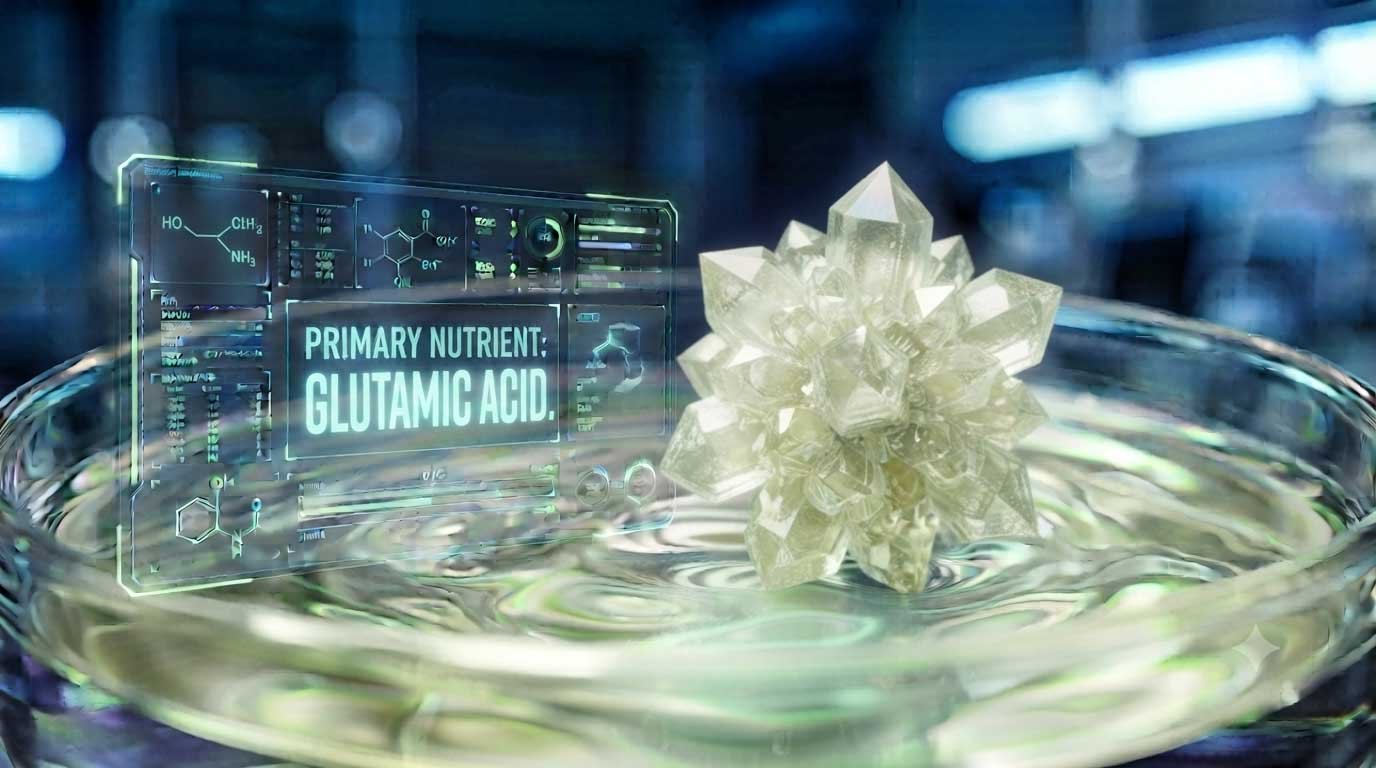
The Amino Acid Your Brain Won’t Shut Up About
Ask most people to name an amino acid and you’ll probably get a blank stare, maybe a mumbled “protein, right?” and that’s about it. But mention MSG, and suddenly everyone has an opinion. Funny thing is, most of them don’t realize they’re actually talking about glutamic acid, just wearing a different name tag. Glutamic acid is the free-standing form, and glutamate is what it becomes once it loses a hydrogen ion in the body’s watery environment. In practice, people use the two words almost interchangeably, and I’ll do the same throughout this piece.
Here’s what makes glutamic acid genuinely interesting, and I mean that as someone who has spent a long time reading through amino acid metabolism papers for fun (yes, that’s a real way to spend a Tuesday night apparently): it sits at this strange intersection between the mundane and the profound. On one hand, it’s just another one of the twenty standard amino acids your body strings together to build proteins, no different in that role from glycine or alanine. On the other hand, it happens to be the single most abundant excitatory neurotransmitter in your entire central nervous system. That’s not a small distinction. Every thought you’ve had today, every memory you’ve formed, every muscle contraction you’ve initiated, has involved glutamic acid doing its signaling job somewhere in your brain or spinal cord.
Table of Contents

What throws people off is the dual identity. Glutamic acid isn’t classified as an essential amino acid, meaning your liver can manufacture it from other compounds without you eating a single gram of it. Nutritionally speaking, it’s almost boring in that sense; there’s no daily requirement, no deficiency disease named after it, nothing you’ll find printed on a supplement label with a percent daily value. And yet, in neuroscience circles, it’s treated with the kind of reverence usually reserved for essential nutrients, because without adequate glutamate signaling, basic brain function as we understand it simply doesn’t happen.
I think the confusion also comes from glutamic acid’s association with food. It’s the substance behind umami, that savory, mouth-filling taste in aged cheese, ripe tomatoes, soy sauce, and cured meats. A Japanese chemist named Kikunae Ikeda isolated it from kombu broth back in 1908 and realized it was responsible for that deep, savory quality Japanese cooks had been chasing for centuries without a name for it. That discovery eventually led to monosodium glutamate, the seasoning that would go on to spark decades of public debate, most of which, as we’ll get into later, wasn’t grounded in particularly strong evidence.
So why does any of this matter to you, reading this right now instead of scrolling past it? Because glutamic acid touches more of your daily experience than almost any other amino acid, and most of us walk around with zero understanding of how. It’s involved in how you learn a new skill, how your brain forms long-term memories, how your muscles get fueled during a workout, and even how your gut lining stays intact. It’s also, when mismanaged by the body, tied to some of the more feared processes in neurology, including excitotoxicity, a term that sounds dramatic because it kind of is.
There’s also a broader point worth making before we go further: amino acids don’t get nearly the attention that vitamins and minerals do in the wellness conversation, and I think that’s a mistake. We talk endlessly about vitamin D and magnesium, but the building blocks of neurotransmission and protein structure get treated like background noise. Glutamic acid deserves a closer look, not because it’s some miracle molecule you need to start supplementing tomorrow, but because understanding how it works clarifies a lot of other things: why certain foods taste the way they do, why some people report sensitivity to MSG, why brain injury research so often circles back to glutamate levels, and why the phrase “brain signaling” keeps showing up whenever this amino acid enters the conversation.
Over the next several sections, I want to walk through what glutamic acid actually does in the body, where you’re getting it from without realizing it, what happens when levels run high or theoretically low, and where the legitimate risks lie versus the internet-forum exaggerations. I’ve spent enough time around amino acid science to have opinions about where the fear-mongering outpaces the data, and I won’t be shy about saying so. Let’s get into it.
Key Health Benefits
Glutamic acid earns its reputation honestly, mostly because it’s doing several jobs at once inside your body, not just one. It’s easy to reduce it down to “brain chemical” and call it a day, but that undersells how much territory this amino acid actually covers. Let’s break it into the areas where the evidence is strongest.
Brain Signaling and Cognitive Function
This is the headline act, and for good reason. Glutamic acid, once converted to its ionized form glutamate, functions as the primary excitatory neurotransmitter in the mammalian central nervous system. Researchers studying the glutamatergic synapse have described glutamate as sitting at the crossroads of nearly every major brain metabolic pathway, present in higher concentration in brain tissue than any other free amino acid.
What does “excitatory neurotransmitter” actually mean in plain terms? Basically, when one neuron wants to fire a signal to the next one, glutamate is very often the messenger carrying that signal across the synaptic gap. It binds to receptors on the receiving neuron, NMDA and AMPA receptors being the two most talked about, and that binding event triggers the next neuron to activate. Multiply that across billions of synapses happening in fractions of a second, and you start to understand why glutamate has been linked to learning, memory formation, and synaptic plasticity, which is essentially your brain’s ability to rewire itself based on experience.
I find this part genuinely fascinating: the same mechanism responsible for you memorizing a phone number or recognizing a friend’s face relies on the exact same chemical messenger implicated in seizures and neurodegenerative injury when things go sideways. It’s a reminder that biology rarely deals in purely “good” or “bad” molecules. Context and dose determine the outcome, always.
Muscle and Energy Metabolism
Outside the brain, glutamic acid plays a completely different role, and it’s one that gets far less attention. Because it’s a nonessential amino acid heavily involved in nitrogen metabolism, glutamic acid acts almost like a nitrogen shuttle bus, picking up nitrogen groups from other amino acids during a process called transamination and ferrying them where they need to go. This matters for something as basic as how your body disposes of excess nitrogen, a byproduct of protein breakdown that would otherwise become toxic if it accumulated.
It’s also tied into how your cells generate usable energy. Through its connection to the citric acid cycle, sometimes called the Krebs cycle, glutamic acid can be converted into alpha-ketoglutarate, an intermediate that feeds directly into your cells’ energy-producing machinery. Athletes and researchers interested in exercise physiology have looked at glutamate’s role here, since intense training increases the demand for these metabolic intermediates.
Gut and Immune Support
Here’s a benefit that surprises most people the first time they hear it: glutamic acid is one of the preferred fuel sources for the cells lining your intestines. Research on dietary glutamic acid in animal models has shown it supports intestinal morphology, improves nutrient digestibility, and helps maintain the tight junction proteins that keep your gut barrier intact, essentially the seal that prevents unwanted material from leaking through the intestinal wall into the bloodstream.
- It contributes to intestinal epithelial cell energy needs
- It supports immune signaling within the gut environment
- It plays a role in maintaining the structural integrity of the gut lining
None of this means you need to go out and start dosing free glutamic acid powder to fix digestive issues. But it does explain why protein-adequate diets, which naturally supply plenty of glutamic acid, tend to support better gut barrier function than diets chronically low in protein.
Taken together, these three roles, brain signaling, metabolic housekeeping, and gut support, paint a picture of an amino acid that’s less a “supplement” in the wellness sense and more a foundational piece of how your body runs its daily operations. You’re not managing your glutamic acid intake the way you’d manage vitamin C. You’re simply eating protein and letting your body sort out the rest, which, for the vast majority of healthy people, works exactly as intended.
Dietary Sources
If you’ve eaten literally anything containing protein today, you’ve consumed glutamic acid. That’s not an exaggeration for effect; it’s genuinely the most abundant amino acid in the human diet by weight, present in nearly every protein-containing food on the planet. The average adult consumes roughly 13 grams of glutamate daily just from ordinary dietary protein, according to FDA figures, which puts into perspective how unnecessary it is to go hunting for “glutamic acid foods” the way you might search for vitamin B12 sources.
Animal-Based Sources
Meat, poultry, fish, eggs, and dairy are all reliably dense in glutamic acid because they’re dense in protein generally, and glutamic acid makes up a substantial share of the amino acid profile in most animal proteins. Parmesan cheese deserves a specific mention here; it’s one of the most concentrated natural sources of free glutamic acid known, which is exactly why a well-aged parmesan tastes so intensely savory on its own, no sauce required. Anchovies and cured meats fall into a similar category, packed with free-form glutamate that’s already been liberated from larger protein structures through aging or fermentation, making that umami punch more immediately noticeable on the tongue.
Plant-Based and Fermented Sources
Plant foods aren’t left out of this picture. Tomatoes, particularly sun-ripened and dried ones, carry meaningful amounts of free glutamic acid, which is part of why a good tomato sauce develops such deep savoriness the longer it simmers. Mushrooms, seaweed (especially kombu, the very source Ikeda originally extracted glutamate from), soy sauce, miso, and fermented soybean products like natto are all naturally rich in glutamic acid.
- Ripe tomatoes and tomato paste
- Mushrooms, particularly shiitake
- Kombu and other seaweeds
- Soy sauce, miso, and fermented soy products
- Aged cheeses like parmesan and roquefort
There’s a pattern here worth noticing: fermentation and aging tend to concentrate free glutamic acid because enzymatic breakdown liberates it from bound protein structures. That’s not a coincidence; it’s essentially the biochemical explanation for why so many “savory, deeply flavorful” foods across different cuisines happen to share this one amino acid in common, independently discovered by cooks who had no idea what glutamate even was.
MSG and Added Glutamate
Then there’s the elephant in the room: monosodium glutamate, or MSG, the sodium salt of glutamic acid used as a flavor enhancer worldwide. Chemically, the glutamate in MSG is indistinguishable from the glutamate your body pulls out of a steak or a bowl of miso soup. Your body doesn’t know the difference and metabolizes both sources identically, a point the FDA has stated explicitly in its own consumer guidance.
Added MSG typically contributes far less to total dietary glutamate than natural food sources do, around half a gram per day on average compared to those 13 grams from ordinary protein. It shows up in packaged seasoning blends, instant noodles, frozen meals, chips, and plenty of restaurant cooking, sometimes labeled outright and sometimes hiding under names like “hydrolyzed yeast extract” or “autolyzed protein,” which still contain naturally occurring glutamate even if MSG itself isn’t listed.
I’ll be honest: I don’t think MSG deserves the villain reputation it’s carried for decades, and the research backs that stance up pretty consistently, something we’ll dig into properly in the risks section. For now, the practical takeaway is simple. If you eat a reasonably varied, protein-inclusive diet, you are getting more than enough glutamic acid without ever thinking about it, whether or not MSG ever touches your plate.
Dosage & Deficiency
This is where glutamic acid starts behaving very differently from the vitamins and minerals most people are used to reading about. There’s no Recommended Dietary Allowance for glutamic acid. No upper limit set by a nutrition board. No supplement facts panel with a neat percentage telling you how close you are to some daily target. And that’s not an oversight; it’s because the entire framework of RDAs applies to essential nutrients, things your body cannot make on its own. Glutamic acid isn’t one of those.
Why There’s No Official RDA
Because your liver and other tissues can synthesize glutamic acid from precursor molecules through transamination reactions, there’s no dietary requirement in the traditional sense. Nutrition science reserves the RDA framework for nutrients where insufficient intake leads to a defined deficiency syndrome, think scurvy for vitamin C or beriberi for thiamine. Glutamic acid has no equivalent syndrome because the body simply doesn’t rely on diet alone to maintain adequate levels. Even someone eating minimal dietary protein for an extended period would still be producing glutamic acid internally, though not without other consequences related to overall protein inadequacy.
This is a distinction I wish came up more often in nutrition conversations, honestly, because it explains why searching “how much glutamic acid should I take” returns such inconsistent, often contradictory answers online. There simply isn’t an official number to point to, and anyone giving you a precise milligram target is working from something other than established nutritional science.
What Deficiency Actually Looks Like
Strictly speaking, isolated glutamic acid deficiency isn’t recognized as a clinical condition in healthy individuals. What you will find in the literature is that inadequate total protein intake, meaning a diet chronically low in protein overall rather than glutamic acid specifically, can indirectly affect glutamate-dependent processes. Since glutamic acid depends partly on adequate dietary protein and healthy metabolic function to maintain normal tissue levels, situations involving malnutrition, certain metabolic disorders, or extreme dietary restriction could theoretically disrupt normal glutamate metabolism, though this is more accurately described as a downstream consequence of broader nutritional deficiency than a “glutamic acid deficiency” in its own right.
Some populations are worth flagging as having altered glutamate handling, not from dietary shortfall but from underlying conditions:
- Individuals with certain inherited metabolic disorders affecting amino acid processing
- People experiencing severe, prolonged malnutrition
- Patients under significant physiological stress, such as major trauma, sepsis, or extensive surgery, where amino acid demands shift substantially
That last category connects to something researchers have noted about glutamine, glutamic acid’s close relative: it can become “conditionally essential” during periods of severe physiological stress, when the body’s demand outpaces its own production capacity. Glutamic acid isn’t typically discussed in quite the same conditionally essential terms, but the underlying principle, that extreme physiological demand can outstrip normal synthesis, is a useful concept to keep in mind.
Supplementation Considerations
For the average healthy adult eating a reasonably balanced diet with adequate protein, there is no established need to supplement glutamic acid directly. It’s already abundant in food, already being manufactured internally, and there’s no recognized benefit demonstrated for healthy people adding more on top of that baseline. Where you do see glutamic acid or glutamate-related compounds used deliberately is in clinical and research settings, sometimes involving specific metabolic or gastrointestinal contexts, and these applications are guided by individual medical circumstances rather than general wellness recommendations.
If you’re someone tracking amino acid intake for training or recovery purposes, I’d gently push back on the idea that glutamic acid specifically needs isolated attention. Total dietary protein, spread across a variety of sources, will supply glutamic acid alongside everything else your body needs, without requiring you to single it out.
Toxicity & Risks
This is the section where glutamic acid’s reputation gets genuinely complicated, and where I think a lot of popular discussion loses the plot. There are legitimate, well-documented mechanisms of harm tied to glutamate in the brain. There’s also a decades-long public controversy around MSG that, frankly, hasn’t held up nearly as well under scientific scrutiny as its critics assumed it would. Both things can be true at once, and separating them matters.
Excitotoxicity Explained
Glutamate’s excitatory power in the nervous system is a double-edged sword, and researchers have known this for a long time. Under normal conditions, your brain tightly regulates extracellular glutamate levels through powerful uptake systems, essentially cellular vacuums that continuously clear excess glutamate from the space between neurons before it can overstimulate them. When that regulation breaks down, whether from injury, stroke, oxygen deprivation, or certain neurodegenerative processes, glutamate can accumulate outside the cell and overactivate its receptors to a damaging degree. This process, called excitotoxicity, involves excessive calcium influx into neurons, triggering a cascade of oxidative stress and mitochondrial dysfunction that can ultimately kill the cell.
A 2022 systematic review examining L-glutamate’s role in neurodegeneration described multiple mechanisms through which excess glutamate exposure contributes to neuronal damage, including oxidative stress, neuroinflammation, and disrupted calcium homeostasis, while also noting that clinical and epidemiological research is still needed to fully establish how much this applies to ordinary dietary glutamate exposure versus the pathological glutamate release that happens during brain injury. That distinction is worth sitting with for a second: excitotoxicity is a real, well-established phenomenon, but it’s primarily studied in the context of internally released glutamate during injury or disease, not glutamate you eat with dinner.
Glutamic acid, notably, doesn’t cross the blood-brain barrier easily in its dietary form. The barrier exists precisely to shield brain tissue from fluctuations in blood glutamate levels, which is part of why researchers have generally found that normal dietary glutamate intake doesn’t meaningfully raise brain glutamate concentrations in people with an intact, healthy blood-brain barrier.
The MSG Controversy
The MSG symptom complex, a cluster of self-reported symptoms including headache, flushing, tingling, and heart palpitations following MSG consumption, has been studied extensively since the 1960s, when concerns first surfaced. The largest double-blind, placebo-controlled trials on this topic, involving over a hundred subjects, found that while very large doses of MSG given without food occasionally produced mild, short-lived symptoms in a subset of self-identified sensitive individuals, researchers were not able to consistently reproduce these reactions under controlled, blinded conditions.
The FDA classifies MSG as generally recognized as safe, a conclusion echoed by the European Food Safety Authority, which established an acceptable daily intake of 30 milligrams per kilogram of body weight, a threshold that’s genuinely difficult to exceed through normal eating patterns. The Federation of American Societies for Experimental Biology, tasked by the FDA in the 1990s with reviewing MSG safety data, similarly concluded that any adverse effects tended to be mild and associated specifically with large unbound doses, generally above three grams, consumed on an empty stomach rather than as part of a normal meal.
I want to be straightforward about where I land on this, since strong opinions are apparently part of the job description here: the “MSG is dangerous” narrative has outlived its evidence base by a wide margin. That doesn’t mean zero individuals experience genuine sensitivity, some clearly do, but it does mean the sweeping public fear that shaped decades of “No MSG” labeling wasn’t proportionate to what the research actually showed.
Who Should Be Cautious
None of this means glutamic acid is risk-free for everyone in every context. A few groups warrant genuine caution:
- People who have identified, through consistent personal experience, a reproducible sensitivity to added MSG, even if population-level studies haven’t fully explained the mechanism
- Individuals with certain neurological conditions where excitotoxicity is already an active concern, who should discuss dietary glutamate with their physician rather than making assumptions from general population data
- Anyone considering isolated glutamic acid or glutamate supplementation outside of normal dietary protein, which should be approached under medical guidance rather than self-directed experimentation
For the overwhelming majority of healthy people, though, glutamic acid consumed through ordinary food, MSG included, sits comfortably within a well-established safety margin. The real risk factor isn’t the amino acid itself; it’s the specific pathological contexts, brain injury, certain neurodegenerative diseases, severe metabolic disruption, where the body’s normal glutamate regulation breaks down.
Where This Leaves Us
If there’s one thing I hope sticks after all of this, it’s that glutamic acid deserves to be understood rather than feared or ignored, because right now it seems to get one extreme treatment or the other. Most people never think about it at all, and the ones who do usually encountered it through MSG anxiety rather than any real appreciation for what this amino acid actually does inside a functioning brain and body.
The honest picture is this: glutamic acid is simultaneously one of the most ordinary and one of the most consequential molecules in human physiology. Ordinary, because it’s just another amino acid your body builds proteins from and manufactures on its own without any dietary obligation attached. Consequential, because in its ionized glutamate form, it’s the primary excitatory signal carrying communication across your entire nervous system, underpinning memory, learning, movement, and cognition in ways that are honestly still being actively mapped out by neuroscience.
What I’d actually encourage you to take from this isn’t a supplement regimen or a food to avoid. It’s a slightly different lens on the food you’re already eating. That intensely savory bite of aged parmesan, the deep body of a well-reduced tomato sauce, the umami backbone of a good miso soup, all of that flavor complexity traces back to free glutamic acid doing its chemistry on your taste receptors, the same molecule that’s simultaneously firing signals across billions of synapses in your brain right now, including the ones letting you process these sentences. There’s something almost poetic about that overlap, honestly, the same compound responsible for flavor and for thought.
Practically speaking, here’s where I’d leave you:
- Don’t chase glutamic acid as a supplement target; your body and your diet already have this covered without intervention
- Don’t fear MSG based on outdated public narratives; the controlled research consistently fails to support the level of alarm it’s historically received
- Do pay attention if you’re one of the individuals who genuinely, reproducibly reacts to high-dose MSG, and adjust your intake accordingly rather than dismissing your own experience
- Do maintain adequate overall protein intake, since that’s really the mechanism through which glutamic acid, alongside everything else your body needs, gets where it’s supposed to go
Glutamic acid isn’t a trend, and it was never designed to be one. It’s infrastructure, the kind of biochemical machinery that works quietly and constantly, largely unnoticed until you stop to actually look at what it’s doing. I’d argue that’s exactly why it’s worth understanding in the first place.
Article Sources
At AncientHerbsWisdom, our content relies on reputable sources, including peer-reviewed studies, to substantiate the information presented in our articles. Our primary objective is to ensure our content is thoroughly fact-checked, maintaining a commitment to accuracy, reliability, and trustworthiness.
- AL-Nasser, M. N., Mellor, I. R., & Carter, W. G. (2022). Is L-glutamate toxic to neurons and thereby contributes to neuronal loss and neurodegeneration? A systematic review. Brain Sciences, 12(5), 577. https://doi.org/10.3390/brainsci12050577
- Choi, B.-H., & Coloff, J. L. (2019). The diverse functions of non-essential amino acids in cancer. Cancers, 11(5), 675. https://doi.org/10.3390/cancers11050675
- Danbolt, N. C. (2001). Glutamate uptake. Progress in Neurobiology, 65(1), 1–105. https://doi.org/10.1016/S0301-0082(00)00067-8
- Meldrum, B. S. (2000). Glutamate as a neurotransmitter in the brain: Review of physiology and pathology. Journal of Nutrition, 130(4), 1007S–1015S. https://doi.org/10.1093/jn/130.4.1007S
- Niciu, M. J., Kelmendi, B., & Sanacora, G. (2012). Overview of glutamatergic neurotransmission in the nervous system. Pharmacology Biochemistry and Behavior, 100(4), 656–664. https://doi.org/10.1016/j.pbb.2011.08.008
- Ren, W., Chen, S., Yin, J., Duan, J., Li, T., Liu, G., Feng, Z., Tan, B., Yin, Y., & Wu, G. (2021). Dietary glutamic acid modulates immune responses and gut health of weaned pigs. Animals, 11(3), 626. https://doi.org/10.3390/ani11030626
- Zareian, M. (2014). Glutamate as a neurotransmitter in the healthy brain. Journal of Neural Transmission, 121(8), 799–817. https://doi.org/10.1007/s00702-014-1180-8
- U.S. Food and Drug Administration. (2012). Questions and answers on monosodium glutamate (MSG). https://www.fda.gov/food/food-additives-petitions/questions-and-answers-monosodium-glutamate-msg
- Harvard Health Publishing. (2024). Monosodium glutamate (MSG): What it is, and why you might consider avoiding foods that contain it. Harvard Medical School. https://www.health.harvard.edu/diet-and-nutrition/monosodium-glutamate-msg-what-it-is-and-why-you-might-consider-avoiding-foods-that-contain-it
- Mayo Clinic. (2025). How does your body react to MSG? Monosodium glutamate, also called MSG: Is it harmful? https://www.mayoclinic.org/healthy-lifestyle/nutrition-and-healthy-eating/expert-answers/monosodium-glutamate/faq-20058196

- Phosphatidic Acid: Supporting Muscle Growth and Strength - July 31, 2026
- Ceramides: Supporting Healthy Skin From Within - July 31, 2026
- Synbiotics: Combining Prebiotics and Probiotics Together - July 31, 2026